
You are using an out of date browser. It may not display this or other websites correctly.
You should upgrade or use an alternative browser.
You should upgrade or use an alternative browser.
Ing. Campini projects

!Mark
ACCESS: Confidential
- Joined
- 4 August 2019
- Messages
- 177
- Reaction score
- 291
Belluzzo chose air cooling too, according to Ciampaglia's book. He was the leading expert on turbines in Italy and was working on his own turbines for aeronautical use. Campini went a different way...
And all the sources I've ever read say the german turbojets were unreliable, that's why they were mostly mounted externally (so they were easier to replace), and why a lot of Me262 were built but weren't operational because they had no engines available or their engines didn't work etc.
This is written even in those books about Wunderwaffen and Luft46 type stuff that usually exaggerate claims about German superiority, so if even they say the turbojets were unreliable it's true...
And all the sources I've ever read say the german turbojets were unreliable, that's why they were mostly mounted externally (so they were easier to replace), and why a lot of Me262 were built but weren't operational because they had no engines available or their engines didn't work etc.
This is written even in those books about Wunderwaffen and Luft46 type stuff that usually exaggerate claims about German superiority, so if even they say the turbojets were unreliable it's true...
As said, they were the most reliable of their time (and the only ones). After fixing the fuel supply regulator, they became much more reliable. Most problems were related to short temperature peaks during load transitions. During wartime, development speed is extremly decisive and in field testing is common practice.
!Mark
ACCESS: Confidential
- Joined
- 4 August 2019
- Messages
- 177
- Reaction score
- 291
No lol they weren't the only ones and British and American jets in WW2 were much more reliable and safe, and in fact all post war jets derive from them. Even the Soviets scrapped german jet engines in favor of the british Nene.As said, they were the most reliable of their time (and the only ones). After fixing the fuel supply regulator, they became much more reliable. Most problems were related to short temperature peaks during load transitions. During wartime, development speed is extremly decisive and in field testing is common practice.
Anyway this is a thread about Campini so let's not go off-topic...
The Americans one came after the war (and didn't even come close to the performance of the 262) and the British ones were only used occasionally to down the V1. At that time, the German jets were much more reliable than at the time of their introduction.
There were some postings about the Supergenius Longhi who worked in leading positions in the US while still being to young for a 6niversity degree, did you delete them?
There were some postings about the Supergenius Longhi who worked in leading positions in the US while still being to young for a 6niversity degree, did you delete them?
Last edited:
!Mark
ACCESS: Confidential
- Joined
- 4 August 2019
- Messages
- 177
- Reaction score
- 291
You mean this? https://www.secretprojects.co.uk/th...rboprop-rocket-etc-projects.50845/post-880517They Americans one came after the war and the British ones were only used occasionally to down the V1. At that time, the German jets were much more reliable than at the time of their introduction.
There were some postings about the Supergenius Longhi who worked in leading positions in the US while still beeing to young for a 6niversity degree, did you delete them?
It's in a different thread.
I think you are confusing things, if you saw posts praising Longhi as a "supergenius" they definitely weren't mine and definitely not in this thread. I only deleted a post today that I sent twice by mistake, and one the other day for another mistake I made, I don't even remember what it was, but definitely not about Longhi. Other than that I haven't deleted posts.
If you actually read what I wrote about Longhi, especially when I was talking to Nico, you will see that I myself expressed doubts about the Longhi narrative.
Years ago I wrote on the Re2007 thread that Skybolt's debunking of the Longhi narrative was faulty and made little sense, but it doesn't mean I believe in the official Longhi narrative, in fact in those comments I even criticized aspects of it. For example the Re2007 blueprints are post war etc...
Edit: Oh and the other day I even posted a page from a book that made crazy claims about the Re2007 and said they were baseless. So yea if you actually read what I wrote about the Re2007 you will see that I definitely didn't make baseless claims or praise Longhi as a supergenius or anything.
But again we are going off-topic.
Ok, thanks for clarification, I wanted to answer a post, and started, without finishing. When I wanted to finish it next day, it was gone.
There was this 500 km/claim for the Caproni, which I was searching for
Can be deleted
There was this 500 km/claim for the Caproni, which I was searching for
Can be deleted
Last edited:
Which engine models are water cooled in 50sMaybe a solution would be water injection, which Whittle also experimented with, and later became standard in some jet engines in the 50s. Even the germans who had better alloys still experienced overheating and other engine problems that made their turbojets unreliable.
!Mark
ACCESS: Confidential
- Joined
- 4 August 2019
- Messages
- 177
- Reaction score
- 291
Water injection, it's a different system where water gets injected in the incoming air or fuel or combustion chamber to cool certain parts of the engine. I was saying it could have been a valid alternative https://en.wikipedia.org/wiki/Water_injection_(engine)Which engine models are water cooled in 50s
It was also used in the P47 and probably many others (including Reno air racers). In the jet engines it caused a lot of soot production and was only used for take off.
When you inject water in a jet engine, you can burn more fuel and keep the turbine entry temperature constant with a higher mass flow and pressure.
When you inject water in a jet engine, you can burn more fuel and keep the turbine entry temperature constant with a higher mass flow and pressure.
Last edited:
I don't really get the Caproni developments, sometimes they tried to recover some of the coolant heat, sometimes not, sometimes they lack a real nozzle for building up pressure (and exhaust velocity) sometimes they have one, it's not really pointing in a useful direction. I wouldn't call it turbofans either, because later on they clearly used multi stages compressors.
Driving a multi stage compressor with a piston engine doesn't make sense at all, the whole propulsion system is huge, heavy complex and extremely inefficient. The only useful approach might have been to use a low pressure fan and put the whole piston engine with it's cooling system behind it, so that all the waste heat can be (partially) recovered in a nozzle downstream. Of course, this would only work sufficient in cold air, otherwise the cooling wouldn't work.
Driving a multi stage compressor with a piston engine doesn't make sense at all, the whole propulsion system is huge, heavy complex and extremely inefficient. The only useful approach might have been to use a low pressure fan and put the whole piston engine with it's cooling system behind it, so that all the waste heat can be (partially) recovered in a nozzle downstream. Of course, this would only work sufficient in cold air, otherwise the cooling wouldn't work.
Last edited:
!Mark
ACCESS: Confidential
- Joined
- 4 August 2019
- Messages
- 177
- Reaction score
- 291
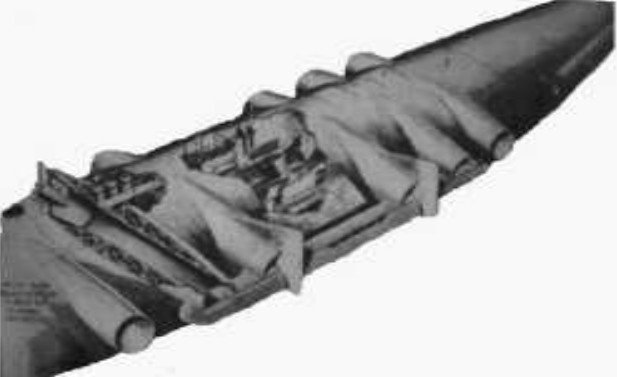
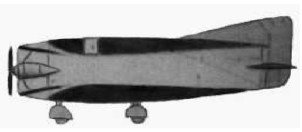
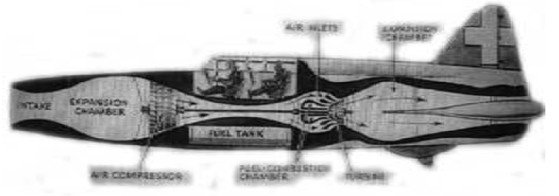
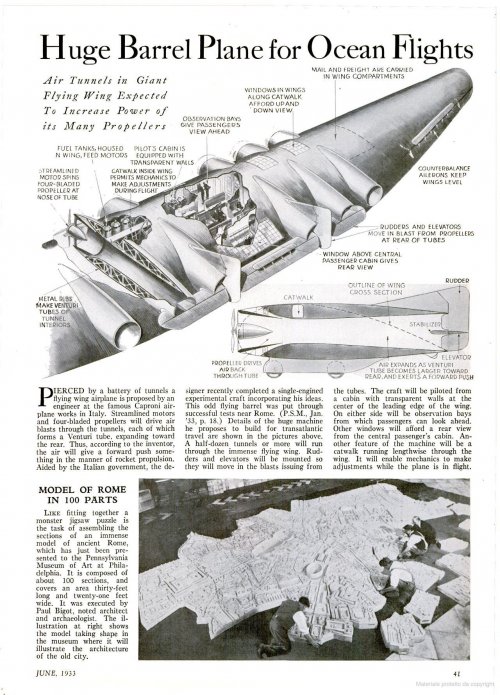
Campini flying wing from this website.
There is also a drawing of the C.C.2. "initial concept".
Very strange drawings.
https://aeroenginesaz.com/en/brand_caproni-campini
Edit: seems related to this. So there was a Stipa Caproni airliner project, and maybe Campini had something to do with it https://www.secretprojects.co.uk/threads/anf-mureaux-stipa-projects.3423/post-260305
https://www.secretprojects.co.uk/threads/anf-mureaux-stipa-projects.3423/post-27277
There is also a drawing of the C.C.2. "initial concept".
Very strange drawings.
https://aeroenginesaz.com/en/brand_caproni-campini
Edit: seems related to this. So there was a Stipa Caproni airliner project, and maybe Campini had something to do with it https://www.secretprojects.co.uk/threads/anf-mureaux-stipa-projects.3423/post-260305
https://www.secretprojects.co.uk/threads/anf-mureaux-stipa-projects.3423/post-27277
Attachments
Last edited:
!Mark
ACCESS: Confidential
- Joined
- 4 August 2019
- Messages
- 177
- Reaction score
- 291
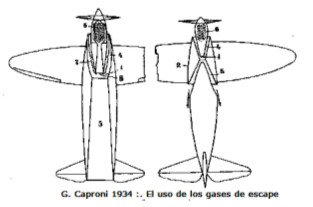
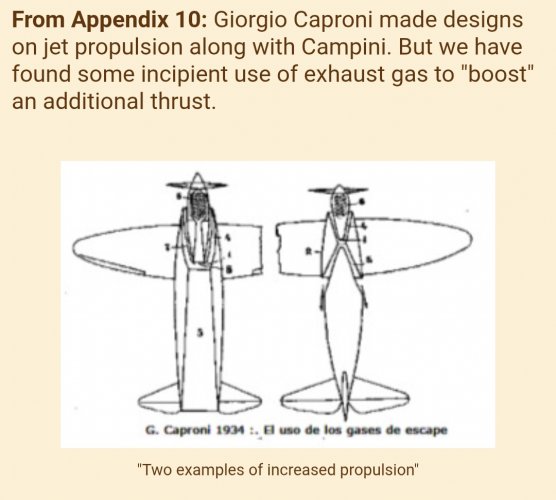
The same website also provides these designs for early jet propulsion attributed to "Giorgio" (Giovanni?) Caproni and Campini. Here drawn is the idea of using exhaust gases of a piston engine to provide additional boost.
https://aeroenginesaz.com/en/brand_caproniThis website is crazy, on one hand it has a ton of photos and information about engines, on the other it's also full of mistakes
Trying to analyze these drawings, and correct me if I'm wrong, these projects are the "missing link", the early concept of the mixed propulsion system that we would later see in Project R and the Ca.183bis and boundary layer control of the R.105 and other projects.
Version 1, on the left, shows a large piston engine + propeller in nose, a long internal duct running through fuselage, air enters from the front and hot exhaust gases are routed into the duct where they would get compressed and expelled rearward.
Unfortunately we don't see the whole description so we don't know if this early project already talked about an afterburner or something.
Version 2, on the right, shows a smaller piston engine maybe? Propeller and front air intake again, but this time exhaust meets incoming airflow and the mixture exits sideways through wing-root outlets! This suggests Caproni wasn’t only chasing thrust, he may also have been aiming for boundary-layer control, lift augmentation and wing flow energizing. Hot high-velocity gas exiting near the wing root could reduce flow separation, increase lift and delay stall. So Version 2 may be as much an aerodynamic control system as a propulsion device.
So what can we say, the idea of using exhaust gases to increase thrust was old, it was tested since the time of Cosimo Canovetti and Henri Coanda before WW1 (didn't Caproni study with Coanda?), multiple inventors across decades independently followed the same logic toward jet propulsion. It evolved in the Campini motorjet, the Ca183bis with mixed propulsion, the Progetto R (Re2005 R variants), and the Rossi R.105 with blown flaps.
https://aeroenginesaz.com/en/brand_caproniThis website is crazy, on one hand it has a ton of photos and information about engines, on the other it's also full of mistakes
Trying to analyze these drawings, and correct me if I'm wrong, these projects are the "missing link", the early concept of the mixed propulsion system that we would later see in Project R and the Ca.183bis and boundary layer control of the R.105 and other projects.
Version 1, on the left, shows a large piston engine + propeller in nose, a long internal duct running through fuselage, air enters from the front and hot exhaust gases are routed into the duct where they would get compressed and expelled rearward.
Unfortunately we don't see the whole description so we don't know if this early project already talked about an afterburner or something.
Version 2, on the right, shows a smaller piston engine maybe? Propeller and front air intake again, but this time exhaust meets incoming airflow and the mixture exits sideways through wing-root outlets! This suggests Caproni wasn’t only chasing thrust, he may also have been aiming for boundary-layer control, lift augmentation and wing flow energizing. Hot high-velocity gas exiting near the wing root could reduce flow separation, increase lift and delay stall. So Version 2 may be as much an aerodynamic control system as a propulsion device.
So what can we say, the idea of using exhaust gases to increase thrust was old, it was tested since the time of Cosimo Canovetti and Henri Coanda before WW1 (didn't Caproni study with Coanda?), multiple inventors across decades independently followed the same logic toward jet propulsion. It evolved in the Campini motorjet, the Ca183bis with mixed propulsion, the Progetto R (Re2005 R variants), and the Rossi R.105 with blown flaps.
Attachments
I am not an expert. But I think that you may have misinterpreted the reasons why water was injected into turbojet and early turbofan engines.Water injection, it's a different system where water gets injected in the incoming air or fuel or combustion chamber to cool certain parts of the engine. I was saying it could have been a valid alternative https://en.wikipedia.org/wiki/Water_injection_(engine)
In piston engines, this was done, as you said, to cool the combustion chamber. Cooling the combustion chamber prevented detonation at higher than normal supercharger boost levels.
In turbine engines, water injection increased the mass-flow through the engine under hot and high takeoff conditions. The evaporation of the water made the air cooler and thus denser, more oxygen rich, and capable of burning more fuel without exceeding the maximum safe exhaust gas temperature. The engine could thus produce more thrust for a short period, such as during takeoff by a heavily loaded aircraft.
There is a more detailed explanation in this article:
https://www.airwaysmag.com/new-post/explained-takeoff-power-water-injection
!Mark
ACCESS: Confidential
- Joined
- 4 August 2019
- Messages
- 177
- Reaction score
- 291
I did not, I said exactly what the sources online say, and they say that water injection cools turbines too, other than providing additional thrust.

Airborne2001
ACCESS: Secret
- Joined
- 19 June 2020
- Messages
- 377
- Reaction score
- 541
This is incredible info. We can indeed see a strong way to get to the R.105 given that said design was planned to employ boundary-layer control. Given his history of studies on the project, we can now understand that part of the intention behind the R.105 was to help test this aerodynamic "boost" on a fighter.The same website also provides these designs for early jet propulsion attributed to "Giorgio" (Giovanni?) Caproni and Campini. Here drawn is the idea of using exhaust gases of a piston engine to provide additional boost.

Temistocle
ACCESS: Secret
- Joined
- 9 December 2009
- Messages
- 309
- Reaction score
- 725
Giorgio Caproni was a famous Italian poet, writer and translator. It is easier to find things about him when you search "G. Caproni" in the web.The same website also provides these designs for early jet propulsion attributed to "Giorgio" (Giovanni?) Caproni and Campini. Here drawn is the idea of using exhaust gases of a piston engine to provide additional boost.
Giovanni Battista (aka Gianni) Caproni is the real aircraft designer.
Cooling the air doesn't make it more oxygen rich. In fact, with water injection, the turbine entry temperature remained unchainged, but more fuel could be burned. The mass flow through the turbine increased significantly by the added steam.and added extra fuel, thus producing more thrust.I am not an expert. But I think that you may have misinterpreted the reasons why water was injected into turbojet and early turbofan engines.
In piston engines, this was done, as you said, to cool the combustion chamber. Cooling the combustion chamber prevented detonation at higher than normal supercharger boost levels.
In turbine engines, water injection increased the mass-flow through the engine under hot and high takeoff conditions. The evaporation of the water made the air cooler and thus denser, more oxygen rich, and capable of burning more fuel without exceeding the maximum safe exhaust gas temperature. The engine could thus produce more thrust for a short period, such as during takeoff by a heavily loaded aircraft.
There is a more detailed explanation in this article:
https://www.airwaysmag.com/new-post/explained-takeoff-power-water-injection
Last edited:

- Joined
- 26 May 2006
- Messages
- 38,285
- Reaction score
- 20,424
Hi,
A stratospheric monoplane designated C.S.3 (Campini Secondo 3), with a C.S.4 variant featuring a different engine and landing gear configuration;
C.S.5 / C.S.6 jet-powered gyroplanes designed in 1939;
C.S.7 and C.S.8 twin-jet monoplanes, precursors to the C.S.10;
The Campini C.S.10 twin-jet heavy fighter of 1942;
The C.S.11 twin-jet bomber, for which two versions were conceived: the first in 1942 powered by DB605A engines, and a second in 1943 powered by Reggiane RE L103 engines.
https://svppbellum.blogspot.com/sea...00+02:00&max-results=20&start=9&by-date=false
A stratospheric monoplane designated C.S.3 (Campini Secondo 3), with a C.S.4 variant featuring a different engine and landing gear configuration;
C.S.5 / C.S.6 jet-powered gyroplanes designed in 1939;
C.S.7 and C.S.8 twin-jet monoplanes, precursors to the C.S.10;
The Campini C.S.10 twin-jet heavy fighter of 1942;
The C.S.11 twin-jet bomber, for which two versions were conceived: the first in 1942 powered by DB605A engines, and a second in 1943 powered by Reggiane RE L103 engines.
https://svppbellum.blogspot.com/sea...00+02:00&max-results=20&start=9&by-date=false

archipeppe
ACCESS: Top Secret
- Joined
- 18 October 2007
- Messages
- 2,564
- Reaction score
- 3,910
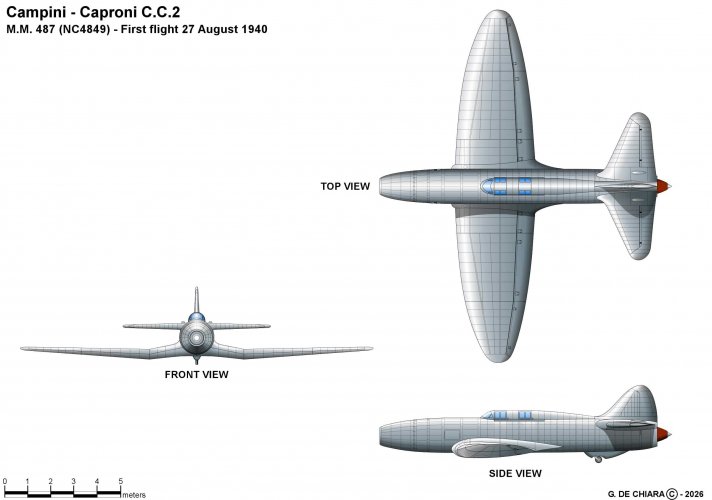
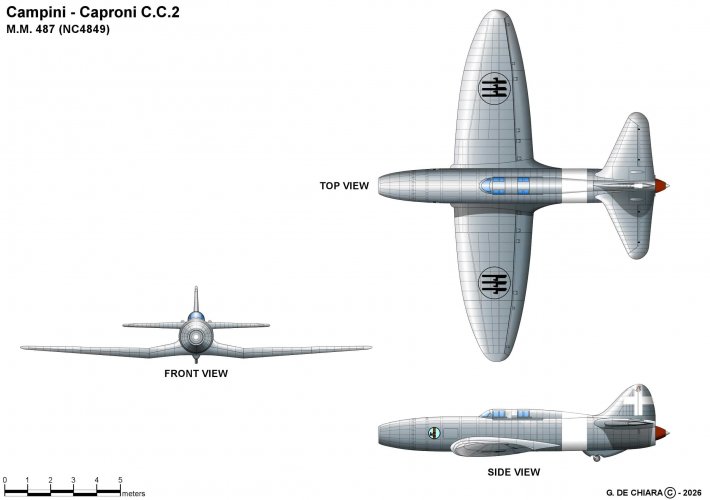
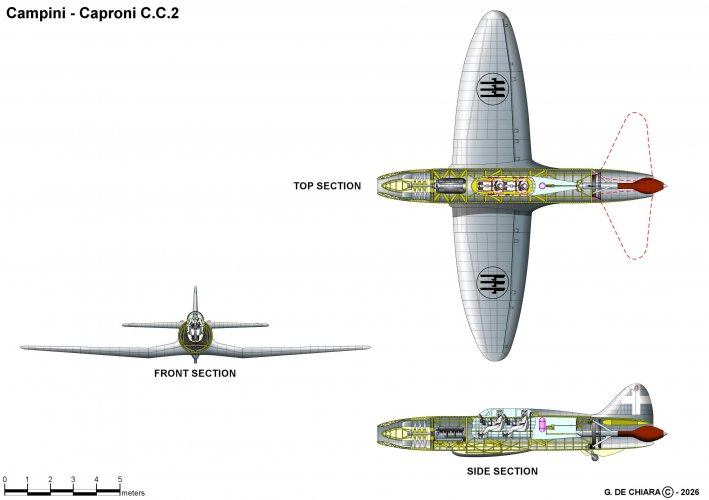
86 years ago the Campini-Caproni CC2 made its first flight, in the hands of the great Mario de Bernardi from Taliedo airfield (near Milan).


Last edited:


