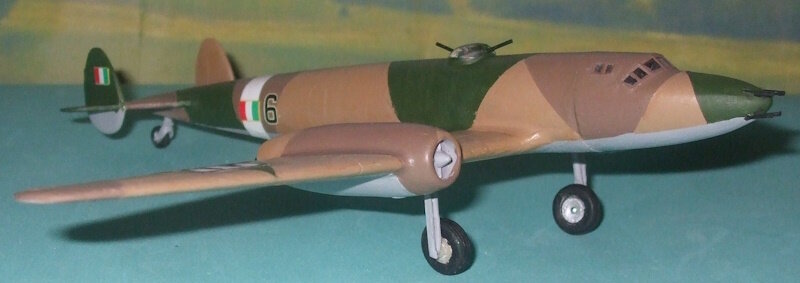
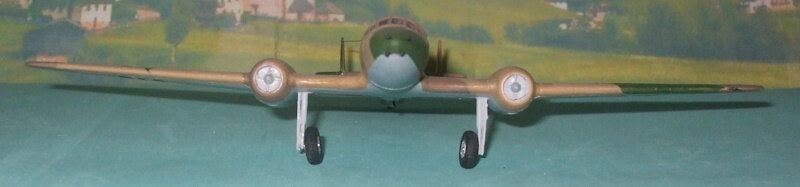
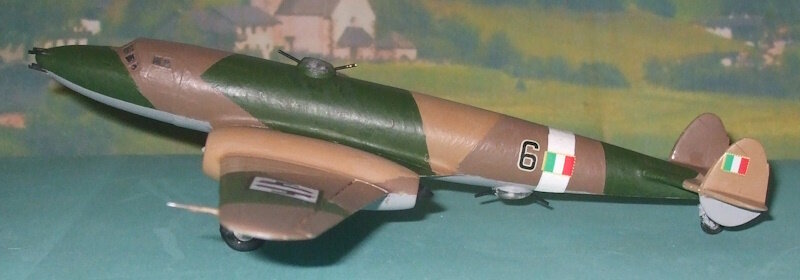
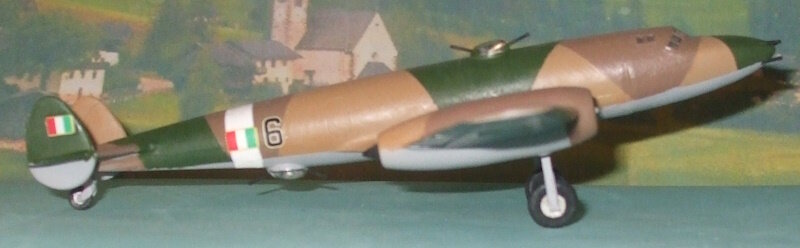
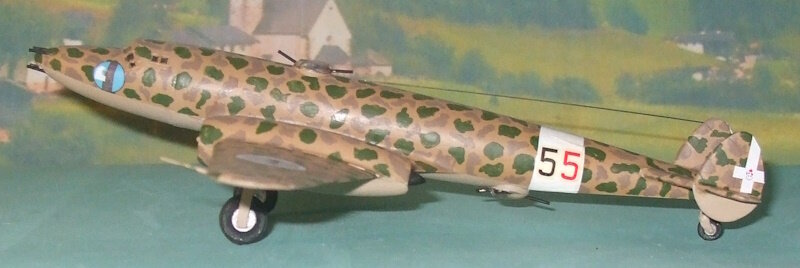
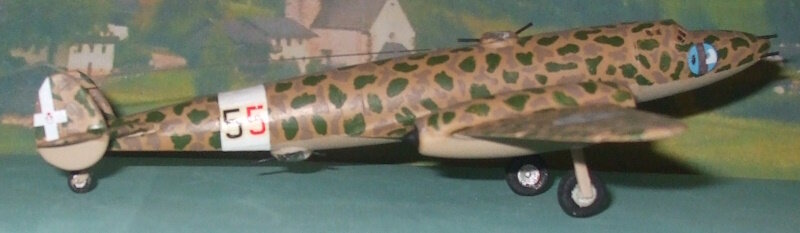
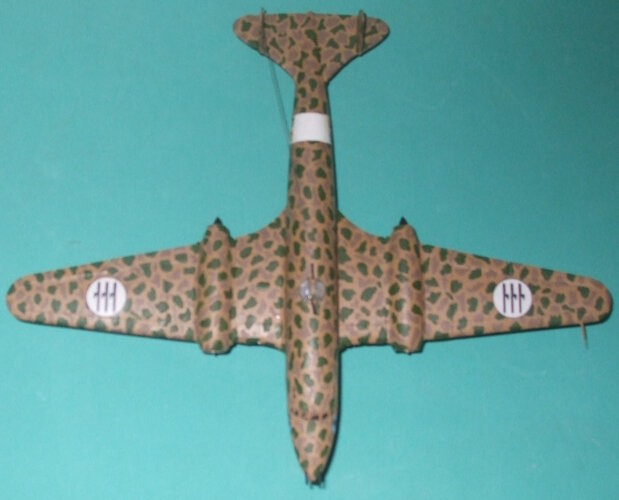
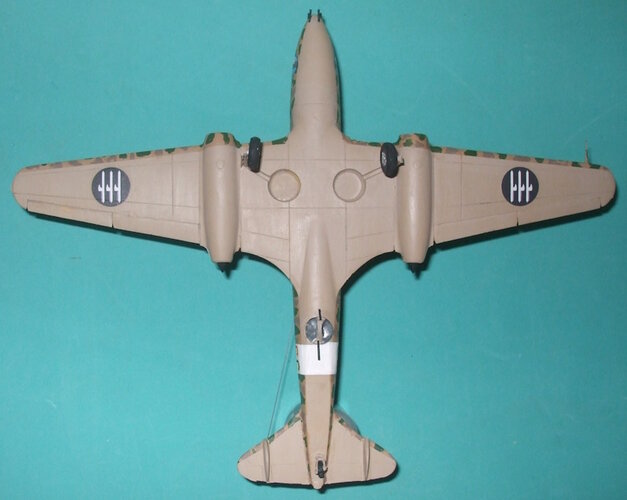
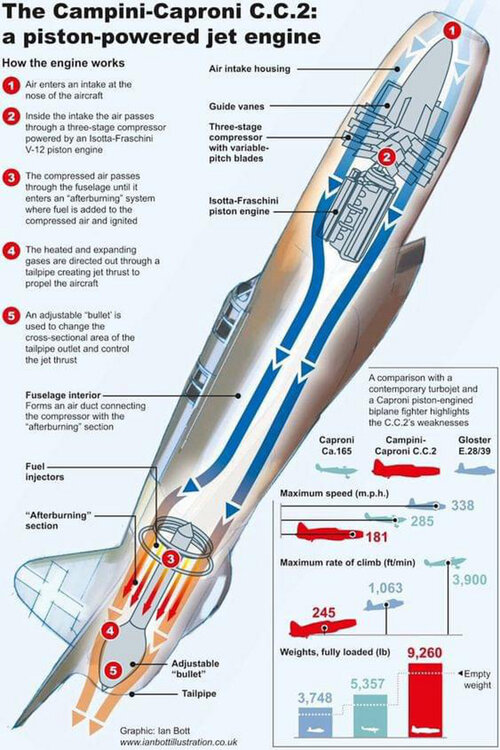
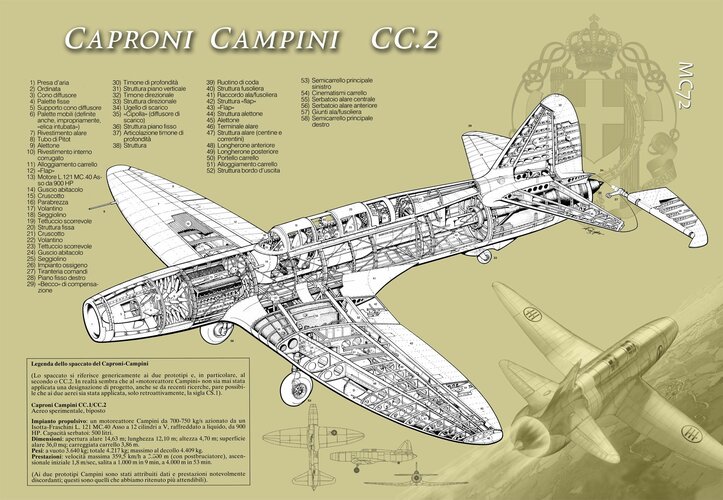
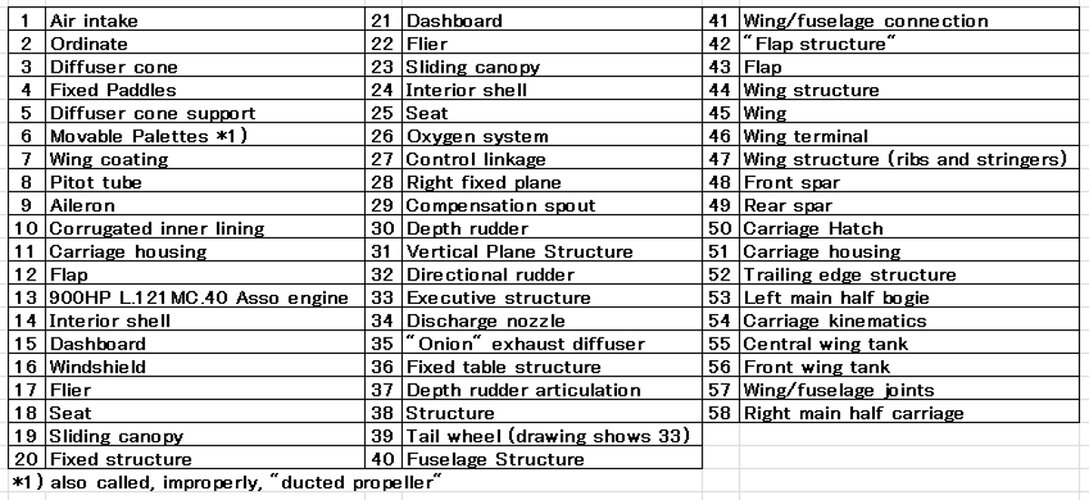
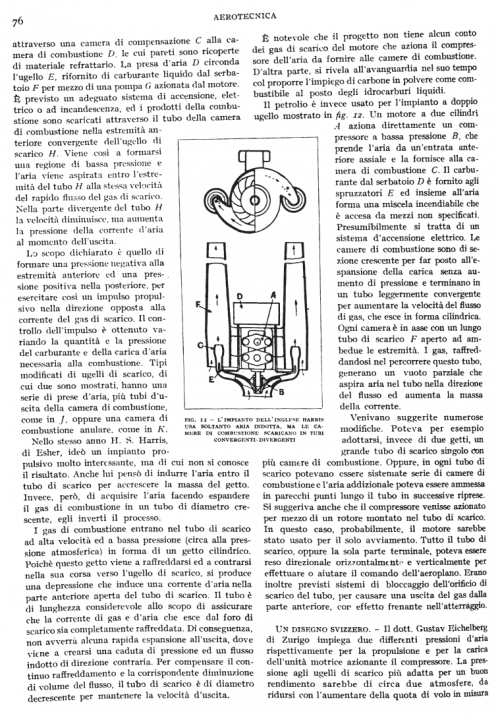
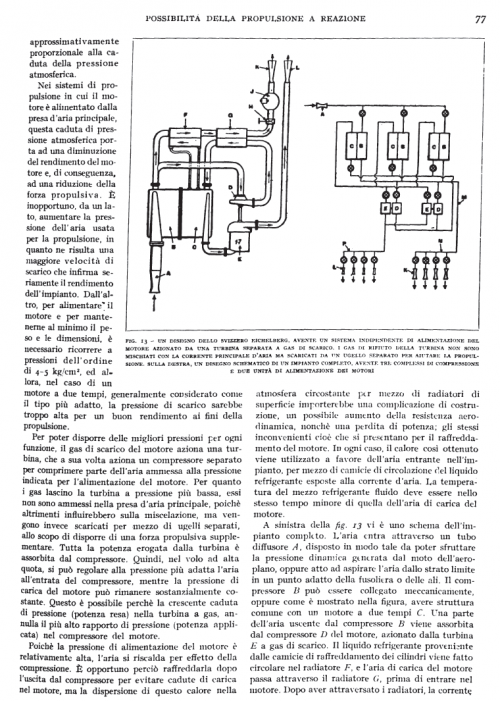
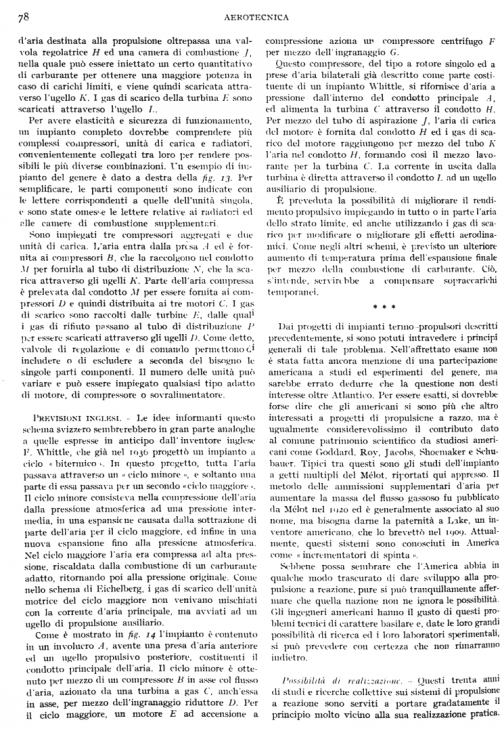
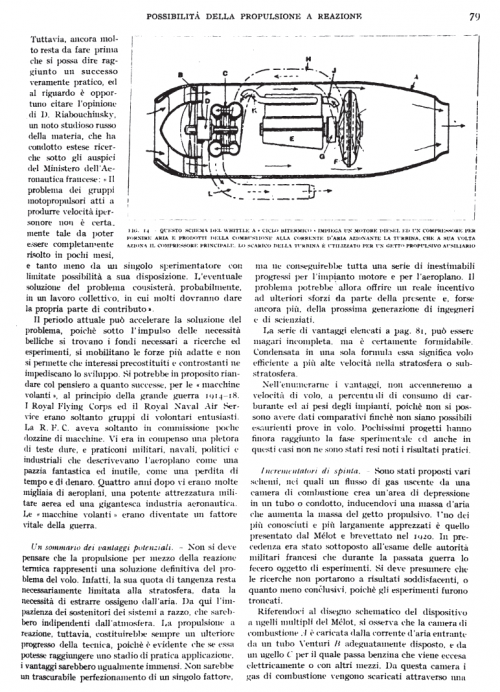
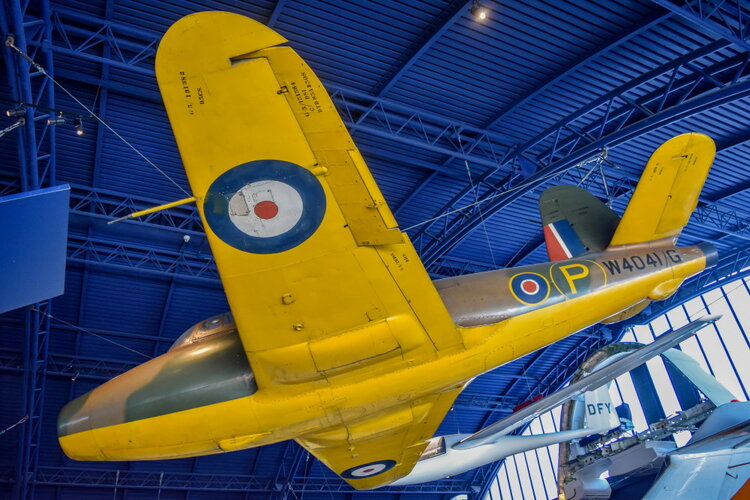
Currently the most ancient (almost) jet-powered of the World, since the previous He-178 was destroyed during wartime.

Yes indeed, the Gloster E.28/39 is on display in the Science Museum in London, which flew in 1941, which would count as the next oldest after the C.C.2. The He 178 and I believe He 176 rocket powered aircraft were both destroyed in the Deutsches Luftfahrt Sammlung museum in the heart of Berlin. It was burned out in an air raid in 1943. Needless to say the RAF were not invited back again...
 

Attachments

  • E.28-39.jpg
    E.28-39.jpg
    345.5 KB · Views: 293
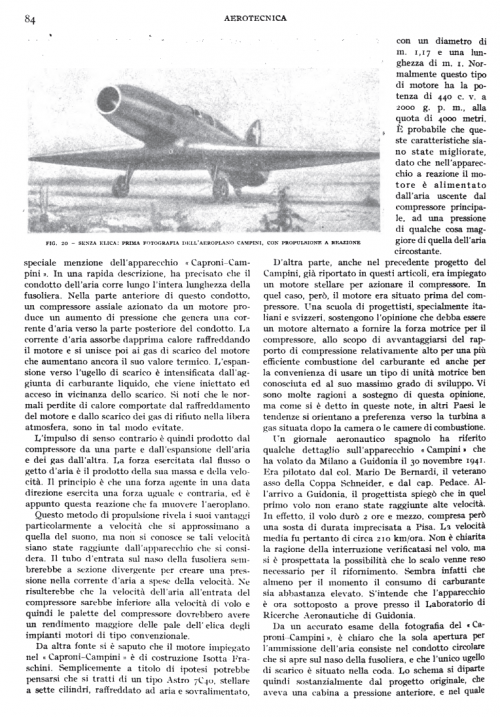
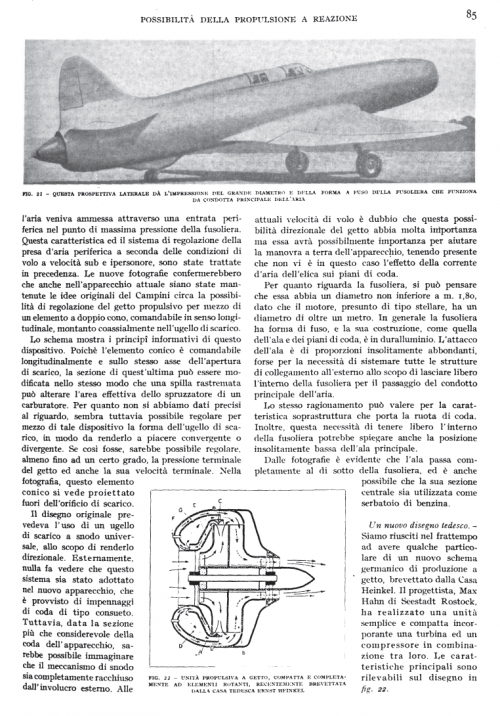
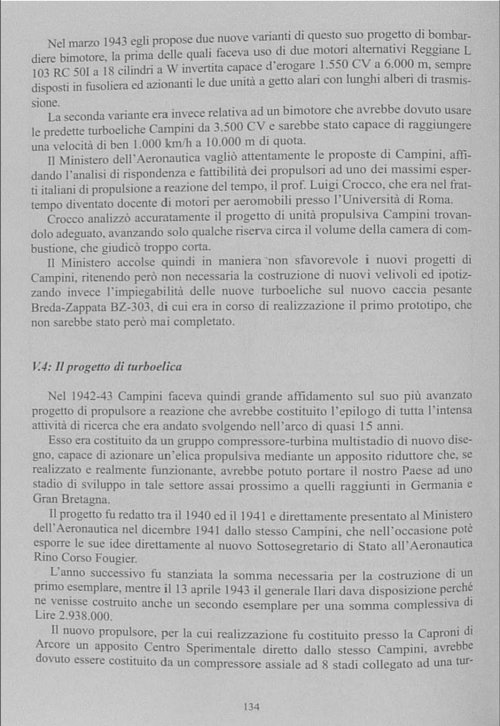
Pictures of the very impressive C.C.2. Aside from the terrific information that our friend Skybolt has placed here for us, this dual language book is well worth seeking out for further detail.

Currently the most ancient (almost) jet-powered of the World, since the previous He-178 was destroyed during wartime.
I keep hoping that a flying replica can be built, we need to keep our heritage alive.
 
Nick Sumner said:
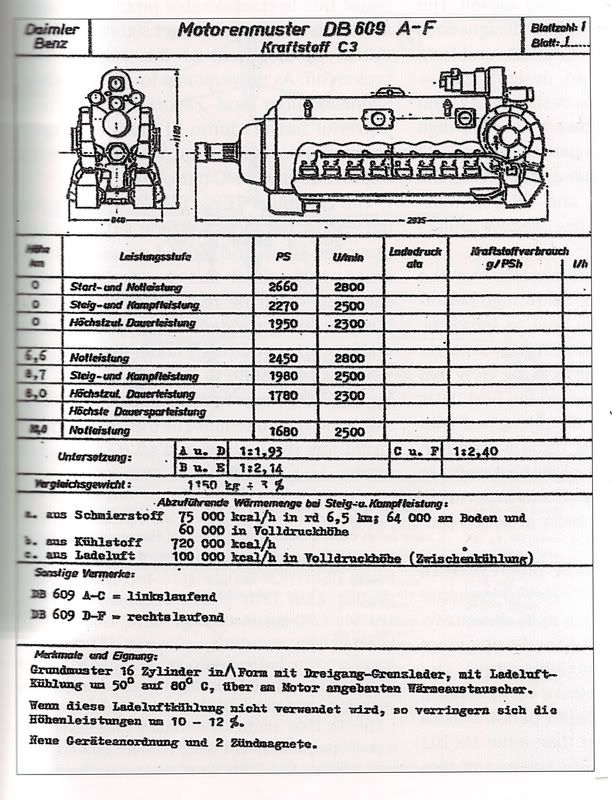
This is the DB609

db609.jpg

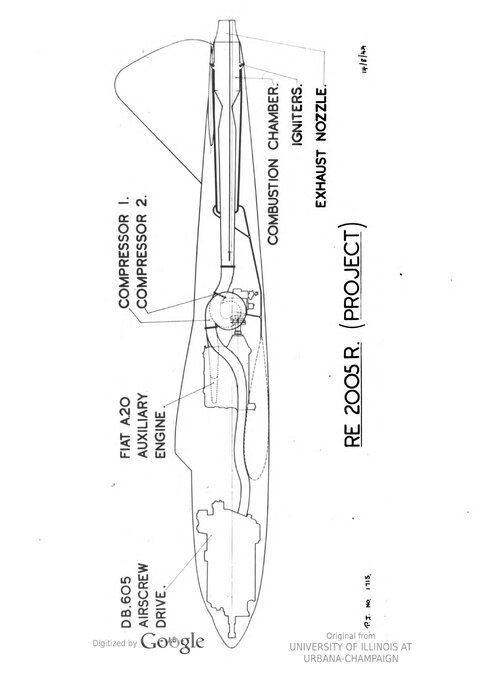
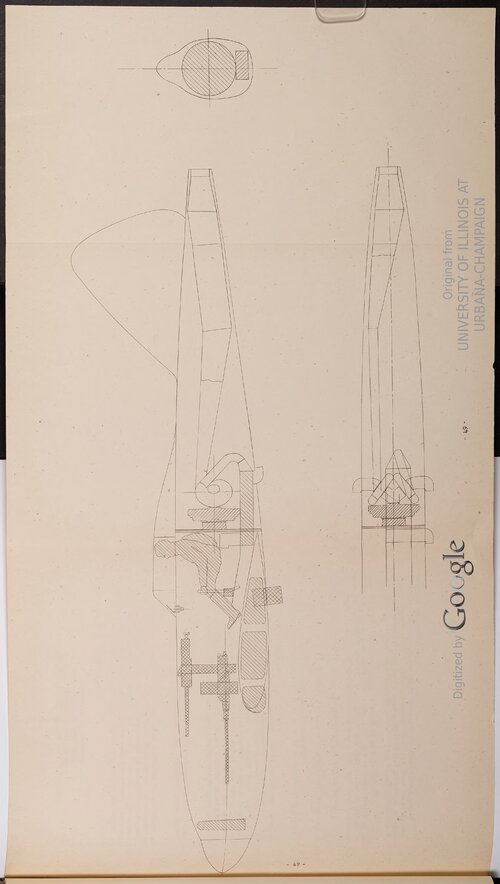
Well, it is true that the DB-609 has a similar shape, but it is a monster 293.5 m long and the engine in the drawing of the Re 2005 R cannot be more than 227 cm.
You may calcualte that comparing the size of the engine with the pilot seat and the length of the canopy, that are both known.
The cannon length may also serve as a refernce.

I understand your reasons. Please see the similiraty in the attached drawing.
May I ask what aircraft that is? (Or is it just a concept for the engine?)
 
Does anyone have a timeline for the Campini CS.10? I am curious about when it was first designed, submitted, and then worked on.
 
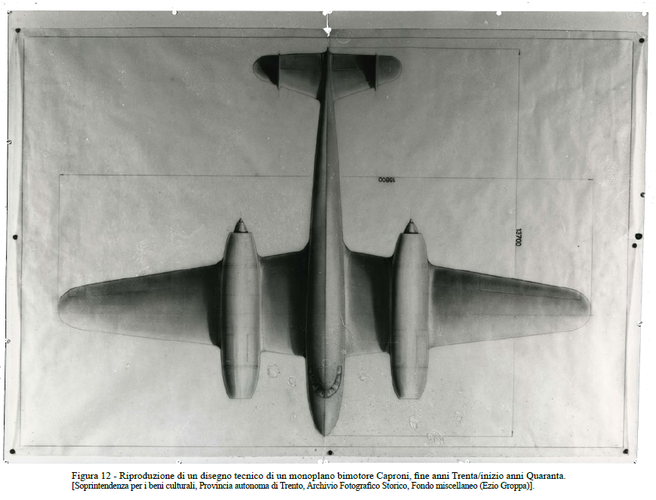
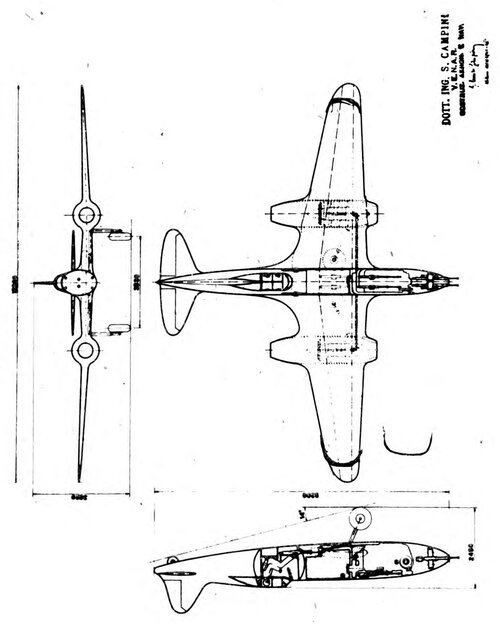
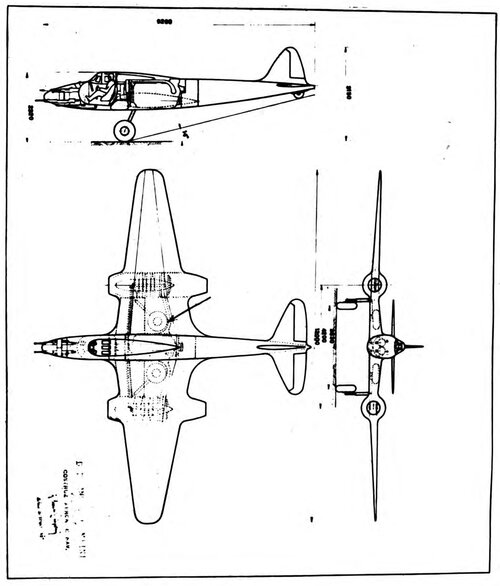
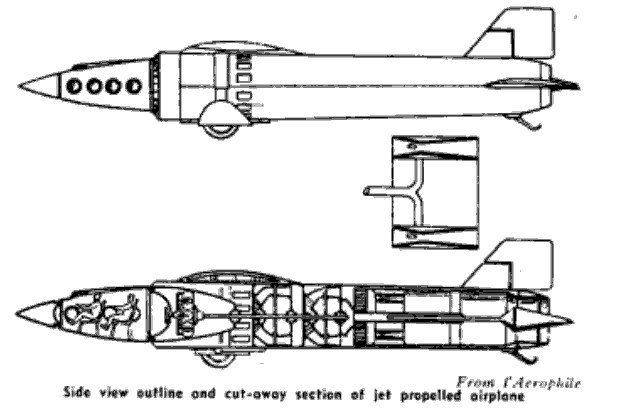
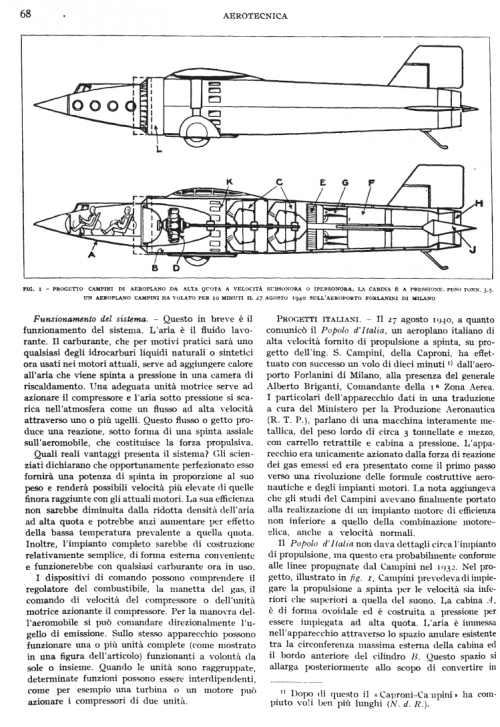
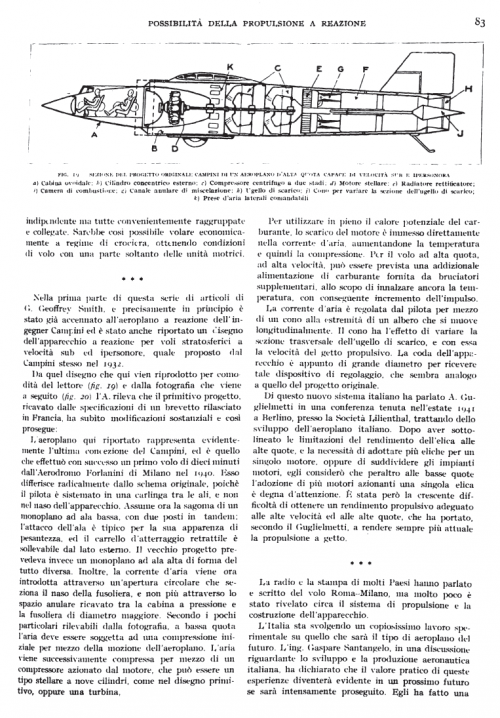
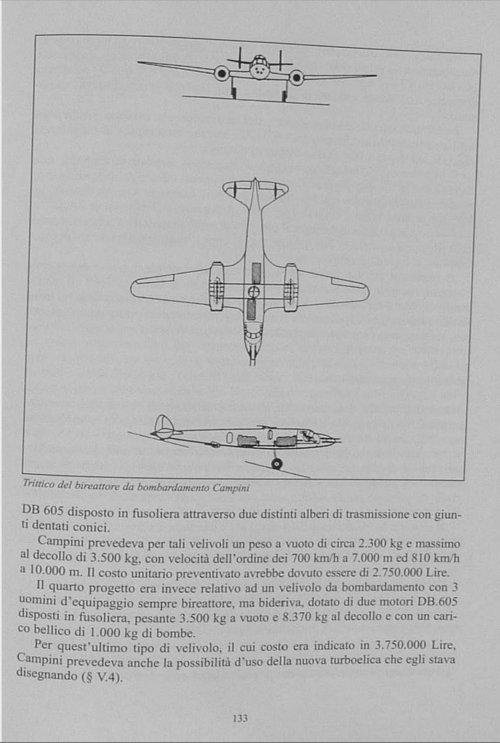
In the already mentioned Ing.Campini 1948 article (first after 10 years...) I found this 1940 project for a twin-engine motoreattore plane. Data are: wingspan 18,8 m; wing surface 48 sqm; wing loading 175 Kg/sqm; take-off run 500 m; range at 10000 m 3000 km, cruise speed at 10000 m 750 KM/h; max speed at 10000 m 1050 KM. The last two are most improbable, expecially the max speed (aerodinamically the plane is very conservative and I don't think possible for itto reach transonic speeds...). The motoreattori were to be driven by 1350 HP engines (a couple of Piaggio ?). Campini said he was thinking of developing (he said: I started developing, um, um, um, Ing., don't even try to make us believe it...) a 3000 HP-equivalent gas-turbine fror this aircraft, hoping to reach 950 KM/h cruise speed and 1250 (supersonic....) at 10000 m. Well, forget about it.
From, I beni storico-aeronautici nel contesto del patrimonio culturale.
 

Attachments

  • 2.png
    2.png
    531.3 KB · Views: 208
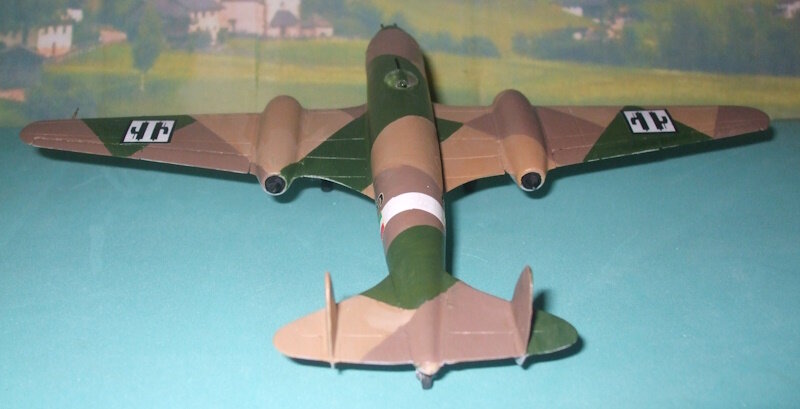
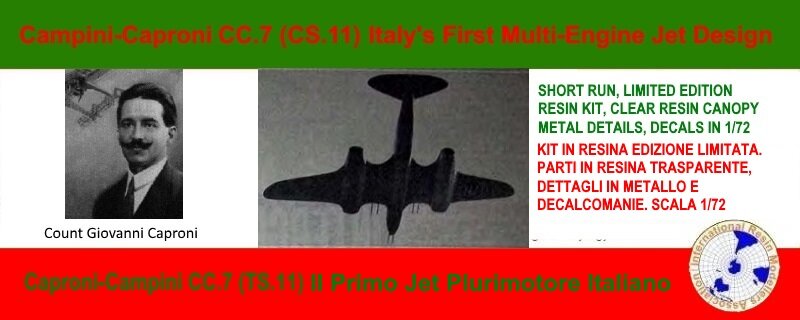
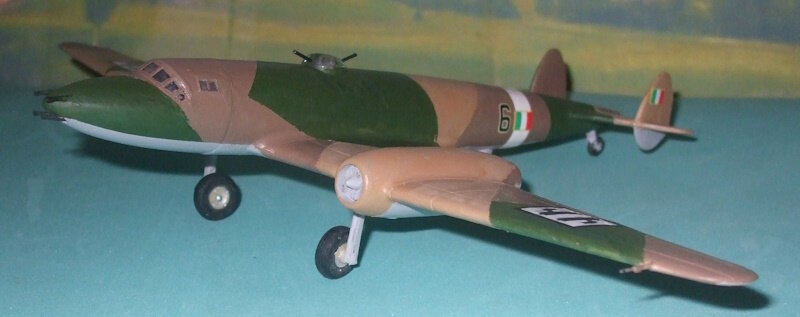
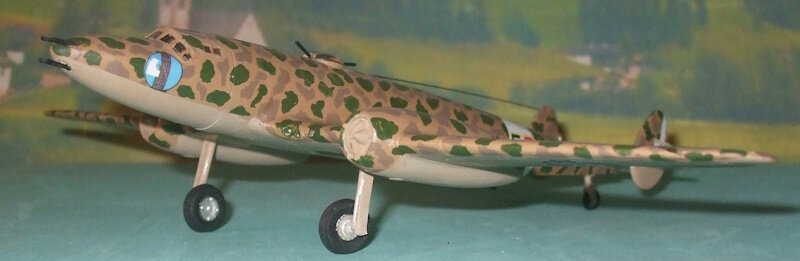
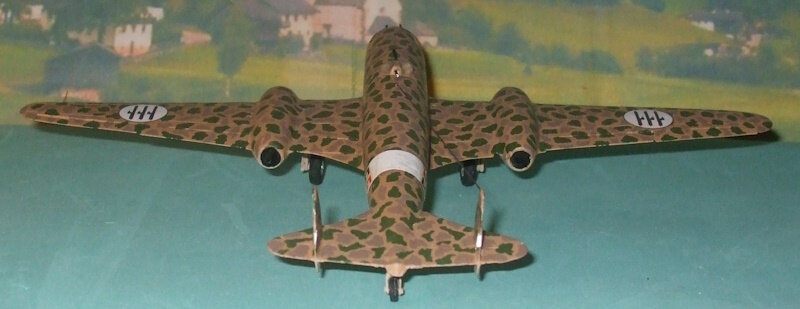
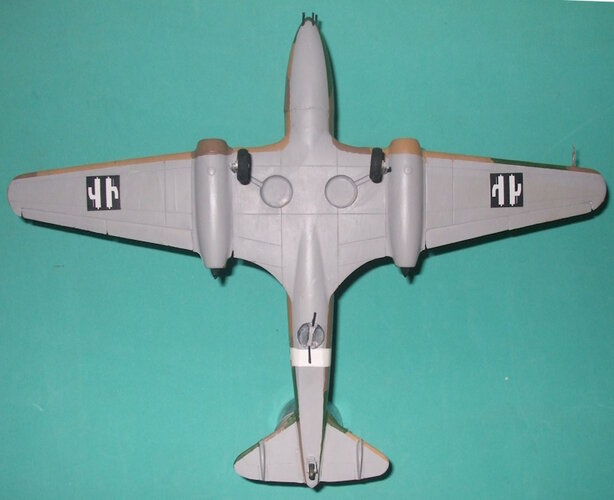
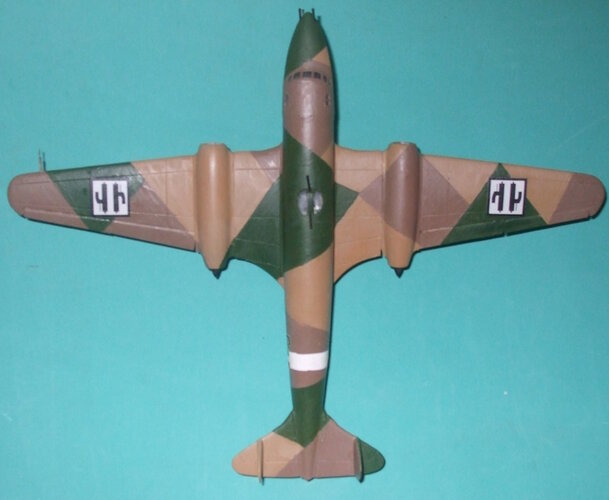
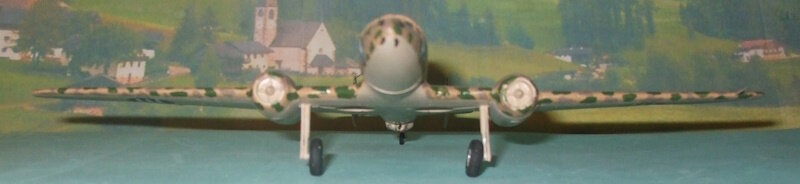
The International Resin Modellers Association presents our IRMA Kit No.11 Campini-Caproni CC.7 (CS.11) Toscana motorjet bomber of WWII. Designed in 1942 the Toscano was powered by the same type of motors as the Campini-Caproni CC.2 (N.1) of 1940. Work was scheduled to begin until Italy reached an armistice with the Allies in 1943, however, with the establishment of the Italian Social Republic later that year, the design once more was front and center for the Aeronautica Nazionale Repubblicana (Italian Social Air Force) to continue the fight with the Axis. Work was commenced to continue with the design, however, by 1945 it was abandoned with the fall of Nazi Germany and the Italian Social Republic.
We present this kit in 1/72 with 32 resin parts including clear resin for the canopy and windows, along with interior details and metal parts for landing gear and other details. The model can be built with rotating wheels and comes with decals to create a version for the Regina Aeronautica (Royal Italian Air Force) or Aeronatucia Nazionale Repubblicana. This kit is completed in an experimental camouflage of 1944-1945.
If you are interested in a kit, we have them for US $190 + shipping, or US $160 + shipping with an IRMA Membership. The model is about the size of a B-25 Mitchell and only 30 kits have been made for the current run. It does require Super Glue to assemble, or Super Gel to add additional time for positioning parts. Not recommended for young children. To get yours, contact us at [email protected] providing your name, shipping address, email, and telephone number so we can calculate shipping costs.
Next kits are: IRMA Kit No.12 SNCASO SO.4000 French jet bomber, IRMA Kit No.13 PZL TS-16 Polish jet fighter, and Schmid SC-28 Wolke German motorized ornithopter of WWII.
Dimensions:
Wingspan: 61'8" (18.8 m)
Length: 47'10" (14.6 m)
Height: 15'5" (4.7 m)
Weight: 18,518 lbs (8,400 kg)
Performance:
Maximum Speed: 650 mph (1,050 kph)
Cruise Speed: 460 mph (750 kph)
Range: 1,864 miles (3,000 km)
Take-Off Run: 1,640'5" (500 m)
Power:
Two Campini Motorjets in the wings driven by two Isotta Fraschini L.121/R.C.40 piston engines in the fuselage providing 1,350 hp (102,695 kg-m/s)/2,500 lbs (1,134 kgs) of thrust
Crew:
Four: Pilot, Co-Pilot/Navigator, Bombardier/Belly Gunner, Tail-Gunner
Armament:
Four 12.7 mm (0.5 in) Isotta-Fraschini Scotti machine guns in nose firing forward
Two 12.7 mm (0.5 in) Isotta-Fraschini Scotti machine guns in belly turret, rotating
Two 12.7 mm (0.5 in) Isotta-Fraschini Scotti machine guns in top turret, one forward, one rearward
3,000 lbs (1,360 kgs) of bombs or 1x torpedo

 

Attachments

  • Campini Caproni CC.7 (TC.11) Toscana back.jpg
    Campini Caproni CC.7 (TC.11) Toscana back.jpg
    87.4 KB · Views: 110
  • A IRMA Kit No.11 Campini-Caproni CS.11 Toscana box art.jpg
    A IRMA Kit No.11 Campini-Caproni CS.11 Toscana box art.jpg
    74 KB · Views: 102
  • Campini Caproni CC.7 (TC.11) Toscana forward port.jpg
    Campini Caproni CC.7 (TC.11) Toscana forward port.jpg
    72.3 KB · Views: 98
  • Campini Caproni CC.7 (TC.11) Toscana forward starboard.jpg
    Campini Caproni CC.7 (TC.11) Toscana forward starboard.jpg
    66.8 KB · Views: 97
  • Campini Caproni CC.7 (TC.11) Toscana front c.jpg
    Campini Caproni CC.7 (TC.11) Toscana front c.jpg
    45.4 KB · Views: 91
  • Campini Caproni CC.7 (TC.11) Toscana port.jpg
    Campini Caproni CC.7 (TC.11) Toscana port.jpg
    71.6 KB · Views: 92
  • Campini Caproni CC.7 (TC.11) Toscana Starboard.jpg
    Campini Caproni CC.7 (TC.11) Toscana Starboard.jpg
    62.4 KB · Views: 104
  • Toscana port front.jpg
    Toscana port front.jpg
    69.5 KB · Views: 95
  • Toscana aft.jpg
    Toscana aft.jpg
    82.4 KB · Views: 92
  • Campini Caproni CC.7 (TC.11) Toscana underside.jpg
    Campini Caproni CC.7 (TC.11) Toscana underside.jpg
    121.6 KB · Views: 89
  • Campini Caproni CC.7 (TC.11) Toscana top.jpg
    Campini Caproni CC.7 (TC.11) Toscana top.jpg
    114.6 KB · Views: 91
  • Toscana port.jpg
    Toscana port.jpg
    77.6 KB · Views: 95
  • Toscana starboard.jpg
    Toscana starboard.jpg
    66.3 KB · Views: 93
  • Toscana top.jpg
    Toscana top.jpg
    121.2 KB · Views: 87
  • Toscana under.jpg
    Toscana under.jpg
    116.7 KB · Views: 78
  • Toscsana fore.jpg
    Toscsana fore.jpg
    47.6 KB · Views: 92
The International Resin Modellers Association presents our IRMA Kit No.11 Campini-Caproni CC.7 (CS.11) Toscana motorjet bomber of WWII. Designed in 1942 the Toscano was powered by the same type of motors as the Campini-Caproni CC.2 (N.1) of 1940. Work was scheduled to begin until Italy reached an armistice with the Allies in 1943, however, with the establishment of the Italian Social Republic later that year, the design once more was front and center for the Aeronautica Nazionale Repubblicana (Italian Social Air Force) to continue the fight with the Axis. Work was commenced to continue with the design, however, by 1945 it was abandoned with the fall of Nazi Germany and the Italian Social Republic.
We present this kit in 1/72 with 32 resin parts including clear resin for the canopy and windows, along with interior details and metal parts for landing gear and other details. The model can be built with rotating wheels and comes with decals to create a version for the Regina Aeronautica (Royal Italian Air Force) or Aeronatucia Nazionale Repubblicana. This kit is completed in an experimental camouflage of 1944-1945.
If you are interested in a kit, we have them for US $190 + shipping, or US $160 + shipping with an IRMA Membership. The model is about the size of a B-25 Mitchell and only 30 kits have been made for the current run. It does require Super Glue to assemble, or Super Gel to add additional time for positioning parts. Not recommended for young children. To get yours, contact us at [email protected] providing your name, shipping address, email, and telephone number so we can calculate shipping costs.
Next kits are: IRMA Kit No.12 SNCASO SO.4000 French jet bomber, IRMA Kit No.13 PZL TS-16 Polish jet fighter, and Schmid SC-28 Wolke German motorized ornithopter of WWII.
Dimensions:
Wingspan: 61'8" (18.8 m)
Length: 47'10" (14.6 m)
Height: 15'5" (4.7 m)
Weight: 18,518 lbs (8,400 kg)
Performance:
Maximum Speed: 650 mph (1,050 kph)
Cruise Speed: 460 mph (750 kph)
Range: 1,864 miles (3,000 km)
Take-Off Run: 1,640'5" (500 m)
Power:
Two Campini Motorjets in the wings driven by two Isotta Fraschini L.121/R.C.40 piston engines in the fuselage providing 1,350 hp (102,695 kg-m/s)/2,500 lbs (1,134 kgs) of thrust
Crew:
Four: Pilot, Co-Pilot/Navigator, Bombardier/Belly Gunner, Tail-Gunner
Armament:
Four 12.7 mm (0.5 in) Isotta-Fraschini Scotti machine guns in nose firing forward
Two 12.7 mm (0.5 in) Isotta-Fraschini Scotti machine guns in belly turret, rotating
Two 12.7 mm (0.5 in) Isotta-Fraschini Scotti machine guns in top turret, one forward, one rearward
3,000 lbs (1,360 kgs) of bombs or 1x torpedo
This is awesome! Thank you!
 
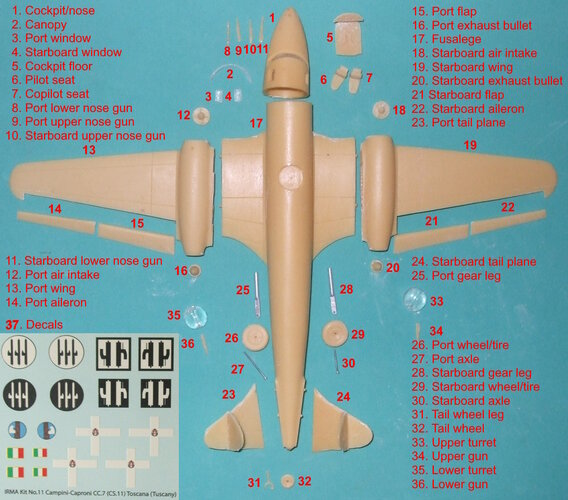
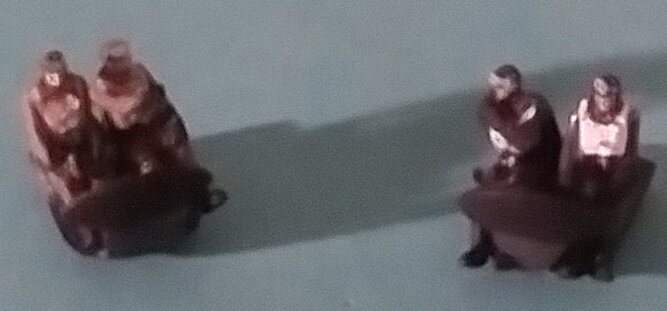
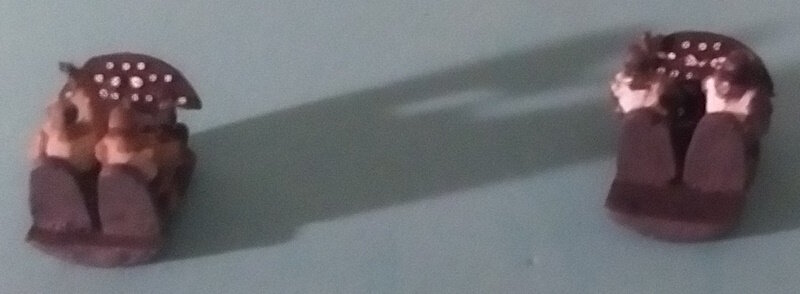
A bit more on IRMA Kit No.11 C.C.7 (C.S.11) Toscana - Here is a photo of the parts with numbers as well as how the interior can be finished. NOTE: Pilots are NOT included in this kit. Pilots in the tan uniforms are Regia Aeronautica (Royal Italian Air Force) 1940-1943 in which Italy supplied their own uniforms and equipment. Pilots in gray uniforms are from the Aeronautica Nazionale Repubblicana (Italian Social Republic Air Force) 1943-1945 modeled on the Luftwaffe of Germany, often supplied by Germany. If you wish to have pilots for your model, these can be found on Shapeways,.com. Also, if a more sturdy tail wheel gear is desired, this can be found from Metallic Details He-111 Tail Support (MDR 7247). As is typical of many resin kits, additional details can be created using brass tubing for guns and wire for the aerial, pitot tube, and wheel axles.
 

Attachments

  • IRMA Kit No.11 Campini-Caproni C.C.7 (C.S.11) Toscana parts numbered labled.jpg
    IRMA Kit No.11 Campini-Caproni C.C.7 (C.S.11) Toscana parts numbered labled.jpg
    550.9 KB · Views: 75
  • Pilots Regia Aeronautica and Aeronautica Nazionale Repubblicana front.jpg
    Pilots Regia Aeronautica and Aeronautica Nazionale Repubblicana front.jpg
    63.5 KB · Views: 72
  • Pilots Regia Aeronautica and Aeronautica Nazionale Repubblicana back.jpg
    Pilots Regia Aeronautica and Aeronautica Nazionale Repubblicana back.jpg
    68.1 KB · Views: 106
Rather than Campini, credit for the Re.2005 R concept should really go to maggiore Antonio Ferri from the Direzione Superiore Studi ed Esperienze at Guidonia (along with fellow 'Guidoniani', Marcello Sarracino) - hence the alternative designation, Re.2005 SF (for Sarracino/Ferri).

Initial Re.2005 R development was prompted by magg. Ferri while still at Guidonia. The D.S.S.E. was a directorate of the Ministero dell'Aeronautica - which gave Ferri its full support for this project. Other work by magg. Ferri at Guidonia had been on high-speed propellers, Reynolds numbers, and prompting the construction of a trans-sonic wind tunnel at D.S.S.E. Much of that knowledge went into the Re.2005 R (including purportedly 'perfecting' the motorjet concept for higher-speed flight).

It was Regianne which resisted the excessive airframe changes and weight penalties of the proposed Re.2005 R modifications. After WW2, NACA published Ferri's 'Complete Tabulation in the United States of Tests of 24 Airfoils at High Mach Numbers (Derived from Interrupted Work at Guidonia, Italy in the 1.31- by 1.74-Foot High-Speed Tunnel).'
 

Attachments

  • zqxpa3tc6r9c1.jpg
    zqxpa3tc6r9c1.jpg
    1.2 MB · Views: 99
  • caproni-campini-cc-2.jpg
    caproni-campini-cc-2.jpg
    602.7 KB · Views: 91
  • CAPRONI CAMPINI CC.2.jpg
    CAPRONI CAMPINI CC.2.jpg
    286.6 KB · Views: 100
Last edited:
Re: Campini Jet Projects

Yes, Gregory (Alegi, author of the Fanà article) drew from the same materiel in the archives of the Ufficio Storico dell'Aeronautica that I (and everybody else) saw. It is the same material available from NARA (documents both taken to Reichlin in 1943 and then in the US and a few documents that escaped German attention aftrer the Armistice). Campini ended his collaboration with Caproni immediately after the CC.1 tests, so there isn't anything in the Caproni archives. The designations could be right, maybe they come from Campini's family memories. Campini was heavily sponsored by De Bernardi with the Regia, but they weren't interested in the motoreattore concept.
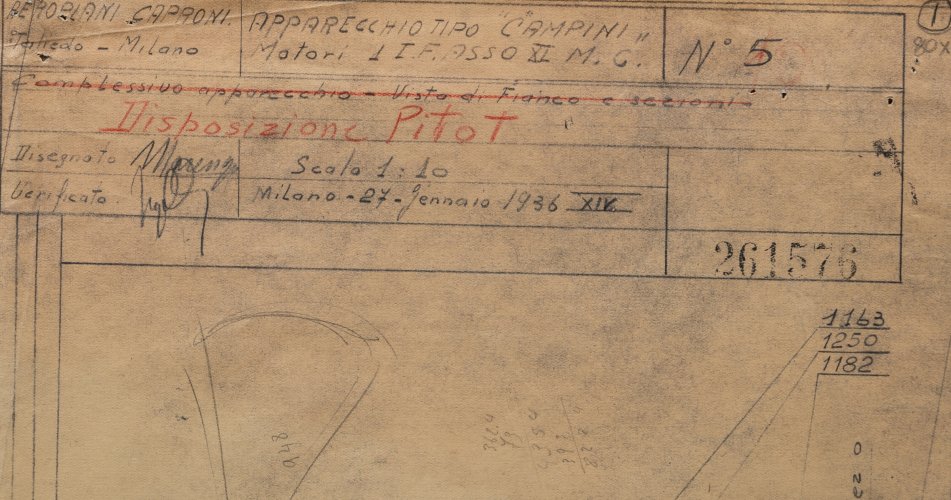
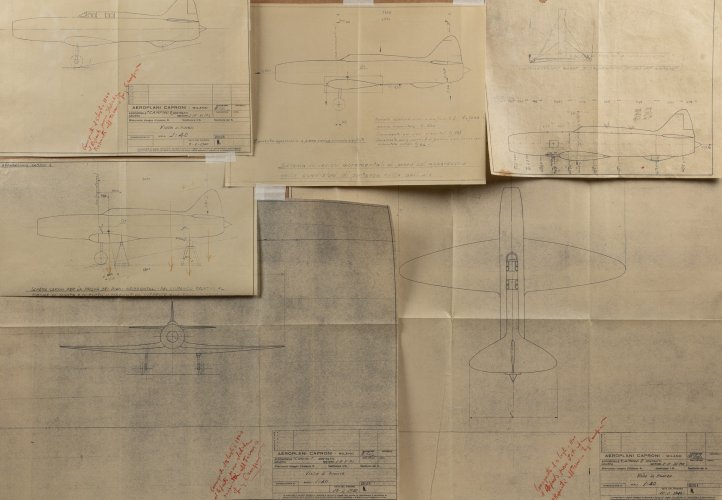
I’m trying to find a home for some original archive material from Campini - ddrawings and dyelines with Campini’s signature and red pencil amendments. Any interest?
 
I’m trying to find a home for some original archive material from Campini - ddrawings and dyelines with Campini’s signature and red pencil amendments. Any interest?

Welcome aboard Bathrelic,

I think of course all of us are interested,please send them here.
 
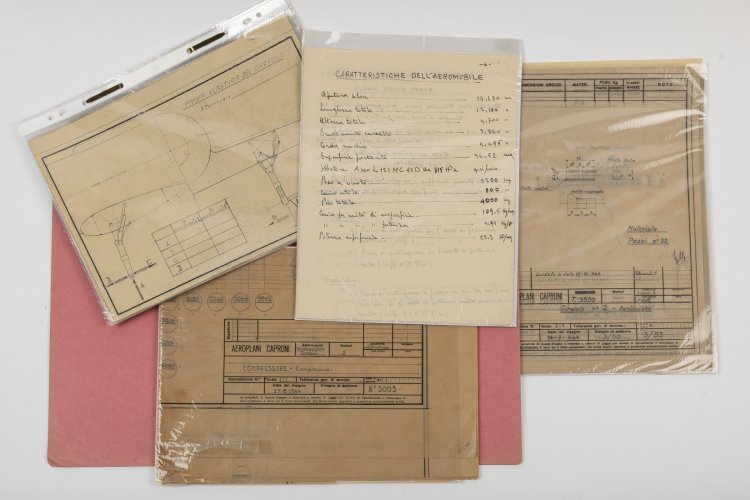
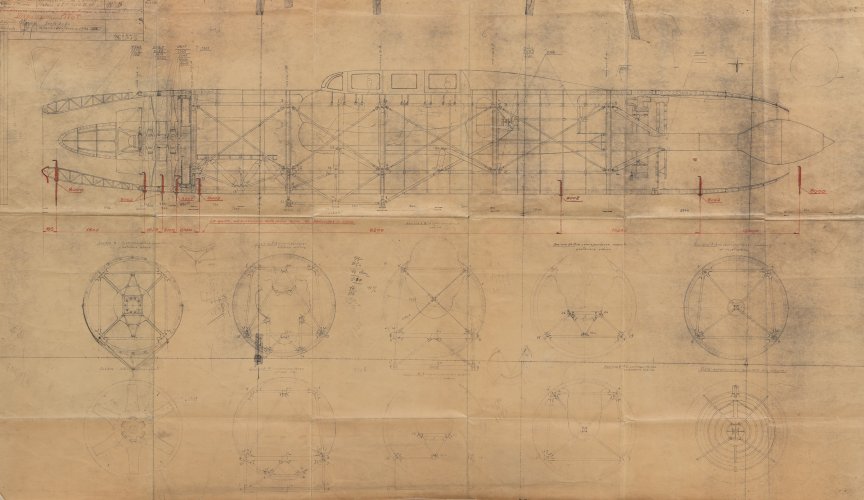
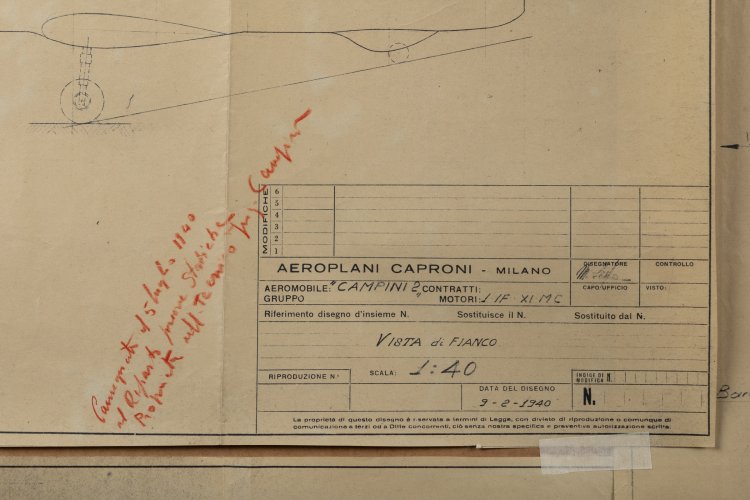
In Mallams auction site I retrieved (about a year ago !) some interesting documents about the Caproni Campini C.C.2, attached here below, as you can see:
- in file 100198358-4 are listed some technical data of the aircraft; also some details of the undercarriage can be retrieved;
- file 100201193-0 (100201193-1 is the titleblock)) is the longitudinal section view, dated 1936;
- file 100201196-0 (100201196-1 is the titleblock) contain main views and CG position, dwgs dated 1940.
 

Attachments

  • 100198358-4.jpg
    100198358-4.jpg
    851.6 KB · Views: 56
  • 100201193-0.jpg
    100201193-0.jpg
    1 MB · Views: 49
  • 100201193-1.jpg
    100201193-1.jpg
    1.3 MB · Views: 52
  • 100201196-0.jpg
    100201196-0.jpg
    1.2 MB · Views: 52
  • 100201196-1.jpg
    100201196-1.jpg
    1.3 MB · Views: 48
In Mallams auction site I retrieved (about a year ago !) some interesting documents about the Caproni Campini C.C.2, attached here below, as you can see:
- in file 100198358-4 are listed some technical data of the aircraft; also some details of the undercarriage can be retrieved;
- file 100201193-0 (100201193-1 is the titleblock)) is the longitudinal section view, dated 1936;
- file 100201196-0 (100201196-1 is the titleblock) contain main views and CG position, dwgs dated 1940.

Are the wing airfoil(s) identified on the drawings?
 
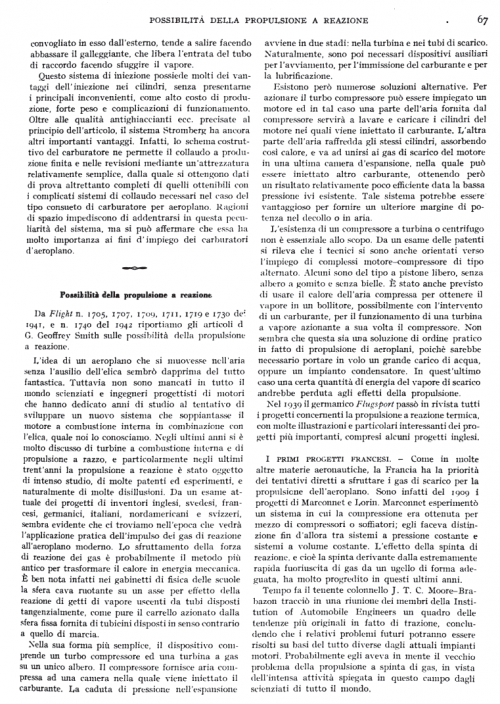
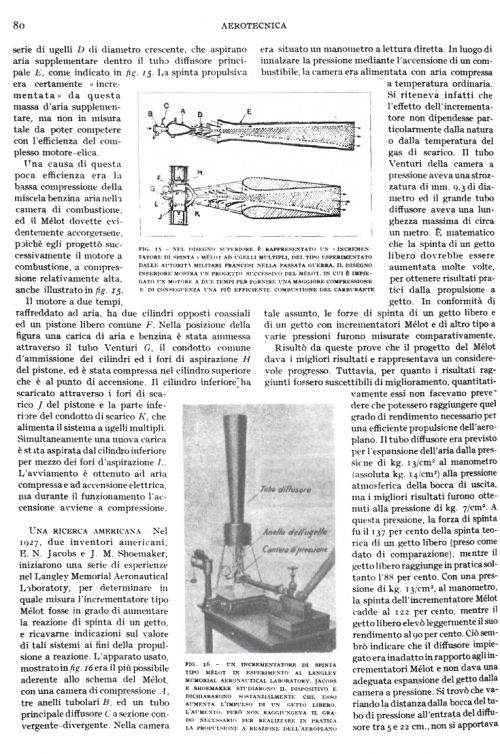
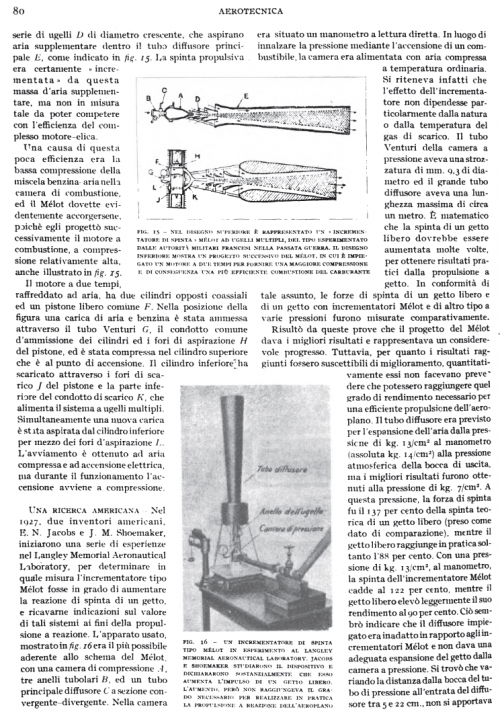
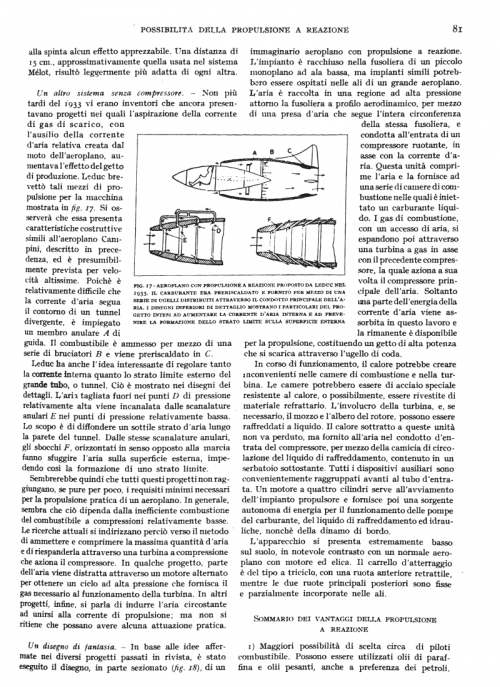
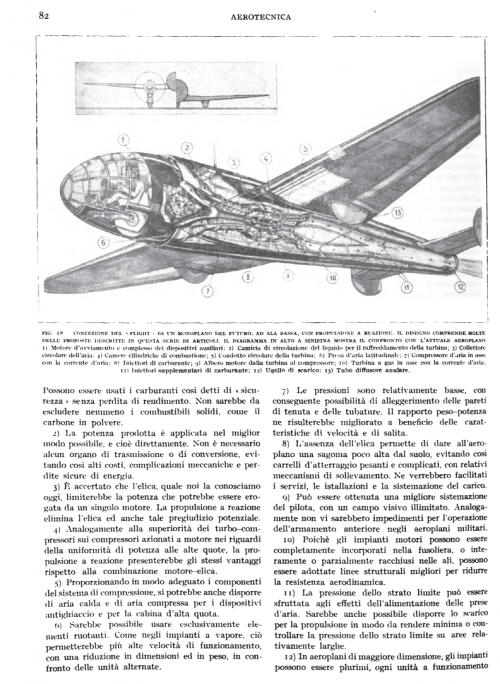
From Rivista Aeronautica 1943,

the whole article.
 

Attachments

  • 1.png
    1.png
    302.4 KB · Views: 49
  • 2.png
    2.png
    250.7 KB · Views: 45
  • 3.png
    3.png
    294.4 KB · Views: 45
  • 4.png
    4.png
    310.5 KB · Views: 37
  • 5.png
    5.png
    282.2 KB · Views: 36
  • 6.png
    6.png
    264.6 KB · Views: 36
  • 7.png
    7.png
    293.3 KB · Views: 38
  • 8.png
    8.png
    287.3 KB · Views: 39
  • 9.png
    9.png
    269.2 KB · Views: 35
  • 10.png
    10.png
    307 KB · Views: 34
  • 11.png
    11.png
    251.6 KB · Views: 40
  • 12.png
    12.png
    296.7 KB · Views: 35
  • 13.png
    13.png
    265.2 KB · Views: 34
  • 14.png
    14.png
    426.1 KB · Views: 34
  • 15.png
    15.png
    426.7 KB · Views: 32
  • 16.png
    16.png
    303.2 KB · Views: 40
  • 17.png
    17.png
    423.5 KB · Views: 44
  • 18.png
    18.png
    261.9 KB · Views: 45
  • 19.png
    19.png
    413.4 KB · Views: 45
  • 20.png
    20.png
    409.7 KB · Views: 63
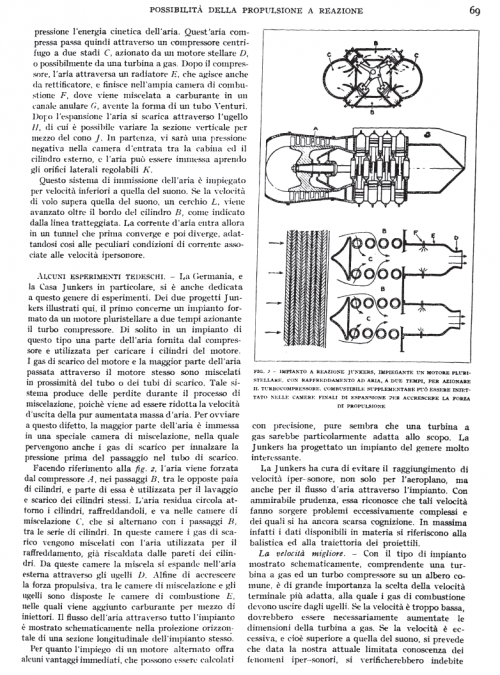
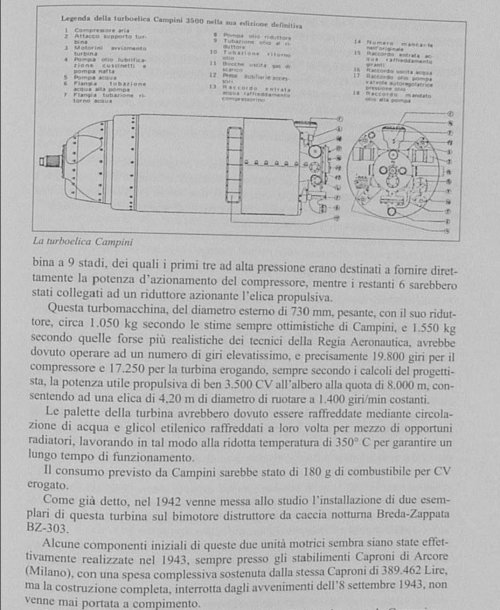
So the Campini turbine is actually fully explained in the book La propulsione a reazione in Italia dalle origini al 1943, with an image and all the history.

It was a turboprop, an 8 stage compressor connected to a 9 stage gas turbine to power a 4.2m wide propeller.
It needed liquid cooling (water and glicol) to keep the turbine below melting temperatures, and a gear rate reduction from 17.250 rpm to 1.400 rpm to allow the propellers to function without surpassing the speed of sound at the tips of the blades.

Luigi Crocco validated the project, he only advised making the combustion chamber bigger, and so eventually funding was granted and a new Experimental Center was created at Caproni in Arcore under Campini's leadership to develop the engine.

If this engine entered service, Italy would have had an engine similar to the first post-war turboprops, a project ahead of its time, even if this wasn't a turbojet as I was previously lead to believe.

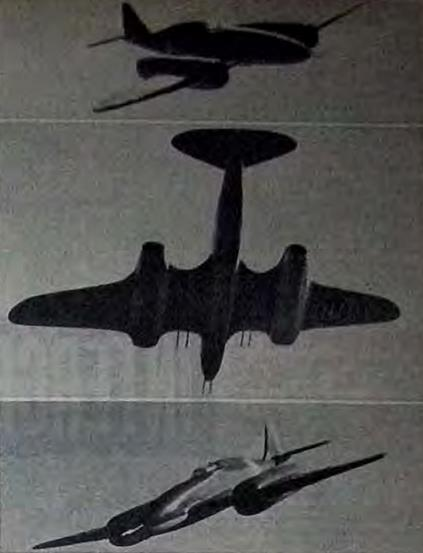
The engine was initially supposed to be mounted on a bomber designed by campini, a variant of the C.S.11. Later it was famously considered for the BZ.303 heavy fighter according to this book, while others say the BZ.301 bomber.

This engine was supposed to erogate about 3000-3550 CV of power, more than the first generation of german turbojets, and they hoped it could push the two-engined planes up to 1000 km/h (today we know that turboprops can hardly go beyond 900 km/h, for example the TU-95 bear, because the propellers reach the speed of sound, and back then a fighter like the BZ.303 powered by these turbines could have maybe realistically reached 750-800 km/h).

At 730mm in diameter it was a bit smaller than the german Jumo 004 engines, while delivering twice the amount of power. It was about the same size as the DB 605, mentioned in the documents in regards to the BZ.303, but weighted more.

The reason given for why Campini didn't work on pure turbojets is because of the limited supply of chrome and nickel, which were necessary to withstand the high temperatures generated by such engines. Italy was put under sanctions and then later with the war the British withheld shipping of these materials from Norway and Turkey to Italy, and the situation only improved slightly when Italy acquired chrome from Albania and nickel from Greece.
 

Attachments

  • Bomber and turbina 3500.jpg
    Bomber and turbina 3500.jpg
    671.1 KB · Views: 47
  • turbina 3500.jpg
    turbina 3500.jpg
    885 KB · Views: 47
  • turbina 3500 (2).jpg
    turbina 3500 (2).jpg
    379.9 KB · Views: 50
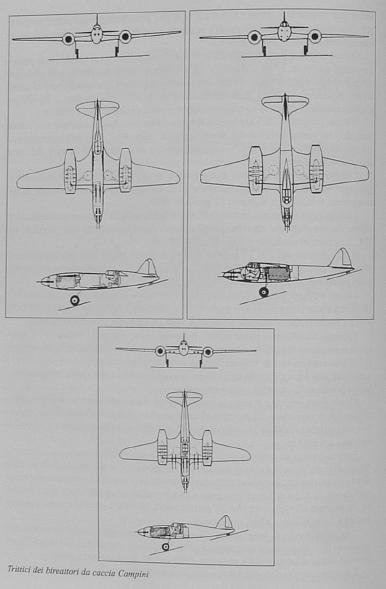
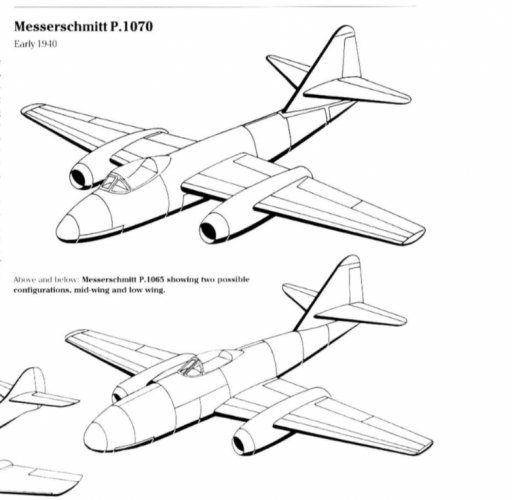
I see a great similarity between the early projects of what would later become the Me262 (the P.1065) and the Campini twin engine fighter.
Both were proposed in 1940, with different cockpit placements, and both chose the central placement.
The Gloster Meteor would choose the frontal placement instead.
Parallel thinking, only that Campini was one man and not a full team of experienced aircraft designers.
And yet his C.C.2 became the first plane to use an afterburner, for example. And it produced more thrust than the German and British engines despite not being a true turbojet.

Campini was developing turboprops as well, just like the Germans and British.
The British de Havilland Vampire was very similar to many canceled German projects.
The designs were simple and dictated by the same principles, but then had to differ for many reasons.
The German engines were still unreliable so they had to be mounted externally, while the British and Americans could place them inside the fuselage (Vampire and P-80) improving aerodynamics and setting a future standard. The P-80 even took off from an aircraft carrier, proving full maturity of the design.
And then new engines like the Rolls Royce Nene were already being developed by the end of the war...
Italy tried to jump to the next generation with the Caproni R.105 powered by a turbofan, and maybe other projects like the Re.2007.

If you look at conventional fighters, we started behind the others but we were able to turn things around and with the Series 5 we even surpassed contemporary German fighters in performance. We impressed the Germans and the Japanese with the SAI.403 so much that they wanted to build more.
If we had more resources and more time we might even have surpassed the other countries in jet planes.
 

Attachments

  • Campini fighter.png
    Campini fighter.png
    218.2 KB · Views: 40
  • Campini fighter.JPG
    Campini fighter.JPG
    23 KB · Views: 47
  • Messerschmitt P1065.jpg
    Messerschmitt P1065.jpg
    134.2 KB · Views: 47
I see a great similarity between the early projects of what would later become the Me262 (the P.1065) and the Campini twin engine fighter.
Both were proposed in 1940, with different cockpit placements, and both chose the central placement.
The Gloster Meteor would choose the frontal placement instead.
Parallel thinking, only that Campini was one man and not a full team of experienced aircraft designers.
And yet his C.C.2 became the first plane to use an afterburner, for example. And it produced more thrust than the German and British engines despite not being a true turbojet.

Campini was developing turboprops as well, just like the Germans and British.
The British de Havilland Vampire was very similar to many canceled German projects.
The designs were simple and dictated by the same principles, but then had to differ for many reasons.
The German engines were still unreliable so they had to be mounted externally, while the British and Americans could place them inside the fuselage (Vampire and P-80) improving aerodynamics and setting a future standard. The P-80 even took off from an aircraft carrier, proving full maturity of the design.
And then new engines like the Rolls Royce Nene were already being developed by the end of the war...
Italy tried to jump to the next generation with the Caproni R.105 powered by a turbofan, and maybe other projects like the Re.2007.

If you look at conventional fighters, we started behind the others but we were able to turn things around and with the Series 5 we even surpassed contemporary German fighters in performance. We impressed the Germans and the Japanese with the SAI.403 so much that they wanted to build more.
If we had more resources and more time we might even have surpassed the other countries in jet planes.
"If we had more resources and more time we might even have surpassed the other countries in jet planes" : so, basically, if Fascist Italy, and hence Nazi Germany had won WW2?
 
"If we had more resources and more time we might even have surpassed the other countries in jet planes" : so, basically, if Fascist Italy, and hence Nazi Germany had won WW2?
Not necessarily, even during the war or before the war or if there had been no war. Victory in WW2 is not required for it.
Maybe I'm exaggerating a little, but consider the following: the Campini projects started in the early 1930s, in 1931 he demonstrated his engine and many people were enthusiastic, for example Giovanni Pegna was inspired to propose a jet racing seaplane in 1934.
In 1933 he designed the first versions of what would later become the C.C.2 and pitched it to FIAT iirc.
At the end it was developed by Caproni but it only flew in 1940, 7 years later!!! And by then Germany and Britain had surpassed Italy.
But if more resources and priority had been put into it since the beginning (for example assigning different projects and different types of jet engines to different companies, like Germany did), the C.C.2 would have flown much earlier, in the mid 1930s.
This would have allowed to then develop more advanced designs like the Campini 3500 CV turbine and maybe turbojets.
Keep in mind that the main reason why Campini didn't develop turbojets after his motorjets was because Italy lacked enough chrome and nickel necessary to build the internal parts of those engines to withstand the high temperatures. The scarcity was especially caused by the sanctions that followed the war in Ethiopia and then the start of WW2 when Britain stopped shipping of chrome and nickel from Norway and Turkey to Italy.
If this didn't happen, if there was no enmity between Italy and Britain, so if Italy has more resources available and gave more priority to jet projects, Italy could have developed these projects already in the late '30s.
Germany started behind everyone else but managed to rearm and develop these technologies quickly.
The development of rocket engines is a good example, up until 1936-37 Germany was behind other countries like the US in terms of rocketry, Von Braun himself said so. But then the germans decided to centralize the development and gave it a higher priority, while other countries focused on other things, the USSR purged many of it's rocket pioneers, etc.
The result was the V-2 rockets...
 
Last edited:
It was a turboprop, an 8 stage compressor connected to a 9 stage gas turbine to power a 4.2m wide propeller.
It needed liquid cooling (water and glicol) to keep the turbine below melting temperatures,
I'm not sure how a liquid cooled turbine works for an aircraft engine. I think a lot of coolant (heavy) would be needed.
 
I'm not sure how a liquid cooled turbine works for an aircraft engine. I think a lot of coolant (heavy) would be needed.
Well the coolant (water and glycol) was also cooled using radiators. Idk what else they had, maybe looking at the blueprints someone can understand better than me. Other than that it comes down to materials, and idk what materials were used, but yea it comes down to materials even today
 
Last edited:
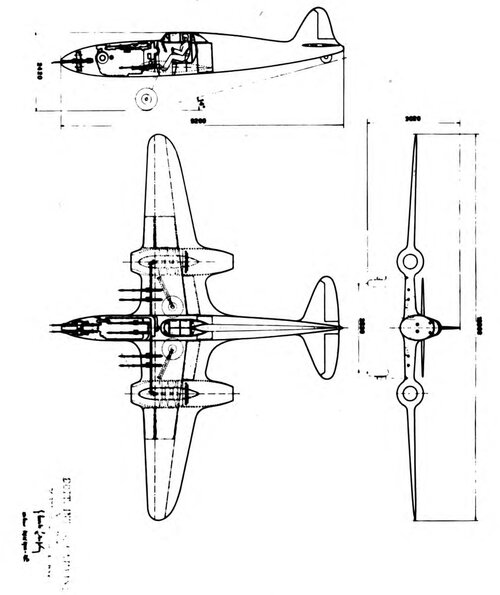
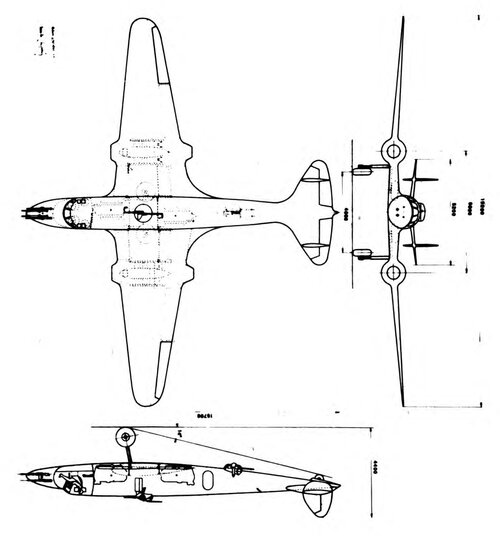
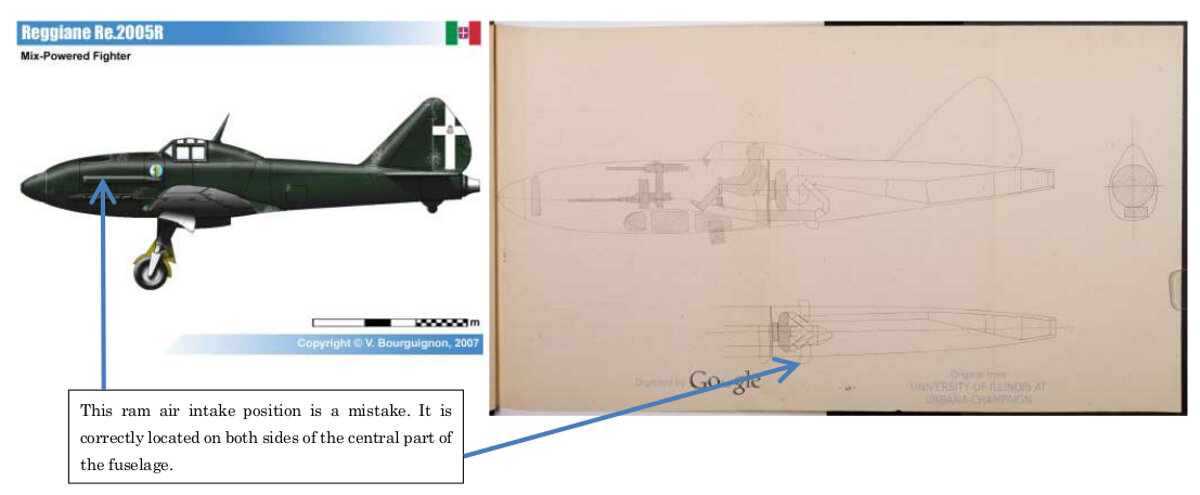
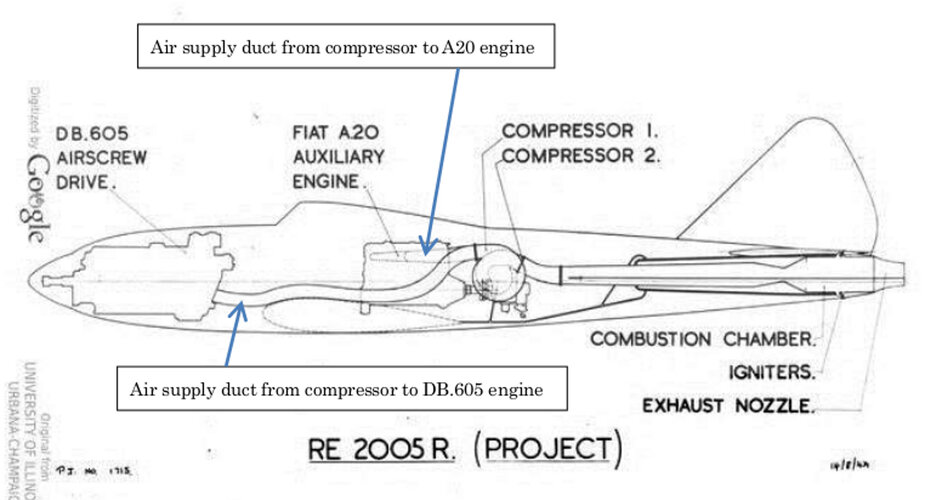
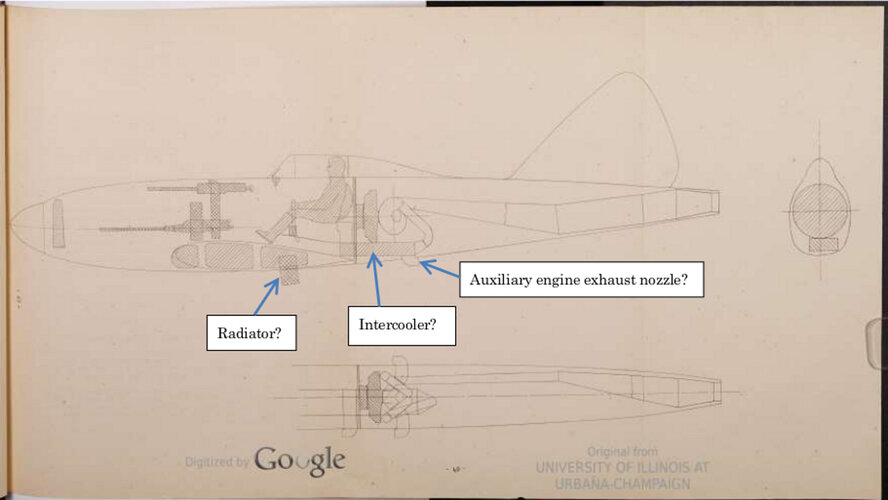
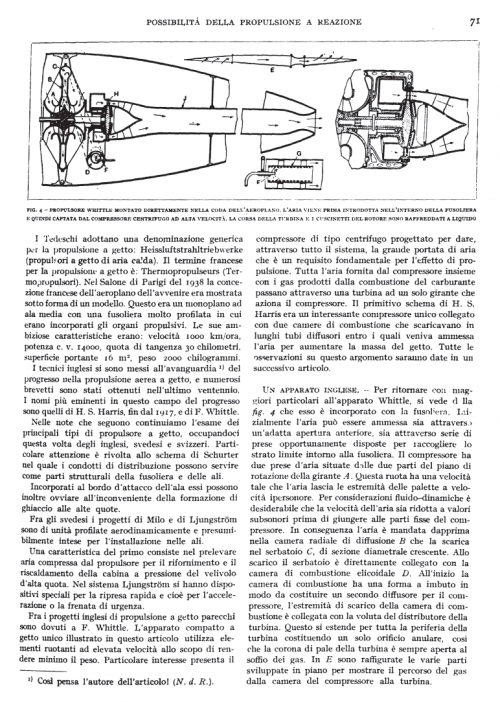
The drawings of fighters and bombers all depict Campini motorjet installations, not turboprops. They have piston engines in the fuselages (identified as 18-cylinder Caproni-Reggiane R.103s in one instance) that drive comprsoors via extention shafts.

I have a hard time seeing the drawing of the alleged turbine engine (in #148 above) as what we would call a turboprop. The drawing does not appear to have any air intakes of a size suitable for a gas turbine.
 
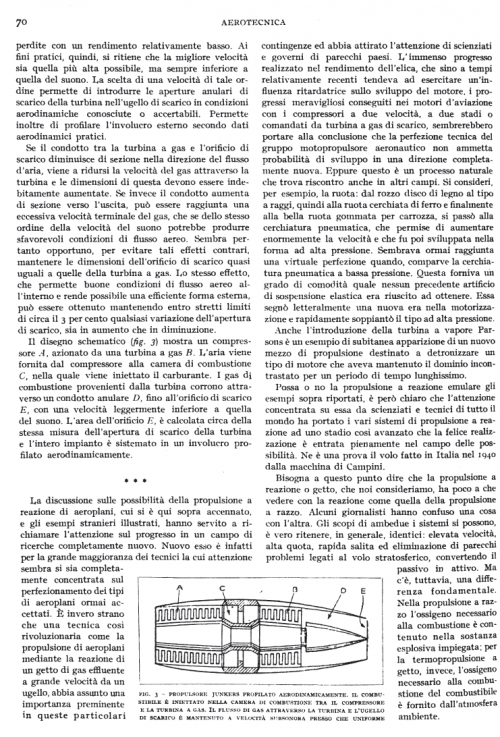
Terminology I've heard is for this is "motorjet", where a piston engine drives a compressor that feeds compressed air to an afterburner to produce at least much of the thrust for the aircraft.
 
Yea we already know this @BarnOwlLover2 and @iverson in fact reading Ciampaglia's book he says the turboprop variants of those planes were proposed, so idk if there are blueprints for them. Initially I thought one blueprint was a turboprop but no it must have been just a mixed propulsion.
 
I'm not sure how a liquid cooled turbine works for an aircraft engine. I think a lot of coolant (heavy) would be needed.
It wouldn't work at all, because the rotating blades need the cooling most. Unfortunately, if you would fill the with water, the pressure inside from the centrifugal rorces would make them burst imidiately.
 
Last edited:
Maybe a solution would be water injection, which Whittle also experimented with, and later became standard in some jet engines in the 50s. Even the germans who had better alloys still experienced overheating and other engine problems that made their turbojets unreliable.
 

Similar threads

Back
Top Bottom