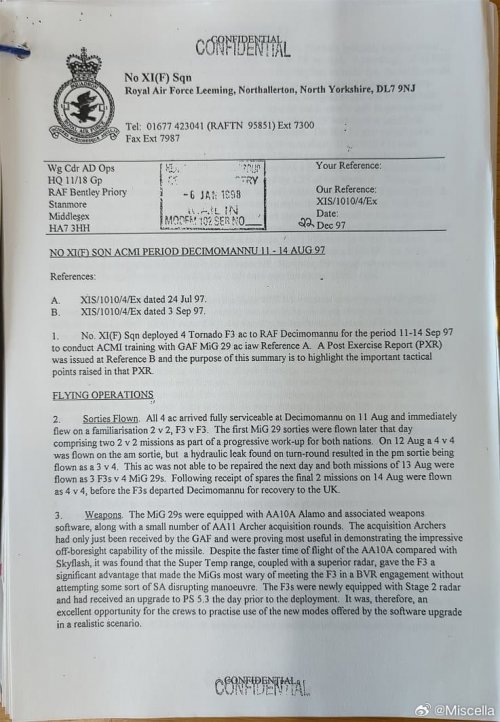
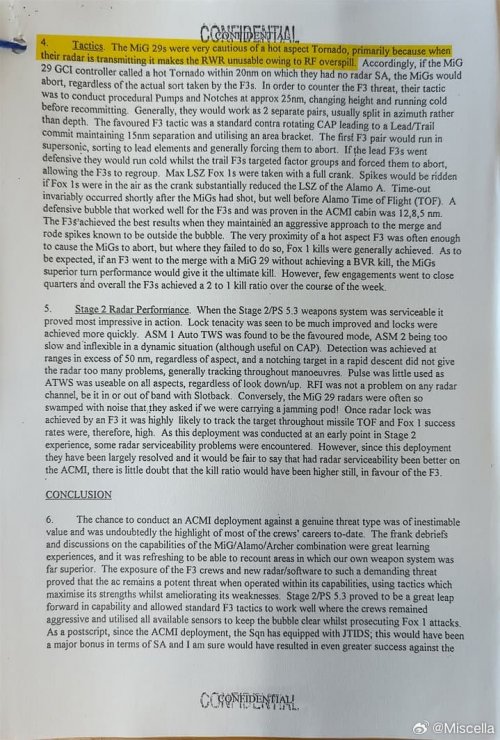
How good were the ADV birds in BFM? I’ve heard radically different things about how it performed. With detractors saying that it is better than F-4 but no match for fourth gen but other saying that it has bested MiG-29 during and F-15 in exercises.
I was an Air Combat Instructor on the Tornado F3. So here we go. At low level the jet was great, however, the jet was stressed to 7.5G so against more agile 9G aircraft it would struggle. But there was plenty of specific excess power (SEP) at low level and so during fighter affil the F3 could hold its own nicely.
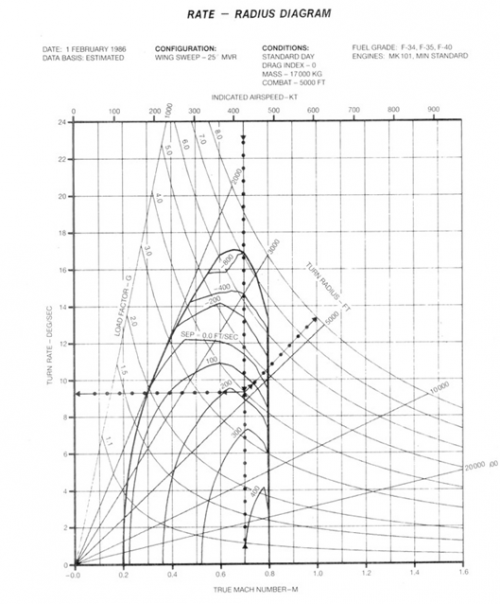
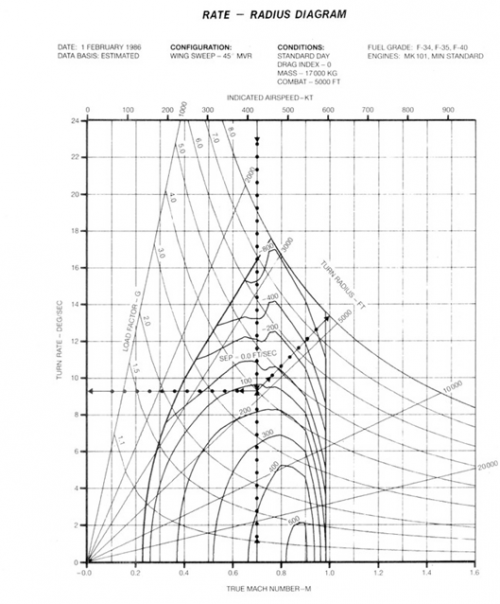
For Air Combat Training (ACT) and Basic Fighter Manoeuvring (BFM) training, normally done with a 10,000ft base height, then the F3 started to struggle. Above 18,000ft, then you ran out of SEP in almost any turn. The aircraft was good at a single circle fight and even against the likes of F15, F16 and F18 she would hold her own at around 180KIAS in a single circle fight with mid-flap selected. The snag was that you needed to deselect mid flap if you wanted to fire AIM-9 or ASRAAM as for real the rocket motor would burn the flap off on one side! So, you had to remember that one if you were in a mid-flap scissors fight!
In a two-circle fight, the jet sucked against anything like Eagle, M2000, Viper, Hornet, Fulcrum, Flanker or Viggen. Started ACT or BFM at around 25,000ft to 30,000ft the jet would need to be overbanked to keep any speed, and involved a series of unload/load pulling manoeuvres as you raced down towards base height. At best, against something like a F16 at medium level you would be giving away about 10-15 degrees a second. So normally, if the F16 driver was sharp the whole thing would be over within 10-15 secs! However, fighting as a pair and relying on your flares initially, if you could get the F16 driver to overshoot and get into a flat or rolling scissors, you could hold off the best Pilots long enough to get your wingman in for a shot against your foe. So, it often wasn’t as clear cut. Especially, with JTIDS where we would sit at the extremes of visual support between a pair, as a “RADAR supported” pair. This meant sitting in battle formation at around 5 miles rather than the normal 2-3 miles for battle - this often caught out any unseen adversaries as the unseen F3 wingman would often come in to save the day.
The other thing you had to watch apart from G was AOA. For the F3 the Normal Operating max was 19AOA and with a Never Exceed of 21AOA. Above that, the big fin was getting massively buffeted due to aircraft design, and above 25AOA you would lose the fin cap or RHWR antennae! I think the highest AOA I saw during my time was 28AOA and the fin cap and RHWR was trashed in the process. But she wasn’t designed for high alpha fighting.
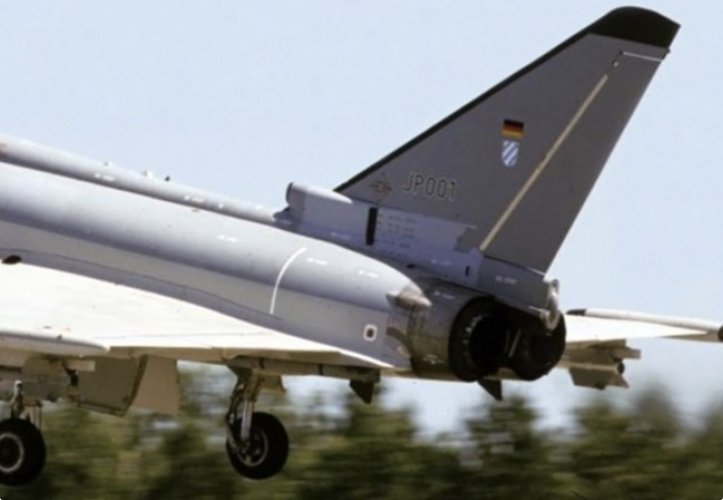
The F3 was designed as an “Agile Interceptor” to fly far out in the Greenland-Iceland-UK (GIUK) gap. It was to detect and chase down long range Soviet aviation (Bears, Fencers, Backfires and Blackjacks). It was superb for that role. The Typhoon was the complimentary fighter designed for Central Europe to take on the expected short range and highly agile Fulcrum and also the longer range Flanker later on. The Berlin Wall changed all that in 1989, and the F3 was used over the skies of Iraq and Bosnia on tasks it wasn’t originally designed for. It did well without a single loss of aircraft nor any Allied aircraft it was riding shotgun for (OCA), it also never let anything through when doing DCA. Finally, for UK and Falklands Islands Quick Reaction Alert, the task it was designed for, it did an exceptional job and met everything it was scrambled to intercept.
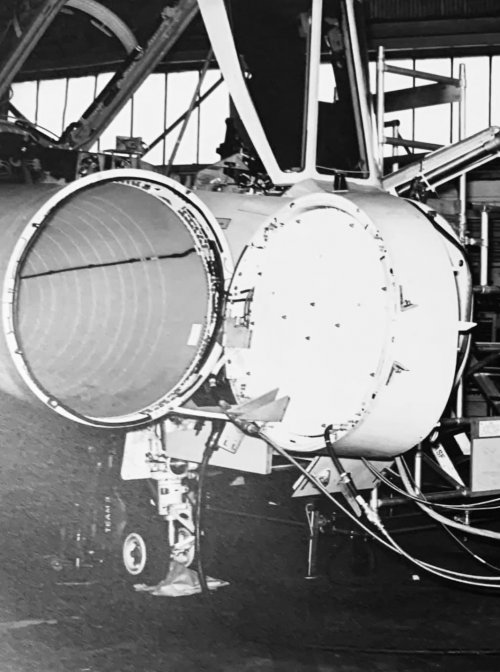
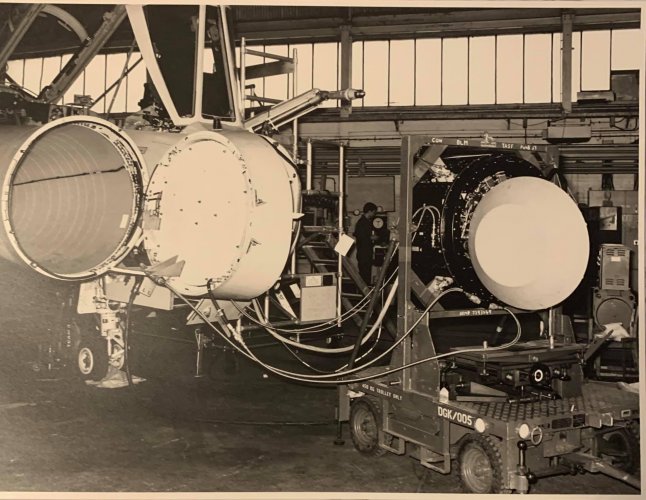
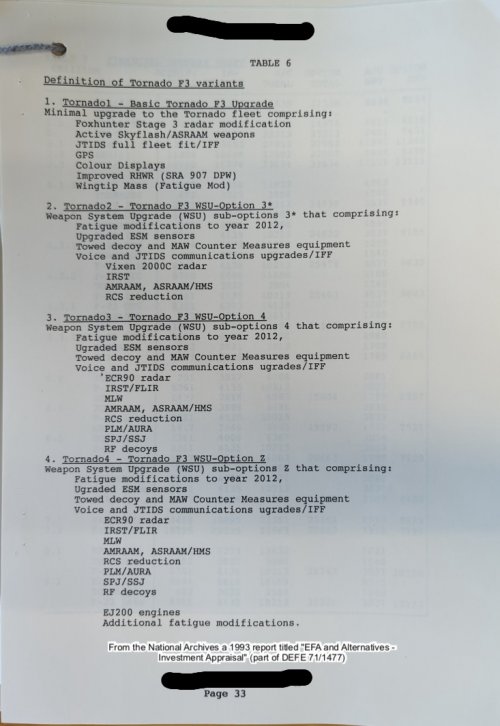
Sadly, there are many that malign it, but when you view it through the above lens, you start to understand that it was pretty good. The proposed Mid Life Upgrade (MLU) for the late 90s was cancelled in 1993 - that would have given more powerful EJ200 engines (to resolve the medium/high level SEP issue), Stage 2G* RADAR (that did come a little later, although an upgraded BLUE VIXEN was also considered), AMRAAM (which came instead of Active SkyFlash), ASRAAM, a helmet mounted sight (I did some simulator trials with that), Towed RADAR Decoy (TRD - we did get this, but it was packaged in a BOZ dispenser, rather than the smaller pod originally conceived), JTIDS Link 16 (this came by the early 90s - a game changer), RADAR Cross Section reductions (some of these were used in the first Gulf War), EW capabilities (we got those along with ALARM capabilities around 2001), IRST, TIALD and a host of software updates. Sadly, the so-called “peace dividend” cancelled a lot of these as NATO and the UK decided that we were all going to be friends… The Tornado F3 and the follow on Tornado 2000 was a victim of these funding cuts.
You can read about some of the MLU options for the F3 in the National Archives. Screen shot attached.







 EFE 19/226


