
You are using an out of date browser. It may not display this or other websites correctly.
You should upgrade or use an alternative browser.
You should upgrade or use an alternative browser.
Little-Known French Projects and Prototypes
- Thread starter hesham
- Start date

- Joined
- 26 May 2006
- Messages
- 38,347
- Reaction score
- 20,482
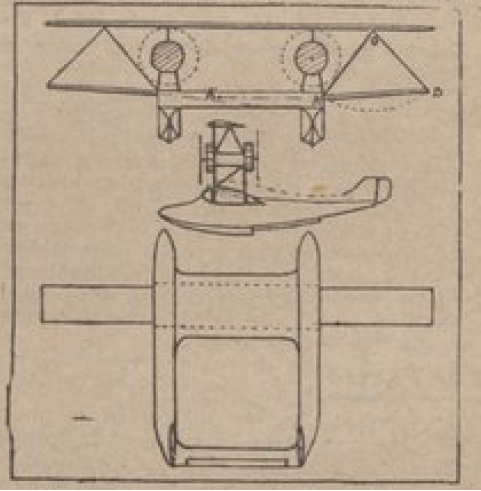
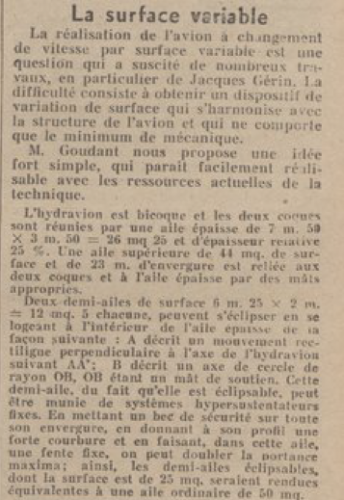
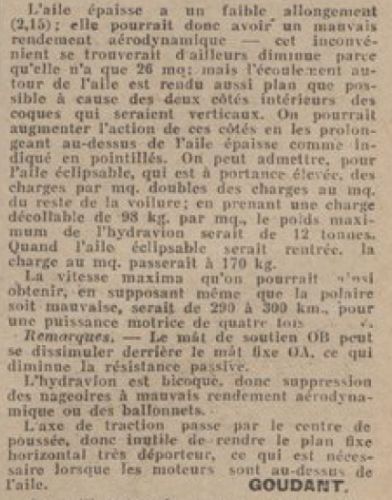
Tophe said:In the Trait d'Union #208 (Mar-Apr 2003): "in 1934, someone named Goudant designed a flying boat with variable area wing. Two half wings (of 6.25m x 2m) disappear inside the the thick wing. 4 engines, speed near 300km/h, not built."
A more Info;
http://gallica.bnf.fr/ark:/12148/bpt6k6576063q/f7.image.r=Goudant%20hydravion
Attachments

avion ancien
The accidental peasant!
- Joined
- 6 March 2013
- Messages
- 394
- Reaction score
- 307
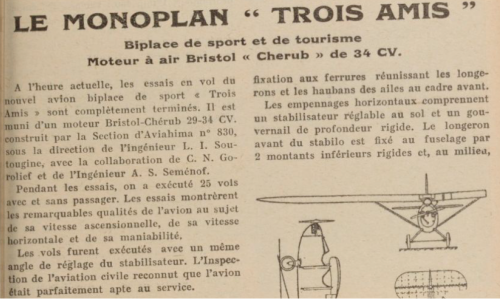
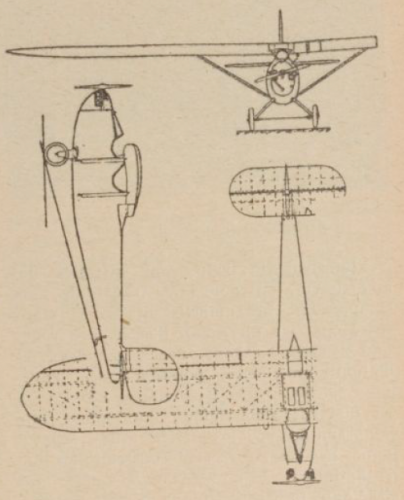
I think not - even though there's no 'snow on its boots' in the drawing! If you take a look at http://www.secretprojects.co.uk/forum/index.php/topic,5786.0/nowap.html it would appear that this aeroplane is Russian. Maybe the French periodical, from which your extract emanates, translated Tri Druga as Trois Amis. Maybe if Flight had featured it, the translation would have been Three Comrades!

- Joined
- 25 July 2007
- Messages
- 4,927
- Reaction score
- 5,563
avion ancien said:... Maybe if Flight had featured it, the translation would have been Three Comrades!
;D But Flight did feature the Tri Druga! Alas, they went with a rather dull translation -- "three friends"

https://www.flightglobal.com/pdfarchive/view/1928/1928%20-%201032.html
avion ancien
The accidental peasant!
- Joined
- 6 March 2013
- Messages
- 394
- Reaction score
- 307
..... but it might have been less dull if it had featured in the Daily Mail - which probably would have translated its name as Three Commie B#######s! After all, this aeroplane emerged only four years after it published the Zinoviev Letter.
- Joined
- 26 May 2006
- Messages
- 38,347
- Reaction score
- 20,482

- Joined
- 26 May 2006
- Messages
- 38,347
- Reaction score
- 20,482

- Joined
- 11 March 2006
- Messages
- 8,543
- Reaction score
- 5,059
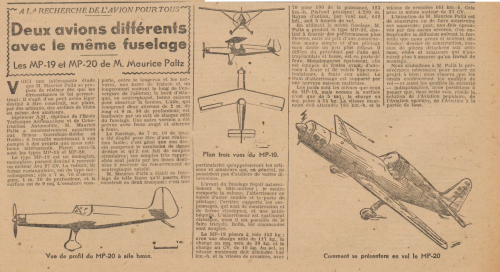
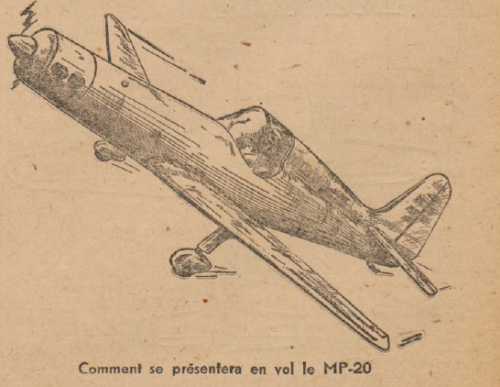
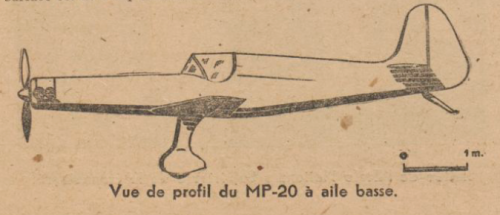
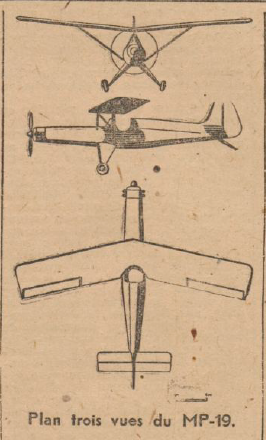
The answer is completely in the article, you posted:
Maurice Paltz was an aviation engineer, who worked for Guerchais-Roche and Holste and
proposed those 2, or better one-and-a half designs, intended for amateur construction and
designed for easy building. And both designs differed in wing only, the fuselage was the same.
Maurice Paltz was an aviation engineer, who worked for Guerchais-Roche and Holste and
proposed those 2, or better one-and-a half designs, intended for amateur construction and
designed for easy building. And both designs differed in wing only, the fuselage was the same.
- Joined
- 26 May 2006
- Messages
- 38,347
- Reaction score
- 20,482
Jemiba said:The answer is completely in the article, you posted:
Maurice Paltz was an aviation engineer, who worked for Guerchais-Roche and Holste and
proposed those 2, or better one-and-a half designs, intended for amateur construction and
designed for easy building. And both designs differed in wing only, the fuselage was the same.
Many thanks to you my dear Jemiba.
- Joined
- 26 May 2006
- Messages
- 38,347
- Reaction score
- 20,482
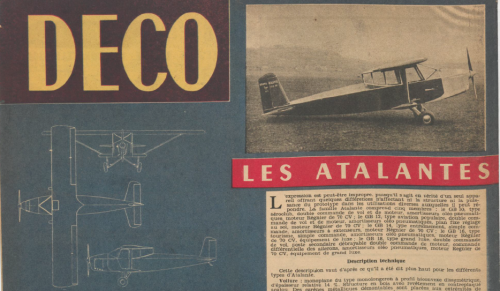
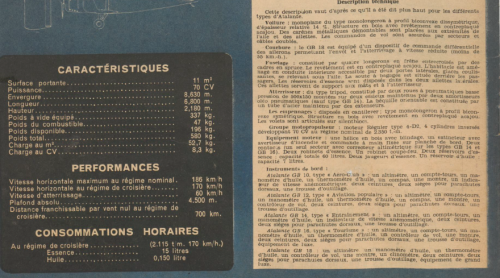
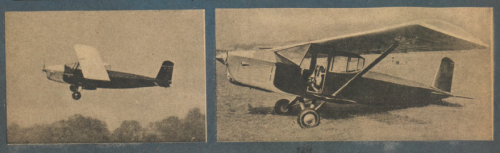
avion ancien
The accidental peasant!
- Joined
- 6 March 2013
- Messages
- 394
- Reaction score
- 307
It would appear that the Atalante GB-10 survived the war as it had been mentioned in Les Ailes of 14 April 1938. It was designed by G.Bertout (hence the initials GB) for the Société des Avions 'Atalante' and had been constructed by Ateliers Nicolas in Auxerre. Les Ailes reported that had been had been presented, earlier that month, at Villacoublay Aerodrome and that it had been demonstrated at St Cyr Aerodrome.
avion ancien
The accidental peasant!
- Joined
- 6 March 2013
- Messages
- 394
- Reaction score
- 307
Just a thought, but wouldn't this 1946 emanation of the GB-10 Atalante be better placed on the post-war aircraft projects board?
- Joined
- 11 March 2006
- Messages
- 8,543
- Reaction score
- 5,059
This article is mainly about the GB-10, I think, a type from 1938. As I understand (please correct me, if I'm wrong !),
the other types would have been closely related to the GB-10, versions for different purposes/clients and maybe
designed in the time between 1938 and 46. So it's ok, I think, to deal with them in this section here, as long, as we
have no clear evidence otherwise.
the other types would have been closely related to the GB-10, versions for different purposes/clients and maybe
designed in the time between 1938 and 46. So it's ok, I think, to deal with them in this section here, as long, as we
have no clear evidence otherwise.
- Joined
- 26 May 2006
- Messages
- 38,347
- Reaction score
- 20,482
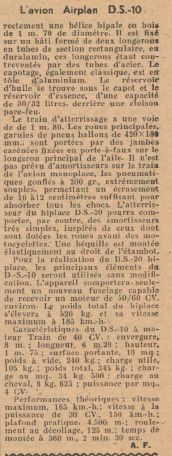
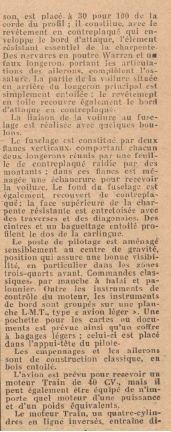
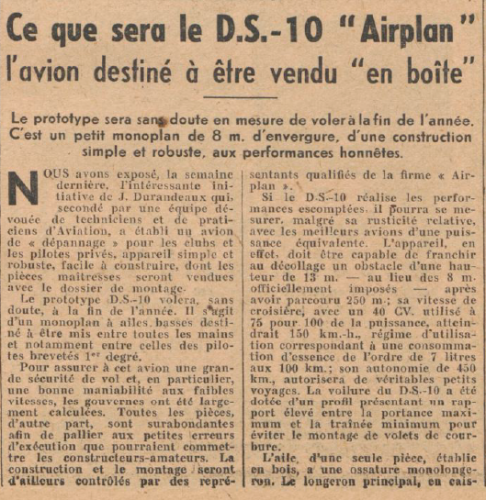
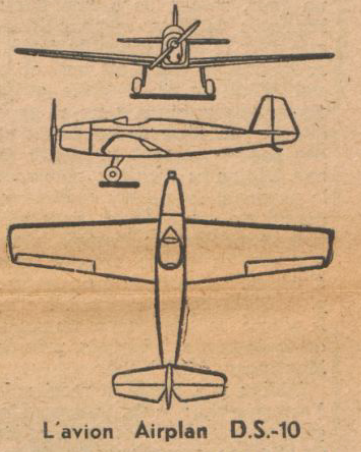
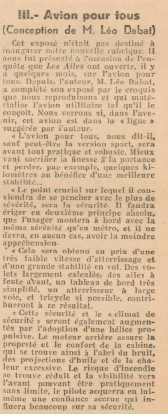
From Ailes 10/1945,
here is a DS.10, a low-wing light monoplane Project as I suggest,created by J. Durandeaux,
in the book; Les Avions Francais 1944-1964,he designed a light aircraft called D.510,or
maybe it was a misprint and they meant DS.10 and they saw the letter "S" as the number
"5" ?!.
here is a DS.10, a low-wing light monoplane Project as I suggest,created by J. Durandeaux,
in the book; Les Avions Francais 1944-1964,he designed a light aircraft called D.510,or
maybe it was a misprint and they meant DS.10 and they saw the letter "S" as the number
"5" ?!.
Attachments
avion ancien
The accidental peasant!
- Joined
- 6 March 2013
- Messages
- 394
- Reaction score
- 307
Curiously the TU index for issues 1 to 266 contains no mention of Durandeaux and the D.510 or DS.10 and Pierre Gaillard's book is succinct in the extreme in describing it as an amateur built light aeroplane dating from about 1945 (with no illustration). I wonder whether it was realised?
- Joined
- 26 May 2006
- Messages
- 38,347
- Reaction score
- 20,482
avion ancien said:Curiously the TU index for issues 1 to 266 contains no mention of Durandeaux and the D.510 or DS.10 and Pierre Gaillard's book is succinct in the extreme in describing it as an amateur built light aeroplane dating from about 1945 (with no illustration). I wonder whether it was realised?
My dear Avion,
if you meant the list or index,it's nothing,I have more than 200 issues of it and after they
published this index they discovered many companies and designers,and they put them in their
issues,according to the index; the articles : Les Constructeurs Francais must ended by issue 266,
but it still appear and reach to issue 302,although they don't finish letter "S" yet ?.
- Joined
- 26 May 2006
- Messages
- 38,347
- Reaction score
- 20,482
hesham said:From Ailes 10/1945,
here is a DS.10, a low-wing light monoplane Project as I suggest,created by J. Durandeaux,
in the book; Les Avions Francais 1944-1964,he designed a light aircraft called D.510,or
maybe it was a misprint and they meant DS.10 and they saw the letter "S" as the number
"5" ?!.
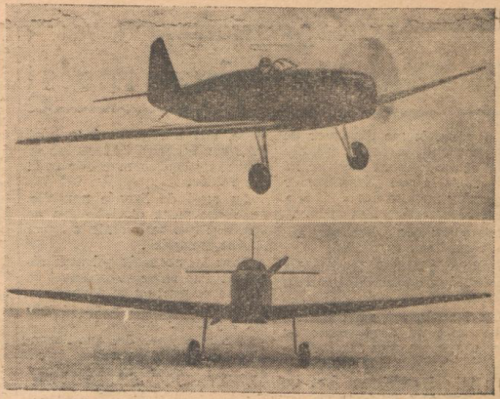
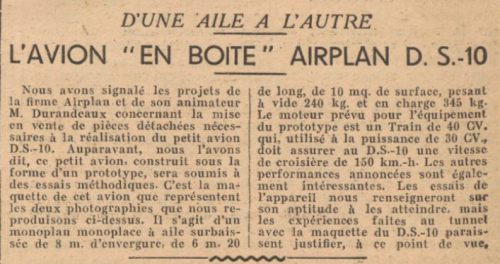
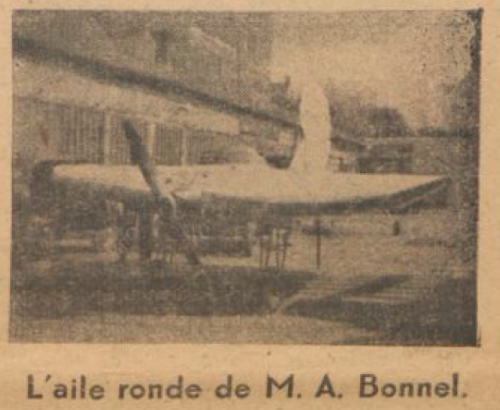
It was actually built,from Ailes 12/1945.
Attachments
avion ancien
The accidental peasant!
- Joined
- 6 March 2013
- Messages
- 394
- Reaction score
- 307
hesham said:It was actually built,from Ailes 12/1945.
But the text of that report [in translation] says, inter alia, that:
'..... it is the model of this aeroplane that is represented in the two photographs, that we reproduce above.'
and it goes on to talk about the engine which it is envisaged will power the D.S.10 and the tests that it will undergo. I can find nothing in the report that says or suggests that, in December 1945, a full scale DS.10 had been built or had flown. Maybe later reports will establish this. I keep an open mind.
- Joined
- 26 May 2006
- Messages
- 38,347
- Reaction score
- 20,482
![Les_Ailes___journal_hebdomadaire_[...]_bpt6k9795984b_13.jpeg](/data/attachments/146/146721-871d37d8dcd561234576dccf8fee8c99.jpg)
- Joined
- 26 May 2006
- Messages
- 38,347
- Reaction score
- 20,482
Hi,
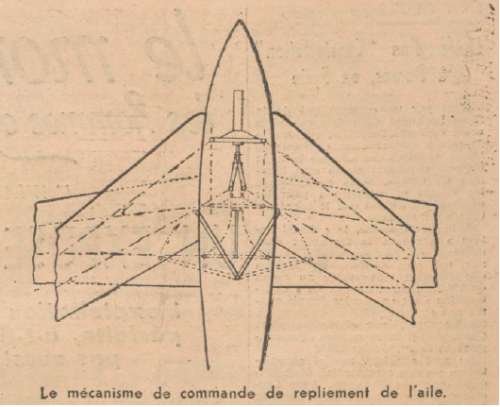
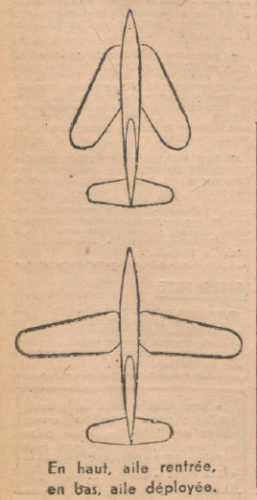
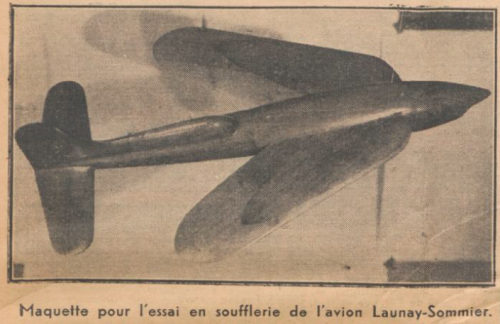
here is an idea for variable swing arrow wing research airplane of 1941,designed by
Mr. Pierre Launay and Mr. Marc Sommier,looks like a fighter Project ?.
here is an idea for variable swing arrow wing research airplane of 1941,designed by
Mr. Pierre Launay and Mr. Marc Sommier,looks like a fighter Project ?.
Attachments
![Les_Ailes___journal_hebdomadaire_[...]_bpt6k9795503h_9.jpeg](/data/attachments/147/147368-a969c9e5b964e5aa5693f91062a28eda.jpg)
- Joined
- 26 May 2006
- Messages
- 38,347
- Reaction score
- 20,482
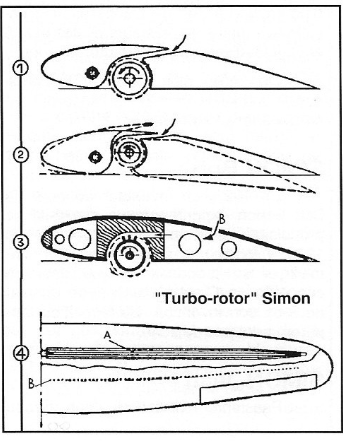
hesham said:here is the Jean Simon unknown helicopter project,there's no sign for this design
on Internet.
http://gallica.bnf.fr/ark:/12148/bpt6k65560687/f2.image
Here is a more Info about this designer and his anther idea,from TU 291;
In 1932 Jean Simon patented a
boundary layer control device
called "turbo-rotor." This device consisted in adapting a turbo-rotor to
paddle or vane, mechanically driven, positioned at the center of
running over the entire span of the wing.
The air circulating on the extrados was sucked in and
repressed on the underside. Several provisions
of the idea were patented and a demonstrator was tested at the wind tunnel of
STAé in Issy-les-Moulineaux in May 1933
under the direction of the Chief Engineer
Lapresle. Built at Zodiac, on the
plans of Simon, this wing of experience
was constituted by a rectangular plane
thick profile: box construction
wood, duralumin rotor, mounting on ball rollings and steel bearings. The
motive power was given by two compressed air turbines placed at each end of the rotor. The dimensions were:
length of 1,430 m; profile depth
297 mm; 53 mm thick; total thickness with the rotor of 90 mm (the rotor exceeded under the intrados).
The tunnel tests demonstrated
especially that the rotor had to turn to a
extremely high speed. In the
it could not exceed 3,000 tr/mn,
which proved very insufficient, the aspiration
at the extrados then being almost zero. he
should have reached a speed of at
minus 8 500/9 000 tr/mn, which was not
possible with compressed air turbines.
Attachments

- Joined
- 26 May 2006
- Messages
- 38,347
- Reaction score
- 20,482
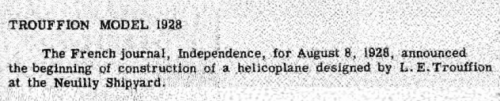
Wonder if there is some joke in that piece: "Le Trouffion" is French military slang for "the low-rank soldier"...
Frankly,I don't know my dear Dan.
- Joined
- 26 May 2006
- Messages
- 38,347
- Reaction score
- 20,482
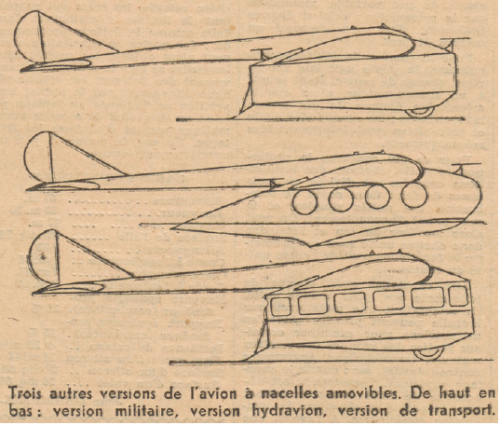
From Ailes 24/1/1953,
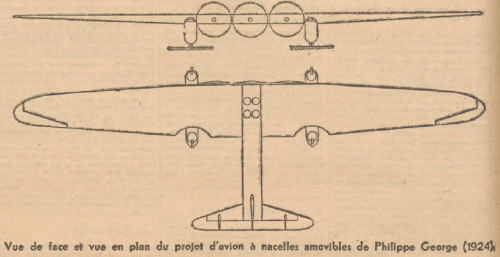
here is an odd idea for a Project from Mr. Philippe George,it was airplane of 1924,with
removable nacelles ?.
https://gallica.bnf.fr/ark:/12148/bpt6k3209190m/f10.item
here is an odd idea for a Project from Mr. Philippe George,it was airplane of 1924,with
removable nacelles ?.
https://gallica.bnf.fr/ark:/12148/bpt6k3209190m/f10.item
Attachments
- Joined
- 26 May 2006
- Messages
- 38,347
- Reaction score
- 20,482
Thank you my dear Jemiba,
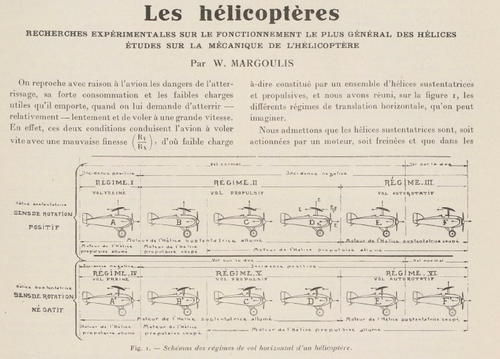
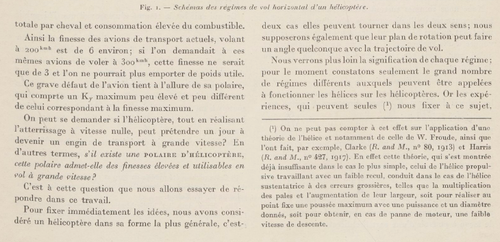
The W. Margoulis was designed in 1922 tilt-propeller triplane,and powered
by two 320 hp ABC Dragonfly engines,mounted between the top two wings
and remained a project.
From L'Aeronautique 1922.
Attachments
- Joined
- 26 May 2006
- Messages
- 38,347
- Reaction score
- 20,482
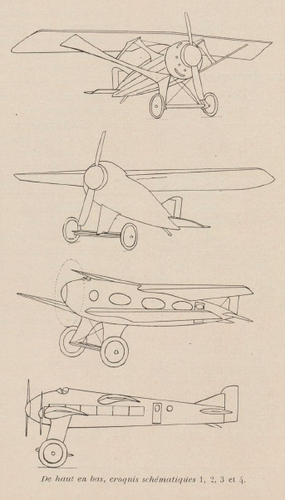
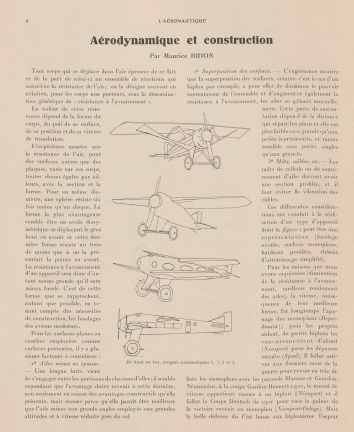
here is the Maurice Brion fighter,it was a single seat fighter biplane,and put the
upper wing behind the cockpit to make a good vision for the pilot,the aircraft
mention in Les Ailes journal and in Trait d'Union magazine also,may be intended
for 1930 C.1 contest,we know about 31 to 32 entries competed in this competition,
many of them remained a drawing board only.
http://gallica.bnf.fr/ark:/12148/bpt6k65537145/f6.image
From L'Aeronautique 1922,
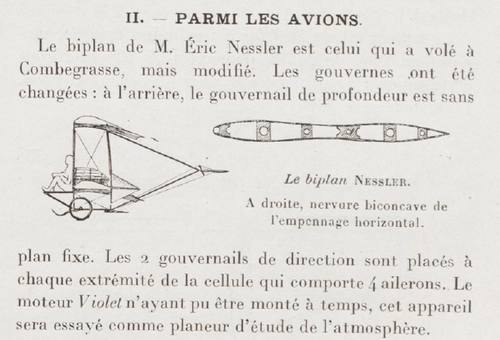
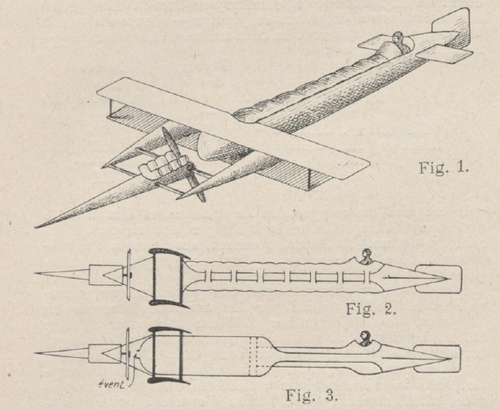
also Mr. Maurice Brion designed and created some new ideas for aircraft shapes.
Attachments
avion ancien
The accidental peasant!
- Joined
- 6 March 2013
- Messages
- 394
- Reaction score
- 307
- Joined
- 26 May 2006
- Messages
- 38,347
- Reaction score
- 20,482
Similar threads
-
 Georges R. Hamel / CLENA aircraft and projects
- Started by hesham
- Replies: 23
-
 Arsenal de l'aéronautique: built prototypes and unbuilt projects
- Started by Jemiba
- Replies: 106
-

-
Various SNCASO (Sud-Ouest) Projects and Prototypes
- Started by hesham
- Replies: 26
-