cluttonfred said:
"Veau" literally means calf (from which we get the English word veal) but when applied to a vehicle it means something gutless and without power, so "veau-marin" means "sea calf" and may be a pun on "sous-marin" or submarine. It is also reminiscent of "vache de mer" or "sea cow" (manatee) also probably not the name you'd choose for a new flying boat.


Absolutely, Matthew! And allow me to translate the header, which gives a little more background to this being a "sea calf"...


"In Europe during the 1920s, and especially in France, the commercial future of aviation seemed to be with flying boats. Ideas sprouted everywhere, and financiers followed it all very closely. The pathetic Saint-Raphaël competition of 1925 had hardly tempered even the wildest enthusiasm. Despite some big problems with motorisation, one kept building ever bigger and heavier machines, most often to the detriment of the most elementary aerodynamic features. The short history of the extremely rare RP.2 is a good example of this."
 
Thank you my dear Toura,


and for Grey,I can't judge well,because the picture is not appear clearly the design,
but may be you are right .
 
Toura, do you have a year for the hydravion à coque monoplan Vinay, please?


One wonders how this thing could alight on water without nosediving
 
hesham said:
Hi,

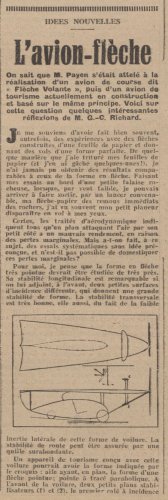
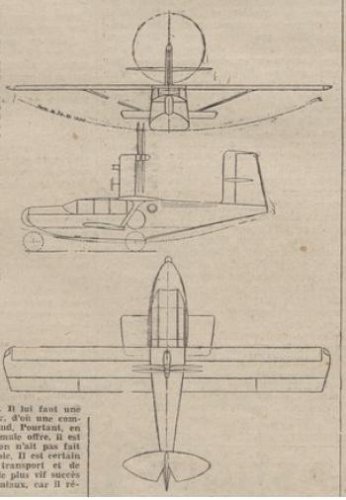
here is two aircraft in very weird configurations.

http://gallica.bnf.fr/ark:/12148/bpt6k65552283/f5.image

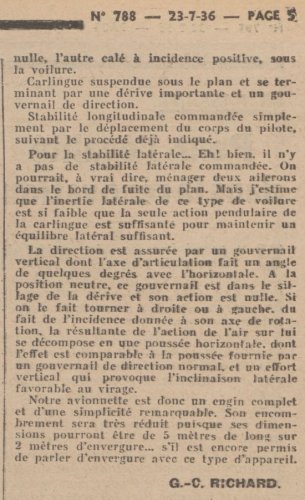
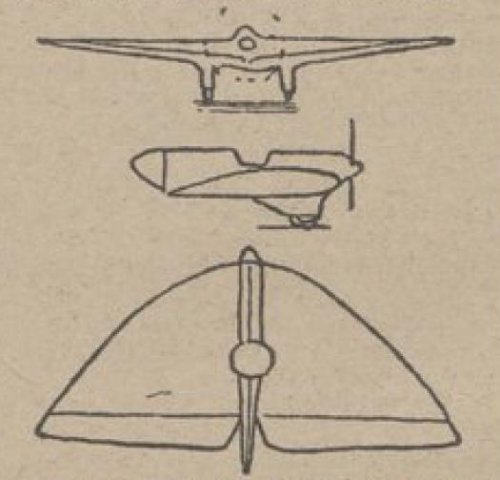
Actually, the text makes it clear that the illustration is the same aircraft in plan view and profile, a concept for a light aircraft inspired by the classic paper dart. There are additional horizontal control surfaces forward for "added stability" though I am not sure why that was though necessary. Here is the whole clipping for anyone who can read (or muddle through) French as the source is in the public domain.
 

Attachments

  • export.jpg
    export.jpg
    228.2 KB · Views: 134
  • export (1).jpg
    export (1).jpg
    126.4 KB · Views: 121
hesham said:
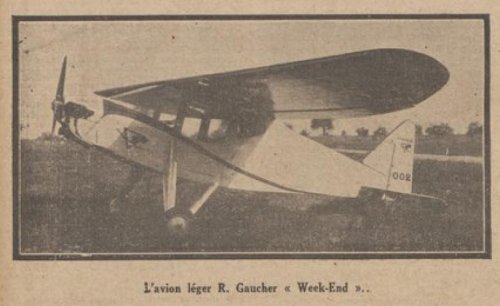
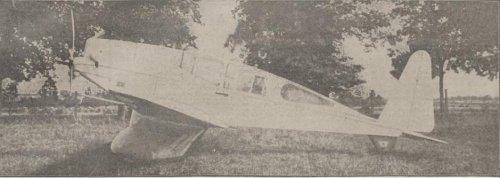
here is the Gaucher Week-End,a two seat high wing light aircraft;


The Gaucher Week-End later became the Payen Pa.47 Week-End / Aeria...
 
I moved the Barbaro types to the appropriate topic.

Please always make sure that a dedicated topic doesn't exist before posting to these generic threads, which only exist as a temporary place for lack of more information. When a manufacturer or a type is sufficiently documented it gets its own page, and we already have a Barbaro page in the "Aerospace" section:


http://www.secretprojects.co.uk/forum/index.php/topic,12377.0/all.html
 

Attachments

  • Duverne-Saran-1.JPG
    Duverne-Saran-1.JPG
    23.3 KB · Views: 616
  • Duverne-Saran-2.JPG
    Duverne-Saran-2.JPG
    38.3 KB · Views: 605
  • Duverne-Saran-3.JPG
    Duverne-Saran-3.JPG
    33.2 KB · Views: 590
It's hard at times to tell which designs were actual projects and which were merely hypothetical...

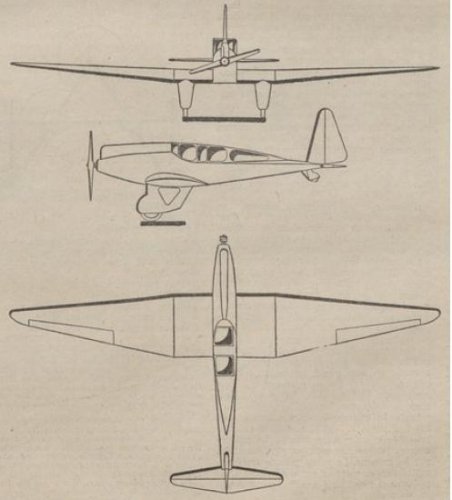
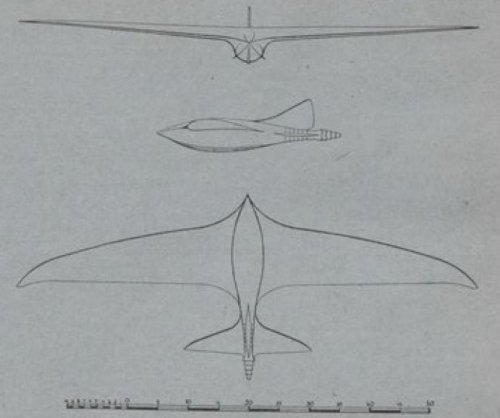
Here is an illustration for Jacques Lacasse's 1948 Technique de l'air. It shows a very interesting blended-wing project (I'm posting it here as I believe it is earlier than the publication of the book, but I could be wrong — I do not own the book myself).
 

Attachments

  • $_57 (3).JPG
    $_57 (3).JPG
    268.2 KB · Views: 205
One of the delights of the pre-war issues of les Ailes is that the editor would feature what we now regard as flights of fancy, however improbable and fantastic they might have seemed at the time. But it must be conceded that this remark is an ex post facto judgment - and with the benefit of hindsight, it's very easy to make such a remark. What must be remembered is that in the twenties and thirties - particularly in France - aviation technology was advancing by leaps and bounds, almost on a daily basis, and it is was a time when almost anything seemed possible. Thus what might seem fantastical one day could be the norm the next. I'm sure that there once was a time, in the not too far distant past, when the concept of jet engines, supersonic speed, aeroplanes capable of carrying 850 passengers, space travel and the like would have been considered fantastical - and when any publication carrying articles by those propounding these ideas might have been decried. Today's projects sometimes become tomorrow's reality!
 
Hi,


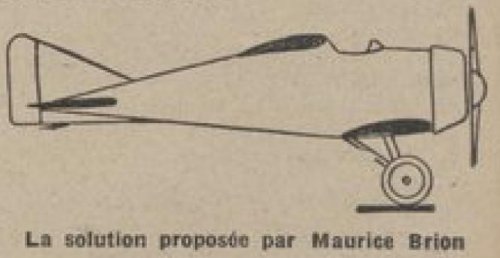
here is the Maurice Brion fighter,it was a single seat fighter biplane,and put the
upper wing behind the cockpit to make a good vision for the pilot,the aircraft
mention in Les Ailes journal and in Trait d'Union magazine also,may be intended
for 1930 C.1 contest,we know about 31 to 32 entries competed in this competition,
many of them remained a drawing board only.


http://gallica.bnf.fr/ark:/12148/bpt6k65537145/f6.image
 

Attachments

  • Brion.JPG
    Brion.JPG
    22.1 KB · Views: 136

Attachments

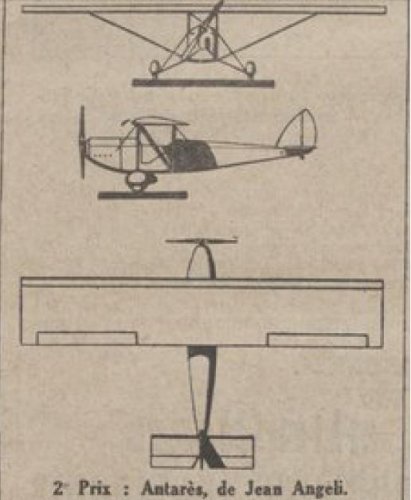
  • Angeli-2.JPG
    Angeli-2.JPG
    26.1 KB · Views: 572
Thanks, hesham. One comment...it would be useful to include the year of publication for some of these to give an idea of the context. Cheers, Matthew
 
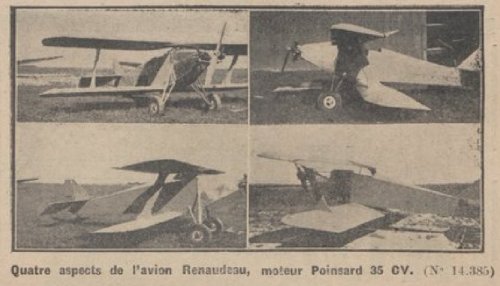
Renaudeau light aircraft, from Les Ailes 7 Dec. 1939.
Adrien
 

Attachments

  • renaudeau_poinsard_les_ailes_1939_p711.jpg
    renaudeau_poinsard_les_ailes_1939_p711.jpg
    132.7 KB · Views: 425
Interesting find, hesham !
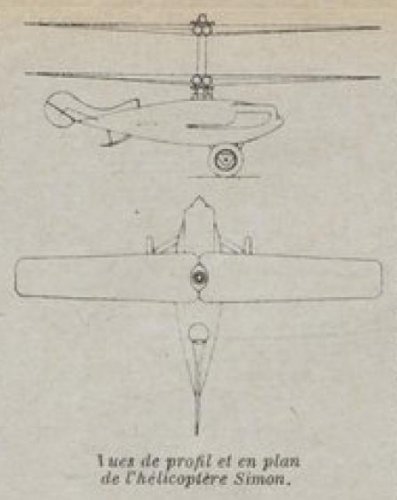
Perhaps one of our native french speakers could help here : The design reminds me to
Gerald Herricks Convertaplanes ( http://www.secretprojects.co.uk/forum/index.php/topic,19837.msg202197.html#msg202197)
and in the text I found "..l'immobilisation en vol", which I would translate as "fixed during flight".
And the 3-view somehow suggests, too, that during cruising flight the rotor should be stopped
and work as a fixed wing.
 
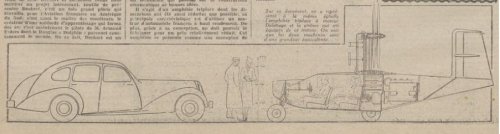
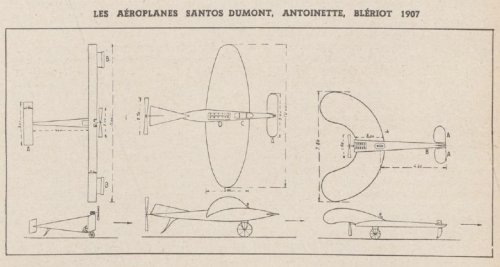
Hi,


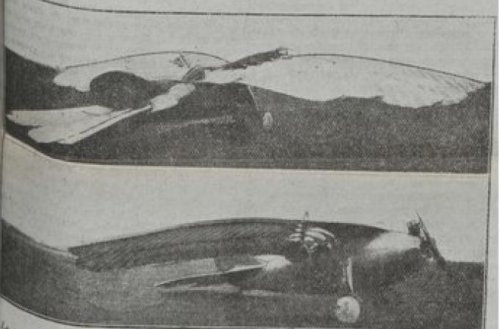
here is a strange ideas from L'Aerophile February 1937,from Santos Dumont,Antoinette
and Bleriot.
 

Attachments

  • Ideas.JPG
    Ideas.JPG
    47.9 KB · Views: 483
hesham said:
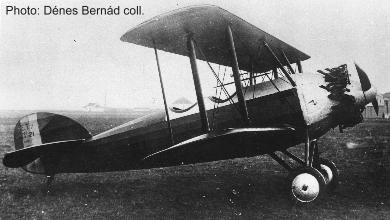
Hi,


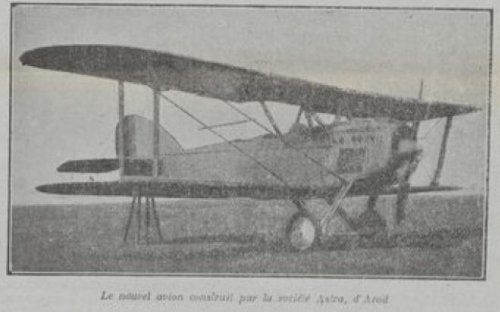
here is the Astra two seat recce and trainer biplane;


http://gallica.bnf.fr/ark:/12148/bpt6k6568240r/f2.image
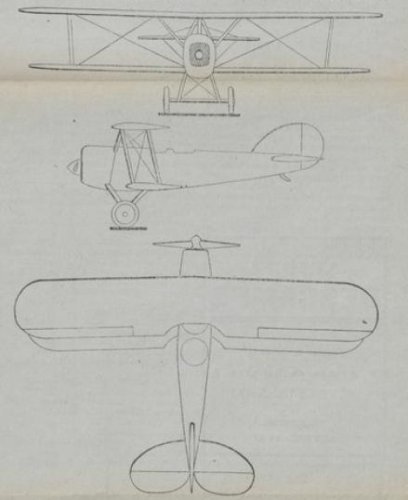
I magnified the whole page from the link in order to read the whole text. Now, my primary school French is rusty, but I'm certain the text says that the aircraft in those two pictures is an new design from Astra company located in Arad.
This link (http://aviatia.cda.ro/15years.htm) about history of pre WW2 romanian aircraft manufacturing says that there was an aircraft maker in Arad named Astra. Most of the pictures are missing, but the one which link still remains looks a lot like our mystery aircraft, they named it S.E.T. 7. Seems that there were small variations between various S.E.T. 3-7 models.
 

Attachments

  • S.E.T. 7.jpg
    S.E.T. 7.jpg
    16.4 KB · Views: 138
hesham said:
http://gallica.bnf.fr/ark:/12148/bpt6k65559918/f2.image

Was this engine working by compressed air,I can't translate well the French language.
The text says "à réaction directe ... avec 5 tuyères" which would be a 5-exhaust jet engine. It also mentions an auxilliary Diesel engine for maneuvering an electricity generation.
1922 is a little early for jet engines, ain't it? The description resembles an early ramjet or statojet.


Heavy-lifter long-range, jet propelled, pressurized and made out of "néocellulose? quite the visionaries!
 
If it should prove that the 'Astra two seat recce and trainer biplane' is, in fact, Romanian in origin, perhaps it's a matter of concern that it should be held out as being French in origin, in that it has been posted as a little-known French project or prototype. The fact that a picture and/or drawing and/or description of an aircraft appears in a French aviation journal doesn't mean that the aircraft is French. Les Ailes and its contemporaries were very cosmopolitan in their approach and featured many aircraft, from Europe and the wider world, on their pages. Thus I do feel that every attempt should be made to ascertain, by cross referencing insofar as is possible, that a hitherto unknown - at least to the participants to this forum - aircraft is, in fact, French - in design or manufacture - before giving it such an attribution by posting it on this thread. The risk from this is that, ultimately, the aircraft may come to be accepted as French, simply by its presence in this thread, when it has done no more than appear in a French aviation journal. That way history is misrepresented. Perhaps, unless there is clear evidence that an aircraft is French, in design or manufacture, it should be described as a little-known project or prototype that may have been designed and/or manufactured in France.

By way of corollary, I also have some concerns about describing the Hennion as a French aircraft when, it appears, it was designed and manufactured in Morocco. M Hennion may have been French and he may have designed and built his aeroplane in French Morocco. But does that make it French? If a British citizen designed and built an aeroplane in India before WW2, is that a British aircraft? I think that most people would consider it to be an Indian aircraft. If it's otherwise, someone had better undertake a significant rewriting of A.J.Jackson's British Civil Aircraft!
 
Hi,


the French designer Paul Schmitt built his first aircraft in 1910,after that came a long
series of aircraft and projects,began with P.S.1 up to P.S.14,I know that he after the
WW1 created an experimental aircraft,may be a seaplane,old source on Internet called
it,the Type 194,has anyone a more info about it ?.
 
hesham said:
the French designer Paul Schmitt built his first aircraft in 1910,after that came a long
series of aircraft and projects,began with P.S.1 up to P.S.14,I know that he after the
WW1 created an experimental aircraft,may be a seaplane,old source on Internet called
it,the Type 194,has anyone a more info about it ?.


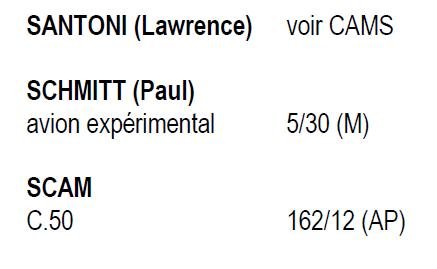
By the way,


this Schmitt experimental aircraft mention in the Trait d'Union magazine index.
 

Attachments

  • Schmitt.JPG
    Schmitt.JPG
    15.3 KB · Views: 127
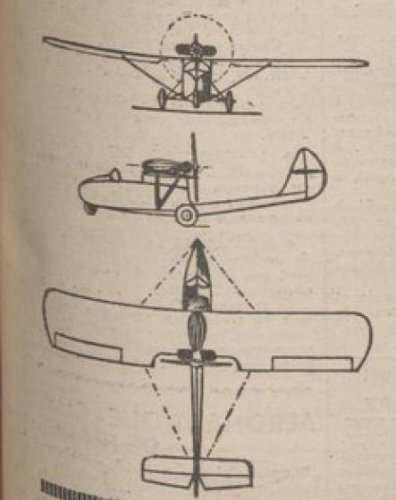
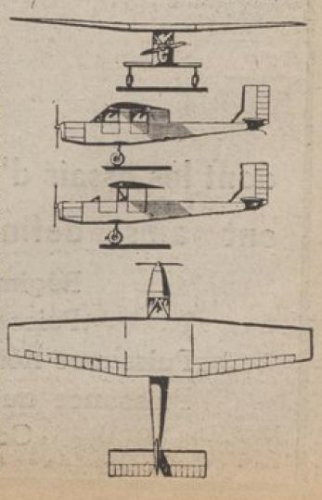
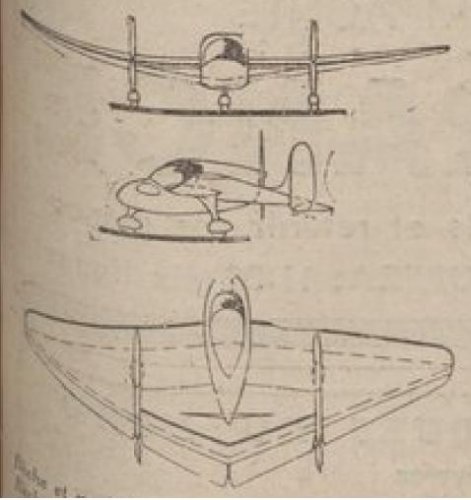
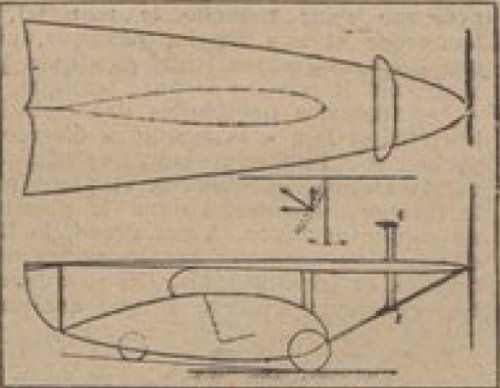
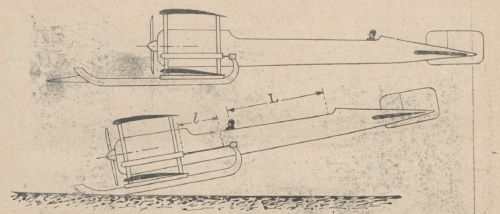
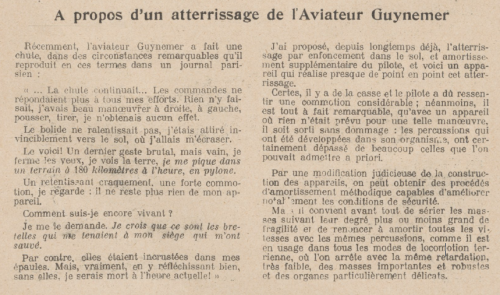
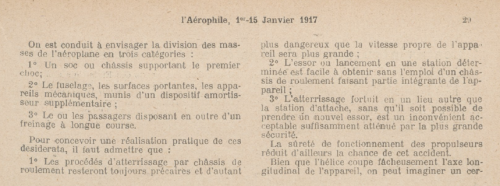
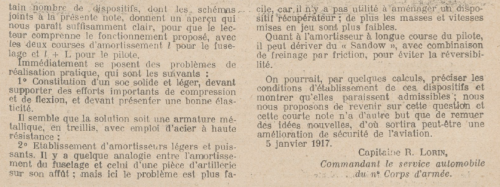
From Aerophile 1917;


consider a strange idea from the aviator Guynemer.
 

Attachments

  • 1.png
    1.png
    565.3 KB · Views: 191
  • 2.png
    2.png
    852 KB · Views: 186
  • 3.png
    3.png
    491.5 KB · Views: 128
  • 4.png
    4.png
    517.4 KB · Views: 117
No, it was not 1st April... It reminds me of this crazy German project for "Punktlandung":
http://www.secretprojects.co.uk/forum/index.php/topic,2733.msg152468.html#msg152468
 
I wouldn't take the sketch too literally, it't just the visualisation of a idea. And that idea
maybe wasn't that crazy, as speeds still were relatively low back then and the jolt of an
emergency landing could well have been damped to acceptable levels for the pilot with a
mechanical damping system. Principally the crush-collapsible zone of nowadasy cars does
nothing else.
 

Similar threads

Back
Top Bottom