From Czech National Technic Museum,

LeO H-28 was a seaplane Project
LeO 32 C.1 was a single seat fighter Project
Wrong: the LeO 32 was a 54-seat transport aircraft project (1929).

Of course I believe you,but in Czech museum,may they was meant LeO-33
and NOT LeO-32 ?!.

Also please I want to ask about LeO 32 transport project,and if it was intended
for military or just for civil ?,again for LeO H-245,and if it was designed as a
military aircraft or not ?,you know I seek about military aircraft.
 
Of course I believe you,but in Czech museum,may they was meant LeO-33
and NOT LeO-32 ?!.

Also please I want to ask about LeO 32 transport project,and if it was intended
for military or just for civil ?,again for LeO H-245,and if it was designed as a
military aircraft or not ?,you know I seek about military aircraft.
Both LeO 32 and H-245 were civil projects.

What is this Czech museum information?
 
My dear Philippe,

do you have more projects for this company ?,specially LeO 34 and LeO H-34 !.
 
Please see reply # 19.
Are you referring to Czech National Technical Museum?
I can not retrieve the information from what I guess is a screen capture. How did you find it? Copy of image from #19 inserted:
1.png
This does not provide any information about the nature of the aircraft possibly tied to these designations.
 
@hesham A designation is listed, but nothing about characteristics or status of the connected design.
The museum's website may have changed since you retrieved the list, but I can't retrieve the same information. How did you find it? Are we talking about the same museum?

We provide sources for others to verify, check the context of information offered.
With the information about the museum offered in #19, I can't verify or context-check the data offered.

´My personal best at pole-vaulting is 8m50, prove me wrong'
 
Yes,the caption appeared it was a single seat fighter,but of course and as I said,
it could be LeO-33 and not LeO-32.
In fact, it could be almost anything, but LeO 32: https://www.secretprojects.co.uk/th...o-prototypes-projects.9017/page-2#post-729667
I had the chance to be invited for years to regular lunchs organized by the association of LeO survivors (called "Mohicans"). I had access to number of testimonies and private archives about LeO projects and prodution. I visited each of them many times and they shared with me their documents and memories. None of them told me about any C1 project. The last one was the LeO 9, in 1921.
 
Are you sure ?!,it's; LeO 32C1 ,very clear.
As you can see, there are some other obvious errors in this list. For example, le 'Le612Bn2" is clearly the LeO 12, LeO H20, H21 and 46 are non-senses, Meteor is from SPCA, etc.
 
LeO-34 was unknown landplane Project of 1932
LeO H-34 was unknown seaplane Project of 1932
I don't know which project was behind the number 34, but it cannot be both LeO 34 and LeO H34. If it was assigned to the landplane design office directed by Paul Asantcheeff, then it was a LeO 34. If it was assigned to seaplane design office directed by Edmond Benoit, then it was a LeO H34. One or the other, but not both.
 
Last edited:
LeO-453E or E-10 was an experimental version,also powered by the same engines
Why do you list the exprimental LeO 453-E10 (I suppose you want to speak about the E10-1 and E10-2) and not the LeO 451-E1, E2, E3, E4, E5, E6, E7, E8-1, E8-2, E9-1 and E9-2?
 
Autogyro series;

LeO C.30 was a license built Cierva C.30 autogyro,powered by one 175 hp
Salmson 9 Ne engine
LeO C.30S was a construction number 26 was completed as the sole C-30S
LeO C.301 was an improved C-30s with uprated Messier oleo-pneumatic
shock absorbers, flotation devices to facilitate ditching at sea and tripod
main rotor support
LeO C.302 was an early autogyros suffered from relatively long take-off
runs,to reduce the take-off length two C-301 aircraft were fitted with the equivalent of Cierva's "Jump" head allowing the aircraft to leap vertically
after only a very short run
LeO C.34 was a two-seat autogyro prototype,powered by one 350 hp Gnome
& Rhône 7-cylinder star engine
LeO C.41 was a four-seat autogyro Project,developed from C.34
Also missing:
LeO-Lepère CL.10 was the Cierva C27 built under license by LeO, powered by 1 Popjoy Catacaret 80 hp, 2 built (1932)
LeO-Lepère CL.11 was a modified CL.10 powered by 1 Renault 7B 100 hp, 1 built (1932)
LeO-Lepère CL.19 was a Cierva C19/4 built under license by LeO, powered by 1 Salmson 5AQ 95 hp, 1 built (1933)
LeO-Lepère CL.20 was a projected autogiro, license bought by LeO from Westland-built Cierva, powered by 1 Popjoy Niagara 3 90 hp
 
I don't know which project was behind the number 34, but it cannot be both LeO 34 and LeO H34. If it was assigned to the landplane design office directed by Paul Asantcheeff, then it was a LeO 34. If it was assigned to seaplane design office directed by Edmond Benoit, then it was a LeO H34. One or the other, but not both.

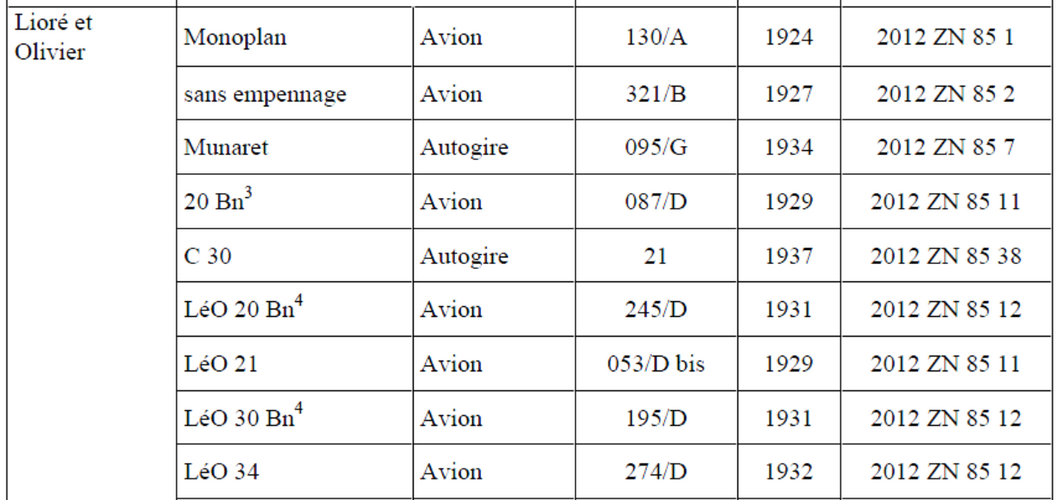
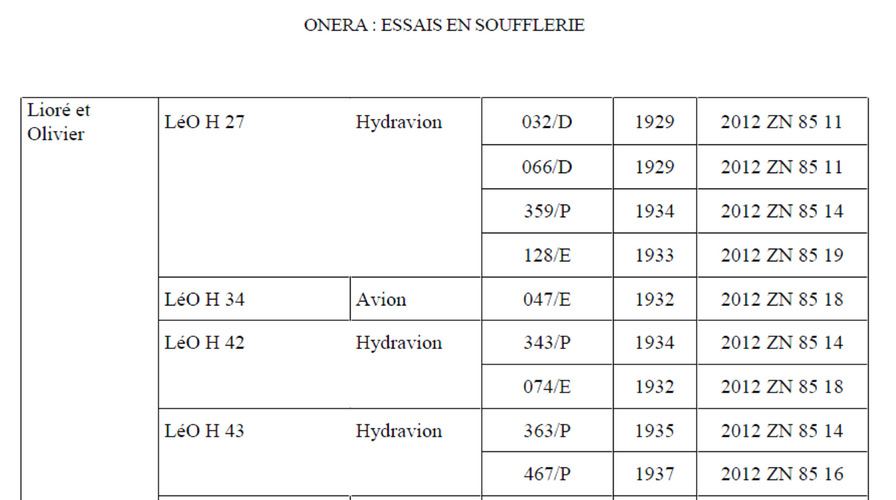
In Onera archive,they mentioned both of them,with a wrong description to
H-34 as Avion,but it must be Hydravion ?.

Why do you list the exprimental LeO 453-E10 (I suppose you want to speak about the E10-1 and E10-2) and not the LeO 451-E1, E2, E3, E4, E5, E6, E7, E8-1, E8-2, E9-1 and E9-2?

I know all of them,except E6,E8-2,E9-2 & E10-2,do you have and Infos ?.

Also missing:
LeO-Lepère CL.10 was the Cierva C27 built under license by LeO, powered by 1 Popjoy Catacaret 80 hp, 2 built (1932)
LeO-Lepère CL.11 was a modified CL.10 powered by 1 Renault 7B 100 hp, 1 built (1932)
LeO-Lepère CL.19 was a Cierva C19/4 built under license by LeO, powered by 1 Salmson 5AQ 95 hp, 1 built (1933)
LeO-Lepère CL.20 was a projected autogiro, license bought by LeO from Westland-built Cierva, powered by 1 Popjoy Niagara 3 90 hp

Of course I know this addition list,and also there was C.21
 

Attachments

  • 9.png
    9.png
    167.4 KB · Views: 43
  • 10.png
    10.png
    152.5 KB · Views: 42
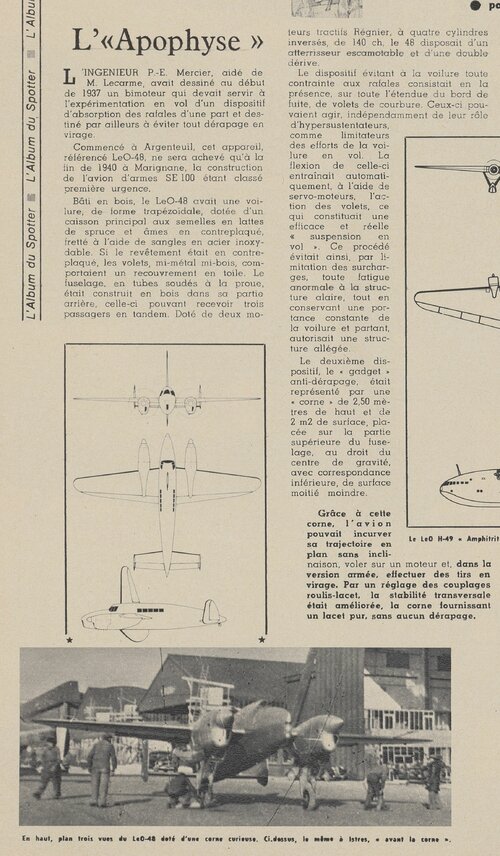
The name Apophyse is came from TU magazine.
I got the answer from Charles Claveau, author of this article in TU magazine. He took this name from Aviation Magazine article by Jean Liron (attached), entitled "L'apophyse" in reference to the name given to the bony crest located at the back of the vertebrae. But this is a confusion: it was just the title of the article, not the name of the aircraft.
 

Attachments

  • Aviation_magazine_international__15 janvier 1971 p.70.jpg
    Aviation_magazine_international__15 janvier 1971 p.70.jpg
    1.3 MB · Views: 41
Last edited:
Of course I know this addition list,and also there was C.21
I don't think so. LeO design office, located route de la Révolte in Argenteuil, directed by Pierre Renoux, started with Cierva C.30 license.
If it was part of Lepère activities in LeO installations, then it was a CL.xx, not a C.xx.
C.21 is not listed in Brooks book about Cierva autogyros.
 
I know all of them,except E6,E8-2,E9-2 & E10-2,do you have and Infos ?
Yes, of course:
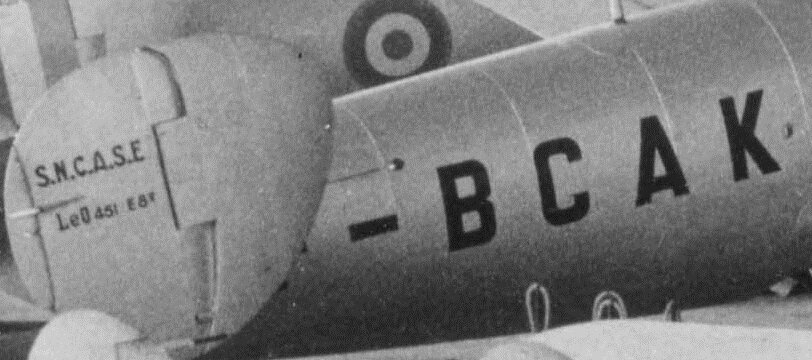
LeO 451-E6 c/n 451: modified in 1947 for CEV general usage (F-ZVLH, F-ZIJP, F-AKHU and maybe F-BCDK). Became LeO 451-E8-2 F-BCAK for testing pulse-jet engines between 1947 and 1952.
LeO 453-E10-2 c/n 9: used for launching remote-controlled vehicles in 1950.
 

Attachments

  • LeO 451-E8-2 cn 451 F-BCAK (PhR).jpg
    LeO 451-E8-2 cn 451 F-BCAK (PhR).jpg
    148.4 KB · Views: 41
LeO-Lepère CL.19 was a Cierva C19/4 built under license by LeO, powered by 1 Salmson 5AQ 95 hp, 1 built (1933

As TU magazine,that's was called C.21 in the company.

Many thanks for LeO 450s "E" series.
 
It seemed to be that,the company used another series,of alphabet,we see
in Messier's site; LeO H,and I know also X1,X2,X3,X4,Y2 & Za ?.
 

Attachments

  • 20.png
    20.png
    6.8 KB · Views: 23
The "LeO H" designation here probably indicates that the study ("amortisseur relevable", or adjustable/retractable shock absorber) was done by Messier for one or several of the "H." aircraft of the time, most likely the H.23 amphibian.
 
>>> LeO H-13 was a 23 passenger transport flying boat biplane,powered by two 150 hp Hispano-Suiza 8Aa engines

23 passengers ... really ?
Given the power of the engines and the year of the project 1921/1922, this must be a mistake. After research, the August 1922 issue of the magazine L'Aéronautique indicates 4 to 6 passengers, CU 500kg, for a range of 500km.

Regards
 
>>> LeO H-13 was a 23 passenger transport flying boat biplane,powered by two 150 hp Hispano-Suiza 8Aa engines

23 passengers ... really ?
Given the power of the engines and the year of the project 1921/1922, this must be a mistake. After research, the August 1922 issue of the magazine L'Aéronautique indicates 4 to 6 passengers, CU 500kg, for a range of 500km.

Regards

I will correct it.
 
Hesham, Frédriksen said that it was a 1924 night bomber competition. Comparisions were made between the LeO-32 and the slightly earlier Farman F.60 Goliath.


That's wrong designation,the project was really mentioned in another source as a BN.3,
a three seat night bomber,but not LeO-32
 
That's wrong designation,the project was really mentioned in another source as a BN.3, a three seat night bomber,but not LeO-32

Is your "another source" correcting my reply from 15 years ago or J. C. Frédriksen's book from Aug 2001?
 
Is your "another source" correcting my reply from 15 years ago or J. C. Frédriksen's book from Aug 2001?
No my dear Apophenia,but it mentioned this BN.3, without any designations.
 
Hi,

can I ask about LeO X series,Y2 and Za,and if they are related to
the LeO 36 to LeO 39,or Not ?.
 
LeO H-6 was a four passenger sesquiplane flying boat,powered by three engines,two 150 hp Hispano-Suiza 8Fb mounted in the wing,and one 250 hp Salmson mounted above the front of the fuselage
LeO H-6/2 was an amphibian version of H-6,powered by the same engines
There was only one LeO H6 built. The prototype was modified in december 1920 by adding weels:
1757576215288.png
"Equipped as a landplane, the Lioré et Olivier three-engine seaplane, piloted by Martin, recently underwent tests which gave complete satisfaction. The aircraft climbed to 2800 m in 35 minutes. At the Etang de Berre, another aircraft is being developed as an amphibious aircraft."

The "other aircraft" developped as amphibious aircraft is the LeO 7-3:
1757577295368.png

I attach the photo of the weels added on the LeO H6.
 

Attachments

  • LeO H6 détail (PhR).jpg
    LeO H6 détail (PhR).jpg
    77.8 KB · Views: 12
Last edited:
LeO H-258 was an interim version similar to H-257bis,powered by two 650 hp Hispano-Suiza 12Nbr engines
It's the LeO 258 (not H258). The development of this variant was entrusted to the land design office headed by Pierre Mercier because the seaplane design office headed by Edmond Benoit was overloaded. This is why there is no "H" in this version.

You can verify the inscription on the rudders, like the example I attach.
 

Attachments

  • LeO 258 (PhR).jpg
    LeO 258 (PhR).jpg
    14.1 KB · Views: 12
Are you referring to Czech National Technical Museum?
I can not retrieve the information from what I guess is a screen capture. How did you find it? Copy of image from #19 inserted:
View attachment 749180
This does not provide any information about the nature of the aircraft possibly tied to these designations.
The information here is from

https://www.ntm.cz/file/f6d579764ec39e3ad67e72e4452d8a4d/2568/747_GI.pdf
which is a finding guide to the Karel Bittner archive, which was an archive of early aviation material compiled by museum employee Karel Bittner, mostly comprising photos but also other documents and sources and containing a lot of valuable early Czech aviation material but also other nations as well, in a scrapbook style with 1726 volumes by subject.

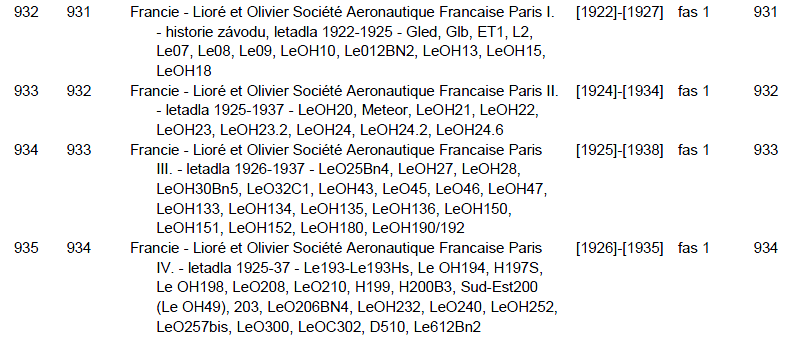
932 931 France - Lioré et Olivier Société Aeronautique Francaise Paris I.
- history of the factory, aircraft 1922-1925 - Gled, Glb, ET1, L2,
Le07, Le08, Le09, LeOH10, Le012BN2, LeOH13, LeOH15,
LeOH18
[1922]-[1927] fas 1 931
933 932 France - Lioré et Olivier Société Aeronautique Francaise Paris II.
- aircraft 1925-1937 - LeOH20, Meteor, LeOH21, LeOH22,
LeOH23, LeOH23.2, LeOH24, LeOH24.2, LeOH24.6
[1924]-[1934] fas 1 932
934 933 France - Lioré et Olivier Société Aeronautique Francaise Paris
III. - aircraft 1926-1937 - LeO25Bn4, LeOH27, LeOH28,
LeOH30Bn5, LeO32C1, LeOH43, LeO45, LeO46, LeOH47,
LeOH133, LeOH134, LeOH135, LeOH136, LeOH150,
LeOH151, LeOH152, LeOH180, LeOH190/192
[1925]-[1938] fas 1 933
935 934 France - Lioré et Olivier Société Aeronautique Francaise Paris
IV. - aircraft 1925-37 - Le193-Le193Hs, Le OH194, H197S,
Le OH198, LeO208, LeO210, H199, H200B3, Sud-Est200
(LeOH49), 203, LeO206BN4, LeOH232, LeO240, LeOH252,
LeO257bis, LeO300, LeOC302, D510, Le612Bn2
[1926]-[1935] fas 1,934

The Bittner collection contains a very diverse mixture of various archival material, which is mostly firmly glued to the pages in hard-bound books that were specially made for this purpose. Some types of archival materials, especially photographs, contained other interesting information and descriptions on their backs, which are often devalued due to the full-surface gluing. Karel Bittner included both originals and period reproductions in the collection, and when processing the collection, he mainly focused on the information value of the documents. For example: The quality of the pasted photographs varies greatly, and the collection includes both first-class originals and copies of poor value. Many of the photographs came from glass negatives from the aviation archive collection, which was damaged by a flood in 2002 in the Karlín Invalidovna, like many other archive funds and collections. The collection also includes photographic reproductions donated to the archive by private individuals or received from various companies or other institutions. Karel Bittner also hand-painted images of aircraft in a number of books, most often depicting colorful camouflage. While organizing the collection, Bittner also transcribed into block letters a number of texts from various magazines, books, and sometimes even entire memoirs of pilots from manuscripts, which were then bound into the appropriate volumes.

The immediate primary problem is that the finding aid may have been OCRed from a printed card format, or hand typed in. Either way, there are likely to be typos in the finding aid.

The secondary problem is even assuming the finding aid is accurate that you are reliant on the scholarship of a non-trained Czech aviation enthusiast to have correctly labelled and recorded the information in the archive volumes in the first place.

Unless you are willing to visit the archive to confirm the contents, it is little better than hearsay and in no way a primary source.
 
There was only one LeO H6 built. The prototype was modified in december 1920 by adding weels:

"Equipped as a landplane, the Lioré et Olivier three-engine seaplane, piloted by Martin, recently underwent tests which gave complete satisfaction. The aircraft climbed to 2800 m in 35 minutes. At the Etang de Berre, another aircraft is being developed as an amphibious aircraft."

I attach the photo of the weels added on the LeO H6.
Thank you for the photo of "wheeled"LeO H6. I think, that this type of undercarriage "convert" this aircraft from flying boat to the pure landplane, as the struts and rods made this undercarriage legs fixed to the wng, without the ability of operating from the water.
For me this aircraft is the subject of interest, because, as far as I knew, its' one of the first projects, realized by Paul-Aime Richard, who later design giant Richard-Penhoet PR-2 flying boat.
 
Of course I know the problem with H-28,but there were two sources for it,first
was Czech Museum,and my dear Sarastro discovered it was another aircraft,
and there's a mistake,but the second was a link on Net, talked about
it, and it had been tested in Eiffel wind tunnel,without any more Info,my
attempt to get back this link or maybe a PDF file again.
 
And generally before LeO 40,there were two projects, BN.2 & BN.3 ?.
 
LeO H-244 was a projected high-speed inter-continental flying boat for Air Union,abandoned when Air Union was absorbed by Air France,maybe with same engines

I don't know that's right or not,it was also intended to military use,can
anyone confirm or deny ?.
 
I don't know which project was behind the number 34, but it cannot be both LeO 34 and LeO H34. If it was assigned to the landplane design office directed by Paul Asantcheeff, then it was a LeO 34. If it was assigned to seaplane design office directed by Edmond Benoit, then it was a LeO H34. One or the other, but not both.
I can now clarify: this project was only the LeO 34, as shown here: https://www.secretprojects.co.uk/th...o-prototypes-projects.9017/page-3#post-852805
There was no LeO H34, it's an error from SHD in writing the inventory of ONERA files.
 
I can now clarify: this project was only the LeO 34, as shown here: https://www.secretprojects.co.uk/threads/lioré-et-olivier-leo-prototypes-projects.9017/page-3#post-852805
There was no LeO H34, it's an error from SHD in writing the inventory of ONERA files.

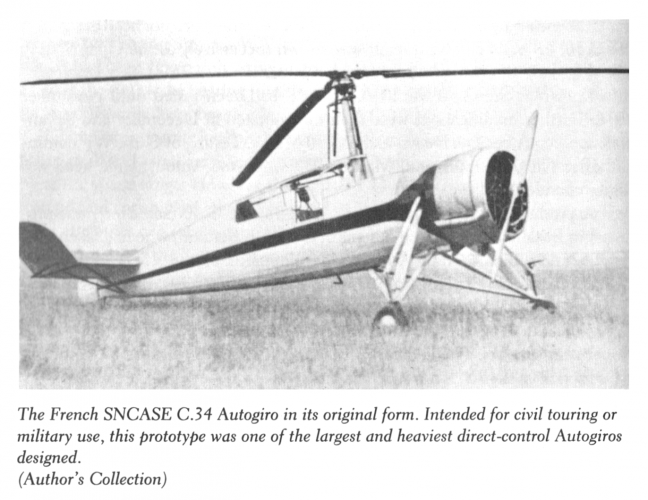
The number "34" was associated a second time with Lioré-et-Olivier, in the form of the C.34 cabin autogiro. It was, however, a Cierva designation. The Lioré-et-Olivier (then SNCASE) C.34 was built as a prototype for civil touring or military observation duties, with a Titan Major engine; however, handling was unsatisfactory and ground vibrations proved unacceptable.

1763636126482.png
 

Attachments

  • 4.png
    4.png
    5.5 KB · Views: 19
  • 5.png
    5.png
    5.5 KB · Views: 22
Why we don't assume that,it was a floatplane version of LeO 34 ?,
specially they had two different wind tunnel codes !.
Why should we assume such error?
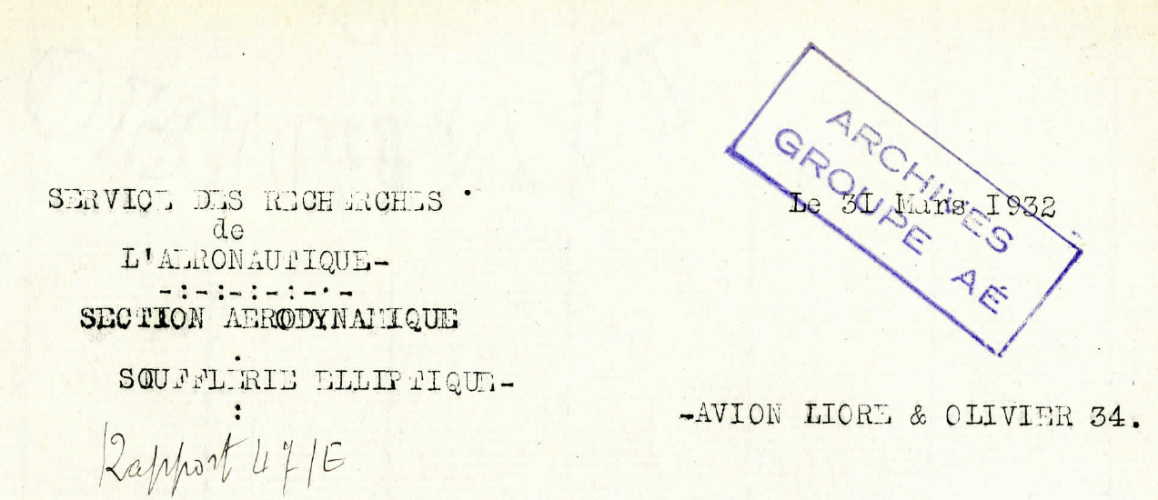
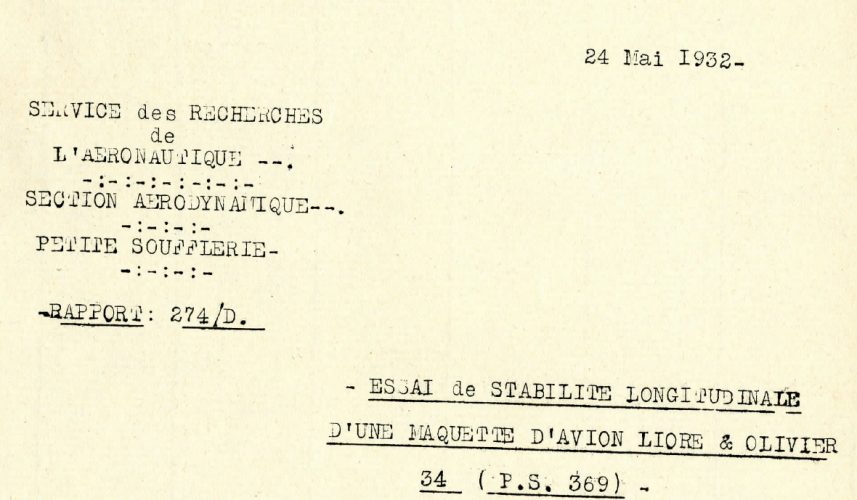
As I explained, this just a bad transcription, as you can read directly in the original ONERA report headers:

There was no H34 at all.
 

Attachments

  • LeO 34 report 1.png
    LeO 34 report 1.png
    440.2 KB · Views: 13
  • LeO 34 report 2.png
    LeO 34 report 2.png
    724 KB · Views: 18

Similar threads

Back
Top Bottom