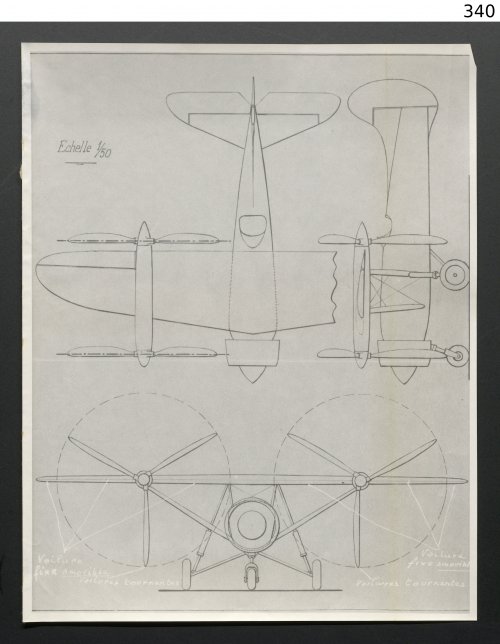
According to the sketch the main landing gears designed as retractable to the wing, isn't it?
I also wonder, if their any standard scale of windtunnel models, that could give the clue to the probable size of the aircraft?
Yes, the LeO 29 wind tunnel report precises:
1757574757435.png
"The tests carried out on the full wing models and the wing with the landing gear recessed in the lower surface were carried out in the wind tunnel of the Saint-Cyr Aerotechnical Institute"
In addition, in the plan of the wing, you can read:
1757575023447.png

The overall wingspan of the model is 10,26m:
1757575136518.png

So the original model had to have a wingspan of 51,3 m. This looks very ambitious in 1929.
 
The overall wingspan of the model is 10,26m:
View attachment 784386So the original model had to have a wingspan of 51,3 m. This looks very ambitious in 1929.
Thank you for detailed answer!
I have the impression, that phrase "Echelle: 1/5 de la maquette" means the scale of the sketch to the size of model, not the scale of model to the actual aircraft. Even the giant Do-X has only 4,8 m wingspan, with all its 12 engines and numerous people on board.
 
Lioré et Olivier has studied various projects during this period, without numbering, like the attached one for exemple in 1927.
Finally, I found an identification for this study (message #71). It became the LeO 34. It was also tested in wing tunnel under this identification in 1932: "aircraft without a horizontal stabilizer, with two staggered wings".
 

Attachments

  • LeO 34 (PhR).png
    LeO 34 (PhR).png
    464.7 KB · Views: 54
Finally, I found an identification for this study (message #71). It became the LeO 34. It was also tested in wing tunnel under this identification in 1932: "aircraft without a horizontal stabilizer, with two staggered wings".

Amazing find my dear Philippe,

and was it a light bomber or what ?
 
I have noticed that there is no photo of the LeO H183 in Philippe Ricco's PDF file recap.
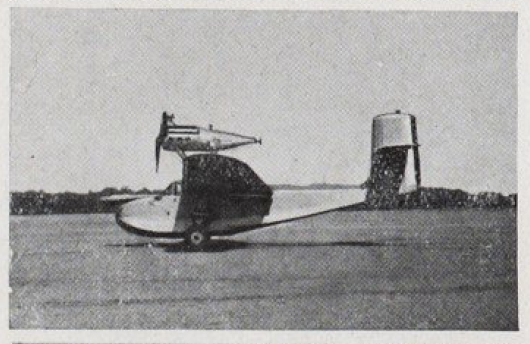
This photo shows what looks like the H18 but with a tractor Hispano engine. Since the H183 was the only version with a Hispano, and since it was modified from the H18 (which was an amphibian, contrary to the H181) I believe this picture shows the H183 landing.

1763827754092.png


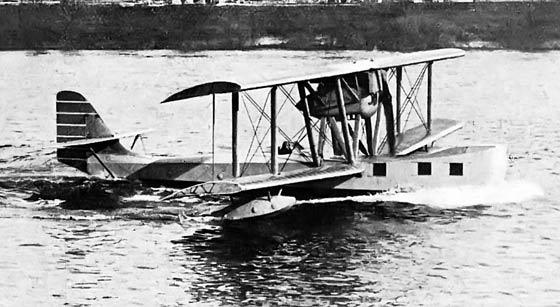
Likewise, there is no photo of the H191 or the H193. This photo found online is labeled as the H191:

1763827895587.png

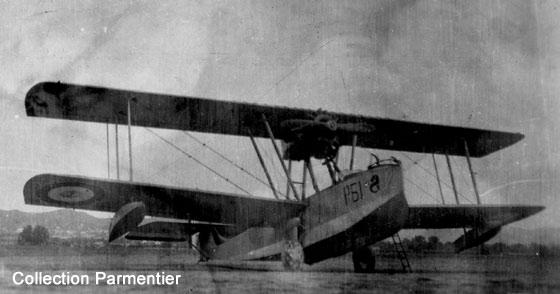
And this one as the H193:

1763827939135.png
 
I have noticed that there is no photo of the LeO H183 in Philippe Ricco's PDF file recap.
This photo shows what looks like the H18 but with a tractor Hispano engine. Since the H183 was the only version with a Hispano, and since it was modified from the H18 (which was an amphibian, contrary to the H181) I believe this picture shows the H183 landing.

View attachment 792640
Hi Stargazer,
thanks for sharing. For me, this photo shows a LeO H23, not a H18.
 

Attachments

  • Lioré et Olivier LeO H23 no 1 modifié (PhR1).jpg
    Lioré et Olivier LeO H23 no 1 modifié (PhR1).jpg
    33 KB · Views: 31
A few mysteries that need solving:
  • LeO H6: some photos show a slightly sesquiplane wing arrangement, while others show a later, inverted sesquiplane one.
    Is the inverted sesquiplane version the H6/2?

    1763828439131.png 1763828387367.png 1763828425613.png

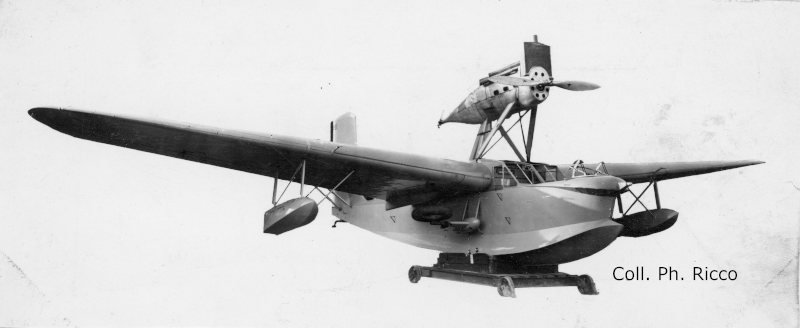
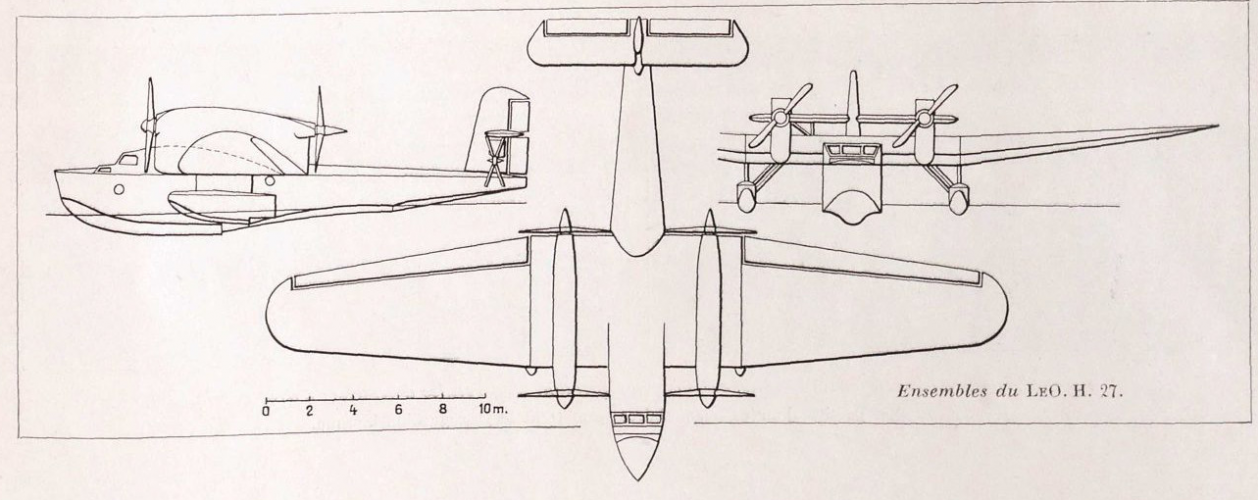
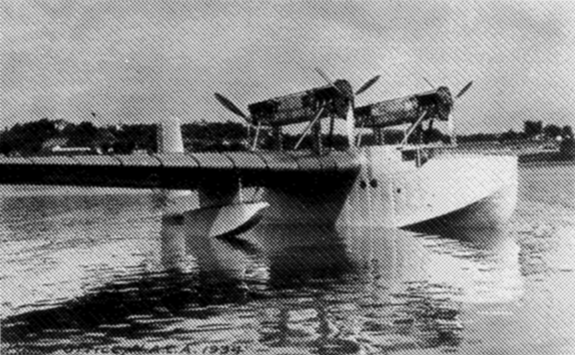
  • H27: plans and models shown in contemporary publications show the push-pull engines blended into the wings; however, photos show that the actual plane had the engines carried on mounts atop the wings. Did the artwork show the configuration planned for the production version?
    1763828970887.png 1763828833432.png
    1763828929988.png

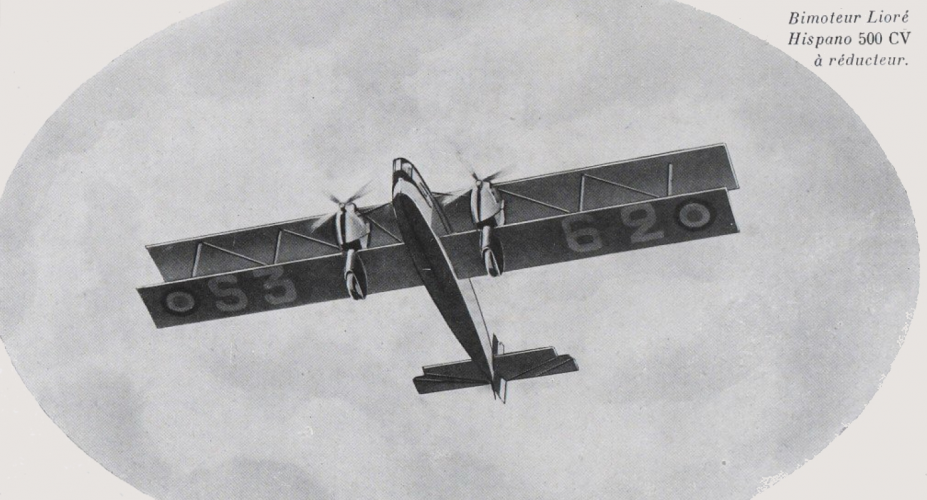
  • LeO 21 with Hispano engine: if I look at the list of all LeO 21 versions, none seems to have used a Hispano engine.
    And yet the contemporary Hispano magazine showed this heavily retouched photo of what seems to be a Leo 21 in flight, describing it as using a 500 hp geared Hispano type. Is this one of the troop transport versions (LeO 213 and 214)? And if not, what is it? The LeO 212 was meant to use the 500 hp Hispano, but it wasn't built...

    1763829361080.png
 
Hi Stargazer,
thanks for sharing. For me, this photo shows a LeO H23, not a H18.

After taking a closer look, I realize you are right. The gunner position in the nose is different in both airplanes.
So all H18 versions were pushers I guess.
 
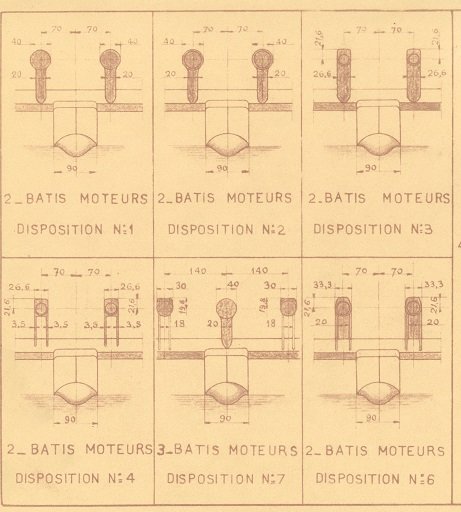
  • H27: plans and models shown in contemporary publications show the push-pull engines blended into the wings; however, photos show that the actual plane had the engines carried on mounts atop the wings. Did the artwork show the configuration planned for the production version?
Many different engine configurations were studied on LeO H47, as shown for example in the attached document. Gérard Bousquet had also published various photos of wind-tunnel models with different dispositions in his Docavia "Les paquebots volants".
 

Attachments

  • LeO H.27 soufflerie 1929 (PhR60).jpg
    LeO H.27 soufflerie 1929 (PhR60).jpg
    85.1 KB · Views: 42
Last edited:
By the way,

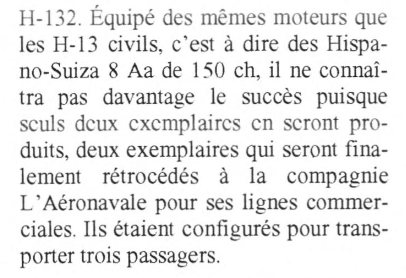
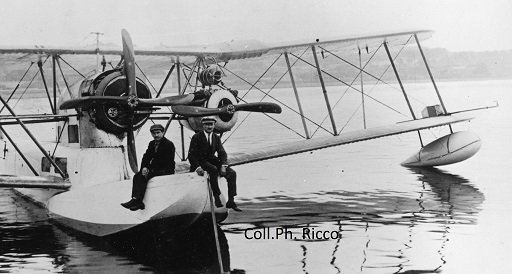
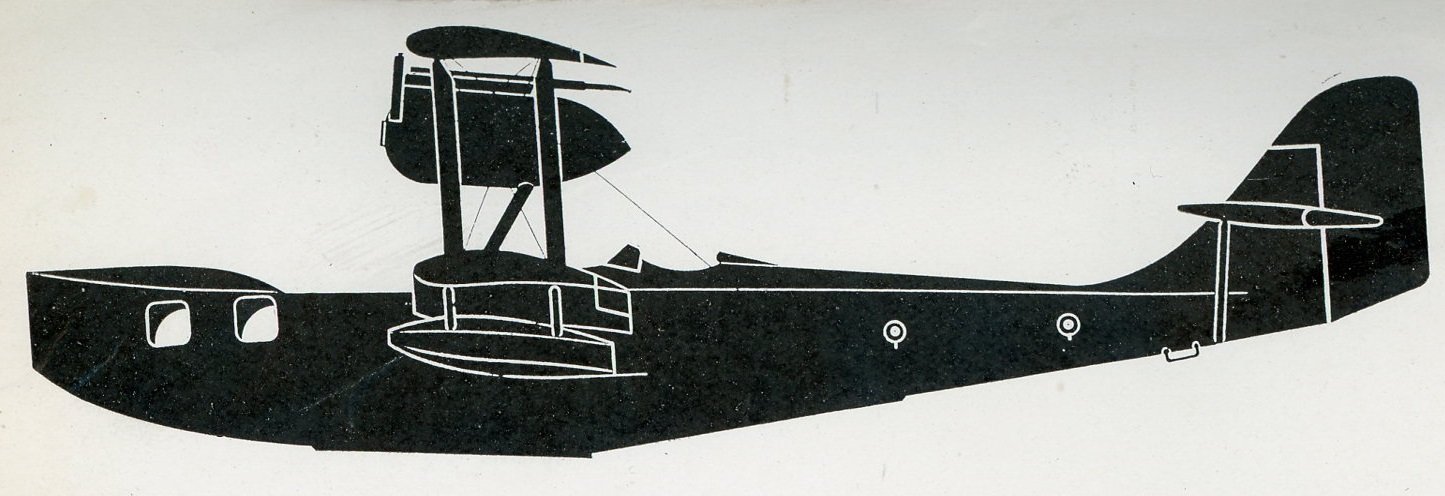
LeO H-132 was powered by 150 hp Hispano-Suiza 8 Aa engines
and not 180 hp,the H-131 was powered by later one
 

Attachments

  • 4.png
    4.png
    92.5 KB · Views: 37
A few mysteries that need solving:
His Stargazer.
Your hypothesis has sense, but I checked my photos and I can confirm that I have many pictures showing this wing configuration (with upper wing shorter than the lower one), but without landing gear. So, these two modifications are independant.
 

Attachments

  • Lioré et Olivier LeO H6 (PhR).jpg
    Lioré et Olivier LeO H6 (PhR).jpg
    62.9 KB · Views: 25
Last edited:
Likewise, there is no photo of the H191 or the H193. This photo found online is labeled as the H191:

View attachment 792641
As I said before, identification of many LeO models is a nightmare, with a lot of contradiction between sources. The LeO H191 is supposed to be a military version, but in this photo, the colors of the rudder are civil.
This photo is on my list, but based on my files it is not a LeO H19x, it's the LeO H133 c/n 01, with elongated hull.
LeO H133 (PhR).jpg

Why do you say that there is no photo of LeO H193 in my list?
 
It's first time to me to hear about LeO/SNCASE C.301/2 ?!.
 

Attachments

  • RL_3_2351_0340.jpg
    RL_3_2351_0340.jpg
    2.7 MB · Views: 34
It's first time to me to hear about LeO/SNCASE C.301/2 ?!.
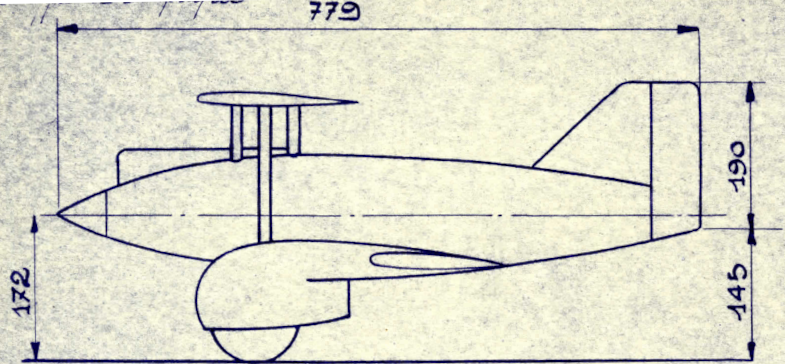
The image you show is the Richard Helicoplane project.
There is no relation with C-301, which is a well known Cierva autogyro modified by Pierre Renoux.
 
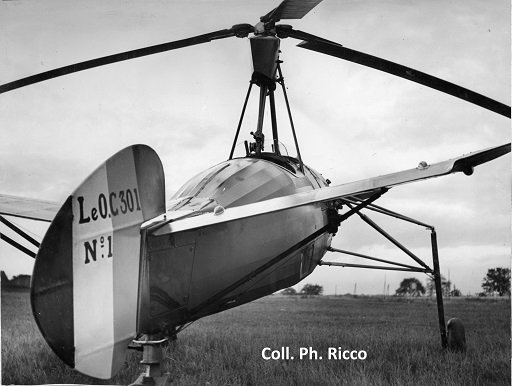
This is the LeO / SNCASE C-301:
 

Attachments

  • Lioré et Olivier C.301 no 1 modifié  (PhR).jpg
    Lioré et Olivier C.301 no 1 modifié (PhR).jpg
    73.2 KB · Views: 27

Similar threads

Back
Top Bottom