
You are using an out of date browser. It may not display this or other websites correctly.
You should upgrade or use an alternative browser.
You should upgrade or use an alternative browser.
Liore et Olivier

- Joined
- 26 May 2006
- Messages
- 38,288
- Reaction score
- 20,425
OK my dear,but what was it ,a light bomber ?.
Or a fighter ?.

- Joined
- 25 July 2007
- Messages
- 4,916
- Reaction score
- 5,538
Or a fighter ?.
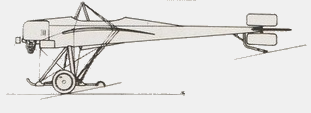
Or just an alternative layout study? Instead of attempting to fit some military role, perhaps the question was simply this: Will a tailless, heavily-staggered biplane layout work?
- Joined
- 15 February 2024
- Messages
- 691
- Reaction score
- 1,875
Premisces of Nenadovich formula study?Or just an alternative layout study? Instead of attempting to fit some military role, perhaps the question was simply this: Will a tailless, heavily-staggered biplane layout work?
- Joined
- 15 February 2024
- Messages
- 691
- Reaction score
- 1,875
Lioré et Olivier is a complicated case. A lot of sources are in contradition about several models in terms of designations, produced numbers or dates. I tried to clean-up the list, but I know that some entries may require further updates. Typically, understanding LeO H13 and H19 families is a nightmare.
As an example of difficulties, the LeO 46 is sometimes noted H46 by error, even in few manufacturer's original documents. In the LeO 25 familly, most are H25x, but with exception of the 258. In practice, the same numbers were reused for LeO 25x projects and H25x seaplanes for independent designs.
Here is my current list for Lioré et Olivier aircraft manufacturer, mainly based on primary material, with as usual an illustrated version attached:
As an example of difficulties, the LeO 46 is sometimes noted H46 by error, even in few manufacturer's original documents. In the LeO 25 familly, most are H25x, but with exception of the 258. In practice, the same numbers were reused for LeO 25x projects and H25x seaplanes for independent designs.
Here is my current list for Lioré et Olivier aircraft manufacturer, mainly based on primary material, with as usual an illustrated version attached:
| Designation | Date | Category | Comments |
| WLD.1 | 1908 | Experimental single-engine biplane | Witzig Lioré Dutilleul 1 built 1 Renault 50 hp |
| WLD.2 | 1909 | Experimental single-engine biplane | Witzig Lioré Dutilleul 1 built 1 Renault 50 hp engine |
| Lioré 1 | 1908 | Single-engine, twin-propeller monoplane | Exhibited at the 1909 Salon, without engine. First flight: September 29, 1910, at Issy-les-Moulineaux (Henri Olivier) 1 Grégoire 40 hp engine 1 prototype |
| LeO 2 | 1910 | Single-engine, twin-propeller monoplane | First flight: 1911 at Issy-les-Moulineaux (Henri Olivier) Second example of Lioré monoplane 1 Grégoire 40 hp engine |
| LeO 3 | 1917 | Single-engine, single-seat, low-wing monoplane fighter aircraft | Designed by Margoulis (derived from the Breguet LE). Project only. Later renamed the LeO 9. |
| LeO 4 | 1917 | A2: Two-seater biplane derived from the Sopwith 1½ Strutter | 1 Rhône 9 Ja de 110 ch or Clerget 200 ch engine 1 prototype |
| LeO 4/1 | 1919 | A2 : avion biplan biplace dérivé du LeO 4 | Version with modified wings and tail assembly of the LeO 4 1 Le Rhône 9 Jb 120 hp engine 1 prototype |
| LeO 5 | 1919 | Twin-engine armored biplane for infantry escort | First flight: 1920 2 Rhône 9 R 170 hp engines 1 prototype |
| LeO H6 | 1919 | Three-engine biplane transport flying boat | First flight: 1919 1 Salmson 9 CM de 260 hp + 2 Hispano-Suiza 8 Aa 150 hp engines Designed by Paul-Aimé Richard 1 prototype |
| LeO H6/2 | 1919 | Three-engine amphibious transport biplane | Wheels added to the LeO H6. 1 Salmson 9 CM 260 hp + 2 Hispano-Suiza 8 AA 150 hp engines. 1 prototype. |
| LeO 7 | 1922 | B3: Three-seater military protection biplane | First flight July 1922 at Villacoublay Two 300 hp Hispano-Suiza 8 Fb engines 1 prototype |
| LeO 7/2 | 1923 | B3: Three-seater military protection biplane | Production version of the LeO 7 Two 300 hp Hispano-Suiza 8 Fb engines 20 units |
| LeO 7/3 | 1924 | Three-seater biplane, torpedo protection or reconnaissance aircraft | Marine derivative of the LeO 7/2, tested in amphibious version with floats. 12 examples |
| LeO 8 | 1922 | Two-seater parasol monoplane for night fighter and reconnaissance | First flight in 1923 at Villacoublay (Gaston Martin). 1 300 hp Renault 12 Fe engine. 1 prototype. |
| LeO 9 | 1920 | Single-seat, low-wing monoplane fighter aircraft | First flown in 1921 at Villacoublay One 300 hp Hispano-Suiza 8 Fb engine Designed by Margoulis (formerly LeO 3) 1 prototype |
| LeO H10 | 1922 | Two-seater biplane seaplane with floats | First flight April 1923 1 Lorraine 12 Da engine, 370 hp 1 prototype |
| LeO 11 | 1923 | Two-seater reconnaissance biplane embarked on an aircraft carrier | First flight at Villacoublay, June 1923. Land-based derivative of the LeO H10. 1 370 hp Lorraine 12 Da engine. 1 prototype. |
| LeO 12 | 1923 | BN2: Two-seater biplane night bomber | First flight June 1924 2 Lorraine 12 Db 400 hp engines 4 units (later LeO 12 A, 12 B, 123 and 121) |
| LeO 12 A | 1924 | BN2: Two-seater biplane night bomber | New designation of the first LeO 12 for the Air Force 2 Lorraine 12 Db 400 hp engines 1 unit |
| LeO 12 B | 1924 | BN3: Three-seat biplane bomber aircraft | New designation of the 2nd LeO 12 for the French Air Force, re-engined and modified to a three-seater. 2 Gnome & Rhône engines. 1 prototype (became LeO 122). |
| LeO 121 | 1925 | T15: 15-passenger biplane transport aircraft | First flight September 1925 New designation of the 4th LeO 12, civilian version of the LeO 12 for Air Union (F‑AHDN) 2 Lorraine 12 Db 400 hp engines 1 prototype |
| LeO 122 | 1926 | BN3: Three-seat biplane bomber aircraft | First flight 1926 New designation of the LeO 12 B, re-engined and modified with a front balcony 2 Gnome & Rhône Jupiter 9 Ab 420 hp engines 1 prototype |
| LeO 123 | 1932 | BN3: Three-seat biplane bomber with closed cabin | First flight August 1932 (Schnée) Conversion of the 3rd LeO 12 with an interior cockpit, originally intended for the Navy with floats, never delivered 2 Gnome & Rhône Jupiter 9 Ady 420 hp engines 1 prototype (F-AKDO) |
| LeO H13 | 1922 | T4: Twin-engine biplane transport flying boat | First flight July 1922 at Meulan (LV Guitton) 2 Hispano-Suiza 8 Aa 150 hp engines Andrieux design 1 prototype (F-AEHJ) 24 civil unite (including two converted into LeO H134s) + 30 military units |
| LeO H13 A | 1923 | T4: Amphibious transport biplane | Twin-engine Amphibious version of the CGEA LeO H13 3 units |
| LeO H13 B | 1924 | Twin-engine close-range reconnaissance flying boat | First flight 1925 (Lucien Bourdin) Flexible hull version of the LeO H13 purchased by Poland 2 Hispano-Suiza 8 Ab 180 hp engines 4 units |
| LeO H13bis | 1924 | HB3: Twin-engine biplane flying boat | First flight 1924 Soft-shell military derivative of the LeO H13 2 Hispano-Suiza 8 Ab 180 hp engines 1 prototype |
| LeO H132 | 1924 | Twin-engine biplane transport flying boat | Military derivative of the lightened LeO H13 A without wheels 2 Hispano-Suiza 8 Ab 180 hp engines 2 units |
| LeO H133 | 1925 | T4: Single-engine biplane transport flying boat | First flight 1925 (Louis Macheny) Derived from the single-engine LeO H13 with elongated hull 1 Renault 12 Fe 300 hp engine 4 units |
| LeO H134 | 1925 | T4: Single-engine biplane flying boat | First flight 1925 Re-engined derivative of the LeO H132, with a refined hull of the LeO H13bis 1 Lorraine 12 Eb 450 hp engine 2 units (former LeO H13 c/n 4 and 34) |
| LeO H135 | 1926 | Twin-engine amphibious biplane for export | Military derivative of the LeO H13 for Poland. 2 Hispano-Suiza 8 Ab 180 hp engines. 7 units |
| LeO H136 | 1926 | HE3: Twin-engine biplane training flying boat | 2 Hispano-Suiza 8 Ab 180 hp engines 20 units |
| LeO H14 | 1923 | T5: 5-seater twin-engine biplane flying boat | 5-seater variant of the LeO H13. Two Hispano-Suiza 8 Ab 180 hp engines. Project only. |
| LeO H15 LeO H150 | 1924 | T12: Three-engine biplane transport flying boat | First flight July 1925 in Antibes 3 Gnome & Rhône Jupiter 9 Aa 380 hp engines Designed by Edmond Benoît 2 prototypes |
| LeO H151 | 1925 | Three-engine, three-seat biplane bombing flying boat | Three-seat military version of the LeO H15. Project only. |
| LeO H152 | 1925 | Three-seat, twin-engine, bombing biplane | Twin-engine version of the LeO H151. Project only. |
| LeO H16 | 1927 | Twin-engine biplane torpedo bomber seaplane | Derived from the LeO 12, built in wood for the Navy, with folding wings and duralumin floats. Project only. |
| LeO H18 LeO H180 | 1928 | Monoplane flying boat for tourism and training | First flight 1928 Experimental model with a thick wing Flying model for the study of the LeO H24 1 Salmson 9 Ac 120 hp engine Designed by Marcel Riffard 1 prototype |
| LeO H181 | 1929 | Two-seater monoplane postal flying boat | First flight 1929 1 Salmson 9 Ac 120 hp engine Designed by Marcel Riffard 6 units |
| LeO H181T | 1926 | Monoplane transport flying boat | Passenger cabin variant of the LeO H181. 1 Salmson 9 Ac 120 hp engine. Designed by Marcel Riffard Project only |
| LeO H182 | 1929 | Three-seater monoplane postal flying boat | Former LeO H181 re-engined for the United States 1 Salmson 9 Nd 175 hp engine 2 units |
| LeO H183 | 1929 | Experimental two-seater monoplane flying boat | First flight 1929 Former LeO H180 re-engined, later reverted to LeO H180 1 Hispano-Suiza 6 P 100 hp engine 1 prototype |
| LeO H19 LeO H190 | 1926 | Single-engine biplane transport flying boat | First flight 1926 Commercial model with mixed construction 1 Gnome & Rhône Jupiter 9 Ab 420 hp engine Designed by Gorin and Bellanger 1 prototype |
| LeO H190 T | 1926 | Single-engine biplane transport flying boat | First flight 1926 (formerly LeO H19) CAF and Air Union, pilot in the rear 1 Gnome & Rhône 9 Ab Jupiter 420 hp engine Designed by Gorin and Bellanger 5 units |
| LeO H191 | 1926 | Training flying boat for the Navy | First flight 1927 Three-seater military version of the LeO H19 1 Lorraine 12 Eb 450 hp engine Designed by Gorin 1 unit |
| LeO H192 | 1926 | Military transport amphibious vehicle | First flight 1926 Version of the LeO H19 with a retractable landing gear, pilot at the front 1 Gnome & Rhône Jupiter 9 Ab 420 hp engine Designed by Gorin 2 units (converted into the LeO H196 and LeO H190) |
| LeO H193 | 1928 | Transport flying boat | First flight 1929 Strengthened version of the LeO H192 1 Gnome & Rhône Jupiter 9 Ady 420 hp engine 5 units |
| LeO H193 S | 1927 | Military flying boat | First flight 1926 Derived from the LeO H193 for the Navy 1 Gnome & Rhône Jupiter 9 Ab engine, 420 hp 15 units |
| LeO H193 CS LeO H193 HS | 1927 | Coastal surveillance flying boat | LeO H193 S equipped for coastal surveillance 1 Hispano-Suiza 12 Mb 500 hp engine 1 prototype |
| LeO H194 | 1927 | Grand raid flying boat | First flight 1926 Record-breaking version of the LeO H193 with additional fuel tank 1 Gnome & Rhône Jupiter 9 Ab 420 hp engine 1 prototype |
| LeO H195 | 1928 | Three-seat military amphibious combat aircraft | Re-engined amphibious variant of the LeO H19. 1 Hispano-Suiza 14 Mb 500 hp engine. Project only. |
| LeO H196 | 1926 | T5: Amphibious transport for 5 passengers | First flight 1926 Conversion of the LeO H192 c/n 1 into an amphibious transport version with passenger and cargo cabin 1 Gnome & Rhône Jupiter 9 Ab 420 hp engine 1 prototype |
| LeO H197 | 1928 | Medical flying boat for two wounded | First flight September 1928 LeO H19 three-seater medical variant 1 Gnome & Rhône Jupiter 9 Adz 420 hp engine 1 prototype |
| LeO H198 | 1928 | Catapult-powered postal seaplane for Atlantic routes | First flight in 1928. Postal variant of the LeO H19. 1 Gnome & Rhône Jupiter 9 Ady 480 hp engine. 9 units |
| LeO H198 A | 1928 | Catapult-powered amphibious mail plane for Atlantic routes | First flight in 1928. Amphibious version of the LeO H198 with wheeled landing gear. One 480 hp Gnome & Rhône Jupiter 9 Ady engine. 9 units (LeO H198s) |
| LeO H198/2 | 1931 | T5: 5-passenger flying boat | First flight 1929 Derived from the LeO H198 with water-cooled engine 1 Renault 12 Ja 450 hp engine 3 units |
| LeO H199/1 | 1930 | T6: 6-passenger flying boat | First flight 1930 New generation LeO H19 based on a modified LeO H193 hull 2 Hispano-Suiza 6 Mbr 250 hp engines Designed by Bucholzer 1 prototype |
| LeO H199/2 | 1930 | T4: 4-passenger flying boat | First flight 1930 Variant of the LeO H199 with other engines 2 Gnome & Rhône 7 Kb 350 hp engines Designed by Bucholzer 1 prototype (former LeO H199 c/n 2) |
| LeO 20 | 1926 | BN3: Twin-engine biplane bomber | First flight 1926 Extrapolation of the LeO 122 2 Gnome & Rhône Jupiter 9 Ady 480 hp engines 3 prototypes + 320 examples |
| LeO 201 | 1935 | Parachute training aircraft | First flight 1937 Former LeO 20 c/n 91, fitted out for paratrooper drops 2 Gnome & Rhône Jupiter 9 Ady 480 hp engines 1 prototype |
| LeO 202 | 1929 | BN4: Four-engine biplane bomber aircraft | Four-engine derivative of the LeO 20 4 Salmson 9 Abc 260 hp engines Project only |
| LeO 203 | 1930 | BN4: Four-engine biplane bomber aircraft | First flight May 1930 at Villacoublay (Bourdin) Re-engined derivative of the LeO 202 with swept wings 4 Gnome & Rhône 9 Kb 300 hp engines 1 prototype |
| LeO H204 | 1930 | Four-engine biplane torpedo seaplane | First flight 1930 Torpedo boat derivative of the LeO 203 4 Salmson 7 Kb 350 hp engines 1 prototype (became LeO 204) |
| LeO 204 | BN4: Four-engine biplane bomber aircraft | Probably the former LeO H204 bomber converted into a land-based version 4 Salmson 7 Kb 350 hp engines 1 prototype | |
| LeO 205 | 1931 | BN4: Four-engine biplane bomber aircraft | Re-engined variant of the LeO 203 4 Renault 9 Ca 350 hp engines Project only |
| LeO 206 "Caravelle" | 1932 | BN4: Four-engine biplane bomber aircraft | First flight: June 1932 at Villacoublay Production version of the LeO 203 with balcony 4 Salmson 7 Kb 350 hp engines 37 built |
| LeO 207 | 1932 | BN4: Four-engine biplane bomber aircraft | First flight: July 1932 Derived from the LeO 203 with supercharger engines 4 Gnome & Rhône 7 Kds 360 hp engines 3 units |
| LeO 208 "Armure de du Gesclin" | 1932 | BN4: Twin-engine biplane bomber aircraft | First flight: June 8th, 1934 (Schnée) Derived from the LeO 20, retractable landing gear, narrow upper wing 2 Gnome & Rhône 14 Kdrs 770 hp engines Designed by Gieure 1 prototype (became LeO 208/2) |
| LeO 208/2 | 1934 | BN4: Twin-engine biplane bomber aircraft | First flight: October 1934 (Schnée) Modified LeO 208 with gimballed nose turret, extended ventral balcony, and enlarged control surfaces 2 Gnome & Rhône 14 Kdrs 770 hp engines 1 prototype |
| LeO 21 | 1926 | T18: 18-passenger transport aircraft | First flight August 1926 Transport derivative of the LeO 20 2 Gnome & Rhône Jupiter 9 Ab 420 hp engines, two-bladed wooden propellers 2 prototypes (F-AIFD and F-AIFE, became LeO 212) |
| LeO 21S | 1928 | 8-passenger air ambulance aircraft | Medical derivative of the LeO 213. 2 Renault 12 Jb 450 hp engines. Project only. |
| LeO 210 | 1926 | Transport aircraft | Initial designation in response to the 1926 program 2 Gnome & Rhône Jupiter 420 hp engines Project only, abandoned |
| LeO 211 | 1926 | Transport aircraft | Initial designation in response to the 1926 program 2 Lorraine 450 hp engines Project only, abandoned |
| LeO 211 | 1930 | T12: Transport bar plane for 12 passengers | First flight 1930 Former LeO 21 c/n 01 fitted with bar 2 Gnome & Rhône Jupiter 9 Ab 420 hp engines 1 prototype (became LeO 213) |
| LeO 212 | 1926 | Transport aircraft | Initial designation in response to the 1926 program 2 Hispano-Suiza 500 hp engines Project only, abandoned |
| LeO 212 | 1927 | T12: Transport plane for 12 passengers | First flight 1927 Former LeO 21 re-engined, with restaurant 2 Renault 12 Jb 450 hp engines, two-blade metal propellers 2 units (one of which became LeO 211) |
| LeO 212 | 1932 | Cargo transport aircraft | Former LeO 213 c/n 01 converted into a cargo transport 2 Renault 12 Jb 450 hp engines 1 prototype (former LeO 21/211/213 c/n 01) |
| LeO 213 | 1926 | Transport aircraft | Initial designation in response to the 1926 program 2 Renault 450 hp engines Project only, abandoned |
| LeO 213 | 1931 | Transport aircraft | Former LeO 211 c/n 01 re-engined 2 Renault 12 Jb 450 hp engines 1 prototype (became LeO 212) |
| LeO 213 "Golden Ray" | 1928 | T18: Transport aircraft for 18 passengers | First flight 1928 Derived from the LeO 21 with increased lifting surface and three baggage compartments 2 Renault 12 Jb 450 hp engines 11 units |
| LeO 213 N | 1928 | T18: night transport aircraft | LeO 213 equipped for night flight |
| LeO 213 TT | 1934 | Military troop transport aircraft | Former LeO 213 converted into a military version for troop transport and parachute drops. 2 Renault 12 Jc 500 hp engines. 9 units. |
| LeO 214 | 1928 | T16: 16-passenger transport aircraft | 16-passenger variant of the LeO 213. 2 Renault 12 Jb 450 hp engines. Project only. |
| LeO 214 | 1934 | Military troop transport aircraft | Redesignation of the LeO 213 converted into a military version. 2 Renault 12 Jc 500 hp engines. 9 units. |
| LeO H22 | 1929 | Light military postal amphibious trainer | First flight 1931 1 Gnome & Rhône Titan 5 Bc 230 hp engine Designed by Gorin and Toiteau 1 prototype (F-ALZA) |
| LeO H221 | 1931 | Light amphibious trainer | First flight November 1931 Navy version of the LeO H22 1 230 hp Gnome & Rhône or Salmson 9 Ab engine 1 prototype |
| LeO H222 | Light amphibious mail carrier | Re-engined version of the LeO H22 One Mizar 7 Mc 240 hp engine Project only | |
| LeO H23 LeO H230 | 1928 | Amphibious monoplane for coastal surveillance | First flight in 1930 at Villacoublay (Bourdin) 1 Hispano-Suiza 12 N 600 hp engine. Designed by Gorin 1 prototype + 1 unfinished prototype. |
| LeO 230M | 1929 | Three-seater amphibious reconnaissance aircraft | Derived from the LeO H23 1 Jupiter 9 Ab engine Designed by Marcel Riffard |
| LeO H232 LeO H23-2 | 1930 | Catapult-mounted surveillance flying boat that can be converted into an amphibious aircraft | Sesquiplane derivative of the LeO H23. 1 Hispano-Suiza 12 Nbr 650 hp engine. 1 prototype + 3 units (Venezuela). |
| LeO H240 | 1929 | Monoplane flying boat with a hull for transporting 10 passengers | First flight: November 11, 1929, in Antibes (Bourdin) Extrapolated from the LeO H180 2 Renault 12 Jb 500 hp engines Designed by Marcel Riffard and Benoist 1 prototype + 1 unit |
| LeO H241 | 1931 | Monoplane flying boat for transporting 10 to 15 passengers | Four-engine derivative of the LeO H240 4 Hispano-Suiza 9 Qdr 350 hp engines Designed by Paul Asantcheef Project only |
| LeO H242 | 1930 | Monoplane flying boat for transporting 10 to 20 passengers | First flight: March 1933, Argenteuil (Bourdin) Four-engine derivative of the LeO H240 Four 350 hp Gnome & Rhône 9 Kd engines Designed by Paul Asantcheef 2 prototypes |
| LeO H242-1 LeO H242/1 | 1933 | Four-engine monoplane transport flying boat | First flight March 1933 Derived from the LeO H242 with spread and ducted engines, increased payload Four 350 hp Gnome & Rhône 9 Kd engines Designed by Paul Asantcheef 12 units |
| LeO H243 | 1935 | 12-passenger flying boat | 12-passenger derivative of the LeO H242, with a widened hull and biplane stabilizer 2 Hispano-Suiza 14 Ha 940 hp engines Project only |
| LeO H243/1 | Maritime exploration flying boat | Military variant of the LeO H243 2 Gnome & Rhône 14 Kdrs 940 hp engines Project only | |
| LeO H244 | 12-passenger flying boat | Re-engined variant of the LeO H243 2 Hispano-Suiza 14 Y 880 hp engines Project only | |
| LeO H245 | Four-engine amphibious passenger monoplane | Amphibious variant of the LeO H246 Project only | |
| LeO H246 | 1937 | Commercial flying boat for the Mediterranean for 26 passengers | First flight: September 30, 1937, in Berre (Léon Givon) Front-mounted 4-engine derivative of the LeO H242 Four Hispano-Suiza 12 Xgrs-1/Xhrs-1 720 hp engines Designed by Paul Asantcheef 1 prototype |
| LeO H246/1 | 1938 | Transport flying boat for 26 passengers | Dirst flight February 1939 Production version of the LeO H246 with reinforced hull and balloon masts 4 Hispano-Suiza 12 Xirs-1/Xjrs-1 750 hp engines 6 units |
| LeO H24/7 | 1935 | Passenger flying boat for the South Atlantic | Temporary designation, became LeO H47. Designed by Paul Asantcheef. |
| LeO 25 | 1928 | BN4: Twin-engine biplane bomber | First flight November 11th, 1928, Argenteuil Enlarged derivative of the LeO 20 2 Hispano-Suiza 12 Hb 575 hp engines 2 prototypes |
| LeO H250 | 1928 | Twin-engine biplane torpedo boat | Naval version of the LeO 25 2 Hispano-Suiza 12 Mbr 500 hp engines Designed by Paul Asantcheef Project only |
| LeO 251 | 1932 | Night bomber aircraft | Lightweight version of the LeO 25 2 Lorraine Algol engines Designed by Paul Asantcheef Project only |
| LeO H251 | 1928 | Twin-engine biplane torpedo seaplane | Engine variant of the LeO H250. Two 420 hp Gnome & Rhône Jupiter engines. Project only. |
| LeO 252 | 1928 | BN4: twin-engine biplane bomber aircraft | Formerly LeO 25 re-engined, with modified tail fin 1 prototype |
| LeO H252 | 1928 | Twin-engine biplane torpedo seaplane | First flight in 1929 at Argenteuil Power variant of the LeO H250 Former LeO 252 equipped with floats 2 Hispano-Suiza 575 hp engines Designed by Paul Asantcheef 1 prototype |
| LeO H252bis | Twin-engine biplane torpedo seaplane | LeO H252 fitted with metal floats designed by André Violleau Project only | |
| LeO 253 | 1929 | BN4: Twin-engine biplane bomber for export | First flight in 1929 at Argenteuil Version of the LeO 25 for Brazil 2 Hispano-Suiza 12 Mb 575 hp engines 3 units |
| LeO H253 | 1928 | Twin-engine biplane torpedo seaplane | Engine variant of the LeO H250 2 Gnome & Rhône 14 Ka 790 hp engines Project only |
| LeO H254 | 1931 | Twin-engine biplane torpedo seaplane | First flight in 1932 at Argenteuil Power variant of the LeO H252 2 Hispano-Suiza 12 Mbr 500 hp engines Designed by Paul Asantcheef 2 prototypes |
| LeO H255 | 1931 | Twin-engine biplane torpedo seaplane | First flight March 1933 at Argenteuil 2 Hispano-Suiza 12 Xbrs 690 hp engines Designed by Paul Asantcheef 1 prototype |
| LeO H256 | 1931 | Twin-engine biplane torpedo seaplane | Version with increased wingspan and surface area of the LeO H253 2 Hispano-Suiza 12 Nbr 650 hp engines 4 units |
| LeO H257 | 1931 | Twin-engine biplane torpedo bomber seaplane | Re-engined version of the LeO H256, modified cabin and tail fin, straight wings 2 Gnome & Rhône 14 Kbrs 700 hp engines 1 prototype |
| LeO H257bis | 1932 | Twin-engine biplane torpedo seaplane | First flight April 1936 at Argenteuil Production version of the LeO H257 with reinforced structure, gimbal-mounted front turret, and eyelids 2 Gnome & Rhône 14 Kirs/Kjrs 870 hp engines 59 units |
| LeO 258 | 1932 | Twin-engine biplane torpedo seaplane | First flight in 1934 at Argenteuil Production version of the re-engined LeO H257 Two Hispano-Suiza 650 hp engines Designed by Pierre Mercier 26 units |
| LeO H259 | 1935 | Twin-engine biplane heavy torpedo seaplane | First flight May 1935 at Argenteuil Re-engined derivative of the LeO H257bis 2 Hispano-Suiza 12 Ydrs/Yfrs 860 hp engines 1 prototype |
| LeO H26 | 1929 | Twin-engine flying boat | Project only |
| LeO H27 | 1929 | Long-range, four-engine metal monoplane postal flying boat | First flight: 1935 Designed by Marcel Riffard 4 Hispano-Suiza 12 No 650 hp engines 1 prototype |
| LeO H271 | 1934 | Metal monoplane exploration flying boat | Military version of the LeO H27 4 Hispano-Suiza 12 Nbr 650 hp engines Project only |
| LeO 29 | 1929 | BN4: Four-seat night bomber | Designed by Marcel Riffard Project only |
| LeO 30 LeO 300 | 1933 | BN5: Metal monoplane bomber | First flight September 1933 at Villacoublay (Schnée) 4 Renault 12 Jb 500 hp engines 1 prototype |
| LeO 301 | 1934 | BN5: Metal monoplane bomber | Version of the LeO 300 with supercharged engines 4 Renault 12 YBRs 500 hp engines 1 unfinished prototype |
| LeO 32 | 1929 | Four-engine 36-passenger transport aircraft | Designed by Marcel Riffard Project only |
| LeO 34 | 1932 | Aircraft without a horizontal stabilizer, with two staggered wings | Concept study in wind tunnel in 1927, then 1932 Project only |
| LeO H35 | 1929 | Military flying boat | Designed by Marcel Riffard Project only |
| LeO 40 "Vorobetchinette" | 1931 | Experimental two-seater touring biplane with total safety | First flight April 1932 at Villacoublay Inspired by the LeO 20 with slotted wing and pusher engine 1 Argus As 8 95 hp engine, then 1 Renault 4 Pb Designed by Vorobetchick and Toiteau 1 prototype |
| LeO 41 | 1932 | Experimental biplane with hinged fuselage | First flight 3/1932 1 Renault 95 ch Designed by Marcel Leyat 1 prototype |
| LeO H42 | 1932 | Tri-engine, twin-tailed biplane exploration flying boat | flying boat with a sabot hull 3 Gnome & Rhône 14 Kbr 700 hp engines or 3 Gnome & Rhône 14 Kdrs 900 hp engines Project only |
| LeO H42bis | 1932 | Tri-engine, twin-tailed biplane exploration flying boat | LeO H42 engine variant 3 Hispano-Suiza 12 No 650 hp engines Project only |
| LeO H43 | 1930 | Three-seater catapultable biplane surveillance seaplane | Initial study for April 1930 Marine program Design by Edmond Benoît Project only |
| LeO H43 | 1933 | Three-seater catapultable monoplane surveillance seaplane | 1st flight: October 4th, 1934, Argenteuil (Bourdin, Peauvert) Evolution of the H43 intended for the "Class S" program of June 1933 1 Hispano-Suiza 9 Va, 575 hp engine, then 1 HS 9 Vb and modified tail fin Designed by Edmond Benoît 1 prototype |
| LeO H43 S LeO H430 | 1937 | Catapult-launched observation monoplane | First flight July 1939 Production version of the LeO H43 with raised rear cockpit and enlarged floats Designed by Edmond Benoît 20 units |
| LeO H431 | Observation monoplane seaplane | Re-engined version of the LeO H43 1 Gnome & Rhône 9 Kfr 720 hp engine Project only | |
| LeO H44 | 1935 | Four-engine monoplane cruising flying boat | 4 Gnome & Rhône L 18 1300 hp engines Project only |
| LeO H440 | Four-engine monoplane cruising flying boat | Re-engined variant of the LeO H44 4 Gnome & Rhône K 14 engines Project only | |
| LeO 45 | 1936 | B4: Four-seat monoplane bomber | First flight January 16th, 1937 at Villacoublay (Jean Doumerc, Ramella) 2 Hispano-Suiza 14 AA08/09 1120 hp, then 2 GR 14 N20/21 1030 hp engines Designed by Pierre Mercier 1 prototype |
| LeO 450 | 1937 | B4: Four-seat monoplane bomber | Planned production version of the LeO 45 2 Hispano-Suiza 14 AA 06/07 engines Designed by Pierre Mercier Project only |
| LeO 451 | 1938 | B4: Four-seat monoplane bomber | First flight: March 1939 Production version of the LeO 45 re-engined with 14 N engines 2 Gnome & Rhône 14 N48/49 1060 hp engines Designed by Pierre Mercier 2 pre-productions + 598 units |
| LeO 451 C | 1944 | T4: Transport aircraft for 4 to 6 passengers | LeO 451 bomber converted into a 4 to 6 passenger transport aircraft for the RMTAM 8 units |
| LeO 451 C-14 | 1944 | T14: 14-passenger transport aircraft | Civilian transport version of the LeO 451 Project only |
| LeO 451 C-21 | 1944 | T21: 21-passenger transport aircraft | Civilian transport version of the LeO 451 Project only |
| LeO 451 DC | Dual-control trainer aircraft | LeO 451 c/n 167 converted to dual controls Designed by Pierre Mercier 1 unit | |
| LeO 451 EMGA | 1944 | Transport and training aircraft | LeO 451 transport aircraft converted for passenger transport and training 20 examples |
| LeO 451 E | 1944 | Flying testbed aircraft | LeO 451 c/n 479 modified for model testing by ONERA 1 unit (F-BDJQ) |
| LeO 451 E1 | Flying testbed aircraft | LeO 451 c/n 449 modified for burner and exchanger testing, aerodynamic flow 1 unit (F-BCDK) | |
| LeO 451 E2 | Flying testbed aircraft | LeO 451 c/n 454 modified for engine development 1 unit (F-BBJP / F-BBTP) | |
| LeO 451 E3 | Flying testbed aircraft | LeO 451 c/n 402 modified for parachute drop and Lecarme-design control sticks 1 example (F-BCAI) | |
| LeO 451 E4 | Flying testbed aircraft | LeO 451 c/n 65 modified for aerodynamic studies 1 unit (F-BDJY) | |
| LeO 451 E5 | Flying testbed aircraft | LeO 451 c/n 461 modified for ice protection 1 unit (F-BCAJ, became LeO 451 E9-1) | |
| LeO 451 E6 | Flying testbed aircraft | LeO 451 c/n 451 modified for missile dropping 1 unit (F-AKHU, became LeO 451 E8-2) | |
| LeO 451 E7 | Flying testbed aircraft | LeO 451 c/n 199 modified for dropping gliding bombs, missiles, or models 1 unit (F-BDJD / F-ZVLG) | |
| LeO 451 E8-1 | Flying testbed aircraft | LeO 451 c/n 493 modified for pulsejet development 1 unit (F-BDJE / F-ZVLB) | |
| LeO 451 E8-2 | Flying testbed aircraft | LeO 451 c/n 451 (former LeO 451 E6) modified for the development of pulsejets 1 unit (F-BCAK / F-ZIPJ / F-ZVLH) | |
| LeO 451 E9-1 | Flying testbed aircraft | LeO 451 c/n 461 (former LeO 451 E5) modified for remote control or seeker development 1 unit (F-ZWLI) | |
| LeO 451 E9-2 | Flying testbed aircraft | LeO 451 c/n 557 modified for dropping SNCASE and ECA missiles 1 unit (F-BCAH / F-ZVLJ) | |
| LeO 451 LC | 1942 | Long-haul aircraft | Adaptation of LeO 451 airframes for overseas services 2 Gnome & Rhône 14 N 44/45 engines Project only |
| LeO 451 M | 1939 | B4: Four-seat monoplane marine bomber | First flight: May 2nd, 1940 Navy version of the LeO 451 (formerly LeO 456) 2 Gnome & Rhône 14 N 48/49 1060 hp engines Designed by Pierre Mercier 1 unit |
| LeO 451 T | 1943 | Four-seat monoplane transport aircraft | First flight 1943 LeO 451s modified for the Germans for freight or fuel transport 2 Gnome & Rhône 14 N 48/49 1060 hp engines Designed by Pierre Mercier 2 units (former LeO 451 c/n 515 and 546) |
| LeO 452 | 1938 | B4: Four-seat monoplane marine bomber | Version of the LeO 45 with reliable engines 2 Hispano-Suiza 14 AA 12/13 engines Designed by Pierre Mercier Project only |
| LeO 452 | 1939 | B4: Four-seat monoplane marine bomber | Modified LeO 451 2 Gnome & Rhône 14 N 38 1000 hp engines rotating in the same direction Designed by Pierre Mercier 1 unit |
| LeO 453 | 1940 | B4: Four-seat monoplane marine bomber | Variant of the LeO 451 with different engines 2 Pratt & Whitney R-1830 engines Designed by Pierre Mercier Project only (resumed in 1946) |
| LeO 453 | 1946 | four-seat monoplane transport aircraft | Re-engined LeO 451 2 Pratt & Whitney R-1830-43 1060 hp engines 40 units |
| LeO 453 L | T10: 10-passenger liaison aircraft | LeO 453 equipped for passenger transport Two 1060 hp Pratt & Whitney R-1830-43 engines 24 units | |
| LeO 453 P | Aerial photography aircraft | LeO 453 equipped for aerial photography for the IGN Two Pratt & Whitney R-1830-67 1060 hp engines 4 units | |
| LeO 453 S | Sea rescue aircraft | LeO 453 equipped for SAR missions 2 Pratt & Whitney R-1830-43 1060 hp engines 12 units | |
| LeO 453 E10-1 | Flying testbed aircraft | LeO 453 s/n 7 modified for launching unmanned aerial vehicles 1 unit | |
| LeO 453 E10-2 | Flying testbed aircraft | LeO 453 s/n 9 modified for launching unmanned aerial vehicles 1 unit | |
| LeO 454 | 1939 | B4: Four-seat monoplane bomber | LeO 451 with alternative engine options Two Sigma engines licensed from Bristol: Hercules II (1000 hp), Hercules III (1400 hp), or Hercules VI (1660 hp) Designed by Pierre Mercier Project only |
| LeO 455 | 1939 | B4: Four-seat monoplane bomber | First flight December 1939 2 Gnome & Rhône 14 R 0/1 1375 hp engines Designed by Pierre Mercier 1 prototype + 4 units |
| LeO 455 PH LeO 455 P | 1945 | Monoplane photographic aircraft | First flight 1945 Former LeO 451 re-engined and equipped for photographic surveys for the Geographic Institute 2 Gnome & Rhône 14 R24/25 or 28/29 engines 5 units |
| LeO 456 | 1939 | B4: Four-seat monoplane marine bomber | Navy version of the LeO 451 2 Gnome & Rhône 14 N 48/49 1060 hp engines Designed by Pierre Mercier Project only (became the LeO 451 M) |
| LeO 457 | 1940 | B2: High-altitude, two-seat monoplane bomber | Derived from the stratospheric LeO 451 with a sealed cabin, thermopropulsive radiators in the fuselage, and turbocharged engines. 2 Hispano-Suiza 12 Z type 89ter 1600 hp engines Designed by Pierre Mercier One unfinished example (became SE 012) |
| LeO 458 | 1940 | B4: Four-seat monoplane bomber | Re-engined version of the LeO 451 2 Wright Cyclone GR-2600 A5B Twin Row 1600 hp engines Designed by Pierre Mercier 1 unfinished prototype |
| LeO 458-1 | 1940 | B4: Four-seat monoplane bomber | Variant of the LeO 458 with short-shaft engine and Curtiss propellers Designed by Pierre Mercier Project only |
| LeO 458-2 | 1940 | B4: Four-seat monoplane bomber | Variant of the LeO 458 with short-shaft engine and Hamilton propellers Designed by Pierre Mercier Project only |
| LeO 458-3 | 1940 | B4: Four-seat monoplane bomber | Variant of the LeO 458 with long-shaft engine and Curtiss propellers Designed by Pierre Mercier Project only |
| LeO 458 M | 1940 | B4: Four-seat monoplane marine bomber | Naval variant of the LeO 458 Designed by Pierre Mercier Project only |
| LeO 459 | 1940 | Four-seat monoplane liaison aircraft | LeO 451 converted for long-range service Designed by Pierre Mercier Project only |
| LeO 46 | 1936 | Monoplane combat torpedo seaplane | First flight May 9th, 1936 at Argenteuil (Bourdin) 2 Gnome & Rhône 14 Kirs/Kjrs 900 hp engines Designed by Paul Asantcheef and Pierre Mercier 1 prototype |
| LeO H47 (ex LeO H24/7) | 1936 | South Atlantic transport flying boat, four-engine tandem monoplane | First flight July 1936 4 Hispano-Suiza 12 Ydrs-1/Yfrs-1 880 hp engines, Designed by Paul Asantcheeff 1 prototype |
| LeO H470 | 1936 | South Atlantic transport flying boat, four-engine tandem monoplane | First flightJuly 23rd, 1938 at Berre (Jacques Lecarme) Production version of the LeO H47 with a reinforced and lengthened hull 4 Hispano-Suiza 12 Ydrs-1/Yfrs-1 880 hp engines Designed by Paul Asantcheeff 5 built |
| LeO H471 | 1936 | E7: 7-crew cruising seaplane | Military variant of the LeO H470 Designed by Paul Asantcheeff Project only |
| LeO H472 | 1936 | South Atlantic transport flying boat, four-engine monoplane | Re-engined variant of the LeO H470 4 Gnome & Rhône 9 Kfr in front position Designed by Paul Asantcheeff Project only |
| LeO 48 | 1936 | Experimental twin-engine aircraft for vertical control surfaces | First flight on November 21st, 1941, at Istres (Jacques Lecarme) Designed by Pierre Mercier 1 prototype |
| LeO H49 (SE 200, “Amphitrite”) | 1936 | Heavy six-engine flying boat | First flight December 11th, 1942 at Marignane (Jacques Lecarme) 6 Gnome & Rhône 14 R 200 1600 hp engines, Became SNCASE SE 200, called “Amphitrite” in 1943 Designed by Paul Asantcheeff 4 prototypes, 2 of which were unfinished |
| LeO 50 (SE 100) | 1936 | C2: Twin-engine, three-seater, twin-tail fighter | First flight March 29th, 1939, at Villacoublay (Jacques Lecarme) 2 Gnome & Rhône 14 N 20/21 525 hp engines Became the SNCASE SE 100 Designed by Pierre Mercier 1 prototype + 1 unfinished |
| CL 10 | 1932 | Autogyro | First flight: October 1932 Cierva C 27 under license by Lepère 1 Popjoy Catacaret 80 hp engine 2 prototypes |
| CL 10B → CL 20 | 1934 | Autogyro | Second improved version of the CL 10 Built in England by Cierva and Lepère after leaving Lioré and Olivier 1 prototype (later designated CL 20) |
| CL 11 | 1932 | Autogyro | First flight: November 1932 Re-engined derivative of the CL 10 One 100 hp Renault 7 B engine Project only |
| CL 19 | 1933 | Autogyro | First flight 1933 Cierva C 19/4 under license by Lepère 1 Salmson 5 AQ 95 hp engine Project only |
| CL 20 | Autogyro | Former CL 10B under Cierva license, built by Westland (license purchased by LeO) 1 Popjoy Niagara 3 engine, 90 hp 1 prototype built by Westland Project only at LeO | |
| C 30 | 1935 | Two-seater tandem autogyro | First flight: August 1935 Cierva C 30 A, built under LeO license One Salmson 9 Nc engine, 135 hp 35 built |
| C 30S (Spécial) | 1936 | Two-seater tandem autogyro | Former LeO C 30 c/n 26 (F-AOLL) with modified landing gear 1 prototype (restored to C 30 standard) |
| C 30 Postal | 1940 | Postal monoplane autogyro | First flight January 23rd, 1941 (Jacques Lecarme) Former Avro C 30 A c/n 01 (F-AOHY), modified with an enclosed cabin Designed by Pierre Renoux 1 prototype |
| C 301 | 1934 | Two-seater tandem autogyro | First flight: October 1934 Improved version of the C 30 One Salmson 9 Nc 135 hp engine Designed by Pierre Renoux 6 units |
| C 302 | 1939 | Experimental two-seater tandem autogyro | First flight 1939 Demonstrator derived from the C 30 with vertical takeoff capability 1 Salmson 9 Nc 175 hp engine Designed by Pierre Renoux 2 prototypes |
| C 34 | 1935 | Streamlined monoplane autogyro | First flight 1936 1 Gnome & Rhône 7 Kg 350 hp engine Designed by Pierre Renoux 1 prototype |
Attachments
Last edited:

- Joined
- 25 June 2009
- Messages
- 15,515
- Reaction score
- 9,447
Here is my current list for Lioré et Olivier aircraft manufacturer, mainly based on primary material, with as usual an illustrated version attached:
Lioré-et-Olivier is one of the very few French manufacturers I didn't do a list for (probably in anticipation of the nightmare!) so I deeply thank you for this one, which will be the basis for a new Excel file of mine (like you Bloch list was).
- Joined
- 26 May 2006
- Messages
- 38,288
- Reaction score
- 20,425
LeO H-462 was an unknown concept,also based on H-46
LeO H-463 was a developed version,could carry a two torpedo and two 20mm guns,powered by two 910 hp Gnôme-Rhône 14 Kcrs engines
Amazing work my dear Philippe,
and can I ask you about LeO H-26,and if it was a military or civil
project ?,and thanks.
- Joined
- 15 February 2024
- Messages
- 691
- Reaction score
- 1,875
I'm afraid I do not have answer. There is no information about the category or planned usage in the plans I have.and can I ask you about LeO H-26,and if it was a military or civil
Last edited:
- Joined
- 15 February 2024
- Messages
- 691
- Reaction score
- 1,875
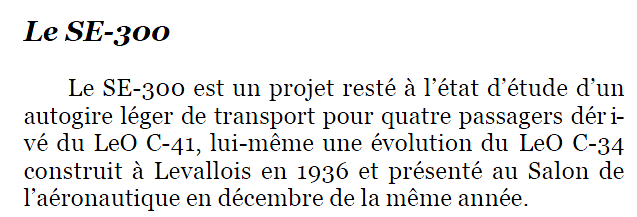
I have serious doubts about Hartmann source, such as SE.300 and C.41 autogiro projects. I do not have any evidence from Lioré et Olivier primary sources about these designations. I prefer not to spread dubious references.What about LeO C.41 autogiro ?.
Last edited:
- Joined
- 25 June 2009
- Messages
- 15,515
- Reaction score
- 9,447
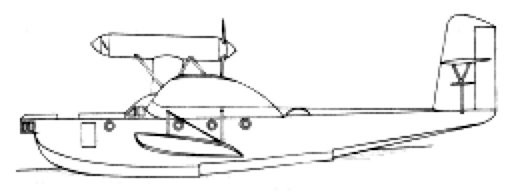
can I ask you about LeO H-26,and if it was a military or civil project ?
I'm afraid I do not have answer. There is no information about the category or planned usage in the plans I have.
The image you shared in your PDF strongly suggests a military type (there seems to be a gunner position in the nose):
- Joined
- 26 May 2006
- Messages
- 38,288
- Reaction score
- 20,425
I have serious doubts about Hartman source, such as SE.300 and C.41 autogiro projects. I do not have any evidence from Lioré et Olivier primary sources about these designations. I prefer not to spread dubious references.
May you are right.
Attachments
- Joined
- 25 June 2009
- Messages
- 15,515
- Reaction score
- 9,447
I have serious doubts about Hartman source, such as SE.300 and C.41 autogiro projects. I do not have any evidence from Lioré et Olivier primary sources about these designations. I prefer not to spread dubious references.
I do not know Mr. Hartmann personally, but I respect his work, just as I respect yours. You make it sound like he might not be a respectable researcher... I know that you work from original company documents, and I don't know what he worked from, but I find it hard to believe that he would assert something as precise without having read it somewhere. The fact that his PDF file does not include his sources doesn't mean he invented things out of thin air! It would be interesting to contact him to find out.
On a related note, here is an extract from a posthumous biography of Jacques Lecarme, published in La jaune et la rouge N° 414, avril 1986. In this text, written by a Noël Daum, I found this strange reference:
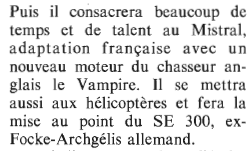
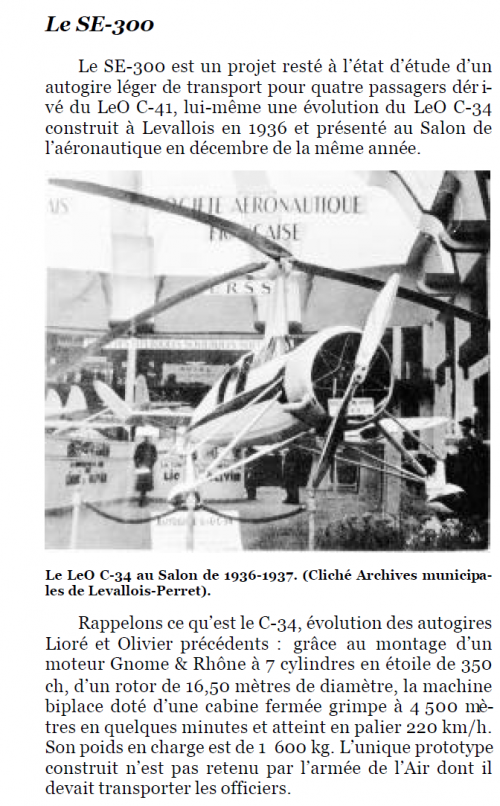
Now of course there are a couple of typos on "Archgélis", and it is unlikely that the SE 300 would be derived from a Focke-Achgelis type, but I find it interesting that in this article published years before the internet, and written in a non-aviation publication, someone could associate the designation "SE 300" with an autogyro.
- Joined
- 15 February 2024
- Messages
- 691
- Reaction score
- 1,875
This case is clearly a typo for the SE-3000, the French adaptation of the Fa 223 made by Pierre Renoux, with the support of Heinrich Focke himself. Lecarme was in charge of testing this twin-rotor hélicopter.On a related note, here is an extract from a posthumous biography of Jacques Lecarme, published in La jaune et la rouge N° 414, avril 1986. In this text, written by a Noël Daum, I found this strange reference:
View attachment 792775
Now of course there are a couple of typos on "Archgélis", and it is unlikely that the SE 300 would be derived from a Focke-Achgelis type, but I find it interesting that in this article published years before the internet, and written in a non-aviation publication, someone could associate the designation "SE 300" with an autogyro.
Last edited:
- Joined
- 26 May 2006
- Messages
- 38,288
- Reaction score
- 20,425
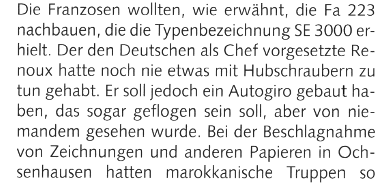
This case is clearly a typo for the SE-3000, the French adaptation of the Fa 223 made by Pierre Renoux, with the support of Heinrich Focke himself. Lecarme was in charge of testing this twin-rotor hélicopter.
But that's not a typo,it's real.
Attachments
- Joined
- 15 February 2024
- Messages
- 691
- Reaction score
- 1,875
Yes, this is exactly what I wrote: it is the SE 3000.But that's not a typo,it's real.
The previous document in message #93 mentions "SE 300", which is a typo (300 instead of 3000).
- Joined
- 25 June 2009
- Messages
- 15,515
- Reaction score
- 9,447
Thanks for clarifying this. Of course it makes sense, I was thinking "autogyro" and had forgotten about the Fa 223 becoming an SNCASE type.Yes, this is exactly what I wrote: it is the SE 3000.
The previous document in message #93 mentions "SE 300", which is a typo (300 instead of 3000).
- Joined
- 25 June 2009
- Messages
- 15,515
- Reaction score
- 9,447
I wasn't referring to Hartmann's text but to the other item I shared in post #93.But Hartmann continued description it as autogiro and not Fa.223 ?.
- Joined
- 26 May 2006
- Messages
- 38,288
- Reaction score
- 20,425
I wasn't referring to Hartmann's text but to the other item I shared in post #93.
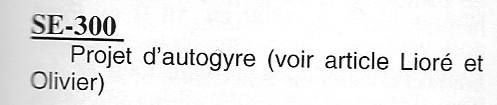
OK,but I speak generally,the SE.300 was an autogiro as many sources,such
as TU magazine,which indicated as LeO C.34 development
Attachments
- Joined
- 25 June 2009
- Messages
- 15,515
- Reaction score
- 9,447
But it is also possible that TU used Hartmann as its source! TU, like every other publication, can make (or repeat) mistakes, which is why I agree with Philippe that primary sources are essential (though difficult to find!)OK,but I speak generally,the SE.300 was an autogiro as many sources,such
as TU magazine,which indicated as LeO C.34 development
- Joined
- 26 May 2006
- Messages
- 38,288
- Reaction score
- 20,425
But it is also possible that TU used Hartmann as its source! TU, like every other publication, can make (or repeat) mistakes, which is why I agree with Philippe that primary sources are essential (though difficult to find!)
We have a magic solution,it's "re-allocated",I think that both
of them are right.
- Joined
- 15 February 2024
- Messages
- 691
- Reaction score
- 1,875
Sorry, but I disagree.We have a magic solution,it's "re-allocated",I think that both
of them are right.
The SE 300 was the former Romano 111, designed to answer A19 technical program in category T3. It was ordered under reference 117/7 the 14th September 1937.
There is also an ambiguity with the "SE 300T" which is a project launched during WW2 for a 300 tons flying boat derived from SE 200, tested on wind tunnel in Toulouse in 1945.
Pierre Renoux have only started using the series 3000 assigned to his department by SNCASE during the war. Before, he kept C-xx designation for his designs up to 1945 (for C-302). I asked people who worked for the autogiro department, then helicopter division all their life. I also had access to huge original sources from LeO and SNCASE documentation. I found no trace neither of such "C.41" nor "SE.300" autogiro projects. So, until you provide an original source, I consider them as unverified legend, nothing more. As a consequence, I exclude them from my lists.
Hartmann has published a lot of very good information. Unfortunately, he also published many errors, incoherencies and unverified information in the middle of his documents. So I cannot consider his site and books as reliable enough.
Claveau has only repeated the information from Hartmann, so the source is the same. Do not think that because you found an information in 2 publications, it is more reliable, most of the time, the source is the same, then in case of error, it is repeated more and more (and you participate actively to this dissemination).
Last edited:
- Joined
- 25 June 2009
- Messages
- 15,515
- Reaction score
- 9,447
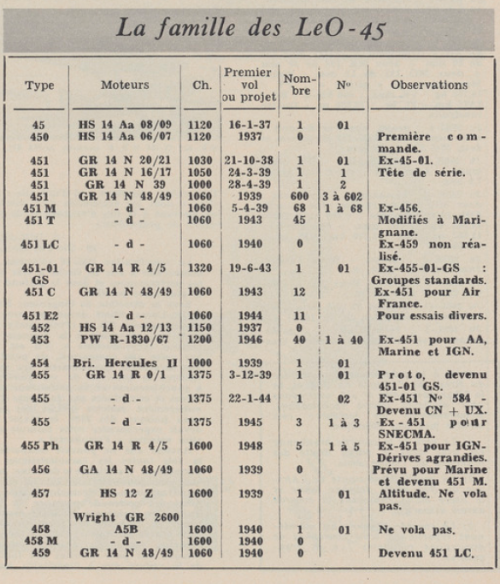
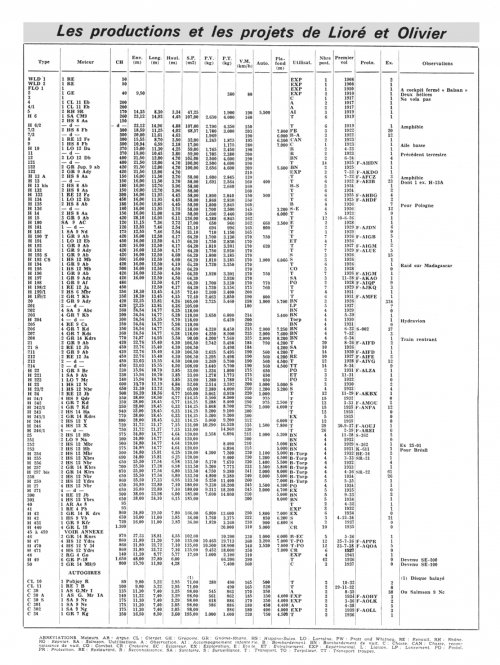
From Aviation Magazine 1971
And the rest of the designations list from the same source. But beware! It contains many omissions and a few mistakes...
Attachments
- Joined
- 25 June 2009
- Messages
- 15,515
- Reaction score
- 9,447
I have used Philippe's research work as a basis for one of my Excel files (attached below).
Most of what's in there is what he wrote, but I added a few things here and there: early aircraft build by LeO for others, a few dates and people. In places where I had different information (notably the engine variants) I indicated the alternate info in parentheses with question marks.
I added all known civil registrations and the corresponding construction numbers.
I also corrected what I believe were mistakes or omissions (mostly in the autogiro section). One misconception in particular is the idea that the CL 20 was just the CL.10B redesignated, which it was NOT. The CL 10B was built by LeO in 1932 and served as a basis for the later CL 20, in which LeO was not involved whatsoever. It's easy to compare photos of both to see a number of differences. Also, a date was given for the first flight of the CL 11 although it is described as a "project only." Brooks's book, which I hold as the most authoritative book on Cierva autogiros, says that it was apparently built but no information could be found. It also mentions a CL 10A which may have been an autogiro seen at Hanworth in 1932, two years before the CL 10B, but that needs confirmation.
The goal here is to have something that is as accurate as possible, so if any of you spots a mistake or can fill in a blank box, please do so. I have used abbreviations in the columns but the second thumbnail provides the detailed explanation for them.
Also, if you see a way I can improve upon my Excel files, I'm all for it! Like all of my Excel charts, it is the latest version, and will be updated and replaced whenever necessary.
Most of what's in there is what he wrote, but I added a few things here and there: early aircraft build by LeO for others, a few dates and people. In places where I had different information (notably the engine variants) I indicated the alternate info in parentheses with question marks.
I added all known civil registrations and the corresponding construction numbers.
I also corrected what I believe were mistakes or omissions (mostly in the autogiro section). One misconception in particular is the idea that the CL 20 was just the CL.10B redesignated, which it was NOT. The CL 10B was built by LeO in 1932 and served as a basis for the later CL 20, in which LeO was not involved whatsoever. It's easy to compare photos of both to see a number of differences. Also, a date was given for the first flight of the CL 11 although it is described as a "project only." Brooks's book, which I hold as the most authoritative book on Cierva autogiros, says that it was apparently built but no information could be found. It also mentions a CL 10A which may have been an autogiro seen at Hanworth in 1932, two years before the CL 10B, but that needs confirmation.
The goal here is to have something that is as accurate as possible, so if any of you spots a mistake or can fill in a blank box, please do so. I have used abbreviations in the columns but the second thumbnail provides the detailed explanation for them.
Also, if you see a way I can improve upon my Excel files, I'm all for it! Like all of my Excel charts, it is the latest version, and will be updated and replaced whenever necessary.
Attachments
Last edited:
- Joined
- 26 May 2006
- Messages
- 38,288
- Reaction score
- 20,425
I added all known civil registrations and the corresponding construction numbers.
I also corrected what I believe were mistakes or omissions (mostly in the autogiro section). One misconception in particular is the idea that the CL 20 was just the CL.10B redesignated, which it was NOT. The CL 10B was built by LeO in 1932 and served as a basis for the later CL 20, in which LeO was not involved whatsoever. It's easy to compare photos of both to see a number of differences. Also, a date was given for the first flight of the CL 11 although it is described as a "project only." Brooks's book, which I hold as the most authoritative book on Cierva autogiros, says that it was apparently built but no information could be found. It also mentions a CL 10A which may have been an autogiro seen at Hanworth in 1932, two years before the CL 10B, but that needs confirmation.
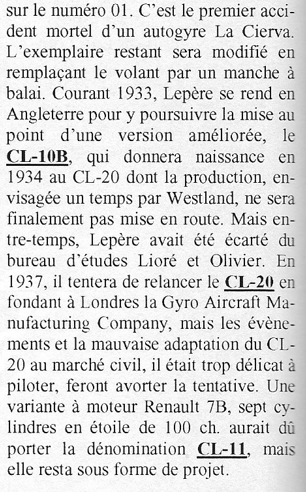
From TU 243,
on serial number O1. This was the first fatal accident involving a
La Cierva autogyro.
The remaining aircraft was modified by replacing the steering wheel with a joystick. In 1933, Lepère went to England to continue developing
an improved version, the CL-10B, which would lead in
1934 to the CL-20. Production of the CL-20, considered for a time by Westland, was ultimately not initiated. Meanwhile, Lepère had been dismissed from the Lioré and Olivier design office.
In 1937, he attempted to revive the CL-20 by founding the Gyro Aircraft Manufacturing Company in London, but events and the CL-20's poor adaptation to the civilian market—it was too difficult to fly—caused the attempt to fail.
A variant with a Renault 7B engine, a seven-cylinder radial engine producing 100 hp, was also developed. should have been designated CL-11, but it remained a project.
Attachments
- Joined
- 15 February 2024
- Messages
- 691
- Reaction score
- 1,875
Hi Stargazer.Also, if you see a way I can improve upon my Excel files, I'm all for it! Like all of my Excel charts, it is the latest version, and will be updated and replaced whenever necessary.
Please remove the name "Apophyse" from LeO 48. It is definitely not a name of the aircraft, but just a nickname given by Jean Liron in the title of his article published in Aviation Magazine in 1971, as well as "Les poules de couleur" for LeO H18 and H22, "Une négresse à plateau" for the H23 or "Le mille-pattes" for the H27.
Last edited:
- Joined
- 26 May 2006
- Messages
- 38,288
- Reaction score
- 20,425
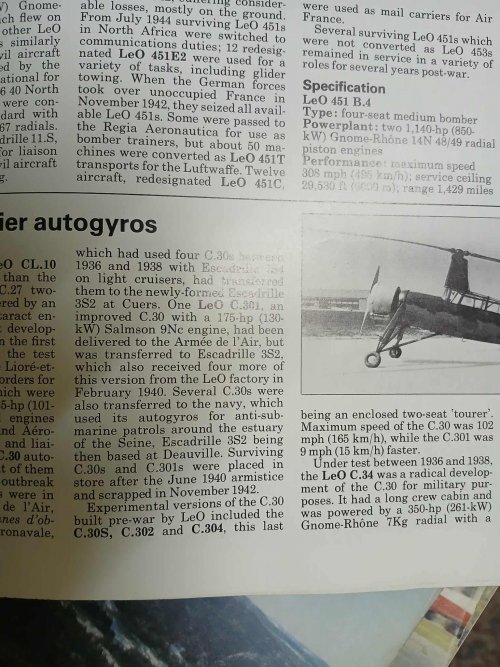
What about LeO C.304 (not C.34) ?.
The reliable source is A-Z magazine
Attachments
- Joined
- 15 February 2024
- Messages
- 691
- Reaction score
- 1,875
I think we don't have the same definition of "reliable".The reliable source is A-Z magazine

They say: "Experimental versions of the C.30 built pre-war by LeO included the C.30S, C.302 and C.304". For C.30S and C.302, this is right. But whether or not there was a project called "C.304", what is sure is that it was never built.
- Joined
- 25 June 2009
- Messages
- 15,515
- Reaction score
- 9,447
Hi Stargazer.
Please remove the name "Apophyse" from LeO 48.
Done.
I continue to research Lioré-et-Olivier, and as I dig deeper I realize that some more things need clarification, especially the early works:
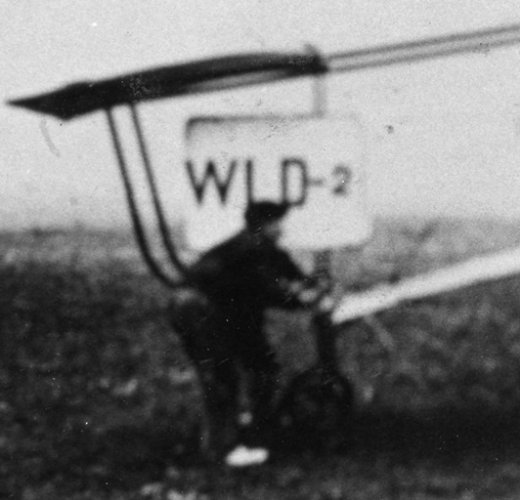
- "WLD": I have never come across that designation anywhere. The letters do appear on the tail of the second example, but there is no indication that it was ever used as a designation. The first example was completely rebuilt and flown in May 1909, the second example was flown in October of that year, but none of the period publications I've found give any designation, they just call them the "Witzig-Lioré-Dutilleul biplane."

- "LeO-1/LeO-2": again, it seems to me that these designations are attempts by historians to designate an airplane that never received a designation at the time. Aviation Magazine called both airplanes the LeO-2, and I'm also of the opinion that they were considered as one and the same type by Lioré. Also, the first example started off as a Witzig-Lioré-Dutilleul monoplane in period articles, though by the time of the second example, it was just a Lioré.

- FLO-1: this airplane was built by LeO in 1912 for engineer Leflot. Leflot's actual involvement in the project was is unclear, and it's also unclear who really designed the airplane, since Lioré wrote in 1942 that he had "designed and built that airplane conceived by Jacques Balsan" (which explains why it is often refered to as the "Balsan monoplane", although "Balsan" was not its actual name).

- Helicoplane: LeO built Viscount Decazes's four-rotor contraption in 1912.

- Zens monoplane: LeO built Paul Zens's second monoplane, also in 1912.

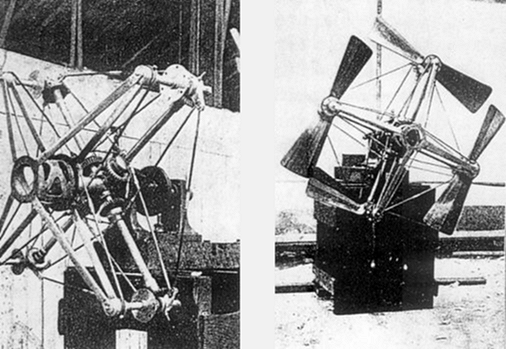
- Plaisant: Army Captain Gustave Plaisant, who had produced in 1910 a weird monoplane with a wing swinging left to right, devised in 1911 a cycliodal propeller system made up of four small propellers connected to a single cross-shaped support. He made conferences about it and the invention was widely covered by the press of the time, leading to LeO building a static testbed for Plaisant in 1912—but not an actual aircraft as I initially thought.

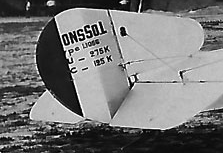
- Sopwith So.L: just like the Darracq-built ones were designated So.D, and the Hanriot-built ones were the So.H, the Lioré-et-Olivier-built Sopwith 1½ Strutter for the French Armée de l'Air were known as the So.L. They were of two different types: SOP.1 A2 for observation, and SOP.2 B2 for bombardment. Ateliers Lioré-et-Olivier put out 595 examples of them in total.
 The tail read: Avions So.L Type Lioré


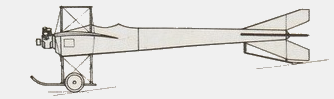
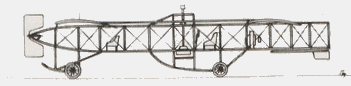
So as you can see, after the 1909-1910 monoplane, none of the LeO productions were indigenous designs. Which begs the question: what were actually the numbers #1 and #2 allocated to in retrospect when Lioré-et-Olivier began designing airplanes again in 1917? Did they call their first new project LeO-3 because the WLD biplanes of 1908-1909 were #1 and the twin-propeller monoplanes were #2? Or could the Sopwith So.L types have been LeO-1 and -2? I do not have a clearcut answer to this question... Wikipedia's "Leo 1" entry leads straight to the Sopwith 1½ Strutter page, though.
Something else I found both interesting and puzzling: the LeO-4 and LeO-7, both designed by Leflot, can also be found as FLO-4 and FLO-7. Did Leflot have a separate list for his designs (in which case, we don't know designs #2, 3, 5, 6)? Or did Lioré use "FLO" prefixes instead of "LeO" when Leflot was the designer? (in which case the FLO-1 would have to be LeO-1, which is exactly what Aviation Magazine International suggested in their LeO types list).
- Joined
- 25 June 2009
- Messages
- 15,515
- Reaction score
- 9,447
What about LeO C.304(not C.34) ?.
The reliable source is A-Z magazine
I think we don't have the same definition of "reliable".
An encyclopedia like that is like a popular science book, it can't be described as "reliable" in the way a specialized book by a renowned author is... So either someone mixed up "304" and "34", or it is another rumored version, the existence of which needs to be backed by some kind of proof.
- Joined
- 15 February 2024
- Messages
- 691
- Reaction score
- 1,875
I can at least answer this question with a photo showing the designation WLD-2 directly written on the tail of the plane.Done.
I continue to research Lioré-et-Olivier, and as I dig deeper I realize that some more things need clarification, especially the early works:
- "WLD": I have never come across that designation anywhere. The letters do appear on the tail of the second example, but there is no indication that it was ever used as a designation. The first example was completely rebuilt and flown in May 1909, the second example was flown in October of that year, but none of the period publications I've found give any designation, they just call them the "Witzig-Lioré-Dutilleul biplane."
View attachment 793102
Attachments
- Joined
- 15 February 2024
- Messages
- 691
- Reaction score
- 1,875
Another point: LeO opened his workshops to anyone who wanted them to build their own aircraft. I haven't attempted to compile a complete list, but there are others, such as Strandgren for example: https://www.secretprojects.co.uk/threads/cyclogyros-aircraft.2837/page-5#post-716787

- Joined
- 3 September 2006
- Messages
- 1,548
- Reaction score
- 1,698
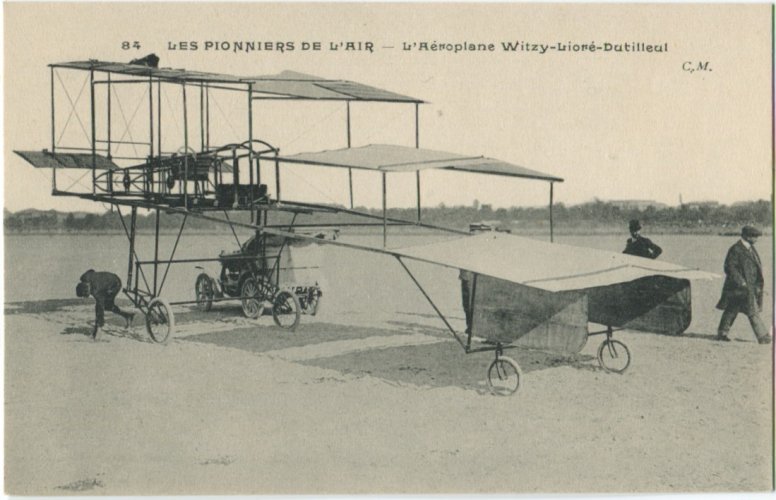
Stéphane, would you say this is the 1st, or the 2nd Witzig-Lioré-Dutilleul biplane? Letters "WLD" do not appear anywhere."WLD": I have never come across that designation anywhere.(...), they just call them the "Witzig-Lioré-Dutilleul biplane."
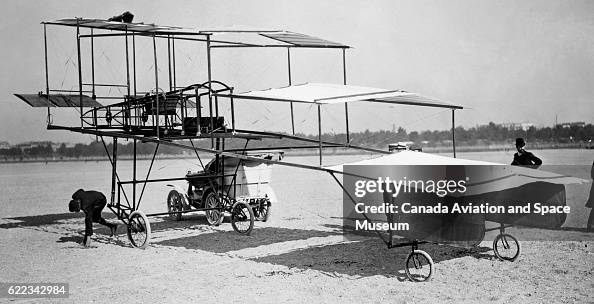
Source Getty images: https://www.gettyimages.com/detail/...dutilleul-news-photo/622342984?language=en-us
There is a nice 2048x1048 version of that photo on the page. AFAIK the source is JAWA 1913.
Mods, pls delete the above image if it is a problem. Getty says we can download and keep for 30 days, but not clear if it applies to SPF.
Last edited:
- Joined
- 25 June 2009
- Messages
- 15,515
- Reaction score
- 9,447
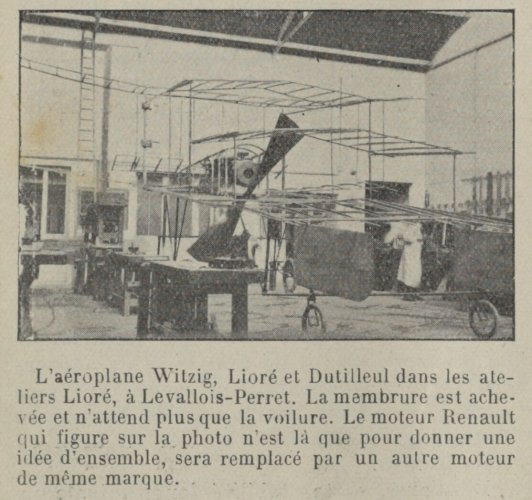
Stéphane, would you say this is the 1st, or the 2nd Witzig-Lioré-Dutilleul biplane?
Both examples were heavily modified along the way, so it's difficult to say, but I'm tempted to say it is the first one in its very first configuration, during construction. Note that it doesn't have its wings fitted here.
- Joined
- 15 February 2024
- Messages
- 691
- Reaction score
- 1,875
Another evidence of WLD usage: Lioré stand at the first aeronautical show at Paris, Grand Palais 1909."WLD": I have never come across that designation anywhere.
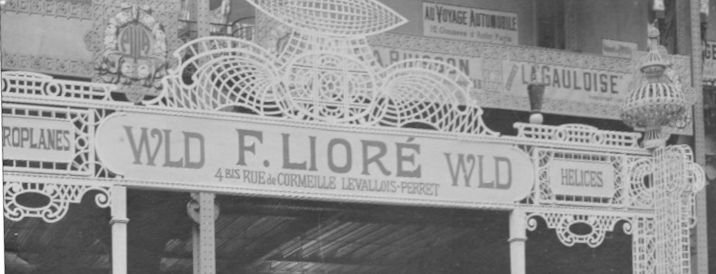
Last edited:
- Joined
- 15 February 2024
- Messages
- 691
- Reaction score
- 1,875
As far as I know, it is the first one, without engine.Stéphane, would you say this is the 1st, or the 2nd Witzig-Lioré-Dutilleul biplane? Letters "WLD" do not appear anywhere.
View attachment 793106
Attachments
Last edited:
Similar threads
-
 Lioré et Olivier (LeO) Prototypes & Projects
- Started by hesham
- Replies: 98
-
-

-
-