
You are using an out of date browser. It may not display this or other websites correctly.
You should upgrade or use an alternative browser.
You should upgrade or use an alternative browser.
PAH-2: alternatives to and evolution of the Tiger attack helicopter




- Joined
- 3 June 2006
- Messages
- 3,538
- Reaction score
- 6,212
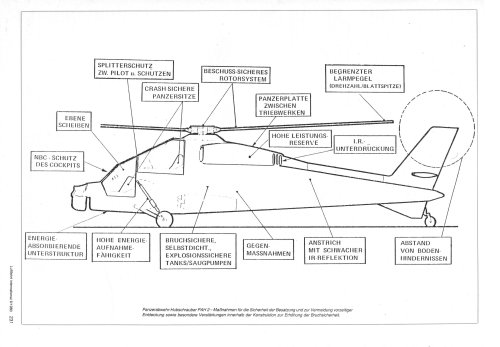
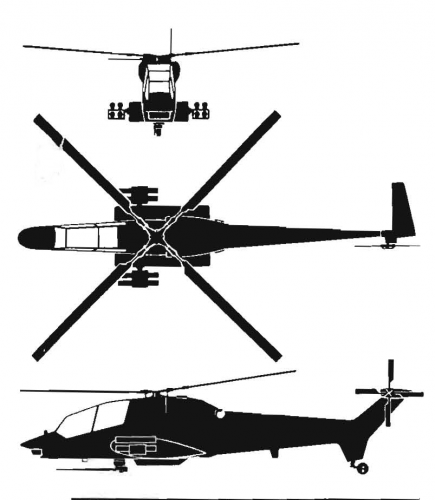
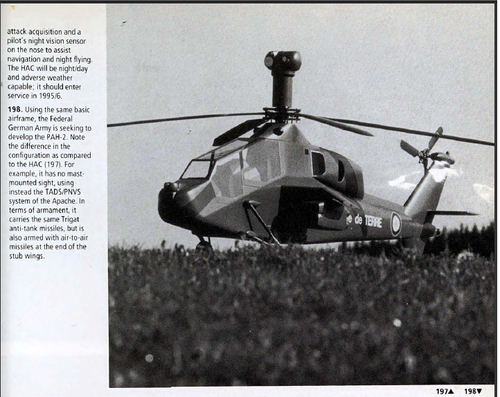
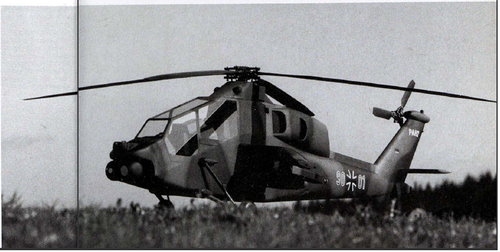
[...]Bell Model 249 Cobra PAH-2[...]
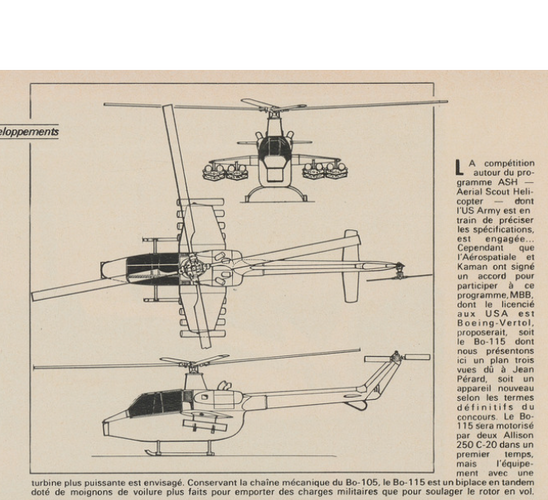
Some info and drawings of the PAH-2 for NATO.

- Joined
- 27 December 2005
- Messages
- 19,225
- Reaction score
- 35,636
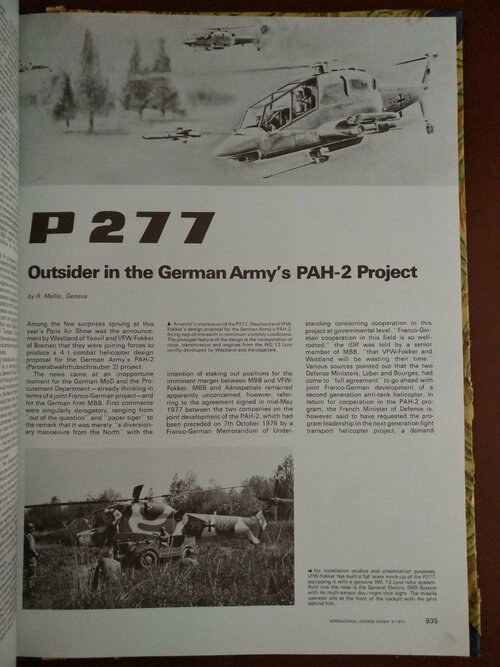
U.K.-German anti-tank helicopter
At the start of the Paris Air Show
Westland announced that they are
collaborating with VFW-Fokker of
Bremen on the design of a new anti-tank
helicopter, the P.277, intended to meet
the West German Army's PAH-2 (Panzer
Abwehr Hubschrauber) requirement.
Employing the Westland Lynx's rotor.
transmission and twin Rolls-Royce Gem
4 engines, the P.277 would have a maximum
mission weight of 9,500 lb., cruise
at 150 kt., climb at 2,650 ft./min., and
have a range of 315 naut. miles.
All-weather/night capability, nap-of-the-
earth agility and high speed are
regarded as essential features and the
two-crew P.277 could be armed with
eight HOT or TOW missiles and a 20/30mm.
cannon in a chin turret, or twin
rocket pods, MATRA 550 missiles, and
a 7.62-mm. gun. Entry into service would
be around 1985-6.
Air Pictorial August 1977
Attachments

- Joined
- 6 November 2010
- Messages
- 6,351
- Reaction score
- 8,226
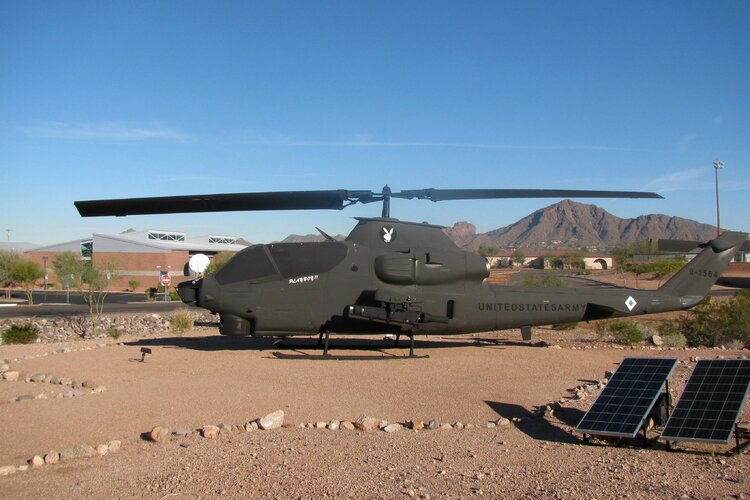
#34, picture -4: Bell AH-1S
Image found here: https://www.skytamer.com/Bell_AH-1S.html
Image found here: https://www.skytamer.com/Bell_AH-1S.html
Attachments

- Joined
- 18 October 2006
- Messages
- 4,776
- Reaction score
- 6,837
Ah! The "Mod S." Best helicopter ever made.#34, picture -4: Bell AH-1S
Image found here: https://www.skytamer.com/Bell_AH-1S.html

richard B
ACCESS: Secret
- Joined
- 17 August 2006
- Messages
- 349
- Reaction score
- 537
Thank you .#34, picture -4: Bell AH-1S
Image found here: https://www.skytamer.com/Bell_AH-1S.html
- Joined
- 27 December 2005
- Messages
- 19,225
- Reaction score
- 35,636

- Joined
- 25 June 2009
- Messages
- 15,515
- Reaction score
- 9,426
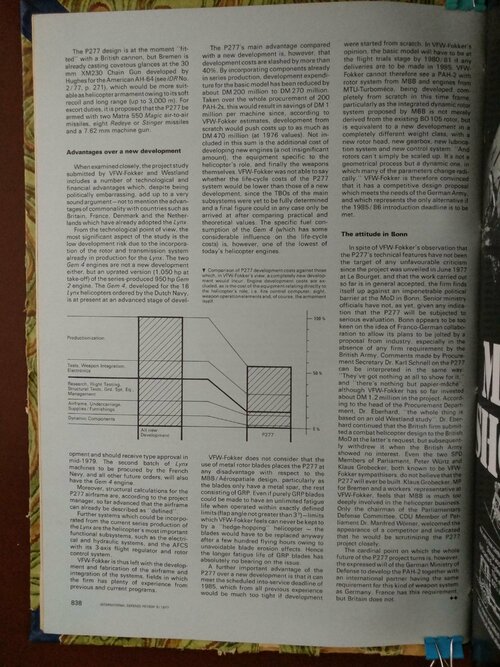
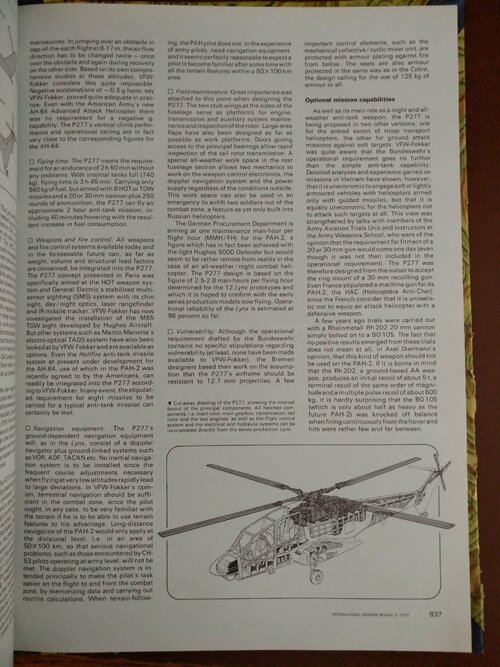
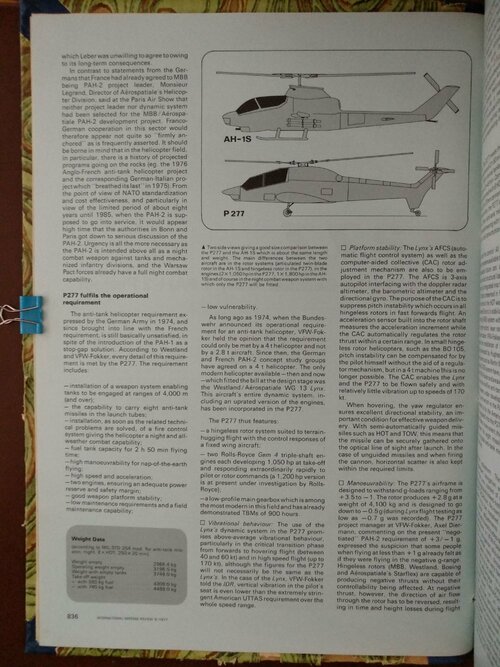
Westland-VFW Fokker P277:


Source: Westland and the Attack Helicopter – from Lynx to Apache, by Dr R V Smith (2020)
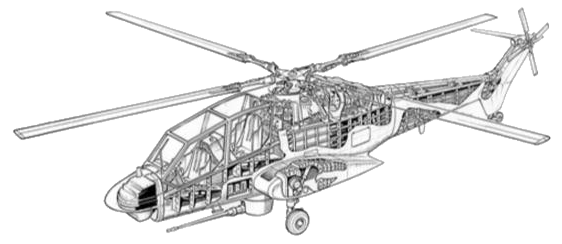
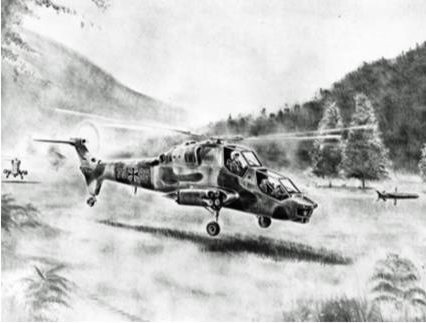
P277 followed from 1976 and was the identity assigned to the armed attack helicopter project collaboration between Westland and VFW-Fokker that was publicly announced in 1977 and which took as its baseline the Yeovil Future Project team’s “Wildcat” configuration. The aircraft was aimed at the emerging German army requirement for a second generation “Panzer Abwehr Hubschrauber” (PAH-2) to follow on the interim MBB BO105 based PAH-1. Extensive wind tunnel tests were completed for the first time on this configuration at the VFW-Fokker facility in Bremen.(12)
A full-size mock-up was built by VFW-Fokker along with a human factors cockpit test facility. The only major change to the “Wildcat” configuration presented in 1975 was a further engine upgrade to the Gem 4 standard and an increase in maximum take-off weight to 4,760 kg (10,500 lb). During the detailed definition of this aircraft its canopy would once more be modified to a “stepped” arrangement, offering the pilot a much-improved view forwards in poor weather and also minimising the mass of armour separating the two cockpit stations (Figure 10).
The formal German PAH 2 requirement, thought imminent in 1977, was not actually formally issued until 1983, by which time the acquisition of VFW-Fokker by Messerschmitt-Bölkow-Blohm (MBB) in 1981, combined with the political desire for a Franco/German collaboration ruled out any possibility of the P277 being taken any further.
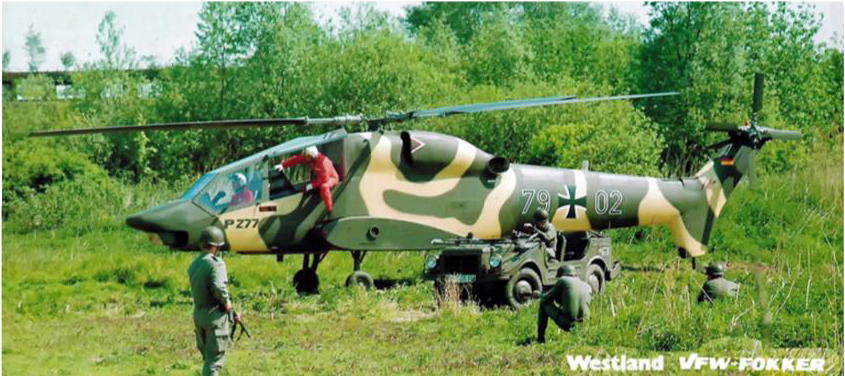
Source: Westland and the Attack Helicopter – from Lynx to Apache, by Dr R V Smith (2020)
- Joined
- 25 June 2009
- Messages
- 15,515
- Reaction score
- 9,426
Westland WG.37 Warrior:

Source: Westland and the Attack Helicopter – from Lynx to Apache, by Dr. R. V. Smith (2020).
All substantive work on a dedicated two seat armed attack variant of Lynx now ceased but the Future Projects group maintained a close relationship with the Operator through the auspices of the Military Advisory Liaison Team (MALT) based at Yeovil and staffed by Colonels Moss and Waddy, both retired.
Through this relationship the Company remained convinced that the Operators’ desires for an effective anti-armour weapon system would eventually result in a resurgence in UK interest in this class of vehicle. The P277 was a solution that could be implemented quickly and at the lowest possible cost but it did not offer a transformation of capability that was seen in some quarters as necessary to combat the Warsaw Pact (WP) threat to NATO. This desire was later to be carried through in large part to the flight performance requirements sought in the Light Attack Helicopter Staff Target GST3971, which is discussed further in Section 8.2.
A 1979 presentation to Major General Ian Baker of ACGS(OR) was intended to focus on a range of concepts that might realise significant commonality across a wide range of airframe types appropriate to all battlefield uses of rotorcraft.(13) The context was the extant “Pathfinder” R & D program that was envisioned as the route to fielding advanced technology for the rotors, transmission, and structures.
Alongside these ideas the Company presented its vision for a revolutionary combat rotorcraft by way of an example of the technological consequences of fielding significantly increased speed, agility and survivability. This was project WG.37 Advanced Combat Helicopter, aka “Warrior” in Project Office parlance, which had resulted from studies of high-speed rotorcraft configurations and technology, previously completed under the sponsorship of the RAE materials and Structures Department. “Warrior” was configured with a co-axial lift offset rotor having
Figure 10. P-277 schemes including stepped cockpit variant and full-size mock-up.both thrust and lift compounding. In some ways it mirrored the technology anticipated by the US Army 2004 Future Vertical Lift (FVL) program and the subsequent Future Armed Reconnaissance Aircraft (FARA) program initiated by the US Army during 2019.
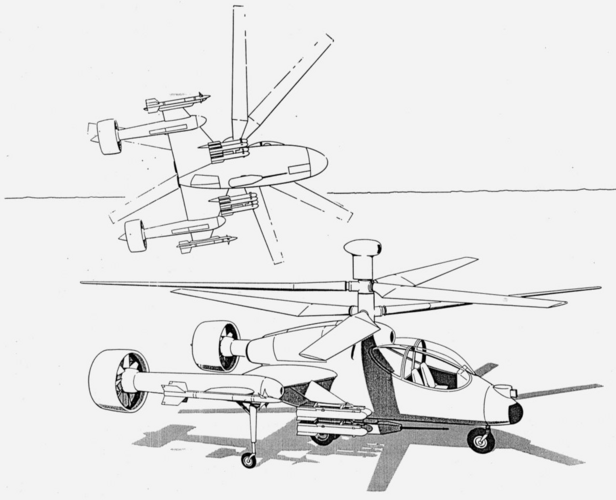
Source: Westland and the Attack Helicopter – from Lynx to Apache, by Dr. R. V. Smith (2020).
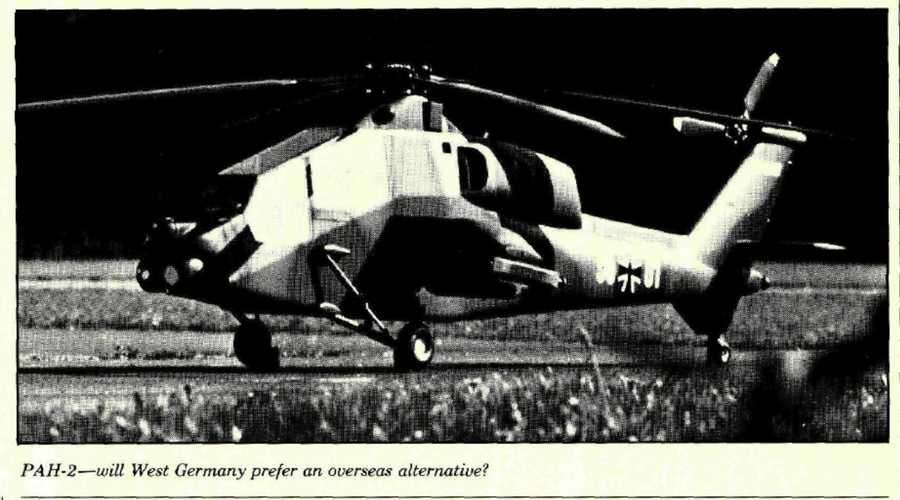
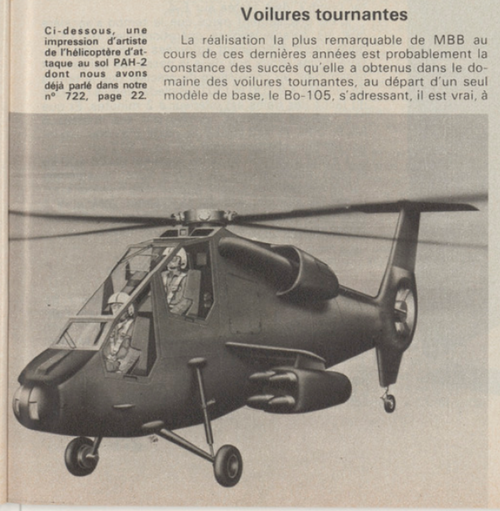
Wehrtechnik 12/1979 p.84
Joint definition phase for PAH-2 now underway
On the sidelines of the trilateral defense minister talks in Hamburg, the German and French defense ministers signed a memorandum of understanding on October 16 for a joint definition phase for the future Panzerabwehrhubschrauber 2 (PAH-2). The definition phase will last a total of eighteen months. After twelve months, an initial assessment will be made to see whether it is actually possible to develop a joint helicopter.
There are still too many unresolved issues, leading critics to claim that the MoU, which was signed after much back and forth, is already setting the stage for the next dispute. A whole series of points remain controversial: the biggest problem—especially for the Germans—is probably the financial viability of development and procurement.
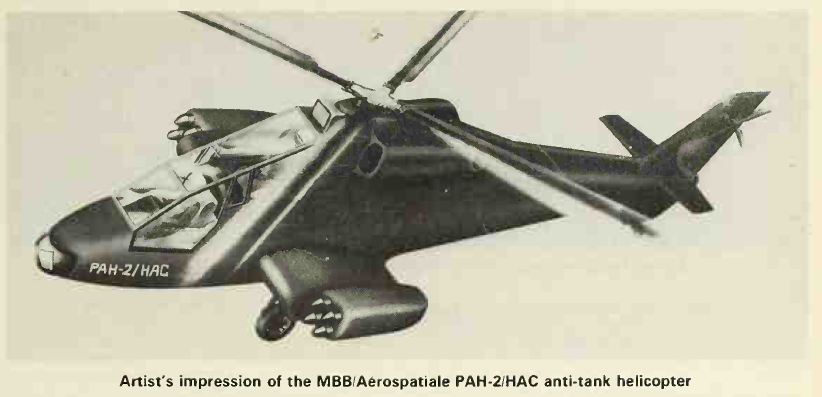
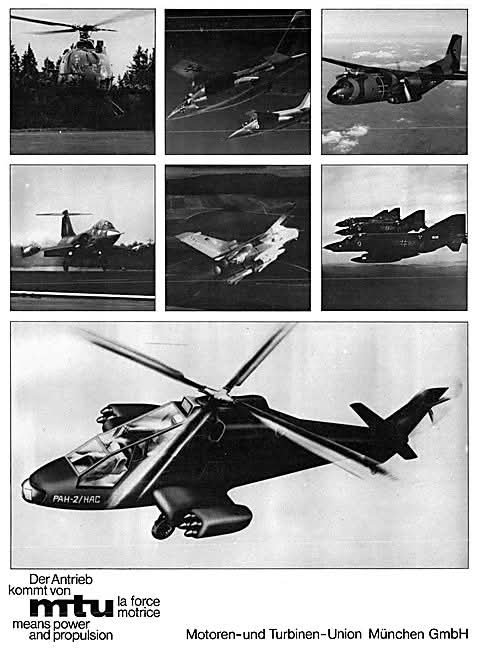
This has resulted in Germany wanting to use as many existing components as possible, or those introduced into NATO, i.e. American night vision equipment and avionics — both possibly from the US YAH-64 combat helicopter. The French, on the other hand, are advocating an entirely European solution, among other things to enable their own industry to gain expertise (and sales opportunities on the world market) in the night vision sector — an understandable desire given the overwhelming power of the US. In addition to armament, the number of engines is still undecided — there is currently a preference for twin engines. The basis for the definition phase — which is likely to cost around DM 20 million on the German side — is the joint proposal for a PAH-2 drawn up by MBB and Aérospatiale. MBB is to take the lead, and the division of work among subcontractors is still being negotiated.
For almost all joint programs above a certain size, the question will arise in the future, purely for cost reasons: develop everything ourselves or purchase mostly American components? This applies to the PAH-2 as well as to the TKF. Purchasing may bring cost savings and greater standardization, but it remains unclear whether America will supply us with state-of-the-art technologies in the long term without reimbursement of development costs and at acceptable unit costs if they know that Europeans are no longer pursuing certain technologies. This should be preceded by a kind of American-European agreement regulating the mutual provision of know-how.
Attachments
Last edited by a moderator:

Attachments
Scott Kenny
ACCESS: USAP
- Joined
- 15 May 2023
- Messages
- 19,517
- Reaction score
- 27,965
A tandem-seat attack fuselaged "Lynx Cobra" would have been a pretty spectacular performer.
Similar threads
-
 MBB BBH Armed Escort Helicopter
- Started by overscan (PaulMM)
- Replies: 26
-

-
 Russian Helicopters High-Speed Attack Helicopter (SBV)
- Started by Triton
- Replies: 35
-
 WG.13 / Lynx attack helicopter projects
- Started by uk 75
- Replies: 47
-
KB Vertical KT-112UD light attack helicopter
- Started by Triton
- Replies: 2