Hi Hecked,


There are some rare cases of simulated combat (or at least competitive display flying) involving new types recorded, for example for the Arado Ar 234 vs. the Me 262. However, these were rare, usually spur-of-the-moment things without systematical background, as far as I can tell.

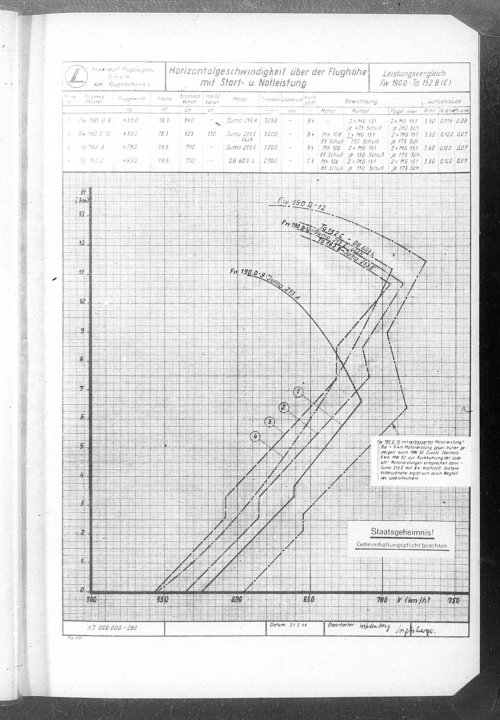
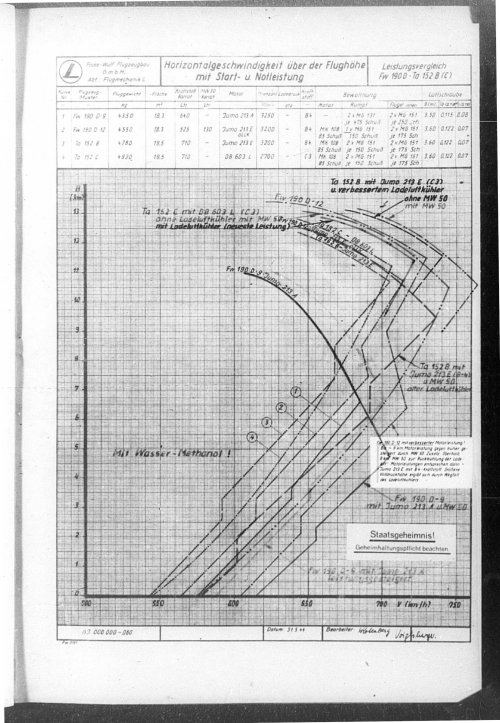
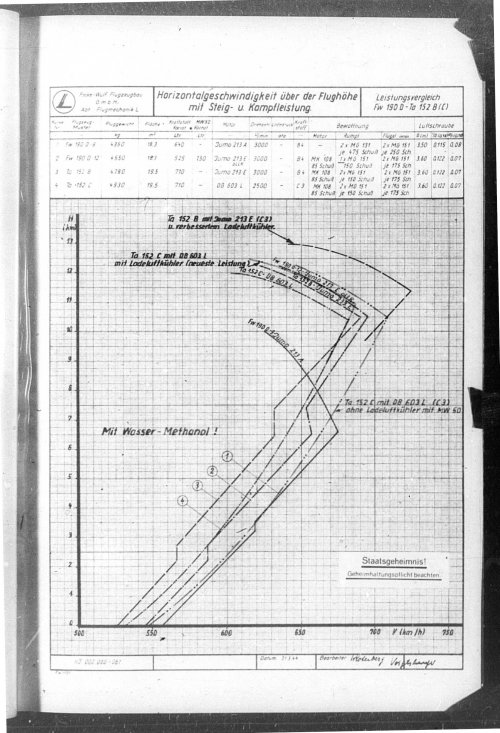
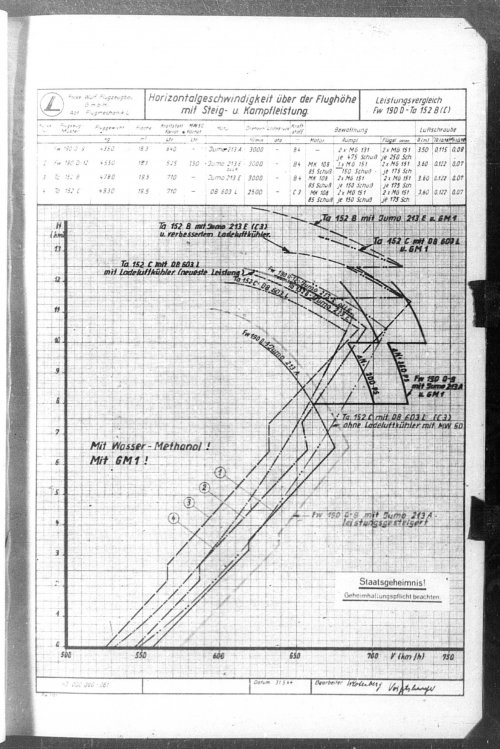
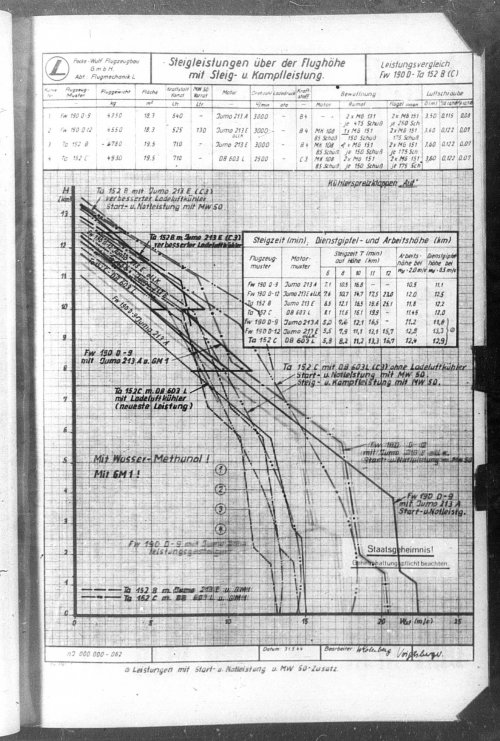
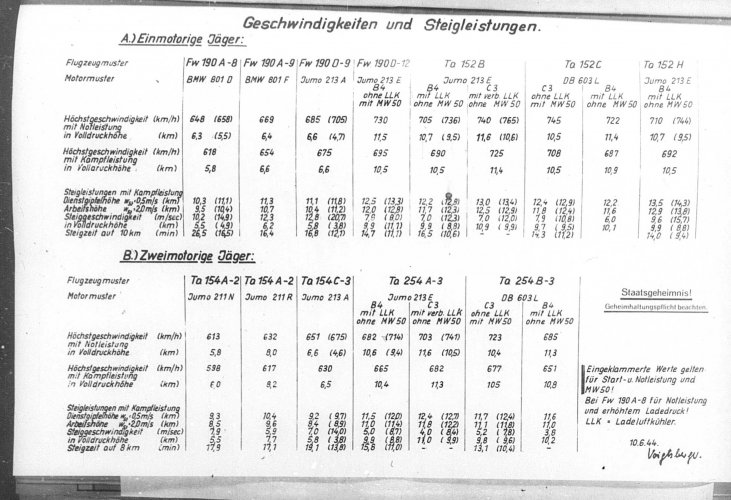
However, for the Me 109 vs. Ta 152C case, the results can be predicted fairly reliably from the known qualities of both types, the engine characteristics of the specific subtypes involved, and the speed curves that exist for some projected Ta 152C variants.

An Me 109K was a sports car in comparison to the Ta 152C, and though with a DB 605DC it might have "only" some 1800 HP near sea level, it was so much lighter that it would outclimb and outturn the Ta 152C, which basically was just a heavy Fw 190 with a marginally bigger wing, at all except maybe very high altitudes. With regard to speed, the Ta 152C with DB 603L would be inferior at low and medium altitude too, and only above the DB 605DC's full throttle height, the Ta 152C would have a speed advantage.

The roll rate certainly would favour the Ta 152C, since it basically had the very stiff Fw 190 wing with an only very slightly enlarged wing span, while the Me 109 always suffered from a somewhat flexible wing that reduced aileron effectiveness considerably at higher airspeeds. However, at the higher altitudes where the Ta 152C might be more competitive performance-wise, the fight would more likely take place at generally lower indicated airspeeds, where the Me 109 rolled reasonably well, too.

In the dive, the Ta 152C probably held all the advantages, though diving would bring it down to the lower altitudes where the Me 109 held a (bigger) performance advantage.

Your mileage might vary a bit depending on how much power you think the DB 605LA developed, and which flying weight you assign to each aircraft, but the general comparison really isn't so difficult since it's basically just another case of "Me 109 vs. Fw 190".

Regards,

Henning (HoHun)

I would rate the Ta 152C more as a single-engined destroyer not really suited to combat/dogfight the upcoming Allied super-props (Spiteful, Sea Fury, MB-5, P-51H, Bearcat, even the very late-mark Spits) which were about to emerge and maximized in virtually all performance parameters except turn (still better turners than Ta 152C).
This task would be rather one for the Ta 152H which, then again, still falls short against these opponents in low-to-medium altitude combat.
Hotrod Doras would have been better up to that though the scheduled fighter unit rosters saw a transition to Ta 152s only gradually phasing out Fw 190Ds (and Me 109s anyway).
Standardization seemed prioritized.
 
Last edited:
Dubious website. Won't register or download.
Looks like a phishing site. Considering I did not know of the site, how could I download five files today?
 

Attachments

  • Phishing Site.jpg
    Phishing Site.jpg
    56.5 KB · Views: 123
I would rate the Ta 152C more as a single-engined destroyer not really suited to combat/dogfight the upcoming Allied super-props (Spiteful, Sea Fury, MB-5, P-51H, Bearcat, even the very late-mark Spits) which were about to emerge and maximized in virtually all performance parameters except turn (still better turners than Ta 152C).
This task would be rather one for the Ta 152H which, then again, still falls short against these opponents in low-to-medium altitude combat.
Hotrod Doras would have been better up to that though the scheduled fighter unit rosters saw a transition to Ta 152s only gradually phasing out Fw 190Ds (and Me 109s anyway).
Standardization seemed prioritized.
The idea of the Ta 152C as a torpedo plane was abandoned due to the instability the plane had when carrying the torpedo. The Ta 152C was designated for combat at low and medium altitudes. It would replace the Antons, Doras and the F versions of the 190. So much so that the DB 603s chosen for the prototypes were the E, EM and EC, versions that are better at low and medium altitudes. The EC would probably be chosen, but because it only had its performance using C3 fuel, they changed it to the DB 603L/LA, which could receive both B4 and C3 fuel. Due to stability problems, they renewed the rear fuel tank of the fuselage and the MW-50, the total weight decreased. The reported weight of the C-0 only as a front fueled tank is 4,545 kg, but it did not have the wing tank, which would add another 368 kg to this total, which would leave the weight maximum takeoff weight at 4,913 kg, lighter than the maximum weight of the H1, P51 and Tempest, 4,913 kg assuming that all tanks are filled with fuel, since two wing tanks would receive the MW-50 load, totaling 150 liters of MW-50, and I don't know the weight of the MW-50
 
Hi Spicmart,

Hotrod Doras would have been better up to that though the scheduled fighter unit rosters saw a transition to Ta 152s only gradually phasing out Fw 190Ds (and Me 109s anyway).
Standardization seemed prioritized.

What the Luftwaffe specified was an Fw 190 development that was more heavily armed, carried a lot more internal fuel, and used an engine of the latest generation with improved performance.

The Dora couldn't use these engines, and I believe it was limited with regard to maximum take-off weight which precluded any big increase of fuel and weaponry.

Whether the Luftwaffe was justified in specifying the Ta 152C is an interesting question, but I would say they got what they asked for. (Of course, at a time when the war was as good as lost.)

Regards,

Henning (HoHun)
 
Hi Spicmart,


What the Luftwaffe specified was an Fw 190 development that was more heavily armed, carried a lot more internal fuel, and used an engine of the latest generation with improved performance.

The Dora couldn't use these engines, and I believe it was limited with regard to maximum take-off weight which precluded any big increase of fuel and weaponry.

Whether the Luftwaffe was justified in specifying the Ta 152C is an interesting question, but I would say they got what they asked for. (Of course, at a time when the war was as good as lost.)

Regards,

Henning (HoHun)

The last Lieferplan which offers a breakdown of production plans by sub-type (the very last ones just say 'Ta 152' without specifying which models) is 227 of December 15, 1944.

The eight Ta 152 models listed are the C-1, C-3, B-5, E-2, H-0, H-1, H-10 and S-1. Oddly enough, given our earlier discussion, they are all to be built from the outset with the R11 modification except the S-1. Note that LP 227 includes an 'E-2' but not an E-1. The difference appears to be that the E-2 had GM1 whereas the E-1 didn't.

C-1/R11, described as a 'leichter Jaeger' is due to start production (at MMW) in February 1945, ramping up to 635 per month by November 1945 (with ATG, SFH, GFW and WFG all coming onstream later) and continues indefinitely.
C-3/R11 schwerer Jaeger starts at SFH June 1945 (later also ATG and GWF), max. 425/month Oct. 1945 and on.
B-5/R11 Zerstoerer starts at Erla exclusively in May 1945, max. 200/month Oct. 1945 and on.
E-2/R11 Aufklaerer starts at MMW exclusively in March 1945, max. 80/month Jul. 45 and on.
H-0/R11 and H-1/R11 (no description, both lumped in together in the same figures) are said to already be in production at Focke-Wulf itself at a rate of 20 per month (later also Erla and GWF for the H-1/R11). Max is 600/month Jul. 1945 and on.
H-10/R11 Aufklaerer starts exclusively at MMW in May 1945, max. 20/month that same month, and on.

The S-1 Schulfz. is not new production - just a modification of existing C-1 airframes. It doesn't specify who's doing the modification work, but Focke-Wulf's own Muster Chart says it's B&V (April '45) and then DLH Prag (August '45).

Incidentally, LP 227 shows final Fw 190 D-11 production in May 1945. This is followed by phaseout of A-8 and D-9 production in July 1945. D-12 and D-13/R11 production then ends in September 1945. The Fw 190 F-8/9/16 continues in new production at a rate of 350 per month indefinitely.

All Bf 109 production is slated for phaseout. The Messerschmitt Bf 109 G (all except the G-10) is set to end in January/February 1945. The G-10 then follows in May 1945. The K-4 ends in November 1945 and the K-6 starts in March 1945, then ends in September 1945.
 
Last edited:
Hi Spicmart,


What the Luftwaffe specified was an Fw 190 development that was more heavily armed, carried a lot more internal fuel, and used an engine of the latest generation with improved performance.

The Dora couldn't use these engines, and I believe it was limited with regard to maximum take-off weight which precluded any big increase of fuel and weaponry.

Whether the Luftwaffe was justified in specifying the Ta 152C is an interesting question, but I would say they got what they asked for. (Of course, at a time when the war was as good as lost.)

Regards,

Henning (HoHun)
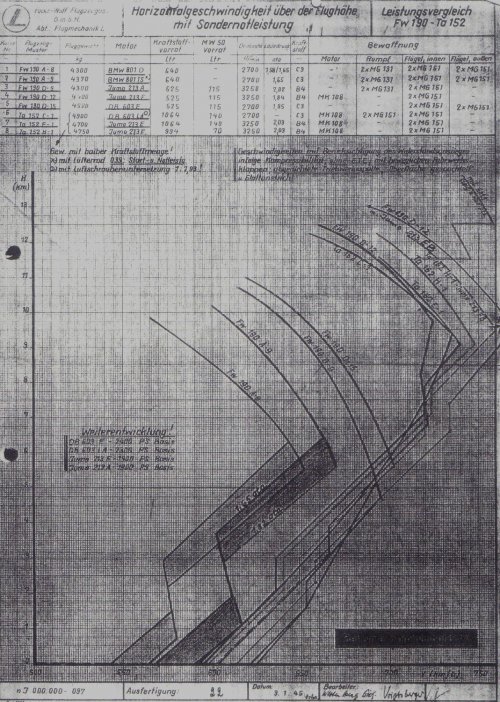
There is a graph showing a projected Dora performance with Jumo 213EB going off the chart and peaking at about 780 km/h.
Not sure if it could have housed the Jumo 213J as well. That one might have (b)reached the 800 km/h mark?

Testing of Allied superprops Spiteful, P-51H, CAC Ca-15, Sea Fury (Napier Sabre prototype) all almost reached or surpassed that mark as well.

The Anton and Dora wing was projected to carry tanks as well so the range difference to Ta 152 would be reduced.

With the Fw fighters having a reputation of being sturdy I wonder why their max take-off weight was lower than comparably big Allied props.
The empty weight of a Dora was about 3500 kg, its max weight was somewhat under 5 tons.
The Bearcat, a dimensionally larger airplane, was designed for carrier operations and, because of that, had to be more rugged and heavier than a landbased version of it. Yet its empty weight was about 3200 kg only while it's max weight is given as about 5900 kg. How could that be?
Similar case with Ta 152 (4000 kg / 5600 kg) and Sea Fury (4200 kg / 6600kg).

The Ta 152 was an attempt to implement all necessary improvements in one package, fair enough, but the weight creep worsened. On the contrary most of the superprops put emphasis on keeping the structure light to maximize aerobatic performance. In light of that and just thinking in dogfighting terms, though that might be limited given Germany's situation, I would put my money on development of the Dora.
Kurt Tank even once mentioned that this would have been the way to go when he looked back post-war.

But even for those directly involved it might have been problematic to assess the situation afterwards.
 
Last edited:
The last Lieferplan which offers a breakdown of production plans by sub-type (the very last ones just say 'Ta 152' without specifying which models) is 227 of December 15, 1944.

The eight Ta 152 models listed are the C-1, C-3, B-5, E-2, H-0, H-1, H-10 and S-1. Oddly enough, given our earlier discussion, they are all to be built from the outset with the R11 modification except the S-1. Note that LP 227 includes an 'E-2' but Focke-Wulf itself only ever seems to define an E-1.

C-1/R11, described as a 'leichter Jaeger' is due to start production (at MMW) in February 1945, ramping up to 635 per month by November 1945 (with ATG, SFH, GFW and WFG all coming onstream later) and continues indefinitely.
C-3/R11 schwerer Jaeger starts at SFH June 1945 (later also ATG and GWF), max. 425/month Oct. 1945 and on.
B-5/R11 Zerstoerer starts at Erla exclusively in May 1945, max. 200/month Oct. 1945 and on.
E-2/R11 Aufklaerer starts at MMW exclusively in March 1945, max. 80/month Jul. 45 and on.
H-0/R11 and H-1/R11 (no description, both lumped in together in the same figures) are said to already be in production at Focke-Wulf itself at a rate of 20 per month (later also Erla and GWF for the H-1/R11). Max is 600/month Jul. 1945 and on.
H-10/R11 Aufklaerer starts exclusively at MMW in May 1945, max. 20/month that same month, and on.

The S-1 Schulfz. is not new production - just a modification of existing C-1 airframes. It doesn't specify who's doing the modification work, but Focke-Wulf's own Muster Chart says it's B&V (April '45) and then DLH Prag (August '45).

Incidentally, LP 227 shows final Fw 190 D-11 production in May 1945. This is followed by phaseout of A-8 and D-9 production in July 1945. D-12 and D-13/R11 production then ends in September 1945. The Fw 190 F-8/9/16 continues in new production at a rate of 350 per month indefinitely.

All Bf 109 production is slated for phaseout. The Messerschmitt Bf 109 G (all except the G-10) is set to end in January/February 1945. The G-10 then follows in May 1945. The K-4 ends in November 1945 and the K-6 starts in March 1945, then ends in September 1945.
Can you give infromation why the C-1/R11 is classed as a light fighter? Don't have the stats.
 
There is a graph showing a projected Dora performance with Jumo 213EB going off the chart and peaking at about 780 km/h.
Not sure if it could have housed the Jumo 213J as well. That one might have (b)reached the 800 km/h mark?

Testing of Allied superprops Spiteful, P-51H, CAC Ca-15, Sea Fury (Napier Sabre prototype) all almost reached or surpassed that mark as well.

The Anton and Dora wing was projected to carry tanks as well so the range difference to Ta 152 would be reduced.

With the Fw fighters having a reputation of being sturdy I wonder why their max take-off weight was lower than comparably big Allied props.
The empty weight of a Dora was about 3500 kg, its max weight was somewhat under 5 tons.
The Bearcat, a dimensionally larger airplane, was designed for carrier operations and, because of that, had to be more rugged and heavier than a landbased version of it. Yet its empty weight was about 3200 kg only while it's max weight is given as about 5900 kg. How could that be?
Similar case with Ta 152 (4000 kg / 5600 kg) and Sea Fury (4200 kg / 6600kg).

The Ta 152 was an attempt to implement all necessary improvements in one package, fair enough, but the weight creep worsened. On the contrary most of the superprops put emphasis on keeping the structure light to maximize aerobatic performance. In light of that and just thinking in dogfighting terms, though that might be limited given Germany's situation, I would put my money on development of the Dora.
Kurt Tank even once mentioned that this would have been the way to go when he looked back post-war.

But even for those directly involved it might have been problematic to assess the situation afterwards.

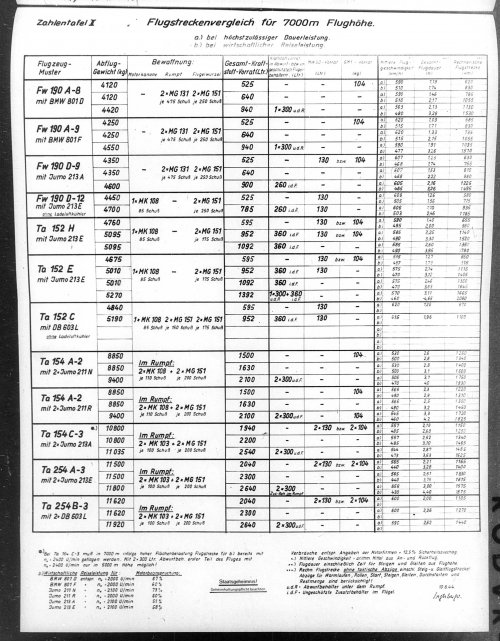
Maybe these will help.

060.jpg

060 2.jpg

061.jpg

061 2.jpg

062.jpg

Chart.jpg


Chart 2.jpg
 
Hi Dan,

Thanks a lot for the detailed breakdown! :)

The eight Ta 152 models listed are the C-1, C-3, B-5, E-2, H-0, H-1, H-10 and S-1. Oddly enough, given our earlier discussion, they are all to be built from the outset with the R11 modification except the S-1.

I believe that oddity can be explained by the research results regarding the possibility of long-range fire against bomber formation. While it was found that the desired combat range of 2000 m was entirely unrealistic, it was also discovered that a yaw damper would eliminate the otherwise inevitable aiming errors resulting from uncoordinated flight at the moment of firing (when the pilot naturally observed the target, not the turn and slip indicator).

Due to this insight, the Jägerkurssteuerung was made required equipment for any fighter, not just bad weather fighters as originally planned.

I found this information recently in some Bundesarchiv documents available on invenio, I guess I will have to make the effort to find the exact signature again when I am back at my place and re-united with my main computer.

Regards,

Henning (HoHun)
 
Hi Dan,

Thanks a lot for the detailed breakdown! :)


I believe that oddity can be explained by the research results regarding the possibility of long-range fire against bomber formation. While it was found that the desired combat range of 2000 m was entirely unrealistic, it was also discovered that a yaw damper would eliminate the otherwise inevitable aiming errors resulting from uncoordinated flight at the moment of firing (when the pilot naturally observed the target, not the turn and slip indicator).

Due to this insight, the Jägerkurssteuerung was made required equipment for any fighter, not just bad weather fighters as originally planned.

I found this information recently in some Bundesarchiv documents available on invenio, I guess I will have to make the effort to find the exact signature again when I am back at my place and re-united with my main computer.

Regards,

Henning (HoHun)
It would be interesting how such a device works.
 
Was the Me 109 wing more flexible than others because of its construction?
I mean not-continuous one-wing-spar design, large cut-outs for radiators/flaps, wheel-wells, slat mechanism and a large tip flanged to the wing.
Yes. Sometime in 1941 or 42 there was testing done by I believe the DVL that found the wing twisted at high speed, which is what caused the high aileron stick forces in the 109.

There was an attempt to remedy this with the V31, which besides that radiator and inward retracting gear also revised the wing structure to improve torsional stiffness.
 
There is a graph showing a projected Dora performance with Jumo 213EB going off the chart and peaking at about 780 km/h.
Not sure if it could have housed the Jumo 213J as well. That one might have (b)reached the 800 km/h mark?

Testing of Allied superprops Spiteful, P-51H, CAC Ca-15, Sea Fury (Napier Sabre prototype) all almost reached or surpassed that mark as well.

The Anton and Dora wing was projected to carry tanks as well so the range difference to Ta 152 would be reduced.

With the Fw fighters having a reputation of being sturdy I wonder why their max take-off weight was lower than comparably big Allied props.
The empty weight of a Dora was about 3500 kg, its max weight was somewhat under 5 tons.
The Bearcat, a dimensionally larger airplane, was designed for carrier operations and, because of that, had to be more rugged and heavier than a landbased version of it. Yet its empty weight was about 3200 kg only while it's max weight is given as about 5900 kg. How could that be?
Similar case with Ta 152 (4000 kg / 5600 kg) and Sea Fury (4200 kg / 6600kg).

The Ta 152 was an attempt to implement all necessary improvements in one package, fair enough, but the weight creep worsened. On the contrary most of the superprops put emphasis on keeping the structure light to maximize aerobatic performance. In light of that and just thinking in dogfighting terms, though that might be limited given Germany's situation, I would put my money on development of the Dora.
Kurt Tank even once mentioned that this would have been the way to go when he looked back post-war.

But even for those directly involved it might have been problematic to assess the situation afterwards.

It seems as though the reason for implementing the Ta 152 wingroot modification in the first place was to allow for bigger main undercarriage wheels to take more weight. Even then, max. weight was presumably limited by the synthetic rubber used in German tyres.
 
Hi Spicmart,

The Bearcat, a dimensionally larger airplane, was designed for carrier operations and, because of that, had to be more rugged and heavier than a landbased version of it. Yet its empty weight was about 3200 kg only while it's max weight is given as about 5900 kg. How could that be?

So I don't take this thread off-topic, I'm going to limit myself to a single post on this.

1) The Bearcat didn't have a liquid cooling system, so the powerplant was lighter.
2) The Bearcat's powerplant had a single-stage supercharger only, so it was lighter.
3) The Bearcat had a single internal tank, the Ta 152 had two internal fuselage tanks and 6 bladder tanks in the wings, carrying 65 % more internal fuel overall.
4) The Bearcat was designed with breakaway wingtips to reduce overall weight, which gave quite a bit of trouble in service and lead to a restriction of the airframe to 4 G until it was reinforced, most likely increasing weight over the published figures.
5) The Bearcat (at least the F8F-2) carried 61 kg of armour, the Ta 152 carried 150 kg.

Using the Ta 152C-0 with DB 603E as a baseline since it lacks the wing tanks, features a single-stage supercharger, and has an internal fuel capacity equivalent to the F8F's, according to my estimate (which includes some guesswork), the Ta 152 is actually very slightly lighter than the F8F-2 if one eliminates the difference in weight of arms, armour, weapons, ammunition, fuel load etc. (I was unable to eliminate the influence of the weapons mountings, which as far as I can tell are significantly heavy, with the Ta 152 mounting one cannon more than the F8F-2.)

(Note that the error margins are considerable, as the 1945 BuAer Characteristics and Performance for the F8F-1 gives different weights than the 1949 manual, and even the 1949 manual gives different "typical" take-off weights for the various F8F variants on two different pages. Also, I couldn't find the weight of the anti-detonant carried by the F8F-2, but as the 1949 manual points out that it will only be cleared after the engine tests have been finished, I guess the typical take-off weight didn't include any anti-detonant.)

In short, based on the limited and somewhat self-contradictory data from not fully consistent and contemporary sources, it doesn't look as if either aircraft type has a significantly heavier structure than the other, with total weight dominated by the differences in powerplant, fuel load and military equipment.

Regards,

Henning (HoHun)
 
Hi Dan,

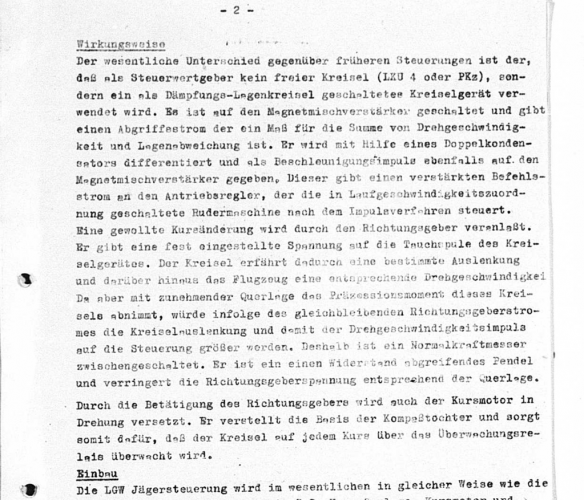
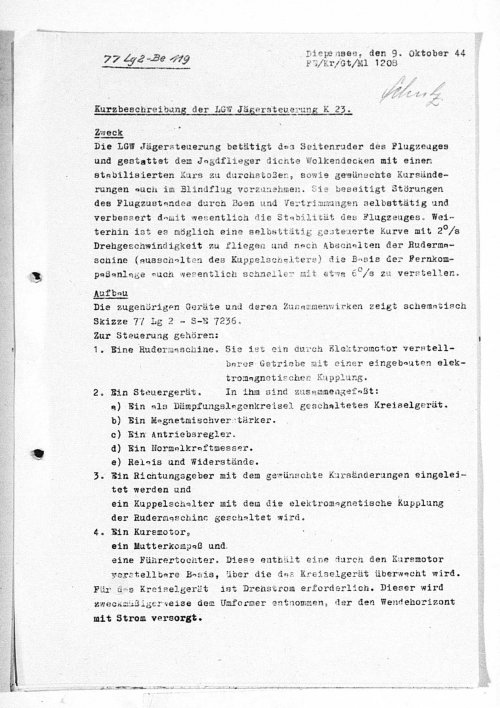
From the K 23 description:

View attachment 776934

From that description, it's not clear to me how the gunnery stabilization works, since it sounds as if the compass is always in the loop. I can't imagine using the course setting mechanism for a gunnery run would have been acceptable ;-)

But then again, I'm not an analog native! :-D

Regards,

Henning (HoHun)
 
From the description at the beginning, it does seem as though it could be used for gunnery stabilisation by automatically correcting unwanted 'disturbances' to the set course caused by gusts etc. But I've no idea how it would actually be used in practise.


K 23.jpg
 
Hi Dan,

From the description at the beginning, it does seem as though it could be used for gunnery stabilisation by automatically correcting unwanted 'disturbances' to the set course caused by gusts etc. But I've no idea how it would actually be used in practise.


View attachment 777372

Very interesting that this shows the original purpose of the Jägerkurssteuerung, penetrating thick clouds and accomplishing changes of direction under blind flying conditions.

I think this snippet is relevant for the gunnery question: "[The autopilot] automatically eliminates disturbances of the flight conditions by gusts and loss of trim and thus significantly improves the stability of the aircraft."

It seems the "Richtungsgeber" (direction sensor - or resolver, I guess) is responsible for course changes, so just disconnecting this unit would probably leave the stabilization function for gunnery as the autopilot's exclusive functionality. This is not even hinted at in that document, so maybe it was a later modification.

Regards,

Henning (HoHun)
 
Did the follow on Jumo 213EB and alleged Jumo 213J production for certain Fw-190s and Ta-152s ever cause them to have different designations?
 
Since the Ta-152 and late war doras are of interest to me...the yaw damper appears to have been specified due to testing feedback stating the H wasn't a great gun platform due to somewhat marginal yaw stability exaggerated by an aft CofG. And there was corrective work suggested for the CofG issues.

HoHun - recognise the name from X=Plane days a long time ago!
 
Hi Coanda,

HoHun - recognise the name from X=Plane days a long time ago!

Ah, the same Coanda! :) We had a great time with X-Plane back then!

Since the Ta-152 and late war doras are of interest to me...the yaw damper appears to have been specified due to testing feedback stating the H wasn't a great gun platform due to somewhat marginal yaw stability exaggerated by an aft CofG. And there was corrective work suggested for the CofG issues.

While there were indeed stability issues with the Ta 152, the introduction of the yaw damper was actually the result of research done on gunnery ... this and a string of subsequent posts have information on the background:

https://www.secretprojects.co.uk/threads/messerschmitt-me-p-1101.15737/page-2#post-611161
In short, research into increasing the effectiveness of fighter attacks against bombers found that yaw damping provided significant improvements of gunnery results.

I presume that the Jägerkursteuerung had originally been developed for bad weather flying, as pointed out by the document Dan posted, but then modified to provide a pure "artificial coordination" mode, too. I'm not entirely sure it's purely yaw damping, as the auto pilot actually seems to be a 3-axis device, so out of caution, I use a somehat generic term here.

Regards,

Henning (HoHun)
 
Did the follow on Jumo 213EB and alleged Jumo 213J production for certain Fw-190s and Ta-152s ever cause them to have different designations?

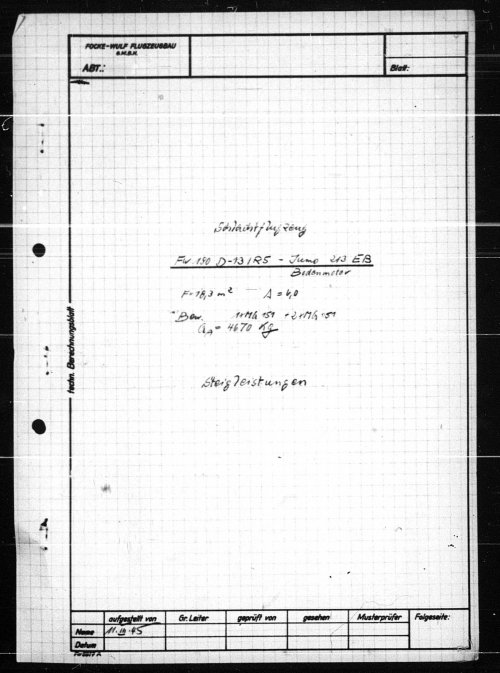
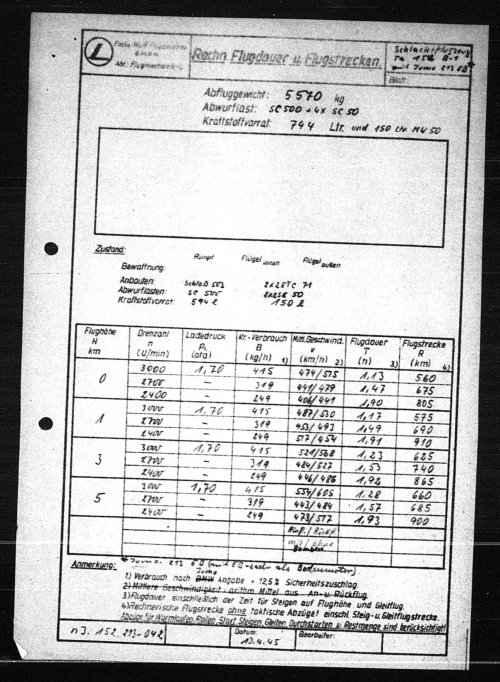
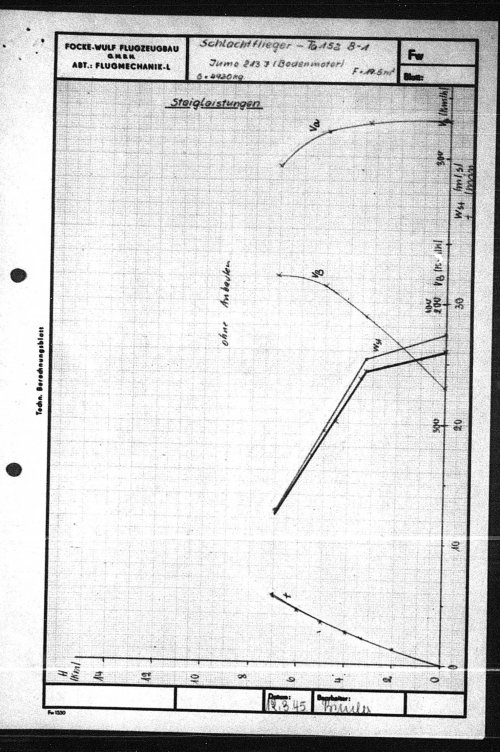
I don't think so. And I don't think they got as far as actual production planning for 190/152 types with those engines - just calculations and other paperwork.

D13 R5 213 EB.jpg

152 B1 213 EB.jpg

152 B1 213 J.jpg
 
Hi Coanda,


Ah, the same Coanda! :) We had a great time with X-Plane back then!


While there were indeed stability issues with the Ta 152, the introduction of the yaw damper was actually the result of research done on gunnery ... this and a string of subsequent posts have information on the background:

https://www.secretprojects.co.uk/threads/messerschmitt-me-p-1101.15737/page-2#post-611161
In short, research into increasing the effectiveness of fighter attacks against bombers found that yaw damping provided significant improvements of gunnery results.

I presume that the Jägerkursteuerung had originally been developed for bad weather flying, as pointed out by the document Dan posted, but then modified to provide a pure "artificial coordination" mode, too. I'm not entirely sure it's purely yaw damping, as the auto pilot actually seems to be a 3-axis device, so out of caution, I use a somehat generic term here.

Regards,

Henning (HoHun)
I read this somewhere in one of the books I have on the 152/dora. I will have to dig it out, maybe the report was referring to what you've pointed to.

Those days now do seem to be the best of times! I have the same hair tearing situations as I did with x-plane physics except now they're IRL aircraft!
 
That's rather cryptic. I translated your Portuguese and noted that the source you are citing is 'mention of two C-1/R31s in JG/301'.

A quick search reveals your likely reference as Manfred Griehl's Last Days of the Luftwaffe: German Luftwaffe Combat Units, 1944-1945. See below.

View attachment 776452

He mentions Stab/JG 301 having "only two aircraft, these being modern all-weather Ta 152 C-1/R31 fighters. Both machines were operational and equipped with K-23 auto-pilots".

I'm sorry to say that I believe this is a typo. The Focke-Wulf Muster Chart from March 21, 1945, shows the following:

View attachment 776453

Griehl put 'C-1/R31' but the bad weather variant of the Ta 152 generally was the R11, with the K 23 autopilot. As I say, there is no known contemporary evidence for an 'R31'.
Hello newsdeskdan,

may I ask from which source these documents come from? If from Bundesarchiv, under which signature can I find it? The Musterkarte and Entwicklungsmitteilung. I would be very interested.

Many thanks,
René
 
Hello newsdeskdan,

may I ask from which source these documents come from? If from Bundesarchiv, under which signature can I find it? The Musterkarte and Entwicklungsmitteilung. I would be very interested.

Many thanks,
René

I'm sorry to say that they came from the Imperial War Museum archive - photographed about seven years ago. Since COVID it has been inaccessible.
 
Bundesarchiv Files -- Fw 190 - Ta 152
Drawings & Documents

[CLICK "DIGITALISAT ANZEIGEN" TO VIEW THE FILES]

Signatur: R 3/3785
Flugzeug FW 190 - Einbauuntersuchungen verschiedener Triebwerke
https://invenio.bundesarchiv.de/invenio/direktlink/5102da5e-9a99-4ffe-9f6a-5eccb67359e1/
Signatur: R 3/3677
FW 190 / Ta 152 - Konstruktionszeichnungen - 1945
https://invenio.bundesarchiv.de/invenio/direktlink/0715c65a-1619-4df7-b60f-9f05ca9fdb7d/
Signatur: R 3/3675
FW 190 / Ta 152 - Planungs- und Konstruktionsunterlagen - 1943 - 1945
https://invenio.bundesarchiv.de/invenio/direktlink/ceaa43c8-f34d-4405-aabb-8c5aff379a7a/
Signatur: R 3/3723
FW 190 / Ta 152 - Entwicklungsmitteilungen - 1943 - 1944
https://invenio.bundesarchiv.de/invenio/direktlink/6f658c53-b6e4-44f1-871d-01fa8794cfa7/
Fw 190 / Ta 152 Variants & Projects
- FW 190 Rohrblock 108
- FW 190 SG 500
- FW 190 / Ta 152 -- X-4
- FW 190 Doppelreiter
- FW 190 Gero Flamethrower
- FW 190 SG 113
- FW 190 SG 116
- FW 190 MK 108 Schrägeinbau
- FW 190 BT 1400
- FW 190 / Ta 152 Sturmflugzeug
- Fw 190 / Ta 152 Erhöhte Panzerung
- Silikatglas Schiebedach
- Fw 190 D-12/R25 m. Jumo 213 EB
- Fw 190 A-10 - 01.05.1944
- Fw 190 Höhenjagdflugzeug - 29.11.1942
- Fw 190 Strahljäger - 05.11.1942
 
Last edited:
Ta-152 with Jumo 213 J

- Ta-152 C & H
- 4-bladed propeller VS-19
- enlarged empennage
- aerodynamically improved and enlarged wings
- 2700 hp
- 300kg exhaust thrust
Source: Flugzeug Classic 09/2006

The Ta-152 B-7 with Jumo 213 J was mentioned in "Kurt Tank - Konstrukteur und Testpilot bei Focke Wulf" by Wolfgang Wagner.


Chef TLR 26.2./4.3.1945
2.) Jumo 213 J
Dauerlauf auf 2700 PS-Basis wird fortgesetzt.
[Endurance test on 2700 hp basis continues.]

Chef TLR 16.3./4.4.1945
9-213
Für 8-190 als Schlachtflugzeug entwickelt Junkers den 9-213 EB als Schlächtermotor mit Einganglader mit 2400 PS in 3km Höhe, 10 Versuchsmotore in Fertigung.
[Jumo 213 EB for Fw 190 "Schlachtflugzeug", 2400 hp at 3 km altitude, 10 test engines in production.]

Lagebericht Abteilung E 3 - 21.12.1944
3) Jumo Motoren
Jumo 213 H (Vierventiler): 1. Voll-Motor Einlaufbeginn am 12. Dezember. Ziel: Leistungssteigerung auf Sondernotleistung 2600 PS. Nicht vor Herbst 45. Luftbedarfsmessungen noch nicht durchgeführt, da Schwierigkeiten im Aufbau.
[Jumo 213 H (four-valve), 2600 hp, Not before autumn 1945.]

Sources:
Google Books &
Bundesarchiv Files
RL 3/2567
RL 3/2572
 
Last edited:
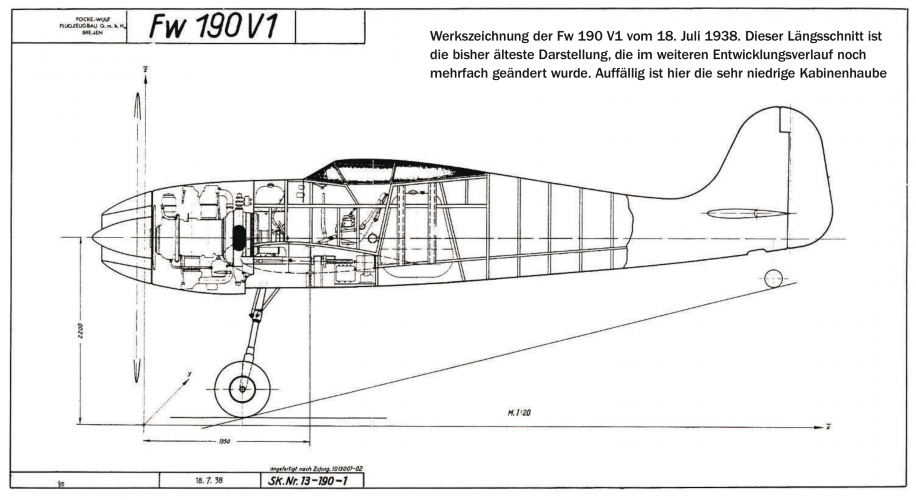
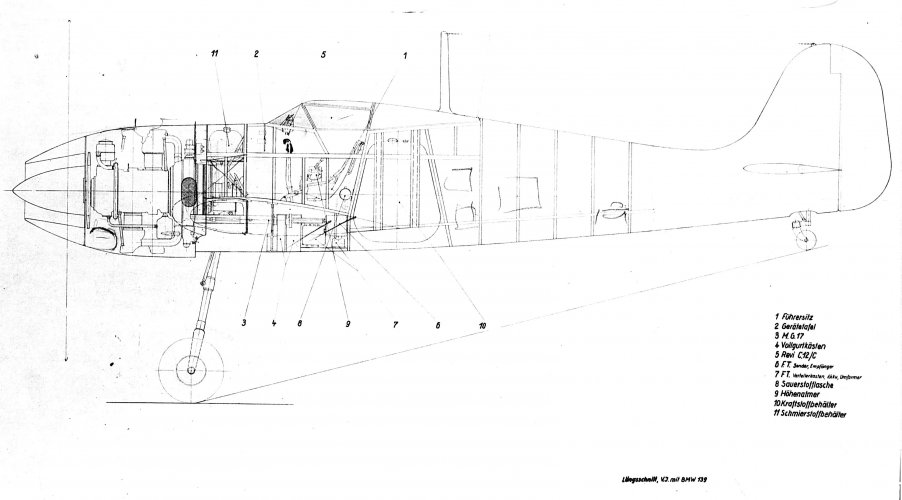
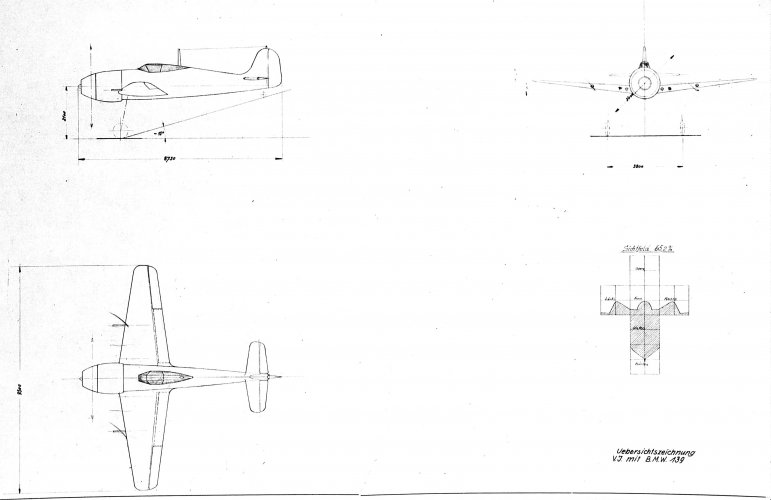
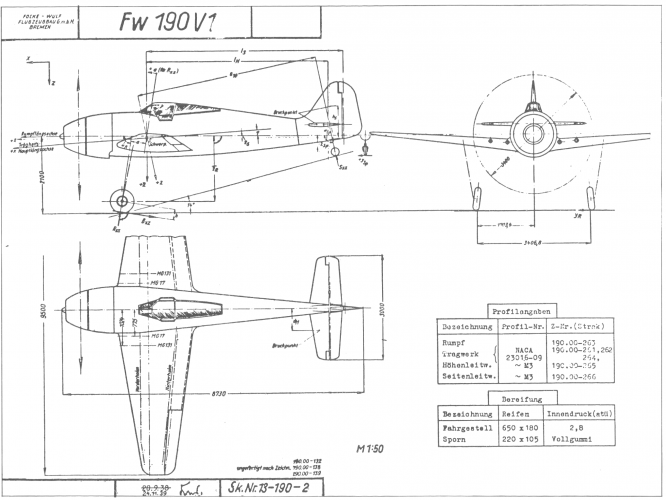
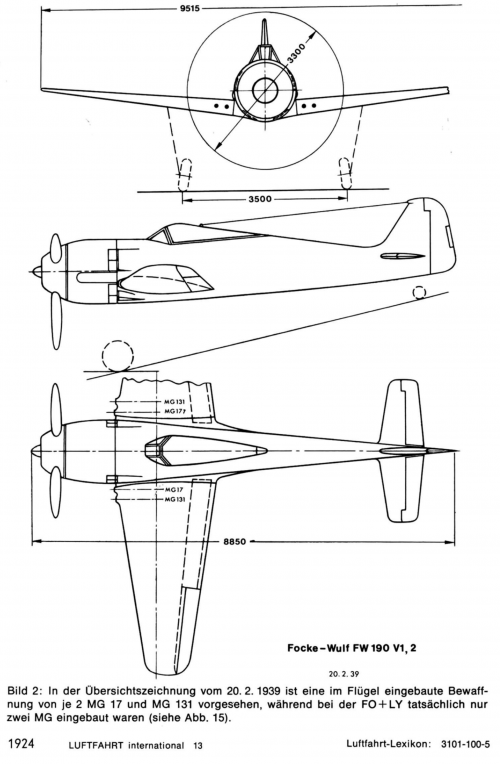
Trying to put the early 190 designs in chronological order

First known drawing, July 18 1938;
july 18 1938 fw190 v1.png
A bit over a week later in a slightly altered form;
july 27 1938 fw190 v1 1.jpg
july 27 1938 fw190 v1 2.jpg

By September 20th of the same year it had changed a bit more. Note that this drawing had its original date of 20.9.38 scribbled out and replaced by 24.11.39, which may imply that the dimensions and data is valid for the V1/2 despite the different style canopy and tail.
sept 20 38 fw190 v1.png
February 1939, this must be very close to final as the V1 would make its first flight about 4 months later.
Feb 20 1939 fw190 v1.png

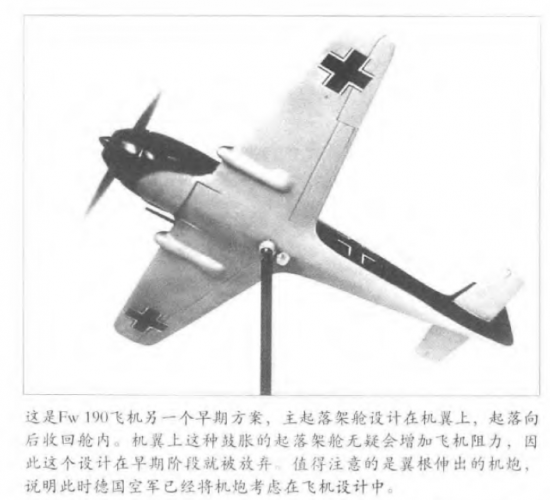
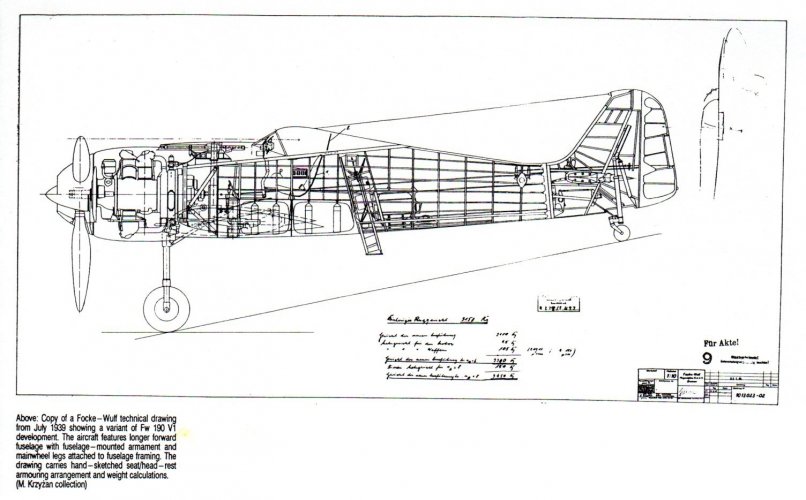
Then what must've been an interim design between the V1 and the series production. This is dated as July 39 and displays several major differences from the V1 series. such as fuselage mounted guns, a more rearward cockpit which also caused a relocation and splitting of the fuel tank, and most peculiar of all a P-40 style landing gear. This also had a much higher gross than the V1/2 yet appears to retain the BMW 139.
july 1939 fw190 v1.jpg

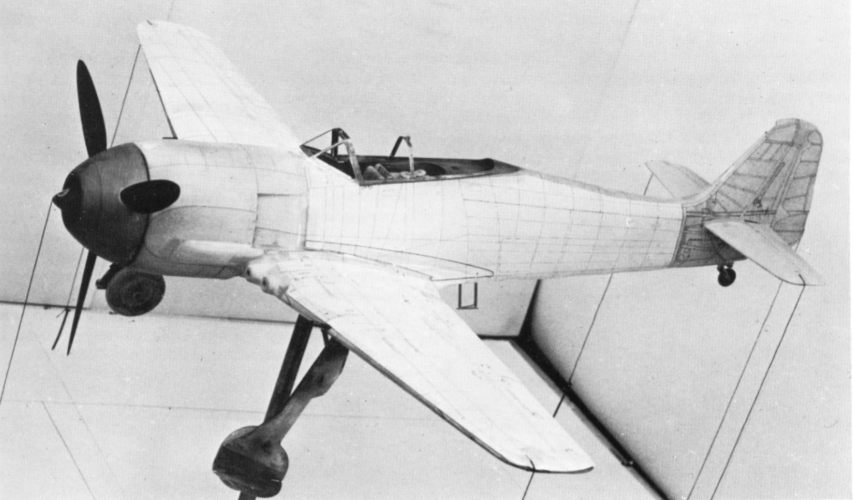
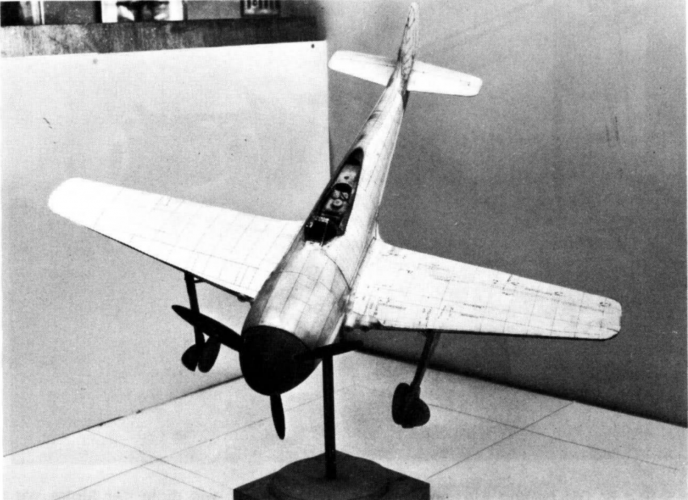
Then there are the models. This one matches the late 38 early 39 drawings;
fw190 v1 models 3.png fw 190 model 1.png
fw190 v1 models.png

This different model has the same style gear as the July '39 design. There are some other photos of this model but I can't find them at the moment;
fw190 v1 models 2.png

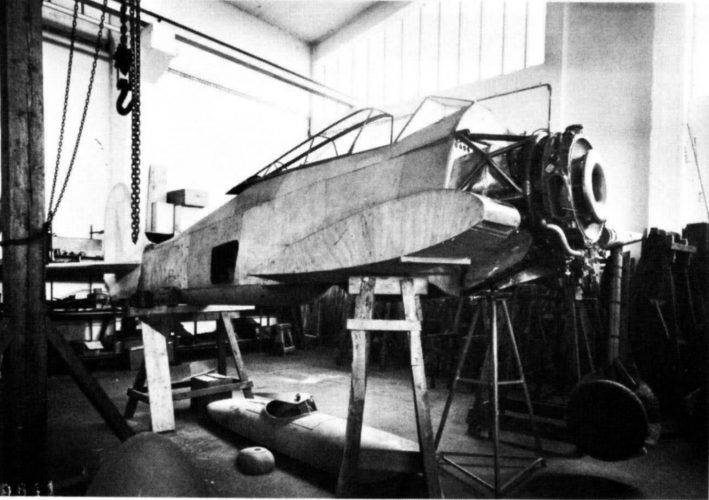
Then there is the mockup, built sometime in 1938.
fw 190 mockup.png
fw 190 mockup 2.png
 
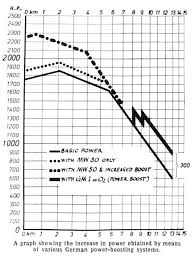
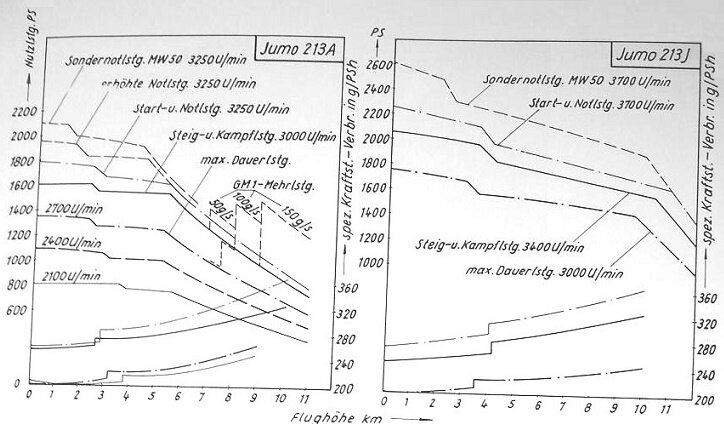
not even 100% but the hp rating does match up, so it might be a simplified graph(but at least it's something)
After some peek - graph is that of the DB 603A. Note that the line shape is that of the DB engines with hydraulically-driven supercharger, and that power line captioned 'basic power' is the same to the 603A. See here, from here.
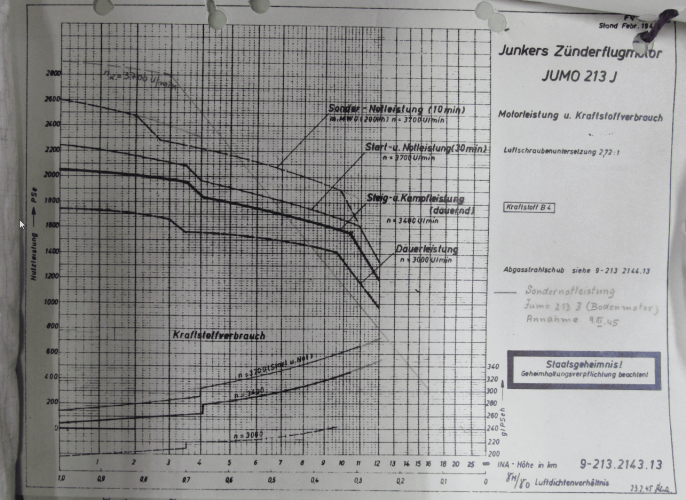
Jumo 213 engines have also the distinctive power curves, where even at 'basic power' the power at SL is higher than at ~2 km. See here, also the 213J.
 
After some peek - graph is that of the DB 603A. Note that the line shape is that of the DB engines with hydraulically-driven supercharger, and that power line captioned 'basic power' is the same to the 603A. See here, from here.
Jumo 213 engines have also the distinctive power curves, where even at 'basic power' the power at SL is higher than at ~2 km. See here, also the 213J.
I see
 
Hi Tomo,

@HoHun , @newsdeskdan
Do you people have some insight on the weight of the wing for the Fw 190A-6 when compared with the weight of the wing of the A-5?

I'm not a rivet counter! :-D

The manual "D. (Luft) T2190 A-5/A-6 Teil 0" with the general data on the two Fw 190 variants lists a Rüstgewicht of 3310 kg for the A-5 and of 3365 kg for the A-6. However, that would include the outer wing guns with their mountings, ammunition trays/drums, and associated equipment, so I'd not risk any conclusions with regard to the structural weights.

Regards,

Henning (HoHun)
 

Similar threads

Back
Top Bottom