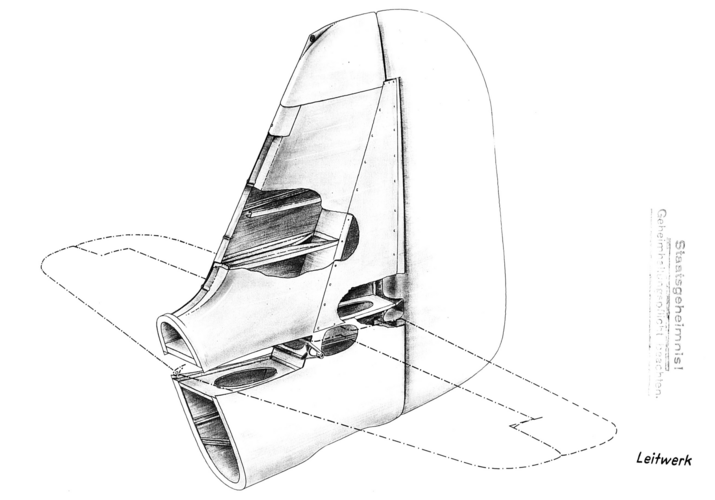
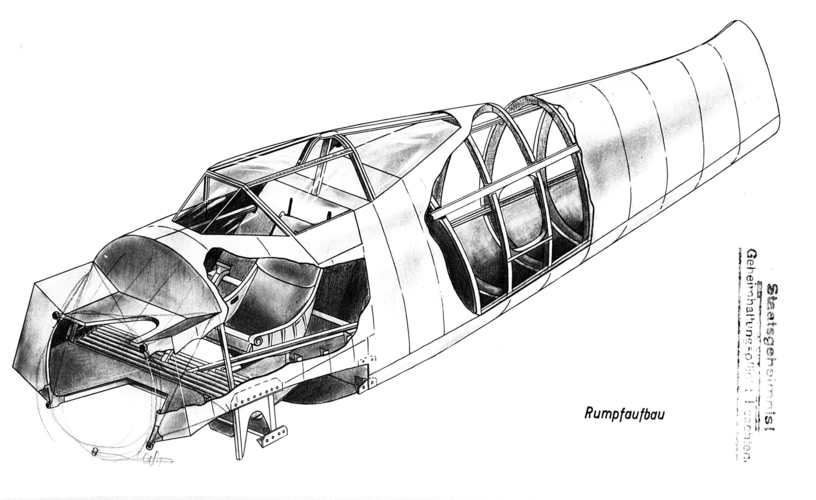
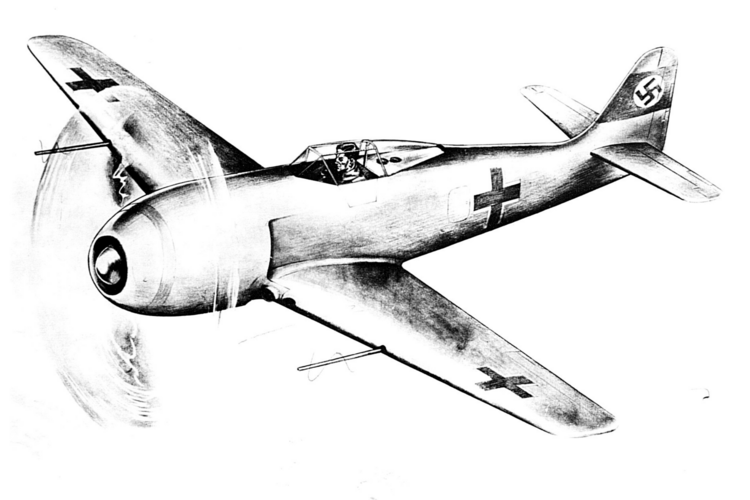
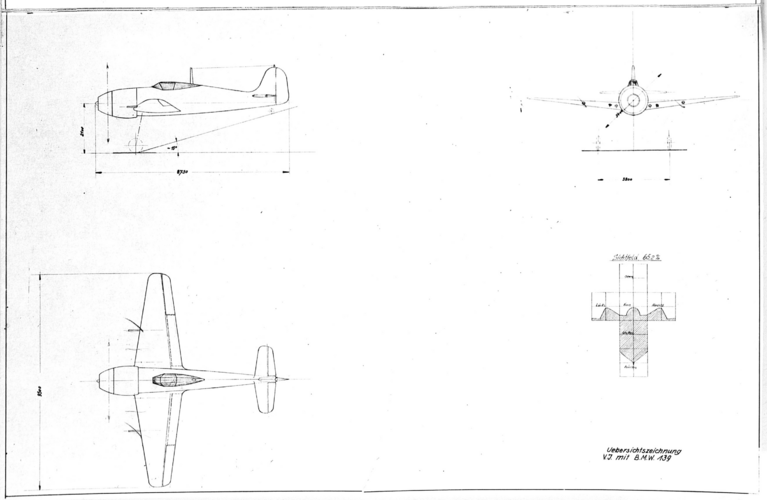
The Ta 152 book by Thomas Hitchcock was much anticipated back then.
Any opinions about it here whether it lives up to it?
 
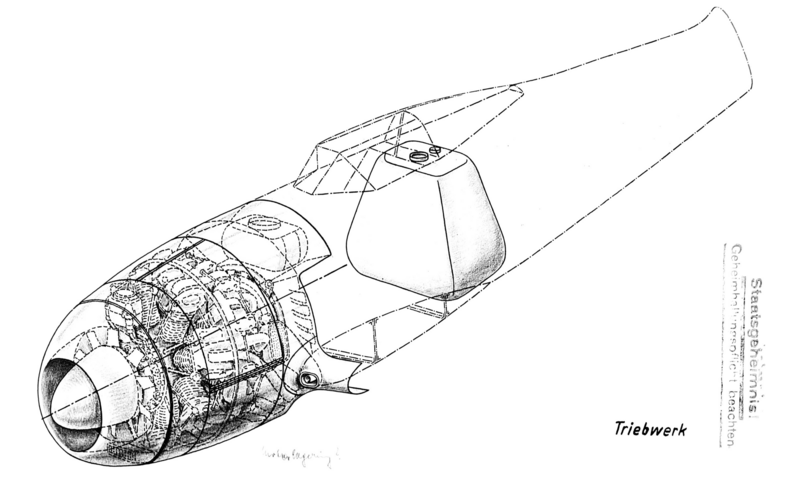
They really had a long way to go in developing the radiator/cowling at that point!
 
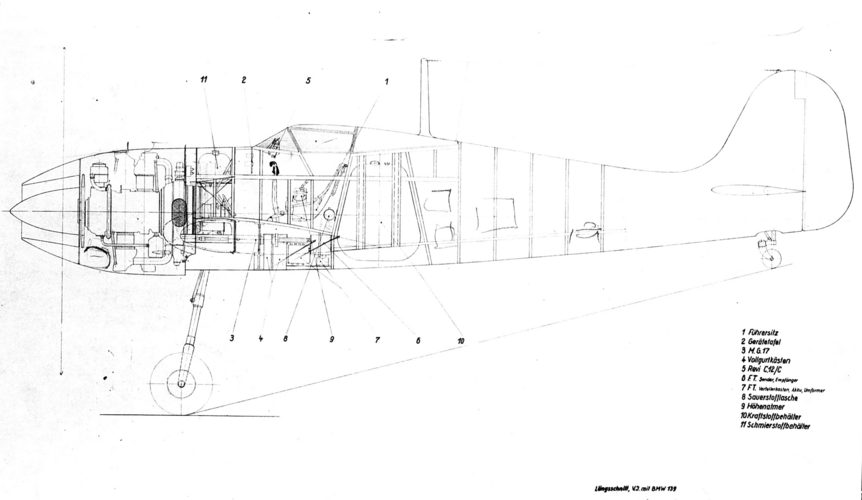
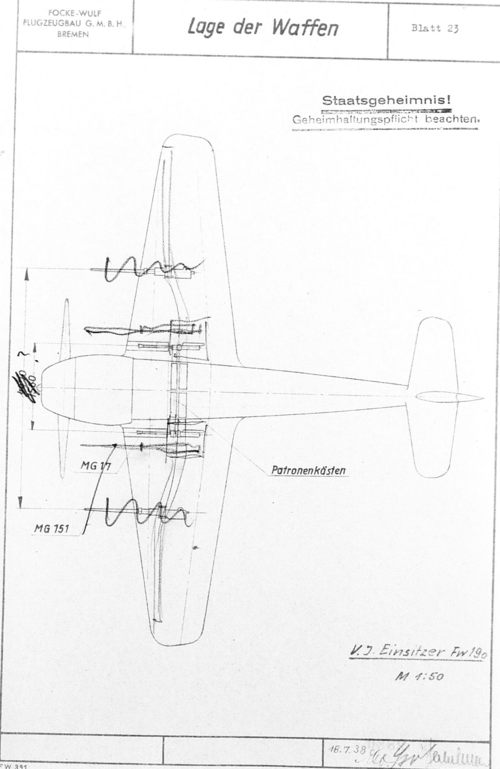
Hello, it's been a while I've been here tho I'm going back to my luft 46 models (currently well on my way with a hobby boss D12/R14 and Ta 152 C), I wonder why was the wing Mg crossed on one drawing.

Thanks for your answer!
 
I wonder why was the wing Mg crossed on one drawing.
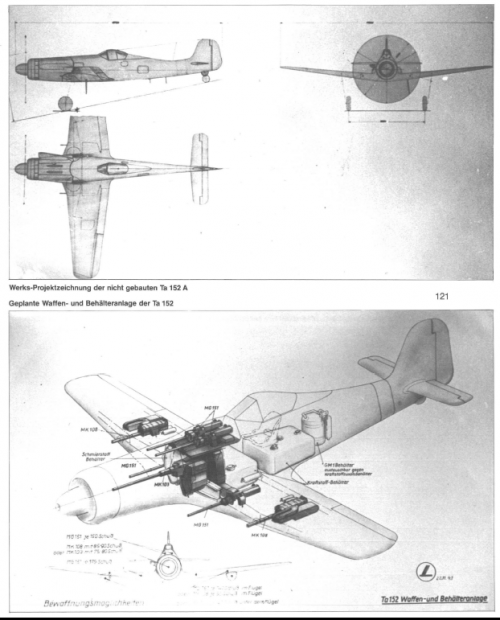
Actually they considered moving the MG 151 from each outer wing (crossed out) to each wing root (added in the drawing rather sketchy) next to each MG 17.

For the V1 and V2 there exist drawings, and photos of wooden model, showing an MG 17 and an MG 131 next to each other in each wing root.
The V1 was built unarmed, the V2 had two MG 17 and two MG 131 in the wing roots.

Initially they were not sure exactly which MG types to use and where to put the MG's in the wings.
Fw 190A production aircraft had usually one MG in each wing root and one MG in each outer wing, plus two MG's in the nose above the engine.
 
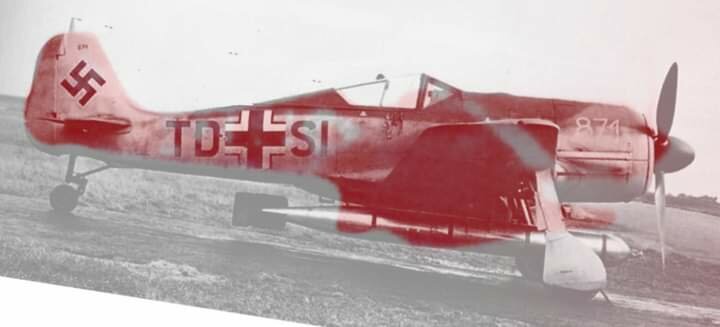
????dora or 190 or fake?
image069_4.gif

http://ourairports.biz/?p=6679
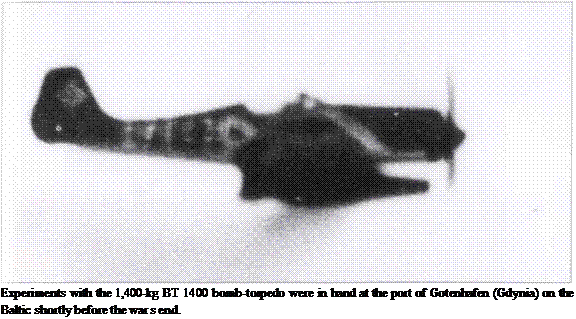
It's the Fw-190D-12. They also tried it with the Ta-152C, but it was to hard to regain stability upon release. So they reverted back to the D-12
 
That's nice. I disagree.

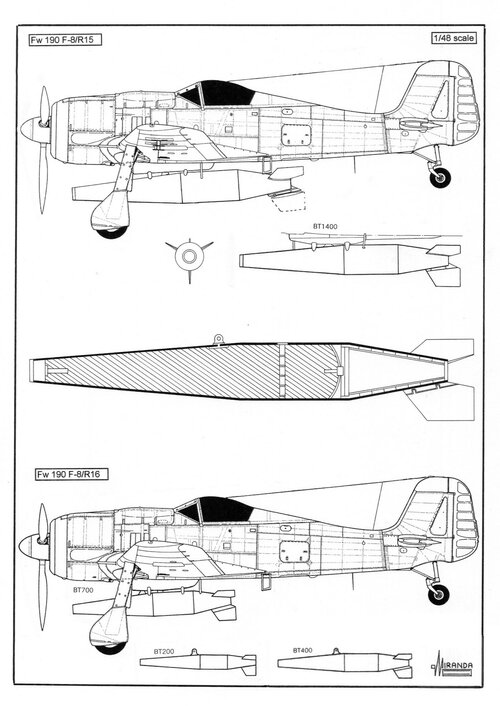
It would be rather more helpful if you could provide a reference to your BT 1400-toting Fw 190D-12.

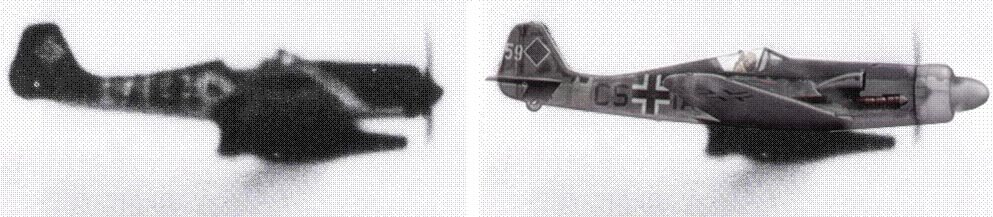
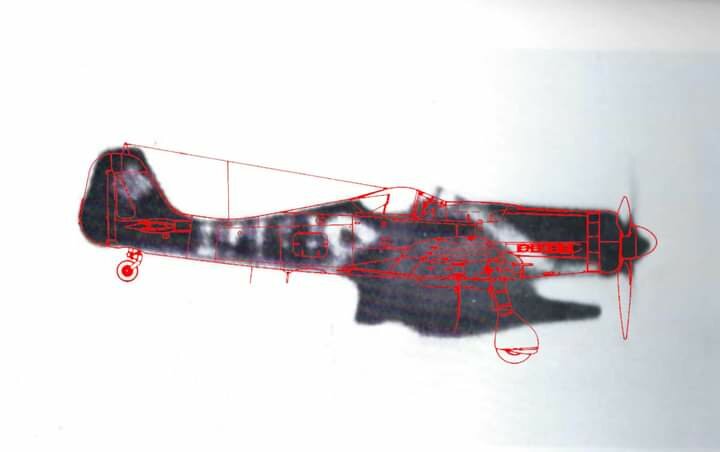
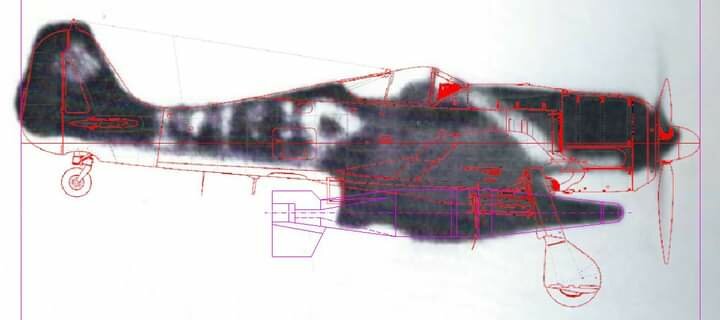
Going back to the image from reply #170, there is something odd about that photograph. I have rather crudely plonked some Fw 190D-12 artwork over that image. Granted the comparative angles of the two images are a bit off but, still, the relative proportions are quite strange.
 

Attachments

  • Fw-190-BT-1400.jpg
    Fw-190-BT-1400.jpg
    82.1 KB · Views: 208
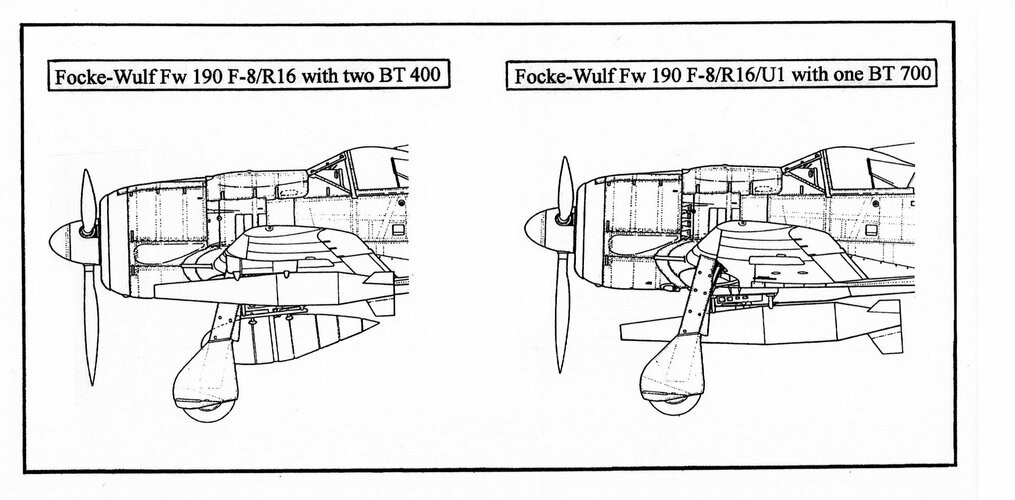
The photo shows a typical radial engined Fw 190, position and size of the cockpit relatively to the fuselage prove it beyond all doubts. The BT could be the BT 700 A as far as its length is concerned.
 

Attachments

  • FB_IMG_1731177420757.jpg
    FB_IMG_1731177420757.jpg
    19.2 KB · Views: 162
  • FB_IMG_1731177483048.jpg
    FB_IMG_1731177483048.jpg
    14.8 KB · Views: 138
  • FB_IMG_1731177442169.jpg
    FB_IMG_1731177442169.jpg
    18.8 KB · Views: 199
The photo shows a typical radial engined Fw 190, position and size of the cockpit relatively to the fuselage prove it beyond all doubts. The BT could be the BT 700 A as far as its length is concerned.
This makes sense. Though, I am a bit surprised that the lower fuselage got cut off that much by light, even with WWII camera quality.
 
Yes. You have to remember, the BF109 started design in ~1933, four years before Kurt Tank started work on the FW190. The FW190 was always hoped to succeed the BF109 by Tank. The RLM merely wished it to supplement it.
[/QUOTE]

The RLM was right!
 
Yes. You have to remember, the BF109 started design in ~1933, four years before Kurt Tank started work on the FW190. The FW190 was always hoped to succeed the BF109 by Tank. The RLM merely wished it to supplement it.

The RLM was right!
[/QUOTE]

The Fw 190 (air-cooled) was a contender against the Me 209 (evaporative cooling) and He 100 (evaporative cooling) as the next main Luftwaffe fighter. In other words, the RLM wanted a Bf 109 replacement and those were the competitors. Their common feature was an emphasis on speed through streamlining - no radiator bulge (Fw also pitched the Fw 187, which aimed for speed through a streamlined twin-engine layout, but with conventional radiators).

The RLM gave the contract to Focke-Wulf, picking the Fw 190, but then came to bitterly regret that decision because although the twin-row air-cooled radial seemed like a safer bet than the risky evaporative options - or the expensive twin-engine design - the BMW 139 (and 801) had massive and seemingly unsolvable overheating problems.

So it quickly became clear (at that point in time) that the Fw 190 wasn't going to become the next main Luftwaffe fighter. Therefore, the Me 209 was picked to replace the Bf 109 instead. Following a substantial redesign, that emerged as the Me 309. Production plans from 1942 show the 109 being wound down and replaced entirely in production by the 309.

The Fw 190 was to continue in limited production before being either cancelled entirely or replaced by a liquid-cooled engine variant. But then, finally, the overheating problem was solved and everything changed.
 
Last edited:
Does anyone have any information or test pilot testimony about the maneuverability and agility of the Ta 152C? I saw that in combat weight they would have a similar weight to the H1, but have a smaller wing area?
 
Appears to be an Fw 190 jet fighter. Anyone has info?View attachment 773405
Focke-Wulf Fw 190 TL


In the late 1930s, Max A. Mueller, engineer of the firm Junkers AG, patented a ducted-fan device that greatly improved the performance of the conventional propellers. In 1938, a team of technicians of the company BMW GmbH, under the leadership of Dr.-Ing. Hermann Oestrich, modified a Bramo 325 radial engine fitted with a four-bladed ducted-fan with a diameter of 1 m. The modified engine, that was named Motorjet, was installed in a trainer Focke-Wulf Fw 44 and successfully tested in flight by Hanna Reitsch.

In 1939, Max A. Mueller joined the Heinkel-Rostock team, working at the time on the development of the HeS 8 centrifugal turbojet, which was expected to be used to propel the He 280 fighters. With a planned thrust of 700 kp and a diameter 20 per cent shorter than the HeS 3, the new turbojet required a great research effort and an extensive test program. Numerous technical problems had to be solved before starting its large-scale production and the HeS 8 suffered numerous delays. By March 1941 it only produced 500 kp static thrust, 550 kp by early 1942 and 600 kp in early 1943.

The root cause was the reduction of the diameter, recommended by the aerodynamicists to minimize the drag produced by the engine nacelles when installed under the wings of the He 280. Trials experience revealed that the most effective way to increase thrust in this type of turbojets was to also increase their diameter, to improve the performance of the centrifugal compressor. In 1939, the HeS 3B, with 93 cm of diameter, produced 450 kp. In May 1941, the British Power Jets W.1, with 107 cm in diameter, produced 387 kp and in 1943, the De Havilland Halford H.1, with 127 cm in diameter, produced 1,225 kp static thrust. With this power, it was possible to build a single engine jet fighter, with the centrifugal turbojet installed inside the fuselage. In 1943, the British chose the Halford to propel their new fighters Gloster E5/42 and De Havilland E6/41 ‘Vampire’. The Americans used the same turbojet to power the Lockheed XP-83 prototype, in early 1944.

In Germany, Max A. Mueller proposed to build the 'ZTL' version of the HeS 8, with a ducted fan of 1 m diameter and a planned thrust of 900 kp. Focke-Wulf engineers also proposed to modify a HeS 8 to be used as a nose-mounted power plant in an Fw 190. The modification would consist of replacing the radial inflow turbine with another of 122 cm diameter and the exhaust nozzle by three outlets located underneath and on both sides of the cowling. The outlets were equipped with deflectors to prevent hot gases from damaging the airframe. The new turbojet, called T.1, would have had a thrust of 600 kp by the end of 1942.

The jet version of the Fw 190 A-3 was named ‘TL’ (Turbo Lader), would have had an overall length of 9.4 m, an estimated maximum weight of 4,865 kg and an estimated maximum speed of 850 kph. The ceiling was expected to be of 10,300 m and the range of 1370 km. Its endurance, with 1,400 litres of J2 heavy kerosene, would have been 70 minutes. As for the armament, would have consisted of two machine guns MG 17 and two MG 151/20 cannons in the standard positions.

In the spring of 1943, the OKL decided to cancel all research work with centrifugal turbojets to focus on the development of axial-flow type engines.

 

Attachments

  • img009.jpg
    img009.jpg
    315.4 KB · Views: 168
  • img010.jpg
    img010.jpg
    508.8 KB · Views: 169
  • img011.jpg
    img011.jpg
    378 KB · Views: 169
Focke-Wulf Fw 190 TL​

The jet version of the Fw 190 A-3 was named ‘TL’ (Turbo Lader), would have had an overall length of 9.4 m, an estimated maximum weight of 4,865 kg and an estimated maximum speed of 850 kph. The ceiling was expected to be of 10,300 m and the range of 1370 km. Its endurance, with 1,400 litres of J2 heavy kerosene, would have been 70 minutes. As for the armament, would have consisted of two machine guns MG 17 and two MG 151/20 cannons in the standard positions.
"TL" does not stand for Turbolader (turbocharger) but for Turbinenluftstrahltriebwerk (turbojet).
 

Focke-Wulf Fw 190 TL


In the late 1930s, Max A. Mueller, engineer of the firm Junkers AG, patented a ducted-fan device that greatly improved the performance of the conventional propellers. In 1938, a team of technicians of the company BMW GmbH, under the leadership of Dr.-Ing. Hermann Oestrich, modified a Bramo 325 radial engine fitted with a four-bladed ducted-fan with a diameter of 1 m. The modified engine, that was named Motorjet, was installed in a trainer Focke-Wulf Fw 44 and successfully tested in flight by Hanna Reitsch.

In 1939, Max A. Mueller joined the Heinkel-Rostock team, working at the time on the development of the HeS 8 centrifugal turbojet, which was expected to be used to propel the He 280 fighters. With a planned thrust of 700 kp and a diameter 20 per cent shorter than the HeS 3, the new turbojet required a great research effort and an extensive test program. Numerous technical problems had to be solved before starting its large-scale production and the HeS 8 suffered numerous delays. By March 1941 it only produced 500 kp static thrust, 550 kp by early 1942 and 600 kp in early 1943.

The root cause was the reduction of the diameter, recommended by the aerodynamicists to minimize the drag produced by the engine nacelles when installed under the wings of the He 280. Trials experience revealed that the most effective way to increase thrust in this type of turbojets was to also increase their diameter, to improve the performance of the centrifugal compressor. In 1939, the HeS 3B, with 93 cm of diameter, produced 450 kp. In May 1941, the British Power Jets W.1, with 107 cm in diameter, produced 387 kp and in 1943, the De Havilland Halford H.1, with 127 cm in diameter, produced 1,225 kp static thrust. With this power, it was possible to build a single engine jet fighter, with the centrifugal turbojet installed inside the fuselage. In 1943, the British chose the Halford to propel their new fighters Gloster E5/42 and De Havilland E6/41 ‘Vampire’. The Americans used the same turbojet to power the Lockheed XP-83 prototype, in early 1944.

In Germany, Max A. Mueller proposed to build the 'ZTL' version of the HeS 8, with a ducted fan of 1 m diameter and a planned thrust of 900 kp. Focke-Wulf engineers also proposed to modify a HeS 8 to be used as a nose-mounted power plant in an Fw 190. The modification would consist of replacing the radial inflow turbine with another of 122 cm diameter and the exhaust nozzle by three outlets located underneath and on both sides of the cowling. The outlets were equipped with deflectors to prevent hot gases from damaging the airframe. The new turbojet, called T.1, would have had a thrust of 600 kp by the end of 1942.

The jet version of the Fw 190 A-3 was named ‘TL’ (Turbo Lader), would have had an overall length of 9.4 m, an estimated maximum weight of 4,865 kg and an estimated maximum speed of 850 kph. The ceiling was expected to be of 10,300 m and the range of 1370 km. Its endurance, with 1,400 litres of J2 heavy kerosene, would have been 70 minutes. As for the armament, would have consisted of two machine guns MG 17 and two MG 151/20 cannons in the standard positions.

In the spring of 1943, the OKL decided to cancel all research work with centrifugal turbojets to focus on the development of axial-flow type engines.
Miranda, Do you have any graphs or documents about the Ta 152C's cornering performance? I saw an interview with ace Willi Reschke, where he was asked if the Ta 152H was superior to the Fw 190D9, he said that the Ta 152 easily outperformed the D9, and I wanted to know how far behind the H in terms of maneuverability the C version is, since it has 4² less wing area, but has a more powerful engine, and similar weight too.
 
Focke-Wulf Fw 190 TL


In the late 1930s, Max A. Mueller, engineer of the firm Junkers AG, patented a ducted-fan device that greatly improved the performance of the conventional propellers. In 1938, a team of technicians of the company BMW GmbH, under the leadership of Dr.-Ing. Hermann Oestrich, modified a Bramo 325 radial engine fitted with a four-bladed ducted-fan with a diameter of 1 m. The modified engine, that was named Motorjet, was installed in a trainer Focke-Wulf Fw 44 and successfully tested in flight by Hanna Reitsch.

In 1939, Max A. Mueller joined the Heinkel-Rostock team, working at the time on the development of the HeS 8 centrifugal turbojet, which was expected to be used to propel the He 280 fighters. With a planned thrust of 700 kp and a diameter 20 per cent shorter than the HeS 3, the new turbojet required a great research effort and an extensive test program. Numerous technical problems had to be solved before starting its large-scale production and the HeS 8 suffered numerous delays. By March 1941 it only produced 500 kp static thrust, 550 kp by early 1942 and 600 kp in early 1943.

The root cause was the reduction of the diameter, recommended by the aerodynamicists to minimize the drag produced by the engine nacelles when installed under the wings of the He 280. Trials experience revealed that the most effective way to increase thrust in this type of turbojets was to also increase their diameter, to improve the performance of the centrifugal compressor. In 1939, the HeS 3B, with 93 cm of diameter, produced 450 kp. In May 1941, the British Power Jets W.1, with 107 cm in diameter, produced 387 kp and in 1943, the De Havilland Halford H.1, with 127 cm in diameter, produced 1,225 kp static thrust. With this power, it was possible to build a single engine jet fighter, with the centrifugal turbojet installed inside the fuselage. In 1943, the British chose the Halford to propel their new fighters Gloster E5/42 and De Havilland E6/41 ‘Vampire’. The Americans used the same turbojet to power the Lockheed XP-83 prototype, in early 1944.

In Germany, Max A. Mueller proposed to build the 'ZTL' version of the HeS 8, with a ducted fan of 1 m diameter and a planned thrust of 900 kp. Focke-Wulf engineers also proposed to modify a HeS 8 to be used as a nose-mounted power plant in an Fw 190. The modification would consist of replacing the radial inflow turbine with another of 122 cm diameter and the exhaust nozzle by three outlets located underneath and on both sides of the cowling. The outlets were equipped with deflectors to prevent hot gases from damaging the airframe. The new turbojet, called T.1, would have had a thrust of 600 kp by the end of 1942.

The jet version of the Fw 190 A-3 was named ‘TL’ (Turbo Lader), would have had an overall length of 9.4 m, an estimated maximum weight of 4,865 kg and an estimated maximum speed of 850 kph. The ceiling was expected to be of 10,300 m and the range of 1370 km. Its endurance, with 1,400 litres of J2 heavy kerosene, would have been 70 minutes. As for the armament, would have consisted of two machine guns MG 17 and two MG 151/20 cannons in the standard positions.

In the spring of 1943, the OKL decided to cancel all research work with centrifugal turbojets to focus on the development of axial-flow type engines.
Like Coanda jet.

You all knew Focke Wulf factories were founded by two dudes who never worked with Focke Wulf fighters ?
 
Miranda, Do you have any graphs or documents about the Ta 152C's cornering performance? I saw an interview with ace Willi Reschke, where he was asked if the Ta 152H was superior to the Fw 190D9, he said that the Ta 152 easily outperformed the D9, and I wanted to know how far behind the H in terms of maneuverability the C version is, since it has 4² less wing area, but has a more powerful engine, and similar weight too.
Sorry, I've been reviewing everything I have on Ta 152 and I've only found classic performances and speed/altitude graphics, but at least I've learned something.
 
Sorry, I've been reviewing everything I have on Ta 152 and I've only found classic performances and speed/altitude graphics, but at least I've learned something.
not even testimonials from test pilots? I've found speed and climb rate graphs for the C version of the Ta 152, but I've never found anything about its maneuverability, it's frustrating
 
https://old-wiki.warthunder.com/Ta_152_C-3


The Ta 152 C-3 is a rank IV German fighter with a battle rating of 6.3 (AB/RB) and 6.0 (SB). It was introduced in Update 1.57 "Battle March".

The Ta 152 C-3 should be considered the pinnacle of the Fw 190 Dora, evolving their concept to an extreme. This plane was designed for mid altitude combat, with a redesigned short wing similar to that of the late 190 series, such as the Fw 190 D-13. With its Daimler-Benz DB 603 engine, gaining speed and altitude is the first priority in this aircraft. Second is heavy usage of Boom and Zoom tactics, especially on heavily armed strategic bombers like the B-17 Flying Fortress. With its armament of four MG-151 20 mm cannons (two in the wing roots, two in the cowling), and a MK-103 cannon firing through the propeller hub, trigger discipline is a must to take down as many aircraft as you can with the ammunition on board. However, it can be pushed to turn tight in a pinch with a rather small amount of energy lost by using the flaps. The flaps are extremely strong and they deploy quickly, even at higher speeds (though it is not advisable to do this unless the situation is just right).

General info

Flight performance


Max speed

at 10 400 m730 km/h

Turn time27 s

Max altitude13 500 m

EngineDaimler-Benz DB-603LA

TypeInline

Cooling systemWater

Take-off weight6 t

Characteristics
Max Speed
(km/h at 10,400 m)
Max altitude
(metres)
Turn time
(seconds)
Rate of climb
(metres/second)
Take-off run
(metres)
AB
RB
AB
RB
AB
RB
Stock
703​
681​
13500​
28.2​
29.2​
9.7​
9.7​
500​
Upgraded
759​
730​
25.8​
27.0​
17.1​
13.1​
 
https://old-wiki.warthunder.com/Ta_152_C-3


The Ta 152 C-3 is a rank IV German fighter with a battle rating of 6.3 (AB/RB) and 6.0 (SB). It was introduced in Update 1.57 "Battle March".

The Ta 152 C-3 should be considered the pinnacle of the Fw 190 Dora, evolving their concept to an extreme. This plane was designed for mid altitude combat, with a redesigned short wing similar to that of the late 190 series, such as the Fw 190 D-13. With its Daimler-Benz DB 603 engine, gaining speed and altitude is the first priority in this aircraft. Second is heavy usage of Boom and Zoom tactics, especially on heavily armed strategic bombers like the B-17 Flying Fortress. With its armament of four MG-151 20 mm cannons (two in the wing roots, two in the cowling), and a MK-103 cannon firing through the propeller hub, trigger discipline is a must to take down as many aircraft as you can with the ammunition on board. However, it can be pushed to turn tight in a pinch with a rather small amount of energy lost by using the flaps. The flaps are extremely strong and they deploy quickly, even at higher speeds (though it is not advisable to do this unless the situation is just right).

General info

Flight performance


Max speed

at 10 400 m730 km/h

Turn time27 s

Max altitude13 500 m

EngineDaimler-Benz DB-603LA

TypeInline

Cooling systemWater

Take-off weight6 t

Characteristics
Max Speed
(km/h at 10,400 m)
Max altitude
(metres)
Turn time
(seconds)
Rate of climb
(metres/second)
Take-off run
(metres)
AB
RB
AB
RB
AB
RB
Stock
703​
681​
13500​
28.2​
29.2​
9.7​
9.7​
500​
Upgraded
759​
730​
25.8​
27.0​
17.1​
13.1​
War Thunder is not a good source, since it is more of an arcade game, where the performances of the planes are modified, not reflecting their real performance in the real world, the Ta 152C3 is one of them, which is portrayed in the game as being much heavier than the H1, even though its weight is similar, but thanks for your answers
 
War Thunder is not a good source, since it is more of an arcade game, where the performances of the planes are modified, not reflecting their real performance in the real world, the Ta 152C3 is one of them, which is portrayed in the game as being much heavier than the H1, even though its weight is similar, but thanks for your answers
Can confirm. Video games prefer balancing over historical accuracy, and most vehicles have inaccurate specifications.
 
War Thunder is not a good source, since it is more of an arcade game, where the performances of the planes are modified, not reflecting their real performance in the real world, the Ta 152C3 is one of them, which is portrayed in the game as being much heavier than the H1, even though its weight is similar, but thanks for your answers
I'm not really interested in Ta 152, nor do I like Wikipedia, among other things because they never cite any of my 45 books and forty monographs as a bibliography, a form of infantile segregation. I don't like video game pages either, but if you are really interested you should ask for explanations about their sources of War Thunder and if they don't answer you publish here that they are not a reliable source.
 
Hi Hecked,

Does anyone have any information or test pilot testimony about the maneuverability and agility of the Ta 152C? I saw that in combat weight they would have a similar weight to the H1, but have a smaller wing area?

The difficulty is, no-one in (late) WW2 really cared much about (turning) manoeuvrability in single-engined fighters, to the point that it was rarely if ever subjected to systematic testing.

To make it even more difficult, the German late-war types weren't even subjected to thorough testing of straight-line performance, and the tested aircraft often were in a configuration that wasn't necessarily representative for the intended series production variants (and on top of that, the configuration they were in often isn't fully understood today for lack of documentation).

The Focke-Wulf Ta 152C can probably best be compared to the otherwise similar Fw 190D-9. If you use an approximate weight of 5000 kg for the Ta 152C with no petrol in the wing tanks, and ca. 4300 kg for the Fw 190D-9 as normal take-off weight, the Ta 152C is 16% heavier but with 19.5 m^2 wing area versus the Fw 190D-9's 18.3 m^2, only has 7% more wing area.

Eyeballing it, in my opinion, on the same power as the Fw 190D-9, the Ta 152C will have a sustained turn rate that is at least 10% slower than the Fw 190D-9's. Due to some extra drag the Focke-Wulf table "Widerstandsdaten von Flugzeugen" shows for the Ta 152C over the Fw 190D-9 (mainly for radiator drag, but also for fuselage and weapons), the difference at the same power might be even more pronounced.

Depending on what power increase over the Jumo 213A of the Fw 190D-9 you want to assume for the DB 603L of the Ta 152C, the Ta 152C might be able to turn (sustainedly) a bit faster than "10% slower", but I'd very roughly estimate that even a hypothetical 15% power increase would still leave the Ta 152C with a 5% sustained turn rate reduction over the Fw 190D-9.

Regards,

Henning (HoHun)
 
Hi Hecked,


The difficulty is, no-one in (late) WW2 really cared much about (turning) manoeuvrability in single-engined fighters, to the point that it was rarely if ever subjected to systematic testing.

To make it even more difficult, the German late-war types weren't even subjected to thorough testing of straight-line performance, and the tested aircraft often were in a configuration that wasn't necessarily representative for the intended series production variants (and on top of that, the configuration they were in often isn't fully understood today for lack of documentation).

The Focke-Wulf Ta 152C can probably best be compared to the otherwise similar Fw 190D-9. If you use an approximate weight of 5000 kg for the Ta 152C with no petrol in the wing tanks, and ca. 4300 kg for the Fw 190D-9 as normal take-off weight, the Ta 152C is 16% heavier but with 19.5 m^2 wing area versus the Fw 190D-9's 18.3 m^2, only has 7% more wing area.

Eyeballing it, in my opinion, on the same power as the Fw 190D-9, the Ta 152C will have a sustained turn rate that is at least 10% slower than the Fw 190D-9's. Due to some extra drag the Focke-Wulf table "Widerstandsdaten von Flugzeugen" shows for the Ta 152C over the Fw 190D-9 (mainly for radiator drag, but also for fuselage and weapons), the difference at the same power might be even more pronounced.

Depending on what power increase over the Jumo 213A of the Fw 190D-9 you want to assume for the DB 603L of the Ta 152C, the Ta 152C might be able to turn (sustainedly) a bit faster than "10% slower", but I'd very roughly estimate that even a hypothetical 15% power increase would still leave the Ta 152C with a 5% sustained turn rate reduction over the Fw 190D-9.

Regards,

Henning (HoHun)
Might one say that a reduction of 5% of sustained turn rate ain't too bad?
What benefits would the Ta 152C have over a Dora with the same propulsion (DB 603L) except for somewhat better range (with wing tanks on both the difference would be less pronounced), better armament and bad weather equipment?
Climb was worse than a Dora's.
In a late-war environment where every ounce of surplus performance could be life-saving I would rather put my bet on a Dora.
But then again do you know how the Germans did calculate and conclude that the importance and effectiveness of a heavier armament such as the Ta 152C's deem it necessary and worth the weight and performance creep?
 
Hi Hecked,


The difficulty is, no-one in (late) WW2 really cared much about (turning) manoeuvrability in single-engined fighters, to the point that it was rarely if ever subjected to systematic testing.

To make it even more difficult, the German late-war types weren't even subjected to thorough testing of straight-line performance, and the tested aircraft often were in a configuration that wasn't necessarily representative for the intended series production variants (and on top of that, the configuration they were in often isn't fully understood today for lack of documentation).

The Focke-Wulf Ta 152C can probably best be compared to the otherwise similar Fw 190D-9. If you use an approximate weight of 5000 kg for the Ta 152C with no petrol in the wing tanks, and ca. 4300 kg for the Fw 190D-9 as normal take-off weight, the Ta 152C is 16% heavier but with 19.5 m^2 wing area versus the Fw 190D-9's 18.3 m^2, only has 7% more wing area.

Eyeballing it, in my opinion, on the same power as the Fw 190D-9, the Ta 152C will have a sustained turn rate that is at least 10% slower than the Fw 190D-9's. Due to some extra drag the Focke-Wulf table "Widerstandsdaten von Flugzeugen" shows for the Ta 152C over the Fw 190D-9 (mainly for radiator drag, but also for fuselage and weapons), the difference at the same power might be even more pronounced.

Depending on what power increase over the Jumo 213A of the Fw 190D-9 you want to assume for the DB 603L of the Ta 152C, the Ta 152C might be able to turn (sustainedly) a bit faster than "10% slower", but I'd very roughly estimate that even a hypothetical 15% power increase would still leave the Ta 152C with a 5% sustained turn rate reduction over the Fw 190D-9.

Regards,

Henning (HoHun)
Might one say that a reduction of 5% of sustained turn rate ain't too bad?
What benefits would the Ta 152C have over a Dora with the same propulsion (DB 603L) except for somewhat better range (with wing tanks on both the difference would be less pronounced), better armament and bad weather equipment?
Climb was worse than a Dora's.
In a late-war environment where every ounce of surplus performance could be life-saving I would rather put my bet on a Dora.
But then again do you know how the Germans did calculate and conclude that the importance and effectiveness of a heavier armament such as the Ta 152C's deem it necessary and worth the weight and performance creep?
I would recommend viewing this older thread from WW2aircraft.net.
https://ww2aircraft.net/forum/threads/fw-190-d-9-13-vs-ta-152-c.21219/Basically, as long as you don't fill the Ta-152C to max fuel capacity, you should generally turn and climb better than a Dora even with the heavier armament.
 
Hi Hecked,


The difficulty is, no-one in (late) WW2 really cared much about (turning) manoeuvrability in single-engined fighters, to the point that it was rarely if ever subjected to systematic testing.

To make it even more difficult, the German late-war types weren't even subjected to thorough testing of straight-line performance, and the tested aircraft often were in a configuration that wasn't necessarily representative for the intended series production variants (and on top of that, the configuration they were in often isn't fully understood today for lack of documentation).

The Focke-Wulf Ta 152C can probably best be compared to the otherwise similar Fw 190D-9. If you use an approximate weight of 5000 kg for the Ta 152C with no petrol in the wing tanks, and ca. 4300 kg for the Fw 190D-9 as normal take-off weight, the Ta 152C is 16% heavier but with 19.5 m^2 wing area versus the Fw 190D-9's 18.3 m^2, only has 7% more wing area.

Eyeballing it, in my opinion, on the same power as the Fw 190D-9, the Ta 152C will have a sustained turn rate that is at least 10% slower than the Fw 190D-9's. Due to some extra drag the Focke-Wulf table "Widerstandsdaten von Flugzeugen" shows for the Ta 152C over the Fw 190D-9 (mainly for radiator drag, but also for fuselage and weapons), the difference at the same power might be even more pronounced.

Depending on what power increase over the Jumo 213A of the Fw 190D-9 you want to assume for the DB 603L of the Ta 152C, the Ta 152C might be able to turn (sustainedly) a bit faster than "10% slower", but I'd very roughly estimate that even a hypothetical 15% power increase would still leave the Ta 152C with a 5% sustained turn rate reduction over the Fw 190D-9.

Regards,

Henning (HoHun)
I believe the TA 152C would be better than Dora, since H1 has surpassed the Dora easily, according to Ace Willi Reschke, I believe the TA 152C is not so behind the H1, since it has more powerful engine than the two, I read other forums, a user that made the mods of TA 152C-3 for IL2 1946, and he received a lot of documentation from the Dietmar Harmman, where he found that the production version was Romever the rear tank of the fuselage, that one of the wing tanks would be replaced by a minor of MW-50 and that hears a change in wing area, and I saw in a page with D9, C3 and H1 specifications, where he reported that the c3 wing area was 20.7² to the envious of 19.5², I thought it was a mistake of the writer, since in the book of Harmann the version C has 19.5² of wing area, but Harmann sent these documents to him years after his book has released, suggesting that Harmann, or another member of forum LEMB discovered more documents about version C, with these changes the weight decreased, but the autonomy also, being according to this user, similar to that of the D9 , he also talked about that he had two C-0 unit delivered to JG/301, where the takeoff weight was 4.545kg, the C-0 did not have the wing tanks, nor the MW-50 tank, but the rear tank of the fuselage was not supposed to be filled, because it generated problems with the center of gravity, and that's why in the production versions it was going to be removed. The version C would use the DB 603LA, right?
 
Hi Hecked,

I saw in a page with D9, C3 and H1 specifications, where he reported that the c3 wing area was 20.7² to the envious of 19.5²

I'd like to see that too :) In December 1944, the "Widerstandsdaten von Flugzeugen" overview from Focke-Wulf still listed the Ta 152C-1 with a 19.5 m^2 wing, and the take-off power with the DB 603L as 2100 HP, compared to the Jumo 213A's 2050 HP the same overview lists for the Fw 190D-9.

Of course, the Jumo 213A is not a high altitude engine, so above some margin above its full throttle height, the Ta 152 either with the Jumo 213E or the DB603L would have outperformed it with regard to sustained turning - but instantaneous turns approximately follow the wing loading, assuming similar wings.

Regards,

Henning (HoHun)
 
I'm not really interested in Ta 152, nor do I like Wikipedia, among other things because they never cite any of my 45 books and forty monographs as a bibliography, a form of infantile segregation.
Do you consider your works as definitive on a given subject?
 
Do you consider your works as definitive on a given subject?
No, I am only interested in advancing a little more than what has been published on little-known topics that other authors tend to avoid due to lack of sufficient evidence. Topics that are much discussed and published do not interest me.
 
No, I am only interested in advancing a little more than what has been published on little-known topics that other authors tend to avoid due to lack of sufficient evidence.
Perhaps a look from the Wikipedia editors point-of-view is a good thing to try? A book that talks about a topic despite the 'lack of sufficient evidence' might not be a good source.
 
Não, estou interessado apenas em avançar um pouco mais do que o que já foi publicado sobre temas pouco conhecidos que outros autores tendem a evitar por falta de evidências suficientes. Temas muito discutidos e publicados não me interessam.
Miranda, do you know Dietmar Hamann or any member of the now defunct LEMB forum?
 
Miranda, do you know Dietmar Hamann or any member of the now defunct LEMB forum?
I am sorry that I cannot help you with this, I never entered as an active member of the LEMB forum because the content was not useful for my research.
 
Perhaps a look from the Wikipedia editors point-of-view is a good thing to try? A book that talks about a topic despite the 'lack of sufficient evidence' might not be a good source.
If you had experience as an author, you would know that you should never admit the views of editors.

In that case we are evenly matched because Wikipedia is not considered a serious source in academic circles. You know what Marx (Groucho) said. I would never belong to a club that decided to admit me.:D
 
Last edited:

Similar threads

Back
Top Bottom