Attachments

  • 7ksm-OP150182-24.jpg
    7ksm-OP150182-24.jpg
    261.3 KB · Views: 27
  • 7ksm-OP150182-25.jpg
    7ksm-OP150182-25.jpg
    306.1 KB · Views: 14
  • 7ksm-OP150182-26.jpg
    7ksm-OP150182-26.jpg
    216.5 KB · Views: 16
Last edited by a moderator:
Oh My - Dearest Vadim Lukashevich, The King's English, please - this here is not some random Russian drug den/brothel...
That was a link to the original source, and the original source is always in the language of the source documents — that is why it is the original source
 
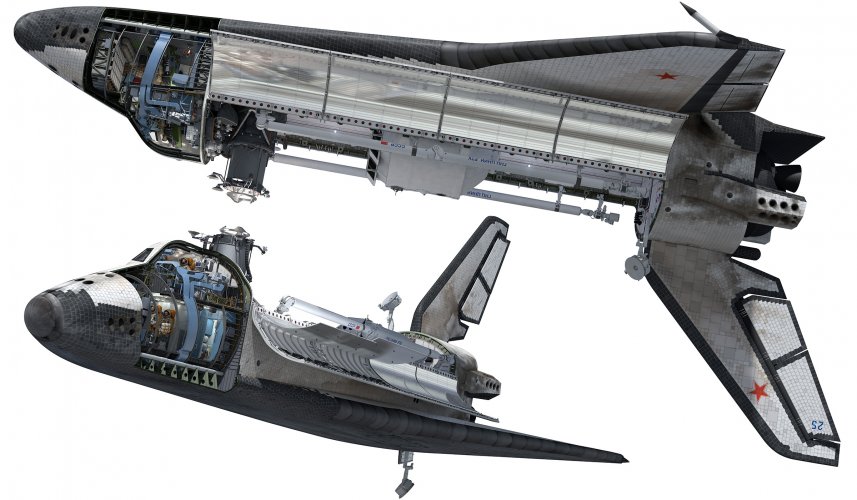
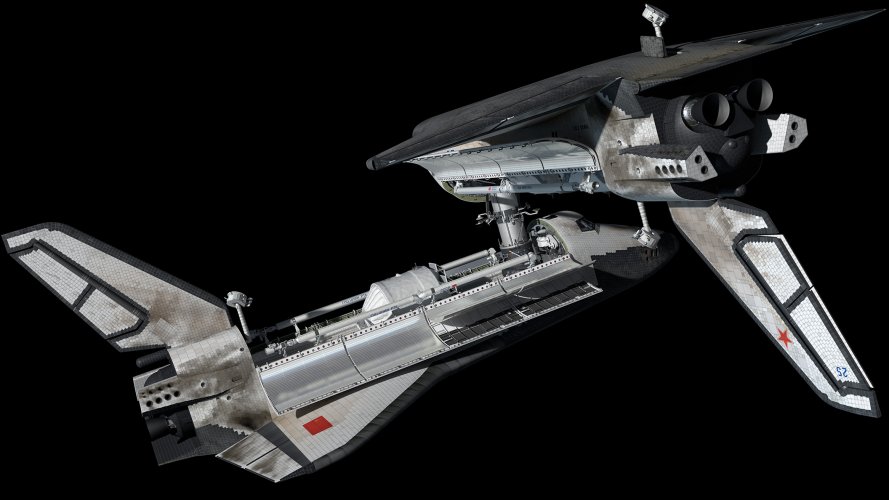
11F35 spacecraft from two different series, showing the interior layout of the crew module: 2.01 on top, 1.01 “Buran” on the bottom. There are about twenty differences.
This is my first time posting this:
 

Attachments

  • моя_98_High.jpg
    моя_98_High.jpg
    701.5 KB · Views: 85
Last edited by a moderator:
Lukashevich’s note does not refer to orbital bombardment. It speaks about some form of combat use. Most likely, it is referring to the destruction of the orbital infrastructure of the Strategic Defense Initiative system.
 
Lukashevich’s note does not refer to orbital bombardment. It speaks about some form of combat use. Most likely, it is referring to the destruction of the orbital infrastructure of the Strategic Defense Initiative system.
Diving into the atmosphere to an altitude of 80 kilometers is not necessary to destroy the enemy’s orbital infrastructure.
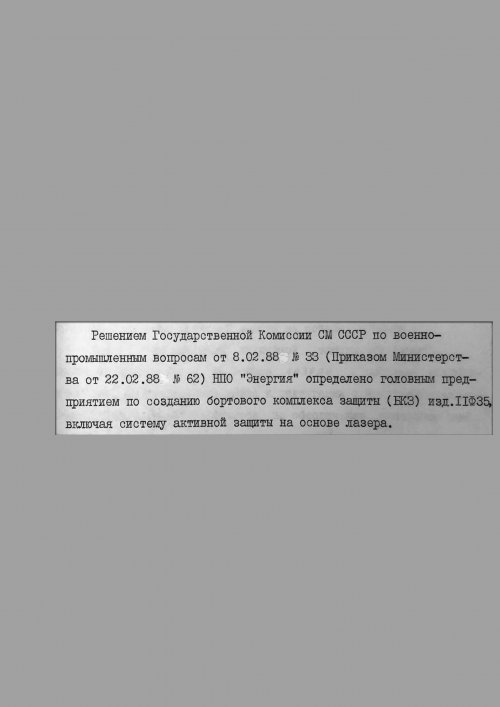
As for countering enemy space assets, the plan was to equip the “Buran” with an “on-board defense system” (initially with space-to-space missiles, and later with weapon systems based on “new physical principles”).
 

Attachments

  • ord22-010388-1а.jpg
    ord22-010388-1а.jpg
    337.7 KB · Views: 69
Last edited by a moderator:
Diving into the atmosphere to an altitude of 80 kilometers is not necessary to destroy the enemy’s orbital infrastructure.
There’s a substitution here. The technical specifications mention multiple reentries, but say nothing about strikes. The test schedule does mention strikes, but it’s unclear what the targets are. Moreover, the schedule is obscured in such a way that this cannot be determined. For flight 8, “maneuvering in the atmosphere” is listed among the objectives, but it is not the only task of the mission. Since a target is mentioned here, it suggests an orbital interception. In flight 10, the “special payloads” could “disperse” not only toward ground targets. In general, “secrecy” can be used to cover any kind of manipulation. The selective publication of the test flight table is Lukashevich’s own selectivity.

 
There’s a substitution here. The technical specifications mention multiple reentries, but say nothing about strikes. The test schedule does mention strikes, but it’s unclear what the targets are. Moreover, the schedule is obscured in such a way that this cannot be determined. For flight 8, “maneuvering in the atmosphere” is listed among the objectives, but it is not the only task of the mission. Since a target is mentioned here, it suggests an orbital interception. In flight 10, the “special payloads” could “disperse” not only toward ground targets. In general, “secrecy” can be used to cover any kind of manipulation. The selective publication of the test flight table is Lukashevich’s own selectivity.
I’m saying what I know for sure.
But since we’re in a public forum, there are some things I can’t say or show.
So it’s up to you whether you believe me or not.

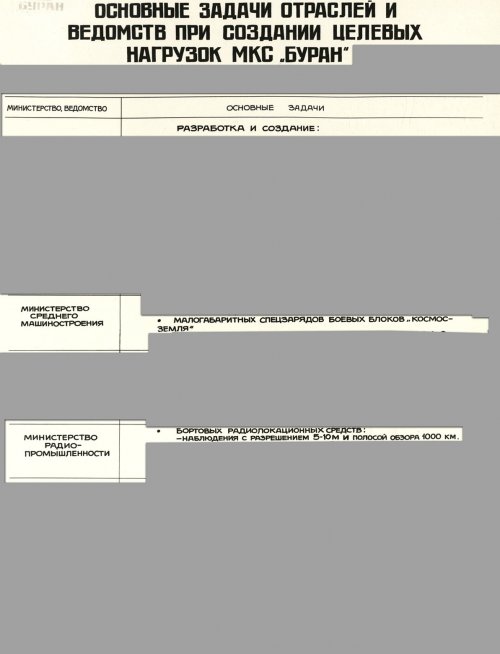
P.S.: The Ministry of Medium Machine Building (Minsredmash) deals with nuclear matters (ammunition, reactors, etc.).
 

Attachments

  • 1 42 0 5361_25%.jpg
    1 42 0 5361_25%.jpg
    151.7 KB · Views: 35
Last edited by a moderator:
I’m saying what I know for sure.
But since we’re in a public forum, there are some things I can’t say or show.
So it’s up to you whether you believe me or not.

P.S.: The Ministry of Medium Machine Building (Minsredmash) deals with nuclear matters (ammunition, reactors, etc.).
Hi again. My friend got interesting question regarding Burans ability to save Columbia.

Could it in theory, with extra tanks, make several dives into the atmosphere to change the orbital inclination by as much as 12°, rendezvous with Columbia to pick up the crew, and then return? This is more a question about Delta-V than about the availability of spacesuits, seats for Columbias crew, or that NASA didn't even knew about the hole in the wing for example.
 
Hi again. My friend got interesting question regarding Burans ability to save Columbia.

Could it in theory, with extra tanks, make several dives into the atmosphere to change the orbital inclination by as much as 12°, rendezvous with Columbia to pick up the crew, and then return? This is more a question about Delta-V than about the availability of spacesuits, seats for Columbias crew, or that NASA didn't even knew about the hole in the wing for example.
The documents only specify the depth of atmospheric penetration—up to 80 km. They also state that an aerodynamic maneuver can be used to re-enter orbit with a different inclination relative to the equator.
However, there is no data on the magnitude of the change in orbital inclination per dive, nor on the permissible number of dives during a single flight.
Theoretically, knowing the spacecraft’s mass, specific impulse, thrust, and specific impulse of the engine, one can calculate the fuel consumption required to return to space from an altitude of 80 km (I have a rough idea of the acceleration impulse), but aerodynamically, a maneuver involving a change in orbital inclination will cause more intense atmospheric drag, the magnitude of which I do not know.

Furthermore, the technical specifications for the design of the “Buran” (late 1976) include a requirement for the time needed to prepare the spacecraft for launch—20 days. But it is clear that in reality (1988+), it took longer

итог69.jpg
 

Similar threads

Back
Top Bottom