It was part of the fairing jettison system.-For a start, never realized Progress flew with Soyuz escape systems, except deactivated. I presume as a way of standardizing launch vehicles between Progress and Soyuz ?

You are using an out of date browser. It may not display this or other websites correctly.
You should upgrade or use an alternative browser.
You should upgrade or use an alternative browser.
Energia - Buran Space Transportation System
- Thread starter flateric
- Start date

galopujacy_jez
Maks
-Wow those dummies got one hell of a ride ! Never knew that. Very clever way of testing.
-For a start, never realized Progress flew with Soyuz escape systems, except deactivated. I presume as a way of standardizing launch vehicles between Progress and Soyuz ?
-And so - once 40 km high they discarded the escape shroud, then fired the ejector seat with the dummy ?
-Su-27 and MiG-29 pilots could brag "that K-36 ejection seat you see in my cockpit, it was tested on a Soyuz rocket." Wild !
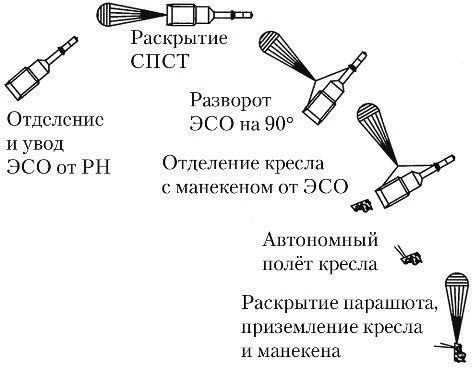
Might a system like that allow a heavier human-rated craft? The occupant could make his way down into the craft--leaving the tower and lower stage to be jettisoned together.
Too violent?
The escape tower would not need to be large enough to tear the whole spacecraft free.
Too violent?
The escape tower would not need to be large enough to tear the whole spacecraft free.
not useable for anything.Might a system like that allow a heavier human-rated craft? The occupant could make his way down into the craft--leaving the tower and lower stage to be jettisoned together.
Too violent?
The escape tower would not need to be large enough to tear the whole spacecraft free.
-For a start, never realized Progress flew with Soyuz escape systems, except deactivated.
The first few Progress missions were launched with the Soyuz LAS attached but they only had a live jettison rocket-motor (The other rocket-motors were empty casings) as they were fitted to function as an aerospike but eventually they were eliminated when flight data indicated they weren't necessary.
Last edited:

Incarn
ACCESS: Confidential
- Joined
- 2 November 2024
- Messages
- 95
- Reaction score
- 610
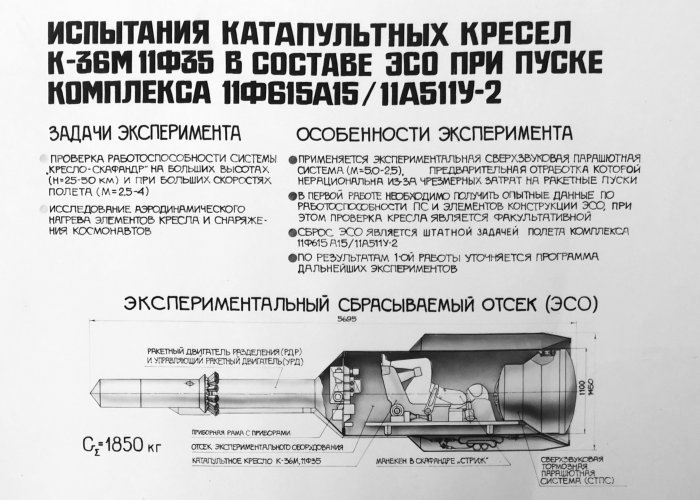
I cannot show the working drawings for reasons of confidentiality—only a fragment of the poster.Do you have any photographs of these test seats installed in the Progress payload fairings? No doubt those payload-fairings would've been heavily modified to accommodate those ejection-seats.
What remains behind the scenes:
- separation of the jettisonable compartment at an altitude of 43 km at a speed of M=5;
- activation of the first stage of the brake parachute system at an altitude of 59 km, M=4.9;
- detachment of the first stage at an altitude of 44 km, M=3.4;
- separation of the K-36M ejection seat with a dummy from the jettisonable compartment, altitude 36 km, speed M=2.9
Attachments
Incarn
ACCESS: Confidential
- Joined
- 2 November 2024
- Messages
- 95
- Reaction score
- 610
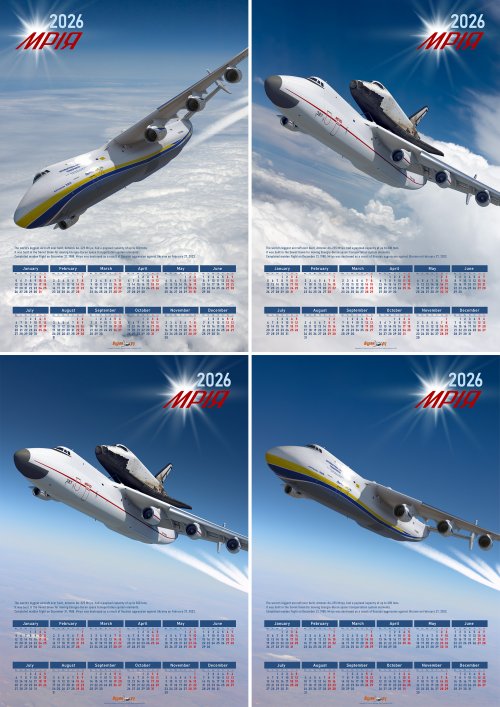
My A1 wall calendars for 2026. You can download them from my website http://www.buran.ru/htm/calendar-2026.htm.
Print them yourself!
Happy New Year!
Print them yourself!
Happy New Year!
Attachments

- Joined
- 1 April 2006
- Messages
- 12,025
- Reaction score
- 13,957

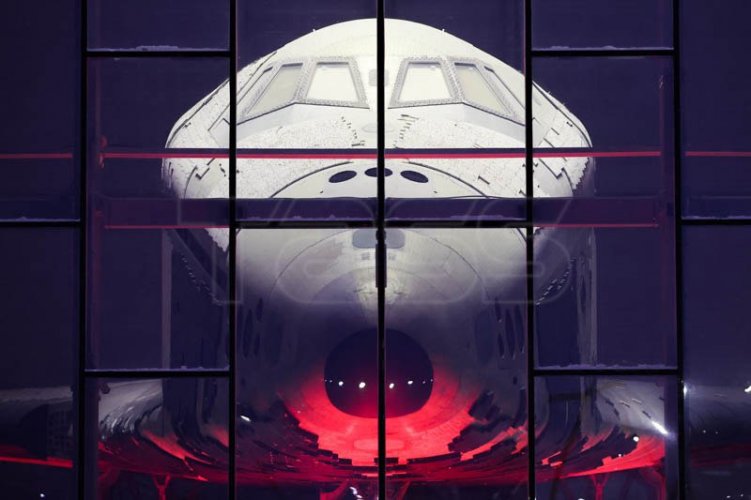
ТАСС Медиа
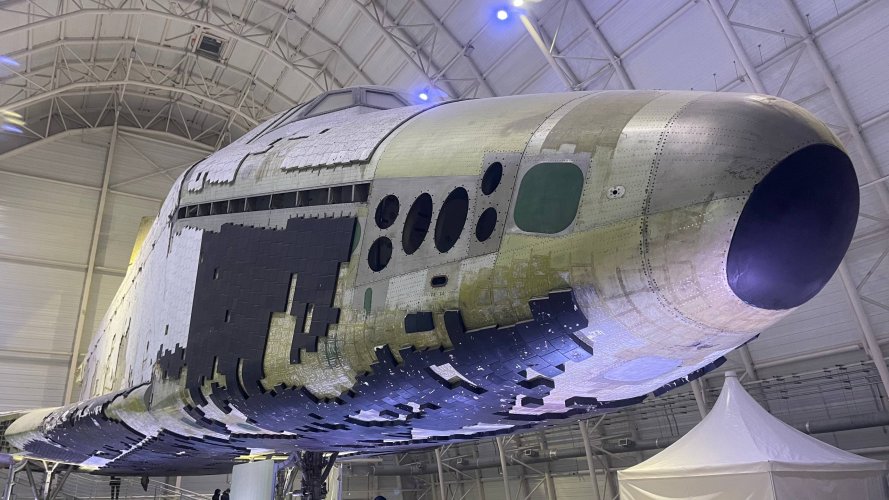
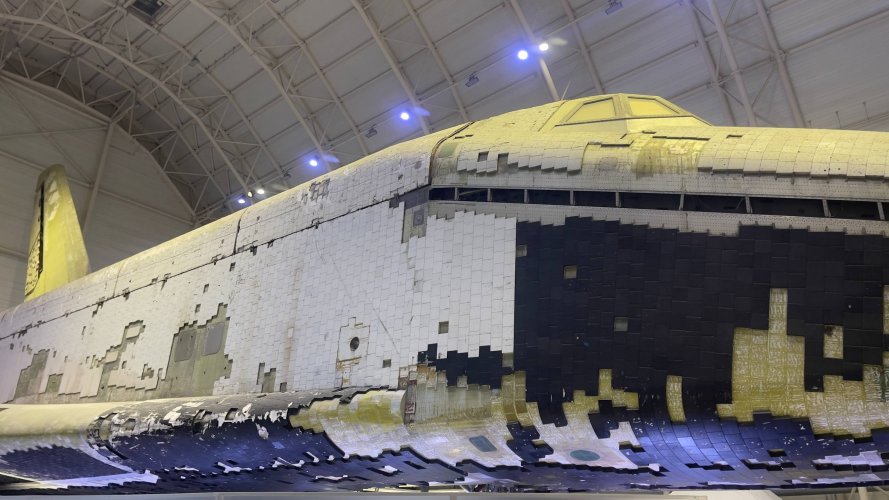
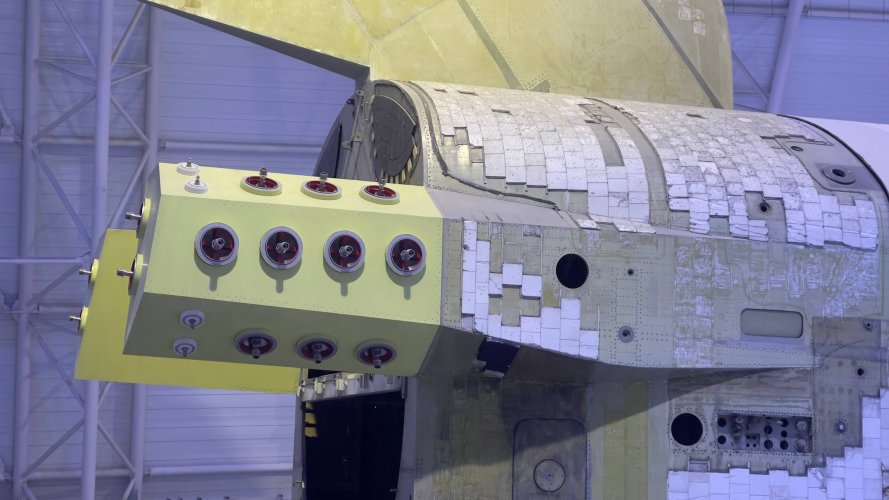
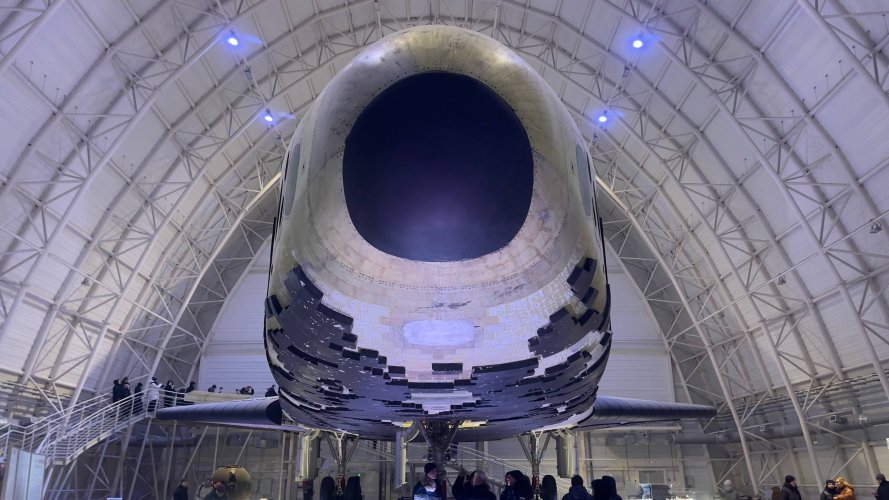
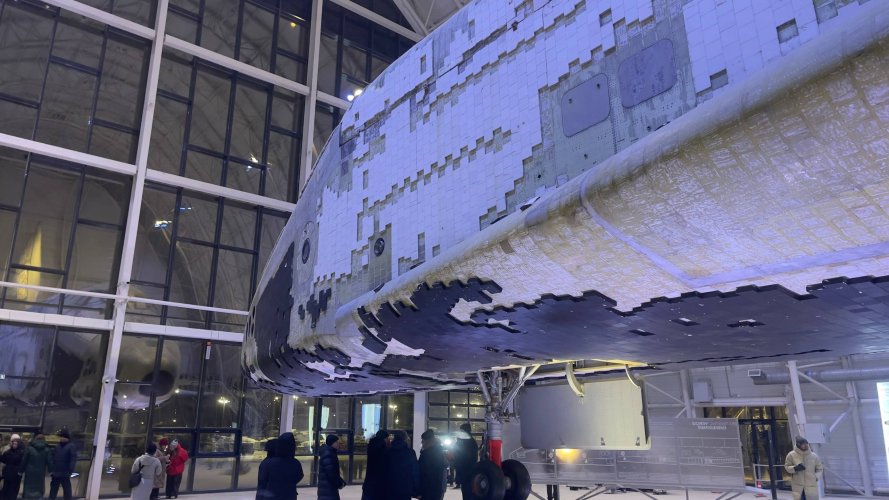
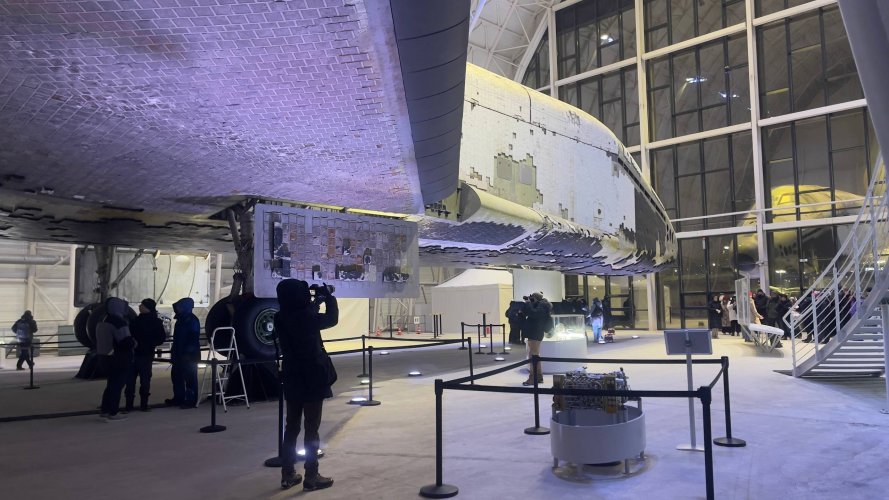
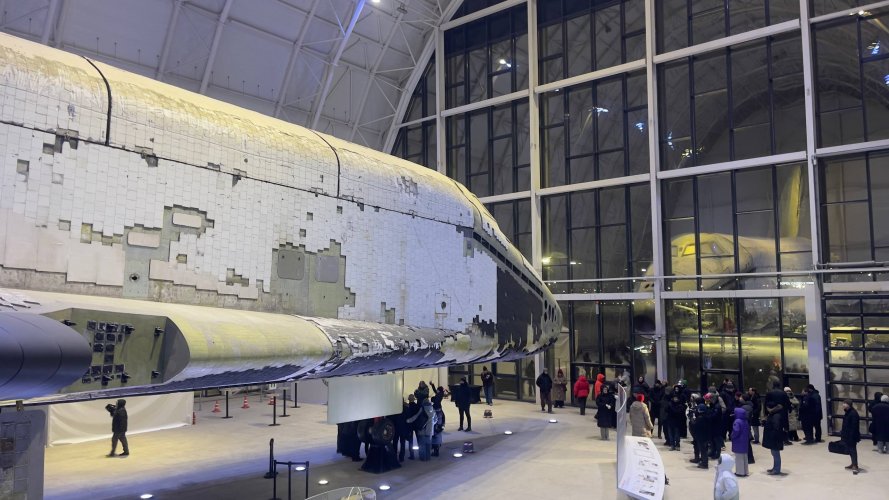
Фото дня Космический корабль Буран 2.01 на открытии нового выставочного центра "Буран" в Музейном комплексе в Верхней Пышме. Фото: Донат Сорокин/ТАСС ✔ Подписывайтесь на ТАСС Медиа
 t.me
t.me

СВЕТЕкатеринбург
Гигантский космический корабль-нейросеть приземлился в Верхней Пышме Сегодня в Музейном комплексе открылся новый выставочный центр, а его главный экспонат — легендарный орбитальный корабль «Буран» (Изделие 2.01). Расскажем историю: первый летный корабль программы — знаменитый «Буран» (изделие...
t.me
Attachments
-
 IMG_20260120_092714_324.jpg57.9 KB · Views: 74
 -
 IMG_20260120_093000_946.jpg468.2 KB · Views: 57
 -
 IMG_20260120_093000_647.jpg372 KB · Views: 55
 -
 IMG_20260120_093000_900.jpg280.9 KB · Views: 57
 -
 IMG_20260120_093000_341.jpg367.8 KB · Views: 56
 -
 IMG_20260120_093000_345.jpg390.2 KB · Views: 58
 -
 IMG_20260120_093000_412.jpg404 KB · Views: 62
 -
 IMG_20260120_093000_986.jpg381.1 KB · Views: 56
 -
 IMG_20260120_093001_056.jpg246.1 KB · Views: 58
- Joined
- 1 April 2006
- Messages
- 12,025
- Reaction score
- 13,957
Attachments

Fibonacci
ACCESS: Confidential
- Joined
- 15 May 2025
- Messages
- 55
- Reaction score
- 373
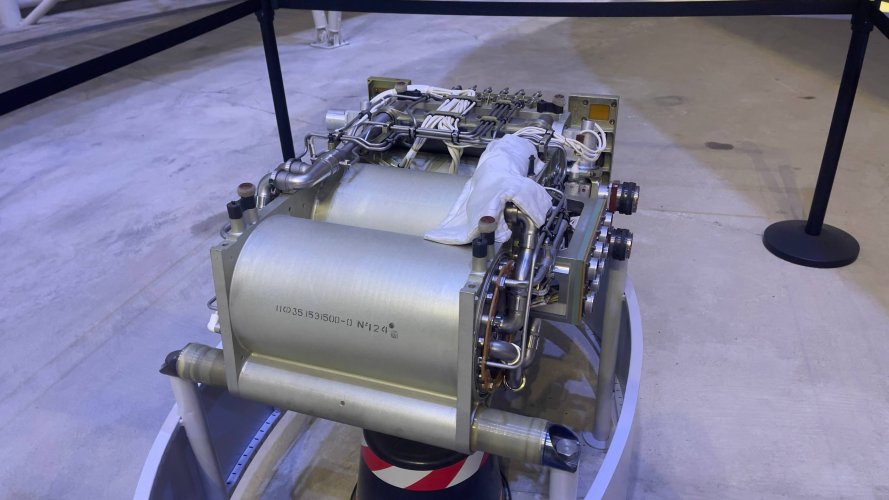
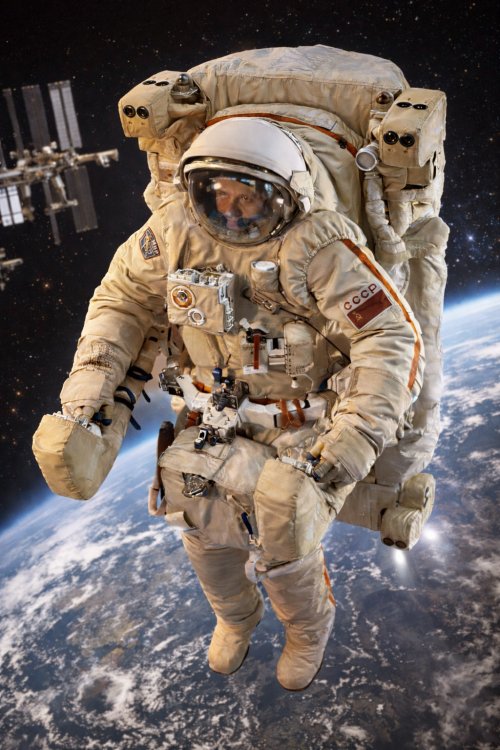
The Russian Zvezda 21KS 'space motorcycle': Buran's Manned Maneuvering Unit (MMU or SPK in Russian). Device successfully tested on the MIR space station in 1990.



KRRRL
ACCESS: Restricted
- Joined
- 31 July 2023
- Messages
- 14
- Reaction score
- 34
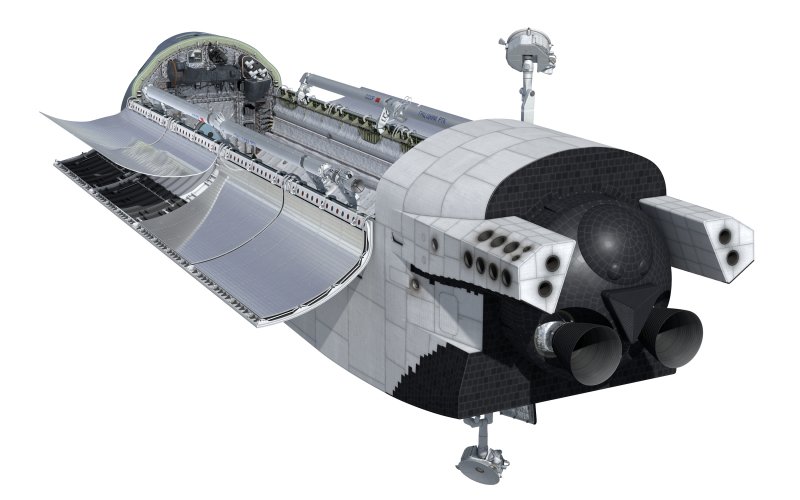
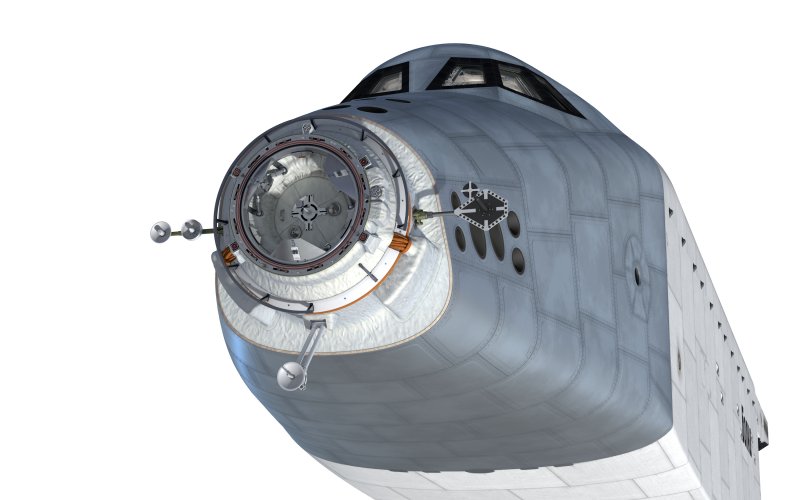
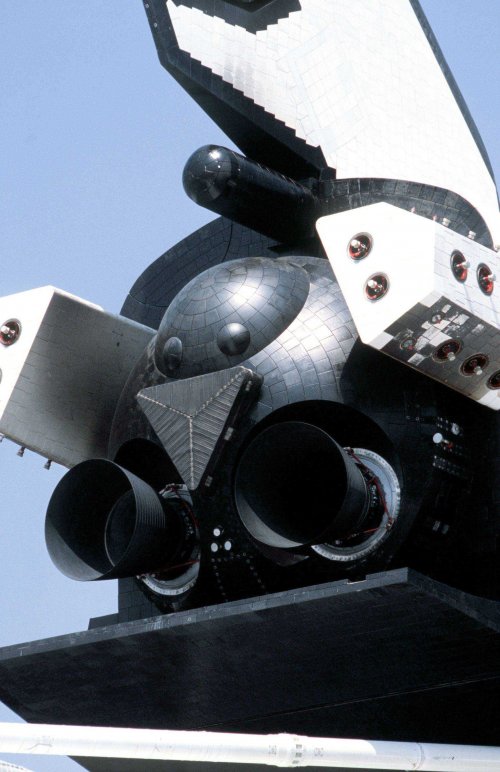
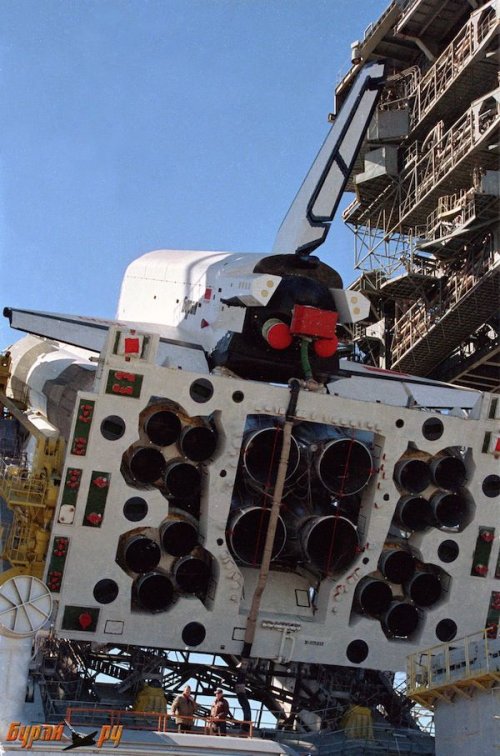
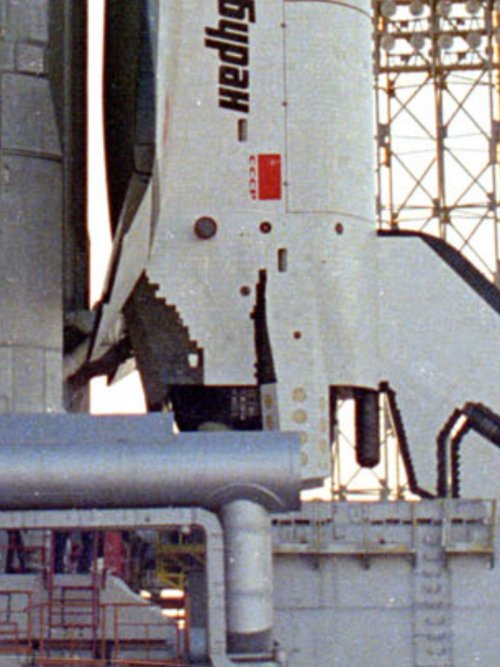
Shouldn't the rear ODU blocks be completely white? In many photos of Buran, you can see that they are black at the bottom due to the soot formed during the separation of the Block-A, and originally were completely white (except for the black piece on the fuselage)
Attachments
Last edited by a moderator:
Incarn
ACCESS: Confidential
- Joined
- 2 November 2024
- Messages
- 95
- Reaction score
- 610
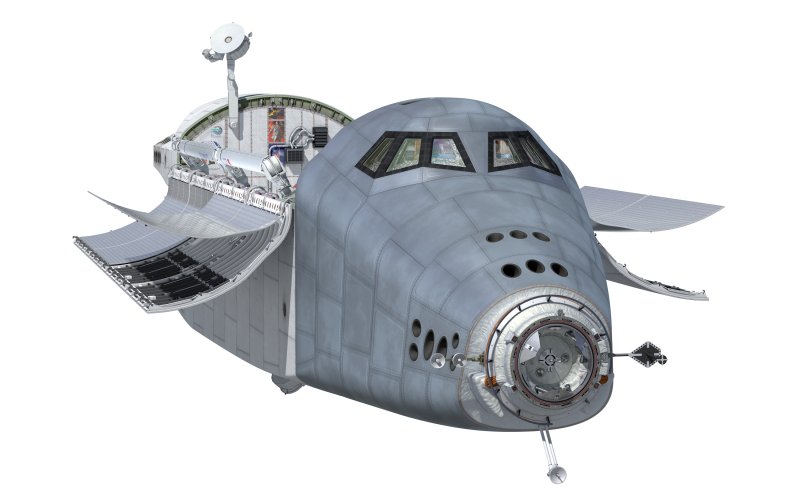
Yes, you're right - this isn't the final version, we're still working on it. We'll fix it.Shouldn't the rear ODU blocks be completely white? In many photos of Buran, you can see that they are black at the bottom due to the soot formed during the separation of the Block-A, and originally were completely white (except for the black piece on the fuselage)
View attachment 800167View attachment 800169View attachment 800166
Attachments
Yes, you're right - this isn't the final version, we're still working on it. We'll fix it.
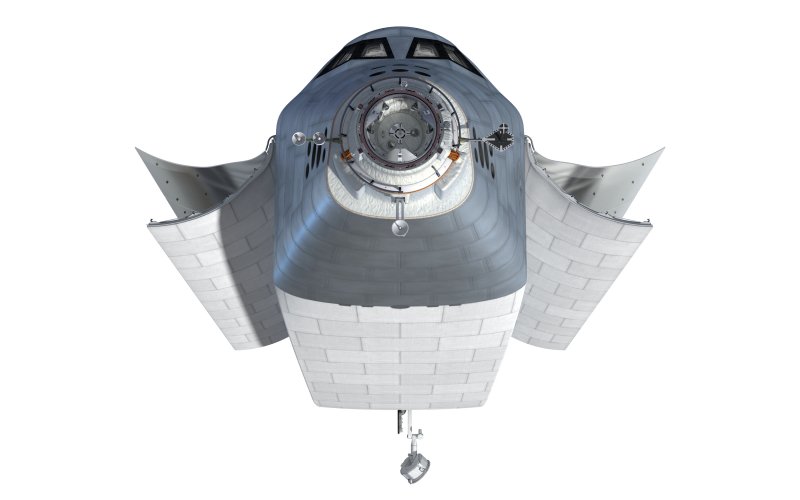
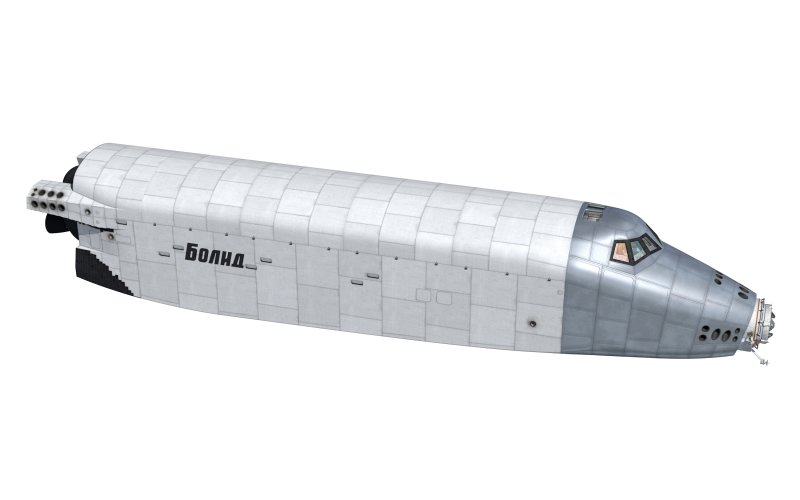
Where are the wings and the tail-fin?
Incarn
ACCESS: Confidential
- Joined
- 2 November 2024
- Messages
- 95
- Reaction score
- 610
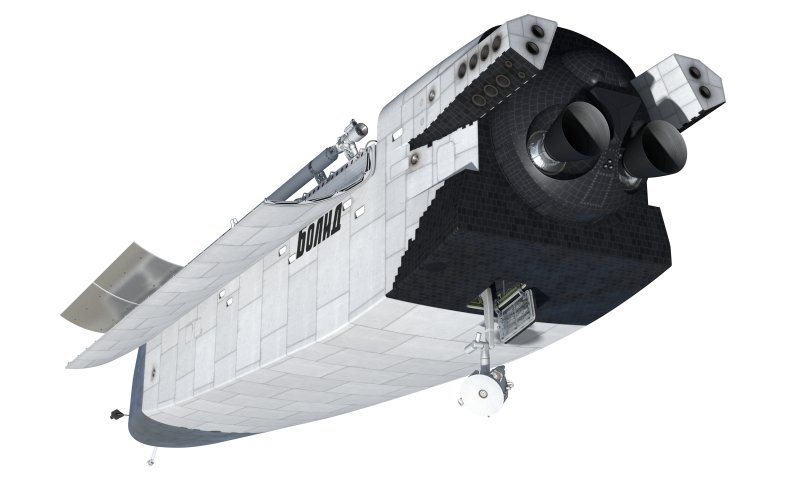
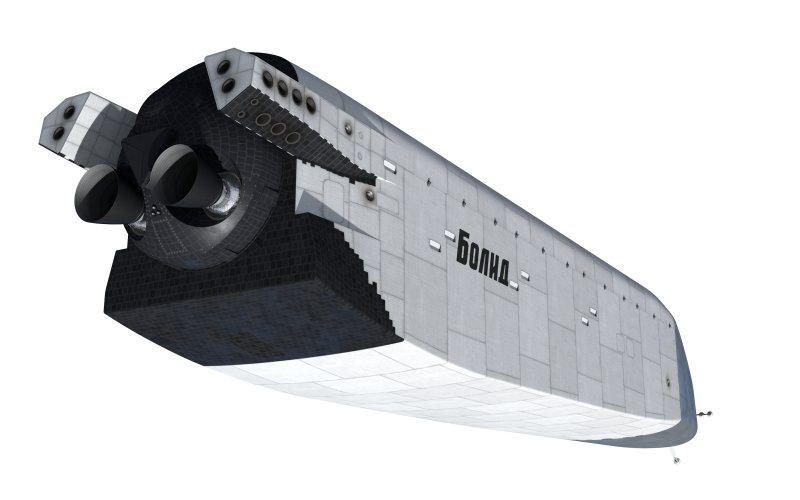
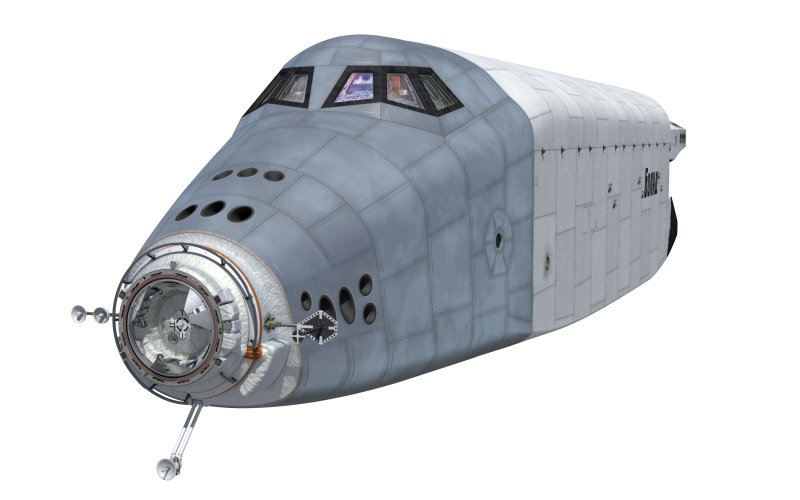
It carries individually targetable warheads in its cargo bay, which it releases in orbit, and does not return to the atmosphere itself, see http://www.buran.ru/htm/spirit.htmWhere are the wings and the tail-fin?
Attachments
- Joined
- 1 April 2006
- Messages
- 12,025
- Reaction score
- 13,957
They are not "like", they are literally those modules.Like the wingless Buran station modules then.
galopujacy_jez
Maks
Sorry for not responding, couldn't find anything substantial!Hi, its been quite a while but im getting back into the topic. Do you happen to have this info anywhere? Thank you very much for the past info youve given btw
KRRRL
ACCESS: Restricted
- Joined
- 31 July 2023
- Messages
- 14
- Reaction score
- 34
Are there any plans to make a model of the laser system for Buran or the space-to-space missile launcher you mentioned? And a couple more questions: what was the actual Delta-V of an empty Buran with a full fuel load, and how much fuel did the additional tanks hold?It carries individually targetable warheads in its cargo bay, which it releases in orbit, and does not return to the atmosphere itself, see http://www.buran.ru/htm/spirit.htm
All the info in the Internet is very different of course, so you're the only reliable source)
Incarn
ACCESS: Confidential
- Joined
- 2 November 2024
- Messages
- 95
- Reaction score
- 610
We plan to complete the Bolid model together with the impact blocks inside the cargo compartment. We do not have detailed data on the Buran's onboard defense system.Are there any plans to make a model of the laser system for Buran or the space-to-space missile launcher you mentioned? And a couple more questions: what was the actual Delta-V of an empty Buran with a full fuel load, and how much fuel did the additional tanks hold?
All the info in the Internet is very different of course, so you're the only reliable source)
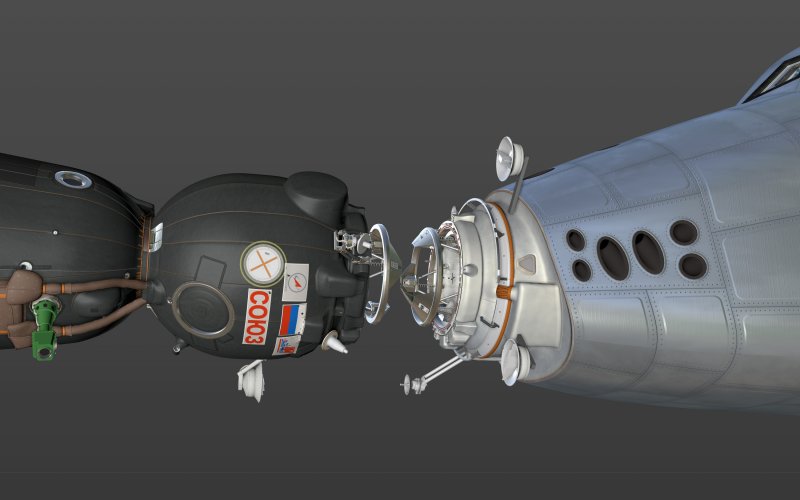
Regarding fuel: the Buran's combined dual-engine installation (ODU) could hold 14 tons of fuel.
A full tank (14 tons) was to be used only for an orbit with an inclination of 97 degrees; for other orbits with inclinations of 50.7, 65, 72.5, and 80 degrees, a tank of 7.5 tons was provided.
In addition, it was possible to place additional fuel tanks for another 14 tons of fuel in the cargo compartment. Thus, the maximum fuel supply for Buran could reach 28 tons.
Taking the mass of Buran as 85 tons, with a maximum fuel capacity of 28 tons and a specific impulse of the orbital maneuvering engines of 362 seconds, the total velocity increment (delta V) would be 1418 m/s.
UPD:
I clarified the mass of Buran before descent from its parking orbit - 77,200 kg.
Accordingly, with this mass and a fuel reserve of 28 tons, the characteristic velocity will be 1,599.3 m/s.
UPD from February 13, 2026:
This data is incorrect because to calculate the consumption of the entire fuel supply, you need to take the mass of the Buran not before descent from orbit, but the maximum mass after launch into the reference orbit. See my post from February 13, 2026 below.
Attachments
Last edited:
KRRRL
ACCESS: Restricted
- Joined
- 31 July 2023
- Messages
- 14
- Reaction score
- 34
Wow, it's actually crazy, especially compared to other questionable sources saying that the Burans Delta-V without any payload and with 7.5t fuel was around 350m/s and 550m/s with 14t fuel and 30t layload (without any specific orbit inclination of course)Accordingly, with this mass and a fuel reserve of 28 tons, the characteristic velocity will be 1,599.3 m/s.
Last edited:
Incarn
ACCESS: Confidential
- Joined
- 2 November 2024
- Messages
- 95
- Reaction score
- 610
The maximum returnable payload for Buran is 20 tons.
As for fuel reserves and characteristic speed reserves, unlike the Space Shuttle, Buran was designed to “dive into the atmosphere” — descending to an altitude of 80 km with a change in orbital inclination due to aerodynamic maneuvering in the atmosphere, followed by a return to space.
And while the Space Shuttle had a working orbit altitude range of up to 400 miles (643 km), the Buran had a working orbit range of 200 (reference), 300, 500, and 1000 km.
Even if we take the maximum mass in the reference orbit (H=200 km) with an inclination of 97 degrees after a boost impulse of 88.5 tons, with 16 tons of fuel remaining, the characteristic velocity reserve (specific impulse of the engine 362 seconds) would already be 707.9 m/s - this is the worst case scenario.
And if we take the maximum mass in the reference orbit after the additional lift-off of 102.5 tons with a fuel reserve of, for example, 25 tons, then the specific velocity reserve will be about 992 m/s.
These data are correct, unlike yesterday's, in which I took the mass of the empty spacecraft before descent.
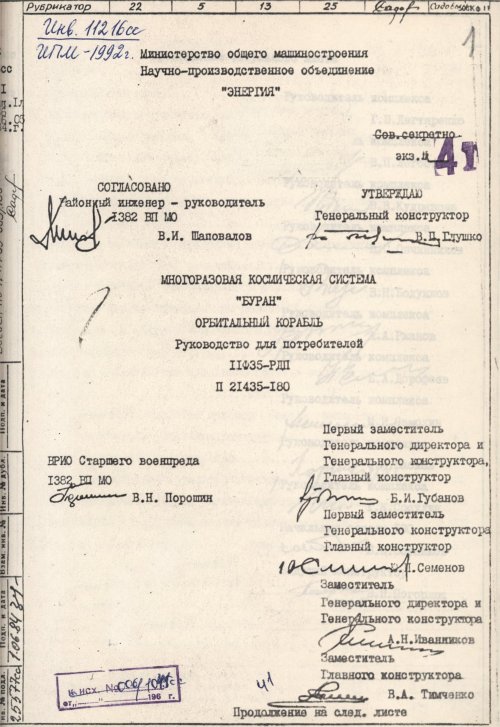
Unlike other speculative sources, I rely on the Buran documentation.
As for fuel reserves and characteristic speed reserves, unlike the Space Shuttle, Buran was designed to “dive into the atmosphere” — descending to an altitude of 80 km with a change in orbital inclination due to aerodynamic maneuvering in the atmosphere, followed by a return to space.
And while the Space Shuttle had a working orbit altitude range of up to 400 miles (643 km), the Buran had a working orbit range of 200 (reference), 300, 500, and 1000 km.
Even if we take the maximum mass in the reference orbit (H=200 km) with an inclination of 97 degrees after a boost impulse of 88.5 tons, with 16 tons of fuel remaining, the characteristic velocity reserve (specific impulse of the engine 362 seconds) would already be 707.9 m/s - this is the worst case scenario.
And if we take the maximum mass in the reference orbit after the additional lift-off of 102.5 tons with a fuel reserve of, for example, 25 tons, then the specific velocity reserve will be about 992 m/s.
These data are correct, unlike yesterday's, in which I took the mass of the empty spacecraft before descent.
Unlike other speculative sources, I rely on the Buran documentation.
Attachments
You must use speculative sources for other vehicles because you are wrong on the shuttle.And while the Space Shuttle had a working orbit altitude range of up to 400 miles (643 km), the Buran had a working orbit range of 200 (reference), 300, 500, and 1000 km.
Unlike other speculative sources, I rely on the Buran documentation.
Attachments
Incarn
ACCESS: Confidential
- Joined
- 2 November 2024
- Messages
- 95
- Reaction score
- 610
After your statement that the Space Shuttle could perform a fully automatic landing without crew involvement (please refer to https://www.secretprojects.co.uk/th...s-flight-option-discussion.50316/#post-850270 ), it became clear to everyone that you are not familiar with the Space Shuttle developer's design documentation.You must use speculative sources for other vehicles because you are wrong on the shuttle.
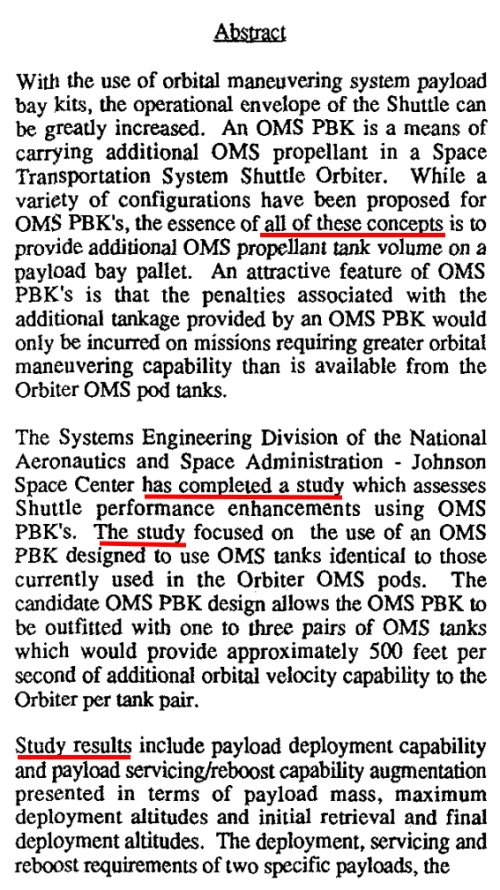
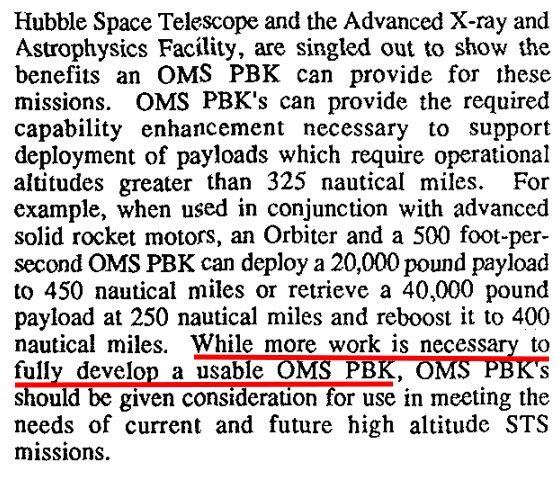
For example, you are trying to prove that the Shuttle could reach an altitude of 600 miles, but that is a lie.
The maximum altitude at which the Space Shuttle could fly was 400 miles. The maximum altitude reached by the shuttle in 133 successful flights was 386 miles, or 621 km (STS-31).
The material you have attached is an unrealized concept, just like your fully automatic landing.
Moreover, this is only a concept that arose in the tenth year of Shuttle flights, see attachments.
I am using documentation from the developer from 1984, i.e., four years before the first flight of the Buran. This is data that was originally incorporated into the design of the Buran and used in the creation of payloads for it.
After your fiasco with the Shuttle's automatic landing and now with its maximum flight altitude, your opinion is no longer of interest.
PS: This thread is about Buran, so please don't flood it.
Attachments
Last edited:
galopujacy_jez
Maks
Hi, does anyone have any information on the Buran's information displays? I mean the VKUs. I have searched practically everywhere for them, and this forum has been the greatest help so far. Any info about them would be greatly appreciated.
Here are three display diagrams of Adonis from Semyonov 1995.
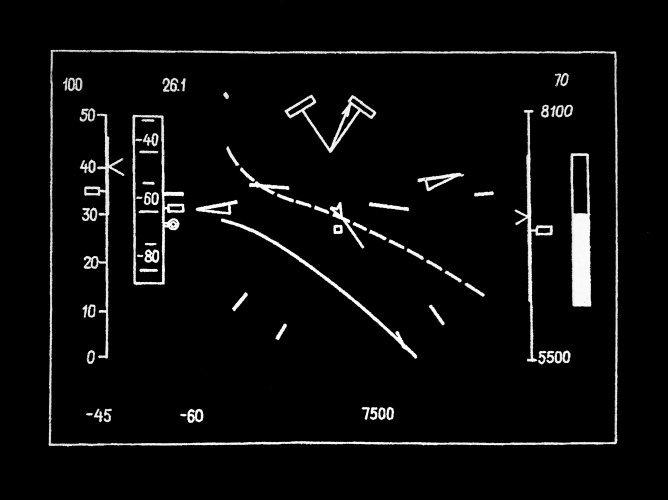
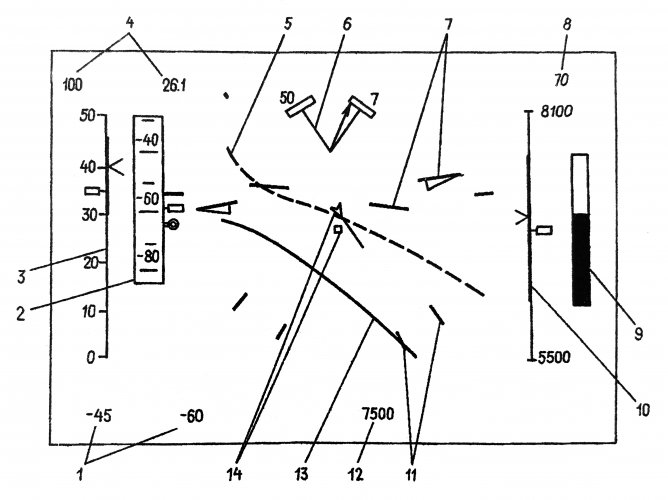
Fig. 9.7. Display information frame for a section of 100...20 km:
1 - movable counter of current and command values of the Vu quantity, 2 Vu scale with indicators of set and current values; 3, 10 - fixed scales of angle of attack and range with maximum ranges, current and nominal values of parameters; 4 - counters of indicated speed and Mach number; 5, 13 - dependencies of nominal and limit positions of the OK, caused by temperature and design limitations; 6 - course situation indicator; 7 - indicators of command and current values of the bank angle; 8 - flight altitude counter; 9 - fuel consumption scale; 11 - bank angle scale; 12 - runway distance counter; 14 - indices of nominal and current orbiter position
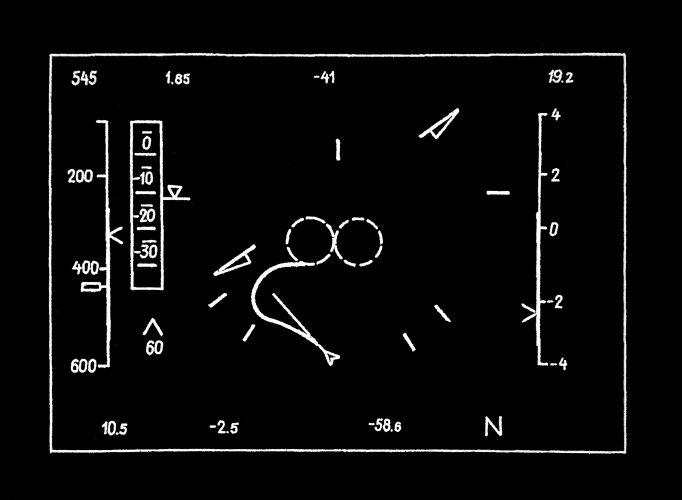
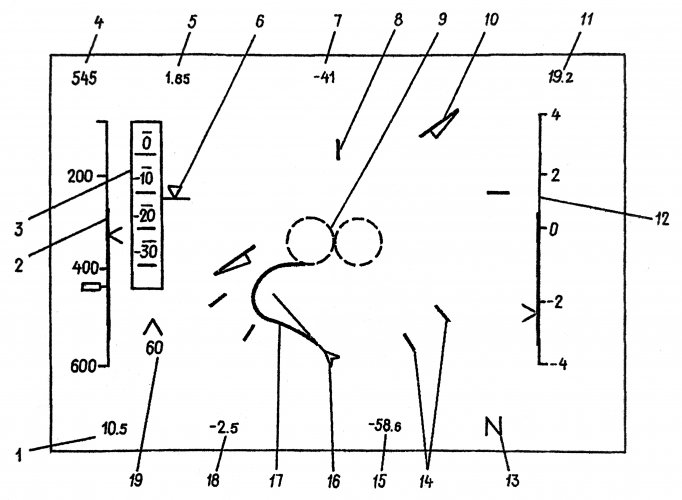
Fig. 9.8. Display information frame for the 20...4 km section: instrument airspeed and altitude reserve scale with
1 - angle of attack; 2, 12 limit ranges, current and nominal values of parameters; 3 - pitch angle; 4, 5 - indicated airspeed and Mach number; 6 - symbol of approaching the permissible angle of attack; 7 - heading; 8 - runway position index; 9 - TsVK position; 10 - current bank angle; 11 - altitude; 13 - index of predicted trajectory; 14 - bank angle scale; 15 - X-coordinate counter; 16 - orbiter position; 17 - predicted trajectory; 18 - lateral deviation from runway centerline; 19 - airbrake deployment angle
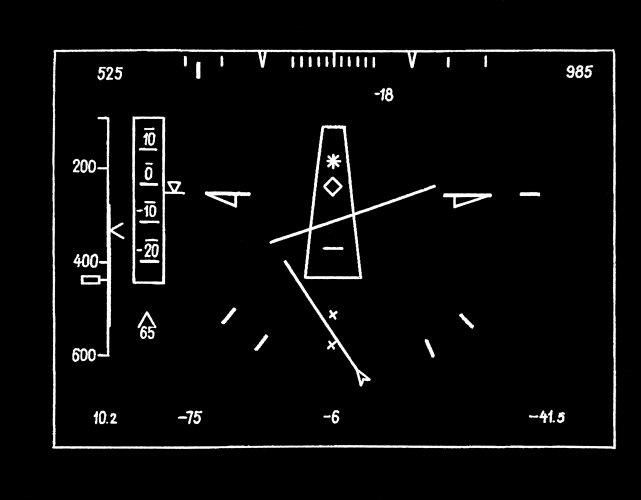
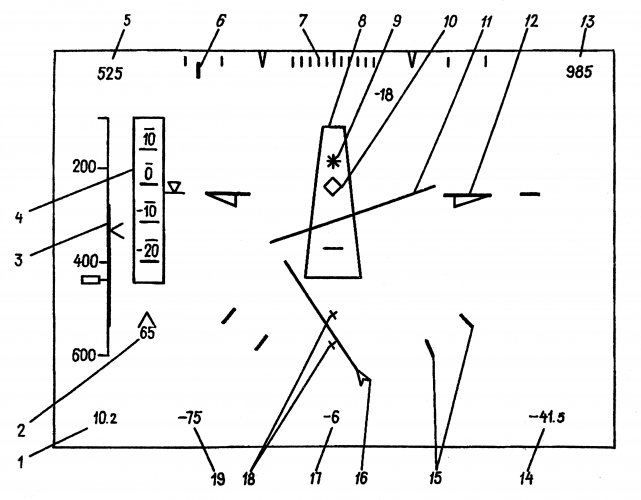
Fig. 9.9. View of the information frame of the display for a section of 4...0 km:
1 - angle of attack; 2 - angle of opening of the air brake; 3 - instrument speed; 4 - pitch angle; 5 - instrument speed counter; 6 - index of the current lateral deviation value; 7 - scale lateral deviation; 8 - runway symbol; 9, 10 - markers of the predicted final miss for the current and nominal OK state; 11, 12 - command and current roll angle values; 13 - altitude; 14 - vertical speed counter; 15 - roll angle scale; 16 - orbiter position; 17 - counter for the longitudinal X-coordinate; 18 - ground landmarks (far and near drives); 19 - lateral deviation from the runway axis

- Joined
- 6 June 2006
- Messages
- 14,667
- Reaction score
- 20,610
Hey @galopujacy_jez - congrats for your Space Review writting ! https://www.thespacereview.com/article/5184/1
Last edited:
galopujacy_jez
Maks
Thank you!Hey @galopujacy_jez congrats for your Space Review writting ! https://www.thespacereview.com/article/5184/1

Owens Z
quaerimus scientiam
- Joined
- 6 October 2023
- Messages
- 493
- Reaction score
- 716
...PS: This thread is about Buran, so please don't flood it.
(Incarn, apologies if this has already been answered, but I'm not finding a number in this thread.) My English-language sources differ widely on the actual touchdown speed (i.e. the vehicle's ground speed at the instant its main-gear tires first contacted the runway) of the Buran orbiter when it landed at Site 251 on 15 November 1988. Anatoly Zak's website just gives an estimated range for the notional program, "312—360" kilometers per hour. Mark Wade's Encyclopedia Astronautica website states the 1988 landing was at 260 kilometers per hour; the book Energia-Buran: The Soviet Space Shuttle by Bart Hendrickx & Bert Vis (Springer-Praxis, 2007) states "Buran landed at a speed of 263 km/h" (page 355); and Dennis R. Jenkins's Space Shuttle 2nd Edition states "207 mph" (page 51), which equates to 333 km/h or 180 knots.
Incarn, what is the definitive true figure in the original Soviet records? (No need to convert for me if the original uses meters per second, or other.) I want to compare and contrast the touchdown speed of Buran's single flight to the Space Shuttle orbiter's touchdown speed, which in the 1970s had nominally been planned for 171 knots, and averaged in real service 195—205 knots. The slowest Shuttle touchdown ever was 156 knots (STS-28A), and the fastest 232.5 knots (STS-3 at White Sands).
Incarn
ACCESS: Confidential
- Joined
- 2 November 2024
- Messages
- 95
- Reaction score
- 610
The article is very interesting (thank you for it!), but it contains many factual errors. Let me go through them one by one:Thank you!
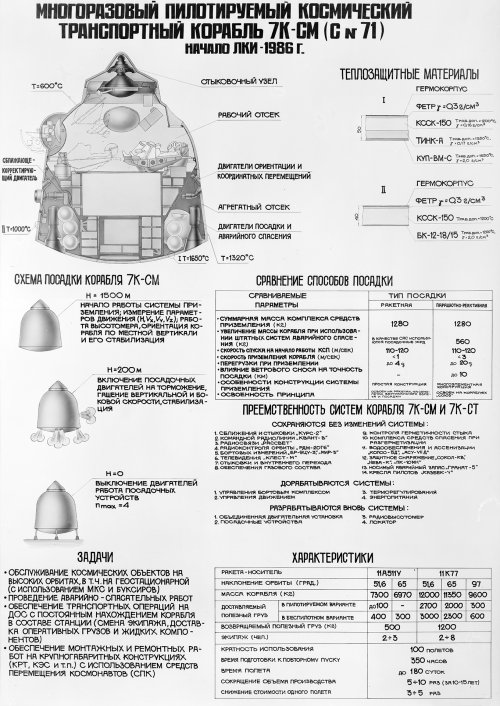
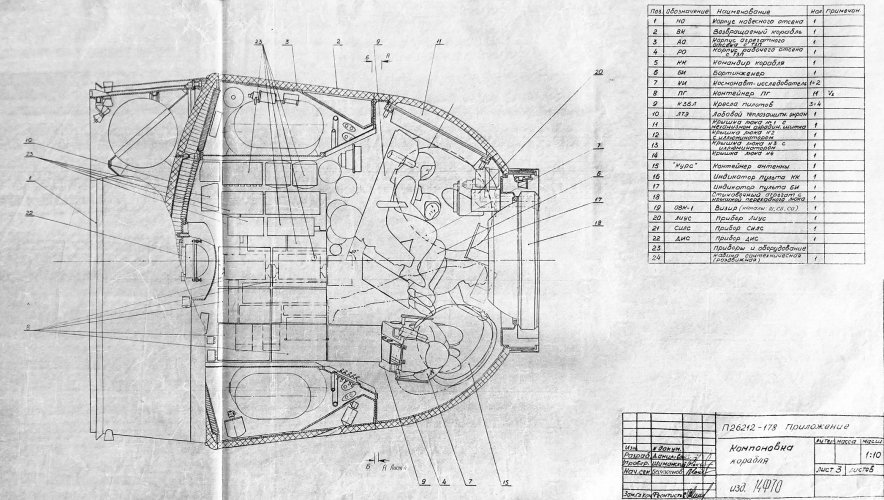
- You are correct in stating that work on the “Zarya” began under the designation 7K-SM in 1982 (as a further modification of the 7K-ST/11F732), and your entire subsequent description pertains specifically and exclusively to this first modification (maximum descent module diameter of 3.5 meters, crew of up to 8 people, etc.)
— but the final version (which was approved for construction in the second half of the 1980s) was designated 11F70 and differed significantly from the first—with a maximum diameter of 4.101 meters, the crew consisted of four cosmonauts in individual ejection seats K36L. The attached drawing, signed by Feoktistov, is dated November 25, 1987; the main set of design documentation was released in the first half of 1988.
- Accordingly, the 7K-SM and 11F70 are different spacecraft with different parameters and characteristics (notably, both the initial and rejected versions of the 7K-SM were intended for launch on both the Zenit and Soyuz rockets with a minimal crew and payload).
Now for the details:
- In its final configuration, the 11F70 had a maximum reentry module diameter of 4.101 meters, while 3.62 meters was the minimum diameter of the conical service compartment;
- Payload capacity (for the 11K77 Zenit rocket) to a 51.6-degree inclined orbit: 2,500–3,000 kg with a crew, 2,800–3,300 kg without a crew; during descent from orbit, 1,200 and 1,500 kg, respectively;
- aerodynamic drag coefficient 0.25;
- reference orbit altitude 150 km, operational orbit altitude 350–600 km;
- landing engines: the 7K-SM has eight engines with a thrust of 6,500 kgf each; the 11F70 has 24 engines (thrust unknown);
- landing accuracy: plus/minus 1 kilometer;
- maximum acceleration during landing: 4g;
- maneuvering engines (on the 7K-SM): 2 with a thrust of 300 kgf each; fuel for the combined propulsion system: RG-1 kerosene, O-30VK oxidizer;
- In the documentation for the “Mir-2” complex, the 180GK does not appear as a small supply ship for “Soyuz”; only “Zarya” is listed. “Soyuz” appears in place of ‘Zarya’ in the next variant of “Mir-2,” the 240GK
Attachments
Incarn
ACCESS: Confidential
- Joined
- 2 November 2024
- Messages
- 95
- Reaction score
- 610
Bart Hendrix correctly states the landing speed of the “Buran” on its first flight:(Incarn, apologies if this has already been answered, but I'm not finding a number in this thread.) My English-language sources differ widely on the actual touchdown speed (i.e. the vehicle's ground speed at the instant its main-gear tires first contacted the runway) of the Buran orbiter when it landed at Site 251 on 15 November 1988. Anatoly Zak's website just gives an estimated range for the notional program, "312—360" kilometers per hour. Mark Wade's Encyclopedia Astronautica website states the 1988 landing was at 260 kilometers per hour; the book Energia-Buran: The Soviet Space Shuttle by Bart Hendrickx & Bert Vis (Springer-Praxis, 2007) states "Buran landed at a speed of 263 km/h" (page 355); and Dennis R. Jenkins's Space Shuttle 2nd Edition states "207 mph" (page 51), which equates to 333 km/h or 180 knots.
Incarn, what is the definitive true figure in the original Soviet records? (No need to convert for me if the original uses meters per second, or other.) I want to compare and contrast the touchdown speed of Buran's single flight to the Space Shuttle orbiter's touchdown speed, which in the 1970s had nominally been planned for 171 knots, and averaged in real service 195—205 knots. The slowest Shuttle touchdown ever was 156 knots (STS-28A), and the fastest 232.5 knots (STS-3 at White Sands).
- ground speed at touchdown: 263 km/h;
- vertical speed at touchdown: 0.3 m/s.
For more details, see here: https://www.buran.ru/htm/algoritm.htm
PS: The shuttle’s landing weight is significantly greater than that of the Buran, which, moreover, was practically empty on its first flight.
The technical documentation states that the Buran’s operational landing speed range is 300–360 km/h, depending on the landing weight and wind conditions at the moment of touchdown on the runway; the average landing speed for a landing weight of 82 tons is 312 km/h. See https://www.buran.ru/htm/table48.htm
Last edited:
Incarn
ACCESS: Confidential
- Joined
- 2 November 2024
- Messages
- 95
- Reaction score
- 610
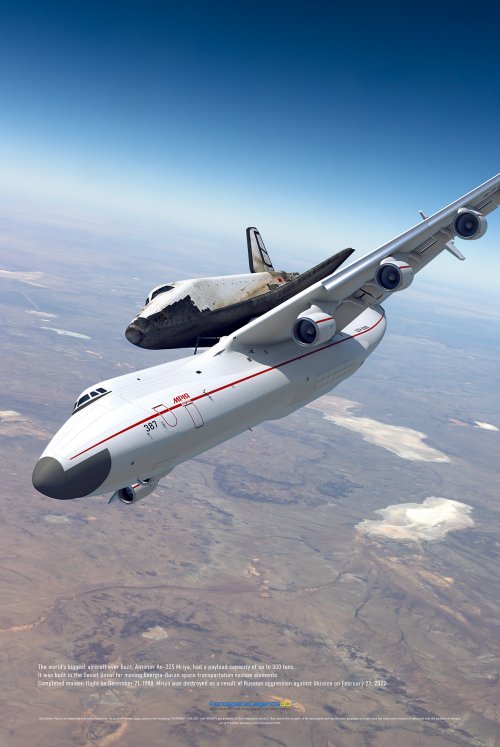
A new poster in the 'Mriya & Buran: Exclusive 3D Aerospace Masterpieces' collection features the first test flights at Baikonur in early May 1989.
Available for print in 16x24, 24x36, 32x48, or 40x60 formats here https://www.zazzle.com/mriya_buran_soviet_aviation_triumph_poster-256152987116922767

Available for print in 16x24, 24x36, 32x48, or 40x60 formats here https://www.zazzle.com/mriya_buran_soviet_aviation_triumph_poster-256152987116922767
galopujacy_jez
Maks
Thank you for the kind words. I won't surprise you when I say the article was written using only sources that are openly available already, so the information you posted is very valuable. If you have more you can share (or documentation that cannot be published directly) I would love to collaborate with you on a more complete account of the project in article form.The article is very interesting (thank you for it!), but it contains many factual errors. Let me go through them one by one:
Owens Z
quaerimus scientiam
- Joined
- 6 October 2023
- Messages
- 493
- Reaction score
- 716
Bart Hendrix correctly states the landing speed of the “Buran” on its first flight:
- ground speed at touchdown: 263 km/h;
- vertical speed at touchdown: 0.3 m/s.
For more details, see here: https://www.buran.ru/htm/algoritm.htm
PS: The shuttle’s landing weight is significantly greater than that of the Buran, which, moreover, was practically empty on its first flight.
The technical documentation states that the Buran’s operational landing speed range is 300–360 km/h, depending on the landing weight and wind conditions at the moment of touchdown on the runway; the average landing speed for a landing weight of 82 tons is 312 km/h. See https://www.buran.ru/htm/table48.htm
Thanks very much for your good help from the original Soviet sources, Incarn. You affirm that the touchdown speed on 15 November 1988 was 263 kilometers per hour, which equates to 142 knots. I had been suspicious of this figure in the Bart Hendrickx & Bert Vis book because it is so much slower than the slowest Shuttle orbiter landing (156 knots on STS-28A, according to Dennis R. Jenkins). But unlike the similar-sized Shuttle orbiter, the Buran design didn't have main rocket engines, and on its one spaceflight Buran included no crew, seats, crew supplies, or payload (other than test instrumentation), as you point out.
Does this Russian-language documentation give the exact figure for the vehicle's landing weight (mass) on 15 November 1988?
That it was believed the notional touchdown speeds of the operational program would be 300–360 km/h (162-194 knots) is noteworthy; thank you.
Incarn
ACCESS: Confidential
- Joined
- 2 November 2024
- Messages
- 95
- Reaction score
- 610
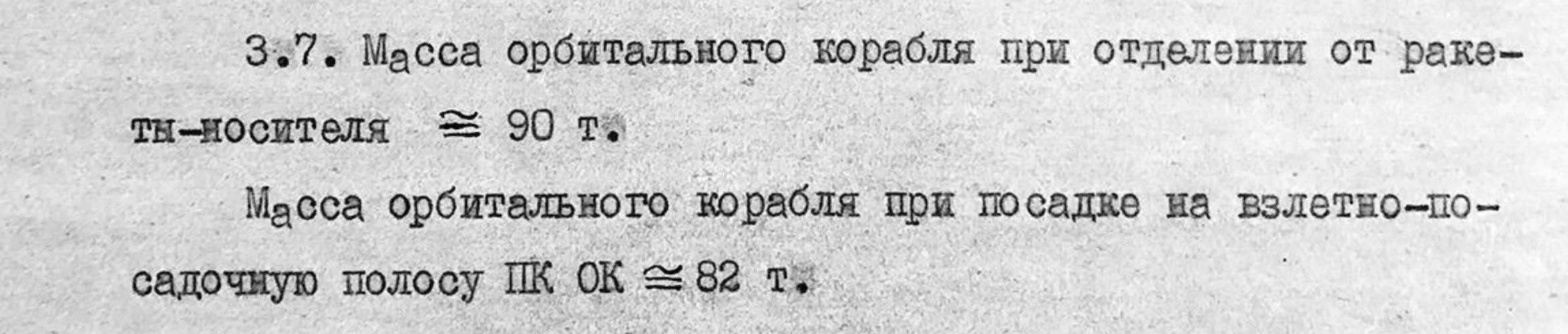
From the objectives of the first launch, approved in October 1987 (one year before the actual launch on November 15, 1988).Thanks very much for your good help from the original Soviet sources, Incarn. You affirm that the touchdown speed on 15 November 1988 was 263 kilometers per hour, which equates to 142 knots. I had been suspicious of this figure in the Bart Hendrickx & Bert Vis book because it is so much slower than the slowest Shuttle orbiter landing (156 knots on STS-28A, according to Dennis R. Jenkins). But unlike the similar-sized Shuttle orbiter, the Buran design didn't have main rocket engines, and on its one spaceflight Buran included no crew, seats, crew supplies, or payload (other than test instrumentation), as you point out.
Does this Russian-language documentation give the exact figure for the vehicle's landing weight (mass) on 15 November 1988?
That it was believed the notional touchdown speeds of the operational program would be 300–360 km/h (162-194 knots) is noteworthy; thank you.
If I find data specifically regarding the first flight, I’ll let you know.
Incarn
ACCESS: Confidential
- Joined
- 2 November 2024
- Messages
- 95
- Reaction score
- 610
To clarify, the speed of the “Buran” at the moment of touchdown on the runway was 262.8 km/h.
I cannot confirm the landing weight, but the takeoff weight is known to be 79.4 tons. Accordingly, the landing mass must be even lower, approximately 70–74 tons (it can be calculated by determining the fuel consumption for the two-impulse orbit insertion maneuver and the braking impulse — using the known velocity increments and the engine’s specific impulse).
I cannot confirm the landing weight, but the takeoff weight is known to be 79.4 tons. Accordingly, the landing mass must be even lower, approximately 70–74 tons (it can be calculated by determining the fuel consumption for the two-impulse orbit insertion maneuver and the braking impulse — using the known velocity increments and the engine’s specific impulse).
Last edited:
galopujacy_jez
Maks
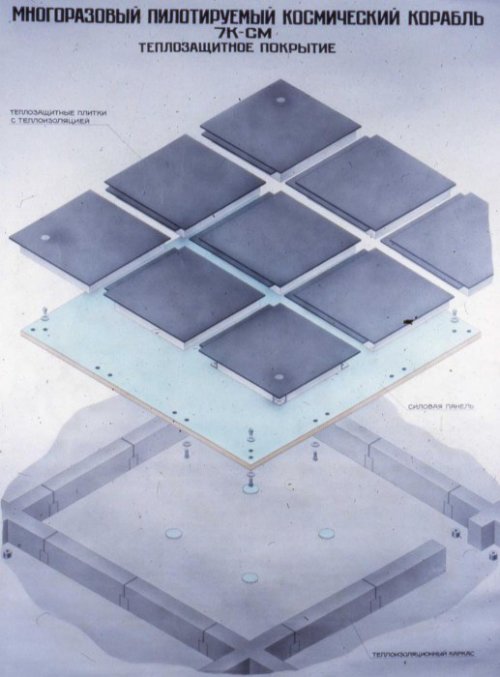
Some questions about the differences then. As I understand it, on 14F70, the thermal protection system was (in order):- You are correct in stating that work on the “Zarya” began under the designation 7K-SM in 1982 (as a further modification of the 7K-ST/11F732), and your entire subsequent description pertains specifically and exclusively to this first modification (maximum descent module diameter of 3.5 meters, crew of up to 8 people, etc.)
— but the final version (which was approved for construction in the second half of the 1980s) was designated 11F70 and differed significantly from the first—with a maximum diameter of 4.101 meters, the crew consisted of four cosmonauts in individual ejection seats K36L. The attached drawing, signed by Feoktistov, is dated November 25, 1987; the main set of design documentation was released in the first half of 1988.
- Thermal protection tiles of composition:
- High-emissivity coating (BK-12-18/15 and a different material)
- (on the windward side tiles only) a variant of TINK quartz material
- base of KSSK-150 pressed thermal insulator made of amorphous silica fibers on inorganic binder
- Felt
- Structural backing
- Separation layer (grid of ribs with pockets of air)
- Pressure hull
Secondly, is 7K-M an alternative designation for 14F70? It pops up in a number of places but I have also seen it as the designation for a Soyuz modification from ~1972 (in Mishin's diaries for example).
Same question regarding 7K-SM and 11F732M, are they the same thing?
Karfidov mentions 7K-SM with the 11F732M designation, No.71 serial number and "preliminary documentation released in 1986" as a two-person ferry to Skif and Kaskad combat stations.
Do these illustrations show the early 7K-SM? (caption in RKK Energia 46-96 uses both 7K-SM and Zarya).
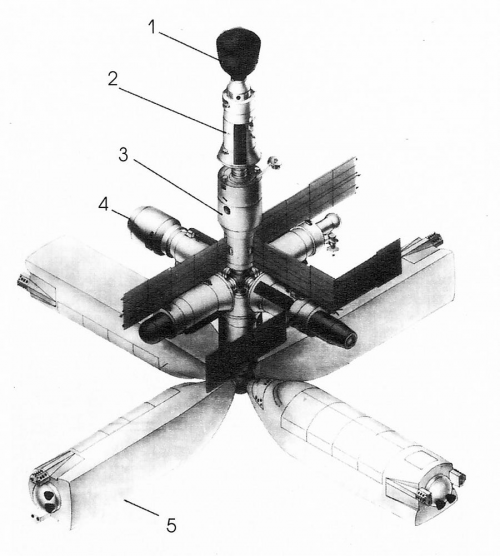
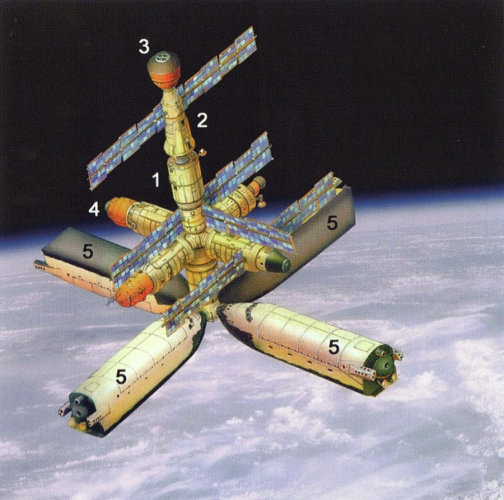
And lastly, is this drawing 7K-SM with parachute recovery or 14F70 mislabeled as 7K-SM?
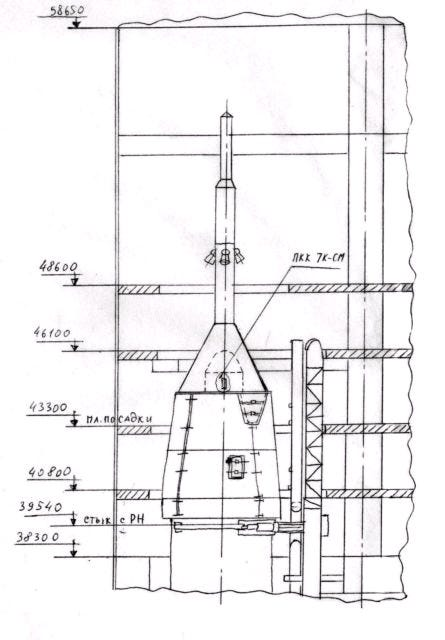
Last edited:
Owens Z
quaerimus scientiam
- Joined
- 6 October 2023
- Messages
- 493
- Reaction score
- 716
From the objectives of the first launch, approved in October 1987 (one year before the actual launch on November 15, 1988). If I find data specifically regarding the first flight, I’ll let you know.
To clarify, the speed of the “Buran” at the moment of touchdown on the runway was 262.8 km/h.
I cannot confirm the landing weight, but the takeoff weight is known to be 79.4 tons. Accordingly, the landing mass must be even lower, approximately 70–74 tons (it can be calculated by determining the fuel consumption for the two-impulse orbit insertion maneuver and the braking impulse — using the known velocity increments and the engine’s specific impulse).
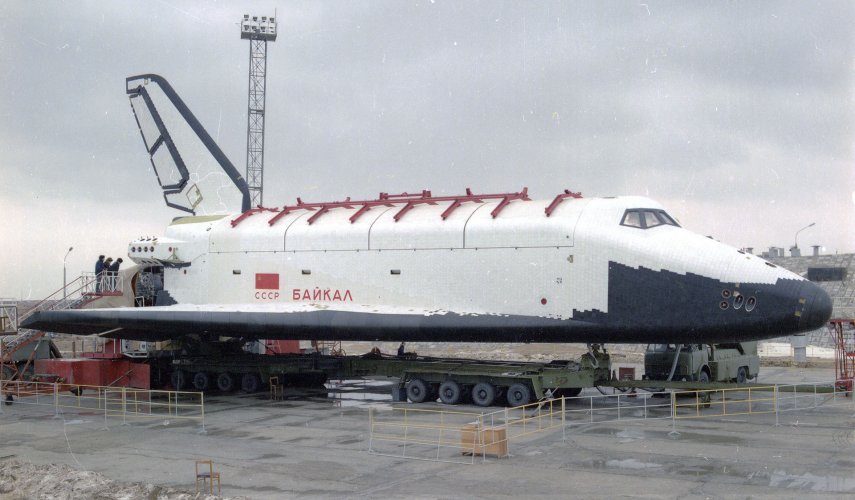
Good; thanks Incarn. I want to compare the landing of Buran in 1988 to the five 1977 glide flights of Space Shuttle Enterprise, which landed at Edwards AFB at 183 to 200 knots. Its three SSME rocket engines were mockups, but I believe they were ballasted to equal real engines for these test flights. I will check whether I can find an exact figure for Enterprise's touchdown weight.
Incarn
ACCESS: Confidential
- Joined
- 2 November 2024
- Messages
- 95
- Reaction score
- 610
Attachments
Similar threads
-

-
 Black ZEUS: The top secret shuttle mission that never flew
- Started by Flyaway
- Replies: 4
-
-

-
 Looking for old AWST with articles on soviet military space program
- Started by flateric
- Replies: 12