On a note re. tags, among other tags I would have liked to create or add to this topic would have been the 'Directorate General of Civil Aviation and Air Traffic (Italy)'. I believe this was part of the Kingdom of Italy's Ministry of Aeronautics.
 
Hi!
http://villacougnet.it/tag/reggianehttp://www.leteckemotory.cz/caproni/
PDF file.
http://www.ottoperotto.org/wp-content/uploads/2011/11/LOCANDINA_RE.pdf
http://www.philaphoto.com/imageLibrary/displayimage.php?album=1536&pos=25A model of the Reggiane Re.8000 seaplane airliner that was proposed in 1944. The Reggio company was owned by Caproni and construction of the first prototype (of two planned) was to have begun in mid 1946. The all metal design featured two decks with beds to sleep 52 passengers or for daytime flights, 76 - with 10 crew. Also included were a restaurant, bar & meeting room! The wing floats were retractable. Power was to be by four P&W 3,000-3,500hp engines allowing a max takeoff weight of 53,000kg and a range of 5,300km at a cruising speed of 340kph. Photographed in Trento, Italy. 2013.
reggiane_ca_8000_scale_model_-3-jpg.566726

reggiane_ca_8000_scale_model_-1-jpg.566724

re_8000_01-jpg.566722

287_dsc04716-jpg.566720

286_dsc04715-jpg.566718

283_dsc04712-jpg.566716

282_dsc04711-jpg.566714

285_dsc04714-jpg.566712

170113-jpg.566710

p1-jpg.566728
 
Hi,


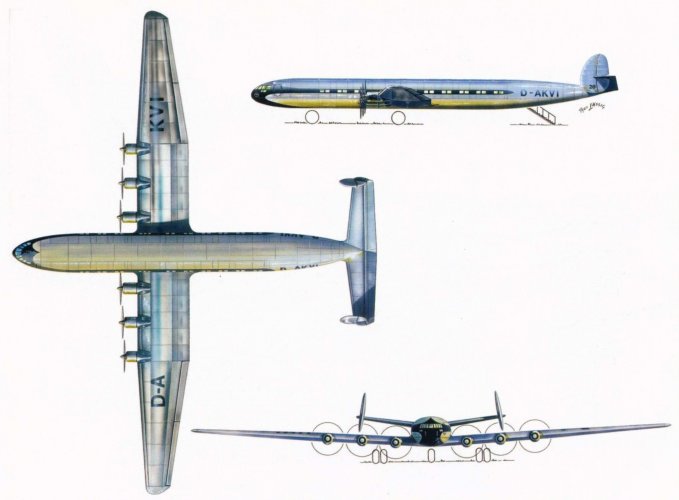
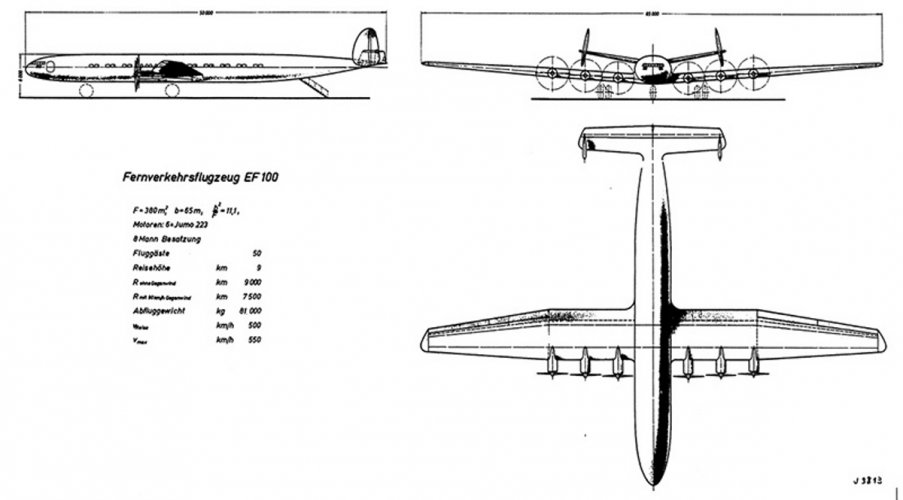
here is the Junkers EF.100 wing tunnel Model.
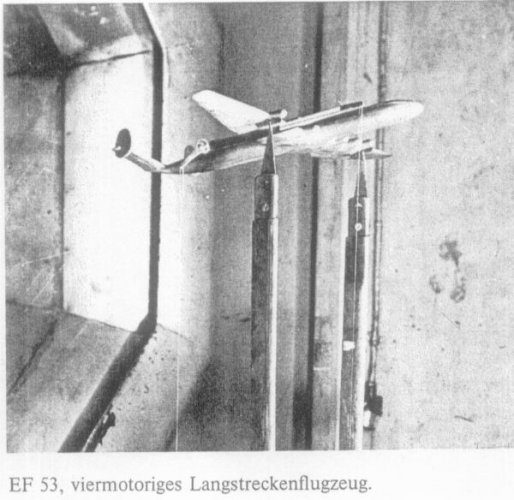
Be I a decade late to this discussion, but the mockup on the left is not the EF 100. It is the Junkers EF 53, the EF 100's smaller, short lived precursor. Apart from that one photograph there is no information on that project. Note the different tail structure and a 4 engine design rather than the EF 100's 6 engine one. 1757705867211.png
 
From "Junkers Grossflugzeuge"-H.J.Nowarra.Motorbuch-Stuttgart 1988.
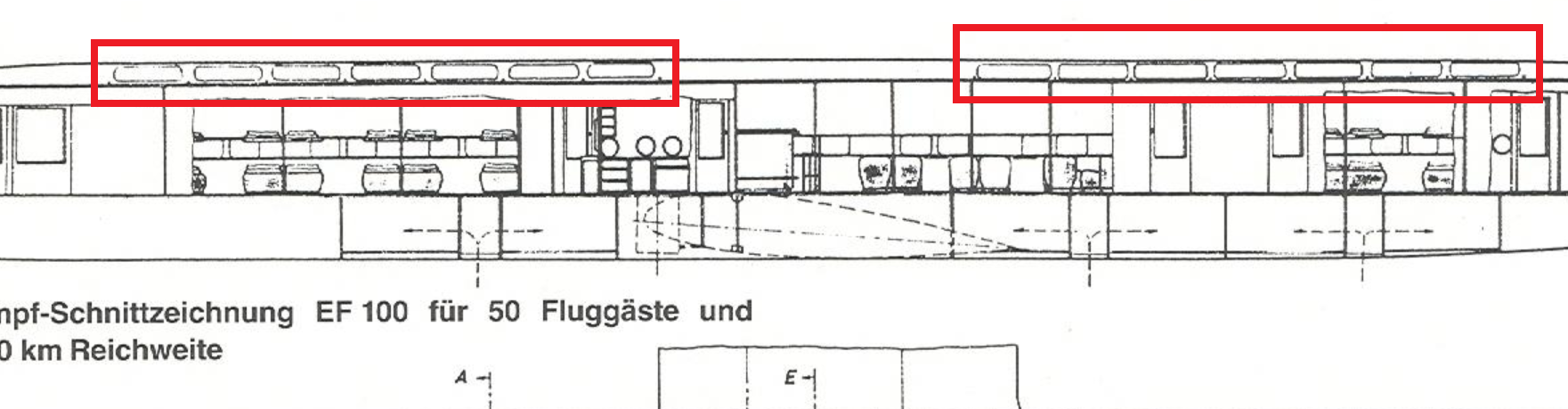
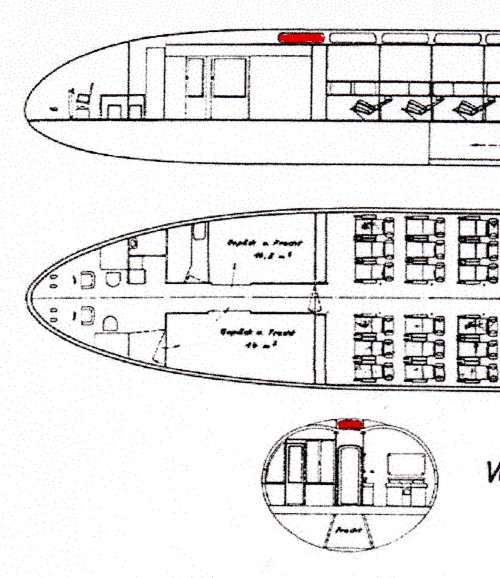
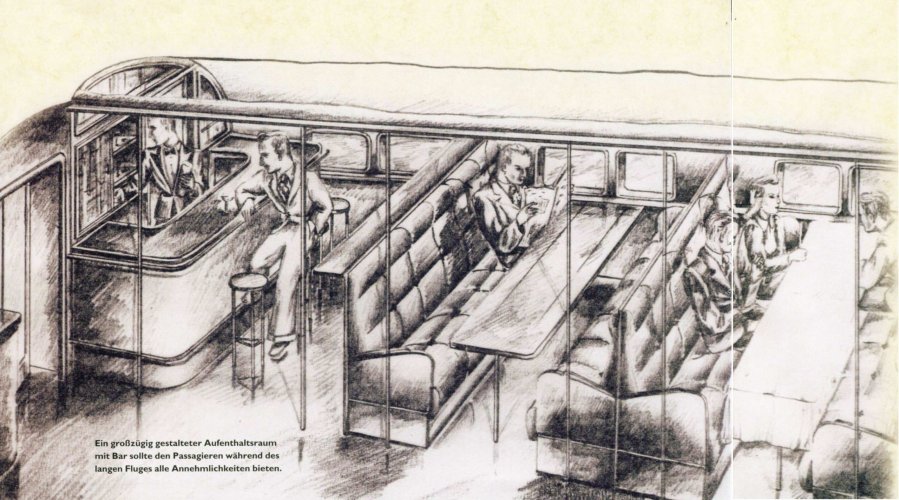
Mr. Miranda, in the Junkers EF 100 diagram you posted there appears to be something resemblant of a second set of windows near the top of the fuselage. It is not something that I have seen on any other drawing. Do you happen to know what they are supposed to be?
 

Attachments

  • Screenshot 2025-09-16 142957.png
    Screenshot 2025-09-16 142957.png
    426 KB · Views: 68
Had WWII gone the other way, might floatplanes become even more popular?

To this day, a lot of Siberia is untouched--could Germany have opened up more of that vast interior? Or would they just use it for their own CC/gulags and left people to freeze? The war pushed development into the interior somewhat--I don't know if Stalin was as pro-infrastructure as Mao or others--maybe Trotsky could have come around...

I was really hoping for a Bering Strait bridge/tunnel one day.
 
Had WWII gone the other way, might floatplanes become even more popular?

To this day, a lot of Siberia is untouched--could Germany have opened up more of that vast interior? Or would they just use it for their own CC/gulags and left people to freeze? The war pushed development into the interior somewhat--I don't know if Stalin was as pro-infrastructure as Mao or others--maybe Trotsky could have come around...

I was really hoping for a Bering Strait bridge/tunnel one day.
No, they would not have been.

A floatplane is a very disadvantageous design. The hull which is required to land on water is not only tons (literally) of dead weight, but also a massive cause of drag and a massive maintenance expenditure. In a world where airlines squeeze every last penny out of everyone and everything, a floatplane has no place. The only reason why large floatplanes were a thing back in the day is the absence of airports with paved runways capable of accommodating land-based airliners. World War II saw the development of such airports for bomber operations, and many of these were reconfigured for civil use post conflict. Regardless of the Allies or Axis winning, the death of the floatplane was imminent; the only way to preserve them for longer was to avoid WWII altogether. As much as it saddens me to see them gone, they aren't coming back, except maybe GEVs. As for Siberian expansion? Germany never had plans to conquer it in the first place, they only wanted to reach the "AA line" between Arkhangelsk and Astrakhan.
 
Mr. Miranda, in the Junkers EF 100 diagram you posted there appears to be something resemblant of a second set of windows near the top of the fuselage. It is not something that I have seen on any other drawing. Do you happen to know what they are supposed to be?
In my opinion it is a ventilation system installed over the junction of both pressurized hulls, perhaps containing oxygen for emergencies in case of depressurization.
 

Attachments

  • 595.jpg
    595.jpg
    478.5 KB · Views: 86

Attachments

  • Junkers_EF-100-00.jpg
    Junkers_EF-100-00.jpg
    334.5 KB · Views: 54
  • Junkers_EF-100-01-scaled.jpg
    Junkers_EF-100-01-scaled.jpg
    600.9 KB · Views: 47
  • Junkers_EF-100-02-scaled.jpg
    Junkers_EF-100-02-scaled.jpg
    516.3 KB · Views: 42
  • qy9nDqq.jpg
    qy9nDqq.jpg
    27.5 KB · Views: 42
  • fFedrNs.jpg
    fFedrNs.jpg
    135.4 KB · Views: 36
Had WWII gone the other way, might floatplanes become even more popular?

To this day, a lot of Siberia is untouched--could Germany have opened up more of that vast interior? Or would they just use it for their own CC/gulags and left people to freeze? The war pushed development into the interior somewhat--I don't know if Stalin was as pro-infrastructure as Mao or others--maybe Trotsky could have come around...

I was really hoping for a Bering Strait bridge/tunnel one day.
How on this here (albeit inevitably slowly warming) globe would float planes help with operations on ice and/or snow covered surfaces???
 
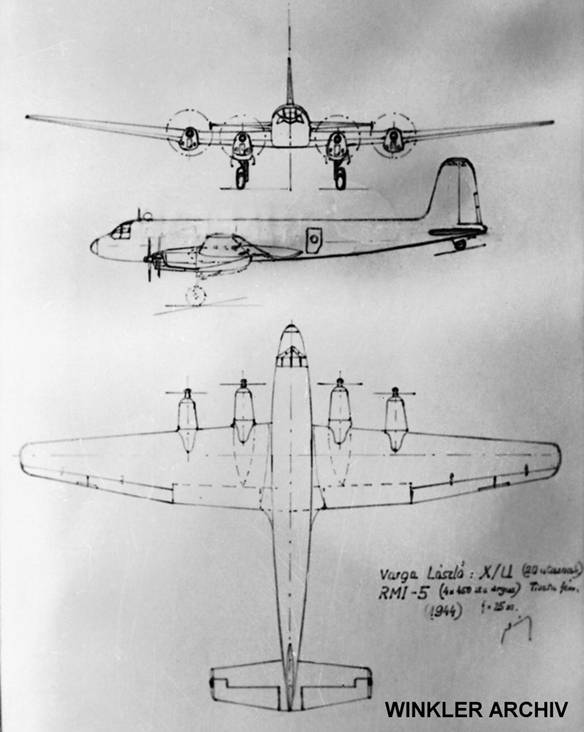
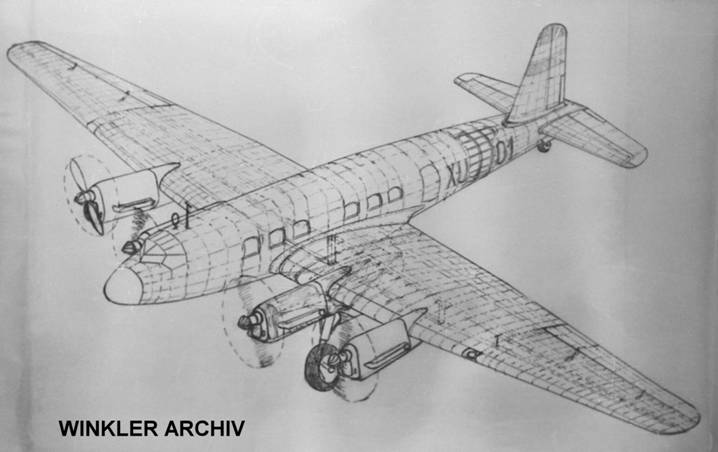
Hungarian Varga RMI-5 X/U passanger/cargo 4-engine airliner project
https://balaton-modell.gportal.hu/gindex.php?pg=3083346&nid=669522
Its history: From 1941, both the Germans and the Italians suspended the delivery of transport planes.

It was not possible to obtain 4-engine Condor and additional Ju-52 machines from the Germans. Therefore, the Aerotechnical Institute was entrusted with the development of its own transport machine. The Ar-96 B AS-411 produced in MÁVAG was intended as its engine, which would have been produced at Waggon in Győr. Based on the experience gained at X/H, Professor László Varga and his team set out to create a modern, large transport machine with a metal shell structure. The 4-engine solution is the prescribed min. For transporting 20 passengers was ideal.

Before the design, the German Fw-200 25-seat machine was studied, which achieved outstanding and economical performances with 4x 620 hp engines and also met the long-term ideas of MALERT (the ancestor of MALÉV).

Now, as with the other types, work began with model making and technological experiments. At the Hubert&Sigmund factory in Kőbánya, the pulling experiments of the main support belt and the special profiles of three vertebrates were also carried out. The metal shell wing was designed with a through main support, the chassis were made with a well-proven ring spring system for other types and could be coated in the internal engine nacelles.

The construction of the plane was in an advanced state, and the fuselage model was ready when the Ferihegy Experimental Workshop was bombed and destroyed.

Minimum 20 people transport capacity.

Technical data:
Span: 25 m
Length: 18.3 m
Height: 5.2 m
Weight: 5600 kg
Take-off weight: 9500 kg
Max. speed: 320 km/h
Range: 1500 km
Altitude: 7000 m
Engine: 4 pcs Argus AS-411 (480 hp)

eremi5rajz.jpg

rajz_3D.jpg
 
Last edited:
How on this here (albeit inevitably slowly warming) globe would float planes help with operations on ice and/or snow covered surfaces???
Alaska pretty well needs them....during the expedition to document the Tunguska event--biting flies were one of the biggest problems...not ice.
 

Similar threads

Back
Top Bottom