
You are using an out of date browser. It may not display this or other websites correctly.
You should upgrade or use an alternative browser.
You should upgrade or use an alternative browser.
US Navy Standard Missile Family
- Thread starter Lampshade111
- Start date
-
- Tags
- area air defence asat asuw ballistic missile defense cold war cold war ii convair early 21st century general dynamics general dynamics pomona division hughes missile systems company late 20th century north atlantic treaty organisation post-cold war raytheon standard missile company (smco) surface-to-air missile united states united states navy

- Joined
- 11 February 2007
- Messages
- 4,149
- Reaction score
- 8,900
If it was I'm pretty sure they'd be using a standard Mk 41 VLS cannister, not a bespoke inclined launcher.Is this possibly a testbed for the AAW systems of the Hunter class frigate? CEA radar, Aegis, SM-2 missiles…

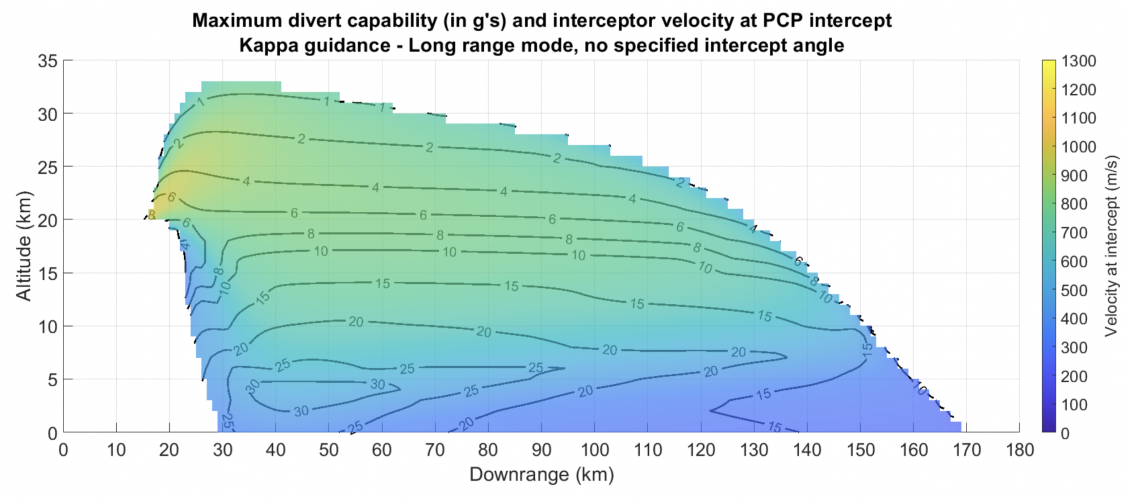
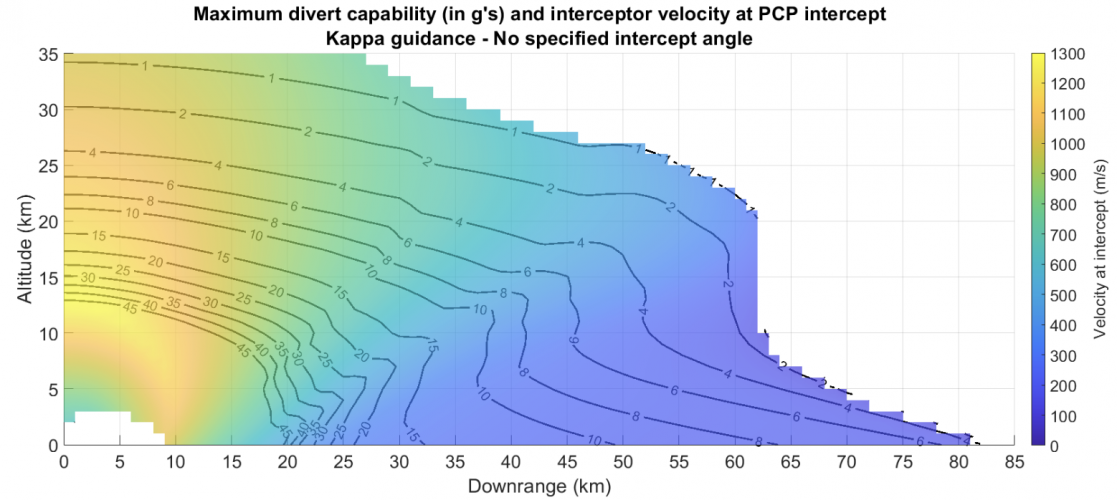
In terms of the SM-2's kinematics, this report's table seems somewhat applicable, although I don't know the specific requirements for ballistic intercepts and the guidance method might be different in that case.
These two tables remind me a lot of the dirty modeling I did to figure out SPRINT's range. I found that there were two modes of operation for SPRINT:
1.) Mode ONE -- Upper Stage ignites within 0.2 - 0.5 seconds of Lower Stage Burnout; short ranged, maximum aerodynamic maneuverability at short range.
2.) Mode TWO -- Upper Stage delays ignition during coast period to ignite upon command from ground to extend range.
I wouldn't be surprised if RIM-156 (SM-2 Blk IV) also works the same way, with missile coast/delayed ignition following release from the MK 72 booster.
Attachments
spikedpsycho
ACCESS: Secret
- Joined
- 14 March 2026
- Messages
- 336
- Reaction score
- 479
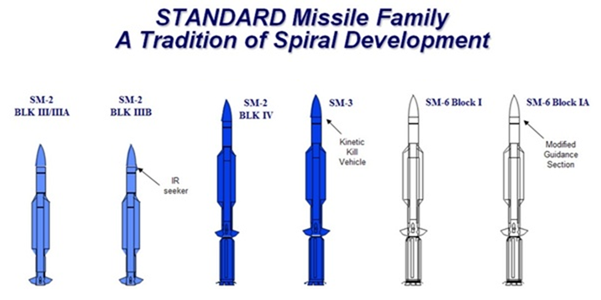
Standard was upgrade Tartar. For lack better really a ship of theseus.
But truly long lasting name brand.
But truly long lasting name brand.

- Joined
- 3 June 2011
- Messages
- 20,999
- Reaction score
- 19,284
As was Terrier to SM-6.Standard was upgrade Tartar. For lack better really a ship of theseus.
But truly long lasting name brand. View attachment 819932
Scott Kenny
ACCESS: USAP
- Joined
- 15 May 2023
- Messages
- 19,678
- Reaction score
- 28,164
No, I don't think the SM2 pauses before it lights off the main stage.I wouldn't be surprised if RIM-156 (SM-2 Blk IV) also works the same way, with missile coast/delayed ignition following release from the MK 72 booster.
I wouldn't be surprised if RIM-156 (SM-2 Blk IV) also works the same way, with missile coast/delayed ignition following release from the MK 72 booster.
What is this Kappa guidance?

Dilandu
I'm dissatisfied, which means, I exist.
And Tartar was basically a Terrier upper stage with new seeker. And Terrier was a test vechicle for Talos) Everythibg started with Project Bumblebee)Standard was upgrade Tartar. For lack better really a ship of theseus.
But truly long lasting name brand.
Terrier was a test vechicle for Talos
It was originally a GTV (Guidance Test Vehicle) for testing the Talos's beam-riding midcourse guidance system.

- Joined
- 16 April 2008
- Messages
- 10,604
- Reaction score
- 18,186
What is this Kappa guidance?
It's a family of equations for proportional guidance. Different versions are better suited to different speeds of target (and other variables).
- Joined
- 16 April 2008
- Messages
- 10,604
- Reaction score
- 18,186
No, I don't think the SM2 pauses before it lights off the main stage.
Agreed. Check this test footage.
It's a family of equations for proportional guidance. Different versions are better suited to different speeds of target (and other variables).
Do you have a link to a website that would go into detail about these guidance equations please?

Kat Tsun
eeeeeeeeeeeeeee
- Joined
- 16 June 2013
- Messages
- 1,887
- Reaction score
- 2,669
Would there be any practical way to convert SM-2 into an SM-6 to make up for current shortfalls? I know the SM-2 blk3C is an upgrade kit to existing missiles to make them ARH (among other things); what would be necessary to allow the missile to accept a mk72 booster and be used as an SM-6 stand in? I assume there are some structural differences to allow the missile to survive the harsh acceleration of the booster?
I wonder if they could perhaps replace the SARH head with a AMRAAM head like the ESSM got tbh.
- Joined
- 16 April 2008
- Messages
- 10,604
- Reaction score
- 18,186
Do you have a link to a website that would go into detail about these guidance equations please?
The linked paper here describe them in some detail. They're fairly complex matrix algebra. Way over my head—there's a reason I started college as a ln electrical engineer and graduated as a political scientist, and matrix algebra was a big part of it.
https://icas.org/icas_archive/ICAS2006/PAPERS/157.PDF
- Joined
- 16 April 2008
- Messages
- 10,604
- Reaction score
- 18,186
Would there be any practical way to convert SM-2 into an SM-6 to make up for current shortfalls? I know the SM-2 blk3C is an upgrade kit to existing missiles to make them ARH (among other things); what would be necessary to allow the missile to accept a mk72 booster and be used as an SM-6 stand in? I assume there are some structural differences to allow the missile to survive the harsh acceleration of the booster?
For starters, you'd probably have to regrain the rocket motor, because you want a different burn profile for an upper stage rather than a stand-alone missile. And you have to change the aerodynamic surfaces and maybe the nosecone to deal with higher velocities and thermal stresses that come with it. Maybe adjust the fuzing as well.
It's getting very Ship of Theseus.
I wonder if they could perhaps replace the SARH head with a AMRAAM head like the ESSM got tbh.
That’s exactly what SM-2 blk3C is.
Scott Kenny
ACCESS: USAP
- Joined
- 15 May 2023
- Messages
- 19,678
- Reaction score
- 28,164
I'm not sure what difference is between the SM2 and SM6 rocket. They're both Thiokol Mk-104s, but the SM6 is a Mk104 DTRM. Dual Thrust Rocket motor (boost+sustain). If the SM2 is also boost+sustain then the only difference between SM2blk3C and SM6 would be the presence of the Mk72 booster.Would there be any practical way to convert SM-2 into an SM-6 to make up for current shortfalls? I know the SM-2 blk3C is an upgrade kit to existing missiles to make them ARH (among other things); what would be necessary to allow the missile to accept a mk72 booster and be used as an SM-6 stand in? I assume there are some structural differences to allow the missile to survive the harsh acceleration of the booster?
I'm not sure what difference is between the SM2 and SM6 rocket. They're both Thiokol Mk-104s, but the SM6 is a Mk104 DTRM. Dual Thrust Rocket motor (boost+sustain). If the SM2 is also boost+sustain then the only difference between SM2blk3C and SM6 would be the presence of the Mk72 booster.
Yes, but being accelerated to supersonic speeds in the first 5 seconds is a different flight regime than SM-2. There are a lot of structural issues that could arise.
Scott Kenny
ACCESS: USAP
- Joined
- 15 May 2023
- Messages
- 19,678
- Reaction score
- 28,164
IIRC the SM2 also breaks Mach 1 in the first 5 seconds.Yes, but being accelerated to supersonic speeds in the first 5 seconds is a different flight regime than SM-2. There are a lot of structural issues that could arise.
The loads on the components are the same in that case.
IIRC the SM2 also breaks Mach 1 in the first 5 seconds.
The loads on the components are the same in that case.
I would guess that any acceleration at the 6+s mark is beyond normal SM-2 because that solid boot is already starting from super sonic and more importantly igniting in much thinner air.
The linked paper here describe them in some detail. They're fairly complex matrix algebra. Way over my head—there's a reason I started college as a ln electrical engineer and graduated as a political scientist, and matrix algebra was a big part of it.
https://icas.org/icas_archive/ICAS2006/PAPERS/157.PDF
Thanks
 , if I were do a search for more technical papers on these guidance equations what search terms should I use?
Similar threads
-

-

-
1980s US intercontinental cruise missile (& ATCM program)
- Started by GeorgeA
- Replies: 37
-
Navy Needs New Servers for Aegis Cruisers and Destroyers After Chinese Purchase
- Started by Triton
- Replies: 1
-
Sea-based Anti-Ballastic Missile Intercept System (SABMIS)
- Started by Triton
- Replies: 74