https://grokipedia.com/page/messerschmitt_p1108
The Messerschmitt P.1108 was a late-World War II design project for a jet-powered long-range strategic bomber developed by the German aircraft manufacturer Messerschmitt for the Luftwaffe.
[1] Conceived in response to Reichsmarschall Hermann Göring's autumn 1944 directive for high-speed bombers capable of striking distant targets in the United States and Soviet Union with a 4-ton payload, it adopted an innovative all-wing (flying wing) configuration to minimize drag and enhance speed, range, and fuel efficiency compared to conventional designs.
P.1108/I
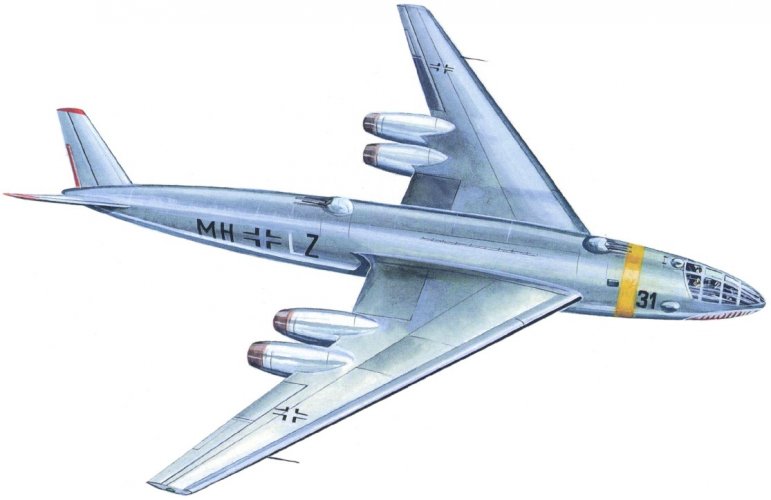
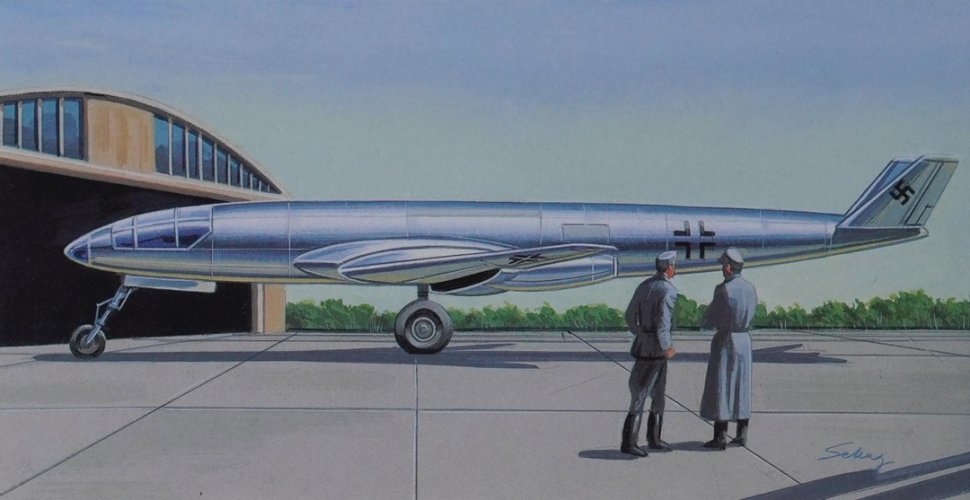
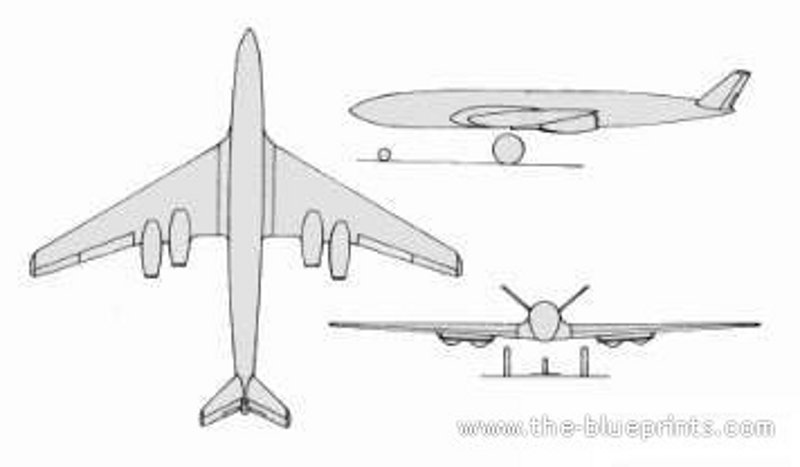
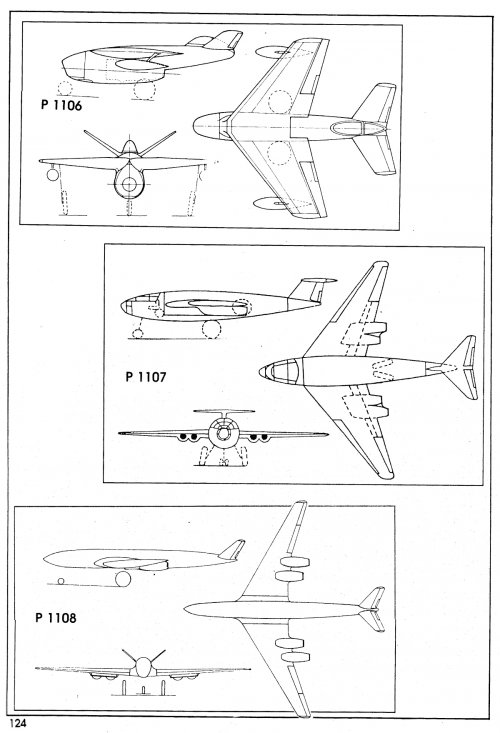
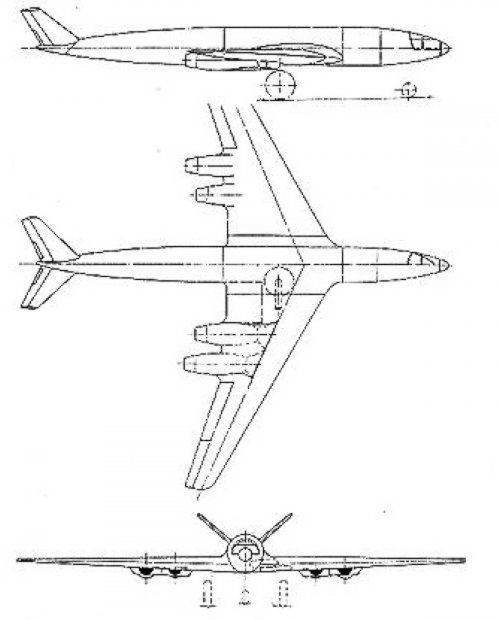
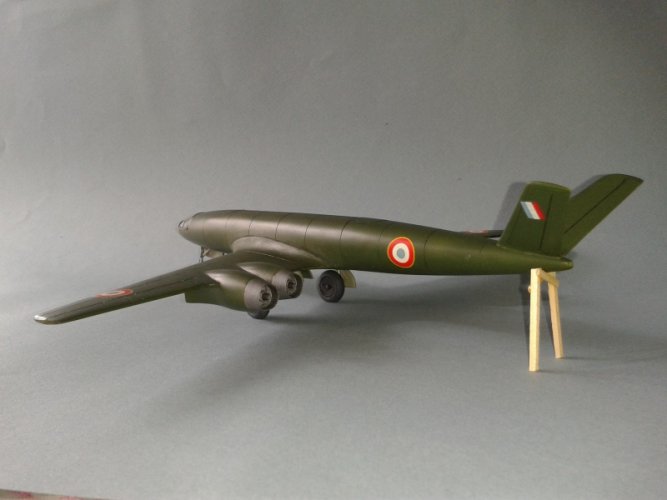
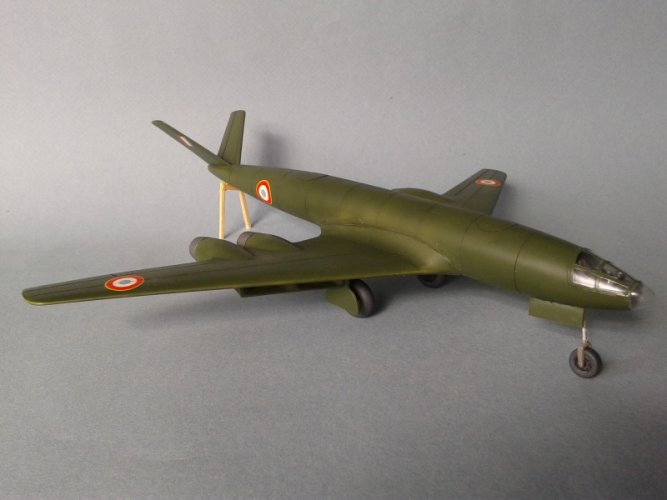
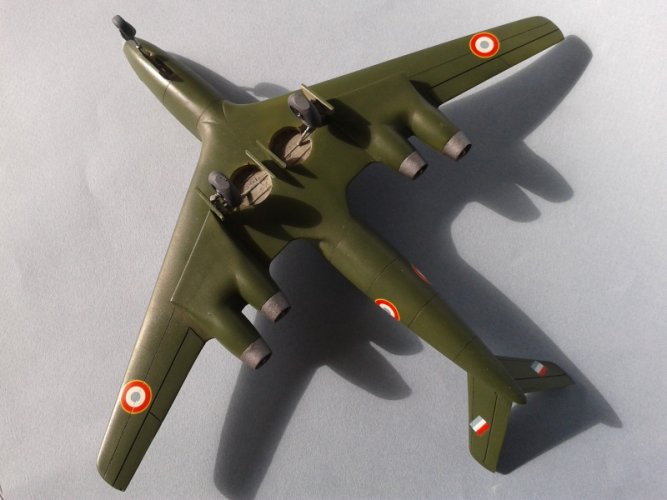
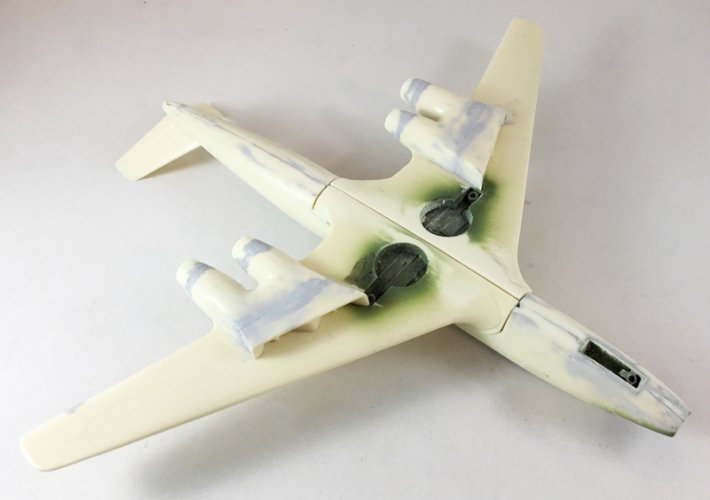
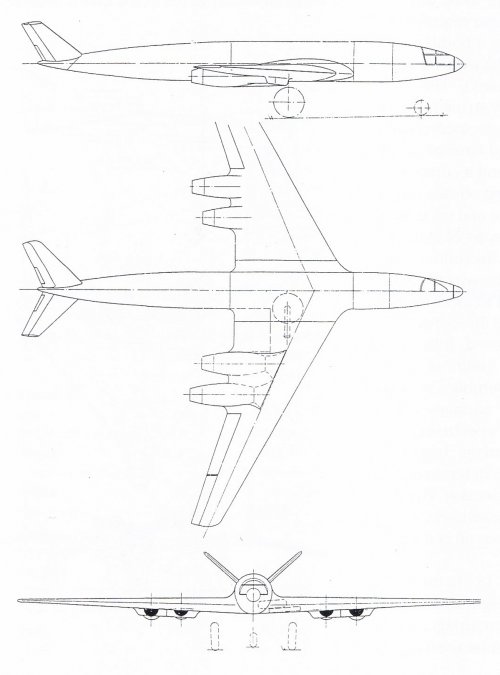
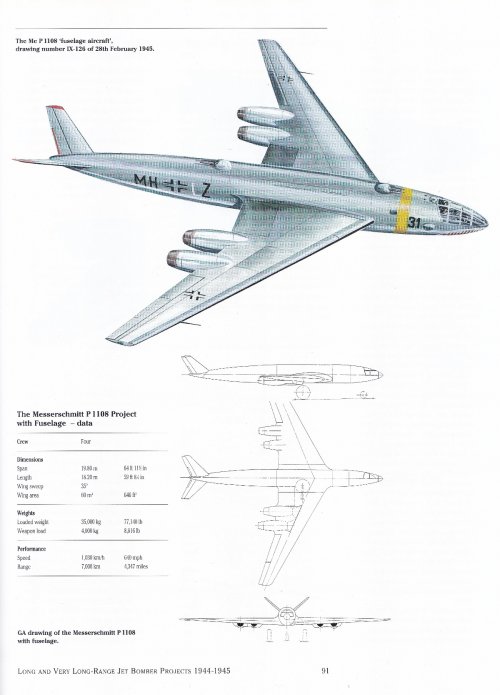
The P.1108/I represented the primary, baseline variant of the Messerschmitt P.1108 long-range jet bomber project, employing a
conventional fuselage to integrate key operational elements. This design featured a traditional cylindrical fuselage that accommodated the internal bomb bay and crew stations for a crew of three in tandem seating, prioritizing simplicity and efficiency for strategic missions. Powered by four embedded turbojet engines, it was conceived as a high-speed platform for penetrating enemy airspace with heavy ordnance.Key structural dimensions included a wingspan of 20.12 m and a length of 18.2 m, which supported aerodynamic optimization for a
cruise speed of 900 km/h. These proportions facilitated agile handling at high altitudes while maintaining the structural integrity needed for long-range flights. The wings incorporated a 35-degree sweep to enhance transonic performance, reducing drag and improving stability near the speed of sound during bombing runs.The variant was designed to carry a payload of 4,000 kg of bombs housed in the fuselage bay, underscoring its role in strategic bombing against remote industrial or military targets. Defensive considerations focused on speed rather than extensive armament, with the core propulsion provided by four Heinkel-Hirth He S 011 turbojets. Overall, the P.1108/I embodied Messerschmitt's late-war push for advanced jet technology amid resource constraints.
P.1108/II
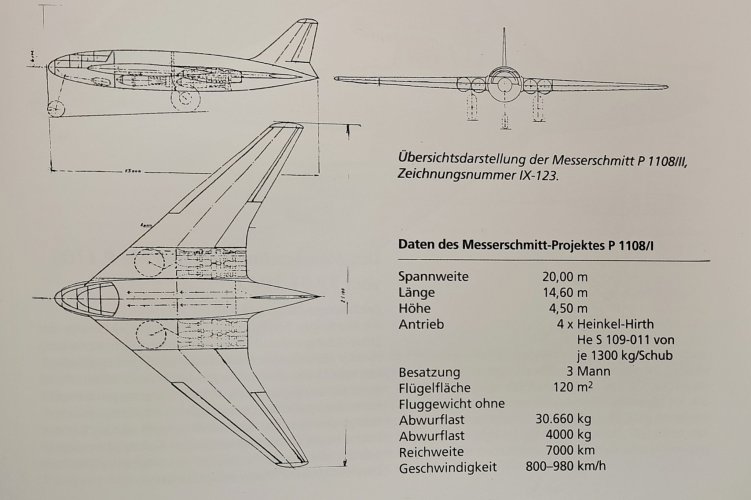
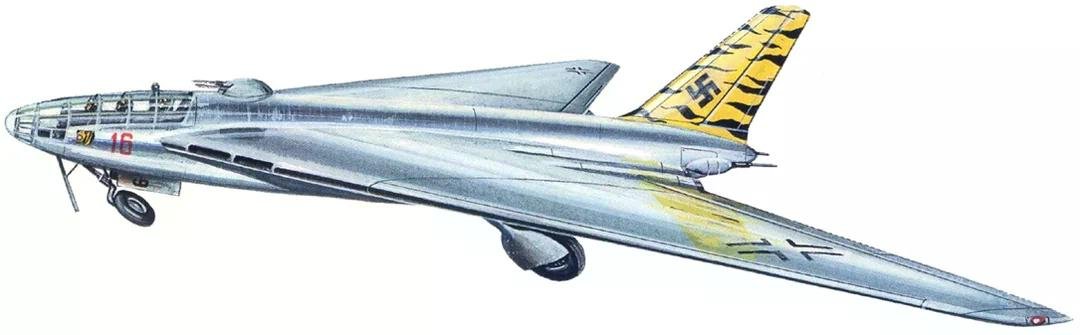
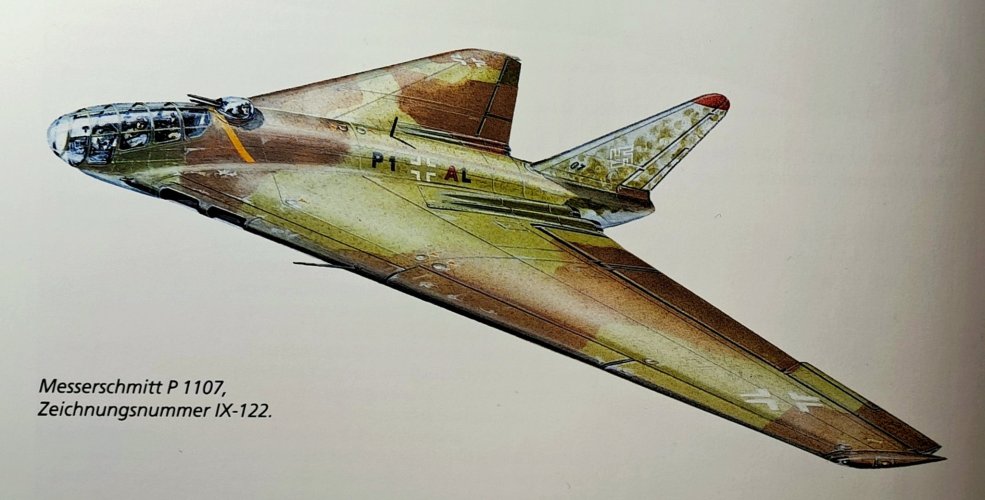
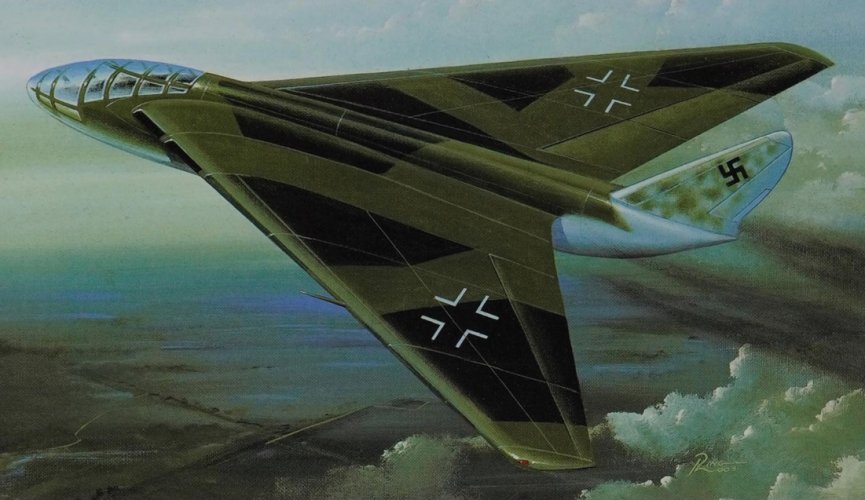
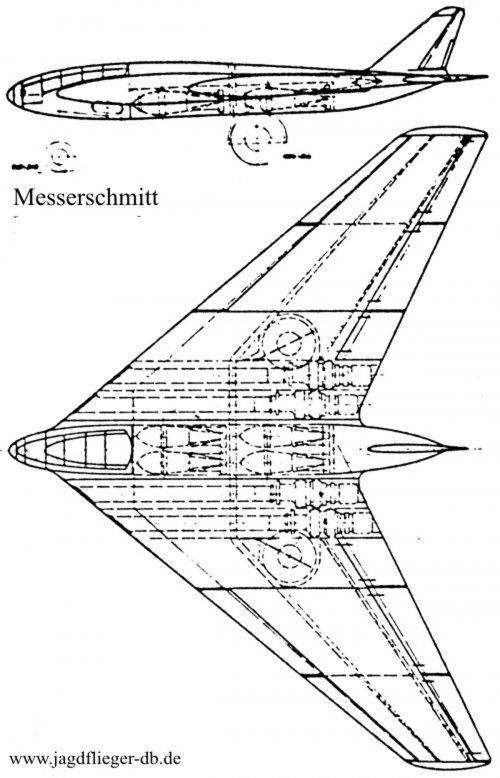
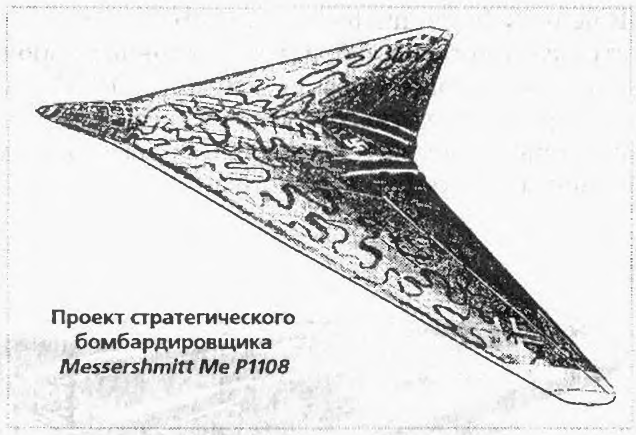
The Messerschmitt P.1108/II represented an advanced iteration of the P.1108 bomber project,
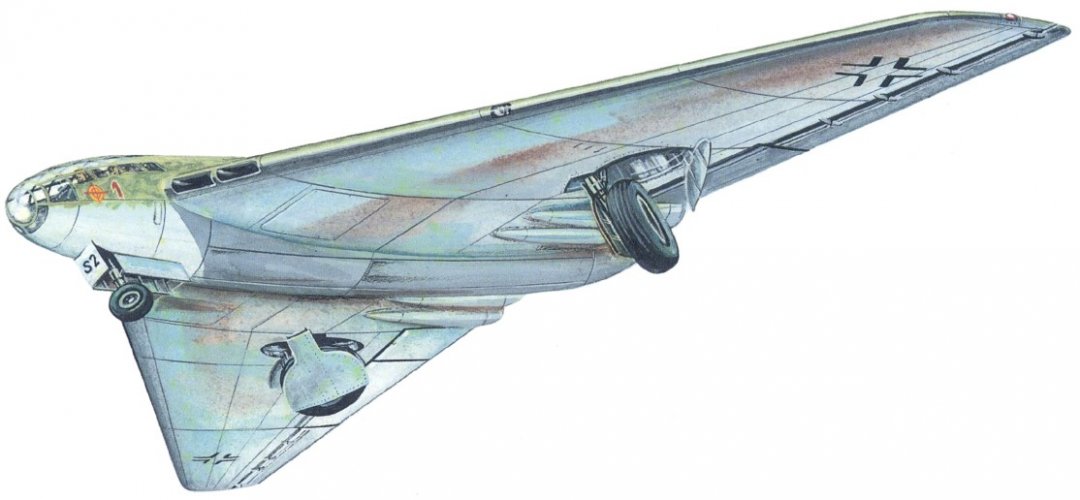
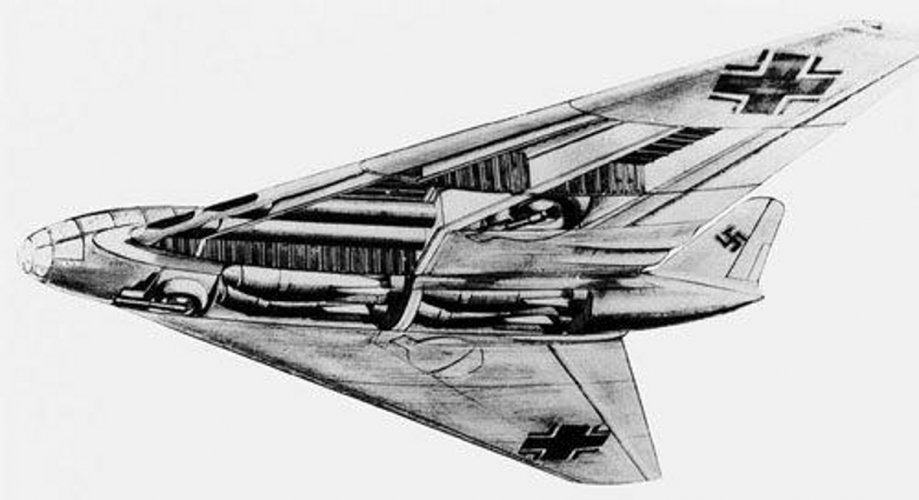
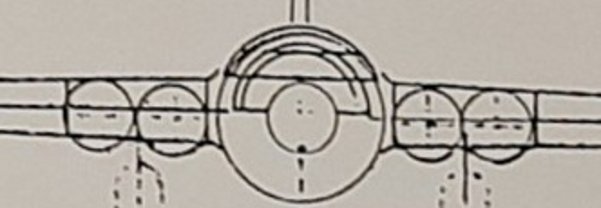
adopting a radical blended-wing body configuration to achieve superior aerodynamic efficiency. This delta flying wing design with a single vertical fin and rudder, influenced by Alexander Lippisch's earlier concepts, integrated the fuselage seamlessly into the wing structure, eliminating distinct boundaries to minimize drag and enhance overall performance. Unlike the more conventional swept-wing layout of the baseline P.1108/I, the /II variant buried its four Heinkel-Hirth HeS 011 turbojet engines within the wing roots near the trailing edge, allowing for shared air intakes and reduced external protrusions.
[5]With slightly larger dimensions than the P.1108/I—including a wingspan of 21.7 meters—the /II variant was engineered for improved lift generation without sacrificing compactness, resulting in a projected maximum speed of up to
910 km/h at high altitude. This configuration promised enhanced fuel efficiency due to the low-drag profile, enabling an extended operational range suitable for transatlantic strike missions, with estimates reaching approximately
7,800 kilometers while carrying a 4-ton bomb load. The design's emphasis on aerodynamic integration positioned it as a forward-thinking response to the Luftwaffe's need for long-range strategic bombers capable of evading Allied defenses.However, the P.1108/II's innovative structure introduced significant trade-offs, particularly in manufacturing complexity and operational practicality. Fabricating the blended-wing body required advanced techniques beyond the capabilities of wartime German industry, which was already strained by resource shortages and Allied bombing. Additionally, the all-encompassing wing design compromised crew visibility from the pressurized cockpit, potentially complicating navigation and bombing accuracy in low-level operations. These challenges, combined with stability concerns inherent to early flying-wing concepts, contributed to the variant's rejection in favor of simpler proposals by March 1945.