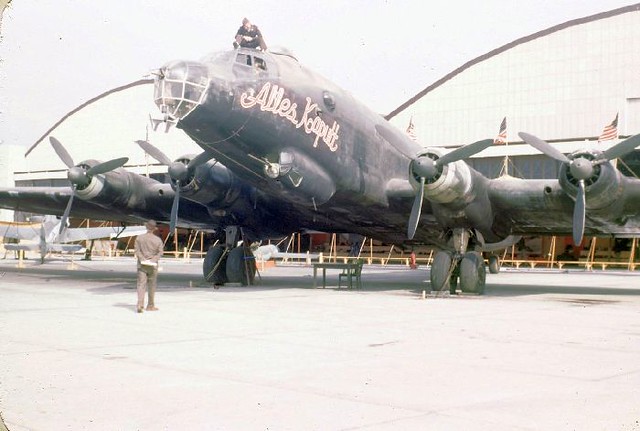
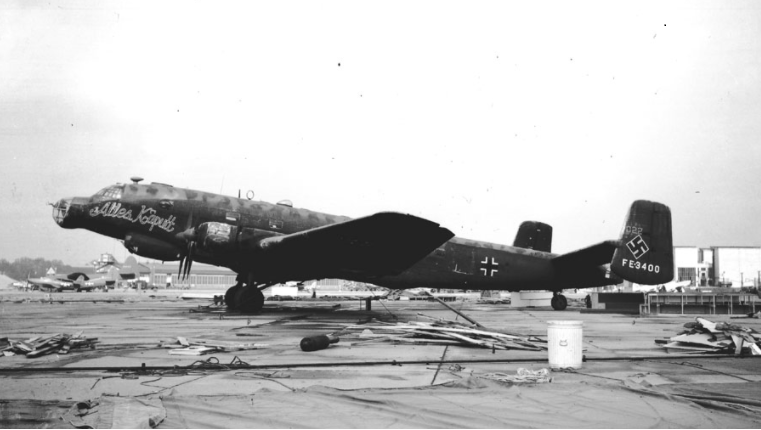
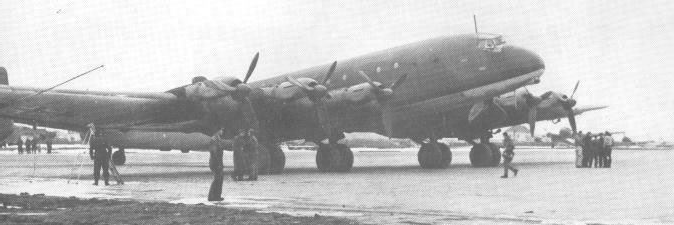
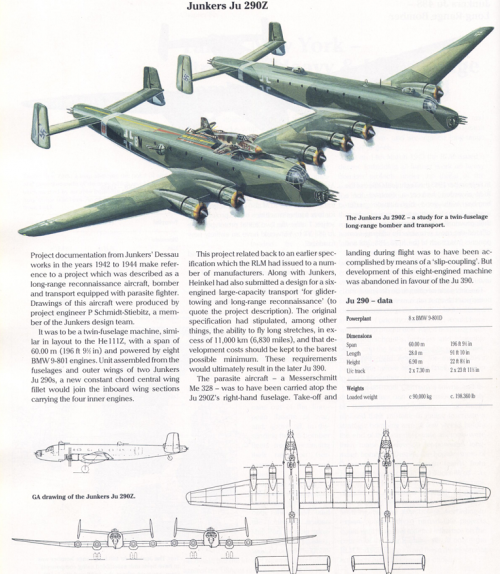
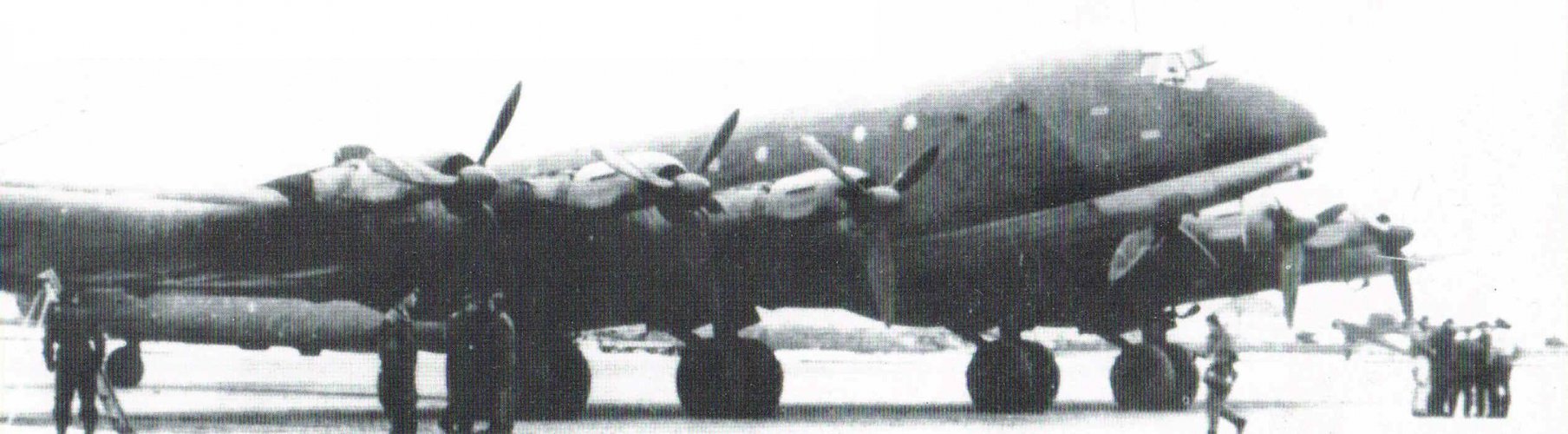
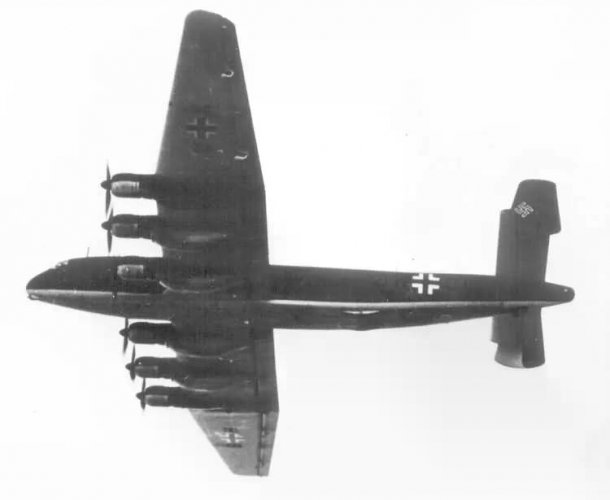
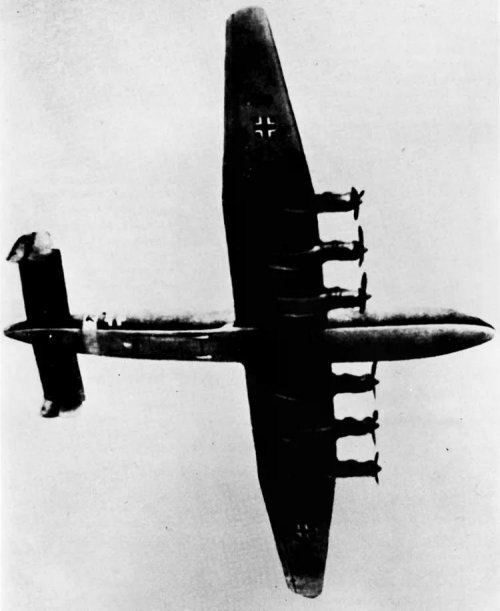
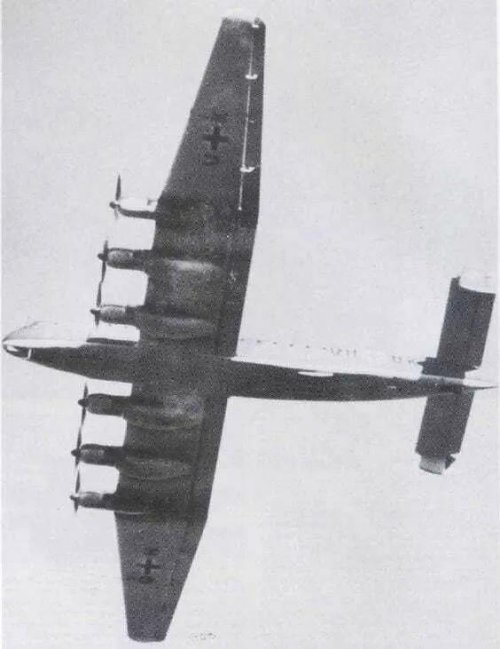
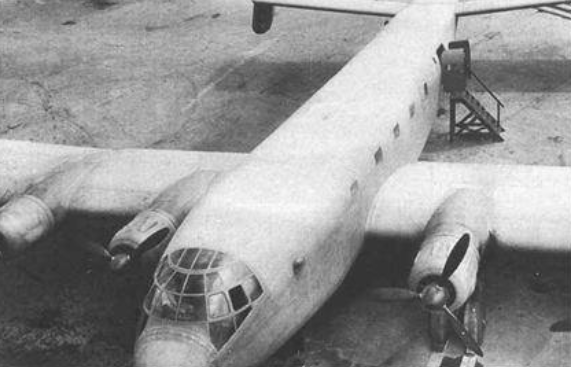
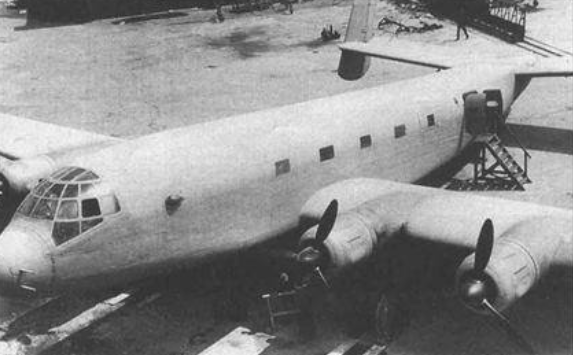
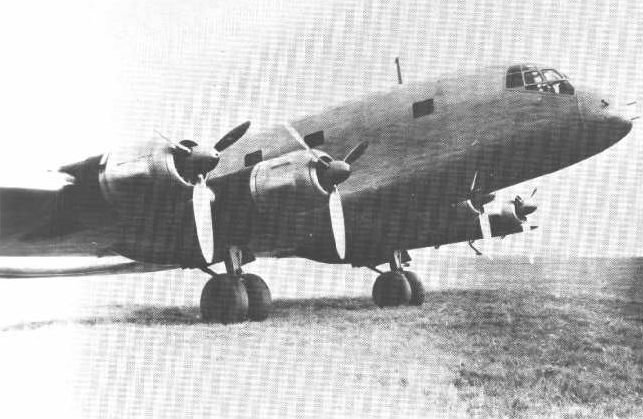
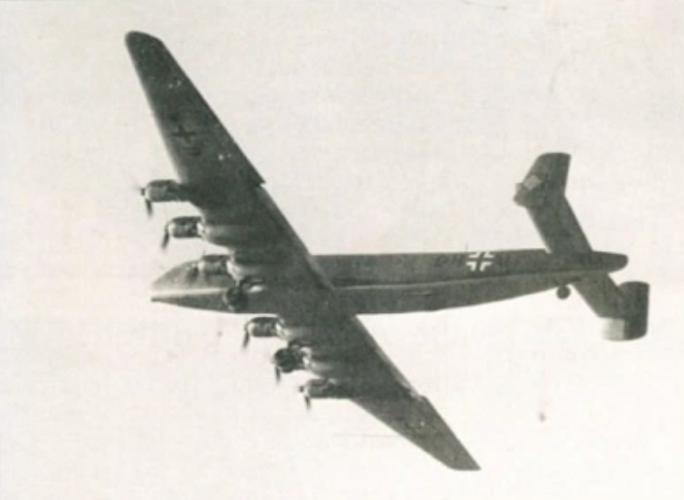
Just posted by the San Diego Air & Space Museum (SDASM) on their Flickr Photostream from the Jack Canary collection, a couple of color photos of the captured Junkers Ju-290 (Ju-290A-5, to be exact) "Alles Kaputt." Plenty of other color gems in this collection. Check them out here (link)
It's close, but I still think the 290 wins the ugly prize because of the awkward transition from flat to curved glazing and the way the fuselage tapers down to the glazed section. I can't tell for sure, but I'm also pretty sure the entire glazed nose is itself asymmetrical.
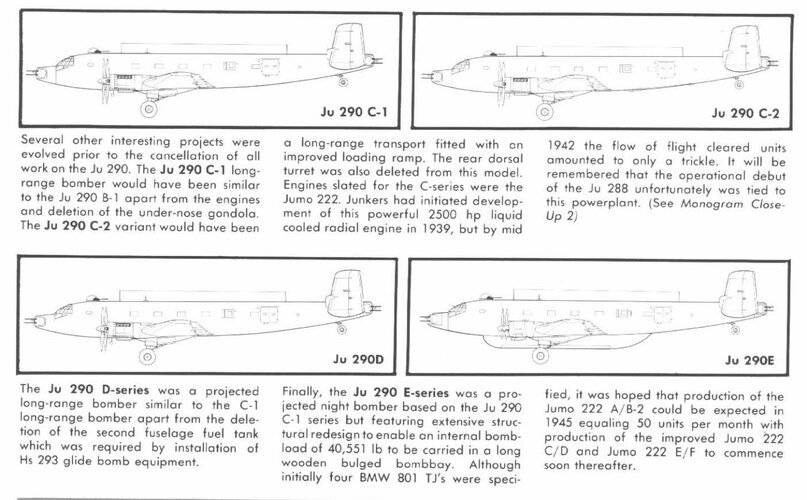
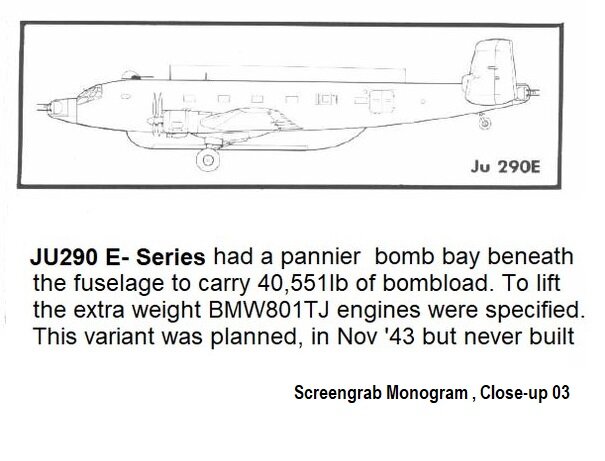
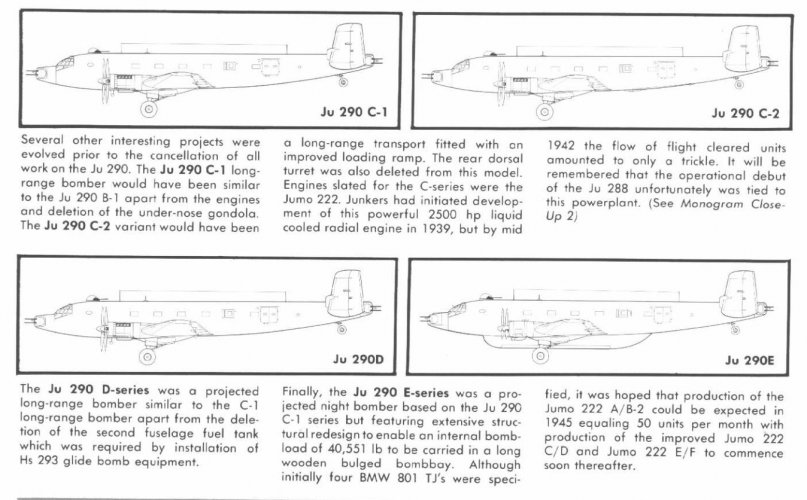
I am looking for informations, drawings etc. of the Junkers Ju-290E.
I think it was a night-bomber-project with a internal bomb-bay.
Maybe someone can help ?
As you can see,
the Ju290E had an external panier (blister) attached reminiscent of the ventral baggage hold of a modern J.32 Jetstream with Quad turrets fore & aft , plus one dorsal turret.
So much for that ! Thought it was a good idea ....
Got today "Ju 90" by Helmut Bukowski and Fritz Müller, describing development and service of the Ju 90 and 290.
There's one photo, that rang a bell. Just have a look and judge for your own ...
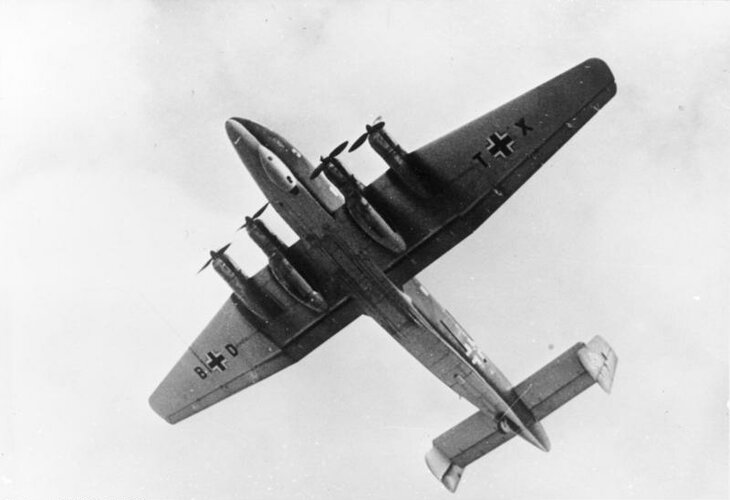
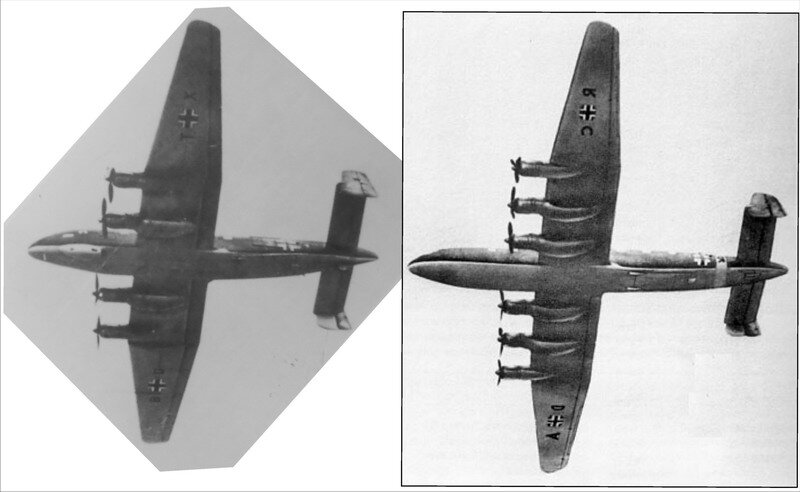
In your disinformative image juxtaposing a Ju290 with an obviously photoshopped image of a Ju390, the Ju290 on the left is the JU290 V1 prototype BD+TX
BD+TX crashed on take off at Stallingrad, carrying a load of wounded soldiers.
So much for that ! Thought it was a good idea ....
Got today "Ju 90" by Helmut Bukowski and Fritz Müller, describing development and service of the Ju 90 and 290.
There's one photo, that rang a bell. Just have a look and judge for your own ...
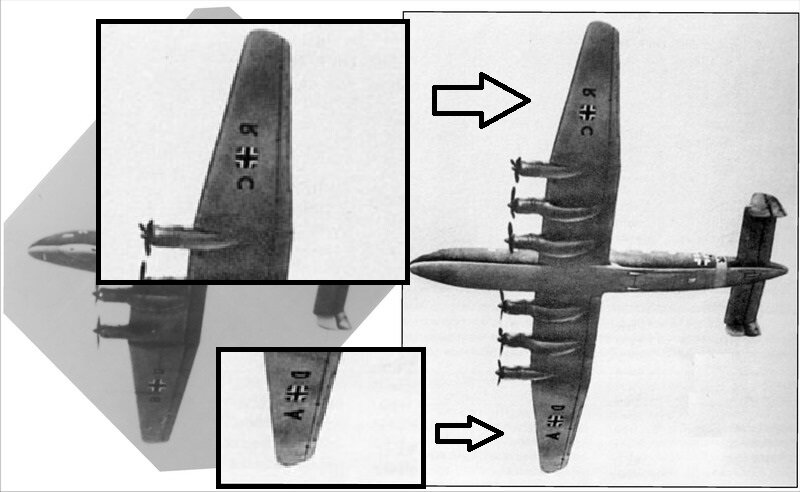
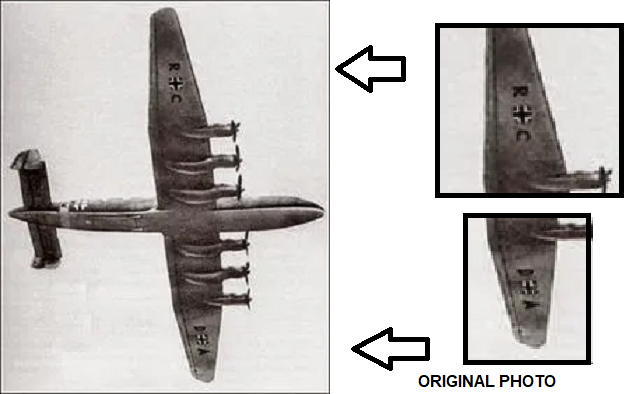
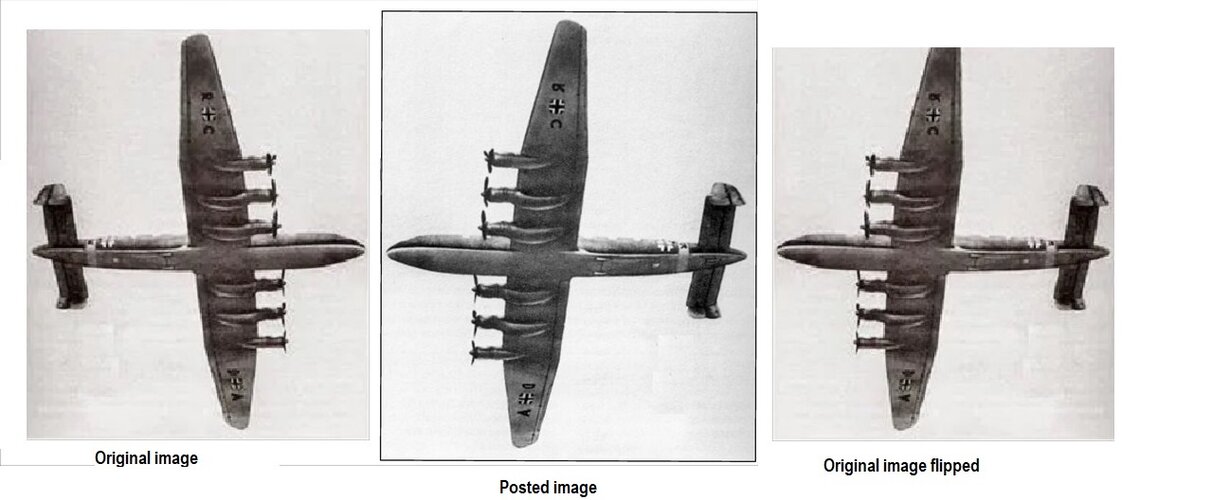
in your photoshopped image , the Ju390 on the right has been flipped and to remove all doubt studying the Stkz letters prove they are mirror inversions: this is your image reproduced:
stkz lettering enlarged:
This was the original Ju390 image of RC+DA
i don't see the point of your images except to deceive and mislead people?
So much for that ! Thought it was a good idea ....
Got today "Ju 90" by Helmut Bukowski and Fritz Müller, describing development and service of the Ju 90 and 290.
There's one photo, that rang a bell. Just have a look and judge for your own ...
One does not need photoshop technique.
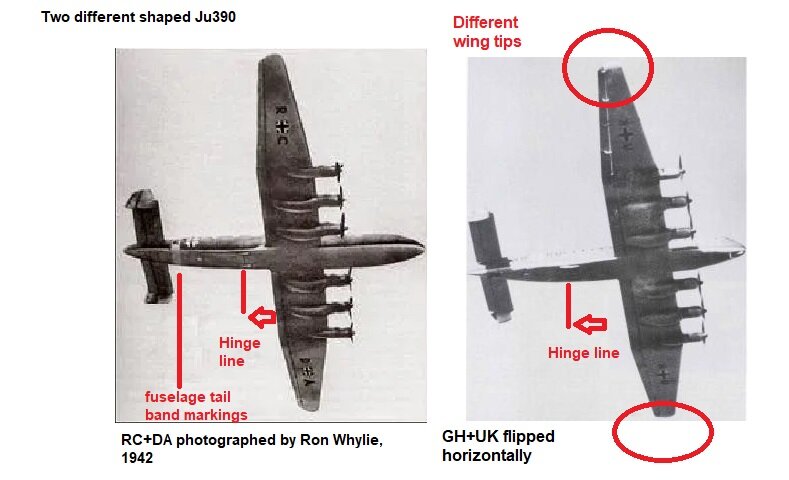
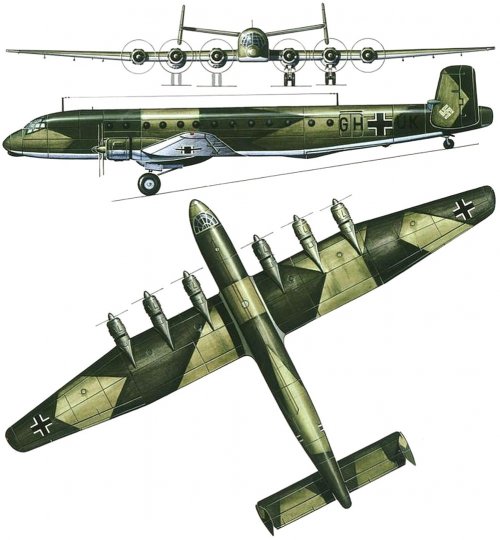
The Ju390 on the right below was flipped by me to prove there wee two different Ju390 flown. On the left is one demonstrated to Hitler in 1944 GH+UK, On the left is RC+DA photographed in 1942 by an Australian merchant seaman Ron Whylie. Their wingtips come from entirely different aircraft.
This is GH+UK at Insterberg 1944, before I flipped it horizontally:
in your photoshopped image , the Ju390 on the right has been flipped and to remove all doubt studying the Stkz letters prove they are mirror inversions: this is your image reproduced:
...
i don't see the point of your images except to deceive and mislead people?
Overpraise, I'm afraid, but probably I should have been more precise (or you just can have a look at post #25).
You can still find that doctored "photo" of the Ju 390 on several internet sites and older publications, and it may well have been made before the times of Photoshop and the like. A good reminder, that many errors, and fakes are here to stay, unfortunately !
And again, to get this straight: That photomontage wasn't my work, I'm rather in line drawings ...
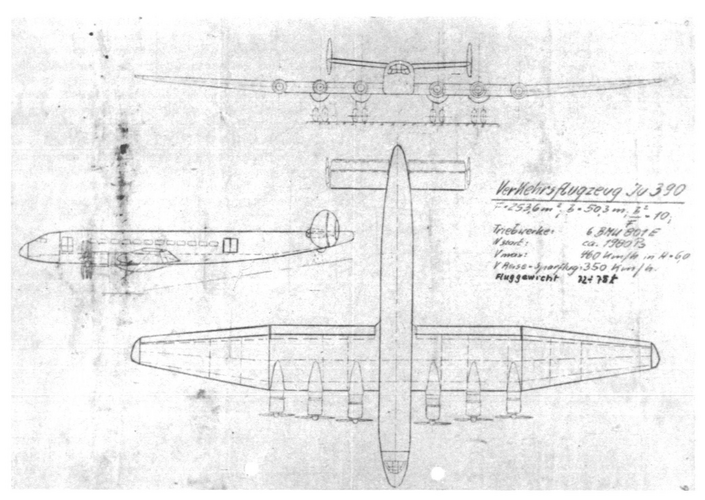
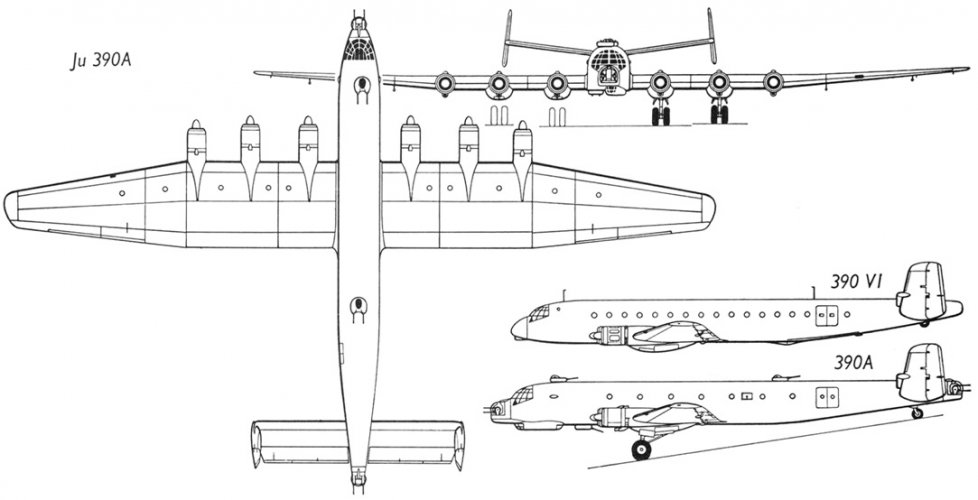
Original drawings of Civilian version of Ju 390 from book "Die grossen Dessauer Ju 89, Ju 90, Ju 290, Ju 390 Die Geschichte einer Flugzeugfamilie (1993)" page 98
The original description - "Eine leider nicht datierte Skizze einer Ju 390 zur Verwendung als Verkehrsflugzeug.
Der Entwurf ist erkennbar aus der Ju 90 V9 abgeleitet worden, mit allen dort auch zu findenden Eigenheiten."
Worth comparing with drawings of Junkers EF 100 - post 4 and 14 https://www.secretprojects.co.uk/threads/axis-1940-airliner-dreams-projects.656/
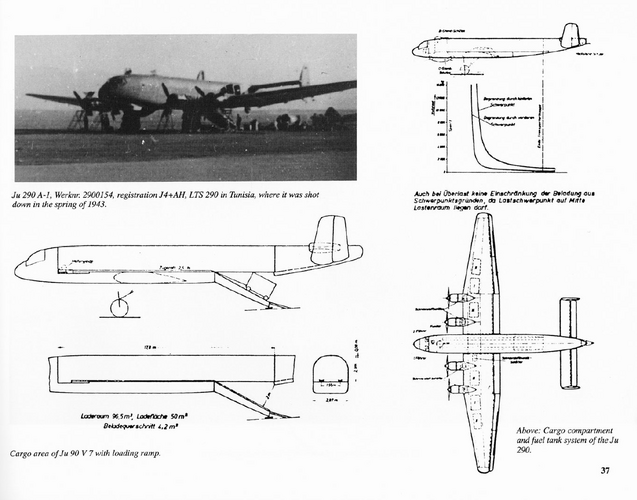
Can see the loading ramp on the back according to the patent
1941-1954) DE911454 - JUNKERS - Transportflugzeug mit im Rumpfboden vor dem Leitwerk angeordneter, um eine Querachse verschwenkbarer Förderklappe
And patent list (which I managed to find) for German cargo planes
I am looking for informations, drawings etc. of the Junkers Ju-290E.
I think it was a night-bomber-project with a internal bomb-bay.
Maybe someone can help ?
The only drawing I have seen comes from the Monogram Close up profile 03.
It was planned to carry a bomb load of 40,550lb.
Similarly the Ju390 would have required a pannier to act as a bomber.
My personal opinion, it would not have survived five minutes over UK, much too slow for one thing.
In your disinformative image juxtaposing a Ju290 with an obviously photoshopped image of a Ju390, the Ju290 on the left is the JU290 V1 prototype BD+TX
in your photoshopped image , the Ju390 on the right has been flipped and to remove all doubt studying the Stkz letters prove they are mirror inversions: this is your image reproduced:
So much for that ! Thought it was a good idea ....
Got today "Ju 90" by Helmut Bukowski and Fritz Müller, describing development and service of the Ju 90 and 290.
There's one photo, that rang a bell. Just have a look and judge for your own ...
Hello everyone...this is my first post here. Some time ago i´ve made an articule about the 390 to post in a Facebook group, so i hope you dont find too boring:
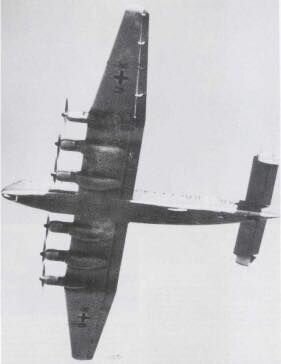
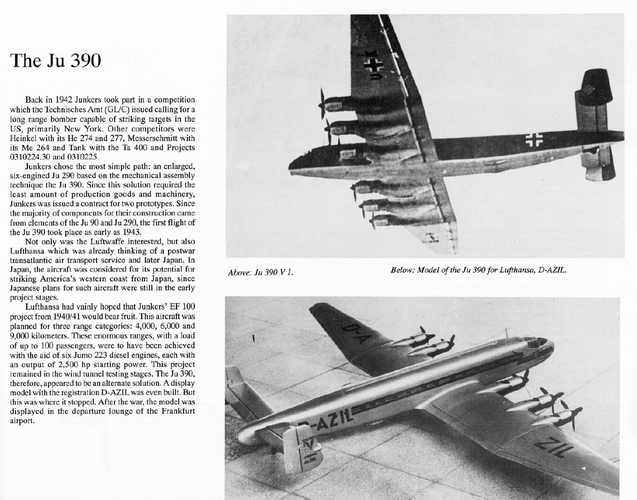
Two prototypes of the Junkers 390 were created by attaching an extra pair of inner-wing segments onto the wings of Ju 90 and Ju 290 airframes, and adding new sections to lengthen the fuselages. Power came from 6x1,500 hp BMW radial engines and it had a range of 18,000 miles. The V1 GH+UK made its maiden flight (allegedly) on 20 October 1943 and performed well, resulting in an order for 26 aircraft. According to former Junkers test pilot Hans-Joachim Pancherz' logbook, the Ju 390 V1 was brought to Prague immediately after it had been displayed at Insterburg to the Fuhrer, and while there took part in a number of test flights, which continued until March 1944, including tests of in-flight refueling. The project was cancelled in mid-1944. The Ju 390 V1 was returned to Dessau in November 1944, where it was destroyed in late April 1945 as the American Army approached. The second prototype V2 (RC+DA), was longer than the V1 because it was constructed from a Ju 290 airframe. It was fitted for maritime patrol. Interestingly the photo snapped of RC+DA was taken during an attack on a Malta Convoy, suggesting this aircraft was possibly operated by LTS.290 in North Africa. The photo clearly shows a white "Afrika" band. The photo was taken by merchant seaman Ron Whylie whilst his convoy KMF-5 was under attack in late 1942. The date alone disrupts claims that the first flight was made in 1943. A copy of his photo of RC+DA was long held by the Museum of Military History in Vienna and published by German test pilot Hans Werner Lerche in his autobiography. There are several wild tales involving Ju 390s in the Internet. A Ju 390, which may or may not have been the V2, is claimed by some to have made a test flight from Germany to Cape Town in early 1944. The sole source for the story is a article which appeared in the "Daily Telegraph" in 1969 titled "Lone Bomber Raid on New York Planned by Hitler", in which Hans Pancherz reportedly claimed to have made the flight in question, in company with an air to air refueling aircraft [Ju-290 reg CE+YZ] in January 1944. According to the book "German Aircraft of the Second World War" by J.R.Smith and Anthony L.Kay, the Ju 390 V2 went in January 1944 to FAGr 5 at Mont-de-Marsan for operational evaluation, from where it made a claimed flight to within 12 miles of New York. Other sources say that the recon flight to NY was on 27 August 1943, from Norway. What is a fact its that FaG 5 was disbanded in August 1944 when airbases in France were threatened by the Allies. FaG's Ju 290s and 390s were passed to KG 200, a special missions unit. Several interesting missions are attributed to the Ju 390, including liaison flights to Japan. While confirmation is lacking [not surprising for KG 200, a special ops unit)] Ju 290A-9s are known to have completed these missions. The V2 was standing by at Rechlin to evacuate Nazi VIPs to Spain in April of 1945. While a Ju 290A-5 actually made the flight to Spain, the V2 was not reported to have been located after the war. One account says the V2 was flown from Poland with German scientists and a secret centrifuge which ionized mercury(project Cronos/Laternenträge) to Bodo, Norway, where it was repainted in Swedish colors, and then flown with mid-air refueling to a ranch in Paysandu Province, Uruguay. The landing was witnessed by a Polish diplomat. The aircraft was then dismantled and sunk in the Uruguay River, where it is said to remain to this day. View attachment 637446View attachment 637447
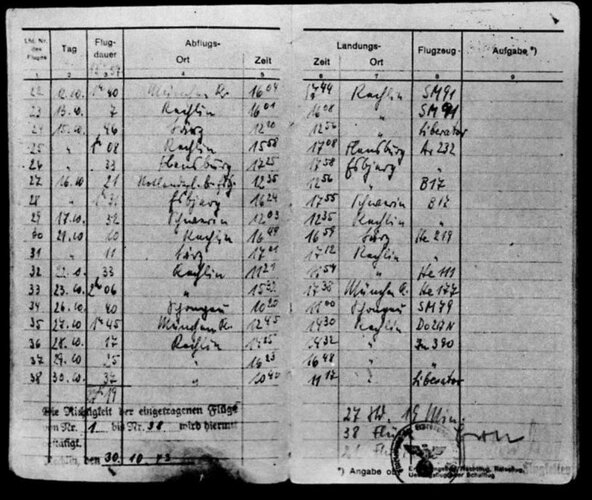
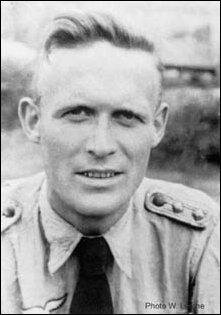
Pancherz was not merely a "former Junkers test pilot" He was the Ju390 Chief test pilot. The other Ju390 test pilot whose log book survived the War was Hans Werner Lerche. He flew the Ju390 on 28 October and 29 October 1943, both flights began at Reichlin, so the aircraft was not at Prague "until March 1944."
The interesting point here is that under British interrogation Pancherz asserted there was only one Ju390, however Lerche conceded after the war that there were two Ju390.
Just as a clue: The photo of the RC+DA is often regarded as a pre-photoshop photo composition, see also https://www.secretprojects.co.uk/threads/junkers-ju-290-and-390-variants.4887/post-188256
Not even the Kössler/Ott book ("Die großen Dessauer") gives a definite answer, if a second prototype was
ever finished. In that book, a document is cited, that states, that "due to the cancellation of the program, the already
accumulated expenditures for the fuselage and tooling/jigs have to be billed to the department for war damages".
This could be regarded as quite a clear evidence, that the second prototype perhaps was near completion, but not
actually finished.
No, certain individuals seek to discredit the RC+DA photo as a photoshop, The fact that a bunch of drop-kicks try to discredit the image is not proof.
however it was claimed on AXIS HISTORY forum that a print of the original is on display with the Vienna Museum and test pilot Hans Werhner Lerche confirmed the authenticity of the photo. Ju390 test pilot Hans Werhner Lerche also confirmed the existence of RC+ DA as the "other" Ju390.
Ron Whylie's son Steve with no motive to deceive posted his father's wartime photos to a website maintained by the Returned Services League.* When I spotted the image I wrote to the Sydney RSL trying to authenticate the image. I got a response from Ron Whylie confirming he took the photo in 1942. I recall it was about 2004 Steve said his father had never used the internet previously and I did not own a computer before 2004, so I was new to emails myself.
*[Correction not the RSL It was actually the Maritime Union OF Australia, memory played tricks with me. Over Christmas 2023 I managed to find an email from Ron in 2008 and the union. ]
Just as a clue: The photo of the RC+DA is often regarded as a pre-photoshop photo composition, see also https://www.secretprojects.co.uk/threads/junkers-ju-290-and-390-variants.4887/post-188256
Not even the Kössler/Ott book ("Die großen Dessauer") gives a definite answer, if a second prototype was
ever finished. In that book, a document is cited, that states, that "due to the cancellation of the program, the already
accumulated expenditures for the fuselage and tooling/jigs have to be billed to the department for war damages".
This could be regarded as quite a clear evidence, that the second prototype perhaps was near completion, but not
actually finished.
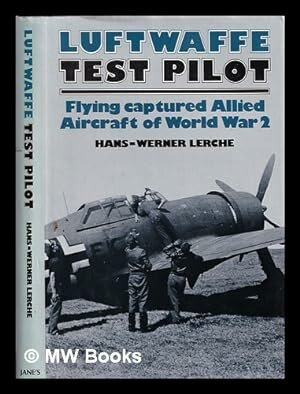
RC+DA's image was first published by Ju390 test pilot Flug Kapt Hans Werner Lerche in his 1977 Autobiography.
Luftwaffe test pilot : flying captured Allied aircraft of World War 2 / Hans-Werner Lerche
RC+DA was published in 1977 by Lerche used as an illustration in his book.
The photo itself of RC +DA was taken from one of the ships on Convoy KMF-5 at 05.45am 22 December 1942. by steward Ron (Steve) Wylie.
Ron was 87 years old when I contacted him in 2008. Ron published his wartime photos online with help from the Maritime Union of Australia, Zoe from the Union's Sydney branch scanned all his images from the Convoy online to a website as the Union as tribute to Ron. Zoe confirmed to me the print of RC+DA was authentic. Ron passed away in Feb 2023
I myself stumbled across the image of RC+DA on the website (www-merchant-navy-ships .com) his collection is now in the hands of the UK National Archives KEW collection. so there is no opportunity for anybody to manipulate the image of RC+DA. I was curious enough to email the webmaster to authenticate the image The Maritime Union of Australia responded, putting me in touch with Ron himself.
If anybody still wishes to discredit the image of RC+DA then they need to provide forensic evidence.
First of all, sorry for the length of the text, but I was intrugued about this thread.
So, maybe they are not "forensic evidence", but with a grain of salt:
1) the only know picture of RC+DA was taken over the Mediterranean Sea at the same identical angle and in the identical light condition of GH+UK at Instenburg (not Instenberg);
2) the alleged picture of RC+DA was taken over the convoy "KMF-5 at 05.45am 22 December 1942" during the journey from Gibraltar to Bona, 11 months BEFORE the prototype GH+UK photo was taken at Instenburg on November 1943 (the GH+UK Ju 390 V1 prototype first flight was in October 1943).
So the Ju 390 V1 was RC+DA, not GH+UK, that was the V2. Please, can you provide original German documents that confirm this assertion?
3) the picture of RC+DA was taken at “05.45am 22 December 1942", (one of the shortest day of the year), at nortwest of Bougie (today Béjaia), presumably during the last part of the night. See here: https://www.timeanddate.com/sun/@2505329?month=12&year=2023
5) taking that clear, not blurred picture from the bridge of a ship during an air raid means that the aircraft was very low over the convoy (forgot cheap telezoom/autofocus available for a seaman in those days), and an easy prey (for its dimensions and speed) for the antiaircraft guns and for the 600th Squadron NF Beaufighters that provided air cover to the convoy. The same day, at around the same time (before dusk) the convoy was attacked by He 111 and Ju 88 torpedo bombers and two were lost by by the defences.
See the following links for details (none mention a six engine aircraft, the seamen only recognized the usual German torpedo bombers): https://www.feldgrau.net/forum/viewtopic.php?t=21511 http://troopshipcameronia.com/torpedoed/the-third-attack#more-133 http://www.warsailors.com/convoys/kms5.html
Someone, sometime, for some reason, cut the wingtips of GH+UK, maybe on the prototype or in the picture you shown (to confirm the existance of two different aircraft?). I think the second option is easier… (BTW, enlarging your photo and using a bit of contrast/light correction, a "ghost" of the rounded left wingtip emerges, see below)
7) “Ron published his wartime photos online with help from the Maritime Union of Australia, Zoe from the Union's Sydney branch scanned all his images from the Convoy online to a website as the Union as tribute to Ron”.
In the end, I still have not see the ORIGINAL picture (the usual photo on the web is grainy/scanned at low resolution). Please, could you provide the link of this website with the ORIGINAL photo?
8) "I myself stumbled across the image of RC+DA on the website (www-merchant-navy-ships .com) his collection is now in the hands of the UK National Archives KEW collection. so there is no opportunity for anybody to manipulate the image of RC+DA.".
I did not find that website (also trying to change "." instead of "-"). Please, could you provide the exact website/location of that image?
Please, could also indicate the record containing the original RC+DA image at the UK National Archives? So everybody can find it.
9) "RC+DA's image was first published by Ju390 test pilot Flug Kapt Hans Werner Lerche in his 1977 Autobiography "Luftwaffe test pilot : flying captured Allied aircraft of World War 2". RC+DA was published in 1977 by Lerche used as an illustration in his book."
The book (I have it) was published by Jane's, that collected images of all origins (William Green, Macchi, SIAI, Bundesarchiv…). That image did not comes from Lerche personal archive (as rightly stated in the book for the pictures of his logbook). This is the caption of that image:
Everybody can check in the Deutsche Museum in Munich if there is any trace of the ORIGINAL picture (it could be the faked one).
I read the book many time ago, but maybe I forgot: Lerche did not talk about RC+DA in the text, but only about the first prototype in Rechlin (page 41-42 and 142).
Please, could you provide a book/document/interview where Lerche "confirmed the existence of RC+ DA as the "other" Ju390" as you stated?
10) "it was claimed on AXIS HISTORY forum that a print of the original picture is on display with the Vienna Museum and test pilot Hans Werhner Lerche confirmed the authenticity of the photo".
Please, could you (or the guy on Axis History forum) provide where we can find the print of the ORIGINAL pictures in the Vienna Museum? How Lerche confirmed the foto was original? He only flew the GH+UK prototype…
******
Sorry again for the long text: at the end, it seems that on an entire convoy with hundreds of seamen, trained to recognize every kind of enemy plane, only one sailor saw it (before dawn) and got the picture (in fully daylight) of a very new (and very near!) German aircraft, that could have been a very valuable piece of intelligence… but no one else reported the sighting.
Pancherz was not merely a "former Junkers test pilot" He was the Ju390 Chief test pilot. The other Ju390 test pilot whose log book survived the War was Hans Werner Lerche. He flew the Ju390 on 28 October and 29 October 1943, both flights began at Reichlin, so the aircraft was not at Prague "until March 1944."
View attachment 715070
The interesting point here is that under British interrogation Pancherz asserted there was only one Ju390, however Lerche conceded after the war that there were two Ju390.
It is a nice tale but complete bunkum.
The details sound plausible until you look into them and its easy to discredit the claimed date and place of the photograph.
The fact that the alleged photograph was taken of a Ju 390 allegedly in the hands of an operational Luftwaffe unit 11 months before the first prototype Ju 390 V1 GH + UK was completed and flown (and 26 months before Joachim Eisermann's alleged flight in V2 on 9 February 1945) stretches credulity to breaking point by itself.
There is a website which details the four aerial attacks made during the night of the 21st and the early morning of the 22nd on convoy KMF-5, in particular the torpedoing of the troopship Cameronia: https://troopshipcameronia.com/
The bottom of the page 'The Third Attack' notes that the all-clear was given at 05:45am after the third attack had been made. It also notes at this point that each ship in the convoy was assigned a close escort warship. So this would be an odd time to photograph the Junkers given the raid was over and the all-clear given. And any ship overflown by the Junkers would be getting a very hot reception.
However the clincher is of course the time of day. 05:45am on 22 December would be pitch black darkness - as Temistocle has pointed out above and which any sunrise table would confirm. Indeed as shown on the testimony on page "The Fourth Attack", it was still dark at the later time of 06:00am when the fourth attack began;
“Without warning ‘A’ and ‘B’ Turrets opened fire and four wicked tongues of flame leaped into the darkness. All the guns were firing now”
“We did not see the Heinkels (Possibly from Catania) coming in against the convoy from a southerly direction. It was still murky there, for the dawn was breaking high and the bombers flew at very low altitudes – almost on the sea surface – and with the dark of distant mountain ranges behind them. The laboured sound of their engines we knew and could recognise but the true direction of that stuttering drone is not easy of establishment by the ear at sea”
There is even a painting depicting the torpedoing of Cameronia at 06:34 which is quite clearly depicted in the very early dawn.
So quite simply Wylie could never have photographed anything at 05:45 some 45 minutes before dawn, let alone photographed an aircraft of a type that wouldn't exist for at least another year.
The fact that no working links are provided to the websites claimed and that I too could find no trace on the National Archives Kew catalogue of any file or collection relating to Ron Wylie, Steve Wylie or any other Wylie is pretty much par for the course.
Once again I take the liberty of putting my finger on it... with this attempt at representing a hypothetical high-altitude recce version of the Ju-390 and its elongated wing outer panels. It was the desire to make an electric flying model that motivated me more than 1/4 of a century ... but I am very much in doubt !
Following on from discussion elsewhere, I'd like to revisit the question of what the Ju 290 C looked like.
Thomas Hitchcock suggests the following:
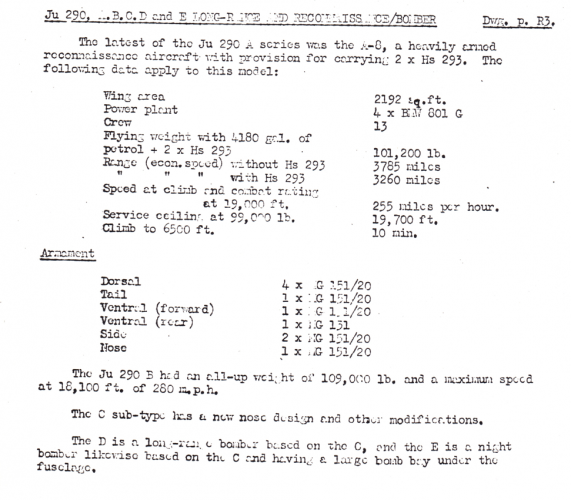
The Ju 290 D and E (both apparently real) were based on the Ju 290 C - see this description from the A.I.2(g) report German Aircraft: New and Projected Types of January 1946:
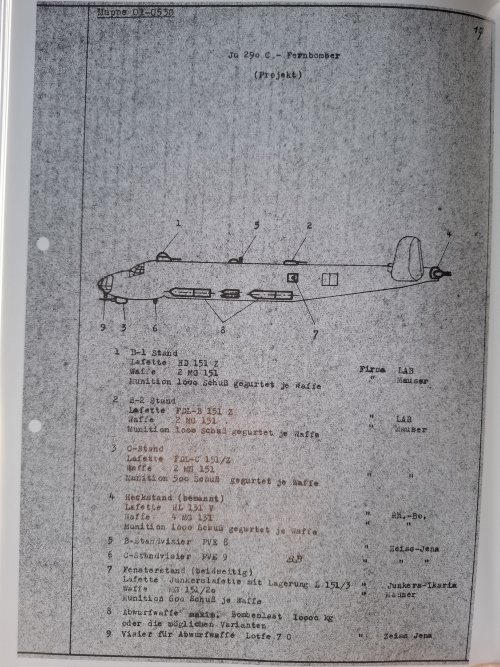
The Ju 290 E is said to have "a large bomb bay under the fuselage". The following drawing appears in a book by Manfred Griehl and Helmut Bukowski - Junkersflugzeuge 1933-1945 Bewaffnung - Erprobung - Prototypen - Der Illustrierte Original Bericht des Professor Brunolf Baade an die sowjetische Militaeradministration, Dessau 1946. Could this in fact be the Ju 290 E? Either way, it would seem to suggest that all of Hitchcock's drawings are guesswork rather than being based on real period documentation.
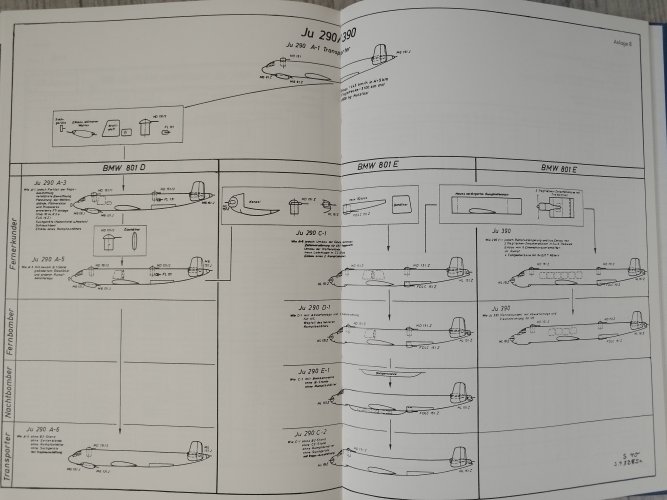
The picture in the Dessau report does not line up with the overview provided in "Die großen Dessauer" by Kössler and Ott. In their appendix 8 (p 236) they reproduce what I think is a period overview of the different planned developments of the Ju 290. Unfortunately I could not find a source qouted by Kössler and Ott or more context. To me it seems like the document is intended to highlight the parts commonality between the different planned versions of the Ju 290/390 family. The categorization of the aircraft aligns with your list from A.I.2(g). The drawings indicate nose armament as 1 HL151 Z.
Now to make things more interesting, Griehl&Bukowski show a 4x MG131 nose turret mockup on p. 207 of his book on the Dessau report and associates it with the Ju 290 B-1 dated 1944.
The HL151 Z in Kössler/Ott is different from Hitchcock's depiction, but also does not align with the Dessau report. The Hitchcock noses are however closer to the nose depicted on the Ju 390 in the Dessau report (p 63 in Griehl&Bukowski's book) and to the 4xMG131 turret mockup shown by Griehl&Bukowski. I would take the drawing in the Dessau report with a grain of salt, since it was created as a compilation report for the Soviets and thus might draw on an earlier/undefined stage of Ju 290 development. Nonetheless, comparing the Kössler/Ott image with Hitchkock, his drawings do appear to be based on a written description and not any particular drawing, especially with regards to the bomb bay.
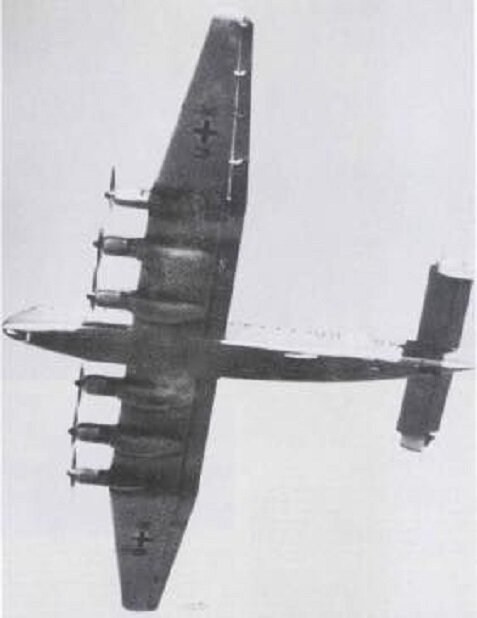
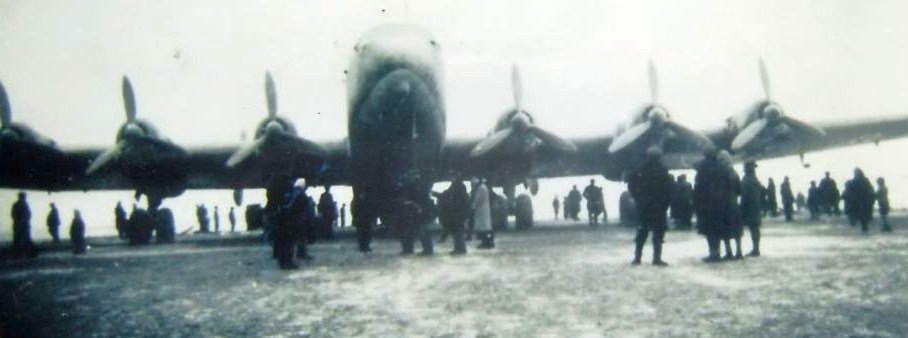
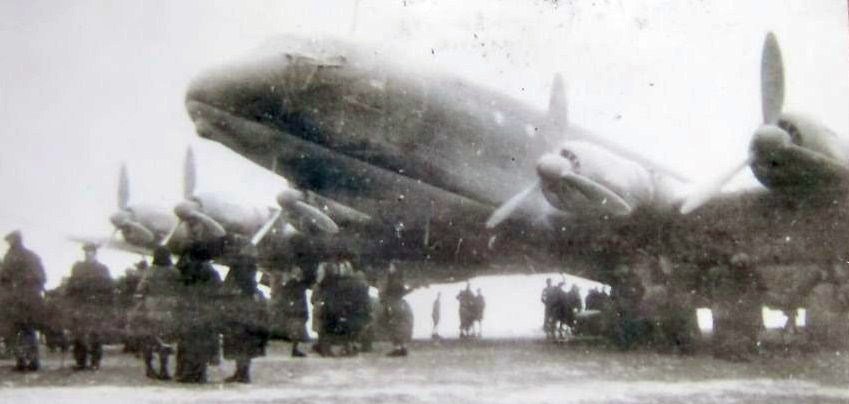
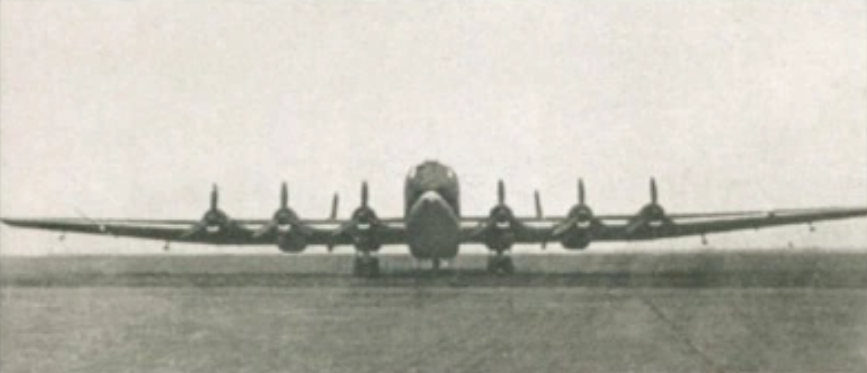
Very rare Ju 390 photo I just found. Very similar to another famous photo of the aircraft, but from a slightly greater distance. it is not much, but I'll add it here for history. The first photo below is the widespread one (for comparisons' sake), the second is the rare one; the third is the same but upscaled.
I can only reiterate that there is no evidence at all for the existence of an Me 323Z, even as a drawing board project. If any moderators are reading this, discussion of it belongs in the 'Theoretical, Fake and Generic Projects' thread.
There is the barest shred of evidence to support Thomas Hitchcock's Ju 290 E, as outlined in Monogram Close-Up 3. This comes from the well-known report A.I.2(G) Report No. 2383 German Aircraft: New and Projected Types by Horace King, dated January 1946.
This gives only the most minimal description of the Ju 290 E as "a night bomber likewise based on the C and having a large bomb bay under the fuselage" - see below. Whether Hitchcock extrapolated his description and drawing from that, or whether he had some independent information on it is unknown.
The closest I can get to it is some Junkers graphs dated June 1944 showing what the performance of the Ju 290 might have been like with four Jumo 222 E/Fs (earlier graphs, from March 1944, show projected performance with Jumo 222 A/Bs). These graphs don't mention a C, D or E designation.
Incidentally, it would seem that there were numerous other Ju 290 variants that have never been reported on before as far as I'm aware, such as a six-engined Ju 290 (small wing area) and two different wings for the Ju 390. The last variant I could find evidence on, from February 1945, was a Ju 290 A (sub-type unspecified) fitted out to carry either two or three Re 4 piloted flying bombs.
I found this from Dan in another thread that got a little bit more into the Ju-290E. The Ju-290E is rumored to be a contender for a very large bomb, but the 17.7 ton bomb was proven fake. However, there was a 20 ton bomb in the works. This should all be taken with a grain of salt though given that the Ju-290E is very dubious by itself.
I found this from Dan in another thread that got a little bit more into the Ju-290E. The Ju-290E is rumored to be a contender for a very large bomb, but the 17.7 ton bomb was proven fake. However, there was a 20 ton bomb in the works. This should all be taken with a grain of salt though given that the Ju-290E is very dubious by itself.
The 'E' was real - it's just whether the depiction of it in Hitchcock's book is accurate or not. Given the available evidence, I don't think it's that accurate. But it does seem that a variant of the Ju 290 with a great big bomb container bolted onto the underside was planned.
The 'E' was real - it's just whether the depiction of it in Hitchcock's book is accurate or not. Given the available evidence, I don't think it's that accurate. But it does seem that a variant of the Ju 290 with a great big bomb container bolted onto the underside was planned.
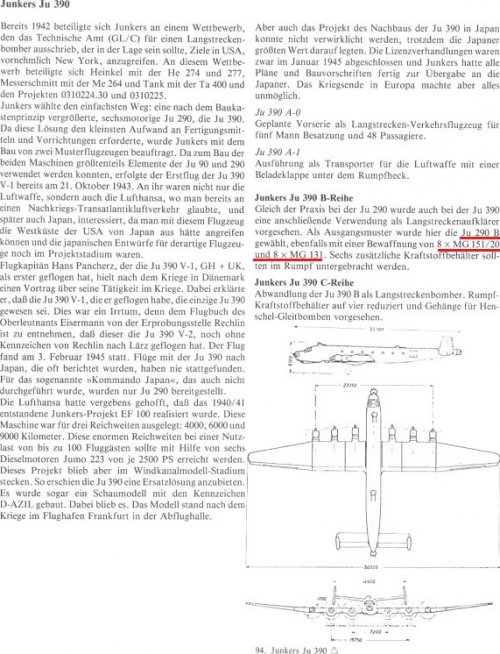
I have seen this, however after putting it through a translator I have some questions. First, the book mentions the Ta-400, He-277, and He-274 as "Amerikabomber" contenders even though this has been debunked. That can be blamed on popular misinformation though. The one that strikes me mostly is the explanation of the three variants. "A" appears to be a long range airliner/transport aircraft, "B" appears to be a long range maritime/reconnaissance aircraft, and "C" is stated as a long range bomber though one that is for anti-convoy duties and lacking the fuel for the intended mission. Therefore, I do question the accuracy of this.
I found an archived version of Kossler and Otts book on the Ju-89 through Ju-390, and it mentions three intended variants, though none have a letter designation. I did my best to translate what I could (as you can see I do not speak German), and it mentions a long range attack aircraft (I assume this to be the "Amerikabomber" version), a transport variant, and another labelled "Fernerkunder". The latter seems to confuse Google Translate as it simply says "remote sensing", which I gather might be for reconaissance? (Some of the links when I search this up suggest this.)
I have seen this, however after putting it through a translator I have some questions. First, the book mentions the Ta-400, He-277, and He-274 as "Amerikabomber" contenders even though this has been debunked. That can be blamed on popular misinformation though. The one that strikes me mostly is the explanation of the three variants. "A" appears to be a long range airliner/transport aircraft, "B" appears to be a long range maritime/reconnaissance aircraft, and "C" is stated as a long range bomber though one that is for anti-convoy duties and lacking the fuel for the intended mission. Therefore, I do question the accuracy of this.
I found an archived version of Kossler and Otts book on the Ju-89 through Ju-390, and it mentions three intended variants, though none have a letter designation. I did my best to translate what I could (as you can see I do not speak German), and it mentions a long range attack aircraft (I assume this to be the "Amerikabomber" version), a transport variant, and another labelled "Fernerkunder". The latter seems to confuse Google Translate as it simply says "remote sensing", which I gather might be for reconaissance? (Some of the links when I search this up suggest this.)
I don't think I've ever seen a primary source reference to a Ju 390 B or C but it's not impossible that they did exist. There's a lot that isn't known about Junkers designs because so few documents have survived.
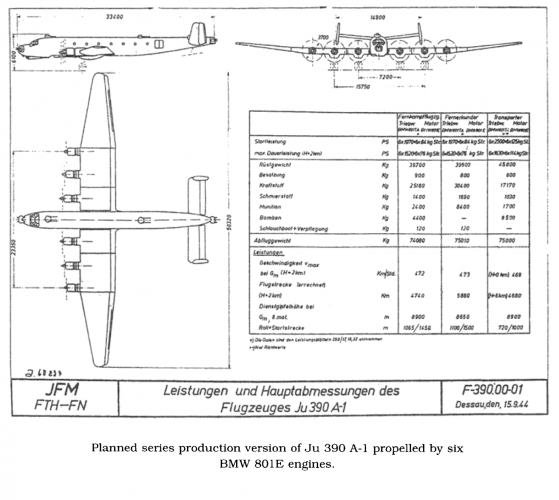
Oddly enough, it seems that the only two variants that were ever ordered in significant quantities were the Ju 290 B-2 and Ju 390 A-1, with 542 Ju 290 B-2s and 117 Ju 390 A-1s on order as of December 1, 1943 (Lieferplan Nr. 225). As far as I can tell, the B-2 and A-1 were identically equipped for the long-range reconnaissance bomber mission - seeking out convoys and either marking them for U-boats or attacking directly with guided weapons. They would have complemented one another by covering the different zones that their ranges allowed.
The Ju 390 was originally an Amerikabomber, so two Amerikabombers out of maybe 13 designs optimistically proposed at one time or another for that mission were actually built (Ju 390 and Me 264).
It always seems bizarre that the He 274 gets lumped in with the Amerikabombers since it was very definitely a short-range high-altitude design meant for attacks on England. The Ta 400 and He 277 were never Amerikabomber contenders, as you say.
Fernerkunder is long-range reconnaissance.
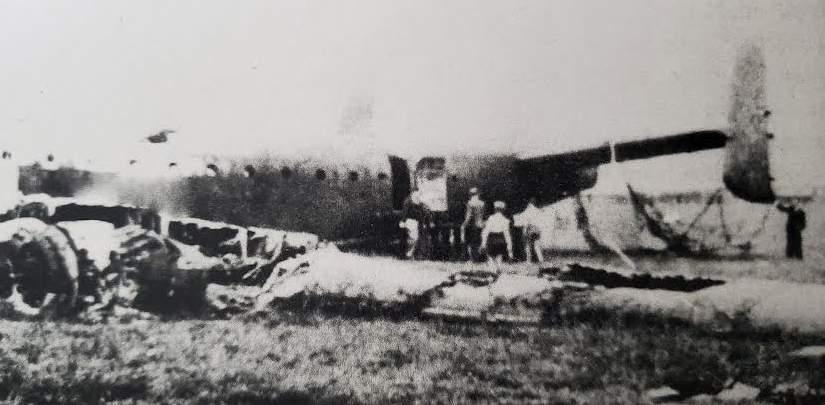
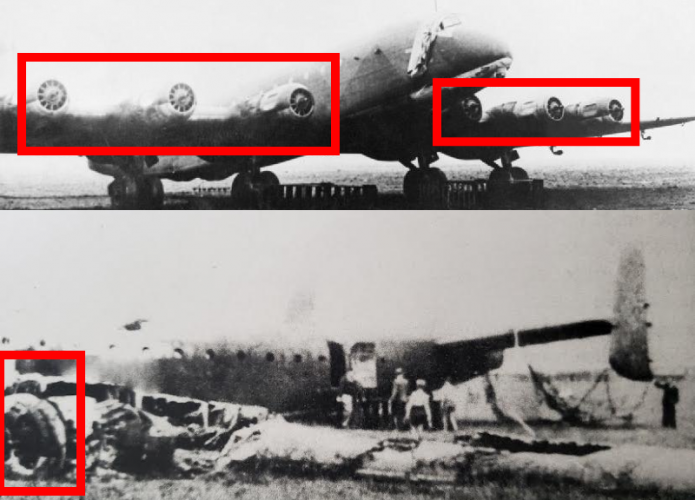
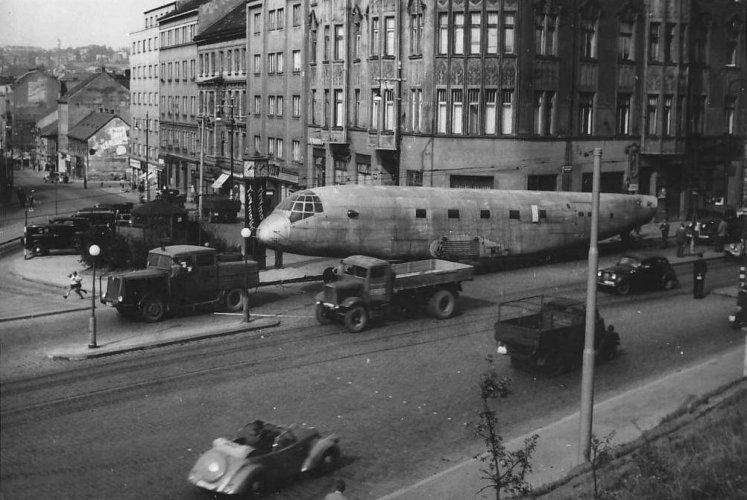
New Junkers Ju 390 photograph and potential evidence towards the existence of the Junkers Ju 390 V2.
Recently I came across this photograph which was previously unknown to me. The aircraft has to be the Junkers Ju 390 and not its smaller Ju 290 predecessor, citing its distinct round windows and elongated fuselage. We know the aircraft was destroyed at the Junkers factory in Dessau in April of 1945 to prevent its capture by the allies. The exact date of the aircraft's destruction and its subsequent fate are unknown, the photograph appears to be taken post war given that there are civilians present. The aircraft's damage shows that the cause of destruction was likely a fire.
Subsequently, this photograph further reinforces the theory for the existence of a flightworthy Ju 390 V2 (please note, this is not direct evidence, but a mere potentiality). The famous Ju 390 V1 photograph dated to November 1944 shows the aircraft in an abandoned state with the propellers removed. The photograph of the destroyed Ju 390 likewise does not show any remnants of the aircraft's propellers. We can conclude that the aircraft was never repaired before its destruction.
Now in the mid 1970s James P. O'Donnell interviewed Hans Baur, the personal pilot of Adolf Hitler, for his book "The Bunker". Baur makes a mention that a proposal was made in late April 1945 to fly Hitler out of Berlin using a Junkers Ju 390 aircraft, stationed at Rechlin. The plan did not go through due to Hitler's rejection and the impossibility of the task given the encirclement of Berlin.
We know the Ju 390 V1 was never repaired, and thus could not have been at Rechlin and could not have been flightworthy at this point in time. It was very unlikely that Baur did not know about the Ju 390 V1 being in disrepair for at least 6 months when making his offer, especially since he seemed rather informed about the aircraft and its capabilities.
Thus the testimony is either false (perhaps referring to a different aircraft - a Ju 290 for instance), or the Junkers Ju 390 V2 was really flightworthy. Given the credibility of Baur and O'Donnell, I believe this theory does hold some potential. Perhaps if anyone has Hans Baur's exact testimony, that may shed some light on this.
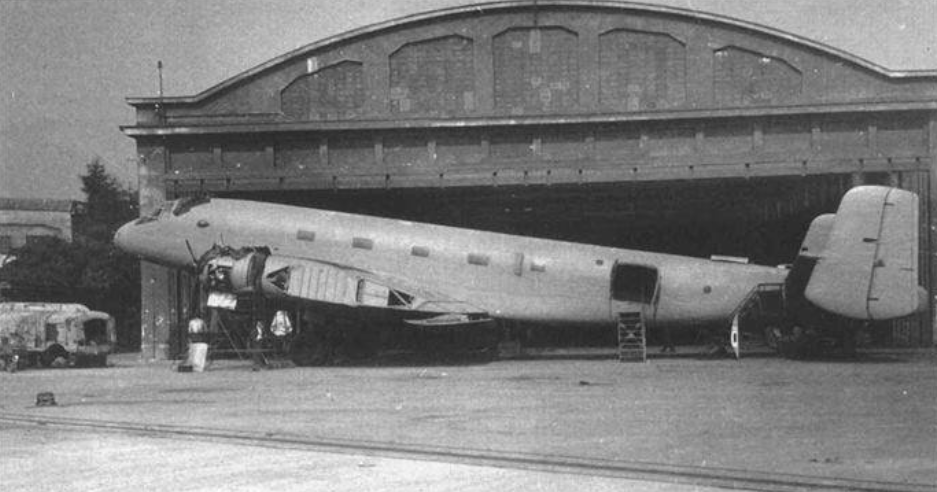
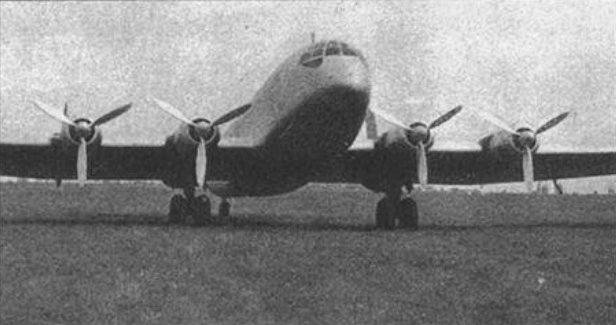
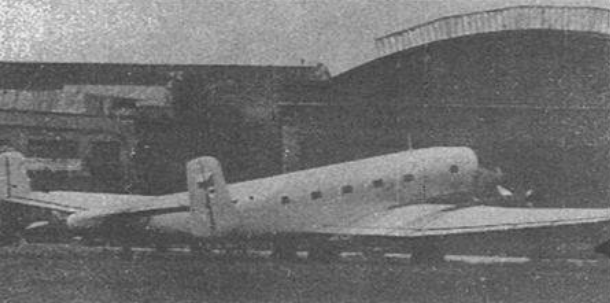
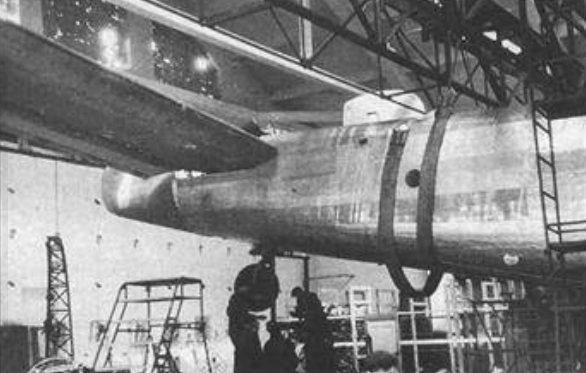
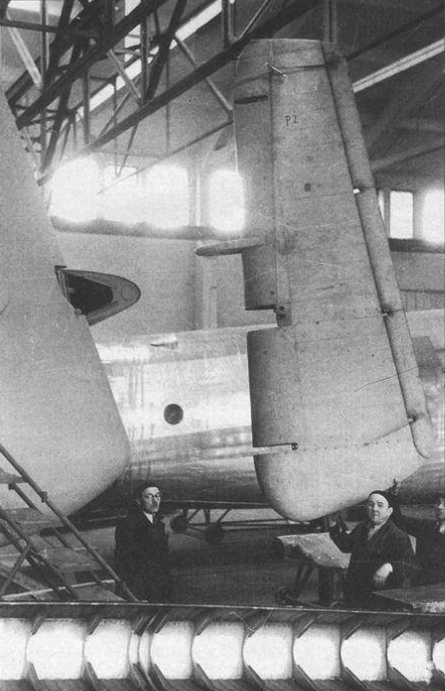
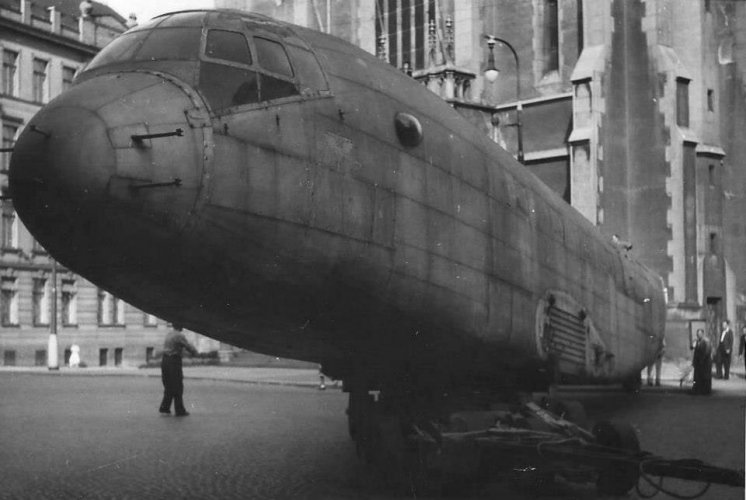
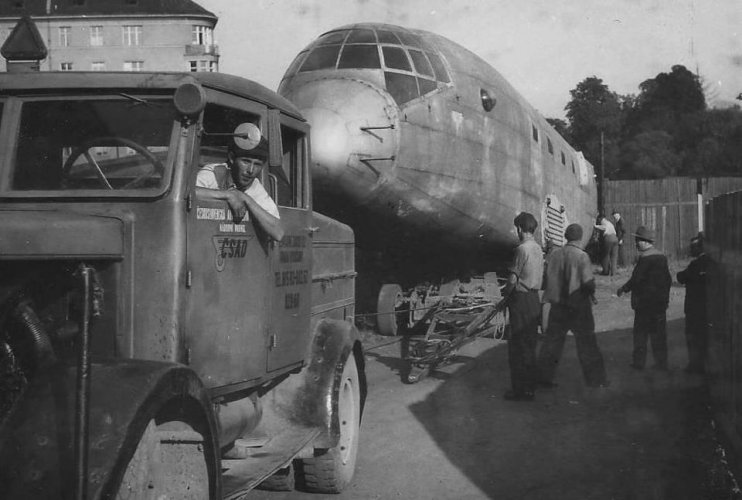
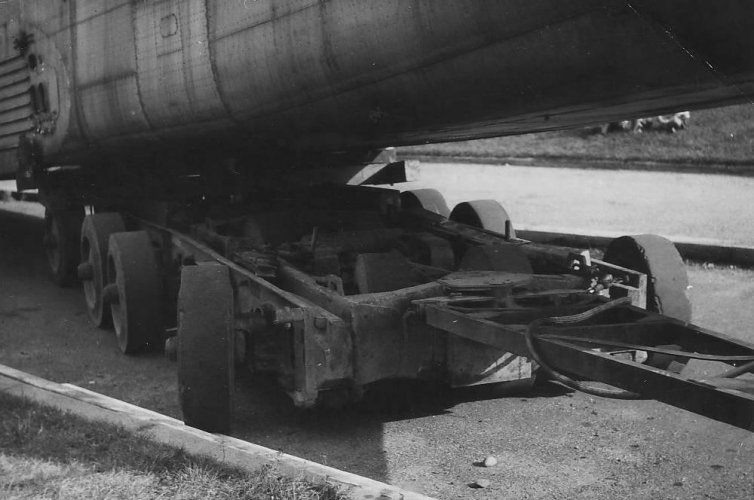
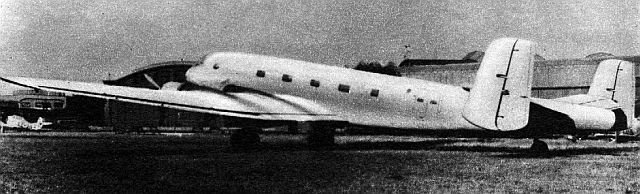
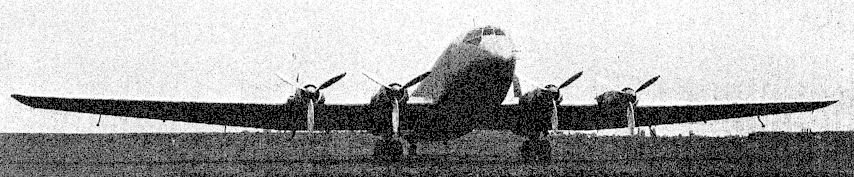
Czechoslovak license-built variant of the Junkers Ju 290.
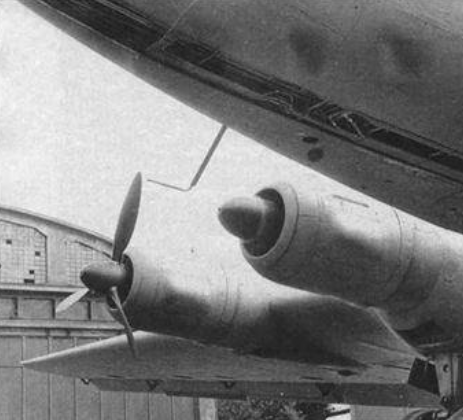
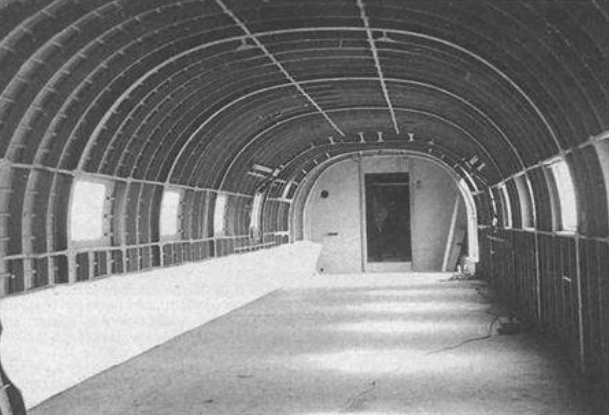
The Letov aircraft corporation serviced and constructed Junkers Ju 290 aircraft for the Luftwaffe during the war, and unsuccessfully attempted to build an airliner on its basis. The L-290 "Orel" (Eagle) was essentially a Ju 290 stripped of its military/freight instrumentation and fit with a passenger cabin to seat 44 to 48 passengers. A single example was built in 1946.
This site uses cookies to help personalise content, tailor your experience and to keep you logged in if you register.
By continuing to use this site, you are consenting to our use of cookies.