The HE-firing MBT isn't for the purpose of the HE, but the purpose of delivering HE at the minimal possible time.
From the moment of spotting and ID'ing a target, a tank's response is measured in seconds.
The tank is no long the primary, or secondary sensor on the battlefield. It could be in the era of scout tanks where recon aircraft costs far more to bring a part of vulnerable eyeball mk1 for short period of time. Today, clouds of drones spot and ID things at far beyond tank weapon range, and while artillery, drones and missile shooters are dueling the tank is doing nothing. (except acting as a poor artillery, perhaps) Perhaps after attrition both sides can still desire to close for a pitched battle, but in almost all cases one side would find engagement disadvantageous and hide behind defenses. (This is why tank on tank is so rare despite usage is not that rare)
So, what if you don't rely on other sensors and just send in the tanks as the primary sensor? Well they get spotted by everything at range while spotting almost nothing in return as tanks have large signature and no means to look beyond the horizon, and get ambushed in every possible way due to having no situation awareness.
So what if you have horizon to horizon deathbeam that kills all beyond the horizon spotters? Well, a topological map and some triangulation enables a pretty good track of the killbeam shooter, simply by looking at what survives. What is needed is a cloaking field that can only be countered by a tank-like vehicle, otherwise the cat's out the bag and long range sensing and targeting is just here.....
------
So what about opponent forces the are stealthy and hidden until close range? Well for one, such forces chooses when to reveal themselves, and can choose simply do not do so against tanks unless they have effective anti-tank weapons or forced by other forces. Getting surprised by tanks is in theory possible, but not likely with poor stealth of tanks.
So the tanks plus combined arms can potentially put opponent in a dilemma (no at-hide from tank, vulnerable to other forces), especially if the opponent is limited to line of sight weapons. If the opponent is spamming drones, not-a-spike, mine warfare, and utilizing other indirect fire weapons, the forcing function of the tank isn't very relevant.
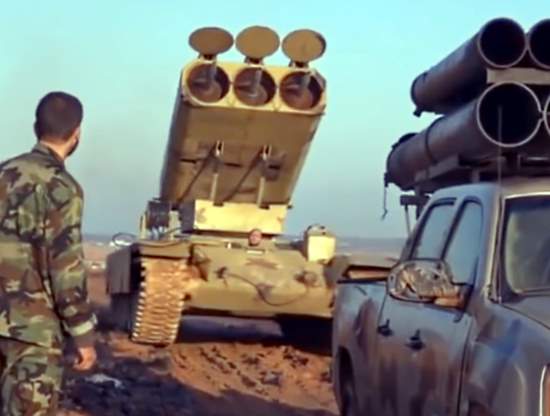
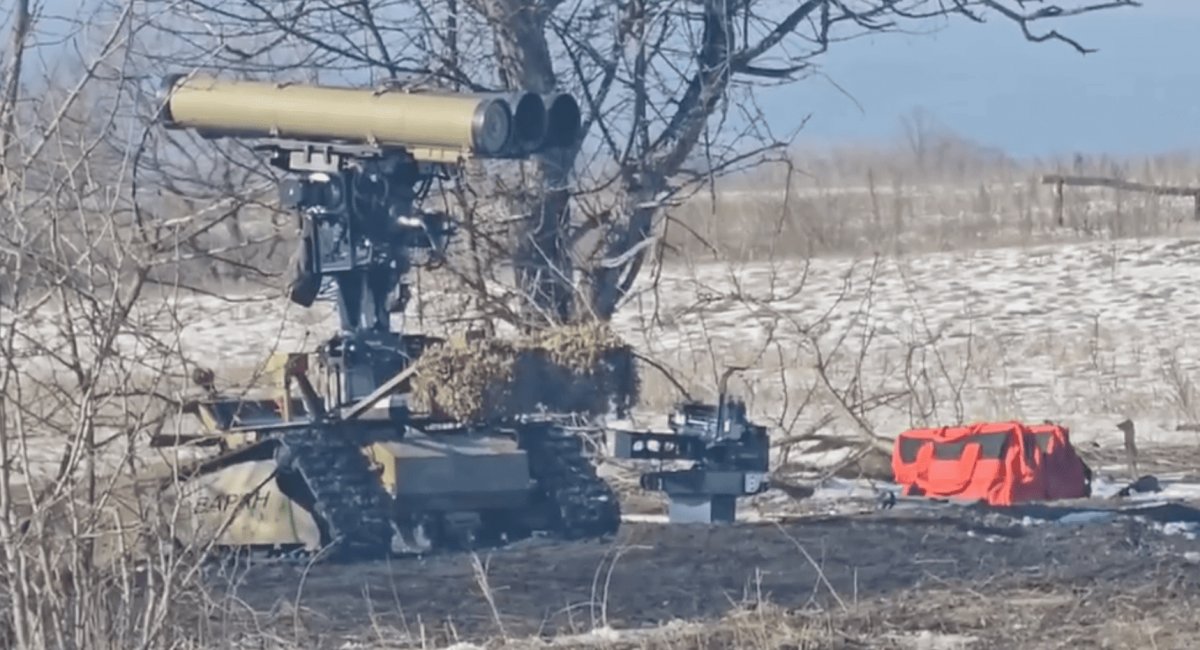
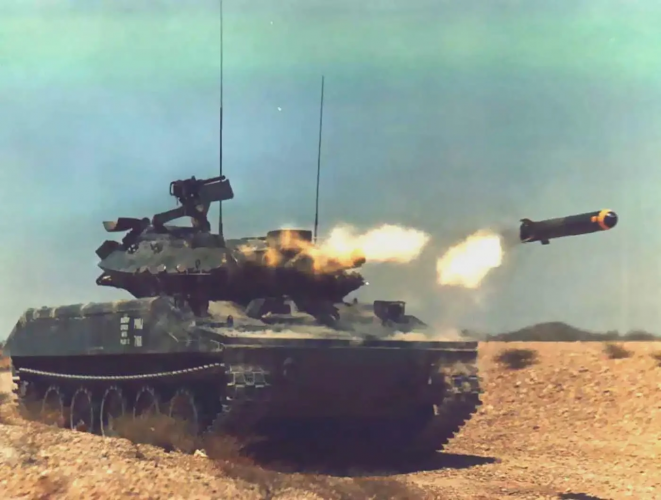
But lets say in a particular tactical situation the opponent need line of sight. With the opponent revealing themselves to be spotted, they are out of cover. There are no existing infantry or robot that can face tank 30/40/50/57/76mm apds or generally resist 50mm++ airburst. There is also no common structure/cover that can resist the above amount of firepower, and non-tunnel structures that can resist such fire power are quite large and visible and can be planned around like with planned fire. For tunnel structures, even large bombs can get resisted and shooting the opponent before the opponent take cover is what works. An AA based turret design for fast rotation and tracking rate is generally much better than MBT turrets with 10 tons of armor in front, and 10 ton gun/ammo/etc for max sabot velocity that is irrelevant here. Also, just about any vehicle can carry a missile launcher packing warhead in the 155mm class and missile velocity can be made fast if necessary (up to hypervelocity), the only issue is slightly higher cost/mass per shot relative to a shell. Short of Syrian Arab Army style leveling entire cities with tank fire war plan, it should be quite sufficient.
And relocation is a limited form of defense when sensors and munitions can track. Without going under ground/under top cover, movement does little when munitions can follow. With drones flying under tree canopies, only urban and prepared tunnels is relevant. For most nations, such fights can be converted into seiges (or ignored as not being part of war plans) and only a subset of nations needs to clear such areas. For nations that needs to clear such areas, munitions that go inside tunnels is far more useful than trying to hit the entrance with a bigger gun.
A drone or artillery shell are measured in minutes. If you're dealing with availability or coordination issues then a fire mission could take hours.
Support arms have reaction times when they are supporting a wide front and need to process new tactical information. When fires are preplanned it takes basically no time. In any case information systems is quickly converging time to turret rotation and project flight.
A tank parked on the zero line can maybe shoot directly, but no tank in a peer fight can survive artillery and other fires parked at the zero line. So tanks are generally parked beyond artillery range, and when the shooting begins they have to move into position by.....driving
Driving is no match for flying if not super sonic projectile in helping things.
If we disregard nuance like technological disparity, then in Ukraine's open terrain AFVs are extremely vulnerable, and in Gaza's urban terrain with a subterrannean layer AFVs have proven remarkably resilient.
Hamas is not a state actor and have no industry or technological capability.
In any case, using short range weapons in long range fight is the definition of vulnerability. Vehicles like HIMARS are extremely successful with low loss rates.
Force protection saw more relative evolution in the last decade than any organization's lethality.
Anti-aircraft guns saw more evolution than ever in the 1940s....which says something~
You need superiority in other domains to keep anything alive. That's a major argument against drone-centricity. That you can't abandon all to focus on one aspect (FPV drones), instead you need to maintain conventional superiorities - ground included.
Robust weapon systems works independently.
Submarines fight their own wars without support from other arms
Fighter bombers do it all as long as it get into the air
Raiding Ships that "outrun anything it cant outfight" manage to operate on the high seas independently before airpower
Tunnel networks with missiles and protected by infantry can deter superpowers with vast superiority in all arms.
Even the tank, in its ww2 armored division form is extremely difficult to counter
1. Tank mobility and armor protects from ranged fire from artillery and airpower
2. Tanks out range infantry AT weapons, tanks supported by infantry out fights straight infantry in open terrain
3. Tanks out maneuver and out mass towed anti-tank guns. In any case mass towed guns are easy picking by artillery.
It is due to sheer robustness of ww2 armored forces that Rommel can get lost doing bullshit dashes and pull victory out of a hat.
It is due to vulnerability an brittleness of modern armor concept that more layers of joint-ness upon joint-ness is demanded, with other branches bending backwards to fulfill the armored operating concept.
Certainly, wide spectrum capability is useful for different situations and conflicts, but training spearman because of a chance of getting stone-aged is not a good idea.