From Feb 18, 1926 Automotive Industries Magazine

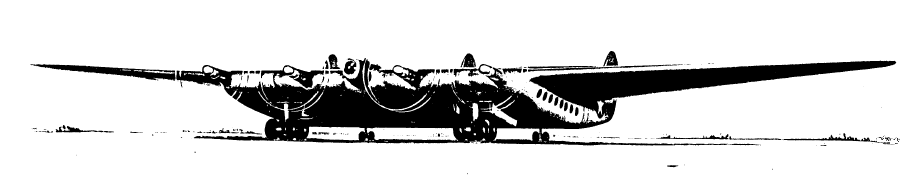
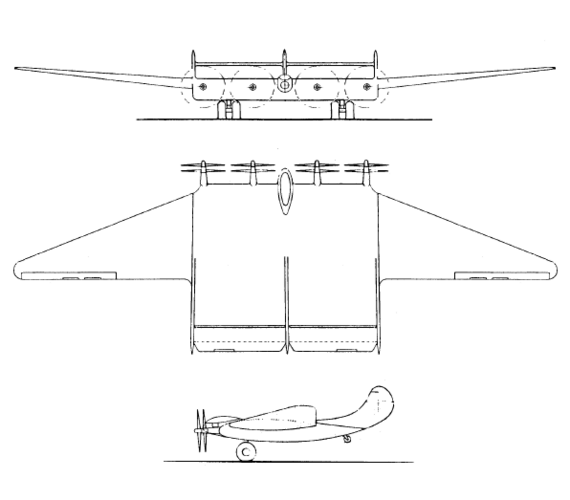
Remington-Burnelli RBL-6
Single engine, Tractor monoplane, 8-seat passenger/freight, land-based aircraft.
Specifications: 400 hp, V12 Liberty, water-cooled. 36 ft length, 8.5 ft height, 54 ft wingspan. Weight empty 4600 lbs, Weight gross 7400 ibs, useful load 2800 lbs. 120 mph max speed, 102 mph cruise at 10,000 ft., landing speed 58 mph. Wing chord average 9 ft 3 in., 640 sq ft wing area. Tail surface area 68 sq ft, vertical tail surface area 36 sq ft. Sweepback angle 0 deg.
Awesome! Thank you so much.
 
Remington-Burnelli RBL-4
Twin-engine, tractor monoplane, 18-seat passenger/freight, land-based aircraft.
Specifications: Two 400 hp Liberty engines, Aircraft length 45 ft. 5 in., height 10 ft. 4 in., wingspan 78 ft. Gross weight 13900 lbs., Weight empty 8,400 lbs., useful load 5,500 lbs. Max speed 125 mph and 106 mph cruise.
 
Awesome! Thank you so much.
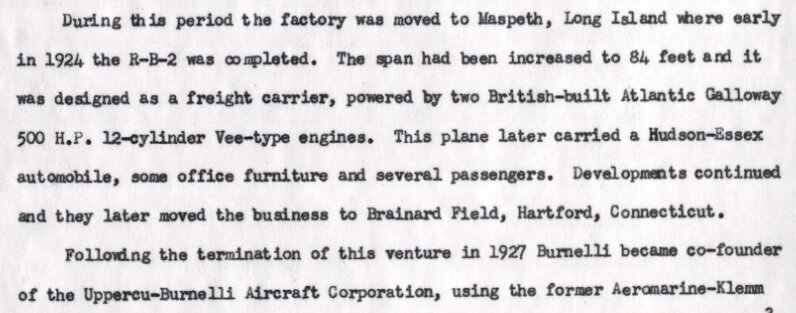
Maybe someone has some line drawings of these aircraft. The two 'Atlantic' engines are likely the Atlantic Galloway engines of 500 hp each that powered the RB-2 according to the 1925 Year Book. Also from the Smithsonian, below, regarding Burnelli's factory move and the engines that powered the RB-2:
 

Attachments

  • Atlantic Galloway.jpg
    Atlantic Galloway.jpg
    88.1 KB · Views: 134
Last edited:
Amazing my dear Dynoman,

and can I ask you,if there were RB 1,2,3,4 & 6,was there RB-5,or not ?.
 
Amazing my dear Dynoman,

and can I ask you,if there were RB 1,2,3,4 & 6,was there RB-5,or not ?.
Hesham, there was an RB-1 and RB-2. I don't know about an RB-3, but the RBL-4 and RBL-6 were Liberty powered aircraft designs, hence the "L." The RB-1 an -2 were the lifting bodied aircraft that were built and flown. The others, I suspect, were all paper designs.

The question remains what was the RB-3 and RB-5. I'll keep looking.
 
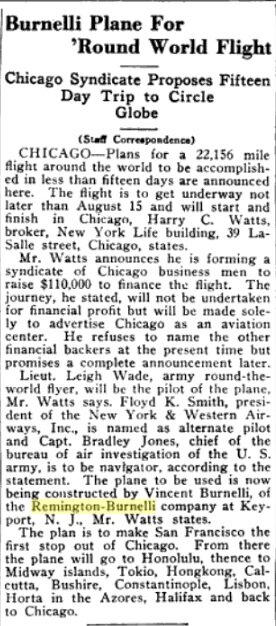
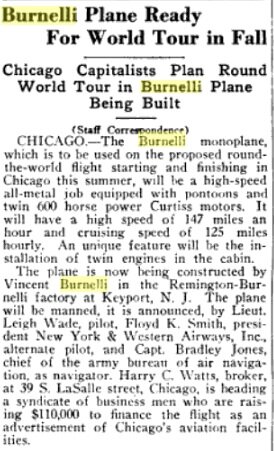
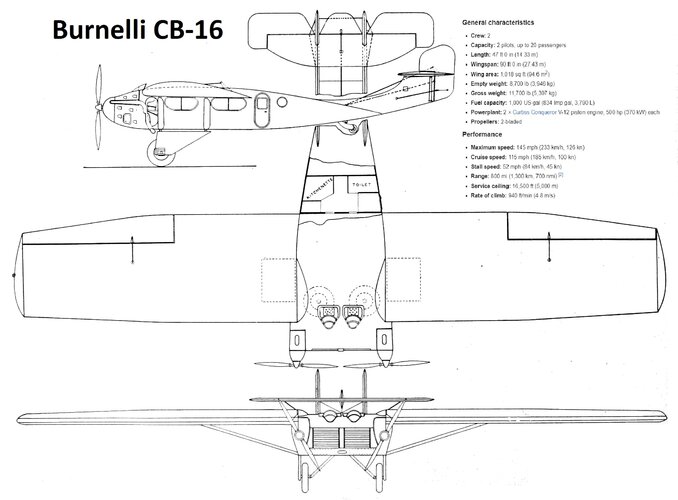
I'm curious if the Burnelli aircraft "under construction" for the round-the-world flight was Chapman's CB-16. This aircraft was used in a number of demonstration flights prior to this proposed flight. Any thoughts on the timeline for this aircraft?
 

Attachments

  • June 30 1928 Air Transport Journal.jpg
    June 30 1928 Air Transport Journal.jpg
    99.8 KB · Views: 59
After a little more digging it looks like the CB-16 (which matches the powerplant and general design expressed in the second article below), was planned to have participated in the Round-the-World trip. However, the article says that the aircraft would be equipped with pontoons. Note: The pilot for the flight Lt. Leigh Wade, was the same pilot who flew one of the Douglas World Cruiser around the world and was the test pilot on the PG-1. Wade also made the first flight in the CB-16.
 

Attachments

  • Ready for Fall 1928.jpg
    Ready for Fall 1928.jpg
    69.8 KB · Views: 68
  • Burnelli CB16.jpg
    Burnelli CB16.jpg
    438.8 KB · Views: 97
Last edited:
The question remains what was the RB-3 and RB-5. I'll keep looking.
A GB-3 was announced at the formation of the new Garvan-Burnelli Aircraft Corp. in April 1926 as a "large experimental plane" prepared especially for the Sesquicentennial in Philadelphia. The new company's president was Thomas F. Garvan, while V. J. Burnelli acted as vice-president; however, the collaboration probably didn't work out as the company continued to appear as Remington-Burnelli in all advertisements and articles after that. I therefore suspect that the RB-3 was simply the GB-3.
 

Attachments

  • 27.png
    27.png
    707.1 KB · Views: 59
My dear Jemiba,here's a clearer view.
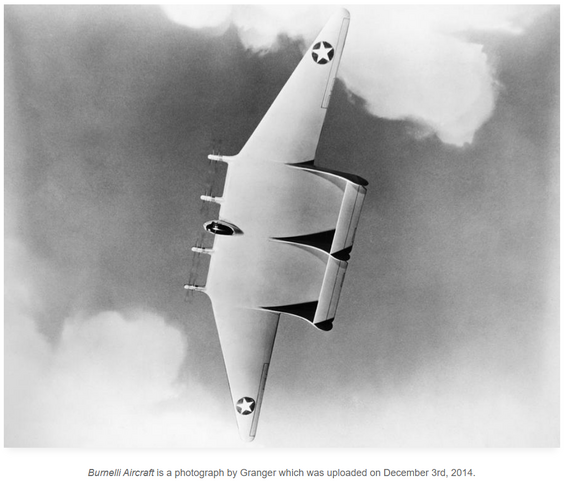
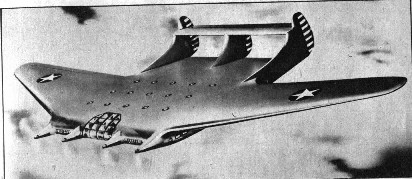
I wonder how many times this particular image has been posted on our forum, but I suspect it's been quite a few... Let's not make your post totally useless, and take that opportunity to add some information to it: it depicts the Canadian Car & Foundry B-1000 (not to be mistaken with the B-1000B, which was a twin-boom design).

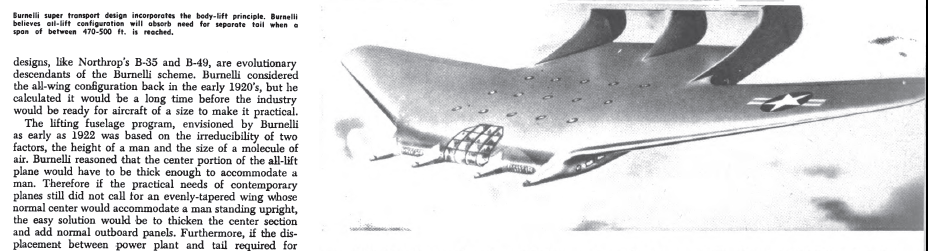
1739577509728.png Conceived in 1942 by Burnelli while in Canada, the B-1000 was studied in freighter, cargo glider tow and airliner versions. It is possible that the cargo variant was submitted to the USAAF, but perhaps also the image was just wishful thinking and not a concrete proposal. An earlier version, designated the B-200 (right) was depicted in USAAC colors.

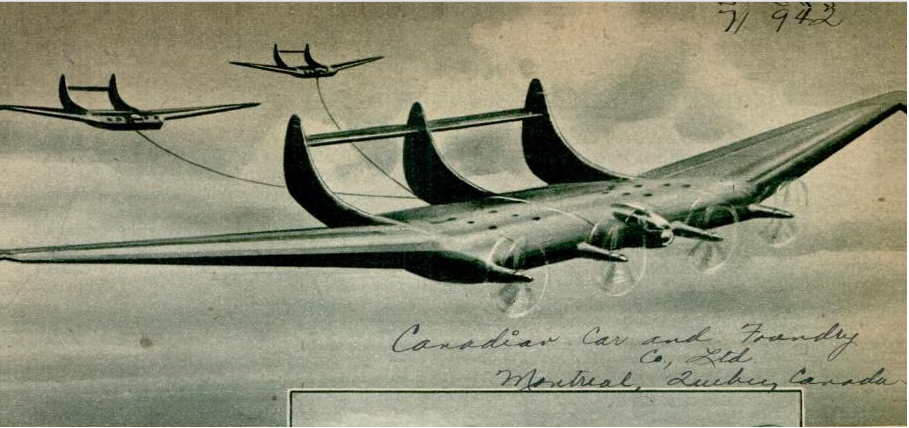
Below, an artist's concept of the B-1000 towing two smaller Burnelli aircraft, from a period magazine:

1739577756579.png

Another period illustration of the B-1000 taxiing (possibly an official company picture):

1739577655756.png

Finally, a three-view arrangement of the B-1000 which I cleaned up for my website:

1739577307712.png
 
...I do not know what/who the "L" stood for, nor what those "Atlantic" engines were supposed to be. Has anyone encountered them before?

So, are we concluding that the 'L' in RBL-6 stood for Liberty? If so, slightly odd that the RB-1 wasn't an 'RBL-1'.

The RB-2 was powered by two 650 hp Beardmore (Galloway) Atlantic V12s. The year 1927 seems late for the Atlantic but perhaps the planned engines were to be 'recycled' from the RB-2? (I note that the RB-2's registration - N9182 - was not cancelled until 1930.)

[Edit: Sorry ... I had missed Dynoman's post regarding the Atlantic engines in reply #163.][/B]
 
Last edited:
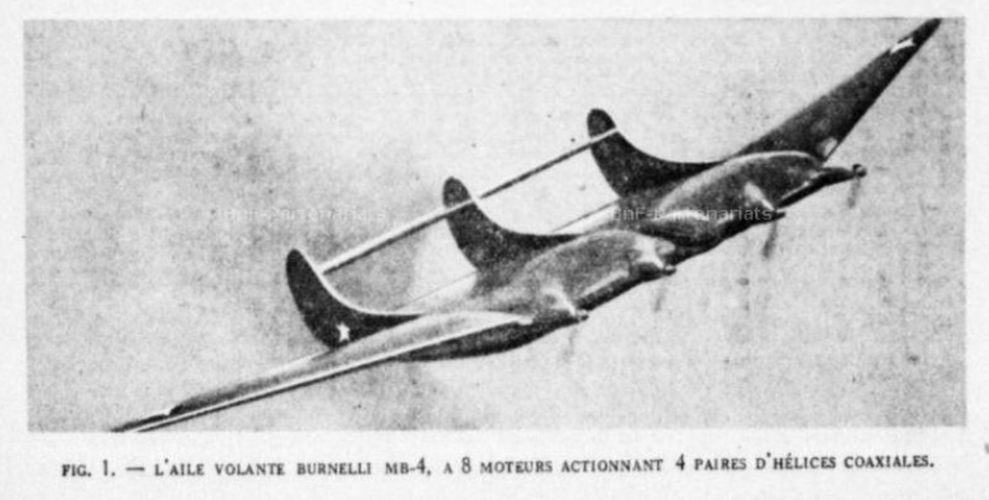
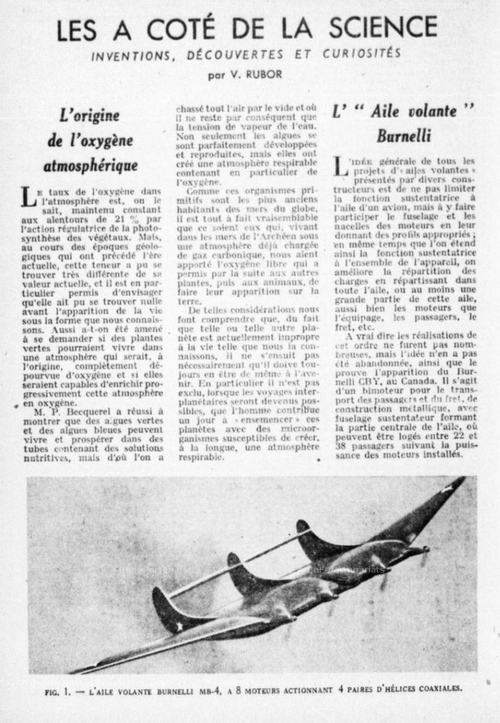
From, 1946-03-01_La_Science_et_la_vie,

they called it MB-4 ?!.
 

Attachments

  • 23.png
    23.png
    756.8 KB · Views: 59
  • 24.png
    24.png
    1.2 MB · Views: 69
1742782155164.png
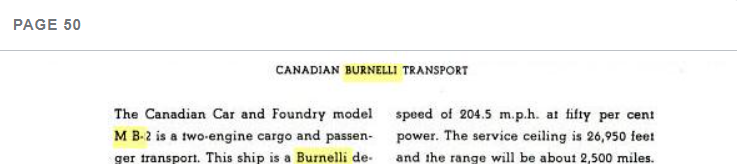
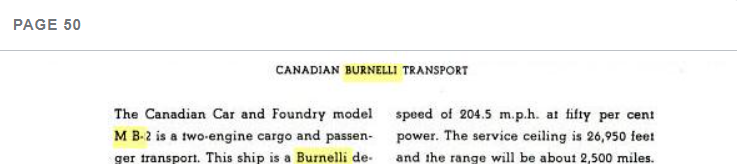
A snippet from Transport Aircraft of he World, Lester Ott, 1944.
Obviously, this is not definitive, however if the two engine Burnelli variant was called the MB-2, then possibly the four propeller variant could be designated the MB-4. This book with the MB-2 was published a couple years before the 1946 article Hesham references.
 

Attachments

  • 1742782188316.png
    1742782188316.png
    66.8 KB · Views: 63
I wonder how many times this particular image has been posted on our forum, but I suspect it's been quite a few... Let's not make your post totally useless, and take that opportunity to add some information to it: it depicts the Canadian Car & Foundry B-1000 (not to be mistaken with the B-1000B, which was a twin-boom design).

View attachment 759550Conceived in 1942 by Burnelli while in Canada, the B-1000 was studied in freighter, cargo glider tow and airliner versions. It is possible that the cargo variant was submitted to the USAAF, but perhaps also the image was just wishful thinking and not a concrete proposal. An earlier version, designated the B-200 (right) was depicted in USAAC colors.

Below, an artist's concept of the B-1000 towing two smaller Burnelli aircraft, from a period magazine:

View attachment 759552

Another period illustration of the B-1000 taxiing (possibly an official company picture):

View attachment 759551

Finally, a three-view arrangement of the B-1000 which I cleaned up for my website:

View attachment 759549

¿Es esa la única información que tiene sobre esos modelos?
 
Not a Burnelli project per-se, but Windracers (https://windracers.com/) have adopted the Burnelli configuration for more than one drone. So, the basic classic Burnelli layout lives in 2025 (including with some examples being reportedly in service)... I thought that was worth noting.
 
Doing research through the New England Air Museum, they have provided a list of archived aircraft designs by Burnelli. Many of which I have no information on. They include:

B-EB-4-R Twin boom, four engine 2000 hp Rolls Royce engines.
B-EB-2-1 Medium Bomber
ALC-2 Cargo Plane
X-188-1 Attack Bomber
X-173-1 Attack Bomber
BC-78 Four engine transport, 72 passengers, 6 crew

They have approximately 4,000 items categorized at the museum for Burnelli.
 
Doing research through the New England Air Museum, they have provided a list of archived aircraft designs by Burnelli. Many of which I have no information on. They include:

B-EB-4-R Twin boom, four engine 2000 hp Rolls Royce engines.
B-EB-2-1 Medium Bomber
ALC-2 Cargo Plane
X-188-1 Attack Bomber
X-173-1 Attack Bomber
BC-78 Four engine transport, 72 passengers, 6 crew

They have approximately 4,000 items categorized at the museum for Burnelli.
Does the Museum have a list of the Burnelli-related drawings in their archives?
 
Doing research through the New England Air Museum, they have provided a list of archived aircraft designs by Burnelli. Many of which I have no information on. They include:

B-EB-4-R Twin boom, four engine 2000 hp Rolls Royce engines.
B-EB-2-1 Medium Bomber
ALC-2 Cargo Plane
X-188-1 Attack Bomber
X-173-1 Attack Bomber
BC-78 Four engine transport, 72 passengers, 6 crew

They have approximately 4,000 items categorized at the museum for Burnelli.

Amazing find my dear Dynoman,

specially X-173 and X-188,we know only GB-171 & GB-178.
 
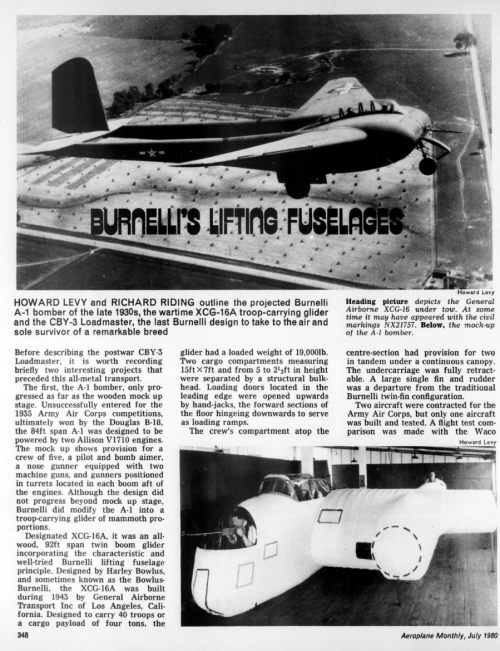
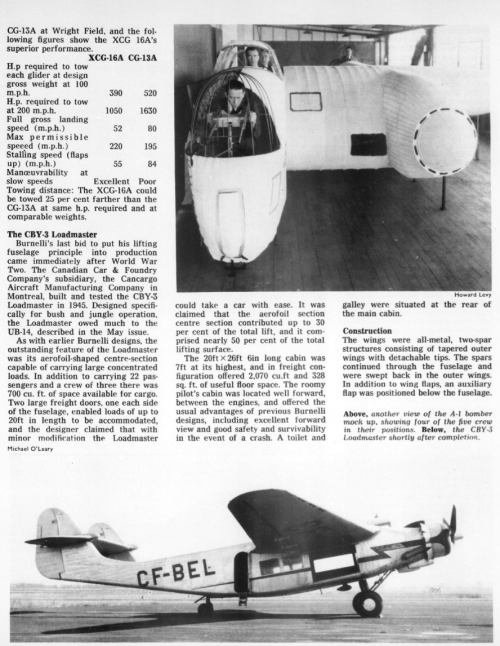
From Aeroplane Monthly 1980/7,

When the US Army Air Corps announced tactical and technical requirements for a new multi-engine heavy bomber in May 1934, capable of, among other things, carrying 907 kg of bombs at a speed of 322 km/h over a range of 3,220 km, V.J. Burnelli also presented his bomber design in 1935. The aircraft—designated A-1 —was to be built as a twin-fuselage design with a short, wide fuselage and two tail booms connected by a horizontal stabilizer, similar to the earlier civilian UB-20 and UB-14 aircraft. The designer envisioned two 12-cylinder Allison V-1710 inline engines, then considered by the USAAC as the primary power source for newly designed combat aircraft. The A-1 bomber's crew was to consist of five men: pilot, bombardier, and three gunners. One of the gunners operated two machine guns placed in a firing position at the front of the fuselage, while the other two operated two rotating gun turrets placed behind the engines in the axis of the tail booms.
The A-1 bomber design was rejected by the USAAC during the initial competition, and in January 1936, the Air Corps selected the Douglas DB-1 twin-engine heavy bomber as its standard, giving it the military designation B-18. Although a wooden mock-up of the A-1 was built, the design was not further developed in its original form. Instead, Burnelli developed a preliminary design for a large transport glider, a concept later used by William H. Bowlus in the design of the 40-seat MC-1A glider (military designation XCG-16). In 1943, General Airborne Transport Inc. built a prototype of this glider, also known as the Bowlus-Burnelli XCG-16A.

In conclusion, it's worth mentioning that the A-1 wasn't the only bomber design with a lifting fuselage. In 1942, Canadian Car & Foundry (CC&F) developed a preliminary design for a much larger bomber based on Burnelli's concept. This gigantic aircraft, designated the B-2000B "Super Bomber ," was to be powered by eight 24-cylinder Allison V-3420 inline engines with a total power output of 20,000 hp. The wingspan was to exceed 67 meters, and the takeoff weight was to reach nearly 100 tons. The B-2000B was to be CC&F's proposal for a large strategic bomber for the USAAF, for which the US Air Force had already submitted a request in 1941. However, the project was not further developed.
 

Attachments

  • 1.png
    1.png
    1.2 MB · Views: 36
  • 2.png
    2.png
    1.1 MB · Views: 37
  • 3.png
    3.png
    1.1 MB · Views: 44
Also from Aviation Operations 1950
 

Attachments

  • 6.png
    6.png
    178.1 KB · Views: 29
1769023481082.png
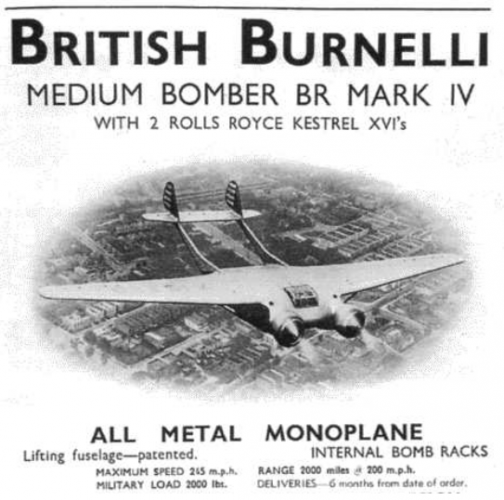
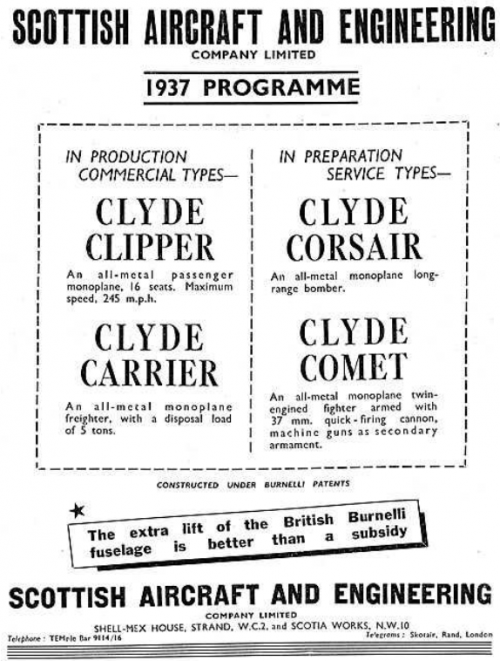
A proposed bomber version of the UB-14B advertised in January 1937. The project was named the "Clyde Corsair" with a projected date of delivery in 6 months.
1769023502894.png

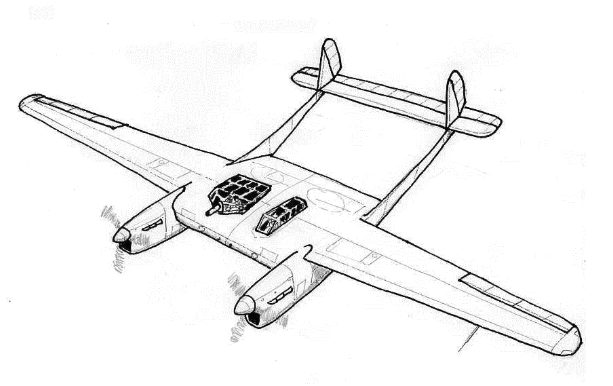
"Clyde Comet" another proposed aircraft by the Cunliffe-Owens Scottish Aircraft and Engineering company based on the Burnelli design.

1769023530161.png
https://dingeraviation.net/cowing/cowing.html
 
Last edited:
1769011880667.png

A proposed bomber version of the UB-14B advertised in January 1937. The project was named the "Clyde Corsair" with a projected date of delivery in 6 months.

1769012087498.png

"Clyde Comet" another proposed aircraft by the Cunliffe-Owens company based on the Burnelli design.

1769012254616.png

https://dingeraviation.net/cowing/cowing.html
No, not Cunliffe Owen, a project by the original holders of the Burnelli licence, Scottish Aircraft & Engineering Co
 
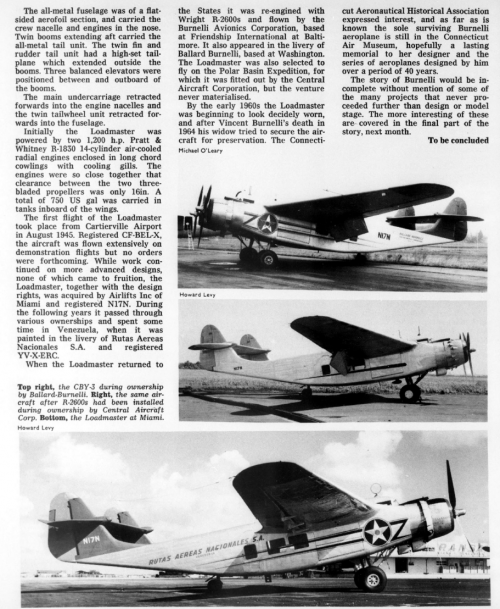
That is the only flying example of the CBY-3 built by Canadian Car and Foundry
 
Back
Top Bottom