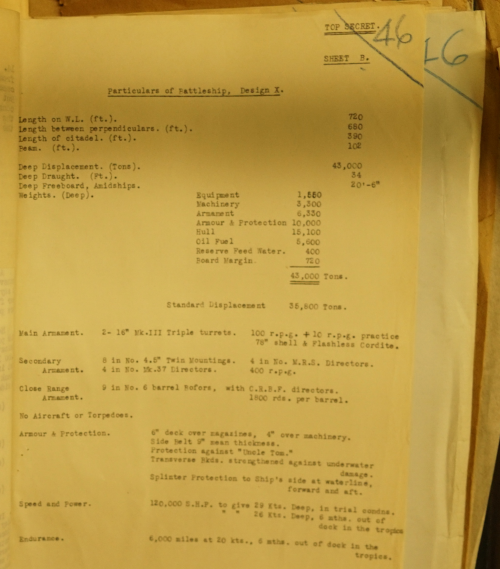
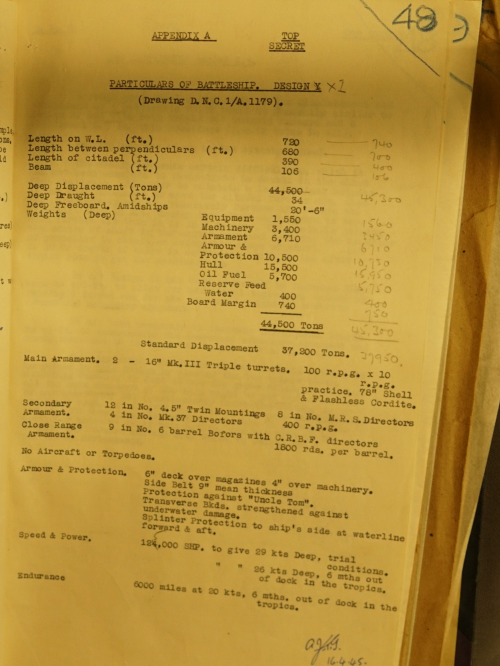
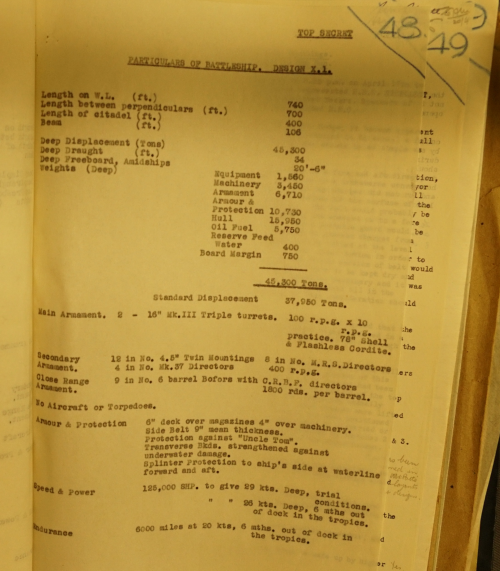
Theoratically both HMS Lion and Temeraie were laid down and a few months of work was done on the hulls.
Now I have two questions:
Did actually an real work was done on the hulls / keels or only the materials were assembled but no actual work was done?

Second, if the keels were actually laid down, did anybody seen or heard of photos of them?

Though not sure how well the RN or the builder shipyards photographed their ships still in construction.

All of the accounts I have read say that yes, they were laid down, and work started, but I have never seen an actual picture. I'd love to see one.

DRW
 
WHERE were they laid down? Archives might be available even now.
 
In the run up to WW2 the usual competitive tendering process (Admiralty design ship, request tenders, tenders reviewed and accepted / rejected, order placed, construction then starts a few months later) was not always adhered to in order to get ships built ASAP.

For example with Duke of York, John Brown had been told informally in late 1936 that they would be awarded a contract to build a new battleship as part of the 1937 Programme. By the end of 1936 they had agreement from the Admiralty about suppliers of equipment required for the new ship and had begun to place orders. A formal tender document was still required for accounting purposes and that was submitted on 15th Feb 1937. At that point some 2,600 tons of steel had been ordered (half before the end of 1936) and by the 17th Feb it was reported that 400 tons was already in the yard and a month later prelimary work was already underway in the yard on drawings and the first sub-assemblies. The Admiralty formally placed the order on 28th April 1937 and her keel was laid on 5th May.

Similarly with the first 5 Fiji class, tenders were sought from 9 yards, but even before the issue of the tender requests (on 27th Oct 1937) John Brown, Stephen, VA & Swan Hunter were approached to begin work on the detailed drawings for the class on the "tacit understanding" that they would receive contracts to each build a ship (the fifth ship in the Programme, Trinidad, was to be built in a Royal Dockyard). Tenders had to be received by 1 Dec 1937. Orders were formally placed on 20th Dec 1937 with the above noted 4 yards. They also proved to be the lowest four tenders. That was a product of the Shipbuilding Conference trade association, which, with the unwritten agreement of the Admiralty, sought to limit price competition between builders.

VA(T) were able to lay Nigeria down on 2 Feb 1938.

In addition to VA(T) and Cammell Laird receiving orders for Lion & Temeraire on 21st Feb 1939, John Brown also submitted an unsuccessful tender dated 31st Jan 1939. Unfortunately I don't have details of the issue dates of the request for tenders, but the submission date must have been close to the end of Jan 1939. As noted, the successful bidders were able to lay the ships down June / July 1939.

So It does beg the question as to when the yards were able to begin amassing materials etc for the Lions.

John Brown submitted a new tender for the third Lion, Conqueror, on 17th July 1939 with the order being placed on 15th Aug. On the outbreak of war the Admiralty delayed her progress initially for a few months, but then extended later. But again it raises a question about materials being collected by the yard for her.

 
The first two images are from John Roberts' article "Penultimate Battleships: The Lion Class 1937-1946" (Warship #19, pg 167 & Warship #20, pg 266) The image is on page 269.

The related text is on pg. 272-273, under "Design X". The upper design is the original Design X. The lower one is Design X1. Roberts does not provide dimensions, but he does mention that Design X was to have 16 4.5" (8x2) and 54 40mm (9x4). He does not discuss the secondary armament on X1.
Hold up.

54x 40mm means 13x4 plus a loose pair. Or are we saying 9x4 plus 9x2?
 
In the run up to WW2 the usual competitive tendering process (Admiralty design ship, request tenders, tenders reviewed and accepted / rejected, order placed, construction then starts a few months later) was not always adhered to in order to get ships built ASAP.

For example with Duke of York, John Brown had been told informally in late 1936 that they would be awarded a contract to build a new battleship as part of the 1937 Programme. By the end of 1936 they had agreement from the Admiralty about suppliers of equipment required for the new ship and had begun to place orders. A formal tender document was still required for accounting purposes and that was submitted on 15th Feb 1937. At that point some 2,600 tons of steel had been ordered (half before the end of 1936) and by the 17th Feb it was reported that 400 tons was already in the yard and a month later prelimary work was already underway in the yard on drawings and the first sub-assemblies. The Admiralty formally placed the order on 28th April 1937 and her keel was laid on 5th May.

Similarly with the first 5 Fiji class, tenders were sought from 9 yards, but even before the issue of the tender requests (on 27th Oct 1937) John Brown, Stephen, VA & Swan Hunter were approached to begin work on the detailed drawings for the class on the "tacit understanding" that they would receive contracts to each build a ship (the fifth ship in the Programme, Trinidad, was to be built in a Royal Dockyard). Tenders had to be received by 1 Dec 1937. Orders were formally placed on 20th Dec 1937 with the above noted 4 yards. They also proved to be the lowest four tenders. That was a product of the Shipbuilding Conference trade association, which, with the unwritten agreement of the Admiralty, sought to limit price competition between builders.

VA(T) were able to lay Nigeria down on 2 Feb 1938.

In addition to VA(T) and Cammell Laird receiving orders for Lion & Temeraire on 21st Feb 1939, John Brown also submitted an unsuccessful tender dated 31st Jan 1939. Unfortunately I don't have details of the issue dates of the request for tenders, but the submission date must have been close to the end of Jan 1939. As noted, the successful bidders were able to lay the ships down June / July 1939.

So It does beg the question as to when the yards were able to begin amassing materials etc for the Lions.

John Brown submitted a new tender for the third Lion, Conqueror, on 17th July 1939 with the order being placed on 15th Aug. On the outbreak of war the Admiralty delayed her progress initially for a few months, but then extended later. But again it raises a question about materials being collected by the yard for her.
Thank you, Sir.
 
Hold up.

54x 40mm means 13x4 plus a loose pair. Or are we saying 9x4 plus 9x2?

9x6, drwells42 miswritten. By this time the Sextuple Bofors was the new Light AA.

I checked against the original source, (John Roberts' article "Penultimate Battleships: The Lion Class 1937-1946" (Warship #19, pg 167 & Warship #20, pg 266)) and I can confirm that this was a typo. It should have been 9X6.

DRW
 
Thank you for reminding me about those Warship articles. They do contain some interesting information on dates etc.

From Waship 19 p182
15 Dec 1938 - legend and drawings for Lion class approved by Admiralty.
22 Dec 1938 - invitations to tender issued
21 Jan 1939 - tenders from VA(T) and CL accepted and orders placed.
1 June 1939 - CL laid down Temeraire "the earliest date possible under the London Treaty" with Lion following at VA(T) on 4th July.

Having looked at the text of the 1936 London Treaty, I note that there were conditions about advance notification to other signitories about ship characteristics of vessels to be laid down. Part 3 Article XII specified notification 4 months before the ship was to be laid down. That would suggest the other parties to the Treaty had been advised in January 1939, which would be about as soon as it could be done given the timing of Admiralty approval of the design.
http://www.ww2ships.com/documents/doc0004-london1936.shtml

From Warship 20 p271
Once war started, the design changes started to accumulate, resulting in a complete redesign in 1942. At the end of 1941 approx 300 tons of steel for Lion was sitting on the stocks. Some of the steel and armour already gathered was not useable in the proposed new design. All this material was disposed of in 1942/43.

Work on manufacturing the 16" turrets was allowed to continue until July 1943 when the DNC questioned why, when the ship they were intended for had not been (re)designed, which might render them useless.

Clearing the stocks at VA(T) and CL in 1942/43 coincides with the ordering of the Audacious class carriers from those yards. They both had a limited number of slips capable of taking such large ships. I've not yet discovered if the same slips were or were not used for building both classes.

Jordan also notes that the turret work competed with that for army AA guns for resources, while demand for tank armour was competing with ship armour.
 
Last edited:

Similar threads

Back
Top Bottom