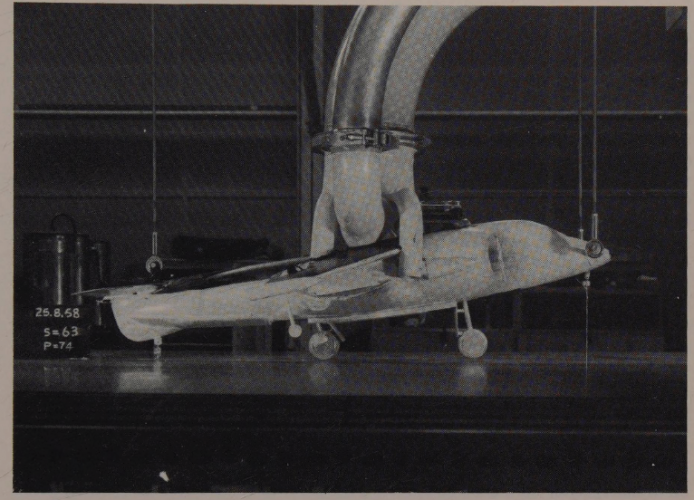
Looks like that model shows a half-way solution with the Harrier II wing but using a stock Sea Harrier cockpit with LRMTS in the nose and FLIR underneath, scabbed on.
Reminds me of some of the Big Wing Sea Harriers of the same era, but without the humpback.
 
Missed this one in August. Colour me unconvinced. I don't disagree that keeping the nozzles moving in sync is critical, but it's not impossibly worse than the need to synchronize other control surfaces. If you're going to physically lock them together to move in lock-step, you can still do that, you just control the single motor initiating the movement with the FBW system.

The real reason is, I suspect, that this was very early (c1980) in the deployment of FBW flight control systems (it's roughly contemporaneous with the UK's ACT Jaguar FBW demonstrator) and handling the VTOL or STOVL transitions would have been a bleeding-edge requirement for the time, which is not something you want to be doing when the USN is arguing to kill the project and a major programme driver is to keep the development costs low to avoid going the way of AV-16.
 
These are the last of the AV-8B photos that were sent to me after I left McDonnell in St. Louis. They are of an early production AV-8B, possibly the first. The tail number of the "B" model is 161396. The "A" model is tail number 159255. The presence of the air data boom on the AV-8B and the pilots in orange flight suits means that the airplane is in some phase of MCAIR company testing.

This photo is dated November 1981.
Inflight_AV-8A_AV-8B_Nov-1981.jpg

This photo is dated October 1981.
AV-8B_Oct-1981.jpg

The last two are dated November 1981.
 

Attachments

  • AV-8B_Nov-1981-02.jpg
    AV-8B_Nov-1981-02.jpg
    481.2 KB · Views: 82
  • AV-8B_Nov-1981-01.jpg
    AV-8B_Nov-1981-01.jpg
    530.6 KB · Views: 63
Last edited by a moderator:
Messing around with 3d models I came to a sudden realization that one of the advantages of the original Harrier was that it was very small, considering the amount of weapons it could carry. It made possible to place a modern jet on a smaller and smaller platforms (Garibaldi, for instance). But the subsequent development has inevitably enlarged it, and P.1154 was roughly the size of a Phantom, making it much less suitable for small carriers.

I wonder - was there an attempt to make a supersonic version of the Harrier while keeping the dimensions? Was it possible at all?
 
P1214 was only a little bigger. But that was almost 20 years later.
Possibly, if you fold it enough times. :)

But yes, it's much later and I meant earlier versions, like something alternative to P1154, so it's probably more in the direction of 1150.
 
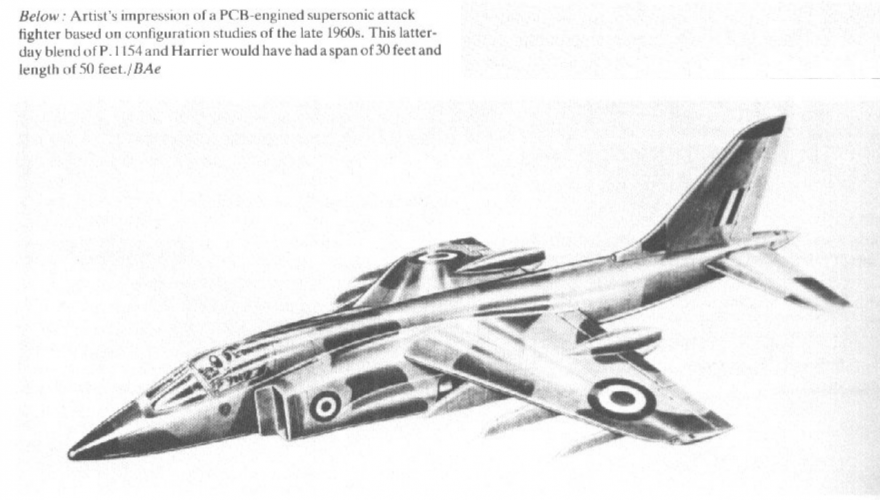
This is a supersonic Harrier proposal.
Around 53 feet in length and 30 feet span, so shorter than a T.2, and less span than an AV-8B.

So broadly, a 'yes it may have been possible' answer for Martes, if you include all Harriers.


1762281107733.jpeg
1762281176898.jpeg
 
Last edited by a moderator:
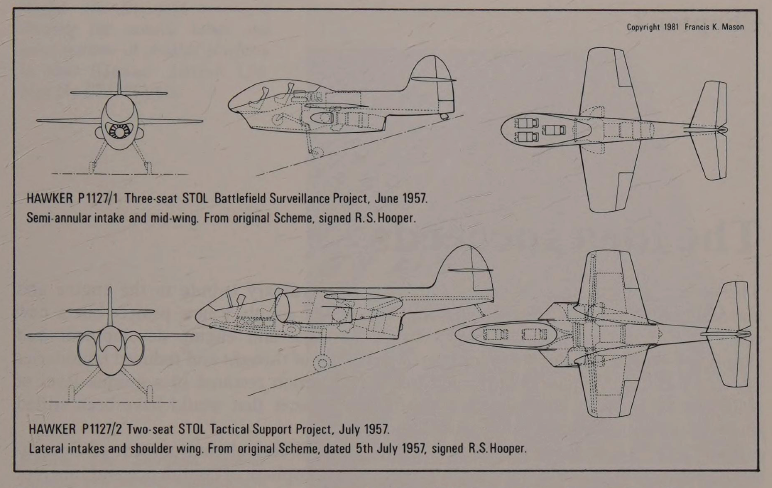
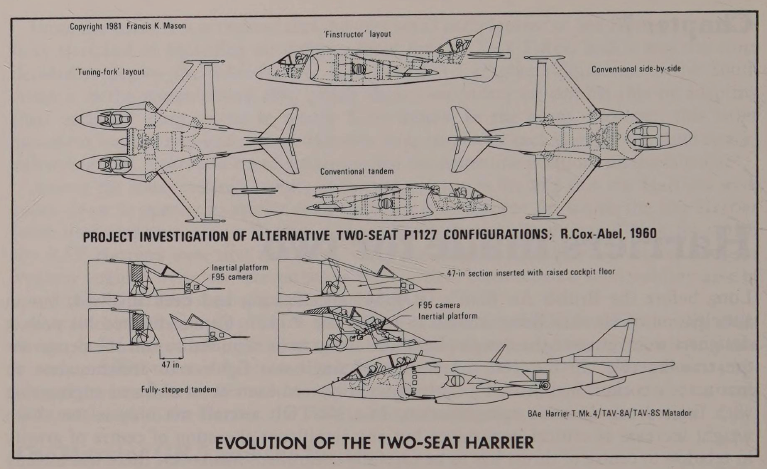
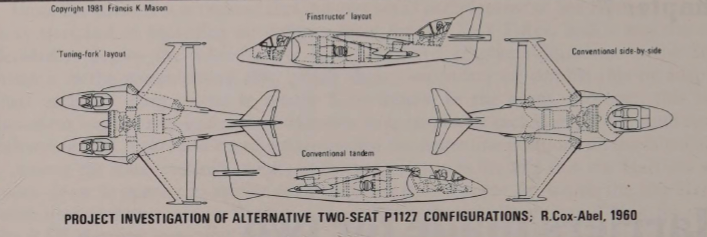
Was wondering if original GA. drawings of the various P.1127 trainer seat studies been found other than the partial views shown ?

cheers, Joe
 

Attachments

  • 8.png
    8.png
    220 KB · Views: 81

Similar threads

Back
Top Bottom