http://mars-attaque.blogspot.com/2025/07/safran-une-feuille-de-route-sur-les.html**A preparatory risk-taking study the launch of the T-REX program was notified to Safran at the beginning of June. The next step will be signing a contract development within 18/24 months, in order to achieve a more powerful engine the entry into service of the Rafale at Standard F5 planned around 2032-2033. Or an engine having previously filmed on a test bench, and flown on a test bench before being qualified around 2031.
To reach 9 tonnes of thrust (compared to 7.5 tonnes on the current Rafale M-88 engine), there will be no changes to the overall volume occupied by the engine compared to the current engine, so no modifications to the structure of the Rafale (internally or externally, for aerodynamics). The concept of maintenance will remain the same overall similar, with a search for commonality of spare parts as much as possible between engines of different generations. A resumption of programming of flight controls will obviously be necessary, as is the development of internal engine regulation software.
6 modules out of the 21 modules of the current M-88 will be modified, in particular those relating to air compression and cooling in the high-pressure turbine, with a recovery of air inlets and outlets, in addition to the use of new materials on certain hot parts, notably in the continuation of the Upstream Study Plan (PEA) known as Turenne. It is therefore a question of seeking efficiency gains, without strong variation in fuel consumption, to add punch to the Rafale while the trend is towards weighting on the sensors and effectors (radars, weapons, on-board processing capabilities data...).
A Turenne 3 PEA is already in progress preparation for the future NGF engine (New Generation Fighter) of the SCAF program (Air Combat System of the Future), in addition to the developments envisaged with the use of other new materials resistant to expected high heat variations, variable nozzles, etc. For the ***NGF, a 12 ton engine approximately thrust is expected***
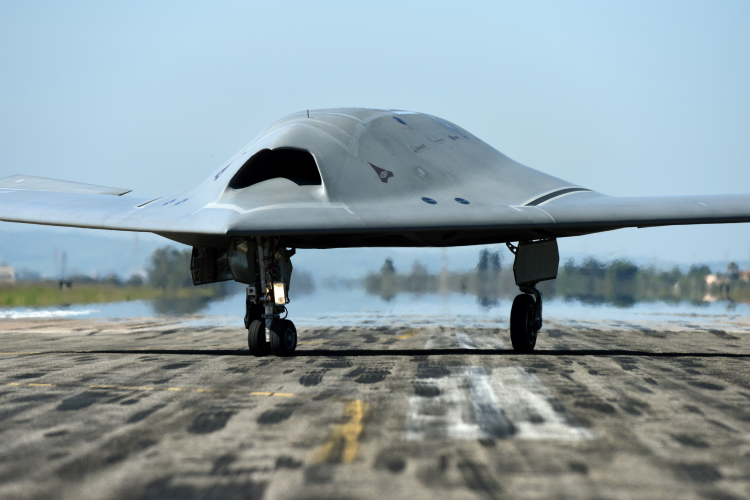
From all these studies a family of engines for use will be born military for different applications, with the future M15, M30 and M50 (i.e. engines with 1.5, 3 and 5 tonnes of thrust), particularly for motorizing drones, including those accompanying manned devices for future standards Rafale and the post-Rafale (or the Collaborative Aircraft Combat or CCA). Reuse of modules as much as possible is sought after, with, for example, on the M50, a resumption of the architecture of the M88, but without afterburner, in order to power the future UCAS (Umanned Combat Air System) stealth which should weigh around 15 tonnes approximately.**
According to this, engine for SCAF fighter will be in 12ton thrust class( ~117.68 kn).
Engine envisoned for Indian AMCA mk2 is also in ~120kn thrust class.
Indian defense minister recently announced they are looking to cooperate with Safran for engine.
India recently increased mtow of its amca mk1 design from 25ton to 27 ton.
The engine being developed is for amca mk2 which is expected to be ~30 tons mtow.
If scaf will also use same engine, then its mtow can also be considered ~30tons, if France wants to keep supercruise(with internals weapons) aspect alive.