
You are using an out of date browser. It may not display this or other websites correctly.
You should upgrade or use an alternative browser.
You should upgrade or use an alternative browser.
Shipyard capacities of Japan
- Thread starter Tzoli
- Start date
-
- Tags
- 20th century aircraft carrier battlecruiser battleships cold war cruiser destroyer empire of japan imperial japanese navy imperial japanese navy technical department interwar period japan japan defense agency japan maritime self-defense force ministry of the navy (japan) post-world war ii pre-world war i shipbuilding world war i world war ii

- Joined
- 22 April 2012
- Messages
- 2,274
- Reaction score
- 2,848
In Battleships : axis and neutral battleships in World War II, Garzke and Dulin say at page 53 that the Japanese contemplated expanding naval infrastructures to accommodate the Yamato program to Japanese industry.
Apparently they begun in 1940, the construction of a new navy yard with a berth for battleships, carriers ands submarines, a dock capable of handling battleships and 2 smaller docks. This navy yard would have been located at Uga (might be Usa), Kyushu on the western side of the Bungo Straits. All work on those facilities stopped in 1943.
Also, they began the construction of a new repair dock capable of handling Yamato in the Kitan straits in Wakayama Prefecture as part of a new facility of Kawasaki Company. The dock was half-completed in 1943 when work was halted.
I can't find any info on those project on the net so I wonder if they were really carried out or if some documents exist on those.
Do you have any thoughts on this or had ever heard about ?
I find the Garzke and Dulin narrative a bit confusing. I can not find an Uga in Japan that would be a logical location for a such a large dock and Usa is not on the Bungo Straits but on Seto Inland Sea proper. The Wakayama reference makes more sense but again I can't find any supporting evidence. A large dock was built at Yura in the early 1970s so that could have been a logical location for an earlier planed facility.
The Japanese coast has had a lot of reclamation since the war so its possible that any work that was undertaken for these yards has been destroyed or buried by that, but it does stand in contrast to the survival of the other Yamato infrastructure:
Kure: Building dock still exists
Yokusuka: Dry-dock still exists
Saesbo: Dry-dock still exists
The sorts of facilities mentioned by Garzke and Dulin would have been large and should have left an impact on the landscape, especially for the first decade or so after the end of the war. If they really progressed as far as claimed its surprising there is not more evidence.
Last edited:

Monomaker
ACCESS: Restricted
- Joined
- 21 May 2025
- Messages
- 5
- Reaction score
- 11
While interesting on the materials, workforce, economics and industrials perspectives of japanese shipbuilding, those reports don't delve too much in the structures aspect.Would the US Strategic Bombing Survey not have relevant data? Looks like the relevant reports would be Pacific Theatre Reports 046 and 048, for Naval and Merchant Shipbuilding respectively.
I also tend to think that the construction of a whole new main navy yard while the others main 4 (Kure, Maizuru, Sasebo, Yokosuka) were build in the 19th century will not have gone unnoticed by the americans and a mention of this should have survive.I find the Garzke and Dulin narrative a bit confusing. I can not find an Uga in Japan that would be a logical location for a such a large dock and Usa is not on the Bungo Straits but on Seto Inland Sea proper. The Wakayama reference makes more sense but again I can't find any supporting evidence. A large dock was built at Yura in the early 1970s so that could have been a logical location for an earlier planed facility.
The Japanese coast has had a lot of reclamation since the war so its possible that any work that was undertaken for these yards has been destroyed or buried by that, but it does stand in contrast to the survival of the other Yamato infrastructure:
Kure: Building dock still exists
Yokusuka: Dry-dock still exists
Saesbo: Dry-dock still exists
The sorts of facilities mentioned by Garzke and Dulin would have been large should have left an impact on the landscape, especially for the first decade or so after the end of the war. If they really progressed as far as claimed its surprising there is not more evidence.
The Wakayama reference is interesting because it talks about the prefecture and not Wakayama city which is the main industrial center. So maybe it's implied that the dock wasn't built in Wakayama. Perhaps the Yura dock was constructed by finishing the old drydock. The Yura dock apparently measure 275m so in the range of a Yamato and the reference said that the dock was half-complete in 1943 so it's not out of the question that the americans overlooked it and the destruction of records did the rest. But there no evidence to support that.

- Joined
- 1 February 2011
- Messages
- 3,347
- Reaction score
- 5,035
Japanese wiki:
Unfinished naval arsenal
- Tentative name: O Factory: Former Hayami District, Oita Prefecture Ogami village It was planned to be installed in 1943 (Showa 18), but was canceled in 1943 (Showa 18). It was planned to have facilities for the Machinery Department and Ordnance Department, which would have facilities for one slipway and two docks, and would also be able to build battleships and aircraft carriers. The acquisition site was later the Human Torpedo Kaiten Training Base Ogami baseIt became.
- Tentative name: S Factory: Yamaguchi Prefecture Murozumi town It was planned to be constructed in. It mainly consisted of the construction of large submarines and also made it possible to carry out general repairs.The construction budget was passed in 1942 (Showa 17) and 1943 (Showa 18), but it was not realized.
Great find Tzoli, but usually translation from japanese to english gives some names that are nothing like what we'd expect, at least to someone that does not understand japanese like me. Do these refer to the Uga and Kitan facilities respectively, or other facilities? Maybe one of our japanese speaking friends could help.Japanese wiki:
Unfinished naval arsenal
- Tentative name: O Factory: Former Hayami District, Oita Prefecture Ogami village It was planned to be installed in 1943 (Showa 18), but was canceled in 1943 (Showa 18). It was planned to have facilities for the Machinery Department and Ordnance Department, which would have facilities for one slipway and two docks, and would also be able to build battleships and aircraft carriers. The acquisition site was later the Human Torpedo Kaiten Training Base Ogami baseIt became.
- Tentative name: S Factory: Yamaguchi Prefecture Murozumi town It was planned to be constructed in. It mainly consisted of the construction of large submarines and also made it possible to carry out general repairs.The construction budget was passed in 1942 (Showa 17) and 1943 (Showa 18), but it was not realized.
Monomaker
ACCESS: Restricted
- Joined
- 21 May 2025
- Messages
- 5
- Reaction score
- 11
Thanks Tzoli those are good infos.
The Ogami one could refer to the Uga of Garzke and Dulin because the ja wiki for the ogami base talk about the purchase of 25 hectares of terrain to construct the new Super-Yamato battleships and the description of O factory is similar to Garzke and Dulin one. A mistranlation of report could have led to Ogami becoming Ugami and then to Uga.
I think the Murozumi one could have been a project to expand the Hikari Naval Arsenal, which opened on the 1st of october 1940.
The Kitan project is tied to Kawasaki Company so it's a civilian project and I didn't find anything in the japanese wiki of the shipbuilding branch of Kawasaki Heavy Industries.
The Ogami one could refer to the Uga of Garzke and Dulin because the ja wiki for the ogami base talk about the purchase of 25 hectares of terrain to construct the new Super-Yamato battleships and the description of O factory is similar to Garzke and Dulin one. A mistranlation of report could have led to Ogami becoming Ugami and then to Uga.
I think the Murozumi one could have been a project to expand the Hikari Naval Arsenal, which opened on the 1st of october 1940.
The Kitan project is tied to Kawasaki Company so it's a civilian project and I didn't find anything in the japanese wiki of the shipbuilding branch of Kawasaki Heavy Industries.
- Joined
- 22 April 2012
- Messages
- 2,274
- Reaction score
- 2,848
Thanks Tzoli those are good infos.
The Ogami one could refer to the Uga of Garzke and Dulin because the ja wiki for the ogami base talk about the purchase of 25 hectares of terrain to construct the new Super-Yamato battleships and the description of O factory is similar to Garzke and Dulin one. A mistranlation of report could have led to Ogami becoming Ugami and then to Uga.
I think the Murozumi one could have been a project to expand the Hikari Naval Arsenal, which opened on the 1st of october 1940.
The Kitan project is tied to Kawasaki Company so it's a civilian project and I didn't find anything in the japanese wiki of the shipbuilding branch of Kawasaki Heavy Industries.
I think this is unlikely, Murozumi is about 5km South East of the location of the former Hikari Naval arsenal. There is a bay there called Murozumi bay that could have been a candidate for a new yard.
Ogami looks too small to house a shipyard that could construct a Yamato, the bay is only about 300m at its widest, its long and narrow, and very difficult to see how it could have housed the facilities described. It is also a long way from any significant industrial infrastructure and doesn't look very densely populated - a strange choice for a shipyard to build one of the largest and most complex ships designed up to that time.
Could someone post the link to the Japanese wiki page?
Last edited:
- Joined
- 1 February 2011
- Messages
- 3,347
- Reaction score
- 5,035
Here:I think this is unlikely, Murozumi is about 5km South East of the location of the former Hikari Naval arsenal. There is a bay there called Murozumi bay that could have been a candidate for a new yard.
Ogami looks too small to house a shipyard that could construct a Yamato, the bay is only about 300m at its widest, its long and narrow, and very difficult to see how it could have housed the facilities described. It is also a long way from any significant industrial infrastructure and doesn't look very densely populated - a strange choice for a shipyard to build one of the largest and most complex ships designed up to that time.
Could someone post the link to the Japanese wiki page?
https://ja.m.wikipedia.org/wiki/海軍工廠

- Joined
- 11 February 2007
- Messages
- 4,149
- Reaction score
- 8,900
Landfill into the bay and build the slips pointing seawards. Shops either go on the landfill, or where the village was. Less than ideal terrain didn't stop historical yards, Tyne's High Walker yard was basically scabbed onto a hillside, but went on to build Nelson and KGV, and would have built Anson (Admiral Class, not the KGV) had she gone through to completion.Ogami looks too small to house a shipyard that could construct a Yamato, the bay is only about 300m at its widest, its long and narrow, and very difficult to see how it could have housed the facilities described.
Last edited:
- Joined
- 22 April 2012
- Messages
- 2,274
- Reaction score
- 2,848
Landfill into the bay and build the slips pointing seawards. Shops either go on the landfill, or where the village was. Less than ideal terrain didn't stop historical yards, Tyne's High Walker yard was basically scabbed onto a hillside, but went on to build Nelson and KGV, and would have built Anson (Admiral Class, not the KGV) had she gone through to completion.
This did cross my mind, but then the slips and docks open out directly onto a 9.5km wide part of Beppu bay which would also be less than ideal from the perspective of exposure to waves and weather. Plausibly a large basin could be built out into Beppu bay to provide fitting out quays and a bit of shelter but its an enormous effort for a site that seems to be a long way from any major industrial infrastructure.
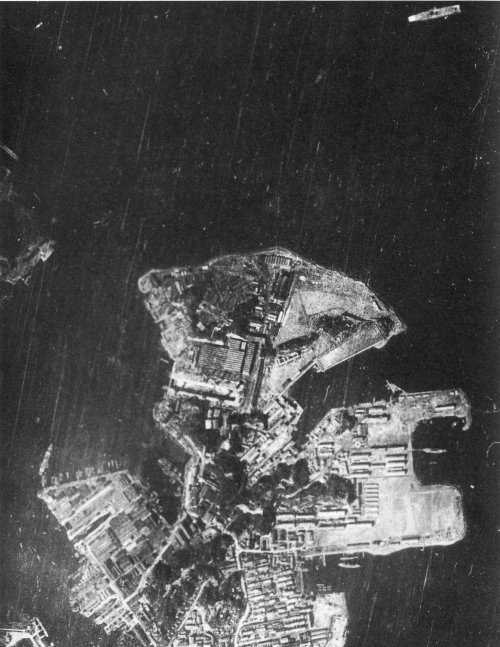
Its not just that the site is less than ideal, its that there are much better potential locations around Japan. E.g., a second large building dock at Yoksuka would make an enormous amount of sense, in the attached picture there is ample space for a second dock and facilities to the north of the actually built dock where Shinano was constructed (Dock 6 today). Helpfully, there is even a boat ramp where a dock entrance could have gone.
Attachments
- Joined
- 11 February 2007
- Messages
- 4,149
- Reaction score
- 8,900
Which makes me wonder if there's a factor we're not seeing.its an enormous effort for a site that seems to be a long way from any major industrial infrastructure.
Government and LDP Consider Building “National Shipyard”
https://www.nikkei.com/nkd/industry...&n_m_code=043&ng=DGKKZO89522550R20C25A6EA1000
Government and LDP, have begun studying the formulation of a policy package to revitalize Japan's shipbuilding industry. A proposal to increase building capacity by having the government take charge of constructing or rebuilding shipyards and upgrading existing shipbuilding facilities.
https://www.nikkei.com/nkd/industry...&n_m_code=043&ng=DGKKZO89522550R20C25A6EA1000
Government and LDP, have begun studying the formulation of a policy package to revitalize Japan's shipbuilding industry. A proposal to increase building capacity by having the government take charge of constructing or rebuilding shipyards and upgrading existing shipbuilding facilities.
Parts of the High Walker yard were built on what would today be classed as "Brown field" and parts lay up to 70ft above river level, so a lot of material had to be excavated to produce the necessary levels. Yard history can be found here.Landfill into the bay and build the slips pointing seawards. Shops either go on the landfill, or where the village was. Less than ideal terrain didn't stop historical yards, Tyne's High Walker yard was basically scabbed onto a hillside, but went on to build Nelson and KGV, and would have built Anson (Admiral Class, not the KGV) had she gone through to completion.
https://www.tynebuiltships.co.uk/Armstrong-Yard-HW.html
- Joined
- 11 February 2007
- Messages
- 4,149
- Reaction score
- 8,900
Or in The Battleship Builders by Johnson and Buxton.Parts of the High Walker yard were built on what would today be classed as "Brown field" and parts lay up to 70ft above river level, so a lot of material had to be excavated to produce the necessary levels. Yard history can be found here.
https://www.tynebuiltships.co.uk/Armstrong-Yard-HW.html
Well, the links seem to be dead now but while looking on the www i found info that the Sasebo no.7 dock was finished in 1940, or more or less about the same time as Yokosuka no.6 dock. Just adding this small bit of info for future reference.I have found this bit of info that will help a little more finding out about the length of various japanese docks/slipways. The Sasebo dock specifically built to handle Yamato class repair is 343.8 metres long and 51.3 wide.
https://www.city.sasebo.lg.jp/kankou/kankou/nihonisan/chinjuhu_12301-en.html
Barrett and David, much appreciate the info, if you have any more details however small they are most welcome.
PS: does anyone know which dock/slipway was used to build the 3 Aganos from Sasebo? This link contains info on current Sasebo dock sizes, but which are new or lengthened or WW2 no idea, except that no.4 is ex no.7 which is the one built for the Yamatos. As seen it was lengthened and widened.
http://www.ssk-sasebo.co.jp/ssk/us/corporate/factory/index.html
I have come across this extremely interesting discussion on japanese shipyards here. I'm currently perusing through it, please note you have to be a member there to see the attachments.
https://www.j-aircraft.org/smf/index.php?topic=12913.0
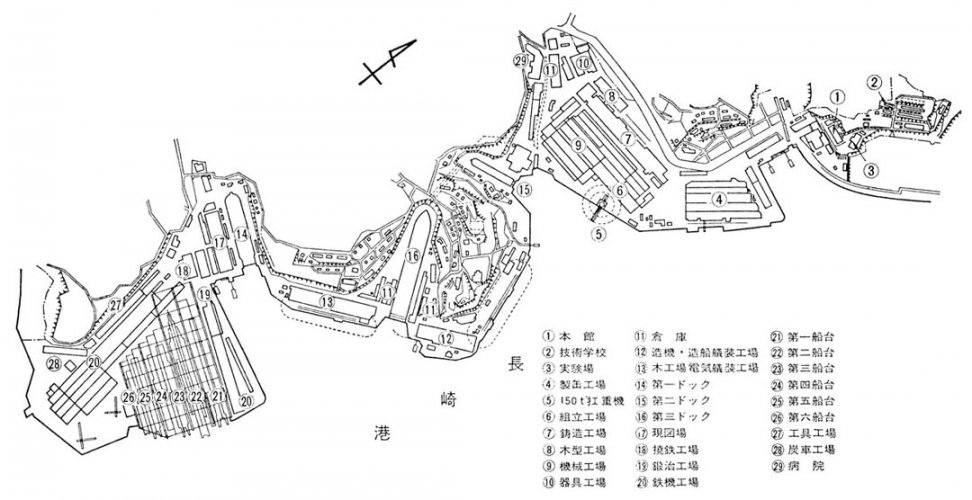
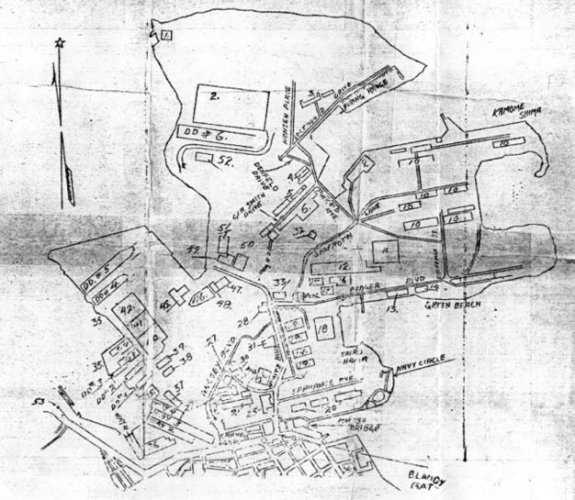
Of particular interest are the maps of Yokosuka and especially Mitsubishi Nagasaki shipyards. Regarding the latter, can anyone help with the translation, i'm trying to identify the slipway where Musashi was built, next to which Junyo was being built as well.
https://www.j-aircraft.org/smf/index.php?topic=12913.0
Of particular interest are the maps of Yokosuka and especially Mitsubishi Nagasaki shipyards. Regarding the latter, can anyone help with the translation, i'm trying to identify the slipway where Musashi was built, next to which Junyo was being built as well.
Attachments
Last edited:

- Joined
- 3 June 2011
- Messages
- 20,999
- Reaction score
- 19,284
Monomaker
ACCESS: Restricted
- Joined
- 21 May 2025
- Messages
- 5
- Reaction score
- 11
I don't read japanese but I tried to guess that before and I think it's one of the slipway with a gantry crane so 22 and Junyo was either 21 or 23.Of particular interest are the maps of Yokosuka and especially Mitsubishi Nagasaki shipyards. Regarding the latter, can anyone help with the translation, i'm trying to identify the slipway where Musashi was built, next to which Junyo was being built as well.
Thanks for your insight, so the cluster of structures 21 to 26 are slipways?I don't read japanese but I tried to guess that before and I think it's one of the slipway with a gantry crane so 22 and Junyo was either 21 or 23.
Yes, Its true . Musashi made in Dai 2 sendai (Berth No2, 22 in pic).Jyun-yo(Kashihara-maru) made in Dai 3 sendai (23),Tai-yo(Kasuga-maru) made in dai 4 sendai(24).I don't read japanese but I tried to guess that before and I think it's one of the slipway with a gantry crane so 22 and Junyo was either 21 or 23.
Yes. There is a dock in other location.Thanks for your insight, so the cluster of structures 21 to 26 are slipways?
dock is 14~16 in pic, Dai-1 dock - Dai-3 dock.
When Mitsubishi make Musashi , it is too heavy, Mitsubishi decided a few armor installed it later ship launching ceremony. This episode you can read at wikipedia in Japanese langage

https://japanese-warship.com/battleship/building-musashi/
Last edited:
Fantastic, many thanks for your help! In the link about building Musashi, is that a real image of Musashi and not AI? If so i've never seen that image before.Yes, Its true . Musashi made in Dai 2 sendai (Berth No2, 22 in pic).Jyun-yo(Kashihara-maru) made in Dai 3 sendai (23),Tai-yo(Kasuga-maru) made in dai 4 sendai(24).
Yes. There is a dock in other location.
dock is 14~16 in pic, Dai-1 dock - Dai-3 dock.
When Mitsubishi make Musashi , it is too heavy, Mitsubishi decided a few armor installed it later ship launching ceremony. This episode you can read at wikipedia in Japanese langage
https://japanese-warship.com/battleship/building-musashi/
View: https://www.youtube.com/watch?v=juJwpmXskxs
Which image? My post'link movie is that I want to tell there are slipways.Fantastic, many thanks for your help! In the link about building Musashi, is that a real image of Musashi and not AI? If so i've never seen that image before.
This one from the link about building Musashi.Which image? My post'link movie is that I want to tell there are slipways.
https://japanese-warship.com/battleship/building-musashi/
Attachments
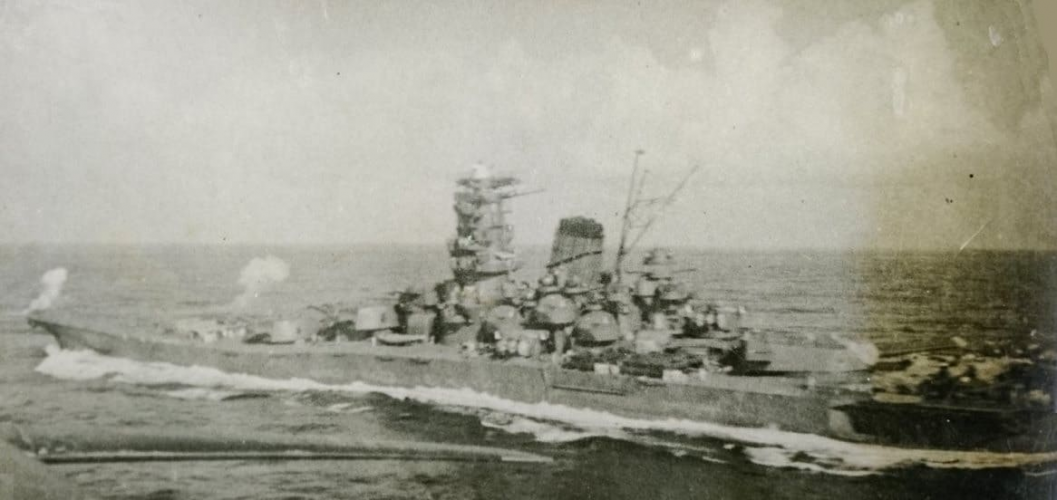
It is in YAMATO-museum.This one from the link about building Musashi.
https://japanese-warship.com/battleship/building-musashi/
https://yamato-museum.com/note/館長ノートvol-48 海底に眠る軍艦/
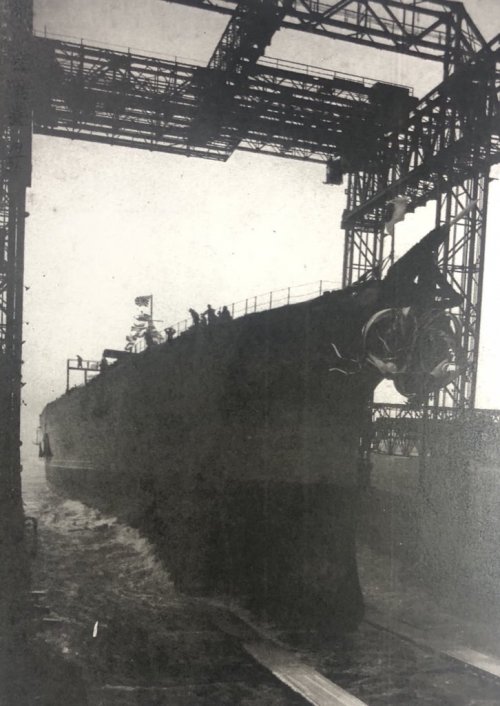
Thanks Barret, so is this slipway a different facility than the drydocks (specifically the large no.5 and no.6) listed in the Yokosuka drydocks table posted on the previous page? I assumed to date that Shokaku must have been built in the large no.5 drydock, but i'm obviously wrong.
Similar threads
-

-

-

-
never realized projects of Japanese destroyers ww2
- Started by T-50
- Replies: 19
-
 Nakajima Ki-201 Karyu and "J9N/J9Y" Kikka
- Started by Michel Van
- Replies: 145