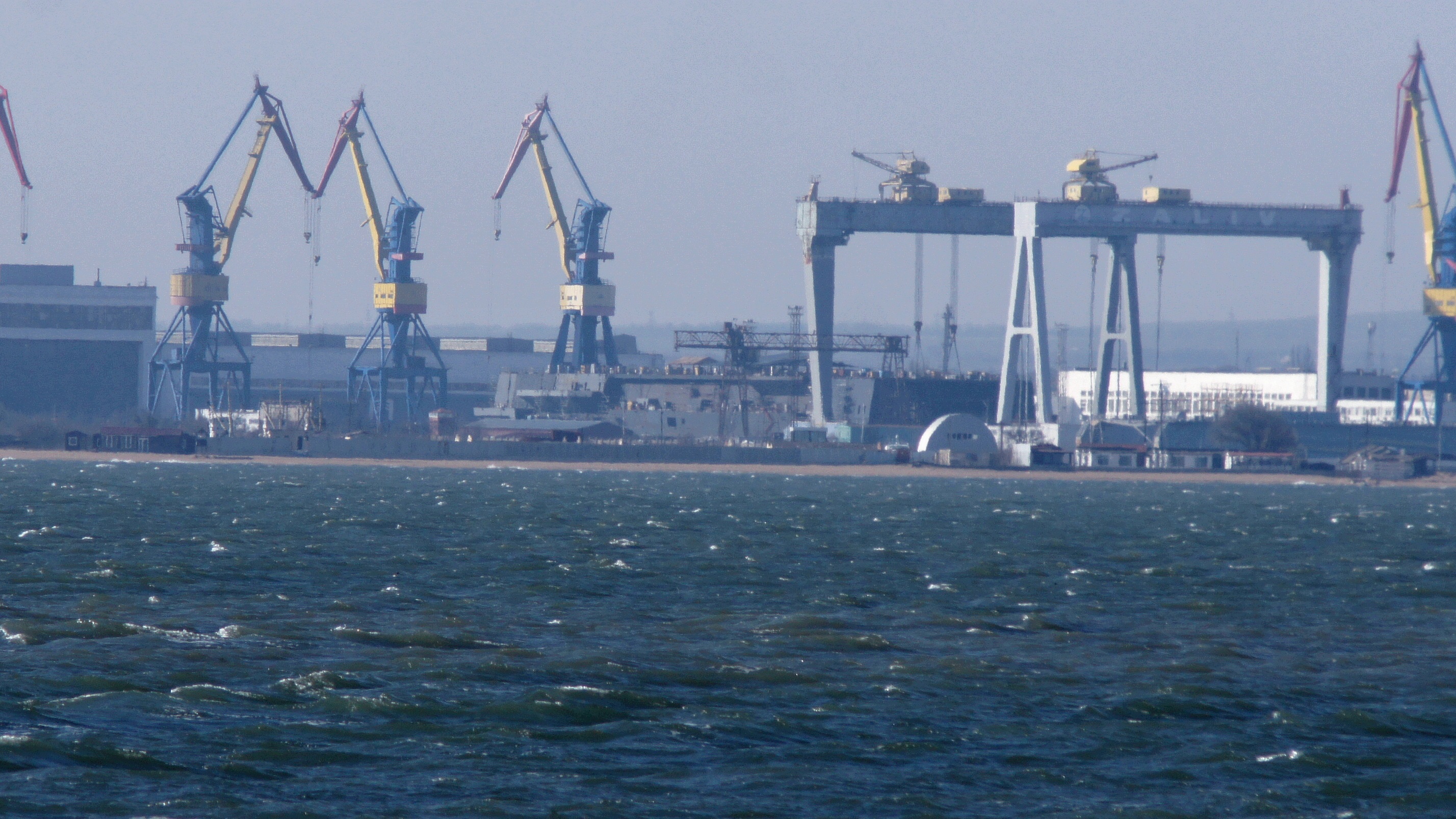
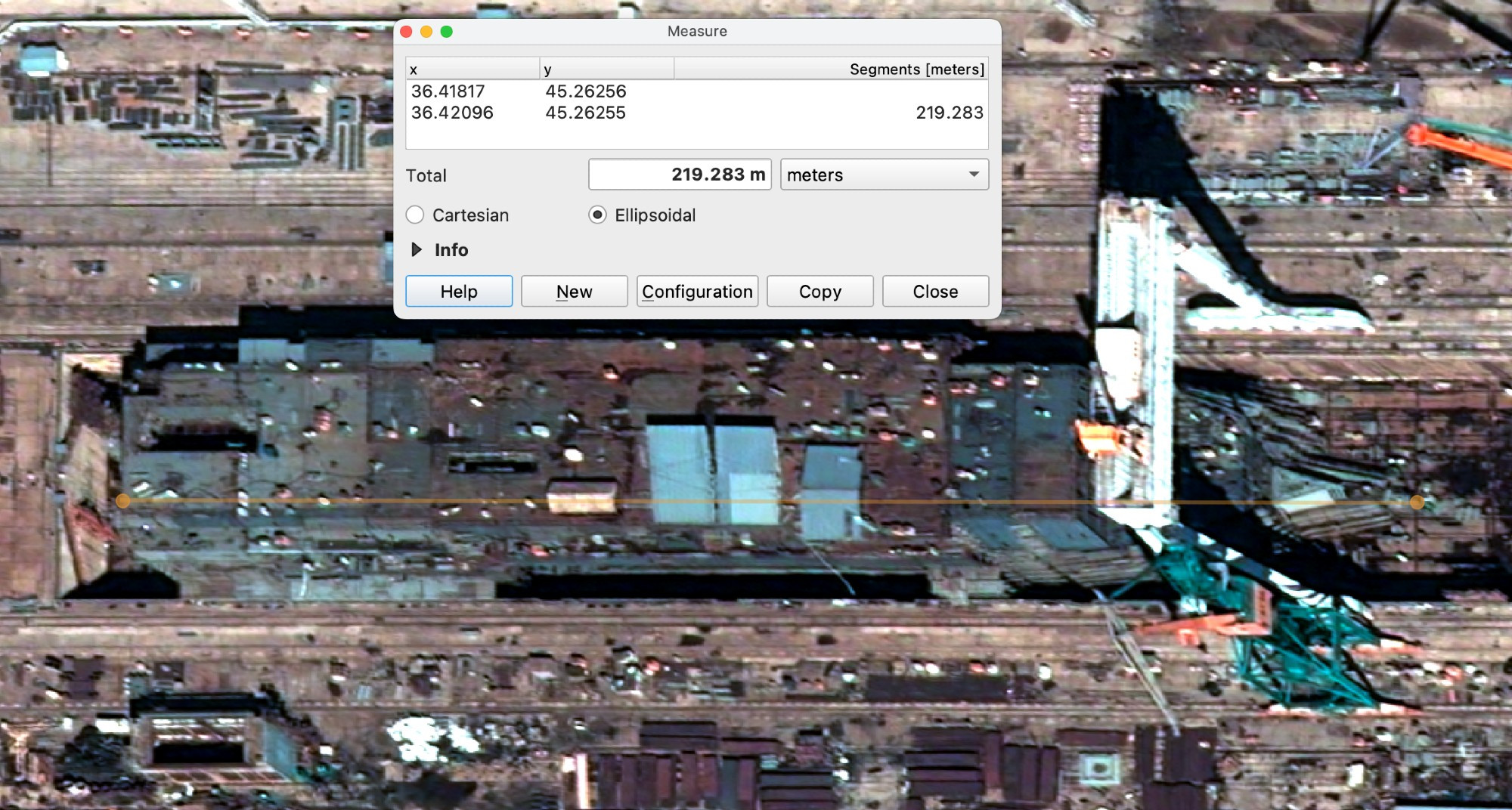
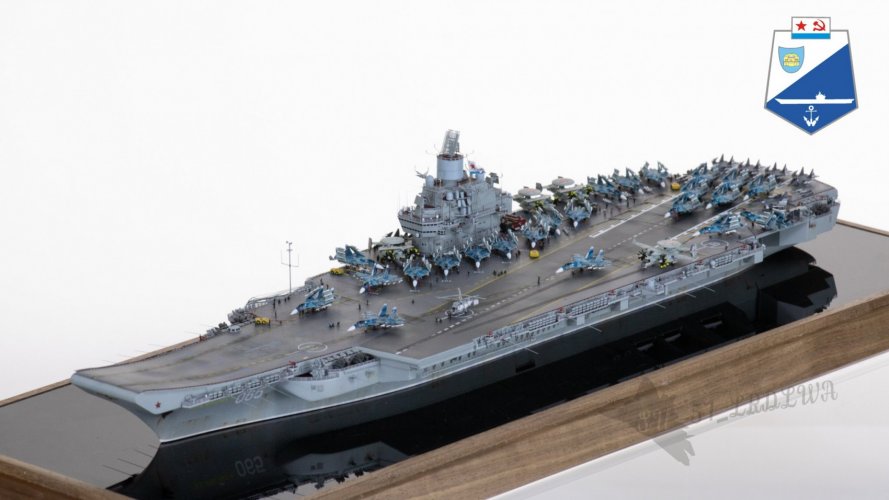
Pr. 23900 Ivan Rogov-class LHD under construction, march 2025:
26-12527089-dsc07388.jpg


25-12526747-19-marta.jpg


(с) forums.airbase.ru
If the satelite-view measurement (+- 220m) is accurate, then the entire keel or hull bottom is already in place, or hull modules assembled, according to open source estimates of its overall length.
From the stern, it appears much of (possibly 2/3rds) the external superstructure assembly height has been reached.
 
220m looks like waterline length, as from photo above one can clearly see that bow is only being started to fill out.
 
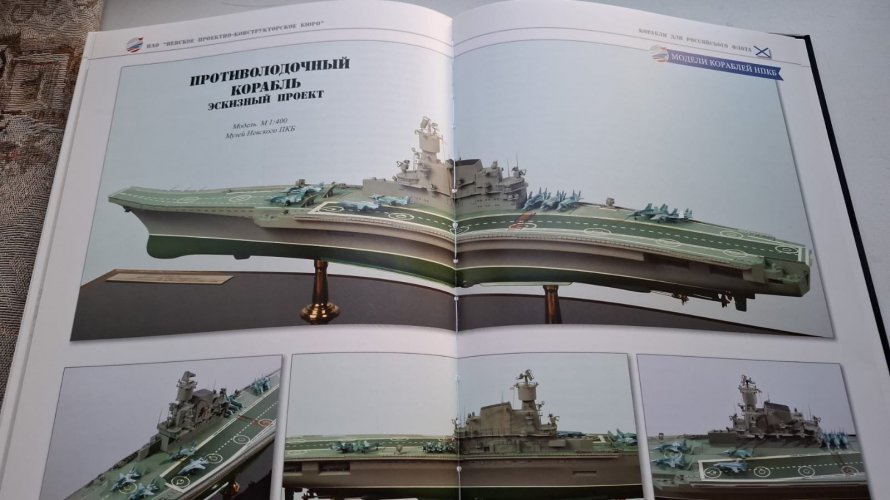
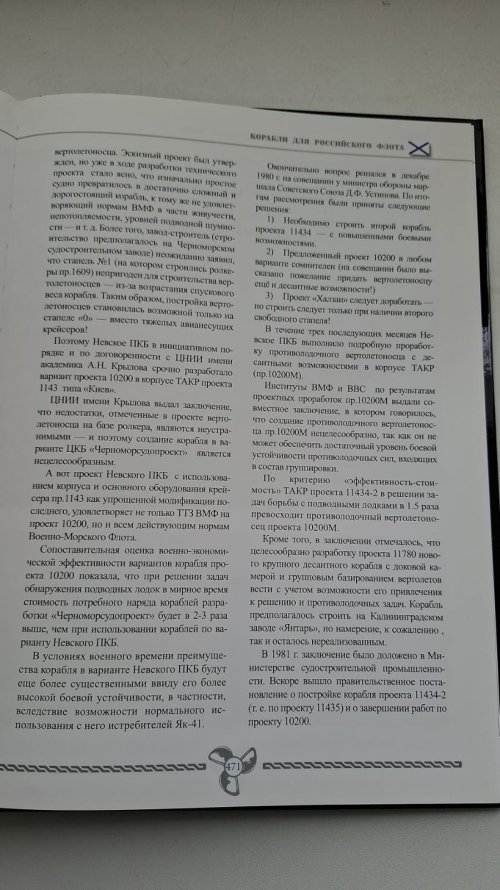
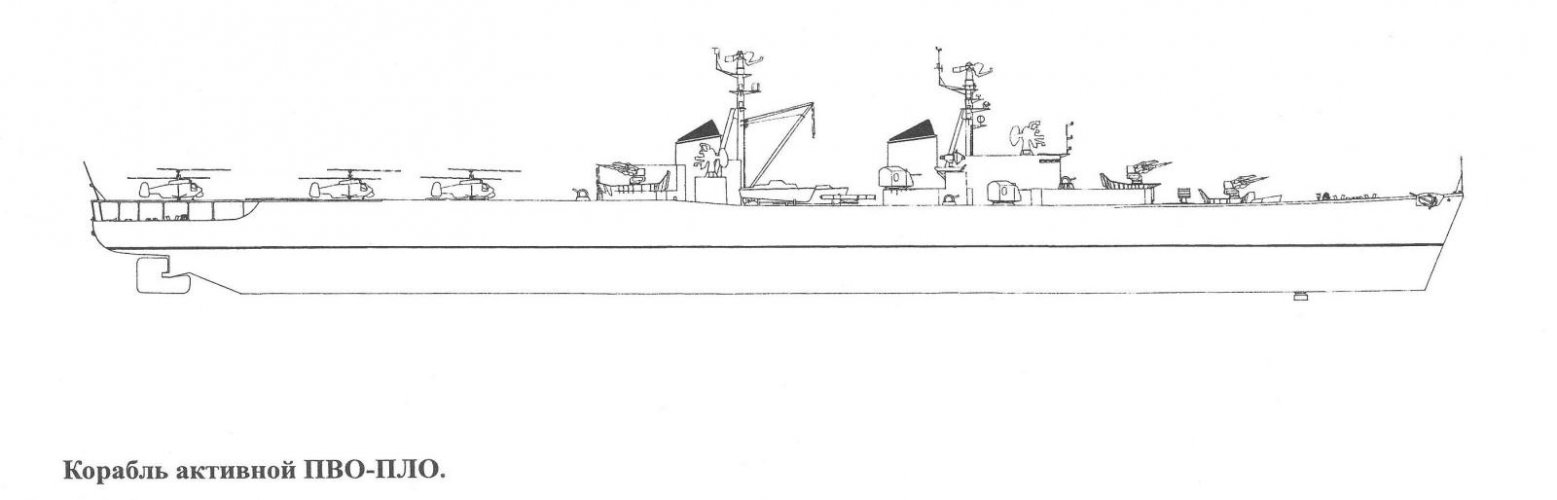
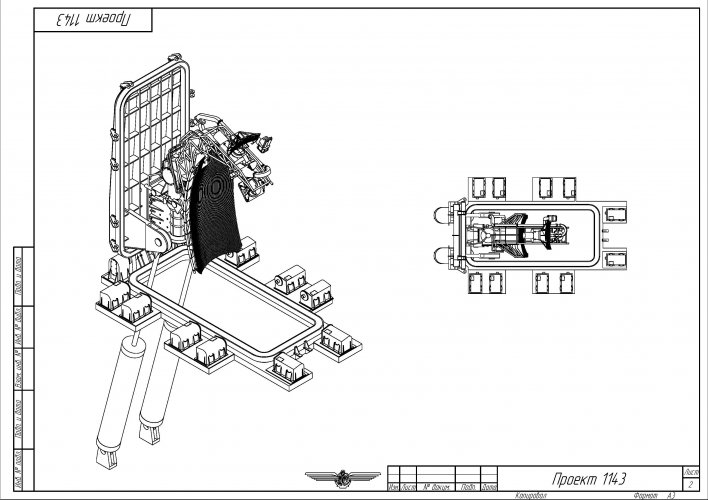
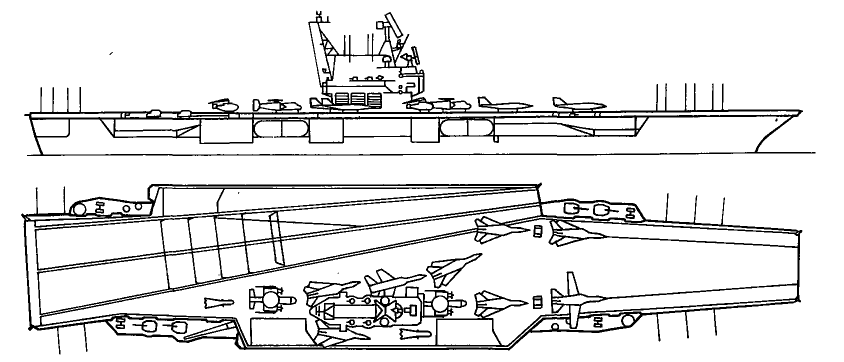
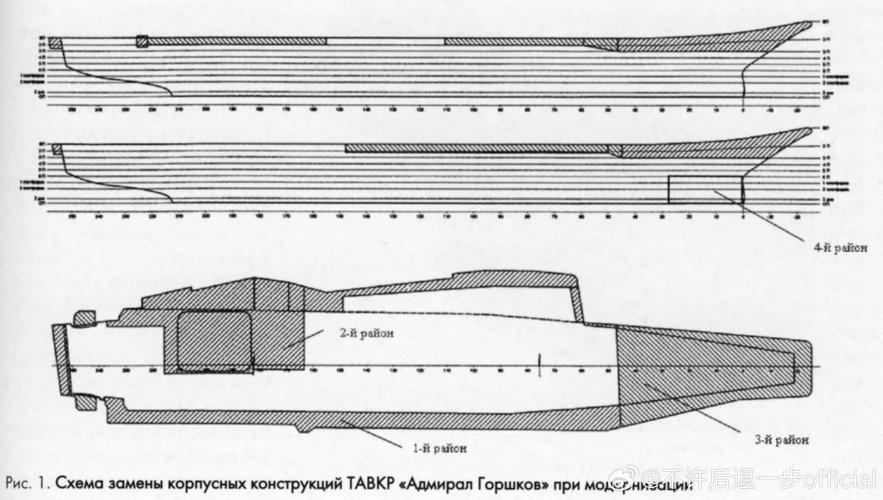
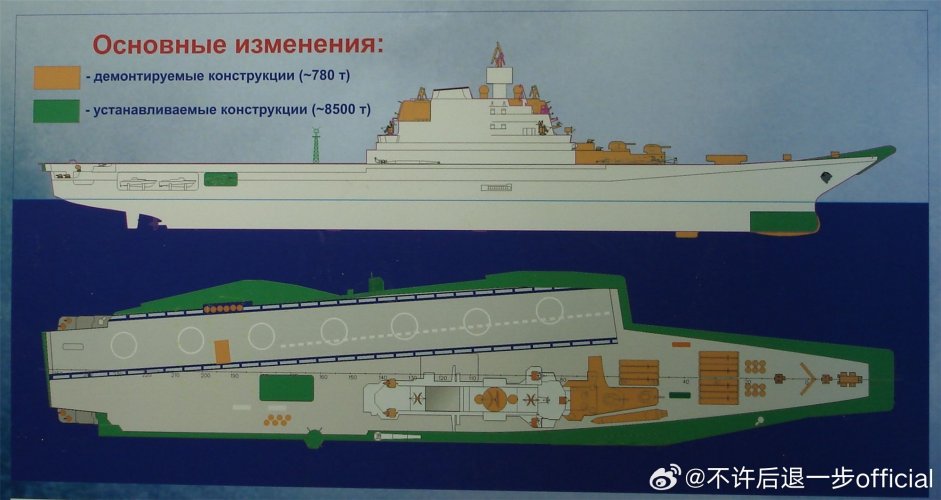
halzan project 10200m from nevsky bureau based on project 1143

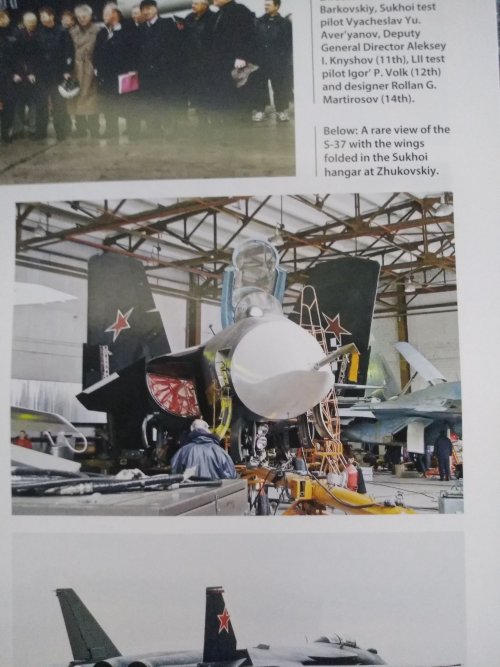
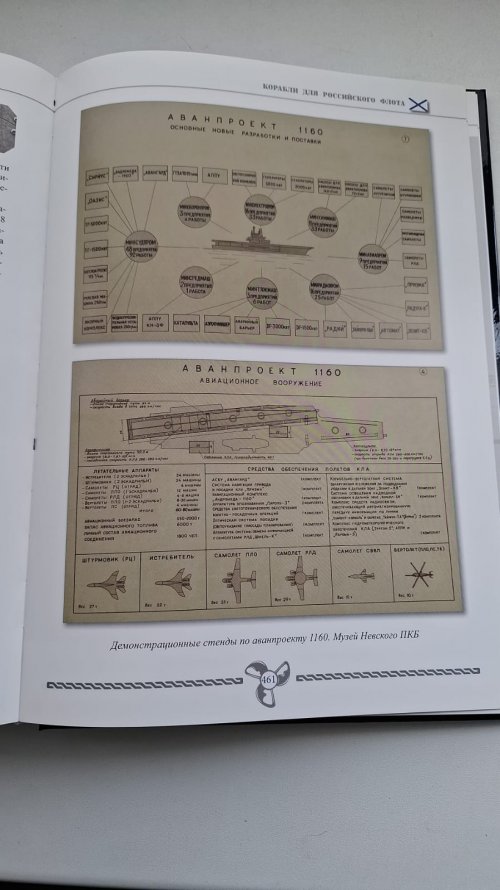
First, I like your last two posts. What book/books are the photos from and I'd like to see more.

Second, the picture you described as Project 10200 Khalzan is , if I recall correctly, actually a variant of Project 1143 with no connection to Khalzan. Project 10200 is a very different beast. See attached pic.
 

Attachments

  • 3663227_original.jpg
    3663227_original.jpg
    179.9 KB · Views: 352
Last edited:
Second, the picture you described as Project 10200 Khalzan is , if I recall correctly, actually a variant of Project 1143 with no connection to Khalzan. Project 10200 is a very different beast. See attached pic.
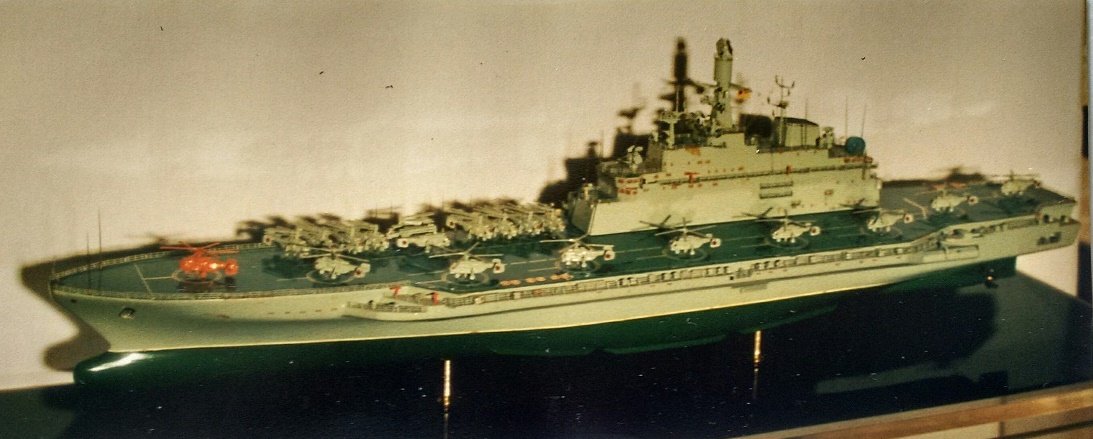
This was project 10200m based on 1143, not 1609
 

Attachments

  • IMG-20250517-WA0048.jpg
    IMG-20250517-WA0048.jpg
    196.8 KB · Views: 291
This was project 10200m based on 1143, not 1609
After looking this over, I went back to the Gangut article on Project 10200 Khalzan and saw the reference to "Project 10200M" based on a Project 1143 hull.

Thanks for the quick response. I need to re-read both the article and the page you posted.
By the way, what book are you are using as your source? I would like to see more of it.
 
Last edited:
In this case M is for Modified not Modernized?
Project 1020.0 and 1020.0M
 
Air wing of 1160

Thank you for posting this. I am having a little trouble reading and interpreting the text. For the air wing I get:

Fighters: 2 x Squadrons = 24 aircraft
Attack Aircraft: 2 x Squadrons = 24 aircraft
Recce Aircraft: 1 x Squadron = 4 aircraft (variants of the attack aircraft)
ASW Aircraft: 1 x Squadron = 12 aircraft
AEW Aircraft: 1 x Squadron = 4-6 aircraft
ASW Helicopters: 1-2 x Squadrons = 8-30(??) aircraft
Helicopter: 1 squadron = 4 aircraft
Total = 60-80

For the attack aircraft, I note the weight difference between them and the fighters (27t versus 22t) which makes sense when looking at the T-10 carrier derivatives, attack proposal here, and a fighter proposal here.

The last set of helicopters, are they Ka-25Ts for over the horizon targetting or generic utility versions for liaison and guard ship duties?
 
Thank you for posting this. I am having a little trouble reading and interpreting the text. For the air wing I get:

Fighters: 2 x Squadrons = 24 aircraft
Attack Aircraft: 2 x Squadrons = 24 aircraft
Recce Aircraft: 1 x Squadron = 4 aircraft (variants of the attack aircraft)
ASW Aircraft: 1 x Squadron = 12 aircraft
AEW Aircraft: 1 x Squadron = 4-6 aircraft
ASW Helicopters: 1-2 x Squadrons = 8-30(??) aircraft
Helicopter: 1 squadron = 4 aircraft
Total = 60-80

For the attack aircraft, I note the weight difference between them and the fighters (27t versus 22t) which makes sense when looking at the T-10 carrier derivatives, attack proposal here, and a fighter proposal here.

The last set of helicopters, are they Ka-25Ts for over the horizon targetting or generic utility versions for liaison and guard ship duties?
The US air wing would be generic utility helicopters.
 
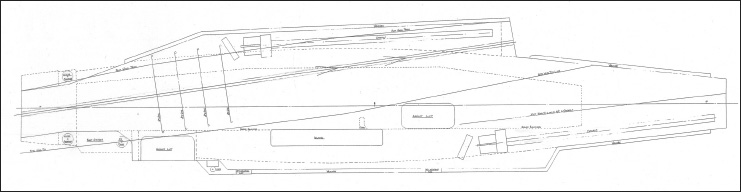
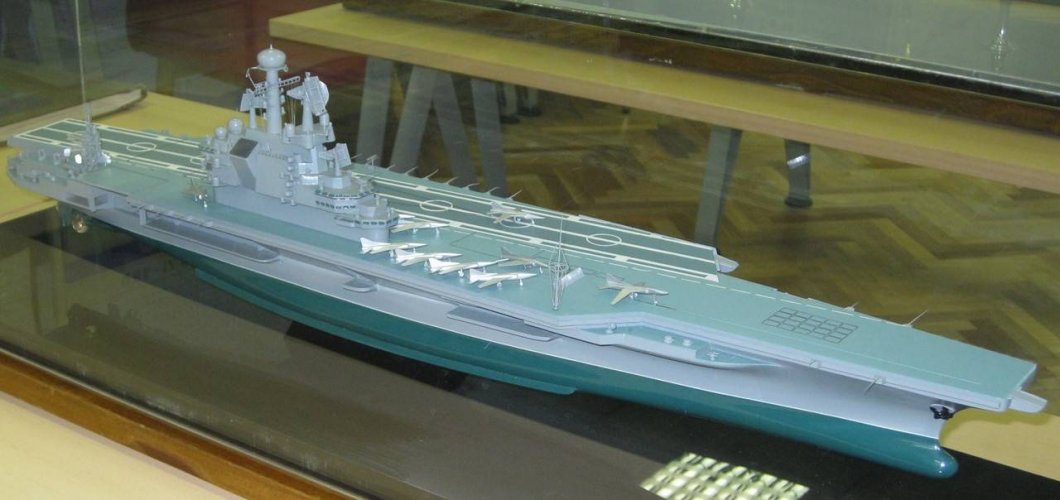
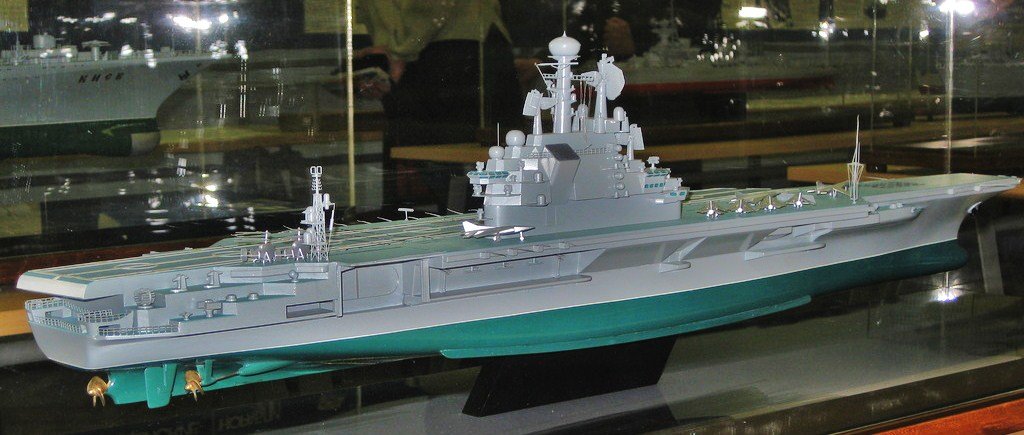
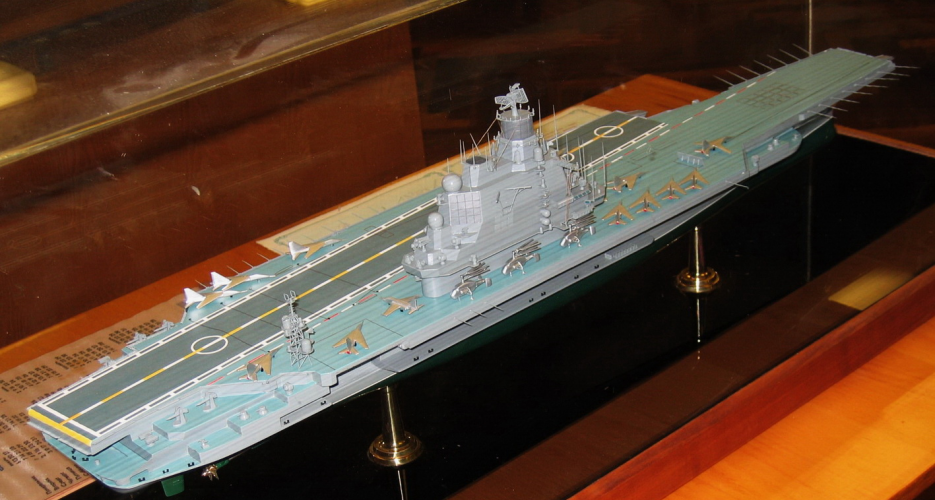
It seems both 1160 and 1153 design studies inherit a lot of features from CVA-01.

Note elevator positions, alaskan highway, 3-shaft machinery.


1760771557026.png

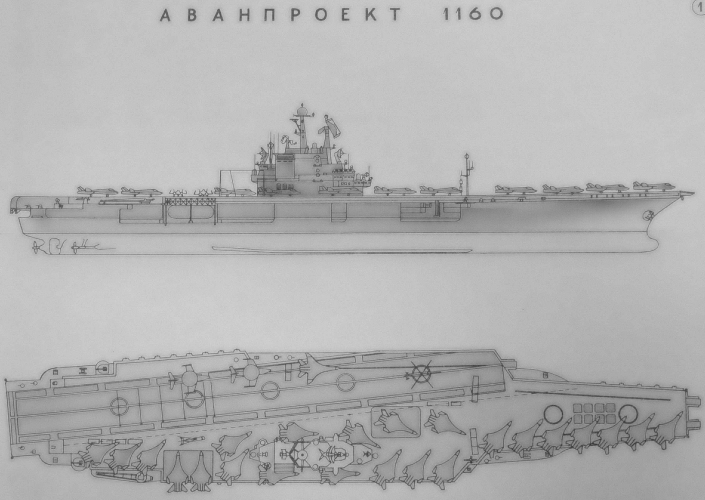
Preliminary project 1160

1760771606677.png

The 1962 Design Study 53 for CVA-01’s flight deck with a conventional angled deck (Hobbs)

1760771741163.jpeg

1760771827448.jpeg
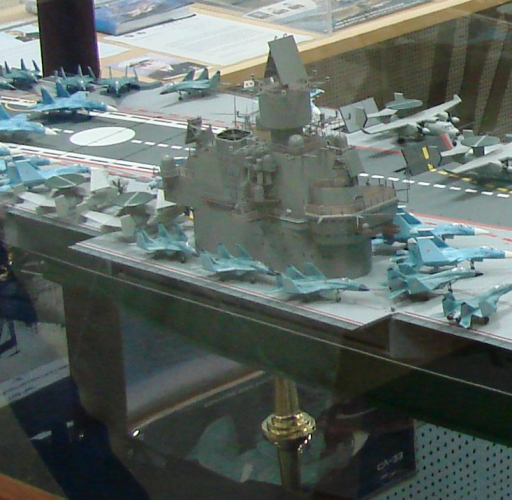
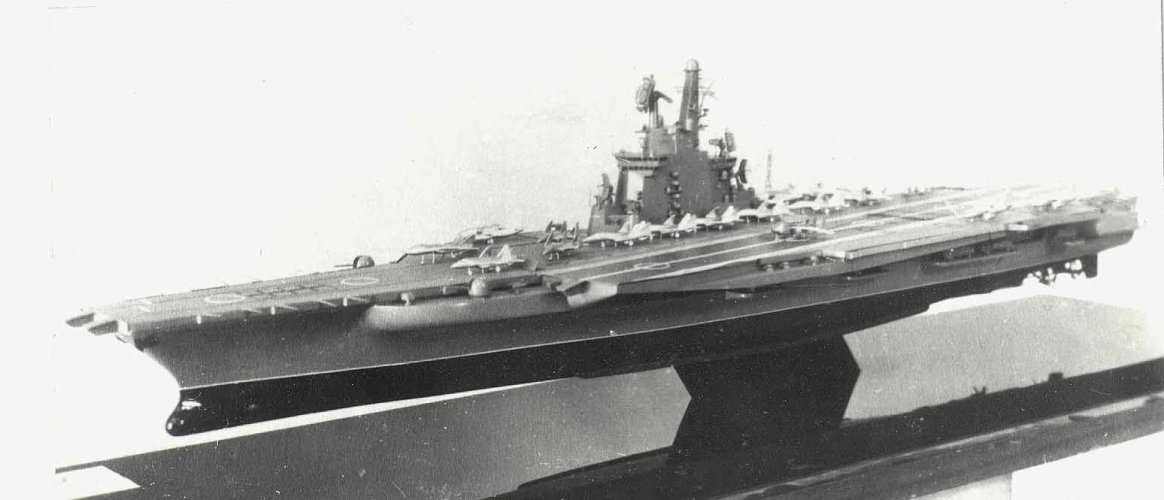
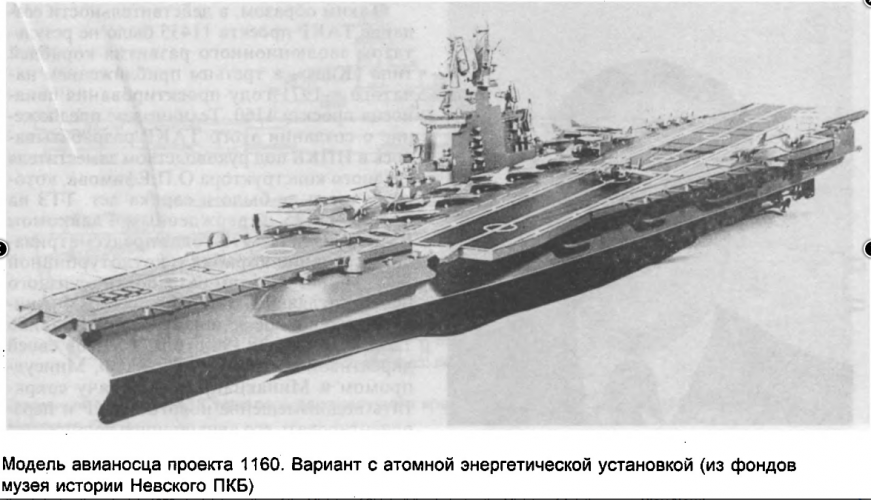
Official model of 1160 or early 1153

1760771726496.png

Official model of 1153​
 
Preliminary project 1160
Note the T-10-like aircraft on the deck

The 1962 Design Study 53 for CVA-01’s flight deck with a conventional angled deck (Hobbs)
Also note that the CVA configuration that was apparently used was not the final "parallel deck layout".

Also interesting that designer's Ulyanovsk model features fold-out (!) alaskan highway:

1760833868873.png
I have no idea if it was incorporated into the finalized configuration of the ship as it was ordered, though.
 
https://www.globalsecurity.org/military/world/russia/68-bis.htmI'd love to know what years the proposals for the Sverdlov light carrier conversion and helicopter cruiser conversion were formulated, I've never seen information about the helicopter cruiser outside of here and if it can be verified one way or another I'd appreciate it
According to the two editions of 《Soviet Missile Cruisers》 by A.N. Sokolov and other reference materials, this series of conversion plans was proposed between 1957 and 1960.
 
According to the two editions of 《Soviet Missile Cruisers》 by A.N. Sokolov and other reference materials, this series of conversion plans was proposed between 1957 and 1960.
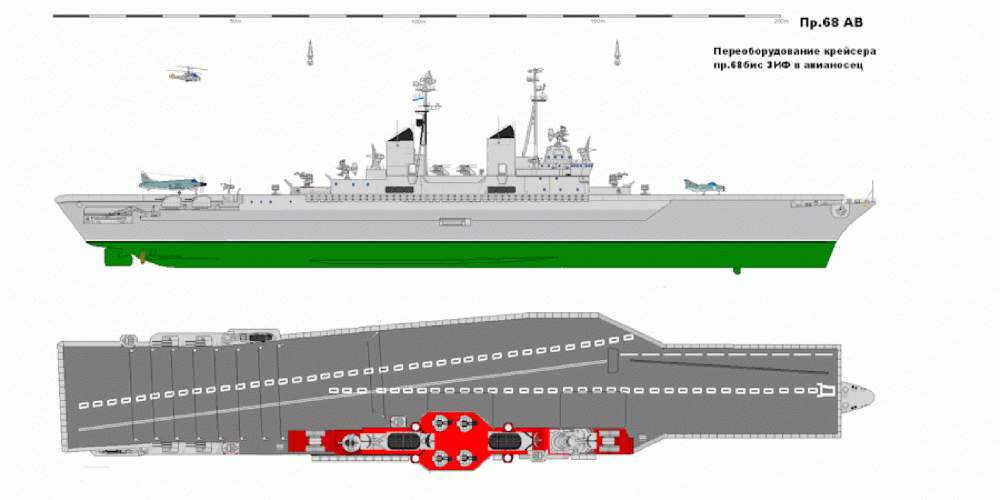
I found these first two images about Sverdlov conversion into a carrier, but (as asual) i dont remember where I get it.

The follow two other images, I don't know what ships they are, but I do know that they are Soviet ships, and maybe variants of Sverdlov CV convertions.

The 5th image is a Sverdlov helicopter carrier version that I found in a forgotten file from 2007 year.
The 6th and last image is a retouched today version to make it look better from 5th image.
 

Attachments

  • 68AB Cruiser MILL in aircraft carrier 68ab-line1.gif
    68AB Cruiser MILL in aircraft carrier 68ab-line1.gif
    164.2 KB · Views: 201
  • 68AB Cruiser MILL in aircraft carrier 68bis-mill-line1.gif
    68AB Cruiser MILL in aircraft carrier 68bis-mill-line1.gif
    105.2 KB · Views: 169
  • pic_32.jpg
    pic_32.jpg
    28.3 KB · Views: 151
  • pic_33.jpg
    pic_33.jpg
    25.3 KB · Views: 155
  • sverdlov.jpeg
    sverdlov.jpeg
    37.7 KB · Views: 151
  • sverdlov.jpeg
    sverdlov.jpeg
    135.1 KB · Views: 162
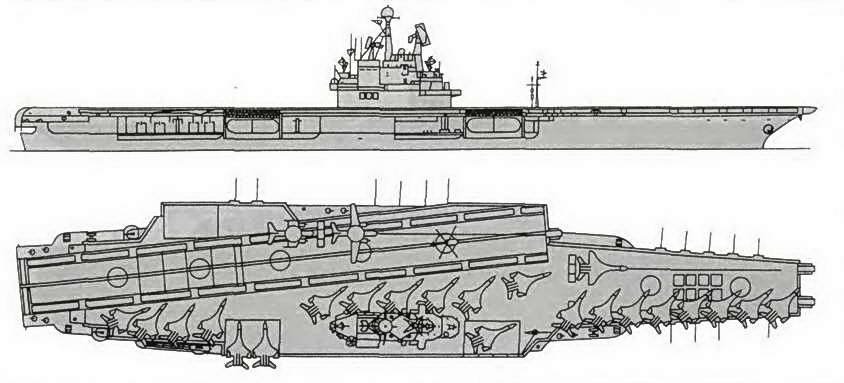
Preliminary project 1160
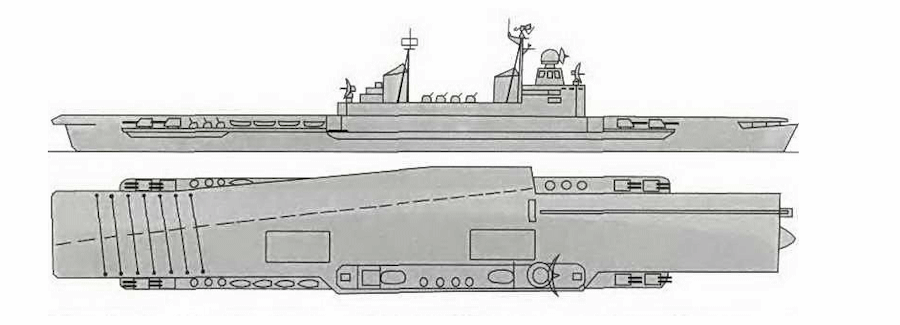
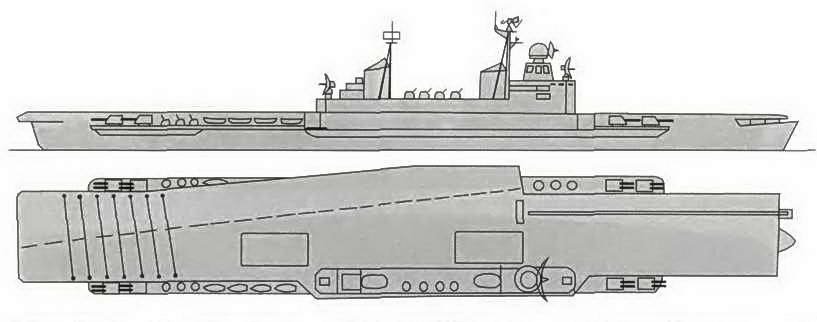
This was, of course, not the only study - Sokolov's book contains another, with 3 outboard elevators and 3 catapults (and supposedly 4 screw shafts):

1761314073743.jpeg

There is, unfortunately, very little information about the development of the ship's layout and machinery and the reasoning behind the variations. It is apparently said that there were several variants, ranging from 50 to 80 ktons and the 80kton one was the most developed (which, I assume, this sketch represents).

And there is a considerable resemblance between this plan and the Chinese Fujian, allowing for newer electronics and technological base.
 
This was, of course, not the only study - Sokolov's book contains another, with 3 outboard elevators and 3 catapults (and supposedly 4 screw shafts):


There is, unfortunately, very little information about the development of the ship's layout and machinery and the reasoning behind the variations. It is apparently said that there were several variants, ranging from 50 to 80 ktons and the 80kton one was the most developed (which, I assume, this sketch represents).

And there is a considerable resemblance between this plan and the Chinese Fujian, allowing for newer electronics and technological base.

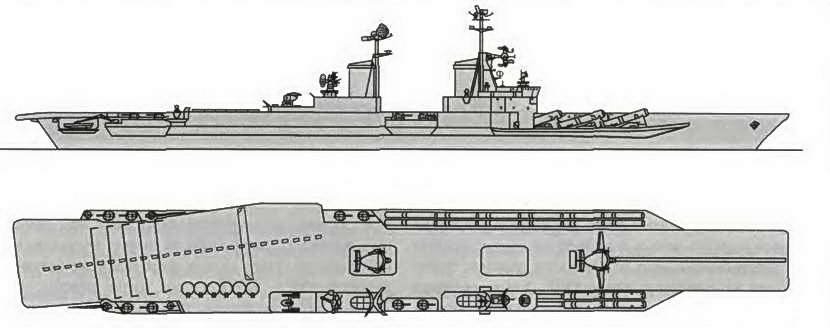
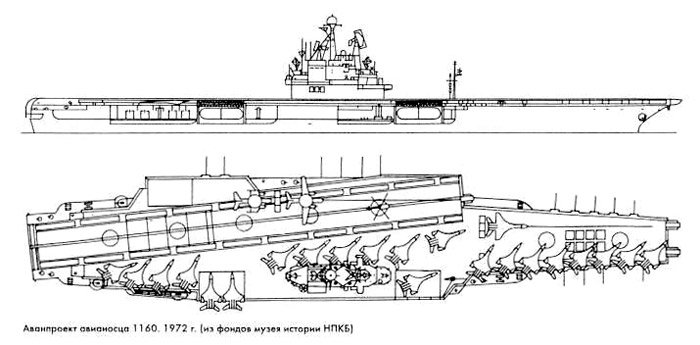
I think the model in the attached photo shows the all deck-edge elevator arrangement. If you look carefully you can see what appear to be the outlines of elevators on the fligh deck forward of the island on the starboard side and aft on the port side as shown in the diagram.

I note that the diagram also shows the height finder radars present on the model, although they are mounted above the bridge rather than below as on the model. Their presence is odd, the Soviets had 3D naval radars well before the 1970s.

Looking at the arrangement of aircraft on the flight deck I can't help thinking that the size of the proposed air wing for the 1160 design was very optimistic.
 

Attachments

  • 1160 Original.jpg
    1160 Original.jpg
    83.5 KB · Views: 138
  • 1160_1972.jpg
    1160_1972.jpg
    54.5 KB · Views: 151
I think the model in the attached photo shows the all deck-edge elevator arrangement. If you look carefully you can see what appear to be the outlines of elevators on the fligh deck forward of the island on the starboard side and aft on the port side as shown in the diagram.
Yes, with the exception of a somewhat different superstructure and gun turret positions, it seems to be the same layout, with 3 deck-edge elevators.

I note that the diagram also shows the height finder radars present on the model, although they are mounted above the bridge rather than below as on the model. Their presence is odd, the Soviets had 3D naval radars well before the 1970s.
I thought those are AA missile fire director radars - similar to the one of M-1 Volna (SA-N-1):

1761370307201.png 1761369593504.png
But it's mostly of no consequence, because the final main air defense missile system selected for them was SA-N-7.
There is a standard set of two 3D radars, MR-600 (Top Sail) forward and MR-710 (Top Steer) aft:

1761369774657.png
Looking at the arrangement of aircraft on the flight deck I can't help thinking that the size of the proposed air wing for the 1160 design was very optimistic.

T-10 and subsequent Su-27 are indeed very large and take a lot of place, but then this variant isn't small either.

Curiously, there seem to be a lot of discussions and stories about how the airwing was developed and selected, but the development process of the ship is mostly mentioned in passing, like "PKB presented a new configuration" or "a range of configurations" and that's all.
 
Last edited:
I thought those are AA missile fire director radars - similar to the one of M-1 Volna (SA-N-1):
There is a standard set of two 3D radars, MR-600 (Top Sail) forward and MR-710 (Top Steer) aft:

Curiously, there seem to be a lot of discussions and stories about how the airwing was developed and selected, but the development process of the ship is mostly mentioned in passing, like "PKB presented a new configuration" or "a range of configurations" and that's all.

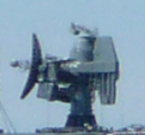
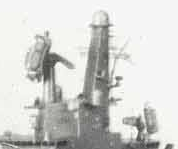
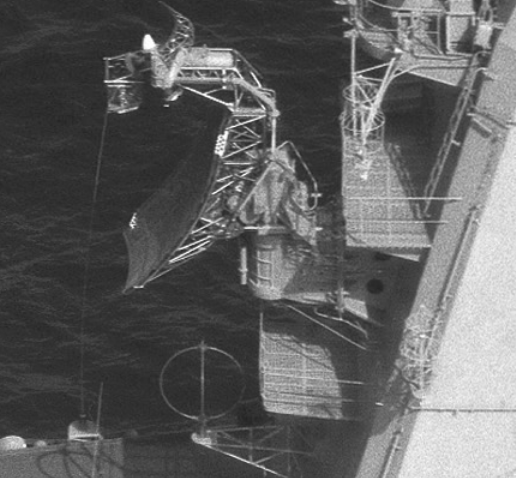
I originally thought that too but those radars don't match any other Soviet naval missile director/illuminator that entered service. Additionally, there are only SA-N-4 launchers and their guidance sets (4R33) are, I think, visible at different locations on the ships. Specifically, on the model I think they are below and either side of the height finder forward. They are clearer in the image I attached to this post. @M. A. Rozon speculated that the height finders are the Razliv (High Lune) set that was installed on Dzerzhinsky. However, I am skeptical, Razliv would have been 15 years old at this point and these sets remind me most of the PRV-16 (Thin Skin) height finders used by the Soviet land forces that entered service in the early 1970s, just as this ship was being designed.
Note, this is yet another variation of the design, in addition to having Mig-23esque aircraft it has a large mass of additional 'stuff' in front of the height-finders as an extension to the Island, reminiscent of the Kiev class. It could be that this image shows the model in its original configuration, and it was reworked later into the one with the T-10 derivatives. I tried to catalogue all the different configurations shown in the various models in this post, but missed this one.
 

Attachments

  • 1160_VG.png
    1160_VG.png
    560.9 KB · Views: 135
Last edited:
I originally thought that too but those radars don't match any other Soviet naval missile director/illuminator that entered service.
I spotted something vaguely similarly looking on the foremast of Slava-class cruisers.

1761397707682.png 1761397725099.png

Can't find what this actually is out of hand, it may be a strike missile director for midcourse correction. Would make sense having those on a missile-armed carrier, probably.

Anyway, what I wanted to emphasize is that it seems to me that -

1. The Soviet carrier program heavily referenced the design work (but not the final configuration) of the British CVA program. It would be interesting to determine whether it was the case from the beginning, or the information was used at later stages, when 1160 was starting to morph into 1153, and how and when this information was obtained.

2. Chinese Type 003 is a direct descendant of this program and apparently replicates as much of the 80kton variants of 1160 and/or 1153 as possible (i.e. reversal of 1143.5 back to it's full-sized origin).
 
Last edited:
I spotted something vaguely similarly looking on the foremast of Slava-class cruisers.

View attachment 789364 View attachment 789365

Can't find what this actually is out of hand, it may be a strike missile director for midcourse correction. Would make sense having those on a missile-armed carrier, probably.

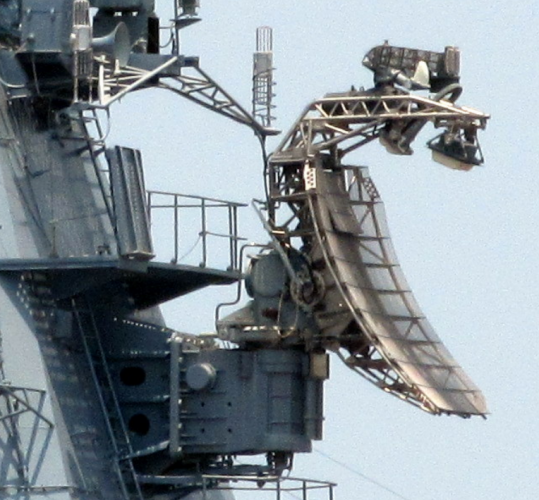
Front Door radar associated with P-500/SS-N-12 anti-ship missiles. It wouldn't be fitted to Pr.1160 as that was armed with P-700/SS-N-19.
 
Yes, those are the missile directors of the antiship missiles on the Slavas.
The Kievs has them as well just hidden under a trap door on the nose:
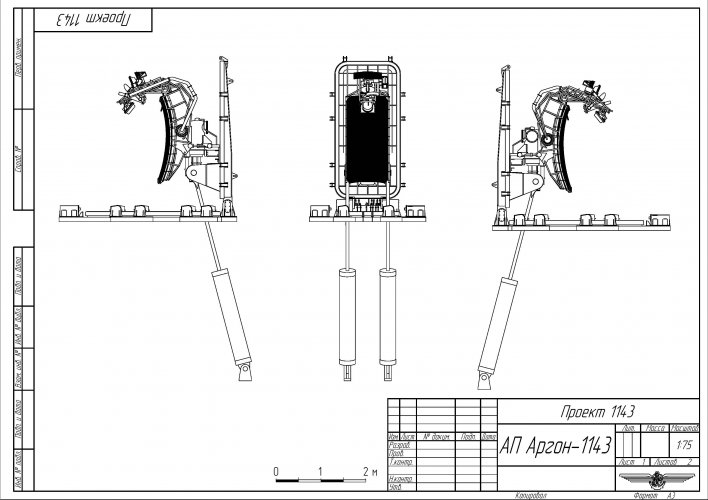
Argon-1143 "Front Door" Radar of the Kiev class for the SS-N-12 Sandbox missiles
 

Attachments

  • 05-9533449-antenna-argon-a-stranitsa-1.jpg
    05-9533449-antenna-argon-a-stranitsa-1.jpg
    414.4 KB · Views: 111
  • 05-9533449-antenna-argon-a-stranitsa-2.jpg
    05-9533449-antenna-argon-a-stranitsa-2.jpg
    500.1 KB · Views: 105
So presence of those radars on some of the models may indicate P-700 wasn't the initial armament option, or it was considered that at that stage of development it would need it.
But the Argon series aren't present on that model. Those two radar sets look nothing like the Argon. Compare it with Razliv (High Lune) on Dzerzhinsky and the PRV-16 (Thin Skin B). The other thing to note about these sets is their size, based on the number of decks they must be 5-6m tall.
 

Attachments

  • Razliv_High Lune.png
    Razliv_High Lune.png
    13.6 KB · Views: 71
  • 1160 HF Set.png
    1160 HF Set.png
    17.9 KB · Views: 55
  • PRV-16_01.jpg
    PRV-16_01.jpg
    74.8 KB · Views: 132
But the Argon series aren't present on that model.

If I understand the timeline correctly the model was done before the work on 1143 even began (like '65-'67) so the exact form of the whatever strike missile director that was to be fitted to those ships was very possibly not finalized, and could've been based on the examples you cite. Rectangular shape of the dish, though, suggests connection to the future Argon, so there might be no discrepancy here.
 
Last edited:
Around 1968 there was ~45-50.000t aircraft carrier study (based on open-source information about Western aircrafts), usually referred to as AVL (АВЛ), which was successfully pitched to Soviet leadership,
and only after that official work on 1160 have started, with Decree by Soviet Government in 1969.
So, this model in #468 can't be from any earlier than either of those two years.
 

Attachments

  • 7Ahtg0h.png
    7Ahtg0h.png
    19.3 KB · Views: 163
Last edited:
So, this model in #468 can't be from any earlier than either of those two years.
Thanks for clarifying the timeline. It's still possible the radars on the model are some kind of Argon prototype at this point, though.

Around 1968 there was ~45-50.000t aircraft carrier study (based on open-source information about Western aircrafts), usually referred to as AVL
Hm, this one also features alaskan highway.
 
This was, of course, not the only study - Sokolov's book contains another, with 3 outboard elevators and 3 catapults (and supposedly 4 screw shafts):


There is, unfortunately, very little information about the development of the ship's layout and machinery and the reasoning behind the variations. It is apparently said that there were several variants, ranging from 50 to 80 ktons and the 80kton one was the most developed (which, I assume, this sketch represents).

And there is a considerable resemblance between this plan and the Chinese Fujian, allowing for newer electronics and technological base.
Don't like that Waist Cat lineup, it needs to be angled a bit more outboard. Or else the AEW plane's wing risks clipping the flight deck.
 
Don't like that Waist Cat lineup, it needs to be angled a bit more outboard. Or else the AEW plane's wing risks clipping the flight deck.
On Fujian it's simply moved somewhat closer to the edge of the deck. Apparently, they also thought of this :)
 

Similar threads

Back
Top Bottom