- Joined
- 27 December 2005
- Messages
- 18,716
- Reaction score
- 33,063


overscan said:Contenders
Source:
- Aerospatiale ASLP
- Boeing SRAM-T (SRAM-2 derivative)
- Martin Marietta/BAeD/Hunting TASM-UK
John Fricker "RAF Operational Requirements" Air International May 1993

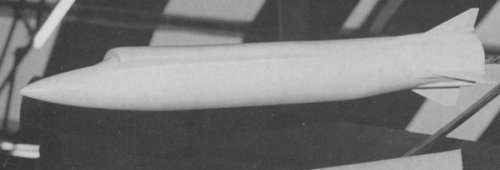
SourceUsing a fuselage like this and placing the air intakes on the
leeward surface, we can get a vehicle that is discreet for on-
ground radar (ALCM, F117, B2). Of course, this location
contradicts the aerodynamic constraints. It can always be
said that, if the vehicle is very discreet, it will not be
detected and therefore will not have to manoeuvre.
Aerospatiale's ASLP concept is based on this principle with
an leeward surface air intake combined with a radar
detector. If acquisition is made anyway, the missile no
longer has to be discreet but its performance must be
increased. It turns over and the air intake is then on the
windward surface where it can be efficient
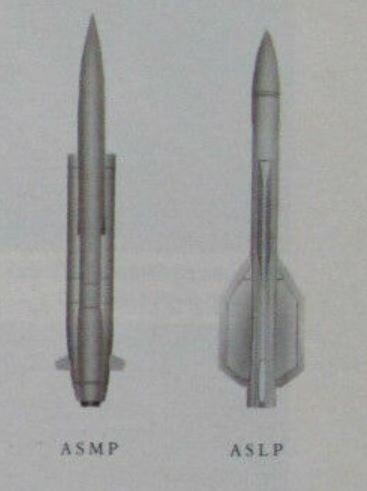
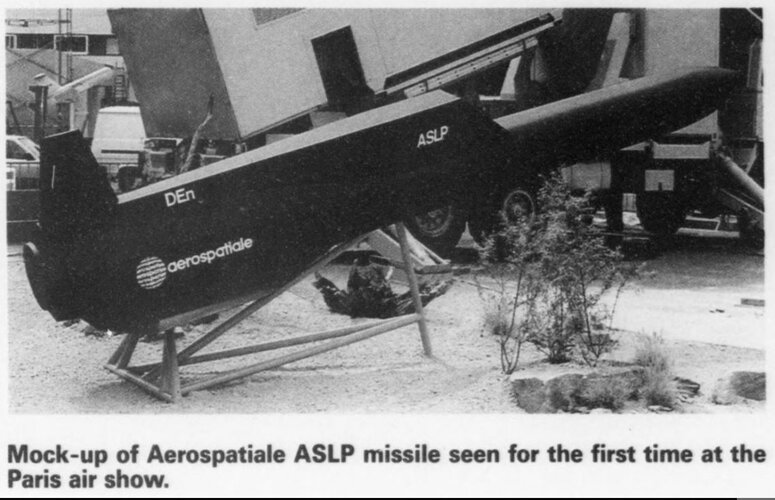
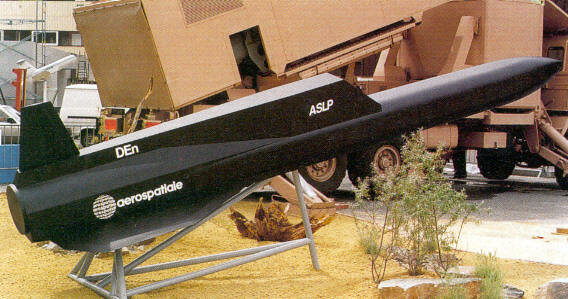
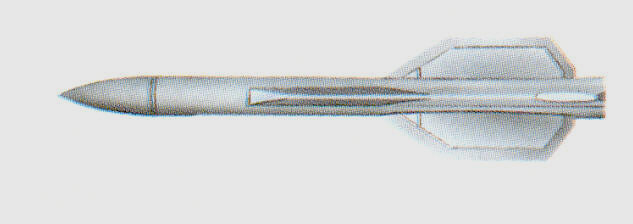
Aerospatiale unveiled a mock-up of one of the many ASLP (air-sol longue’ portée: long-range air-to- surface) missile designs it has studied in association with the Direction des engins (French missile directorate). This missile, currently at the pre-development stage, is mainly intended to replace the ASMP which has been in French service since 1986 as the airborne component of the French strategic nuclear force and could be adopted by the UK, depending on the result of current negotiations.
The ASLP could also be used as a long-range conventional cruise missile. Current plans envisage the ASLP equipping the ACT and ACM versions of the Rafale, each aircraft being capable of carrying one missile on the centreline hard point or one under each wing. The ASLP uses a ramjet plus solid-propellant motor which enables it to travel at speeds close to Mach 3.5 over distances of 1,000 to 1,500km. The missile is completely autonomous, with a terminal phase programmable to any threat defenses. The ASLP flies at very low altitude and is expected to be accurate to within a few metres, due to its ability to navigate to its target by autonomous course correction in free flight. The radar-absorbent configuration and materials are designed to give the ASLP the greatest possible stealth capability. The navigation and guidance systems must also be hardened against possible countermeasures. Its speed, manoeuvrability, low-altitude flight, stealth and resistance to countermeasures will enable the missile to penetrate even the densest defenses.
Another approach being considered is to develop a derivative of the ASLP capable of flying at very-high altitude to prevent it being detected by early-warning aircraft.
Very hard to find photos


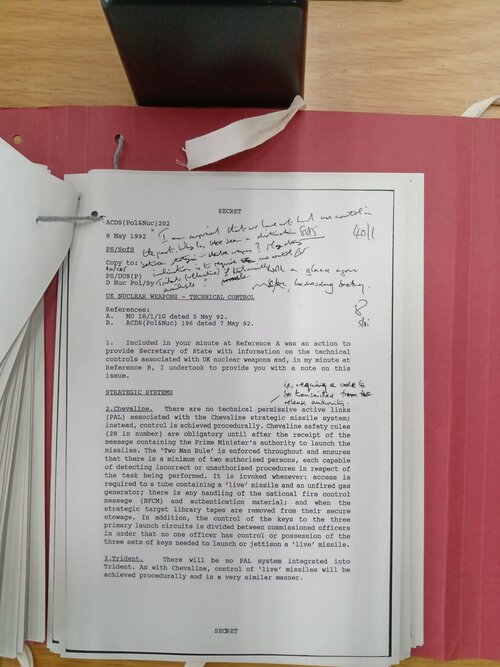
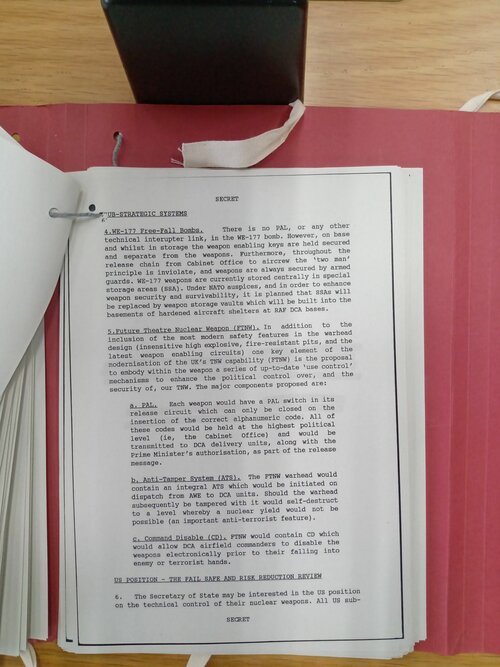
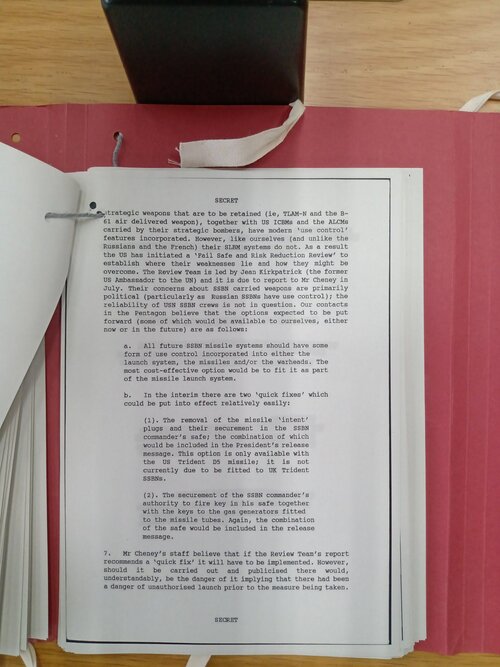
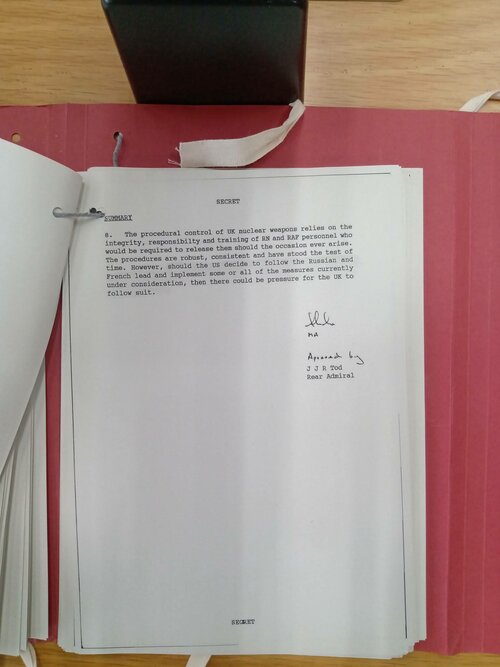

From the Twitter account of historian (who's name I've now forgotten) back when Twitter allowed people without accounts to browse.
I was under the impression that the US version was integrated into the PAL. Enter an invalid code however many times and the thermal batteries fry the detonator circuits. [edit: or a specific code once]It's worth clarifying that 'Command Disable' is the ability to render a nuclear weapon incapable of producing a nuclear yield on the authority of a field commander. This is quicker and safer than the alternative of physically destroying the weapons, which would otherwise be required if control of the weapons were to be lost. AFAIK it was introduced in the US on the B61, which is a slightly more modern weapon than WE.177.
It does not imply an ability to disable weapons remotely by transmission of a command, which would pose obvious risks to nuclear surety.

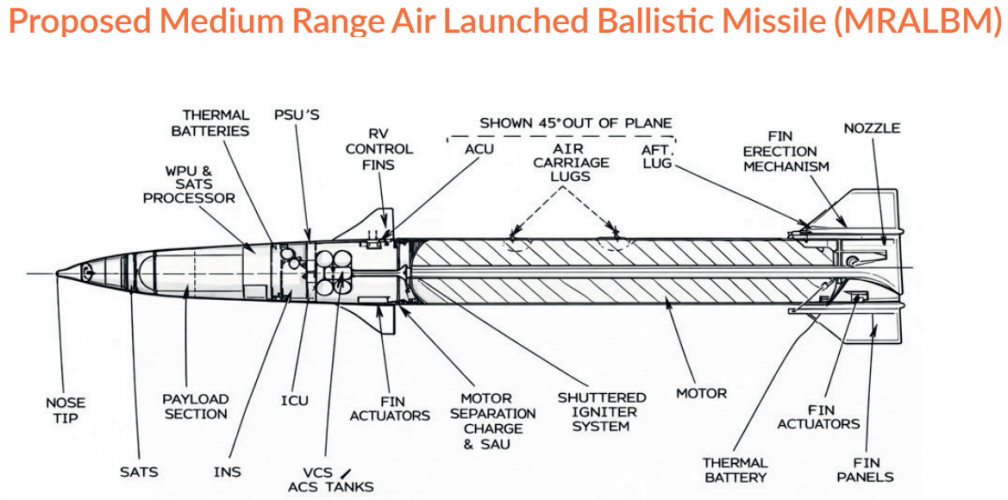
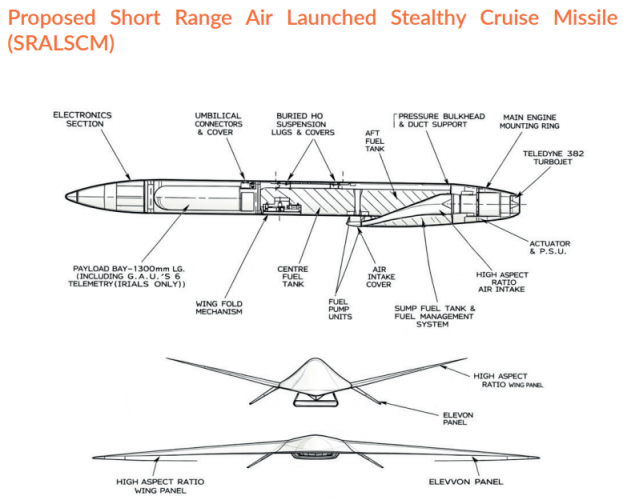
The stated requirement for 230 weapons to replace WE.177s one-for-one, except for NDBs, is interesting as that must closely align with the number of WE.177s in RAF service. Which puts the lie to some of the claims from anti-nuclear groups that fewer than 100 WE.177s were deployed.Dr James Jinks has written a research paper about the 1980s studies into the replacement of the WE.177 in British service, for the think tank Policy Exchange. The primary objective of the paper is to identify lessons for today but there is a huge amount of new (to me) material on the SR(A).1244 studies. I won't list it all but some of the considerations are particularly notable (e.g. the desire for an anti-ship capability) as are some of the proposed solutions.


I'm not sure we aren't looking at two separate concepts. There's simply no way to have a wing with significant dihedral from ahead and a basically flat one from behind.@JFC Fuller
I don't really understand the drawing of the cruise missile variant. How does the frontal view of that work? Unfortunately there doesn't seem to be more details in the paper.
As a policy history, rather than a technical history, I think it's understandable that Jinks doesn't replicate the technical details. But enough has been included to strongly exist that they're available in the archival material.@JFC Fuller
I don't really understand the drawing of the cruise missile variant. How does the frontal view of that work? Unfortunately there doesn't seem to be more details in the paper.
Morphing wings or something equally exotic, perhaps?I'm not sure we aren't looking at two separate concepts. There's simply no way to have a wing with significant dihedral from ahead and a basically flat one from behind.
You could do that, but why? I think this is two separate concepts. I really wish they'd given us plan views so we could better understand the layout of each.Morphing wings or something equally exotic, perhaps?
That, and the testing programme, seem to support the view that the TASM warhead was more than just a W91 clone, but not a wholly independent design. Given that Holbrook was apparently a very close copy of W76, and that an NDB would be a simpler weapon than either, I can't help but wonder if there was a perceived pathway away from dependence on US designs.A UK design incorporating US SRAM-T electronics and sub-systems