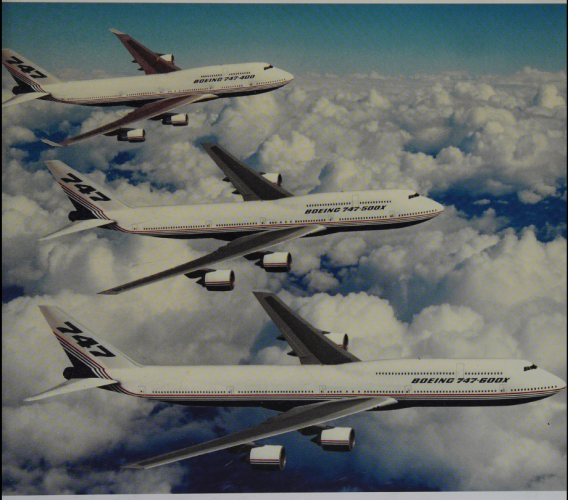
In an act of remarkble stupidity, I decided to take a front view of all things of this exact model.
Not stupid at all. That photo captures something important. It shows just how narrowly the turbofans were placed on the early 747s. One of the last major design changes, if memory serves, was moving the engines further out on the wing and spacing them further apart.
 
Dear Sentinel Chicken,
is there in the book a picture to say if my interpretation below is right or wrong?
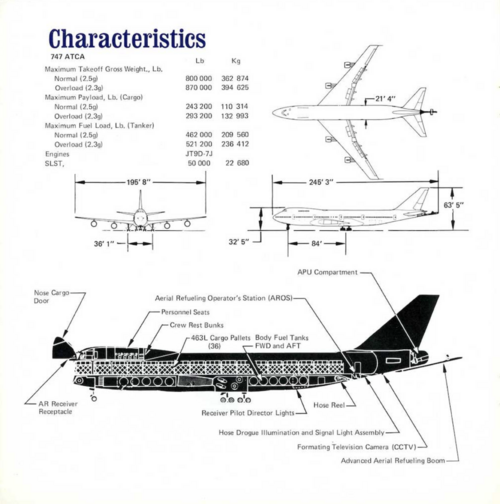
I'd actually expect the single engine to be on the outboard pylon. You'd need less rudder trim designed in that way.
 
Wingtip-mounted flying booms never seem to make it to the hardware stage and I can imagine some complications that might make them impractical. Similar placement of hose-and-drogue units has some precedent, but not in the USAF (for fixed wing aircraft anyway) although it's been proposed and even programmed several times. A cynic might point out that a multi-point hose-and-drogue refueling capability would make USAF-supported USN/USMC/NATO operations more competitive with all-USAF operations (simultaneous low-flowrate hose-and-drogue connections versus a single high-flowrate flying boom connection), but that would suggest that the USAF is institutionally unenthusiastic about it's assigned missions in support other services.
Heaven forbid someone say the quiet part out loud...


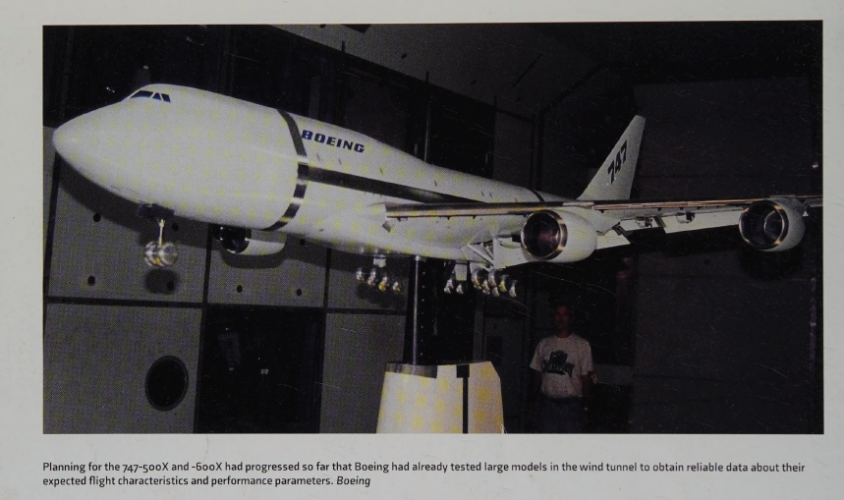
Here's a clean Boeing 747 model (1/20 scale -- about 12-ft. long) with or without winglets. Made by Pacific Miniatures, it comes with its original carrying crate, visible in the background.

This is what collectors refer to as a "divorce model" because of what happens when you try to put it in the living room, where it belongs.
:D :D :D :D


[fixed gear 747 weirdness]

The question is then, why would you use a jet for something a turboprop would do much better?
Think it's already been answered, but there aren't any 500pax turboprops, and not all of the major cities were linked via Shinkansen high speed trains at the time. I'm not sure some cities are linked yet, due to the distances between some of the islands.

Remember, Japan has 130mil people, all shoved into a total land area about equal to that of California. Or rather, 1/10 the area of California, because everything else is too steep to put houses on...
 
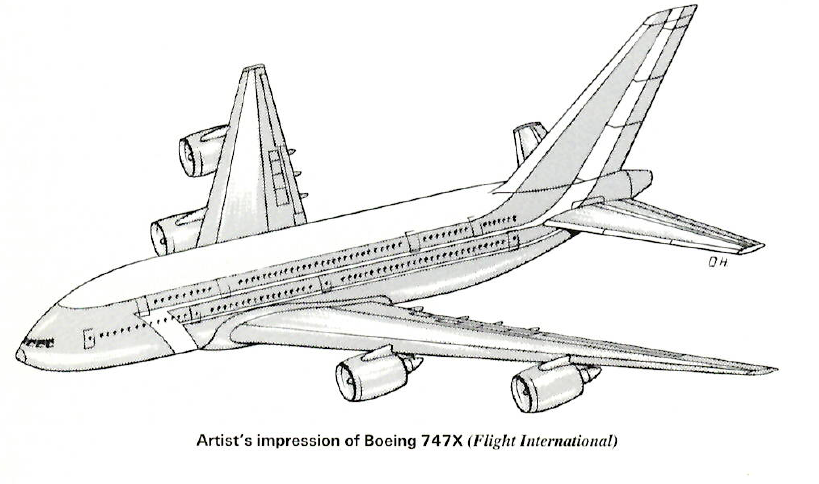
Artist's impression of Boeing 747 LCF (Large Cargo Freighter).

Wind-tunnel model of Boeing 747 LCF.

Via Internet Archive:
http://web.archive.org/web/20050206040440/www.boeing.com/commercial/7e7/photos.html
This variant was actually built and flown.


R.48aa73791937fe087328930972a28f6b


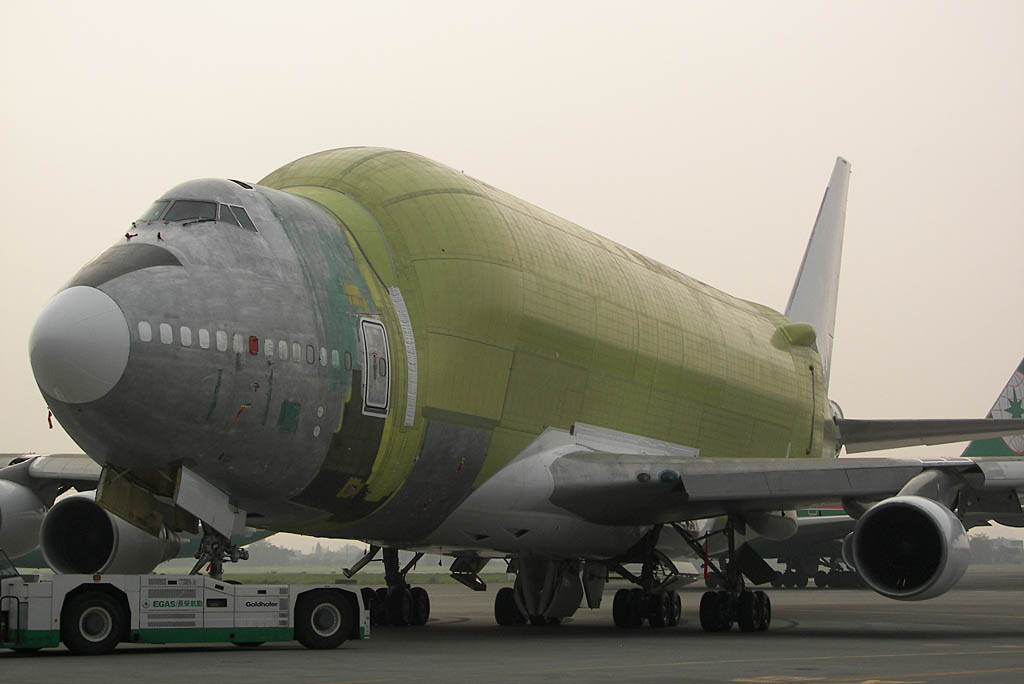
After getting paint

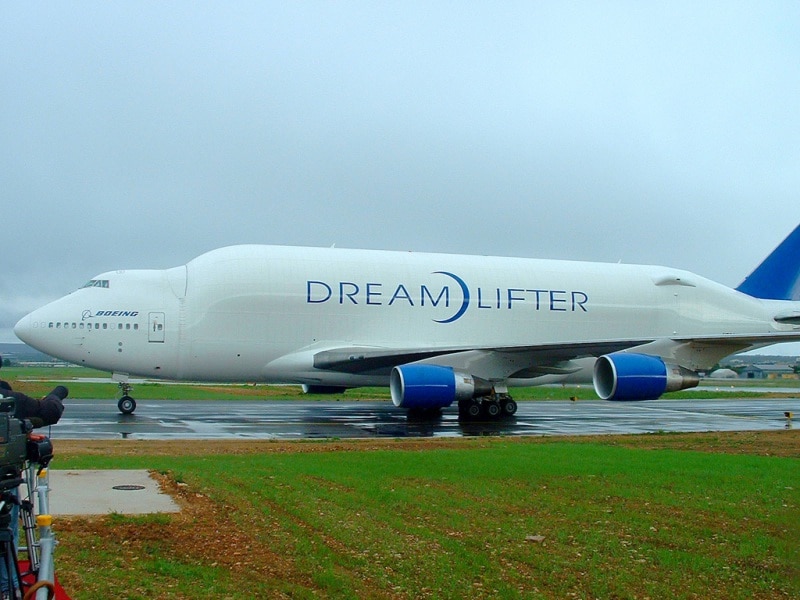
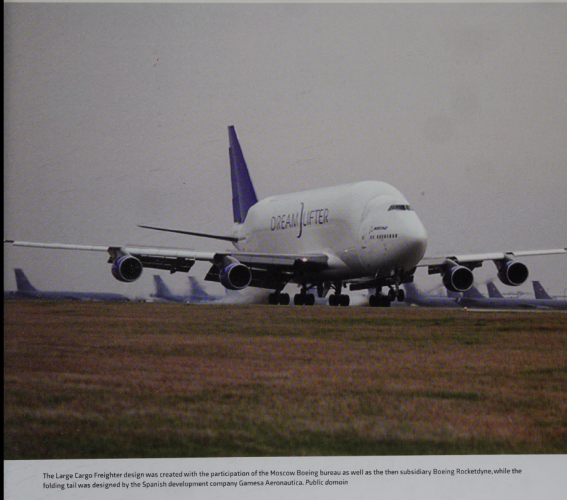
boeing_747_lfc.900x600.jpg


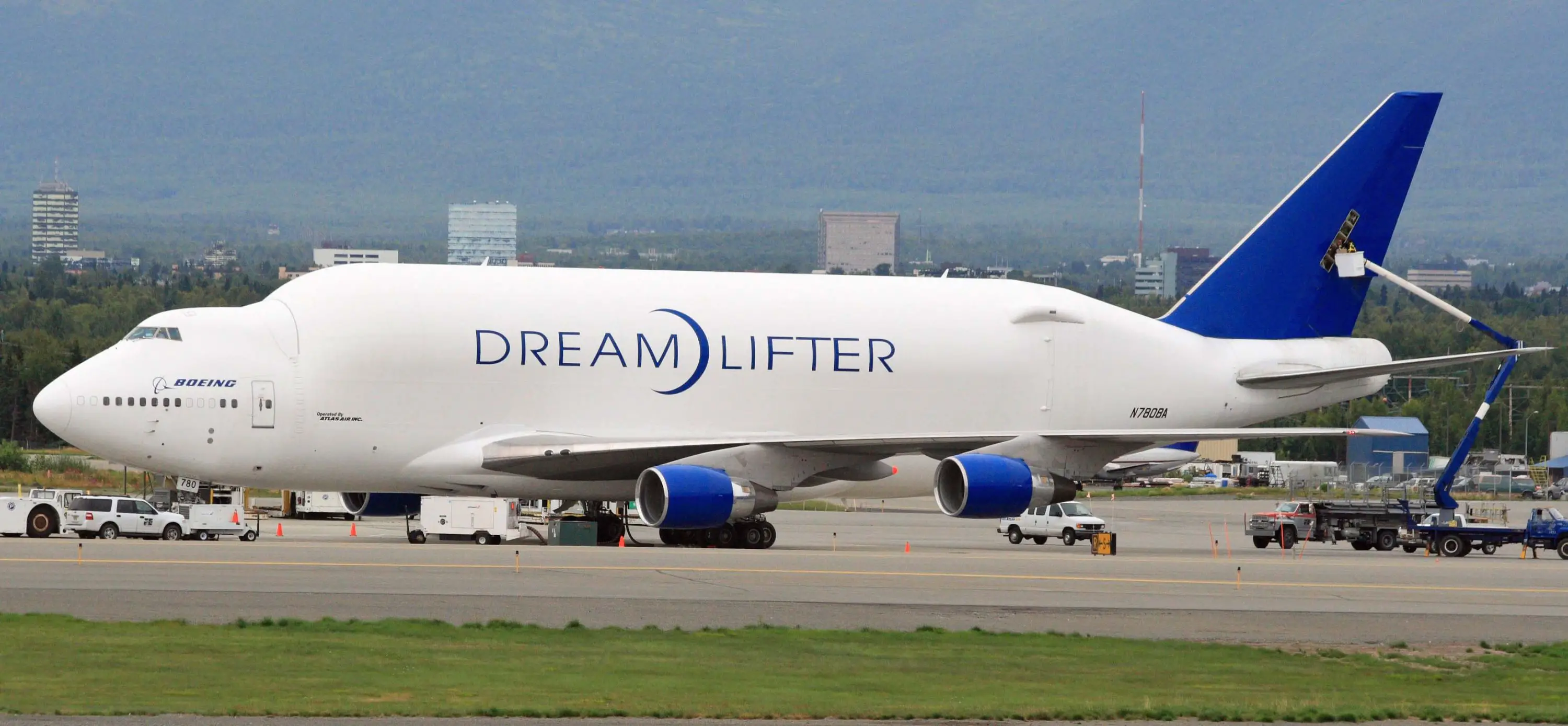
Atlas_Air_747_Dreamlifter_at_ANC-3000x1389.jpg
 
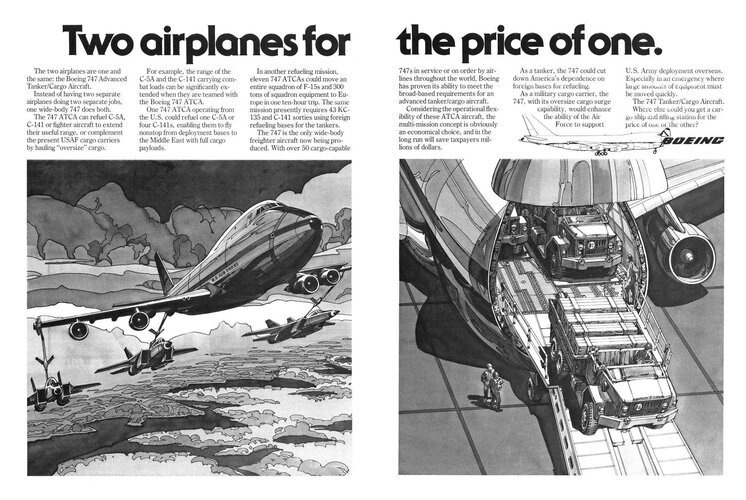
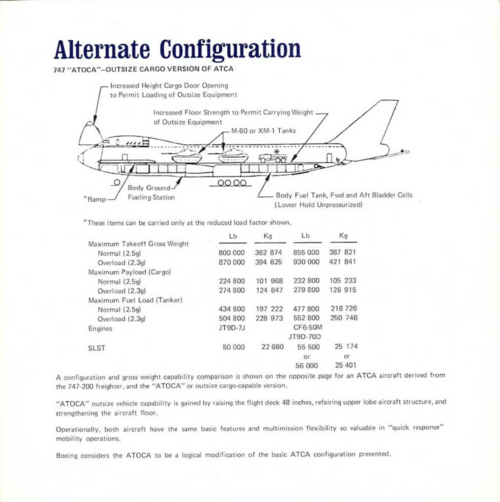
The payload-range graph comparing the C-5 to the 747 ATCA is interesting, because the curve of the 'maximum-weight' section of the graph is the same for the 747 and C-5, with a constant offset. The implication is either that the C-5 has near-identical fuel consumption characteristics to a 747, or that Boeing modelled the C-5 by assuming it was a 747 with a lower MTOW and smaller fuel tanks.
 
The payload-range graph comparing the C-5 to the 747 ATCA is interesting, because the curve of the 'maximum-weight' section of the graph is the same for the 747 and C-5, with a constant offset. The implication is either that the C-5 has near-identical fuel consumption characteristics to a 747, or that Boeing modelled the C-5 by assuming it was a 747 with a lower MTOW and smaller fuel tanks.
Same engines (or close to it) and similar aerodynamics. So I'm sure the TSFC is within a % or two.
 
The 747 was (and is) a record setting iconic airplane with one of the best safety records among commercial aircraft (but don't just trust me - do the research yourselves).
 
The 747 was (and is) a record setting iconic airplane with one of the best safety records among commercial aircraft (but don't just trust me - do the research yourselves).
Yes, it is.

How much would a 747 only carrying passengers on the upper deck cost per ticket?


And, assuming that were actually factually true, how would that quantitatively compare to any of the potential Airbus competitor models?
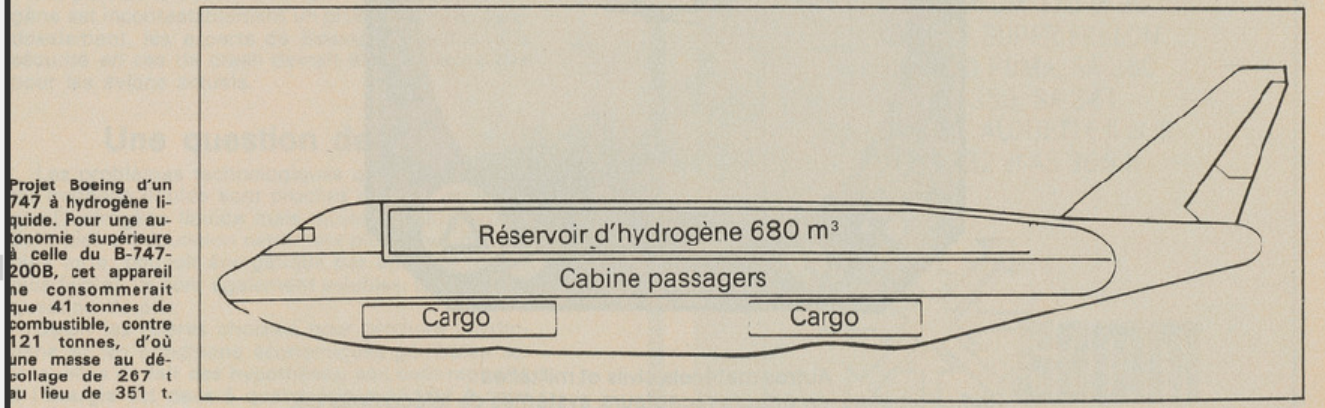
But needing 574k liters of fuel tankage would suggest that anything short of an A380 would have literally no passenger capacity.
 
How much would a 747 only carrying passengers on the upper deck cost per ticket?
The passengers are on the bottom deck. The fuel is on top. Far less loss of capacity - especially as some of the 747s at that time didn't carry passengers upstairs anyway.

I'd be more concerned about the cost of filling up with hydrogen. Which, in fairness, was only considered because of a perceived risk that kerosene wouldn't be available. At that point, hydrogen fuel looks a lot more appealing than swimming the Atlantic.
 
The passengers are on the bottom deck. The fuel is on top. Far less loss of capacity - especially as some of the 747s at that time didn't carry passengers upstairs anyway.

I'd be more concerned about the cost of filling up with hydrogen. Which, in fairness, was only considered because of a perceived risk that kerosene wouldn't be available. At that point, hydrogen fuel looks a lot more appealing than swimming the Atlantic.
How big is the main deck of a 747?

574k liters (internal capacity) is a very large volume once you add all the insulation needed for liquid hydrogen.
 
Yes, it is.

How much would a 747 only carrying passengers on the upper deck cost per ticket?


But needing 574k liters of fuel tankage would suggest that anything short of an A380 would have literally no passenger capacity.
Once again, *please*, provide a *detailed* comparison of 747 vs. 380 numbers, if you would.
 
From this report.
Thanks for finding the simulated photo, I posted about this one in Post #164, the NASA report I found on it entitled 'Preliminary study of a very large catamaran freighter as a derivative of a current wide-body aircraft', is still available from the NASA Technical Reports Server.
 
Once again, *please*, provide a *detailed* comparison of 747 vs. 380 numbers, if you would.
Very hard to do, what with the very large range of seating numbers.

A380 upper deck layout ranges between 56 and 199 seats, 383 and 583 on the lower deck. 383 is the three-class layout, 583 is all-economy. Haven't found a good description of the upper deck, I suspect that 56 is the all sleeper seat layout.

747-8 upper deck runs about 110 passengers, main deck runs about 467 in 3-class layout.

So we're comparing 383 passengers on the A380 versus 467 on the 747. Was not expecting that, I must be too used to the Emirates high-density packing numbers for the A380.

Guess an LH2 "747" (is it still a 747 with a full second deck?) might actually be more viable than an LH2 A380
 
Thanks for finding the simulated photo, I posted about this one in Post #164, the NASA report I found on it entitled 'Preliminary study of a very large catamaran freighter as a derivative of a current wide-body aircraft', is still available from the NASA Technical Reports Server.

You can use the Web archive to get it back.
 
When I was at BAE Systems-Mojave, I was involved in the Airborne Vertical Launch (ABVL) program. My job was the missile launch tubes and upper and lower tube door actuation systems among a few other things.
 
Back
Top Bottom