I didn't have any problems with wayback, but just for anyone who has issues with wayback, here's a drive link for the reports listed in my previous post. https://drive.google.com/drive/folders/1XdCHLFgZiRTPDUFj3ySnPHC9qiyUf2hU?usp=sharingThat’s a lot of antennas!
Also, the Wayback Machine stalls on asking me for donatations - can’t download the files. Anyone else got the same problem?

You are using an out of date browser. It may not display this or other websites correctly.
You should upgrade or use an alternative browser.
You should upgrade or use an alternative browser.
Other Apollo Projects: What Should Have Been
- Thread starter Skybolt
- Start date
- Joined
- 29 September 2006
- Messages
- 1,881
- Reaction score
- 1,624
Cheers!I didn't have any problems with wayback, but just for anyone who has issues with wayback, here's a drive link for the reports listed in my previous post. https://drive.google.com/drive/folders/1XdCHLFgZiRTPDUFj3ySnPHC9qiyUf2hU?usp=sharingThat’s a lot of antennas!
Also, the Wayback Machine stalls on asking me for donatations - can’t download the files. Anyone else got the same problem?
That’s a lot of antennas!
Also, the Wayback Machine stalls on asking me for donatations - can’t download the files. Anyone else got the same problem?
There's a very (very
 ) tiny "x" in the upper right corner of the banner. Clicking it continues the download.
Randy
- Joined
- 29 September 2006
- Messages
- 1,881
- Reaction score
- 1,624
Cheers Randy!That’s a lot of antennas!
Also, the Wayback Machine stalls on asking me for donatations - can’t download the files. Anyone else got the same problem?
There's a very (very
Randy
AnytimeCheers Randy!That’s a lot of antennas!
Also, the Wayback Machine stalls on asking me for donatations - can’t download the files. Anyone else got the same problem?
There's a very (very
Randy
(Except Mondays.... nobody wants to do anything on Monday
)Randy
I love that cockpit and the service module.Pictures of Apollo lifting body Command Module mockup:
The Apollo we got was a simple build though. Not sexy, but it worked.
The sunburst pattern solar panels would have spared Lovell a heartbreak.
On blunt bodies
http://spaceflighthistory.blogspot.com/2022/05/the-return-of-apollo-shape.html?m=1https://arc.aiaa.org/doi/10.2514/1.A35315https://hackaday.com/2026/05/13/how-did-apollo-separate/
Last edited:

DarkLord
ACCESS: Restricted
- Joined
- 6 September 2008
- Messages
- 26
- Reaction score
- 32
Yes , especially the GD Apollo proposals.In case you asked yourself what the hell was the GD/Astro Apollo proposal, it is the Design IV in the drawing. Design III is Martin's.
BTW, anyone interested in highly detailed early Apollo proposals drawings ?
- Joined
- 26 September 2008
- Messages
- 2,216
- Reaction score
- 1,541
Yes , especially the GD Apollo proposals.In case you asked yourself what the hell was the GD/Astro Apollo proposal, it is the Design IV in the drawing. Design III is Martin's.
BTW, anyone interested in highly detailed early Apollo proposals drawings ?
Since you responded to a post that is nearly 14 years old, I assume he'll get right on it.
Hey folks, I've discovered something funny and interesting.
From the beginning NASA always planned 10 landings
- 1*G-class: the first one, became Apollo 11
- 4*H-class: 12 13 14 plus the "original Apollo 15" that was swapped
- 5*J-class: should have been 16 17 18 19 20: we all know how that ended.
Now, Wikipedia LM page tell me, the last H-class LM was LM-9.
And thus this mean...
LM-10 = J-1
LM-11 = J-2
LM-12 = J-3
LM-13 = J-4
LM-14 = J-5
Except the last LM was really, LM-15.
According to Google books NASA 1969-70 Hearings, that one was passed to AAP: George Mueller doomed program that ended savaged - and salvaged into Skylab.
Now this begs a whole bunch on questions, some pertinent, some not.
- WTH did NASA ordered LM-15 if the J-missions had enough with LM-14 ?
- Ok, most logicial explanation: it was a redundant / surplus in case of the five J-class LM exploded or burned during ground testing.
- And then it was passed to AAP
- According to the Hearings: it was to be turned into the pre-Skylab ATM
- the one to be build eviscerating a LM into an ATM
- delivered by a Saturn IB to the wet workshop canned in spring 1969 for Skylab
I can't help to think
- "Hey, some bit of Apollo 21 existed after all"
- "Same for those wet workshop 1967-69 plans"
- Also: AAP had some vague lunar landings planned in the 1967-68 era: they vanished early 1968 with SA-516 and SA-517 cancellations
I wonder if George Mueller at AAP had some kind of "Plan A / Plan B" for LM-15
Plan A "Yeah, sure, LM-15 will ride a Saturn IB to Earth orbit, as AAP wet workshop's ATM-1"
Plan B "LM-15 is surplus to Apollo, beyond Apollo 20 and J-5. Now it is AAP tiny foothold into lunar landings... AAP's Apollo 21, kind of."
From the beginning NASA always planned 10 landings
- 1*G-class: the first one, became Apollo 11
- 4*H-class: 12 13 14 plus the "original Apollo 15" that was swapped
- 5*J-class: should have been 16 17 18 19 20: we all know how that ended.
Now, Wikipedia LM page tell me, the last H-class LM was LM-9.
And thus this mean...
LM-10 = J-1
LM-11 = J-2
LM-12 = J-3
LM-13 = J-4
LM-14 = J-5
Except the last LM was really, LM-15.
According to Google books NASA 1969-70 Hearings, that one was passed to AAP: George Mueller doomed program that ended savaged - and salvaged into Skylab.
Now this begs a whole bunch on questions, some pertinent, some not.
- WTH did NASA ordered LM-15 if the J-missions had enough with LM-14 ?
- Ok, most logicial explanation: it was a redundant / surplus in case of the five J-class LM exploded or burned during ground testing.
- And then it was passed to AAP
- According to the Hearings: it was to be turned into the pre-Skylab ATM
- the one to be build eviscerating a LM into an ATM
- delivered by a Saturn IB to the wet workshop canned in spring 1969 for Skylab
I can't help to think
- "Hey, some bit of Apollo 21 existed after all"
- "Same for those wet workshop 1967-69 plans"
- Also: AAP had some vague lunar landings planned in the 1967-68 era: they vanished early 1968 with SA-516 and SA-517 cancellations
I wonder if George Mueller at AAP had some kind of "Plan A / Plan B" for LM-15
Plan A "Yeah, sure, LM-15 will ride a Saturn IB to Earth orbit, as AAP wet workshop's ATM-1"
Plan B "LM-15 is surplus to Apollo, beyond Apollo 20 and J-5. Now it is AAP tiny foothold into lunar landings... AAP's Apollo 21, kind of."
wayne.mccormick
ACCESS: Restricted
- Joined
- 25 November 2023
- Messages
- 5
- Reaction score
- 3
The San Diego Air & Space Museum (SDASM) Archiveshas just uploaded(looks like SDASM deleted the original Convair/GD LEM photos and reposted them in May 2012 - accordingly, the links & photos below have been corrected) their latest series of photos at their Flickr Commons photostream (link). Among the photos posted are almost 30 photos of the Convair/General Dynamics Lunar Excursion Module proposal in mock-up and model form. Here's a link that should bring up all of them through tags (LINK - Convair/General Dynamics Lunar Excursion Module proposal photos). Aside from the lunar module (LM) photos, there are a bunch of other gems posted in this latest batch, including test photos, drawings, etc., of Saturn I first-stage models equipped with a Rogallo Wing (Link 1, Link 2, Link 3) as a booster recovery system.
Here are a couple examples of the LEM mock-up photos (much larger resolution versions are available at the links/photostream).
Convair Lunar Excursion Module (LEM)
Convair Lunar Excursion Module (LEM)
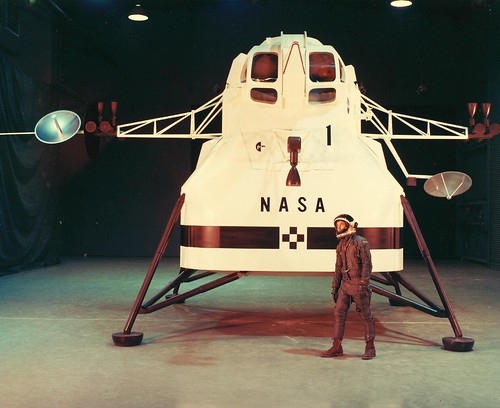
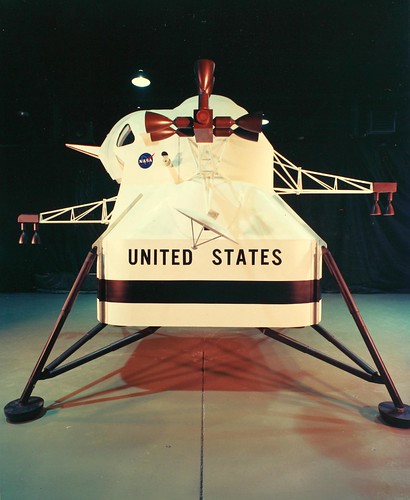
wayne.mccormick
ACCESS: Restricted
- Joined
- 25 November 2023
- Messages
- 5
- Reaction score
- 3
does anyone know who holds copyright to these photos?

- Joined
- 13 August 2007
- Messages
- 10,404
- Reaction score
- 18,041
The NASA ones are copyright freedoes anyone know who holds copyright to these photos?
For others are complicated,
since allot company no longer exist, or merger with other...
...or don't care any more.

- Joined
- 27 December 2005
- Messages
- 19,225
- Reaction score
- 35,635
SDASM will provide high quality scans for a fee.
https://sandiegoairandspace.org/collection/image-collection
https://sandiegoairandspace.org/files/SDASM_Fee_Schedule_2022_1.pdf
https://sandiegoairandspace.org/collection/image-collection
https://sandiegoairandspace.org/files/SDASM_Fee_Schedule_2022_1.pdf
Last edited:

- Joined
- 3 June 2006
- Messages
- 3,538
- Reaction score
- 6,212
More pictures showing Convair/GD LEM models and the 1:1 mockup have been uploaded to the San Diego Air & Space Museum (SDASM) flickr Archive yesterday.
Here some appetizers.
View: https://flic.kr/p/2pmL8dv
View: https://flic.kr/p/2pmJt1n
View: https://flic.kr/p/2pmJtwN
View: https://flic.kr/p/2pmKrNN
View: https://flic.kr/p/2pmLGbk
Here some appetizers.
View: https://flic.kr/p/2pmL8dv
View: https://flic.kr/p/2pmJt1n
View: https://flic.kr/p/2pmJtwN
View: https://flic.kr/p/2pmKrNN
View: https://flic.kr/p/2pmLGbk

- Joined
- 21 April 2009
- Messages
- 14,350
- Reaction score
- 9,433
I thought it had more to do with ordering 15 of each. There was 15 CSM for the Apollo missions (excluding Skylab) and 15 Saturn Vs. Somewhere when the schedules were jumbled up, probably with Apollo 8 flying without one, LM-15 lost its slot and was pushed to AAP before it was cancelled.Hey folks, I've discovered something funny and interesting.
From the beginning NASA always planned 10 landings
- 1*G-class: the first one, became Apollo 11
- 4*H-class: 12 13 14 plus the "original Apollo 15" that was swapped
- 5*J-class: should have been 16 17 18 19 20: we all know how that ended.
Now, Wikipedia LM page tell me, the last H-class LM was LM-9.
And thus this mean...
LM-10 = J-1
LM-11 = J-2
LM-12 = J-3
LM-13 = J-4
LM-14 = J-5
Except the last LM was really, LM-15.
According to Google books NASA 1969-70 Hearings, that one was passed to AAP: George Mueller doomed program that ended savaged - and salvaged into Skylab.
Now this begs a whole bunch on questions, some pertinent, some not.
- WTH did NASA ordered LM-15 if the J-missions had enough with LM-14 ?
- Ok, most logicial explanation: it was a redundant / surplus in case of the five J-class LM exploded or burned during ground testing.
- And then it was passed to AAP
- According to the Hearings: it was to be turned into the pre-Skylab ATM
- the one to be build eviscerating a LM into an ATM
- delivered by a Saturn IB to the wet workshop canned in spring 1969 for Skylab
I can't help to think
- "Hey, some bit of Apollo 21 existed after all"
- "Same for those wet workshop 1967-69 plans"
- Also: AAP had some vague lunar landings planned in the 1967-68 era: they vanished early 1968 with SA-516 and SA-517 cancellations
I wonder if George Mueller at AAP had some kind of "Plan A / Plan B" for LM-15
Plan A "Yeah, sure, LM-15 will ride a Saturn IB to Earth orbit, as AAP wet workshop's ATM-1"
Plan B "LM-15 is surplus to Apollo, beyond Apollo 20 and J-5. Now it is AAP tiny foothold into lunar landings... AAP's Apollo 21, kind of."
Scott Kenny
ACCESS: USAP
- Joined
- 15 May 2023
- Messages
- 19,517
- Reaction score
- 27,964
Has anyone made 3d printable models of the alternate landing modules?
There was a great missed opportunity stuck between wet workshops (unworkable) and dry workshop (much better, but takes a Saturn V).
See Bellcomm document attached.
It was the SLA : Saturn Launch Adapter. It was a fat cone that linked the 6.6 m diameter S-IVB to the 3.9 m diameter Apollo CSM, and provided a home to the folded Lunar Module. That fat cone was 200 m3 in volume, which is twice a Salyut (100 m3) and almost two-third of Skylab (330 m3).
The Soviets created the first generation of Salyuts (DOS-1 to DOS-4) by stuffing Almaz hulls with Soyuz ECLSS guts.
NASA could have done something similar: stuffing Apollo ECLSS guts into a SLA, let's call this SLA-station or SLA-S. The whole thing launched by a Saturn IB, of which a surplus existed post Apollo 7, which expanded booster 205. AAP has ordered Saturn IB up to -216, so 11 boosters were available. Although from 212 onwards they were uncomplete or not even assembled.
SLA-S would have a multiple docking adapter for ATM later. Baseline mission: two launches, one for the SLA-station, one for the Apollo crew. The SLA dry, pressurized module stays attached to the spent S-IVB. Why ? because wet workshop will return. The S-IVB outfitting however would be done from a 200 m3 SLA rather than an Apollo 6 m3 ... should be a little easier no ? Let's call this SLA-WW.
What truly matters is, even if the wet workshop outfitting fails, the Apollo crew still has 200 m3 of dry SLA module. But if it works, the LOX and LH2 tanks add enormous volume to SLA-WW.
Skylab turned the S-IVB's LH2 tank into an habitat but the LOX tank was used as a giant trash can.
This link tells me a S-IVB hydrogen tank was 10500 cubic feet and the LOX one, 2830 cubic feet. That's 297 m3 and 80 m3 respectively.
https://www.enginehistory.org/Rockets/RPE08.30/RPE08.30.shtml
Skylab 330 m3 is the LH2 tank volume plus additional MDA and ATM pressurized modules.
So the SLA-LH2-LOX combined volumes should be approximately 650 cubic meters. Not too far from the ISS as a whole : 1000 m3.
By evenly splitting the 11 Saturns between five Apollos and five SLA-WW, five missions could be done. The 11th Saturn would be in standby for rescue.
See Bellcomm document attached.
It was the SLA : Saturn Launch Adapter. It was a fat cone that linked the 6.6 m diameter S-IVB to the 3.9 m diameter Apollo CSM, and provided a home to the folded Lunar Module. That fat cone was 200 m3 in volume, which is twice a Salyut (100 m3) and almost two-third of Skylab (330 m3).
The Soviets created the first generation of Salyuts (DOS-1 to DOS-4) by stuffing Almaz hulls with Soyuz ECLSS guts.
NASA could have done something similar: stuffing Apollo ECLSS guts into a SLA, let's call this SLA-station or SLA-S. The whole thing launched by a Saturn IB, of which a surplus existed post Apollo 7, which expanded booster 205. AAP has ordered Saturn IB up to -216, so 11 boosters were available. Although from 212 onwards they were uncomplete or not even assembled.
SLA-S would have a multiple docking adapter for ATM later. Baseline mission: two launches, one for the SLA-station, one for the Apollo crew. The SLA dry, pressurized module stays attached to the spent S-IVB. Why ? because wet workshop will return. The S-IVB outfitting however would be done from a 200 m3 SLA rather than an Apollo 6 m3 ... should be a little easier no ? Let's call this SLA-WW.
What truly matters is, even if the wet workshop outfitting fails, the Apollo crew still has 200 m3 of dry SLA module. But if it works, the LOX and LH2 tanks add enormous volume to SLA-WW.
Skylab turned the S-IVB's LH2 tank into an habitat but the LOX tank was used as a giant trash can.
This link tells me a S-IVB hydrogen tank was 10500 cubic feet and the LOX one, 2830 cubic feet. That's 297 m3 and 80 m3 respectively.
https://www.enginehistory.org/Rockets/RPE08.30/RPE08.30.shtml
Skylab 330 m3 is the LH2 tank volume plus additional MDA and ATM pressurized modules.
So the SLA-LH2-LOX combined volumes should be approximately 650 cubic meters. Not too far from the ISS as a whole : 1000 m3.
By evenly splitting the 11 Saturns between five Apollos and five SLA-WW, five missions could be done. The 11th Saturn would be in standby for rescue.
Attachments
Last edited:

Grey Havoc
ACCESS: USAP
- Joined
- 9 October 2009
- Messages
- 24,500
- Reaction score
- 18,170
- Joined
- 5 May 2007
- Messages
- 2,016
- Reaction score
- 4,276
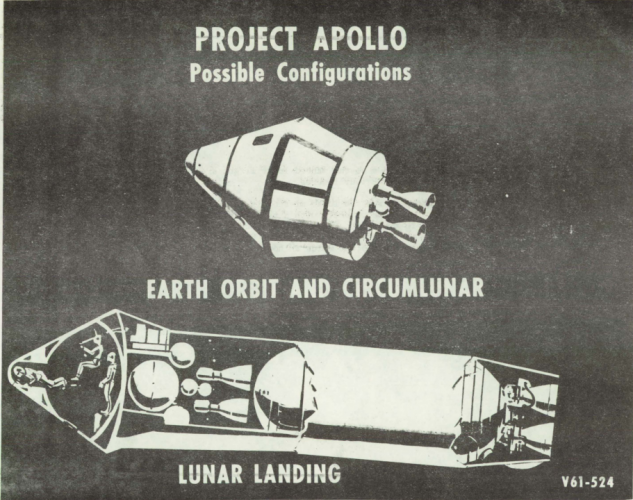
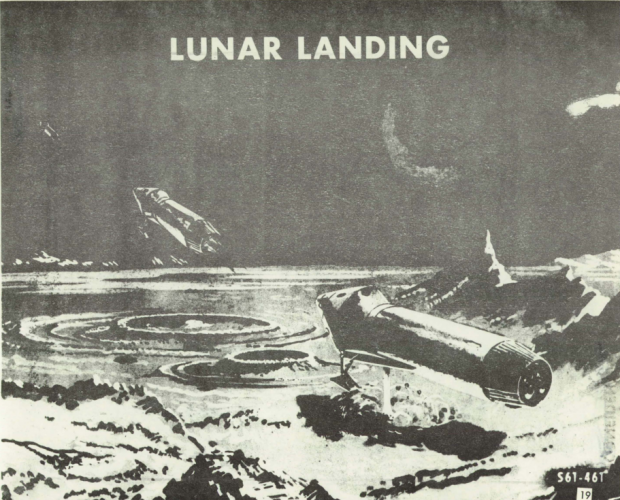
Some very early thoughts from the Fleming commission on what a direct flight Apollo might look like. On the plus side, this approach solves the 'getting down from the capsule' problem. On the other hand, horizontal takeoff seems like it would be horribly impractical.
Attachments
The author of "Doubts About Depots" actually worked on a similar craft --the DTAL lander.
Others
https://masten.aero/lunar-landers/https://www.wired.com/2013/07/international-lunar-resources-exploration-concept-1993/
Single launch
Saturn's last gasp
https://falsesteps.wordpress.com/2013/02/02/flo-the-first-lunar-outpost/
I am hoping Anthropic becomes a modern Bellcomm
Others
https://masten.aero/lunar-landers/https://www.wired.com/2013/07/international-lunar-resources-exploration-concept-1993/
Single launch
Saturn's last gasp
https://falsesteps.wordpress.com/2013/02/02/flo-the-first-lunar-outpost/
I am hoping Anthropic becomes a modern Bellcomm
Last edited:
NASA Hq has no need for such a contract.I am hoping Anthropic becomes a modern Bellcomm
Campbell Mays
ACCESS: Restricted
- Joined
- 25 July 2019
- Messages
- 4
- Reaction score
- 5
I kinda want to see Hazegrayart take this on.Some very early thoughts from the Fleming commission on what a direct flight Apollo might look like. On the plus side, this approach solves the 'getting down from the capsule' problem. On the other hand, horizontal takeoff seems like it would be horribly impractical.
- Joined
- 13 August 2007
- Messages
- 10,404
- Reaction score
- 18,041
you mean this here ?I kinda want to see Hazegrayart take this on.
Campbell Mays
ACCESS: Restricted
- Joined
- 25 July 2019
- Messages
- 4
- Reaction score
- 5
I meant that horizontal lunar landing and take off method,not Nova!
Some very early thoughts from the Fleming commission on what a direct flight Apollo might look like. On the plus side, this approach solves the 'getting down from the capsule' problem. On the other hand, horizontal takeoff seems like it would be horribly impractical.
A bit more concerning is the fact it 'backs" down to a landing
Randy
- Joined
- 5 May 2007
- Messages
- 2,016
- Reaction score
- 4,276
That part probably isn't too bad, as long as you cancel the horizontal velocity before the final vertical descent. I'm sure the crew would like to be looking where they're going, but such is life.A bit more concerning is the fact it 'backs" down to a landing
Randy
That part probably isn't too bad, as long as you cancel the horizontal velocity before the final vertical descent. I'm sure the crew would like to be looking where they're going, but such is life.
All you need is a good set of rearview mirrors
Grey Havoc
ACCESS: USAP
- Joined
- 9 October 2009
- Messages
- 24,500
- Reaction score
- 18,170
Presumably they would have had a periscope arrangement or similar though.I'm sure the crew would like to be looking where they're going, but such is life.
Presumably they would have had a periscope arrangement or similar though.
Just have someone open the hatch and have them guide the pilot down... What could go wrong?
"Ok a bit to the left... your left, no my..."
Randy
A deep dive into the Apollo Applications Program (AAP) 1966-1969 : born, lived, died except for Skylab.
-Excerpt from "Skylab a chronology" NASA History series SP-4011
-And David Portree blog https://spaceflighthistory.blogspot.com/2020/01/without-hiatus-apollo-applications.html
Most interesting facts
-The orbital worskhop (wet, then dry) slipped from 1968 to 1973 (Skylab proper: from 1970 to 1973)
-AAP-1 / AAP-2 / AAP-3 / AAP-4 would build the wet workshop, adding an ATM to a spent S-IVB.
-In the original plans the LM&SS was to be part of the wet workshop too but it was split into a separate AAP-1A mission
-AAP-1A was a flyalone Apollo with the LM&SS, to be flown either in October 1968 or April 1969. Born in May 1967, canned in December.
-AAP lunar missions died in June 1968. Options were AES, ASS and LESA (more on this later) no choice no planning ever done.
-Excerpt from "Skylab a chronology" NASA History series SP-4011
-And David Portree blog https://spaceflighthistory.blogspot.com/2020/01/without-hiatus-apollo-applications.html
Most interesting facts
-The orbital worskhop (wet, then dry) slipped from 1968 to 1973 (Skylab proper: from 1970 to 1973)
-AAP-1 / AAP-2 / AAP-3 / AAP-4 would build the wet workshop, adding an ATM to a spent S-IVB.
-In the original plans the LM&SS was to be part of the wet workshop too but it was split into a separate AAP-1A mission
-AAP-1A was a flyalone Apollo with the LM&SS, to be flown either in October 1968 or April 1969. Born in May 1967, canned in December.
-AAP lunar missions died in June 1968. Options were AES, ASS and LESA (more on this later) no choice no planning ever done.
NASA released the first AAP schedule. It envisioned 26 Saturn IB and 19 Saturn V
AAP launches. Among these would be three S-IVB/Spent-Stage Experiment
Support Modules (ie., wet Workshops), three Saturn V-boosted orbital
laboratories, and four Apollo telescope mounts. The initial AAP launch was
slated for April 1968, The schedule was predicated upon noninterference with
the basic Apollo lunar landing program, minimum modifications to basic Apollo
hardware, and compatibility with existing Apollo launch vehicles.
Apollo Applications Program Schedule ML-4, NASA Hq, 23 March 1966
---------
At the time the SAA Program Office circulated its memo, the first Apollo lunar landing
attempt was expected in late 1967 or early 1968. NASA, the memo explained, had
ordered from its contractors 21 CSMs, 15 LMs, 12 Saturn IBs, and 15 Satur Vs for
delivery between 1966 and 1970. Most were intended for ground and flight tests.
The SAA Program Office assumed that four Saturn IBs (designated AS-209 through
AS-212), six Saturn Vs (AS-510 through AS-515), and their associated CSM and LM
spacecraft would remain unused afer the first successful piloted Moon landing, and that
these would immediately become available for AAP missions. Basic Apollo CSM and LM
spacecraft would be modified to achieve new goals by the installation of "overlay kits.
Building upon these assumptions, the June 1966 memo described two possible AAP
Program schedules. The Case 1 schedule assumed that no Saturn-Apollo hardware
beyond that ordered for the Moon program would become available before late 1968 and
that only enough AAP missions would be flown to accomplish minimal AAP goals. Case 1
missions would not necessarily serve as a bridge for linking Apollo lunar missions with a
new piloted program in the mid-to-late 1970s. Even with these limitations, the SAA
Program Office envisioned that Case 1 would see 21 Saturn IB and 16 Satu V launches
in the AAP by the end of 1973.
The more ambitious Case II schedule would see "an early extensive utilization of Satur
Apollo capabilities, with an earlier focus on a post-Apollo national space objective (such as
a prototype of a space station or a planetary mission module). Case II would see 26
‘Saturn IB and 17 Saturn V rockets launched from KSC before the end of 1975.
Saturn/Apollo Applications Program Summary Description," memorandum with
attachments, MLD/Deputy Director (Steven S. Levenson for John H. Disher), Saturn
Apollo Applications, NASA Headquarters, to George M. Low, Manned Spacecraft Center,
Leland F. Belew, Marshall Space Flight Center, and Robert C. Hock, John F. Kennedy
‘Space Center, 13 June 1966
---------
NASA Hq issued a schedule which introduced the cluster concept into the AAP
design. The cluster concept consisted of a Workshop launch following a manned
CSM launch. Six months later, a LM/ATM launch would follow a second
manned flight. The LM/ATM would rendezvous and dock to the cluster, the
first Workshop launch was scheduled for June 1968.
The schedule called for 22 Saturn IB and 15 Saturn V launches. Two of the
Saturn IBs would be launched a day apart—one manned, the other unmanned.
Flights utilizing two Saturn V Workshops and four LM-ATM missions were also
scheduled.
NASA Hq Schedule, 5 December 1966
---------
Ata NASA Hq briefing, Associate Administrator for Manned Space Flight George
E. Mueller stated that NASA planned to form an embryonic space station in
1968-69 by clustering four AAP payloads launched at different times.
NASA Apollo Applications Briefing, 26 January 1967
---------
Some significant features of a revised Apollo and AAP-integrated program plan
were: CSM would be available to support the first four AAP launches; AAP-1/
AAP-2 in early 1969 were to accomplish OWS objectives; AAP-3/AAP-4 in
mid-1969 were to accomplish the 56-day ATM objectives in conjunction with
reuse of the OWS. Two additional AAP flights were planned for 1969 to revisit
the OWS and the ATM using refurbished command modules flown initially on
Earth-orbit Apollo flights in 1968. AAP missions planned for low Earth orbit
during 1970 would utilize two dual launches (one manned CSM and one un-
manned experiment module per dual launch) and two single-launch, long-duration
CSM to establish and maintain near-continuous operation of the OWS cluster
and a second ATM. 4 May 1967
---------
Required changes in the Apollo Applications Program flight schedules resulted
in plans for the Earth-orbital test of the lunar mapping and scientific survey
(LM&SS) as part of a single launch mission unrelated to the Orbital Workshop.
‘The mission would have the primary objective of conducting manned experi-
ments in space sciences and advanced technology and engineering, including
the Earth-orbital simulation of LM&SS lunar operations. The LM&SS would
be jettisoned after completing its Earth-orbital test. Planned launch date for the
mission was 15 September 1968
Letter, C. W. Mathews, NASA Ha, to R. F. Thompson, MSG, Earth Orbital Test of
LM&SS, 8 May 1967
"Preliminary Data Specification Document for Missions AAP-1a, AAP-1/AAP-2, and
AAP-3/AAP-4." (MSC/ATSO. June 19, 1967.)
Martin Marietta Corp., Final Report, AAP Mission 14, 60-Day Study, 20 September
1967.
---------
Because of the Apollo 20 accident in January and the resulting program delays,
NASA realigned its Apollo and AAP launch schedules. The new AAP schedule
called for 25 Saturn IB and 14 Saturn V launches. Major hardware for these
launches would be two Workshops flown on Saturn IB vehicles, two Saturn V
Workshops, and three ATMs. Under this new schedule, the first. Workshop
launch would come in January 1969.
NASA Hg Schedule, 24 May 1967
---------
Following a series of discussions on the requirements for the lunar mapping
and survey system (LMSS), the effort was terminated. An immediate stop
work order was issued to the Air Force, the Centers, and the contractors in
the LMSS effort. The original justification for the LMSS, a backup Apollo
site certification capability in the event of Surveyor or Lunar Orbiter
inadequacies, was no longer valid, since at least four Apollo sites had been
certified and the last Lunar Orbiter would, if successful, increase that to
eight.
Memos, Robert C. Seamans, Jr., NASA Ha., to George E. Mueller, NASA Hq., Lunar
Mapping and Survey System (LMSS), July 18, 1967
Seamans to Mueller, Termination of the Lunar Mapping and Survey System, July 25, 1967
---------
In a letter to Satum Apollo Applications Director Charles W. Mathews, MSC’s
AAP Assistant Manager Robert F. Thompson presented Houston’s philosophy
regarding major AAP reprogramming.
Two factors, Thompson said, underlay the necessity for planning alterations:
(1) the likelihood of funding cutbacks during 1968 and 1969 and
(2) a clearer picture of how much Apollo hardware AAP
might inherit, as Apollo reprogramming matured after the 204 accident. Thompson
then set forth MSC’s recommendations for the next phase of AAP planning:
a manned Earth-orbital mission during 1969; two manned flights of 28 and 56
days using the OWS during 1970; a manned AAP/ATM flight during 1971;
long-duration (two months to one year) manned flights during late 1971 and
1972; and manned lunar missions (including surface operations) in the post-
Apollo period. In defining the AAP missions, however, Thompson stressed that
until the Apollo goal of landing on the Moon had been achieved, AAP must be
looked on as an alternate to rather than an addition to the main thrust of
Apollo. It must be clear throughout the NASA manned space flight establishment
that Apollo and AAP would not be overlapping programs and that AAP must
not compete with or detract from the main Apollo design.
Letter, Robert F. Thompson to Charles W. Mathews, Apollo Applications Program
Planning, 29 August 1967
---------
NASA Hg issued a revised AAP schedule incorporating recent budgetary cutbacks.
The schedule reflected the reduction of AAP lunar activity to four missions
and of Saturn V Workshop activity to 17 Saturn IB and 7 Satum V
launches.
There would be two Workshops launched on Saturn IBs, one Saturn V
Workshop, and three ATMs, Launch of the first Workshop was scheduled for
March 1970,
NASA Hq Schedule, 3 October 1967
---------
Apollo Applications Program Director Charles W. Mathews directed the AAP
‘Managers at the three manned space Centers to halt all activity pertaining to the
AAP-IA missions. The purpose of the AAP-1A mission would be to perform
‘experiments in space sciences and advanced applications in a low-altitude Earth
orbit for up to 14 days.
TWX, Charles W. Mathews to Leland F. Belew, MSFC, Robert F. Thompson, MSC,
and Thomas W. Morgan, KSC, Mission 1 Termination, 27 December 1967
---------
NASA budgetary restraints required an additional cut in AAP launches. The
reduced program called for three Saturn IB and three Saturn V launches, in-
cluding one Workshop launched on a Saturn IB, one Saturn V Workshop, and
one ATM, Two lunar missions were planned. Launch of the first Workshop
would be in April 1970.
NASA Hq Schedule, 9 January 1968
---------
NASA released a new AAP launch readiness and delivery schedule. The schedule
decreased the number of Saturn flights to 11 Saturn IB flights and one Saturn V
flight. It called for three Workshops. One of the Workshops would be launched
by a Saturn IB, and another would serve as a backup. The third Workshop
would be launched by a Saturn V. The schedule also included one ATM.
Launch of the first Workshop would be in November 1970, Lunar missions
were no longer planned in the AAP. 3 June 1968
---------
NASA Hg revised AAP delivery and launch schedules, further altering the pro-
gram in light of both changing resources and fiscal climate, as well as a maturing
of program plans per se. The new schedule called for seven Saturn IB and two
Saturn V launches, with flight of the first Workshop slated for July 1972.
NASA Hg Schedule, 13 August 1969; AAP Directive No. 4A, Apollo Applications
Program Work Authorization, 19 August 1969; Apollo Applications Program Specification, 15 August 1969.
Last edited:
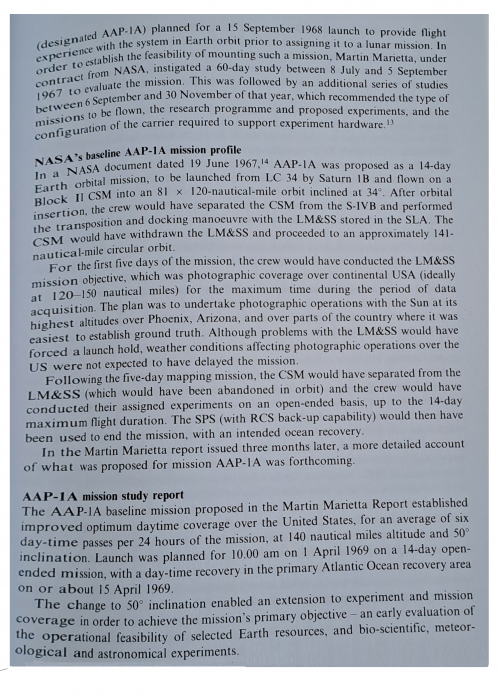
AAP-1A from this wonderful book https://www.amazon.com/Apollo-Forgotten-Missions-Shayler-David/dp/1852335750
Two sources are mentionned @leovinus2001 if you are interested...


Two sources are mentionned @leovinus2001 if you are interested...

From David Portree excellent blog https://spaceflighthistory.blogspot.com/2023/01/the-proper-course-for-lunar-exploration.html
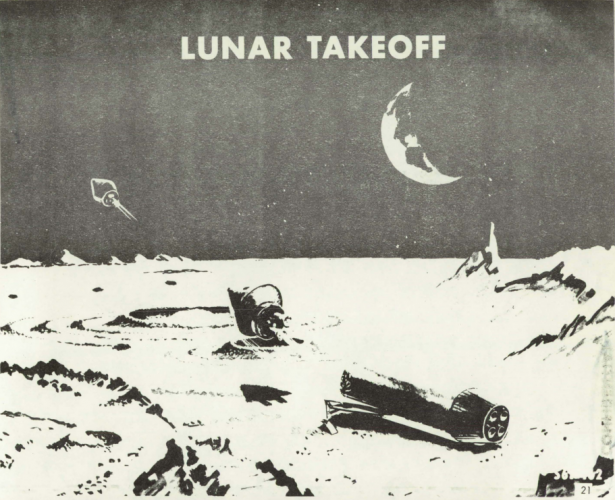
AAP lunar missions could be repeat of classic Apollo, probably similar to J class missions. Alternatives: AES, ALSS and LESA.
Most important point: LM is a loosy cargo vehicle as it needs Apollo, LOR and astronauts to go to the Moon. Mostly because of JFK deadline. LESA on the contrary is kind of Direct Ascent return, but for cargo only. With RL-10 hydrogen engines for maximum performance.
End result: LM truck can deliver 4 metric tons but LESA ? thrice more, 12 metric tons.
AAP lunar missions could be repeat of classic Apollo, probably similar to J class missions. Alternatives: AES, ALSS and LESA.
Most important point: LM is a loosy cargo vehicle as it needs Apollo, LOR and astronauts to go to the Moon. Mostly because of JFK deadline. LESA on the contrary is kind of Direct Ascent return, but for cargo only. With RL-10 hydrogen engines for maximum performance.
End result: LM truck can deliver 4 metric tons but LESA ? thrice more, 12 metric tons.
Evans' second candidate program would be based on the Apollo Extension System (AES) that NASA had begun to study as early as 1963. This option would, he explained, permit "sophisticated orbital survey. . . to gather data on the entire surface of the [M]oon," as well as lunar surface stays lasting up to 14 days.
Two Saturn V rockets would be required for each AES lunar surface mission. The first would launch a piloted CSM and an automated cargo LEM loaded with 2500 pounds of supplies and equipment. The CSM would transport the cargo LEM (often called a LEM Shelter) to lunar orbit, then the LEM would separate and land automatically on the Moon. The CSM and its crew would then return to Earth.
The second Saturn V would launch three astronauts and Apollo CSM and LEM spacecraft "improved" to enable long missions. Two astronauts would land in the improved LEM near the cargo LEM, which would serve as their shelter during their 14-day surface stay. They would use a small surface rover or a pair of flying vehicles to explore an area five miles in radius.
The third candidate program, based on Apollo Logistic Support System (ALSS) studies, would also use two Saturn Vs per 14-day surface expedition, but would differ from AES in that the LEM Truck, a beefed-up LEM descent stage capable of delivering four tons of payload to the lunar surface, would replace the cargo LEM. The LEM Truck's principal payload, Evans wrote, would be the Mobile Laboratory (MOLAB), a pressurized rover that would permit two astronauts to explore an area 50 miles in radius.
Evans noted that, in spite of their impressive capabilities, the AES and ALSS cargo delivery systems would be "inherently inefficient" because astronauts would need to travel to the Moon and back to deliver each automated cargo lander. This would mean that the mass of the CSM systems required for crew support and Earth-return (life support, lunar-orbit departure and course-correction propellants, reentry heat shield, and parachutes) would need to be subtracted from the mass of the payload that the AES and ALSS systems could deliver to the Moon's surface.
Lunar Exploration Systems for Apollo (LESA), the fourth program Evans described, would avoid this inefficiency. LESA, Evans explained, was "a family of shelters, vehicles, and other equipment. . . tailored to support not only short-term reconnaissance operations by two or three astronauts but also semi-permanent scientific stations manned by up to 12 or even 18 men."
The Saturn V-launched LESA Shelter lander would follow a direct-ascent trajectory from Earth to the Moon, so would need no CSM. This would enable delivery of up to 14 tons of payload. Crew delivery at first would be by improved Apollo CSM and an upgraded LEM capable of landing three men on the Moon. The CSM would remain in hibernation in lunar orbit while the crew was on the surface; the LEM would hibernate on the surface while its crew lived in the LESA Shelter.
A 90-day, three-man LESA 1 expedition would explore an area 80 miles in radius; a 365-day, 12-to-18-man LESA 3 outpost made up of additional Shelters and other specialized modules (for example, a nuclear power plant) and relying on advanced direct-ascent landers for crew rotation and resupply would survey an area 200 miles in radius. The former would require a total of three Saturn V launches; the latter, 10 to 17 Saturn V launches.
Developing the AES would cost an additional $500 million over the $20 billion already committed to Apollo, Evans estimated, while ALSS development would cost $1 billion. Developing LESA 1 would cost $2 billion — just 10% of the amount already committed to Apollo. LESA 3 would evolve from LESA 1 for an additional $800 million.
Evans then proposed a two-phase post-Apollo lunar program. In Phase I, which would be based on AES, ALSS, or LESA 1, astronauts would explore three areas of the Moon judged to be of "major geoscientific interest" totaling up to 1800 square miles ("a meager sample," Evans noted, "of the total 10 million square miles of lunar surface"). In Phase II, which would be based on LESA 3 modified for six astronauts, NASA would maintain an outpost on the Moon for four years.
Evans compared operations costs of the four programs. He determined that a combination of LESA 1 in Phase I and modified LESA 3 in Phase II would be most economical, with a total cost of less than $8 billion. ALSS/modified LESA 3, with an operations cost of $8.3 billion, would also be economically acceptable, while AES/modified LESA 3 would be "a disastrous selection" — together, the two phases would cost a total of about $20 billion.
Last edited:
Similar threads
-

-

-
-
-
Large space structure experiments for Apollo Applications Program (AAP)
- Started by Triton
- Replies: 12