Current SM-6 production numbers are in the 200-300 range I believe.

FY26 PB:
FY 2024: 108 SM-6 IA @ $5.3M
FY 2025: 103 SM-6 IA @ $5.5M
FY 2025: 139 SM-6 IA @ $5.3M
FY 2026 provides the final allocation of $31.397 million (decrease from $92.079 million in FY 2025) to continue the effort for replication of special tooling and test equipment to increase SM-6 Block IA production capacity up to 200 missiles per year by FY 2028.
 
FY 2026 provides the final allocation of $31.397 million (decrease from $92.079 million in FY 2025) to continue the effort for replication of special tooling and test equipment to increase SM-6 Block IA production capacity up to 200 missiles per year by FY 2028.
Yeah that's the rate increase I was thinking of. Still no path to get to 500+ and the Navy is not going to fund enough missiles to get to that level. It really needs a OSD push with a joint possibly tri service demand driving that increase.
 
Yeah that's the rate increase I was thinking of. Still no path to get to 500+ and the Navy is not going to fund enough missiles to get to that level. It really needs a OSD push with a joint possibly tri service demand driving that increase.
The real criminality is the lack of an in-production SM-2 replacement.
 
Yeah that's the rate increase I was thinking of. Still no path to get to 500+ and the Navy is not going to fund enough missiles to get to that level. It really needs a OSD push with a joint possibly tri service demand driving that increase.

Would any allied nations be able or willing to make use of it? Though there again, probably not enough purchases to move the needle even if so.
 
The real criminality is the lack of an in-production SM-2 replacement.

Is not there a blk3C upgrade kit?

I think the problem there is there are too many SM-2s already in service and they are not useful against the top tier threats. IMO SM-2 ultimately gets replaced by something dual or quad packed with less range but superior end game and deeper magazine.
 
The USAF could probably make good use of the AIM-174 especially if it expands the current F-15EX fleet which is a strong possibility. But then again, it could well have other more optimized missiles in the works. Current SM-6 production numbers are in the 200-300 range I believe.

I assume USAF has or is developing their own long range weapon. SM-6 has a lot of networking advantages for the USN that probably better justify the high costs (I suspect an anti ship mode is or will be an option as well). It probably is a less attractive option for the Air Force, given the cost and size.
 
Would any allied nations be able or willing to make use of it? Though there again, probably not enough purchases to move the needle even if so.
I think demand from external navies will not be substantial to drive up volumes. For land based applications, the price tax pretty much forces everyone but a very small number out..even if it was fully integrated into say PATRIOT or THAAD architectures.
 
Since this is a SM thread, it would be interesting to see if a combined joint demand (Navy, Army and perhaps Air Force) pushes SM-6 numbers up. So far, the production ramp has been anemic and coupled with performance improvements (guidance etc) has actually led to higher unit cost despite increases on the production side. Somewhere between 500-1,000 units a year should begin pushing unit cost down on the newer SM-6 variants and if the USAF jumps on the AIM-174 to arm its legacy platforms then this might create enough demand for such a production quantity.
USAF is not going to want SM-6s.

It doesn't talk to any USAF systems.

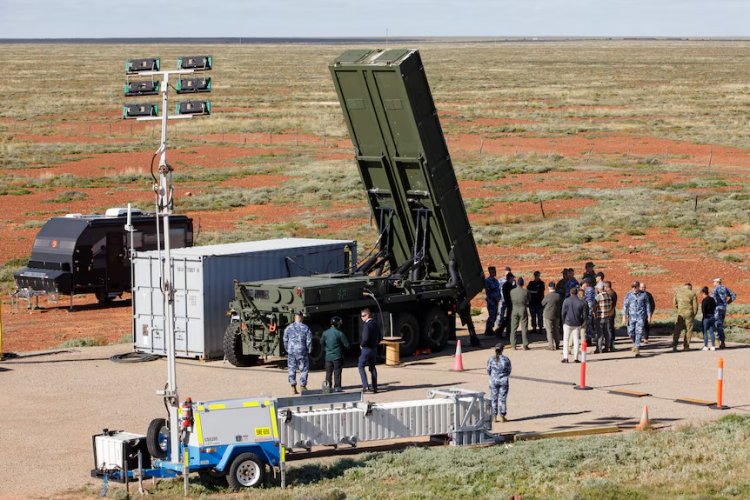
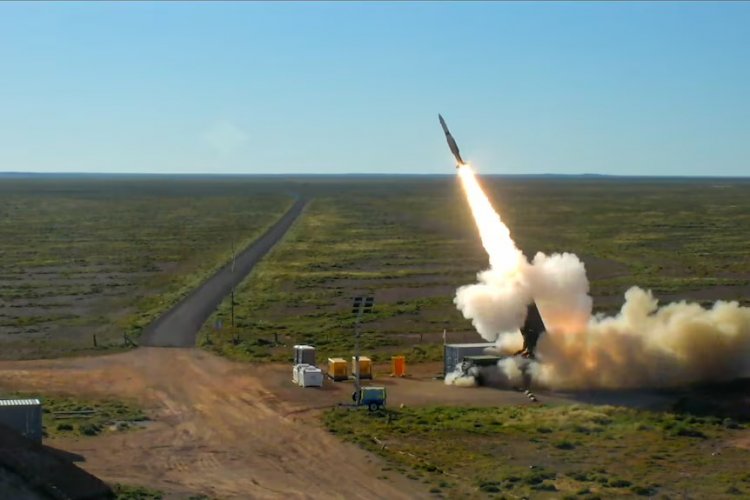
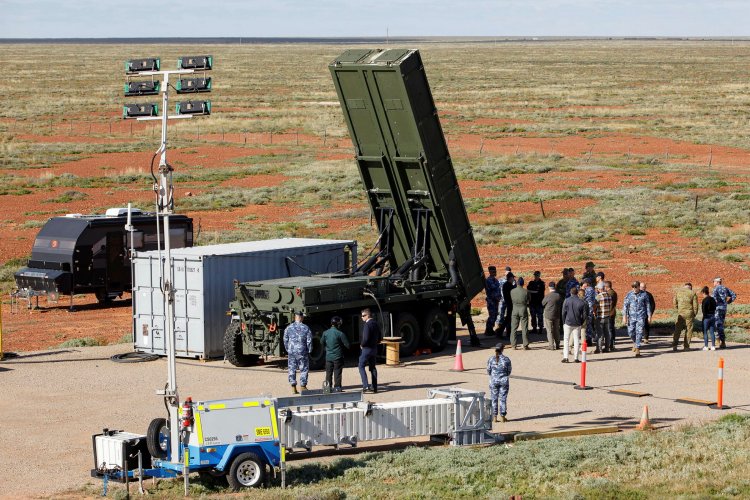
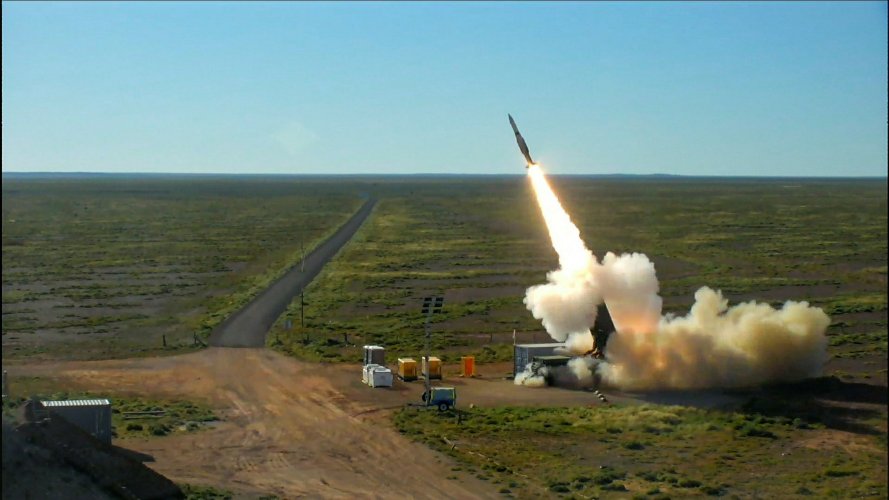
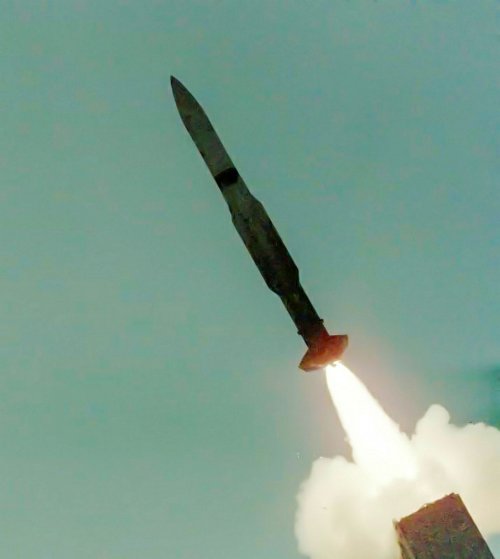
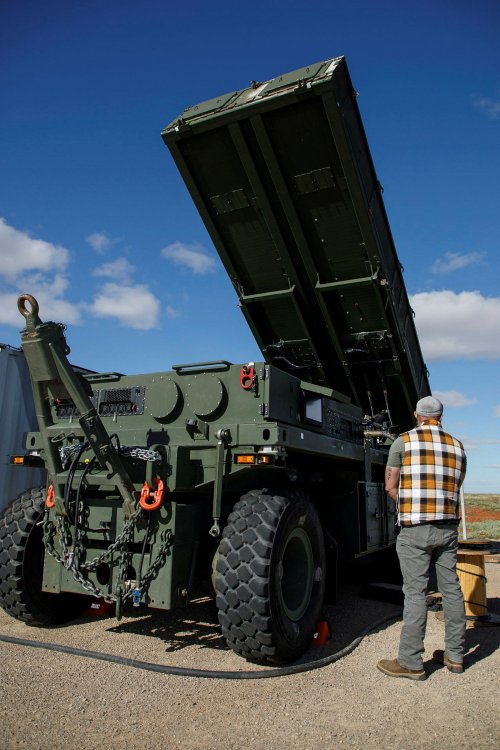
The Army was willing to accept SM-6s because they were an in-service, near-hypersonic weapon with ~500km range.
 
Northrop Grumman Corporation (NYSE: NOC) was awarded a $94.3 million contract by the U.S. Navy to develop and qualify a new 21-inch diameter second-stage solid rocket motor (SSRM) for the Navy’s extended-range missile programs to deter and defeat fast-moving air, surface and hypersonic threats.
  • The SSRM is a low-risk, rapidly developed design that enables the Navy to quickly and cost-effectively field an extended-range hypersonic defense capability.
  • The high-performance 21” diameter rocket motor is engineered to significantly extend range and speed across various missions, including air warfare, surface warfare, land strike, and ballistic missile defense.
  • The Navy has expressed interest for potential deployment of Northrop Grumman's extended range propulsion technology across various platforms.
  • Continued design and low-rate initial production of 60 units for testing and delivery will take place at Northrop Grumman’s Propulsion Innovation Center in Elkton, Md.
 
R/AIM-174 IIRC utilizes a variant of the C3 seeker, albeit with a bigger antenna IIRC.

So the question in a peer question becomes what high value targets are vulnerable to a two or three missile salvo with such a seeker (for the USN I suspect there are more, potentially many more, than for F-47 for example)?

A perusal of the JATM thread would suggest the USAF (just to focus on a single service) may want its high-end very long range weapons to function very differently - be it seeker/fuzing, warhead, terminal agility, propulsion etc etc). After all, as has been discussed above, Gunslinger ain’t cheap.

That said, the USN has been on record several times stating that Gunslinger is an interim solution. Given USN ordnance dimensional limitations and the fact that USAF envisions HACM as an external store, at least for threshold types like EX - at least to my knowledge - this would suggest there is another Joint LRAAM in the pipeline and/or the USN might well be obligated to increment AIM-174 with seeker fuzing comms and effects improvements.

At any rate RIM-174 seems likely to be a workhorse missile for the fleet - analogous to the Super Hornet for CVWs - for some time, and any time some yahoo decides to light off some ballistic missiles and there’s a USN VLS and fire control system nearby - you can go ahead and assume you’re about to burn through a ton of stock.

Edited to say yes im assuming HACM will have some intercept capability, totally speculating.

And who knows what AIM-260 will bring. If we drop max ranges and focus on engagement zones and NEZ outright as well as pound for pound, adjusted by the Murder Factor (maximum number of said missile that can be carried by an aircraft, however operationally stupid and impractical), modified by the squiggle factor of the fraction of the MF that can be carried internally makes for a high bar indeed!

 
Last edited:
Aside from the usual aircraft high value targets it's the age of counter missile warfare. Cruise and ballistic missiles are the new target category being focused on for the general A2A (intercept) missiles. Technically not new we just didn't made it a common capability.
 
Why? Couldn't an adaptor pylon be developed that enables interface between the AIM-174B seeker electronics and the launch aircraft (No doubt a late model F-15).
It's not so much the carriage problem, it's the post-launch problem. Standards are designed to get targeting information from naval systems, and the USAF just flat doesn't have those systems at all.
 
Standards are designed to get targeting information from naval systems, and the USAF just flat doesn't have those systems at all.

I would've thought the USAF and USN would've used a common data-link standard?
 
Oh, dear the Navy's data links are a bigger mess than the other services. It's been only a "few" years since USAF could talk better with the Army. The symbology systems are all different, too. A familiar user could guess but still.... All this should have been unified ages ago but now it's a hell of work.
 
I am not familiar with the details, but the USN datalinks likely grew out of very different requirements that involved ships as major data inputs and receivers. It is not hard to imagine how that drove both hardware and software in a different direction from the Air Force. Frequency band widths might also be fundamentally different.
 
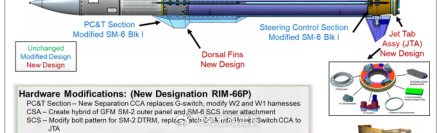
"As reported by 笑脸男人 on January 17, 2026, the SM-2 Block IIIC/CU medium-range surface-to-air missile was displayed at the Surface Navy Association 2026 symposium, providing a detailed look at the latest Standard Missile-2 configuration used by the U.S. Navy. The variant, also known as RIM-66P, incorporates a hybrid semi-active and active radio-frequency seeker, updated control features, and revised internal electronics. The design focuses on extending service life while maintaining compatibility with existing naval launch systems."

See:

 
I just stumbled on this video discussing the all the versions of the Standard missile:


Standard Missile Family Explained
You’re the captain of a U.S. Navy ship in the middle of the ocean. The sea is calm, the skies are clear, and everything feels under control. But suddenly, your radar lights up. An enemy aircraft is heading straight for you, and it’s carrying a deadly missile. What do you do?​
This isn't just a thrilling hypothetical - it's something Navy ships are designed to handle. And as captain, you have one of the world's most advanced missile defense systems: the Standard Missile family. These missiles form a layer of defense to ensure that no threat goes unanswered. Let’s dive into this story, and the differences between them, starting with the very first Standard Missile, the SM1.​
Disclaimer:All information provided is based on publicly available sources and subject to updates and revisions
.==========================================
Timestamps:
00:00 Intro
00:47 SM-1 (RIM-66 Standard)
01:41 SM-2 (RIM-66 Standard MR)
02:47 SM-3 (RIM-161 Standard Missile 3)
04:10 SM-6 (RIM-174 Standard ERAM)
05:55 RIM-116 Rolling Airframe Missile (RAM)
06:41 RIM-162 Evolved SeaSparrow Missile (ESSM)
07:21 SM-4 & SM-5
 

Similar threads

Back
Top Bottom