You are using an out of date browser. It may not display this or other websites correctly.
You should upgrade or use an alternative browser.
You should upgrade or use an alternative browser.
UK SST projects
- Thread starter starviking
- Start date

blackkite
Don't laugh, don't cry, don't even curse, but.....
- Joined
- 31 May 2007
- Messages
- 9,421
- Reaction score
- 9,281
Hi!
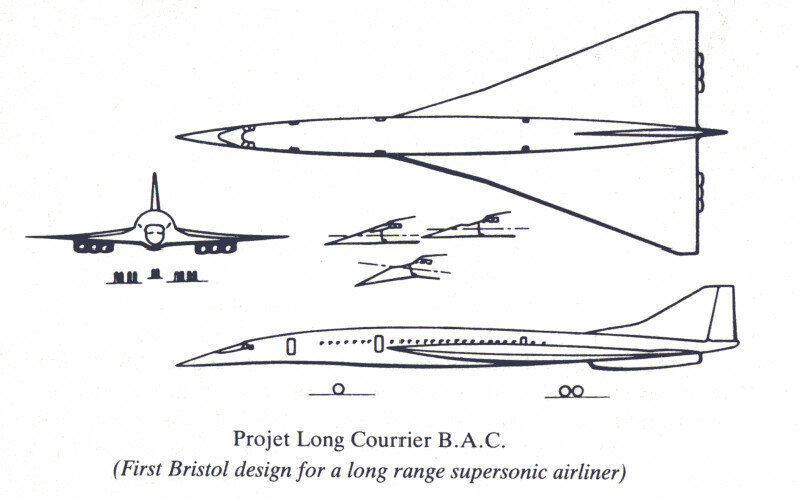
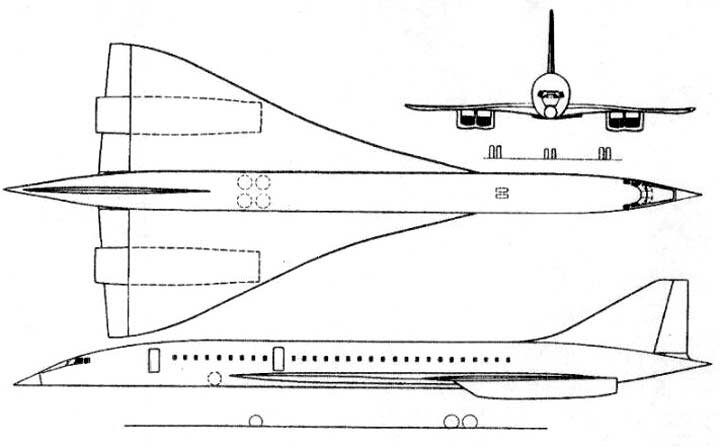
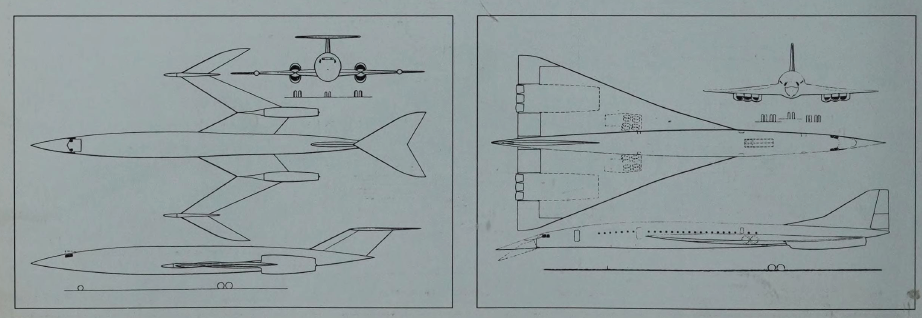
The first Bristol design for a six engined long range supersonic airliner.
http://www.engineerswalk.co.uk/ar_walk.html
The first Bristol design for a six engined long range supersonic airliner.
http://www.engineerswalk.co.uk/ar_walk.html
Attachments

- Joined
- 26 May 2006
- Messages
- 37,567
- Reaction score
- 19,617
Hi,
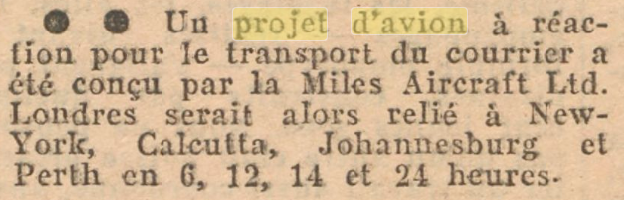
I think this was a Project in post # 109,
A jet aircraft project for the transport of mail has
was designed by Miles Aircraft Ltd.
London would then be linked to New York, Calcutta, Johannesburg and
Perth in 6, 12, 2 and 9 pm.
I think this was a Project in post # 109,
A jet aircraft project for the transport of mail has
was designed by Miles Aircraft Ltd.
London would then be linked to New York, Calcutta, Johannesburg and
Perth in 6, 12, 2 and 9 pm.
Attachments

athpilot
Fly me to the moon...
- Joined
- 18 November 2012
- Messages
- 430
- Reaction score
- 531
<iframe width="560" height="315" src="
View: https://www.youtube.com/embed/CeDrnUiFxpo
" title="YouTube video player" frameborder="0" allow="accelerometer; autoplay; clipboard-write; encrypted-media; gyroscope; picture-in-picture" allowfullscreen></iframe>
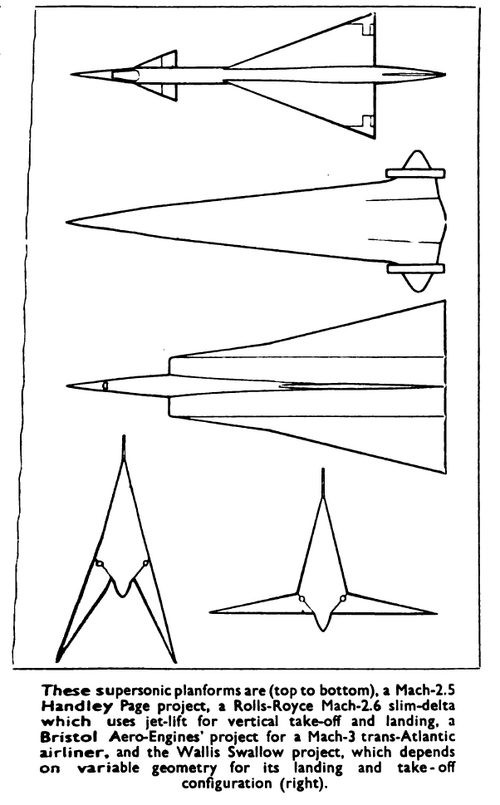
"The Mach 2.5 Vickers Swallow
The Vickers Swallow was a Mach 2.5 supersonic aircraft project headed by Barnes Wallis, working at the British aircraft company Vickers-Armstrongs.
The Vickers Swallow lacked conventional features, such as a vertical stabiliser and rudder, instead using the movement of variable geometry wings and swiveling engines mounted on pylons far out on the wing tips as its primary means of flight control.
Multiple roles were envisioned for the full-scale Swallow. It was initially viewed as suitable for a very long distance airliner; projections of its range would have enabled a non-stop England-Australia route to be served. Later on, the Swallow was increasingly viewed as a potential supersonic successor to the subsonic Vickers Valiant, one of the RAF's V bombers." (from the discreption)
" title="YouTube video player" frameborder="0" allow="accelerometer; autoplay; clipboard-write; encrypted-media; gyroscope; picture-in-picture" allowfullscreen></iframe>
"The Mach 2.5 Vickers Swallow
The Vickers Swallow was a Mach 2.5 supersonic aircraft project headed by Barnes Wallis, working at the British aircraft company Vickers-Armstrongs.
The Vickers Swallow lacked conventional features, such as a vertical stabiliser and rudder, instead using the movement of variable geometry wings and swiveling engines mounted on pylons far out on the wing tips as its primary means of flight control.
Multiple roles were envisioned for the full-scale Swallow. It was initially viewed as suitable for a very long distance airliner; projections of its range would have enabled a non-stop England-Australia route to be served. Later on, the Swallow was increasingly viewed as a potential supersonic successor to the subsonic Vickers Valiant, one of the RAF's V bombers." (from the discreption)

- Joined
- 6 June 2006
- Messages
- 14,667
- Reaction score
- 20,612
Hazegrayart worked his magic once again. That, and the monster Hiller chopper catching S-IB midair. I played the former with U2 "still haven't found what I'm looking for" while the Hiller got Wagner "Rise of the Valkyries" as its OST.
- Joined
- 26 May 2006
- Messages
- 37,567
- Reaction score
- 19,617
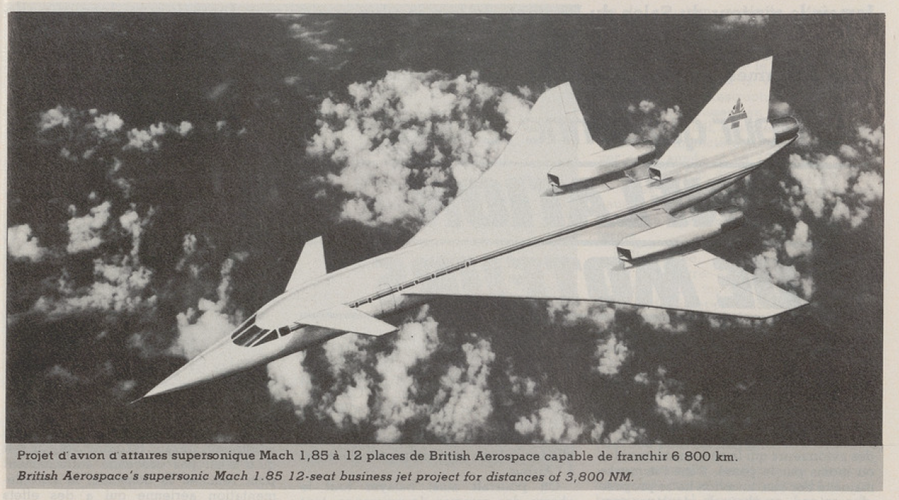
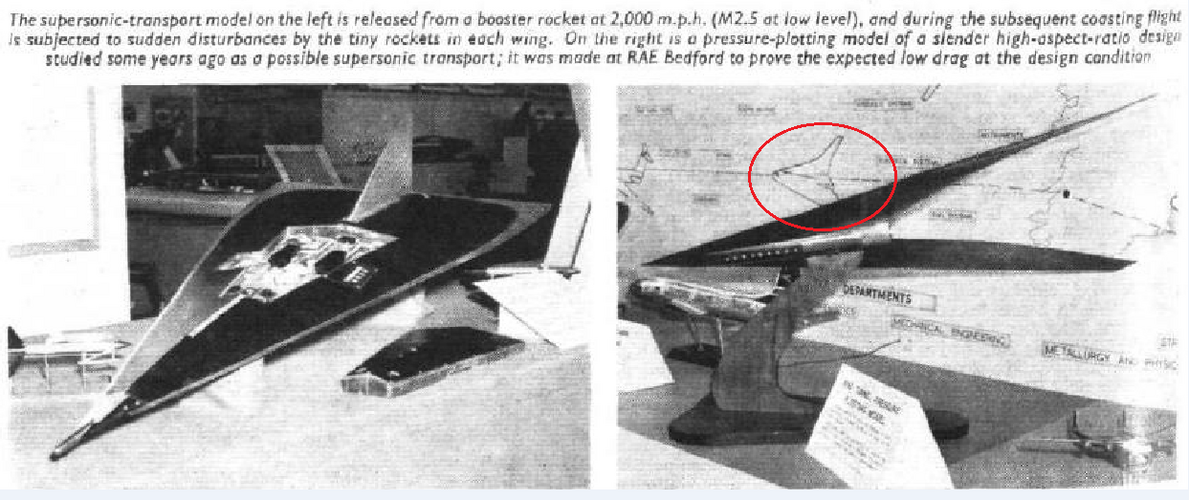
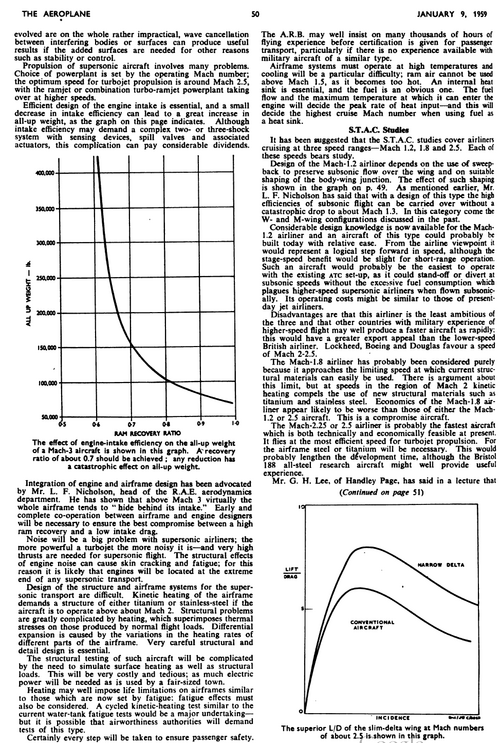
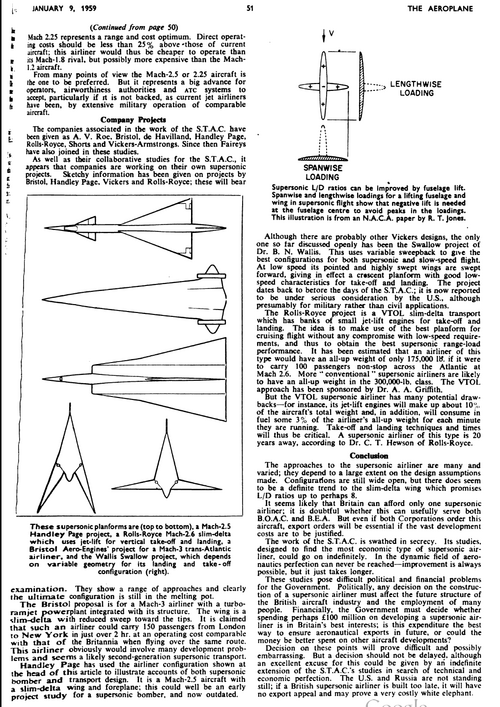
From Krila 3/1987.
From Aviation magazine 1987.
Attachments
- Joined
- 26 May 2006
- Messages
- 37,567
- Reaction score
- 19,617
Attachments
- Joined
- 26 May 2006
- Messages
- 37,567
- Reaction score
- 19,617

Motocar
I really should change my personal text
- Joined
- 16 May 2014
- Messages
- 1,288
- Reaction score
- 1,593
Short video

 www.facebook.com
The Vickers Swallow | A British Supersonic Airliner and Bomber Aircraft #aviation #aviationgeeks #supersonic #vickersswallow #madeinUK #englishaviation #madeinamerica #fastaircraft #aircraft #PanAmerica #avgeeks #aviationdaily #viral #piloting | Jay
201K views, 4.7K likes, 104 comments, 1.9K shares, Facebook Reels from Jay Cee: The Vickers Swallow | A British Supersonic Airliner and Bomber Aircraft #aviation #aviationgeeks #supersonic...
www.facebook.com
- Joined
- 26 May 2006
- Messages
- 37,567
- Reaction score
- 19,617
Hi,
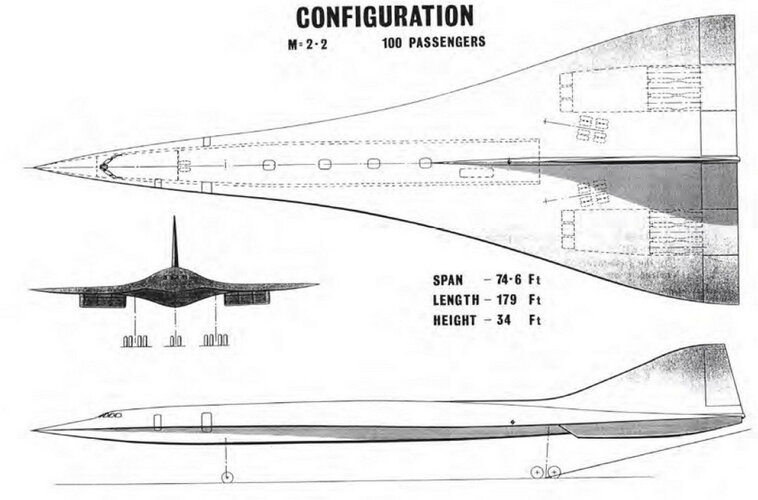
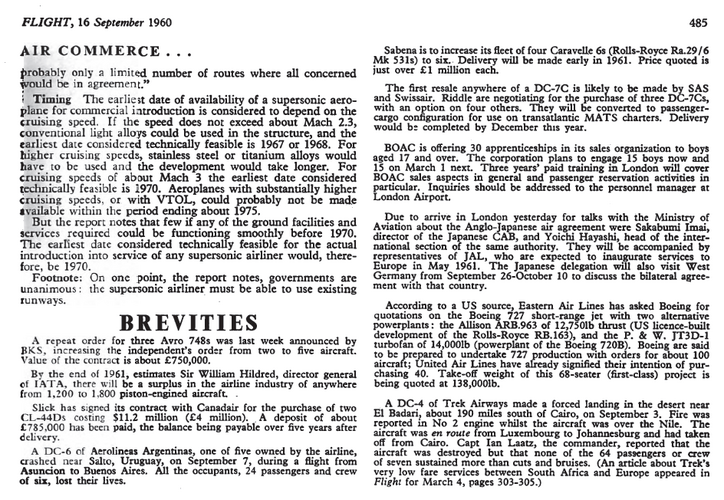
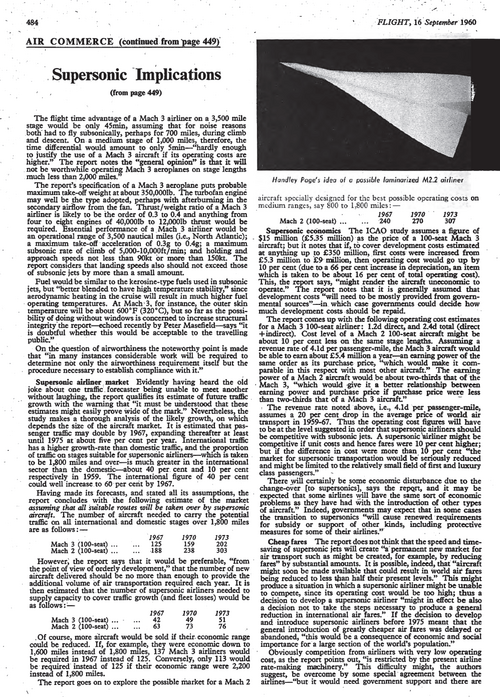
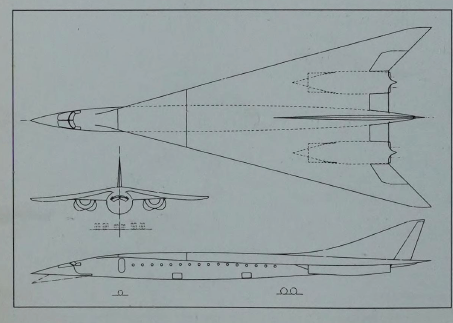
here is the Handley Page's idea of a possible laminarized M2.2 airliner of 1958,
may be it was HP.109.
http://www.flightglobal.com/pdfarchive/view/1960/1960 - 2002.html
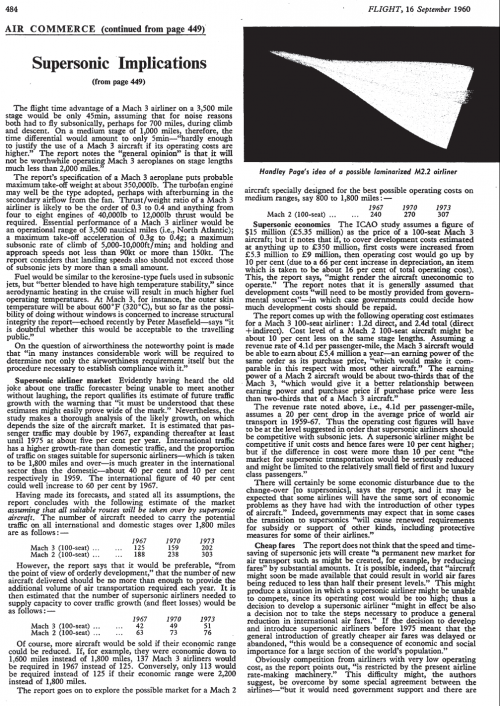
The whole article.
Attachments

Grey Havoc
ACCESS: USAP
- Joined
- 9 October 2009
- Messages
- 24,421
- Reaction score
- 17,889
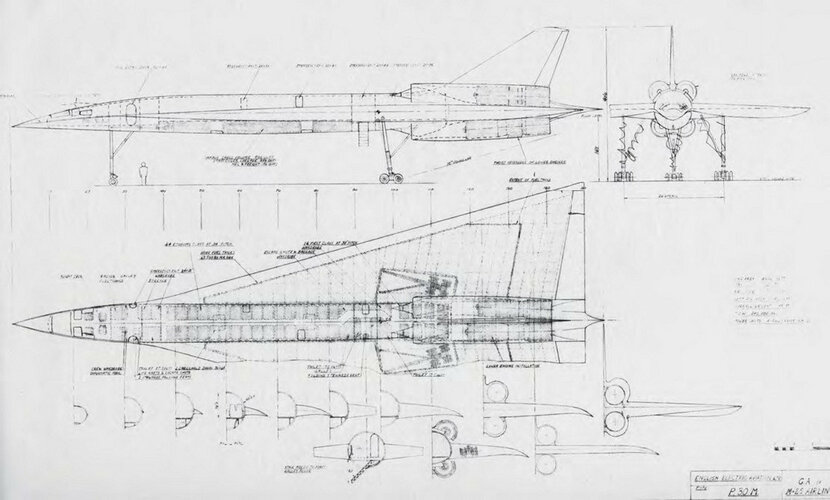
Another version of that drawing of the EE P.30N:

 elpoderdelasgalaxias.wordpress.com
EE P.30N: For SST-arters (IV).
English Electric undertook under the P.30 project a number of design studies for a SST with a max speed of up to Mach 3 in 1959/60. The Mach 2.5 P.30N was one of the last iterations, powered by fou…
elpoderdelasgalaxias.wordpress.com

targetpractice
ACCESS: Confidential
- Joined
- 30 December 2024
- Messages
- 145
- Reaction score
- 553
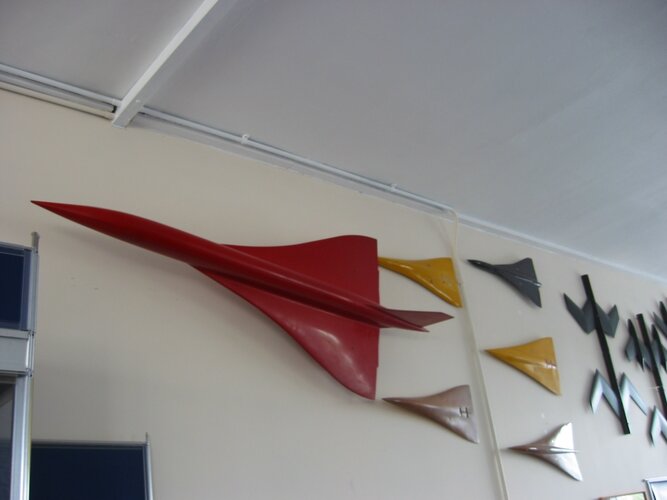
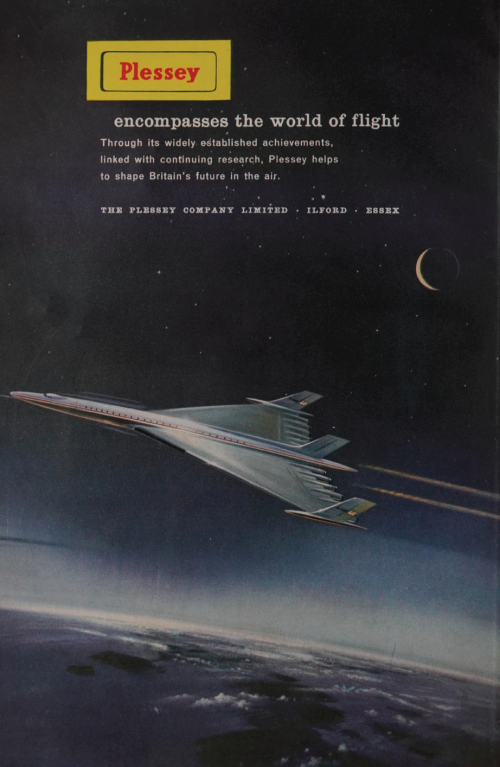
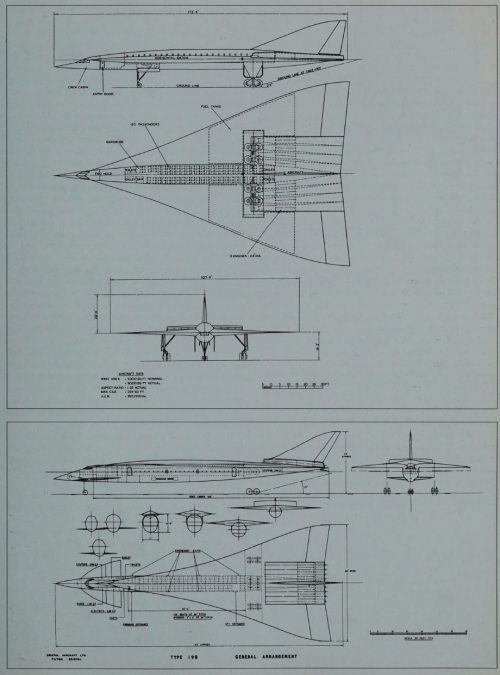
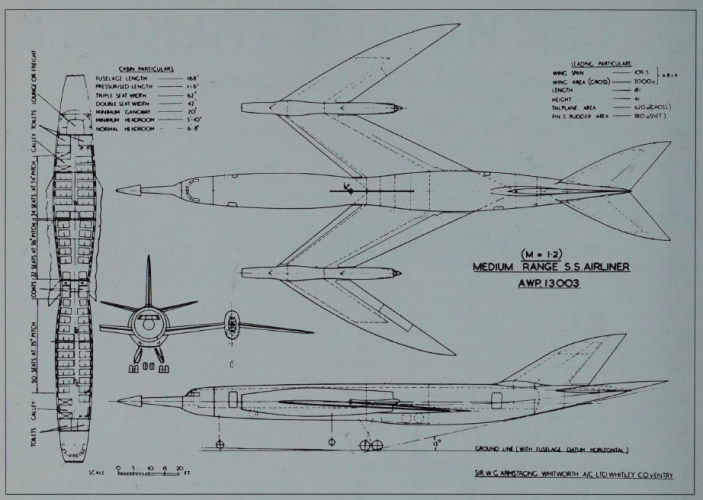
Can anyone help ID this model? The photo was taken in the Midlands Air Museum, but I didn't see a label. There are some similarities with the Bristol 198, but I think the engine pod, and wing/body relationship don't quite match. I'm also assuming the livery is a recent, incongruous, addition.


targetpractice
ACCESS: Confidential
- Joined
- 30 December 2024
- Messages
- 145
- Reaction score
- 553
Thank you!
- Joined
- 26 May 2006
- Messages
- 37,567
- Reaction score
- 19,617
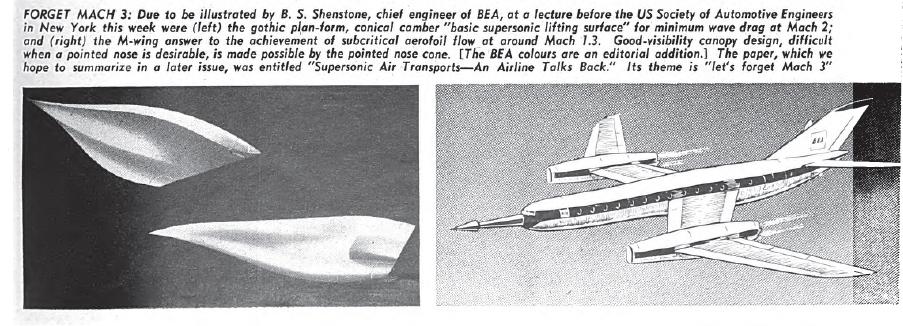
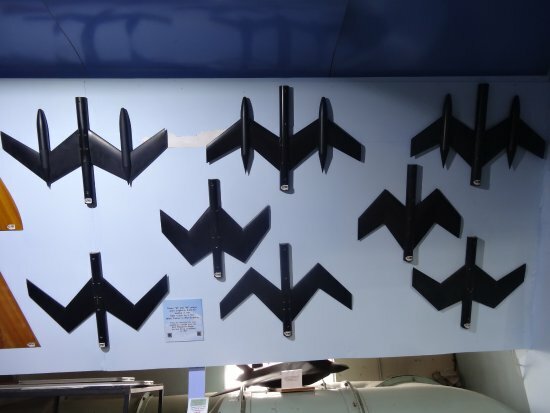
From Flight 1960,
FORGET MACH 3: Due to be illustrated by B. S. Shenstone, chief engineer of BEA, at a lecture before the US Society of Automotive Engineers
in New York this week were (left) the gothic plan-form, conical camber “basic supersonic lifting surface” for minimum wove drag ot Mach 2;
and (right) the M-wing answer to the achievement of subcritical aerofoil flow at around Mach 1.3. Good-visibility canopy design, difficult
when a pointed nose is desirable, is made possible by the pointed nose cone. [The BEA colours are an editorial addition.] The paper, which we
hope to summarize in a later issue, was entitled “Supersonic Air Transports—An Airline Talks Back.” Its theme is “let’s forget Mach 3”
FORGET MACH 3: Due to be illustrated by B. S. Shenstone, chief engineer of BEA, at a lecture before the US Society of Automotive Engineers
in New York this week were (left) the gothic plan-form, conical camber “basic supersonic lifting surface” for minimum wove drag ot Mach 2;
and (right) the M-wing answer to the achievement of subcritical aerofoil flow at around Mach 1.3. Good-visibility canopy design, difficult
when a pointed nose is desirable, is made possible by the pointed nose cone. [The BEA colours are an editorial addition.] The paper, which we
hope to summarize in a later issue, was entitled “Supersonic Air Transports—An Airline Talks Back.” Its theme is “let’s forget Mach 3”