snne
ACCESS: Top Secret
- Joined
- 3 July 2022
- Messages
- 2,459
- Reaction score
- 9,042



...
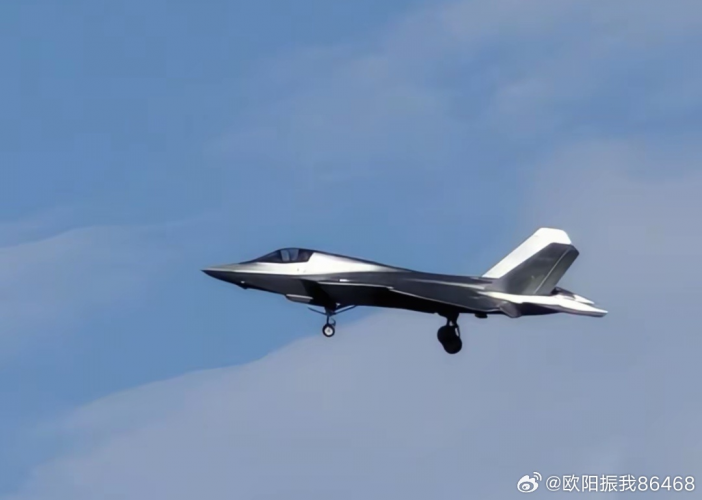
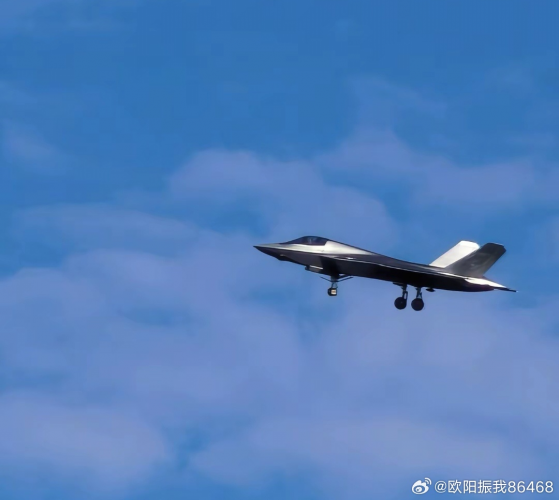
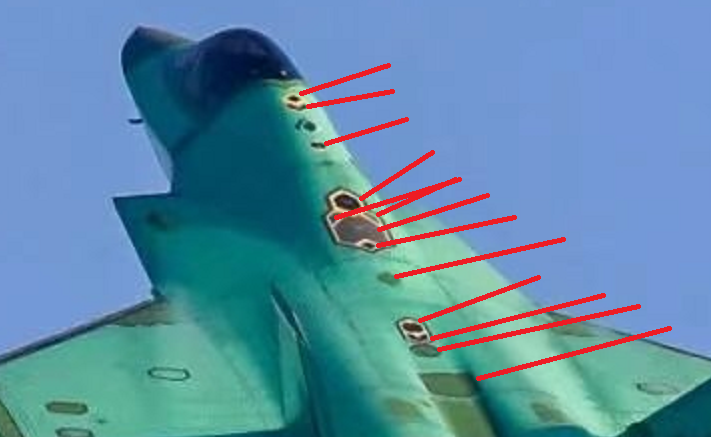
In short seems like a total nothing burger unless more concrete and certainly better resolution clues surface.

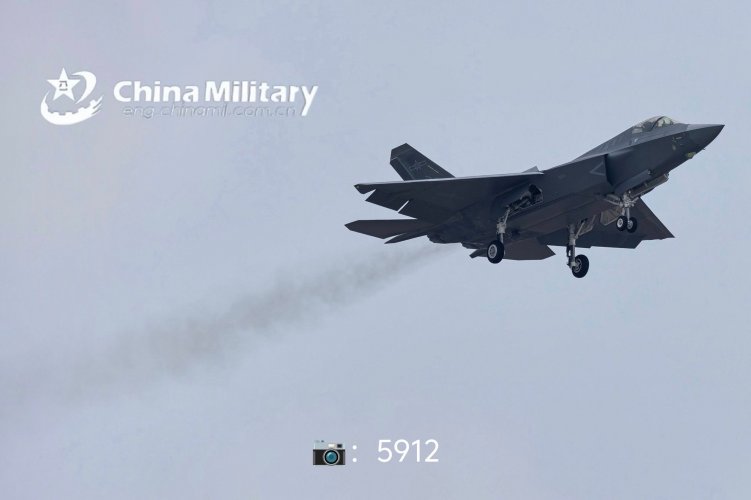
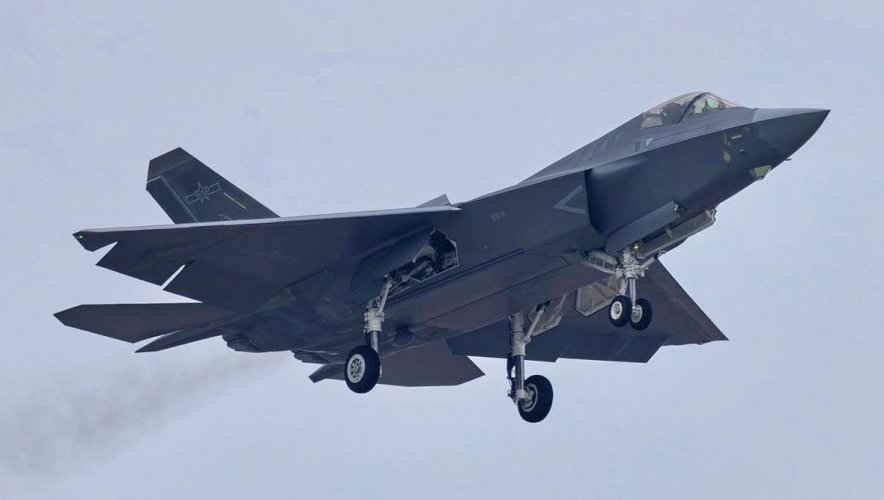
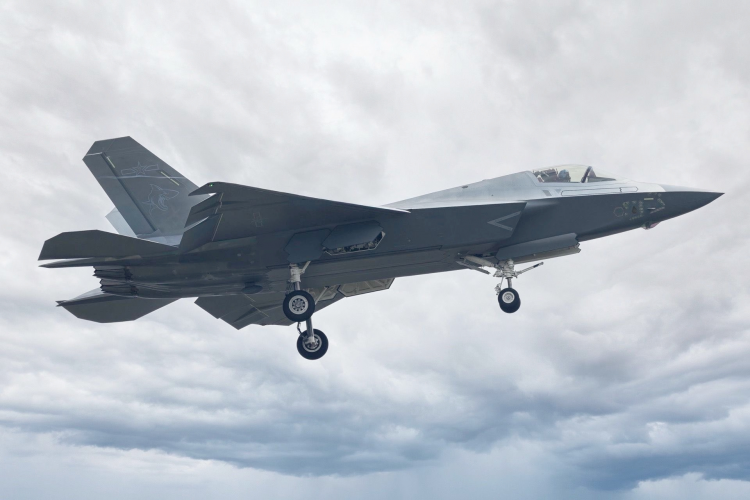
Hey so I’m a big fan of the J-35 and the PLA have been putting out some of the greatest military works in recent years. But I do have some questions regarding the J-35 design choices.
I can’t help to see it as a modern MiG-29. From what I can gather I have no idea what “role” does it intend to play that the J-20 can’t do it better. And if the argument comes down to cost, touché but a modern twin engine stealth jet can’t possible bring down cost much if you’re operating hundreds of them.
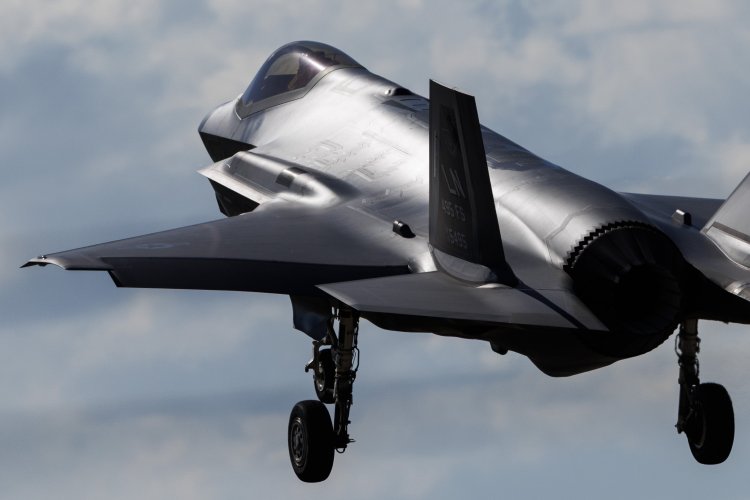
Let’s just use the F-35A and J-20 as a comparison. I do deeply respect what Lockheed managed to do with the F-35A despite the B variant dragging the entire program. The F-35A still holds an impressive internal fuel load, internal weapon space and avionics suite (3 things that I think it’s the most important aspect of a modern fighter)
So first of all, the J-35A is intended as a multirole with more emphasis on A2A, why can’t the J-20 do it instead?
The twin engine choice, with a brand new engine btw, wouldn’t it just drive up program and maintenance cost.
Avionics wise, from its size vs the J-20, wouldn’t you assume the J-20 has more real estate for a more complete avionic suite?
Weapons bay, again looks very similar to the J-20, maybe it would the deeper than it but from its slim size, its debatable as there isn’t any pictures out there of the J-35 IWB.
Internal fuel load, obviously lower than the J-20, and somehow even lower than the F-35A (which respectfully it can hold an impressive 8.3 tons of fuel), which makes me doubt that they state that the J-35A has a combat range ~1250km similar to that as a F-35A.
Every angle I look at it from seems odd cause it reminds me of the MiG-29. That whatever it does it’s big brother Su-27 or competitor F-16 somehow does it better or simpler. If the argument does come back to cost, wouldn’t fielding more J-20’s save up on maintenance cost by having commonality across the Air Force?
Mig-29 was born to a highly specialist requirement (which until the conflict in Ukraine was mostly its downfall), and the problem went well beyond the price. Less specialized fighters rarely fall into the same pit.I can’t help to see it as a modern MiG-29. From what I can gather I have no idea what “role” does it intend to play that the J-20 can’t do it better. And if the argument comes down to cost, touché but a modern twin engine stealth jet can’t possible bring down cost much if you’re operating hundreds of them.
B variant didn't drag the F-35 program down. It was the C variant and broader length limitation.Let’s just use the F-35A and J-20 as a comparison. I do deeply respect what Lockheed managed to do with the F-35A despite the B variant dragging the entire program. The F-35A still holds an impressive internal fuel load, internal weapon space and avionics suite (3 things that I think it’s the most important aspect of a modern fighter)
J-35A has a different, multirole IRST. J-35A is assumed (we have an article, though not a definitive proof) to have deeper bays.So first of all, the J-35A is intended as a multirole with more emphasis on A2A, why can’t the J-20 do it instead?
Mig-29 (9-12) carried as much fuel inside as comparable aircraft carried per engine; furthermore, it was born overweight, as early Soviet composites failed to deliver.Every angle I look at it from seems odd cause it reminds me of the MiG-29. That whatever it does it’s big brother Su-27 or competitor F-16 somehow does it better or simpler. If the argument does come back to cost, wouldn’t fielding more J-20’s save up on maintenance cost by having commonality across the Air Force?

A more accurate comparison would be the F-15 and F/A-18, if the USAF had bought F-17/F-18L (an inverse of what actually happened).Hey so I’m a big fan of the J-35 and the PLA have been putting out some of the greatest military works in recent years. But I do have some questions regarding the J-35 design choices.
I can’t help to see it as a modern MiG-29. From what I can gather I have no idea what “role” does it intend to play that the J-20 can’t do it better. And if the argument comes down to cost, touché but a modern twin engine stealth jet can’t possible bring down cost much if you’re operating hundreds of them.
Let’s just use the F-35A and J-20 as a comparison. I do deeply respect what Lockheed managed to do with the F-35A despite the B variant dragging the entire program. The F-35A still holds an impressive internal fuel load, internal weapon space and avionics suite (3 things that I think it’s the most important aspect of a modern fighter)
So first of all, the J-35A is intended as a multirole with more emphasis on A2A, why can’t the J-20 do it instead?
The twin engine choice, with a brand new engine btw, wouldn’t it just drive up program and maintenance cost.
Avionics wise, from its size vs the J-20, wouldn’t you assume the J-20 has more real estate for a more complete avionic suite?
Weapons bay, again looks very similar to the J-20, maybe it would the deeper than it but from its slim size, its debatable as there isn’t any pictures out there of the J-35 IWB.
Internal fuel load, obviously lower than the J-20, and somehow even lower than the F-35A (which respectfully it can hold an impressive 8.3 tons of fuel), which makes me doubt that they state that the J-35A has a combat range ~1250km similar to that as a F-35A.
Every angle I look at it from seems odd cause it reminds me of the MiG-29. That whatever it does it’s big brother Su-27 or competitor F-16 somehow does it better or simpler. If the argument does come back to cost, wouldn’t fielding more J-20’s save up on maintenance cost by having commonality across the Air Force?
Iirc stabilizers were originally meant to be plastic, and they always tried to get them back(9-15 had them, but since the SU collapsed, only 9-41/47 actually got them to production). As it turned out, China actually achieved big composite parts in production earlier, on J-7E.There are no problems with the MiG‑29’s composite materials — there are more of them than in its contemporary, the Su‑27. And they are still used in the newer versions. As far as I know, the only thing that was abandoned was the carbon‑plastic engine cowlings, which were manufactured in violation of the technological process. Low ambient temperatures and the huge workshops of the Soviet period did not allow for maintaining the temperature regime during the laying out of prepregs.
Yeah I thought about that but I disagree. The F-17/F-18L would be hell of a great multirole aircraft.A more accurate comparison would be the F-15 and F/A-18, if the USAF had bought F-17/F-18L (an inverse of what actually happened).
A two‑engine configuration is less economical than a single‑engine one. Although, according to the formulas, this should not be of significant importance, the reduction in the number of engines in civil aviation did not happen by chance.By lacking F-35's length limits, J-35 can be a successful multirole without any substantial compromise to it's a2a performance.
All things equal, it is. But I'm quite ready to believe aerodynamic finesse can outweigh it, especially since being 2 engines is generally conductive to sensible internal arrangement; it's just more convenient to place parasitic volumes between 2 engines, rather than finding ways to do it in front of one.A two‑engine configuration is less economical than a single‑engine one. Although, according to the formulas, this should not be of significant importance, the reduction in the number of engines in civil aviation did not happen by chance.
While there could be such a weapon in development, overall the need for internally carried AShMs seems rather small. As we're talking about a country with the most modern surface combatants, a vast array of land-launched anti-ship cruise and ballistic missiles, some of which boast incredible range. Then there's also the large amount of J-11, J-16, J-15 and H-6 which can carry oversized anti-ship munitions externally. Which would mean that you don't have to compromise on the part of the missile.And also a long range-ish anti ship missile should also be considered but I doubt it would fit inside the J-35A’s IWB.
J-35 has superior signature management (as per interview with Chief Designer) than the J-20, but the gap is not large enough magnitude in a tactical sense.Iirc stabilizers were originally meant to be plastic, and they always tried to get them back(9-15 had them, but since the SU collapsed, only 9-41/47 actually got them to production). As it turned out, China actually achieved big composite parts in production earlier, on J-7E.
Either way, mig-29 was designed with an overly narrow specialization, which got razor thin due to overweight.
Later, mig ALWAYS tried to increase range, with almost every single model. In comparison, Sukhoi always sacrificed range from the original(which also under delivered), since that original range ended up being excessive/unnecessary.
Whatever the case, it's unimportant. Assuming J-35A isn't overweight, it likely has enough range and endurance as designed.("More than anticipated/expected").
As such, if it is efficient enough to cover most of the tasks (like f-35 does), there's no issue.
By lacking F-35's length limits, J-35 can be a successful multirole without any substantial compromise to its a2a performance. If anything, if signature reduction is successful enough, it may very well end up competitive v J-20a even in duel cases, and more useful in contested airspace overall.
I don't think we have any meaningful way of knowing that... no sources.J-35 has superior signature management (as per interview with Chief Designer) than the J-20, but the gap is not large enough magnitude in a tactical sense.
It’s disclosed by the Chief Designer.I don't think we have any meaningful way of knowing that... no sources.
"所以对干这一型飞机来说用户给了我们更高的隐身指标“It’s disclosed by the Chief Designer.
https://mp.weixin.qq.com/s?__biz=Mz...7eedffb6f69de10c09ba23ac368b1d2fbdfb&scene=27