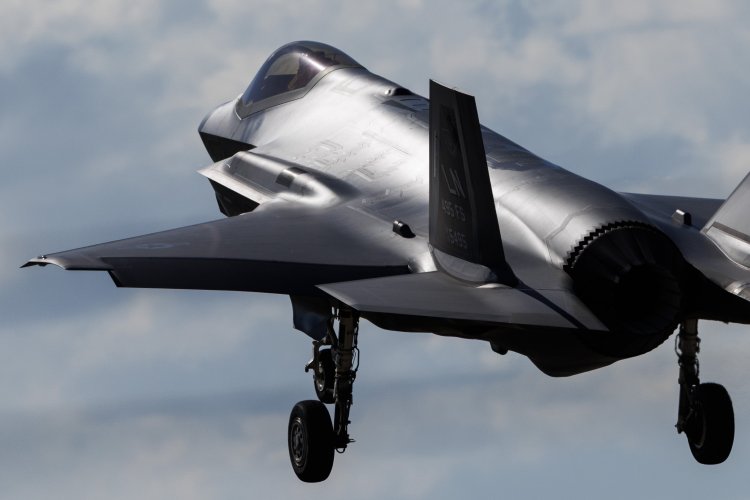
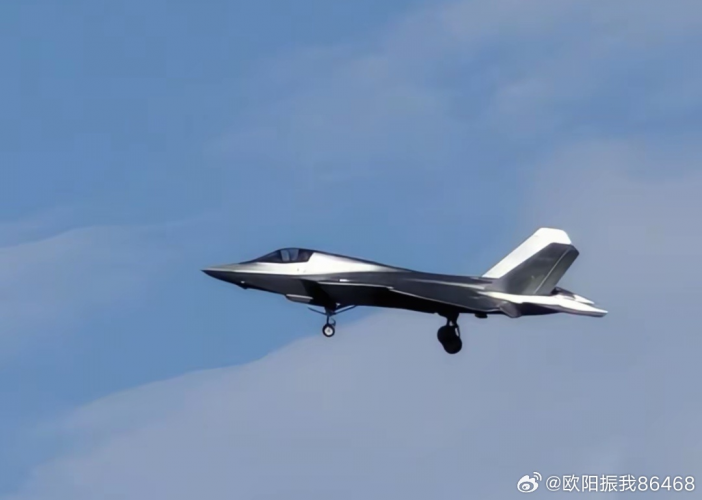
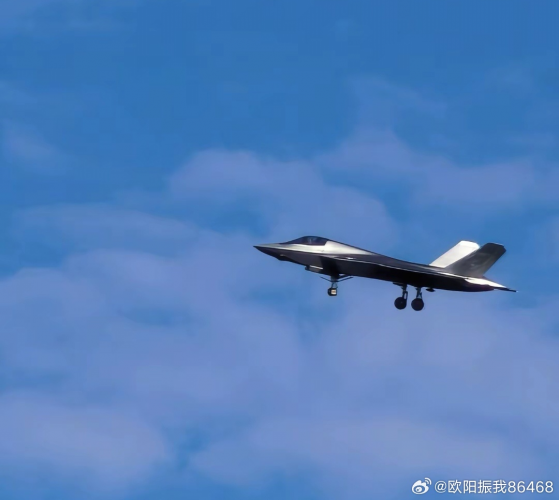
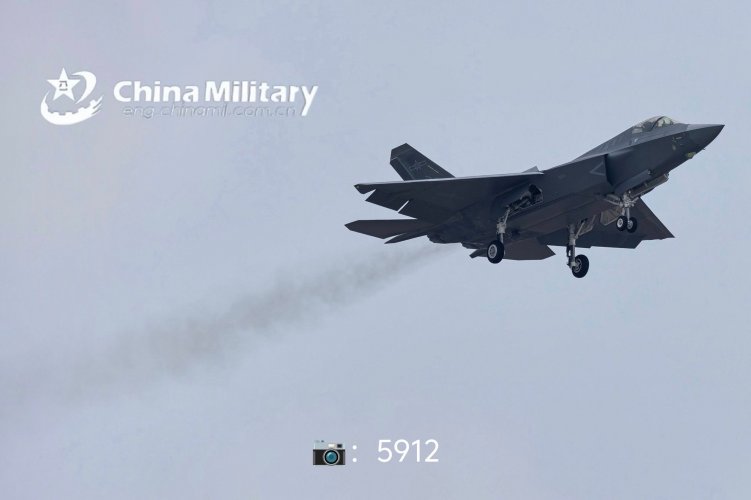
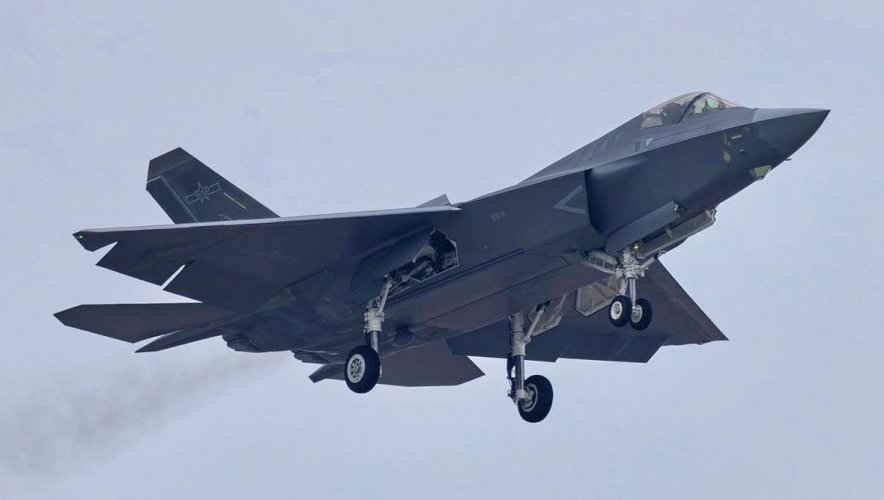
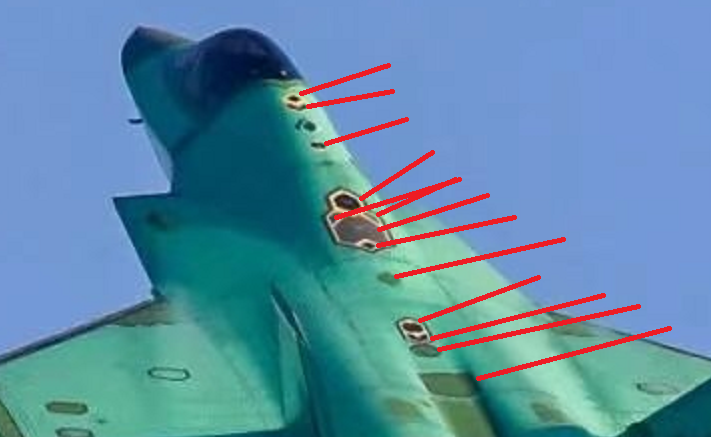
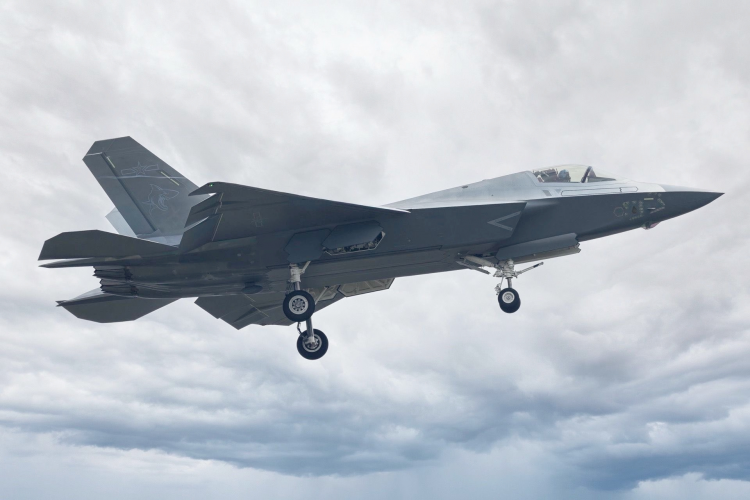
Hey so I’m a big fan of the J-35 and the PLA have been putting out some of the greatest military works in recent years. But I do have some questions regarding the J-35 design choices.
I can’t help to see it as a modern MiG-29. From what I can gather I have no idea what “role” does it intend to play that the J-20 can’t do it better. And if the argument comes down to cost, touché but a modern twin engine stealth jet can’t possible bring down cost much if you’re operating hundreds of them.
Let’s just use the F-35A and J-20 as a comparison. I do deeply respect what Lockheed managed to do with the F-35A despite the B variant dragging the entire program. The F-35A still holds an impressive internal fuel load, internal weapon space and avionics suite (3 things that I think it’s the most important aspect of a modern fighter)
So first of all, the J-35A is intended as a multirole with more emphasis on A2A, why can’t the J-20 do it instead?
The twin engine choice, with a brand new engine btw, wouldn’t it just drive up program and maintenance cost.
Avionics wise, from its size vs the J-20, wouldn’t you assume the J-20 has more real estate for a more complete avionic suite?
Weapons bay, again looks very similar to the J-20, maybe it would the deeper than it but from its slim size, its debatable as there isn’t any pictures out there of the J-35 IWB.
J-35A shares many of its components, structures, materials, subsystems with the naval J-35 which arrived "first" after the export oriented FC-31, which helps to drive down cost somewhat.
More importantly, J-35A (and J-35) as newer designs than J-20 family is said to use some newer construction and production methods to also drive down cost for both procurement and operations (even compared to the newer J-20A/S).
Simply buying more J-20 family aircraft is not as easy as it sounds, because that means CAC would have to massively expand even further than it already has. Furthermore, J-20 family is ultimately still a meaningfully heavier fighter than J-35A, and has higher procurement and operating costs
If I had to summarise it, the benefits of buying J-35A alongside J-20 family come down to:
- Lower cost in procurement, operations per unit than J-20
- Sharing commonalities with naval J-35, driving down cost and logistics
- Expansion of overall PRC 5th gen land based production capacity and rate. CAC was reaching about the limit with their J-20 production rate in recent years, and they also need to prepare for J-36 in the future and other unmanned projects. Giving SAC J-35A helps to expand the annual delivery rate of land based 5th gens without further stretching CAC, while also allowing SAC to expand in experience, scope and preparation for J-XDS production and other unmanned projects (and probably helps them take the resources that are gradually getting idled building SAC-Flankers to a new project).
- Similar/slightly "lower mass" capabilities to J-20 family (i.e.: slightly lower payload etc) but with minimum non-inferior subsystems and signature reduction to J-20A/S -- i.e.: capable in the right areas.
Internal fuel load, obviously lower than the J-20, and somehow even lower than the F-35A (which respectfully it can hold an impressive 8.3 tons of fuel), which makes me doubt that they state that the J-35A has a combat range ~1250km similar to that as a F-35A.
We don't know what the internal fuel load of J-35A is.
You might be getting some figures from legacy FC-31 spec sheets for export, but legacy FC-31 and J-35A are not identical.
Every angle I look at it from seems odd cause it reminds me of the MiG-29. That whatever it does it’s big brother Su-27 or competitor F-16 somehow does it better or simpler. If the argument does come back to cost, wouldn’t fielding more J-20’s save up on maintenance cost by having commonality across the Air Force?
It's likely a combination of cost (procurement and operating, and shared commonality with J-35), industry (CAC alone cannot meet all of the PLA's 5th gen needs), and capability (J-35A is rather capable for its profile).
To be clear -- there was substantial uncertainty whether the PLA would buy a land based J-35 variant for a few years, and there was lots of people who made the same arguments as you have done regarding going for a "all J-20 family" land based 5th gen fleet.
The fact that they went for J-35A, as well as the corroborating rumours around J-35A's lower cost, industry etc, means that basically you can revise the key assumptions underlying your position to ones which are rational.