USSEssex
ACCESS: Confidential
- Joined
- 11 May 2021
- Messages
- 166
- Reaction score
- 294
I have a small update regarding the mention of the Vickers cruiser.
I read the second part of the article about the second submarine tender, and I'm using that article to write this post.
Starting with a brief introduction, in short - it's 1935, and the tender involves mainly three shipyards: Vickers-Armstrong, Cammell Laird, which ultimately withdrew, and the Dutch consortium NVSB, which ultimately won the tender for submarines for Poland.
The Poles wanted submarines with a displacement of around 1,000 tons, but the British offered us a submarine with a displacement of 1,450 tons - as a reminder, this was the Vickers-Armstrong Design 1077, the information drawing was sent to KMW on April 27, 1935.
I think it's important to say a few words about this project.
In terms of design, this design bears similarities to the Delfim submarine built in 1931 for Portugal – ours was to be larger, better armed, and faster, as the Design 1077 had a speed of up to 20 knots.
Perhaps the design of the submarine for us was at least partially based on it – I don't know, but yes, it is at least somewhat similar.
On July 22, 1935, the NVSB submitted a proposal for the Project 2005 submarine, with a displacement of 1,096 tons, which won the tender – in short: this was the design from which the later ORP Orzeł plan evolved. Comparing this design to the final ORP Orzeł plans, both designs are similar, but they have differences.
Returning to the matter at hand:
In his report, Sir Howard William Kennard, the British ambassador to Warsaw, feared that, due to increasing pressure on the Poles to change the design and the ship's requirements from Vickers-Armstrong, the British might lose the submarine tender.
He also added that the chances of winning the tender were slim anyway, after the Vickers-Armstrong shipyard withdrew during the destroyer tender because the shipyard was insisting on domestically produced guns.
He also lamented that, if not for its shortsighted approach, the shipyard could have secured the order not only for destroyers but also for submarines, and a large cruiser planned in the near future, for 2 million pounds sterling.
And he was right, because in the submarine tender, Vickers-Armstrong once again played its cards right and ultimately lost.
Source: Morze Statki i Okręty 9-10 2025, article drugi przetarg na polskie łodzie podwodne... wszystko, co chcielibyście o nim wiedzieć, ale baliście się zapytać. Część 2. Author: Andrzej.S.Bartelski.
I read the second part of the article about the second submarine tender, and I'm using that article to write this post.
Starting with a brief introduction, in short - it's 1935, and the tender involves mainly three shipyards: Vickers-Armstrong, Cammell Laird, which ultimately withdrew, and the Dutch consortium NVSB, which ultimately won the tender for submarines for Poland.
The Poles wanted submarines with a displacement of around 1,000 tons, but the British offered us a submarine with a displacement of 1,450 tons - as a reminder, this was the Vickers-Armstrong Design 1077, the information drawing was sent to KMW on April 27, 1935.
I think it's important to say a few words about this project.
In terms of design, this design bears similarities to the Delfim submarine built in 1931 for Portugal – ours was to be larger, better armed, and faster, as the Design 1077 had a speed of up to 20 knots.
Perhaps the design of the submarine for us was at least partially based on it – I don't know, but yes, it is at least somewhat similar.
On July 22, 1935, the NVSB submitted a proposal for the Project 2005 submarine, with a displacement of 1,096 tons, which won the tender – in short: this was the design from which the later ORP Orzeł plan evolved. Comparing this design to the final ORP Orzeł plans, both designs are similar, but they have differences.
Returning to the matter at hand:
In his report, Sir Howard William Kennard, the British ambassador to Warsaw, feared that, due to increasing pressure on the Poles to change the design and the ship's requirements from Vickers-Armstrong, the British might lose the submarine tender.
He also added that the chances of winning the tender were slim anyway, after the Vickers-Armstrong shipyard withdrew during the destroyer tender because the shipyard was insisting on domestically produced guns.
He also lamented that, if not for its shortsighted approach, the shipyard could have secured the order not only for destroyers but also for submarines, and a large cruiser planned in the near future, for 2 million pounds sterling.
And he was right, because in the submarine tender, Vickers-Armstrong once again played its cards right and ultimately lost.
Source: Morze Statki i Okręty 9-10 2025, article drugi przetarg na polskie łodzie podwodne... wszystko, co chcielibyście o nim wiedzieć, ale baliście się zapytać. Część 2. Author: Andrzej.S.Bartelski.


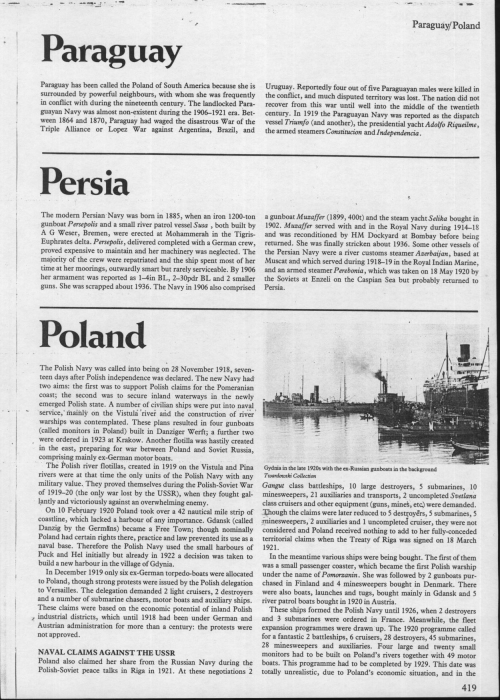
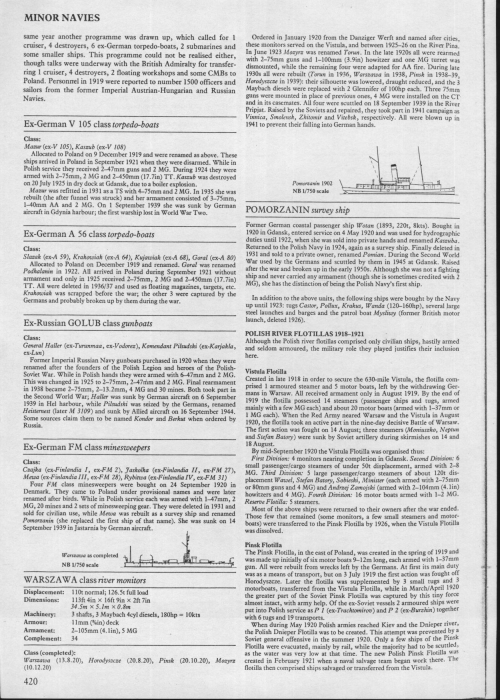
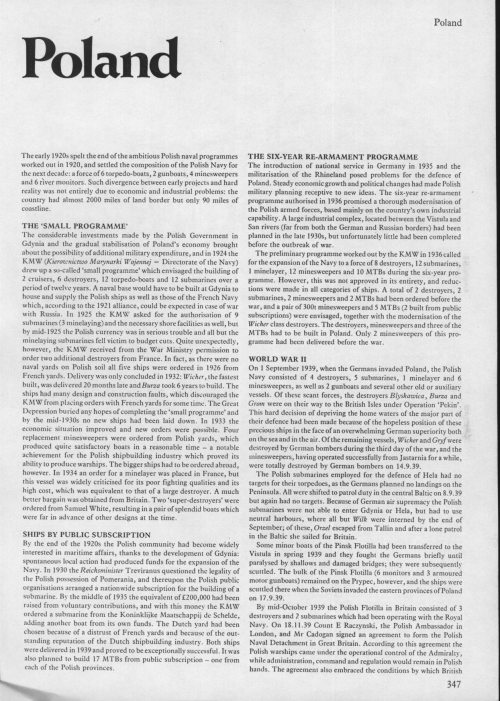
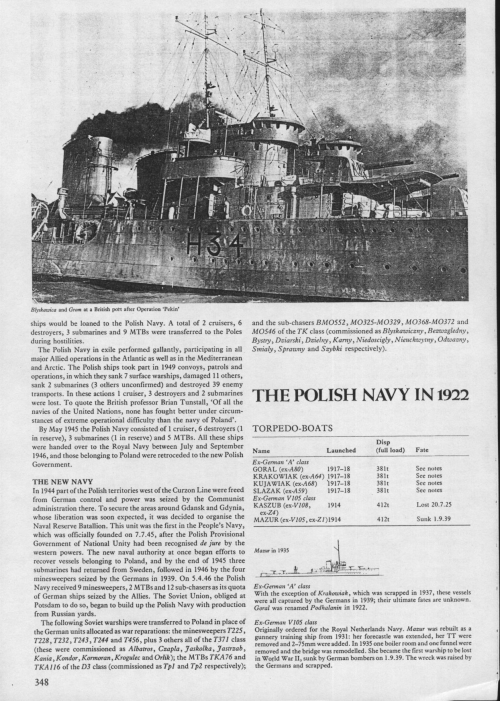
 ). The lists below are for the total fleet size. At the time the 1936 plan was made, Poland's navy consisted of only 2 destroyers and 3 submarines plus smaller vessels from the 1924 Plan, and only 2 additional destroyers and 2 additional submarines were delivered by the time the war started. The 1936 build plan was to be completed by 1942, with the bulk of the ships being built in Poland itself starting in 1940. The following are official expansion plans that were approved by Poland's government.