From the available reports, it can be concluded that the DPRK is running an extensive program to develop modern propulsion systems for the full range of weapons, from armored vehicles to nuclear submarines.
There is no reason to believe that this development does not include modern turbofans.
Of course, there is a possibility of considering a copy of the RD-33, a possible spy upgrade to the WS-13 or RD-33MK level, which in the new conditions can turn into direct technological assistance from Russia.
Engines are the basis and the North Koreans are obviously guided by this.
An interesting finding, which although concerns the construction of an advanced North Korean frigate, can be applied to practically anything that the DPRK has been doing recently. Therefore, a big surprise in the field of aviation cannot be ruled out:
"While the drydock’s arrival at Nampho brings North Korea’s plans to deter U.S. spy flights closer to fruition, Ford cautioned that the ship’s final deployment likely isn’t imminent, pointing to its short construction period of under one year so far — far less than the 18 to 24 months it takes the more experienced Chinese navy to build such large frigates."
Source: https://www.nknews.org/pro/north-ko...-new-warship-in-sign-of-advanced-development/
In fairness, likely the ships were laid down earlier than that, just it wasn't observed. I would guesstimate 2023 (the year KJU referred to new AAW ships) or even earlier.
In fairness, likely the ships were laid down earlier than that, just it wasn't observed. I would guesstimate 2023 (the year KJU referred to new AAW ships) or even earlier.
Oh absolutely, couldn't agree more, their MIC advances especially since KJU became leader, are nothing short of astonishing. To quote a well known americanism, they are punching well above their weight.
An interesting finding, which although concerns the construction of an advanced North Korean frigate, can be applied to practically anything that the DPRK has been doing recently. Therefore, a big surprise in the field of aviation cannot be ruled out:
"While the drydock’s arrival at Nampho brings North Korea’s plans to deter U.S. spy flights closer to fruition, Ford cautioned that the ship’s final deployment likely isn’t imminent, pointing to its short construction period of under one year so far — far less than the 18 to 24 months it takes the more experienced Chinese navy to build such large frigates."
-Relatively "sparse" antenna farm. In Russians, Indians and Chinese example, there are more antenna. A-50I/EI for example have over 71.
-Lack of apparent APU (Auxilliary Power Unit), spotted in Chinese and Russian example. A-50 AEW and its variants have extra power generation unit located within the landing gear sponson.
-Navigator glazings from Il-76 retained.
-The "static dome" is about 12 meter or 11.9 meter in diameter height of about 2.4 m, the available aperture would be about 80% for 3 face arrangement or about 18 sqm per face.
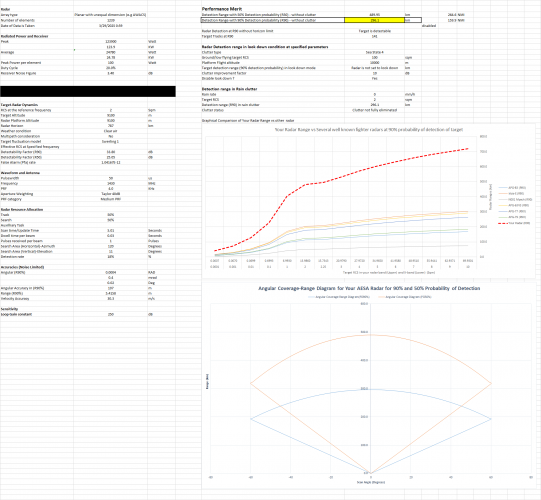
Looks to me this is closer to Iranian Adnan but with vastly more capable radar. One curios thing is whether NK made change to the electrical generator of the airframe. Baseline Il-76 have GT-60 engine driven generator capable of generating 60 KVa or roughly 60 KW.. (yes there is power correction factor e.g 85% but everyone likes round number). Thus total power generation capability of 240 KW can be expected.
For AESA Radars typical electrical power load is 80% for the antenna and 20% is for the rest of the subsystems. Assume 100 Watt TRM and 1239 TRM per face (3 faces makes it 3717). 20% duty cycle for a commercially available L-band module will provide 20 Watt of average power. PAE for such module is about 33-35%. Thus to make that 20 Watt average power one needs about 57 Watt. 3717 TRM means the antenna consumes about 211.8 KW and total power consumption including the electronics can be about 264 KW (52.8 KW for the avionics)
Clearly there seems to be need for upgrade in electrical power generation. Or some form of compromise e.g only energize one array at a time or even using lesser power module with of course noticeable degradation in range.
Rough estimate using the 100 Watt assumption. Which is a legit 300 Km range in PD:90% against 2 sqm target and capability power aperture wise to track 141 targets. Halving the module power will make the range drop to 250 Km. The power consumption is drop to 106 KW for the array with total power consumption of 132 KW or about Half of what the original Il-76's power generation capacity.
Of course, there is a possibility of considering a copy of the RD-33, a possible spy upgrade to the WS-13 or RD-33MK level, which in the new conditions can turn into direct technological assistance from Russia.
License produce tbh is more realistic. as Copying entails the need for an industrial chain to produce metals needed for the engine. Especially the turbine blade. Knowledge and expertise to build proper turbine seems to be "crown jewel" a country would hard to give.
View attachment 764650
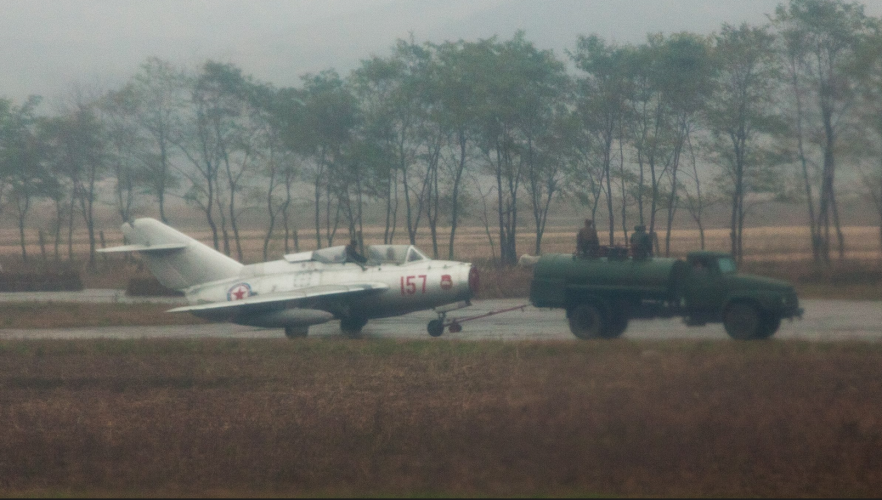
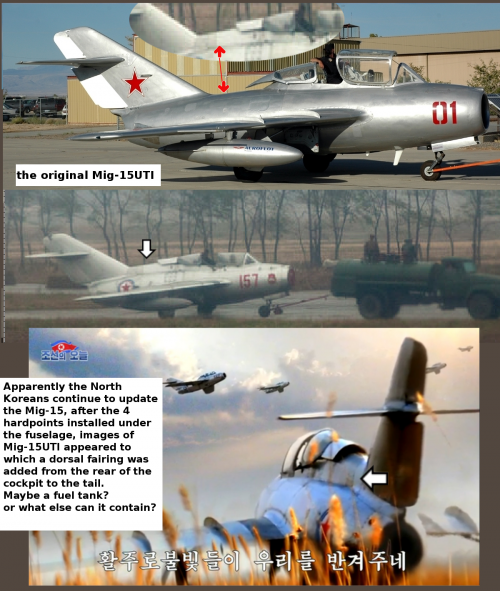
This leads me more and more to think that soon we will also see a manned jet aircraft produced in the DPRK, maybe they will start with a trainer/CAS aircraft, but I would not be surprised if they will present a light fighter with a modern low visibility design
One curios thing is whether NK made change to the electrical generator of the airframe. Baseline Il-76 have GT-60 engine driven generator capable of generating 60 KVa or roughly 60 KW.. (yes there is power correction factor e.g 85% but everyone likes round number). Thus total power generation capability of 240 KW can be expected.
For AESA Radars typical electrical power load is 80% for the antenna and 20% is for the rest of the subsystems. Assume 100 Watt TRM and 1239 TRM per face (3 faces makes it 3717). 20% duty cycle for a commercially available L-band module will provide 20 Watt of average power. PAE for such module is about 33-35%. Thus to make that 20 Watt average power one needs about 57 Watt. 3717 TRM means the antenna consumes about 211.8 KW and total power consumption including the electronics can be about 264 KW (52.8 KW for the avionics)
Clearly there seems to be need for upgrade in electrical power generation. Or some form of compromise e.g only energize one array at a time or even using lesser power module with of course noticeable degradation in range.
Installing a new generator is relatively trivial. Crud, designing a new generator is relatively trivial, electric motors/generators aren't something magically hard. The simplest answer would be to just-over-double the length of the generator overall, to double the length of the field windings.
Installing a new generator is relatively trivial. Crud, designing a new generator is relatively trivial, electric motors/generators aren't something magically hard. The simplest answer would be to just-over-double the length of the generator overall, to double the length of the field windings.
To make it fit the envelope of the original D-30KP is where the complication start. Thus why you see APU's in Russian and Chinese designs. Even with newer Indian A-50 with PS-90 engine and more powerful 90KW GP-26 generator.
To make it fit the envelope of the original D-30KP is where the complication start. Thus why you see APU's in Russian and Chinese designs. Even with newer Indian A-50 with PS-90 engine and more powerful 90KW GP-26 generator.
That photo of the interior of the plane showing control stations, etc., looks totally staged. Why would aircrew be wearing ushankas in an airplane? The whole thing looks like they set up props for it. The control panels look like something out of early Star Trek. Note the rows of evenly spaced unmarked buttons for example.
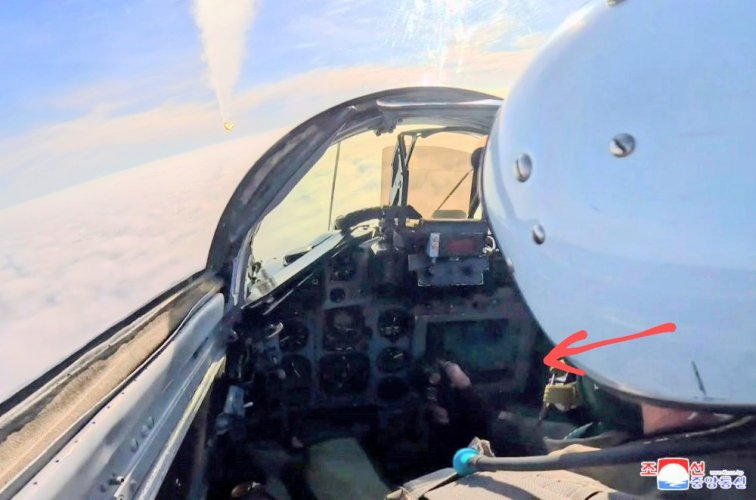
I knew i wasn't crazy when i was talking about seeing an upgraded MiG-23 cockpit. Isn't that a MFD below the HUD, much like MiG-29 has? This is a simulator yes, but i'd be surprised if in service MiG-23 are not so modified. The picture is at least a decade old btw.
For reference, this is the upgraded DPRK MiG-29 cockpit posted in another thread. I'm curious if the normal IPV display is retained as well, or the new large MFD supplants it's functions and was removed.
I knew i wasn't crazy when i was talking about seeing an upgraded MiG-23 cockpit. Isn't that a MFD below the HUD, much like MiG-29 has? This is a simulator yes, but i'd be surprised if in service MiG-23 are not so modified. The picture is at least a decade old btw.
Yes, the MiG-23s underwent a similar modification as the 29s, apparently sometime between 2010 and 2015.
In connection with the next (currently ongoing) phase of the upgrade (new radars, HUDs, jammers and missiles), only the MiG-29s are being mentioned.
I would be surprised if the cockpit upgrade was done for anything other than a significant revision of the weapons system, ie improved radar and missiles, otherwise there is little point for the effort and expense to me. So i would be surprised if the upgraded MiG-23ML was not made compatible with PL-11NK(?) and PL-12NK AAMs, like the upgraded MiG-29s are (already 10 years old plus since the upgrade started)
Modern 4th gen aircraft is still something north Korea even with it's military first policy cannot produce. Even with full blueprint, they just don't have the machine tool and other technology to produce them. Current North Korean MiG-29 itself is just knockdown kit assembly supplied from the USSR/Russia. However seeing how fast the north Korea modernize it's military and the close relationship with Russia they're probably able to either restart MiG-29 local production or design it's own light fighter from scratch like Iran did with Yasin. Considering they were able to produce MALE UAV similar to the US design, it's not far fetched to have north Korea produce it's own combat plane in the very near future
I found an Instagram post with higher quality photos of this mystery North Korean ground attack aircraft. Based on the third photo, more than one appears to have been built.
Come on guys, that is a modified Yak-18 made to look like an Il-10 for a DPRK war film, probably in the 1970s. Sort of like the americans modified T-6s to look like Zeros or Vals or Kates (horrible abominations btw)
Come on guys, that is a modified Yak-18 made to look like an Il-10 for a DPRK war film, probably in the 1970s. Sort of like the americans modified T-6s to look like Zeros or Vals or Kates (horrible abominations btw)
Come on guys, that is a modified Yak-18 made to look like an Il-10 for a DPRK war film, probably in the 1970s. Sort of like the americans modified T-6s to look like Zeros or Vals or Kates (horrible abominations btw)
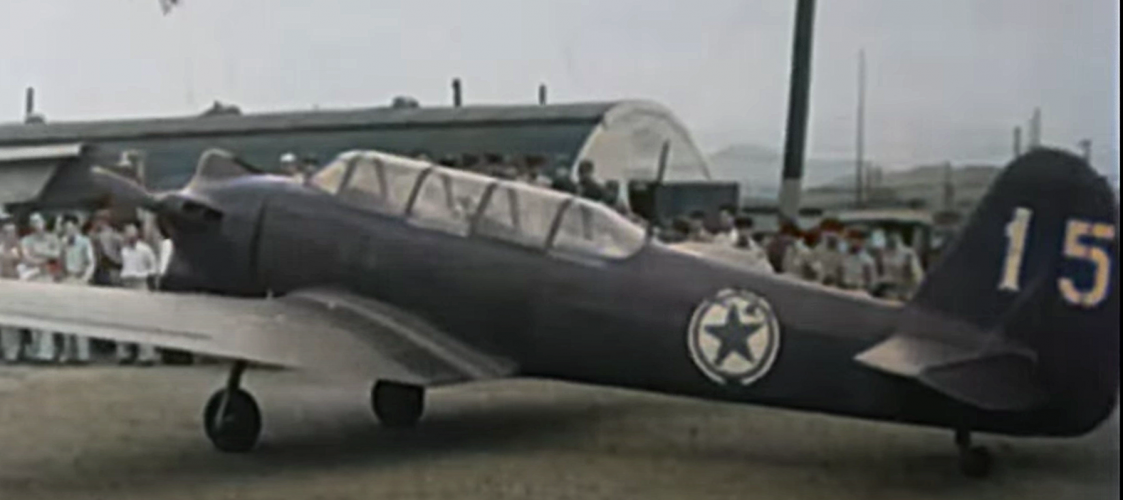
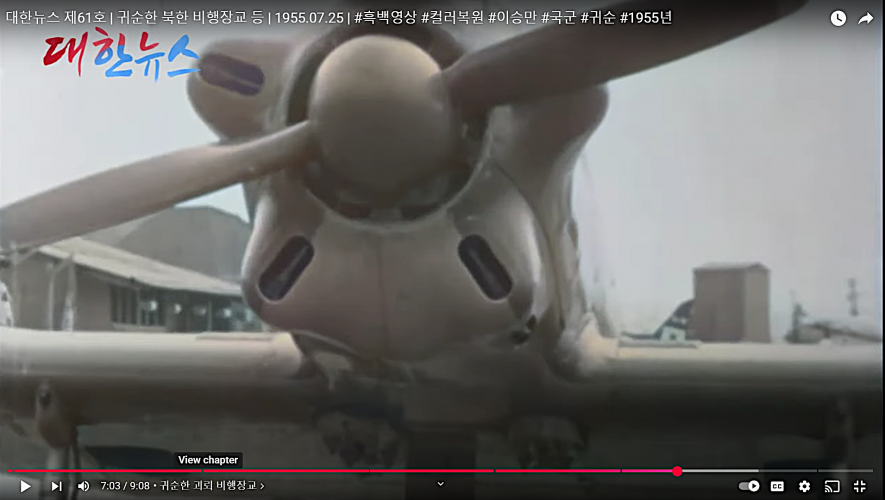
Returning to the Yak-18, North Korean technical personnel installed two hardpoints on the aircraft; it was typically equipped with two 50-kg (110-pound) or 100-kg (220-pound) bombs.
The photo shows the North Korean Yak-18 that a pilot used to flee to the South after defecting. Screenshot from a vintage South Korean video featuring the pilot who defected
This site uses cookies to help personalise content, tailor your experience and to keep you logged in if you register.
By continuing to use this site, you are consenting to our use of cookies.