ArmchairSamurai
ACCESS: Confidential
- Joined
- 1 July 2019
- Messages
- 198
- Reaction score
- 295
Been a while everybody, hope all is well
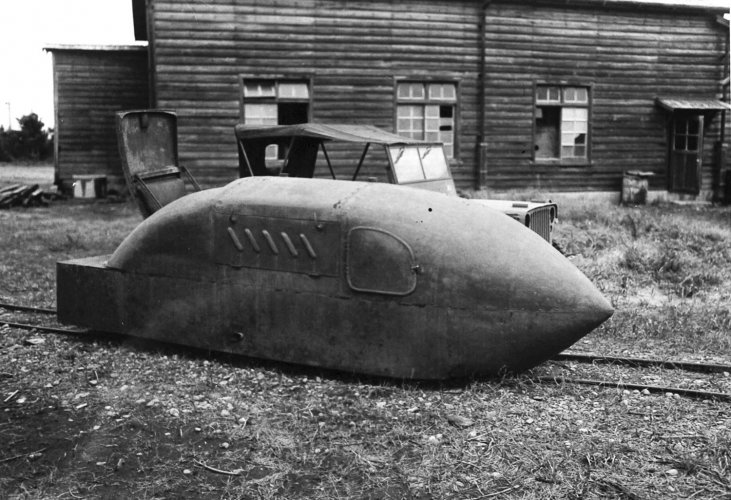
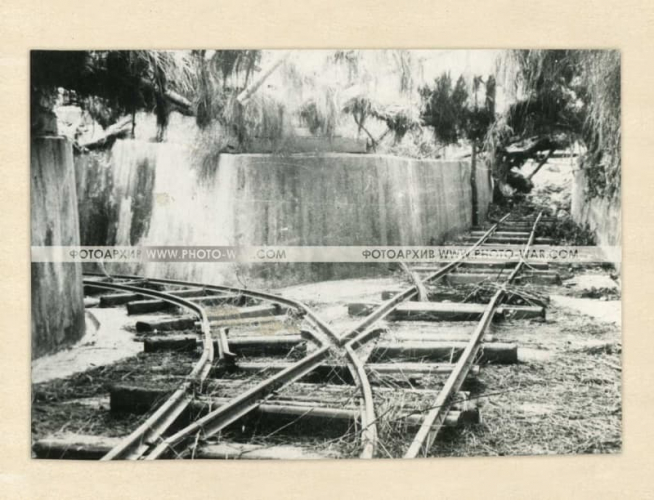
I have had the following photo for some time in my archive. It was and still is a oddity, as to this day I cannot find a solid explanation for what it is. That is to say, I might have a theory now, if you all would allow me. To my knowledge, the photo first originated online in a article from the Atlantic, link below:
https://www.theatlantic.com/photo/2...ese-decoys-used-in-world-war-ii/480186/#img10
Where the author of said article retrieved said photo, is here: https://www.archives.gov/research/guide-fed-records/groups/243.html#243.4.2
Frankly that particular record is massive in volume, so woe to whoever wishes to actually dig through it all and find the photo in question.
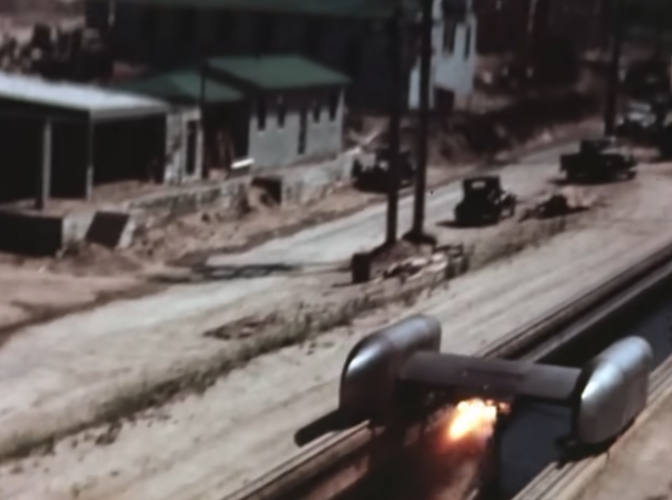
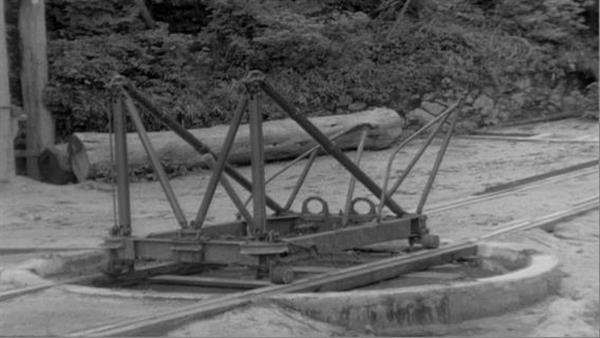
To cut it all short, I am watching a Youtube documentary on the double life of Jack Parsons, a chemist and one of the so-called "Suicide Squad" who developed the JATO for the USAAF. When watching said documentary, a particular shot caught my eye. I clipped it below. It shows a rolling platform for testing of JATOs.
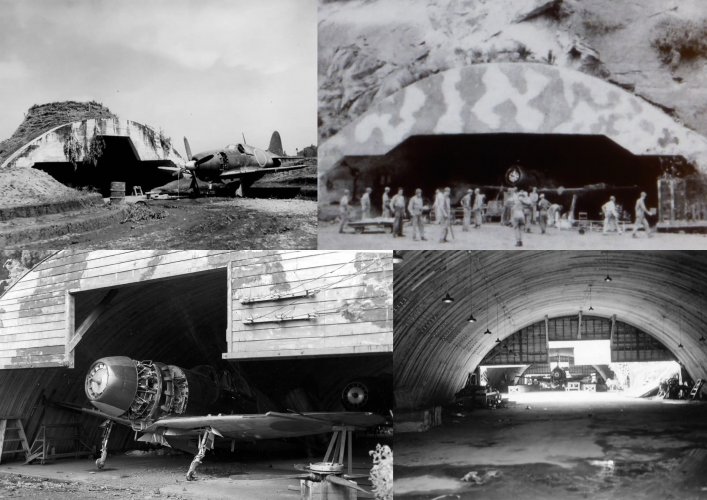
My theory is thus: the mystery object is not a ad-hoc kamikaze railroad torpedo as I have seen theorized elsewhere, but perhaps a prototype test-bed platform for a JATO program. Given Japan's wartime situation at this point in time, airfields were likely being bombed or reconned for activity weekly if not daily, leaving little room for what little airplanes that existed to take off without interference, let alone to land and to be stored safely. That leads credence to the entaigou built across the home islands and elsewhere as Japan lost all air-superiority over its remaining territory. Hinting at the rather frail looking rails seen at the sides of the photo, I imagine the object is either empty, and was merely being towed or pushed to test its ability to ride on rails, or is a indication of the poor conditions of Japan's industry at that point to meet production standards. Either way, I doubt it was laden with any rocket--though I suspect whoever took the photo was likely expecting a rocket or missile, given it was important enough to photograph in the first place. Furthermore, the square tail at the rear of the object looks to be for directing / focusing thrust, as any other means of propulsion is out of the question. The large hatch off-set in the photo may indicate the main means of access to the platform, with a smaller hatch on the side being noted perhaps for instrumentation devices measuring pressure or fuel capacity for example. Heat vents should also be noted, which for a rocket propulsion system, makes sense, as does the overall shape of the object being aerodynamic. It could be that the platform itself allowed for the testing of various different rockets, or combination of rockets, which were being designed to augment Japan's increasing inability to get airplanes airborne in the midst of US airstrikes. Shorter runways, obscured and scattered, made in lieu of airfields, would have allowed Japan to keep pressing fighters into the air, even if only a handful. Afterall, Japan's military junta was committed to the fighting, at whatever cost, which is especially relevant when all of the various ad-hoc kamikaze weapons and equipment are noted. It would be no surprise then that such a program could have been in the works, even if the war was lost, even if there were not any planes to sortie. Such was the nature of last days of Japan and Germany alike. Finally, with Germany exchanging technology with Japan during the war, like for example with the development of Japan's jet aircraft, it cannot be ruled out that Germany's own JATO designs were not in that exchange.
Thoughts?
I have had the following photo for some time in my archive. It was and still is a oddity, as to this day I cannot find a solid explanation for what it is. That is to say, I might have a theory now, if you all would allow me. To my knowledge, the photo first originated online in a article from the Atlantic, link below:
https://www.theatlantic.com/photo/2...ese-decoys-used-in-world-war-ii/480186/#img10
Where the author of said article retrieved said photo, is here: https://www.archives.gov/research/guide-fed-records/groups/243.html#243.4.2
Frankly that particular record is massive in volume, so woe to whoever wishes to actually dig through it all and find the photo in question.
To cut it all short, I am watching a Youtube documentary on the double life of Jack Parsons, a chemist and one of the so-called "Suicide Squad" who developed the JATO for the USAAF. When watching said documentary, a particular shot caught my eye. I clipped it below. It shows a rolling platform for testing of JATOs.
My theory is thus: the mystery object is not a ad-hoc kamikaze railroad torpedo as I have seen theorized elsewhere, but perhaps a prototype test-bed platform for a JATO program. Given Japan's wartime situation at this point in time, airfields were likely being bombed or reconned for activity weekly if not daily, leaving little room for what little airplanes that existed to take off without interference, let alone to land and to be stored safely. That leads credence to the entaigou built across the home islands and elsewhere as Japan lost all air-superiority over its remaining territory. Hinting at the rather frail looking rails seen at the sides of the photo, I imagine the object is either empty, and was merely being towed or pushed to test its ability to ride on rails, or is a indication of the poor conditions of Japan's industry at that point to meet production standards. Either way, I doubt it was laden with any rocket--though I suspect whoever took the photo was likely expecting a rocket or missile, given it was important enough to photograph in the first place. Furthermore, the square tail at the rear of the object looks to be for directing / focusing thrust, as any other means of propulsion is out of the question. The large hatch off-set in the photo may indicate the main means of access to the platform, with a smaller hatch on the side being noted perhaps for instrumentation devices measuring pressure or fuel capacity for example. Heat vents should also be noted, which for a rocket propulsion system, makes sense, as does the overall shape of the object being aerodynamic. It could be that the platform itself allowed for the testing of various different rockets, or combination of rockets, which were being designed to augment Japan's increasing inability to get airplanes airborne in the midst of US airstrikes. Shorter runways, obscured and scattered, made in lieu of airfields, would have allowed Japan to keep pressing fighters into the air, even if only a handful. Afterall, Japan's military junta was committed to the fighting, at whatever cost, which is especially relevant when all of the various ad-hoc kamikaze weapons and equipment are noted. It would be no surprise then that such a program could have been in the works, even if the war was lost, even if there were not any planes to sortie. Such was the nature of last days of Japan and Germany alike. Finally, with Germany exchanging technology with Japan during the war, like for example with the development of Japan's jet aircraft, it cannot be ruled out that Germany's own JATO designs were not in that exchange.
Thoughts?