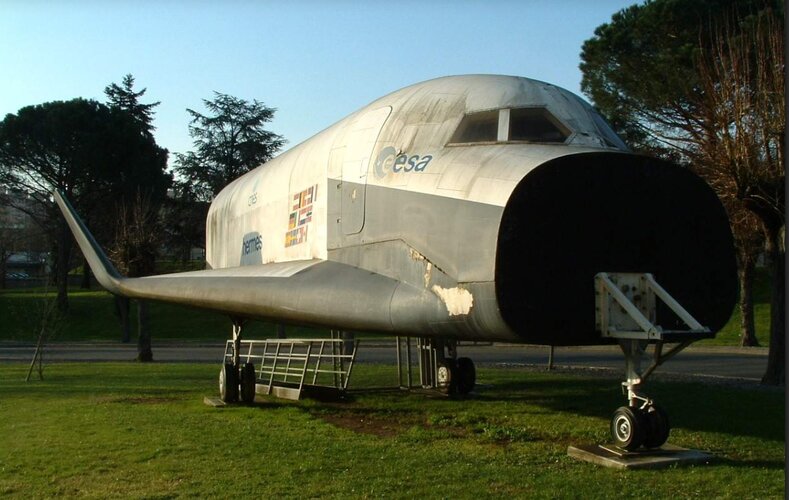
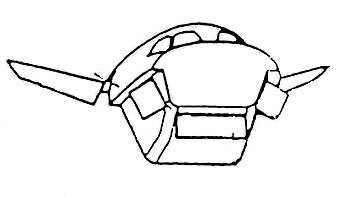
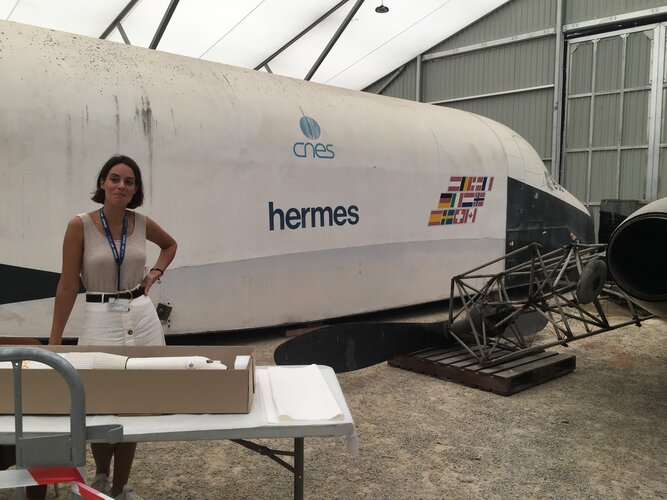
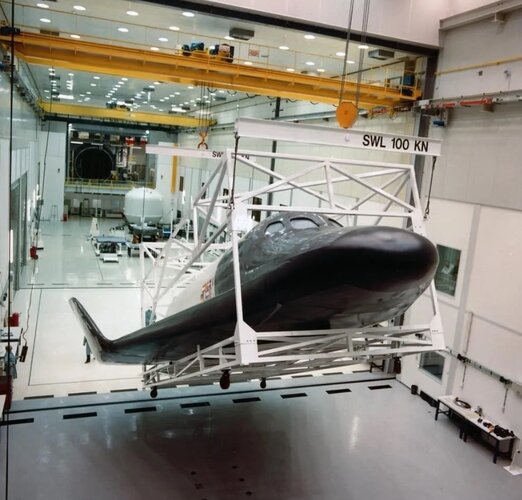
FYI. Hermes is not a "Space Shuttle". It is a winged spacecraft or spaceplane.

The way ESA itself talks about Hermes can lead a person to find both terms acceptable,

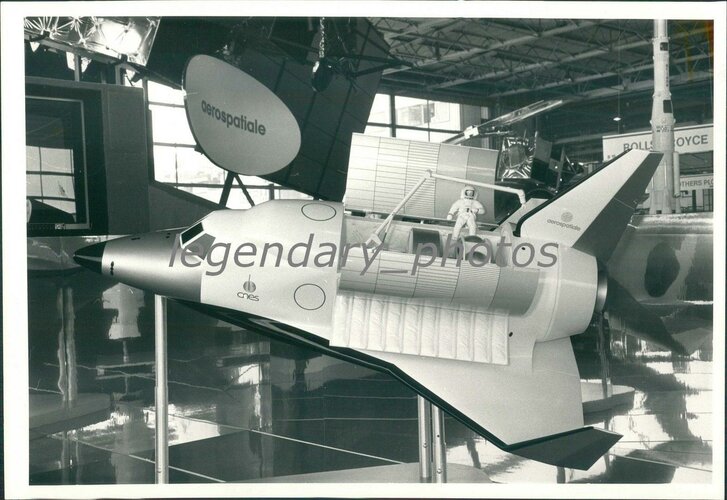
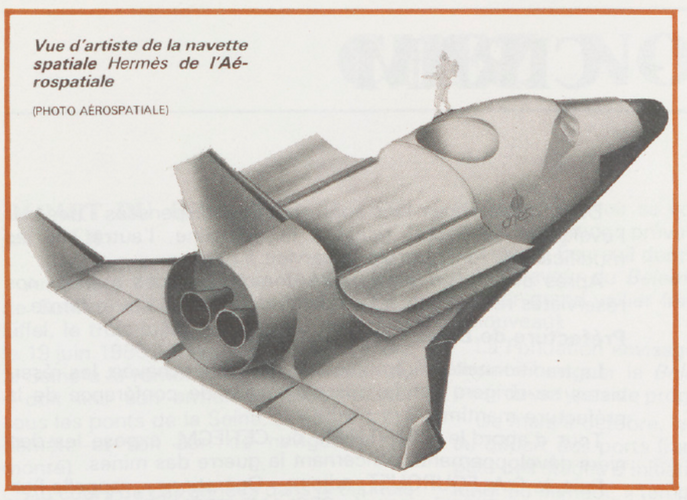
In the early 1980s, the French space agency CNES started investigating a small spaceplane design to be launched on an Ariane rocket. It was envisioned that Hermes would service a small space station, the Man-Tended Free Flyer (MTFF), built primarily by German and Italian industry under ESA's Columbus programme.

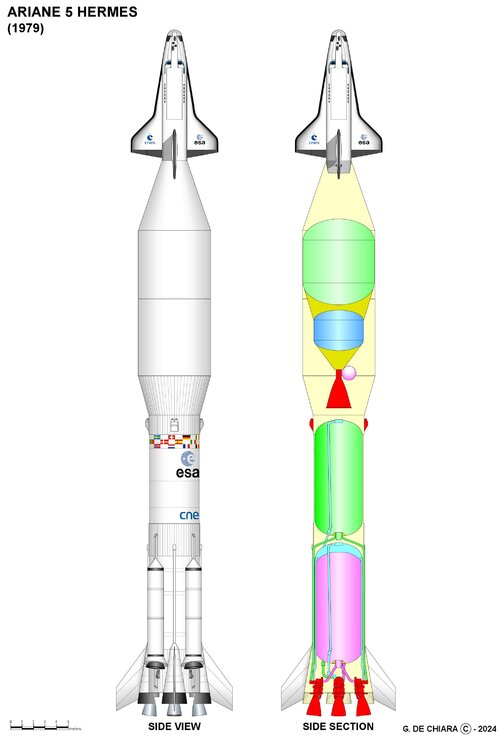
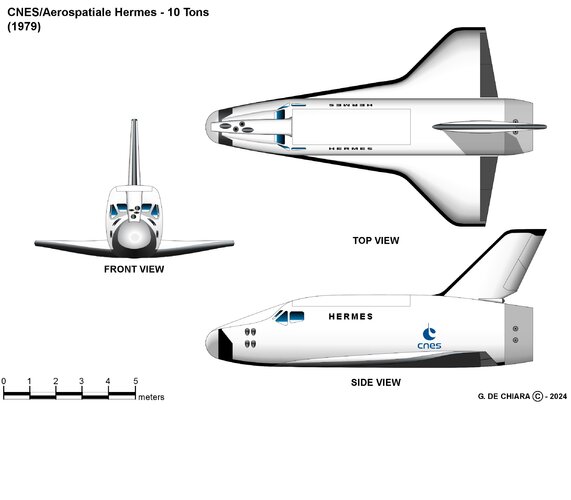
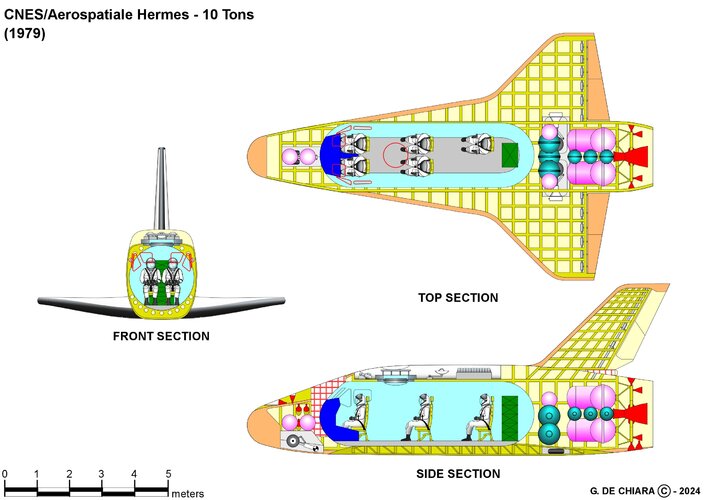
By 1984, Hermes had evolved into a 'mini' space shuttle capable of carrying a crew of 4-6 plus a 4500 kg payload in its cargo bay. This was too heavy for the existing Ariane 4 launch vehicle, so CNES began looking at uprated Ariane versions for the 1990s. Hermes development was a major driver in the specification for ESA's new Ariane 5 launcher.

https://www.esa.int/About_Us/ESA_history/History_Hermes_spaceplane_1987
Spaceplane does fit as the proper term for the thing and is the term most seen,
for instance,
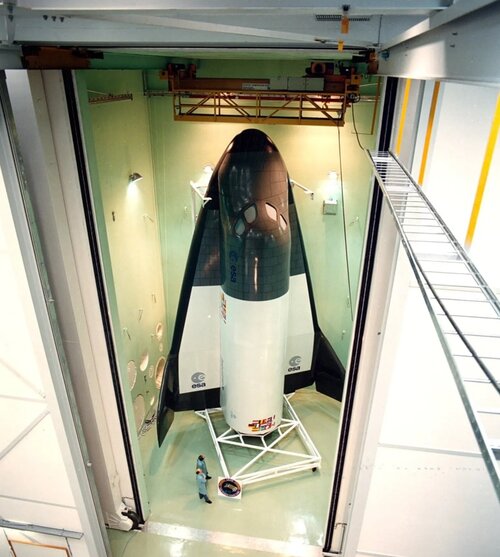
ESA's Hermes manned spaceplane was planned to service the Columbus Man-Tended Free-Flyer and the International Space Station Columbus Attached Laboratory. The project was approved at the Ministerial Meeting in November 1987; the meeting of November 1992 reoriented Hermes into a technology programme. [Image Date: 1990-00-00] [91.03.017-001]

https://www.esa.int/ESA_Multimedia/Images/1998/01/Hermes_cutaway
Hermes was intended to provide independent European manned access to space. Designed to take three astronauts to orbits of up to 800 km altitude on missions of 30–90 days, the spaceplane would have been launched using the Ariane 5 rocket.

https://www.esa.int/ESA_Multimedia/Images/2012/03/Hermes_spaceplane
 
Yes, Avion Spatial/Spaceplane was the preferred term. That's what most of the official publications at the time used (ESA Bulletin...),

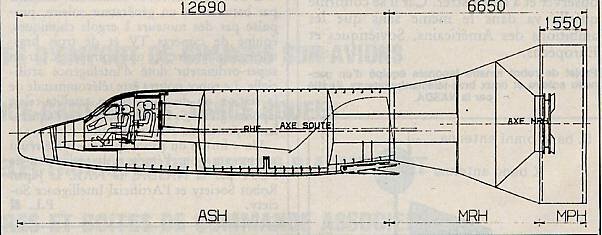
Avion Spatial Hermes (ASH, HSP in english) also became the official name for the forward, recoverable part of Hermes.

1733920723148.jpeg


While alternatives occasionaly appeared there are sources that say that the term shuttle was disliked.


1733920562781.png
 
FYI. Hermes is not a "Space Shuttle". It is a winged spacecraft or spaceplane. The Space Shuttle was a launch vehicle.
you absolutely right, Byeman

Sadly they promoted the 1983 version of Hermes as the French [Space] Shuttle in french media and Press Release.
From 1987 it became official ESA program still label Shuttle not Glider in Press Release...
 
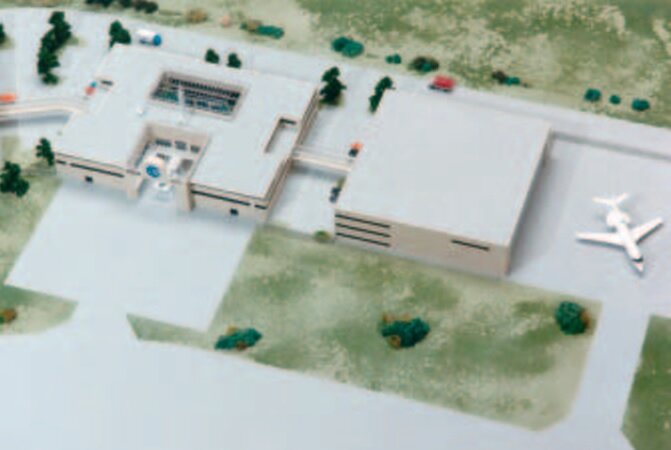
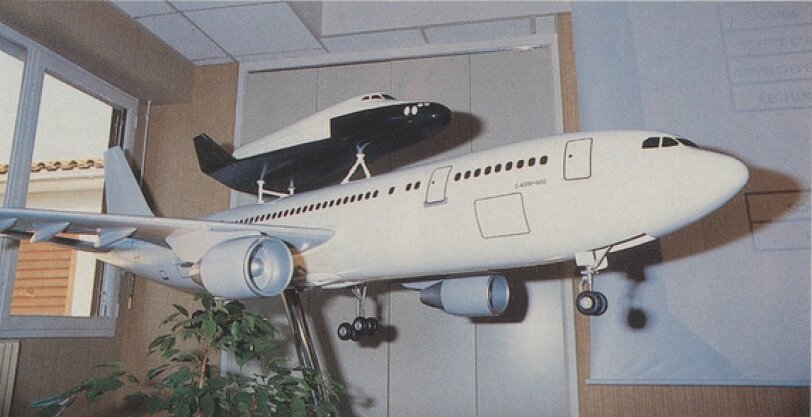
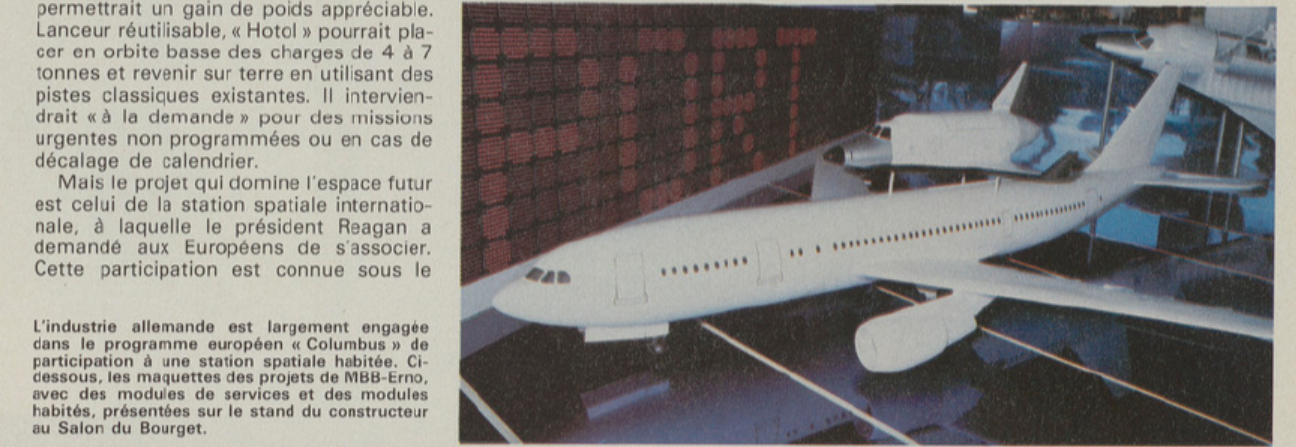
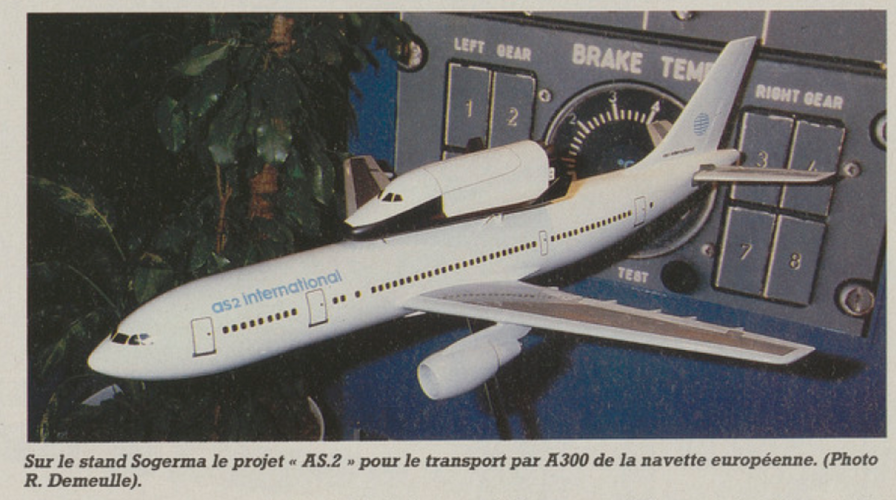
There was supposed to be an astronaut-pilot training center in Brussels, with a Hermes Training Aircraft similar to the Shuttle Training Aircraft (STA, a modified Gulfstream II). The picture below is a model of the proposed training center with, what looks like a Gulfstream on the apron. Any idea what the Hermes astronaut training aircraft was supposed to be and any evidence that any aircraft were modified for this role?

NASA Tech Briefs June 1991 indicate that the Airbus and Falcon were considered during Dassault's studies into a Hermes Carrier Aircraft and a Hermes Trainer Aircraft.
 

Attachments

  • ESA Proposed Astronaut Pilot Training Center.jpg
    ESA Proposed Astronaut Pilot Training Center.jpg
    57.6 KB · Views: 103
Last edited:
1985
 

Attachments

  • 1_262465455af634dfdf71f39b82825fcc.jpg
    1_262465455af634dfdf71f39b82825fcc.jpg
    222.1 KB · Views: 95
  • 1_262465455af634dfdf71f39b82825fcc (1).jpg
    1_262465455af634dfdf71f39b82825fcc (1).jpg
    61.4 KB · Views: 97
A lot of work already done--I am surprised the Dream Chaser guys didn't choose this lay-out.

Falcon Heavy ought to be able to handle this even with some weight creep and still recover the boosters.
O/T..had FH been around in the 70s, how might the Voyagers have handled the extra umph?
 
A lot of work already done--I am surprised the Dream Chaser guys didn't choose this lay-out.

Falcon Heavy ought to be able to handle this even with some weight creep and still recover the boosters.
O/T..had FH been around in the 70s, how might the Voyagers have handled the extra umph?
there was extra umph in Titan IV, Atlas V and Delta IV long before Falcon Heavy.
 
Proprietary data that is moldering under dust and earns zero Euros...in effect- they own one hundred percent...of nothing.

If SLS and Orion dies, that service module of theirs goes nowhere--does nothing. They might just work with them then.
 
Proprietary data that is moldering under dust and earns zero Euros...in effect- they own one hundred percent...of nothing.

If SLS and Orion dies, that service module of theirs goes nowhere--does nothing. They might just work with them then.
Nope, it doesn't work that way.
 
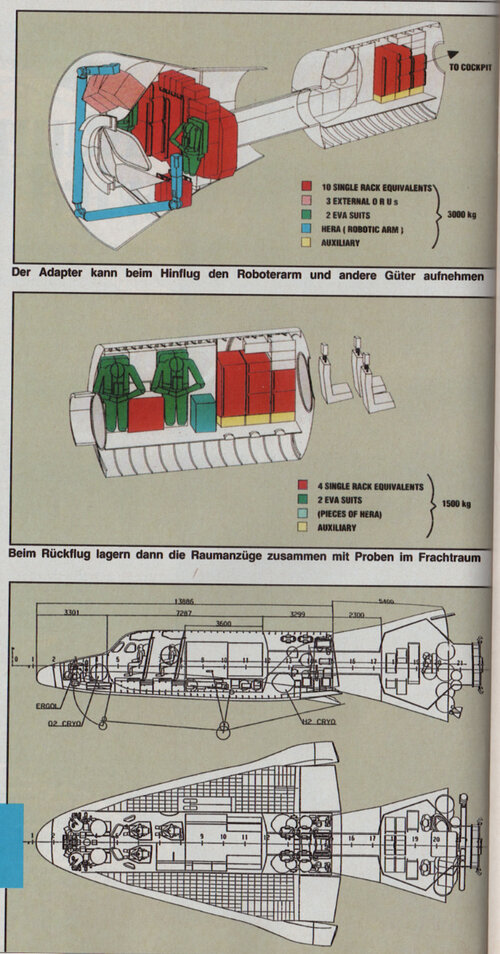
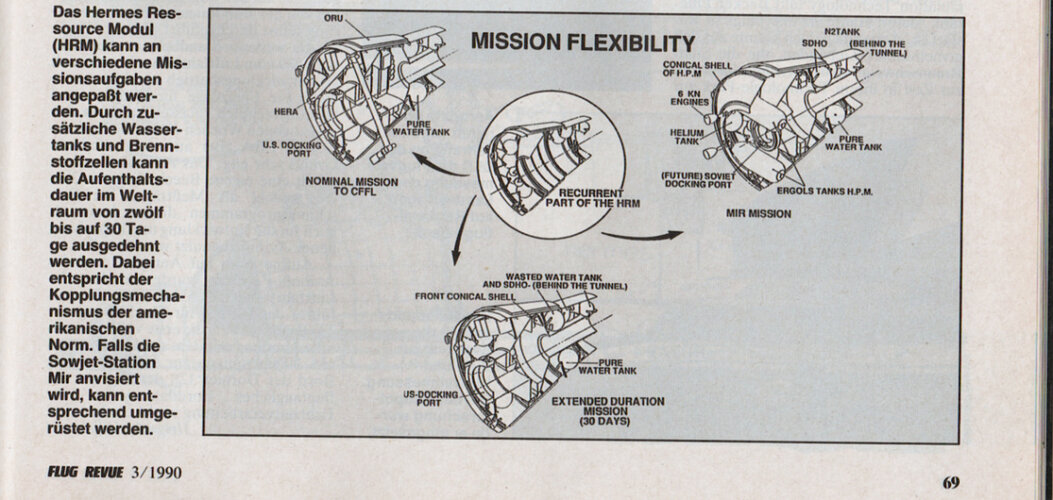
One of last version Hermes
with ejection Seats and HRM (Hermes Resources Module)

HRM serve 3 missions types:
Service MTTF (here Label as CFFL)
30 day Mission
MIR docking mission what need additional Engines and propellants to get Hermes to 54° orbit

Source: Flug Revue 3/1990
 

Attachments

  • Hermes configuration.jpg
    Hermes configuration.jpg
    335.7 KB · Views: 93
  • Hermes Resource Modul.jpg
    Hermes Resource Modul.jpg
    289.4 KB · Views: 99
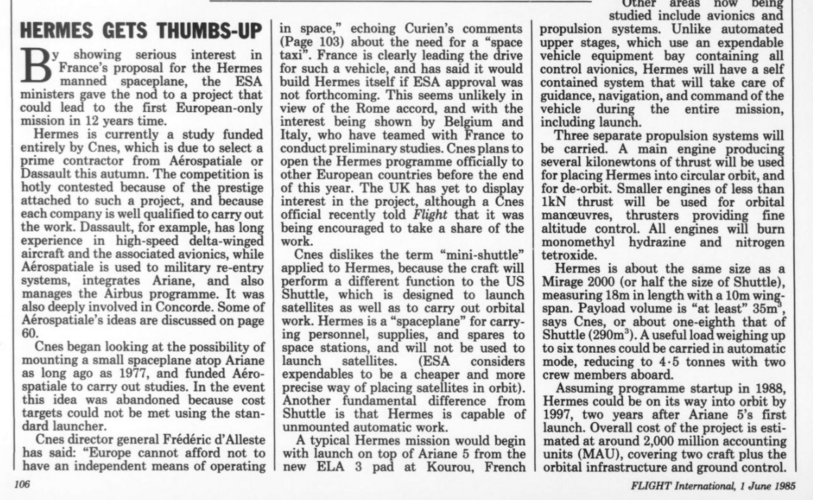
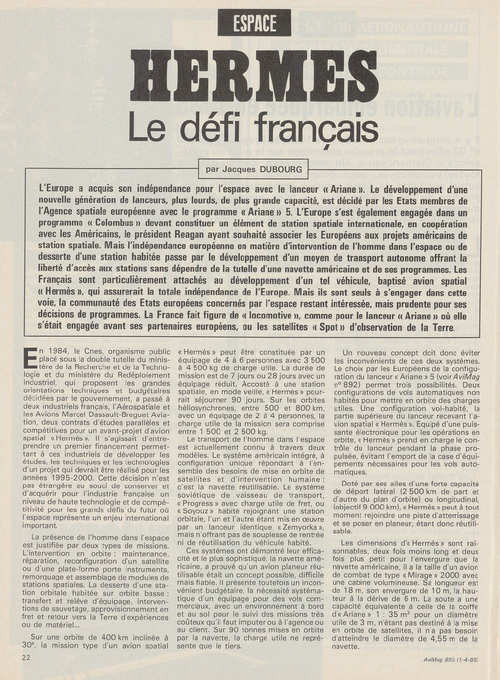
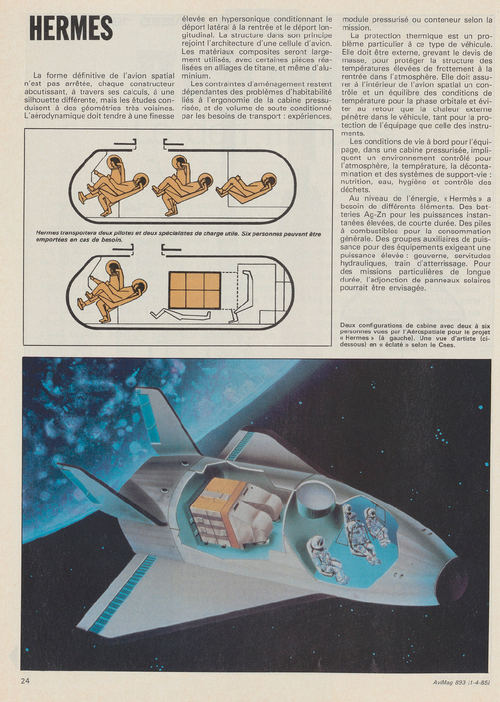
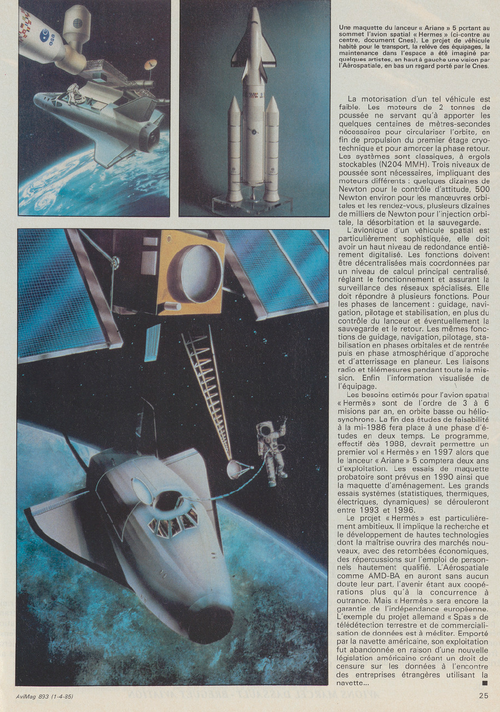
From Aviation magazine 1-7-1985
 

Attachments

  • 1.png
    1.png
    1.2 MB · Views: 87
Proprietary data that is moldering under dust and earns zero Euros...in effect- they own one hundred percent...of nothing.

If SLS and Orion dies, that service module of theirs goes nowhere--does nothing. They might just work with them then.
All data from Hermes went in Switzerland for free. Then you don't know who had access to it, granted that they were not prohibited actors.
 
Sadly, Hermes' weight just kept growing. Especially after ejector seats were added...

IIRC, a comment at time was the poor thing still had negative cargo capacity *after* they deleted the French wine cellar...
Well, Columbia did not bring back the stock of frozen Double Cheeseburgers either...
 
Last edited:
It hosted RCS and early version escape system parachutes
the Parachute serve landing in ocean if second stage failed
the escape system feature also a Solid motor to move fast away from the Rocket.
hermes-one_0005-jpg.726654
 
I just stumbled across this short video about the Hermes spaceplane uploaded onto YT on January 5, 2025:


The Hermes spaceplane, the European response to the American Space Shuttle, was envisioned to provide independent access to space for European crew and cargo. Following its cancellation in 1992, the Hermes shuttle became forgotten to the general public. Philippe Jung, an engineer who worked on the Hermes project, tells the story of the Hermes project in his eyes, from its beginnings to its demise. The Hermes shuttle may be gone, but its spirit still lives on in current and future European space projects.
This video was actually my individual project for the humanities department of the International Space University's Space Studies Program I participated in at the summer of 2024, which took place in Houston, Texas. I would like to thank the department chair Kerrie Dougherty for giving me the opportunity to interview Philippe for this video.
Launch and re-entry animations were enacted using Orbiter Spaceflight Simulator 2016. Music includes "Blueprints" and "Build It" from the original soundtrack of the documentary series "Moon Machines".
 
Just another me too project without any clear and dedicated/dependable long term sustainability need based on (re)supply requirements.
 
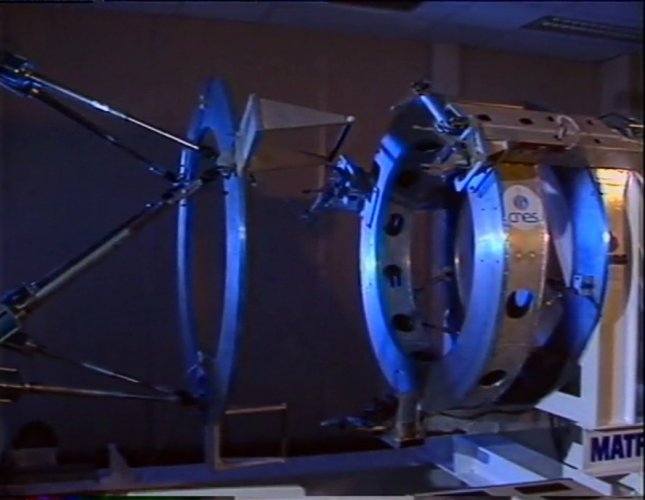
Docking system test by Matra, 1989. This particular test was a demonstration of the approach sensor suite and its software.
Hermes would have been fitted with either probe and drogue or APAS depending on the mission.
 

Attachments

  • 20250506_193325.jpg
    20250506_193325.jpg
    63.3 KB · Views: 70
I've read that Dassault developped years ago a soft to anticipate the heat on the Hermes frame during re entry.
They had the opportunity to test it on the US Shuttle frame so as to compare the computing results with reality : it was very accurate.
So a nice point for the future one.
 

Attachments

  • 300497_tekst.jpg
    300497_tekst.jpg
    580.6 KB · Views: 32
  • 300497.jpg
    300497.jpg
    1 MB · Views: 34

Similar threads

Back
Top Bottom