Air France decided to purchase D.338s as transition aircraft due to the delay of the T30 program aircraft. However, they are not part of the same program at all; they were not presented as competitors to CEPANA, which chose the Bloch 300 and the D.620.

You can refer to Avions issues 179 and 180 (January to April 2011) for D.620 that became D.342, as well as issues 201 and 202 (September to December 2014) for MB.300, and of course, the 2nd volume of "Les avions Marcel Bloch" (2025).
 
Hi,

there are two competitions,we didn't speak about them,

- North Atlantic Seaplane or Flying boat of 1934

- South Atlantic Seaplane or Flying boat of 1936

A few details are remained about them,any help ?.
 
Hi,

in which year this P3 competition,which the main contenders
were; Potez-568,Hanriot H.232,Amiot-390,Caudron C.445 &
Bloch MB.800 ?.
 
Hi,

in which year this P3 competition,which the main contenders
were; Potez-568,Hanriot H.232,Amiot-390,Caudron C.445 &
Bloch MB.800 ?.

I think it was from 1936 to 1937 ?
 
Hi,

may I miss this competition,for transport aircraft,which main
contenders were; Potez-661,Bloch-160 and Dewoitine Design,
who know more about it,or in which year ?.
 
Hi,

may I miss this competition,for transport aircraft,which main
contenders were; Potez-661,Bloch-160 and Dewoitine Design,
who know more about it,or in which year ?.
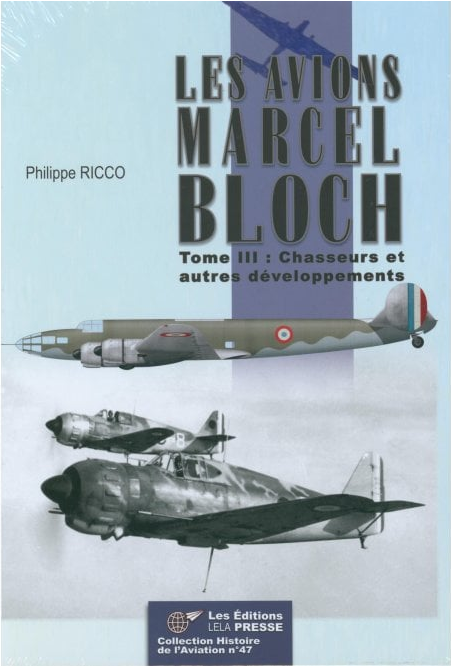
Extract translated from this book: https://www.aviationbookcentre.com/...tome-3-chasseurs-et-autres-developments-p7821
1775801387604.png
The spectacular progress made in the meantime by Air Afrique allowed it to consider taking a new step in its development. To this end, it drew up specifications for two types of aircraft: a large, high-speed, four-engine aircraft for the Algiers-Bangui route and a medium-sized, light, four-engine aircraft with "good speed" for other routes. A technical program was then drawn up at the company's request and published on September 25th, 1936. The specific adaptations required for use in Africa and the small number of aircraft to be manufactured did not inspire much enthusiasm among the manufacturers. Potez proposed a project for a medium-sized, four-engine colonial aircraft, which would give rise to the Potez 661 and 662, while Bloch could meet the demand for the large aircraft with its Bloch 160.​

As you can see, The Potez 661 and the Bloch 160 were not really competing, as each of them responds to a different program. I don't have any trace about a potential other contender from Dewoitine. Could you please elaborate?
 
Last edited:
As you can see, The Potez 661 and the Bloch 160 were not really competing, as each of them responds to a different program. I don't have any trace about a potential other contender from Dewoitine. Could you please elaborate?

At first,it was in Docavia 17.
 

Attachments

  • 1.png
    1.png
    26.5 KB · Views: 27
At first,it was in Docavia 17.
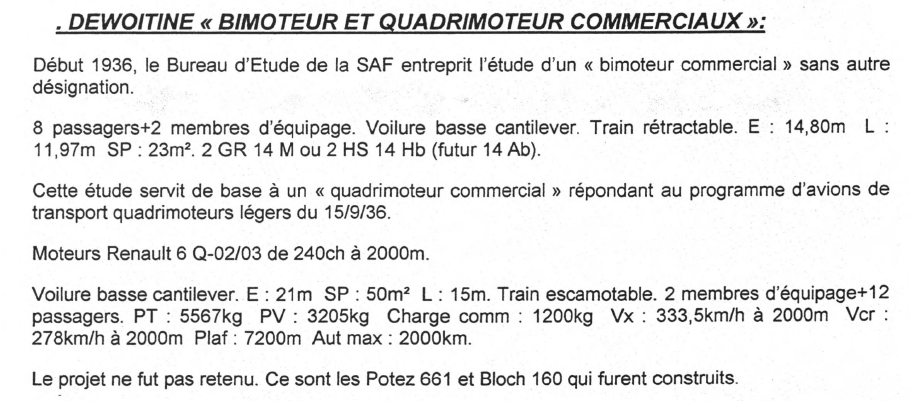
"Quadrimoteur commercial" is not the same category. The two programs for Air Afrique require colonial four-engine aircraft. This Dewoitine project was not a contender for neither Bloch 160 nor Potez 661.
May it was D.690 ?.
Did you invent it?
 
At first,it was in Docavia 17.
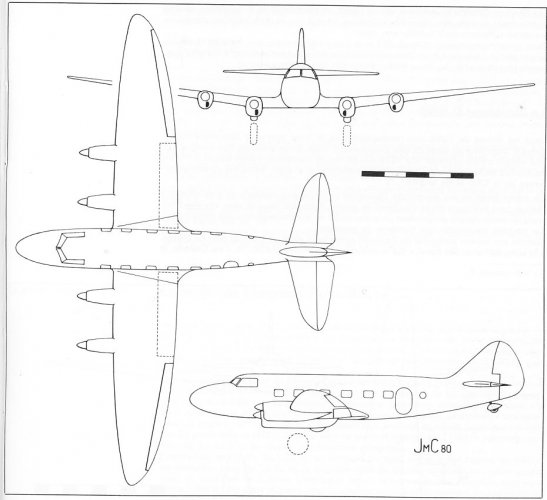
You scanned partially the index page 472. This "avant-projet" (simple feasability study, not a real project) is presented pages 434-436. It responds to a program for "avions de transport quadrimoteurs légers", for which none of Potez 661 not Bloch 160 was designed (this is a mistake from Raymond Danel). It seems that this inital program was cancelled without competition.
See attached the drawing from Jean Cuny in the Docavia, with no number.
 

Attachments

  • Dewoitine de transport quadrimoteur léger 1936 (Docavia p.434).jpg
    Dewoitine de transport quadrimoteur léger 1936 (Docavia p.434).jpg
    82.1 KB · Views: 19
You scanned partially the index page 472. This "avant-projet" (simple feasability study, not a real project) is presented pages 434-436. It responds to a program for "avions de transport quadrimoteurs légers", for which none of Potez 661 not Bloch 160 was designed (this is a mistake from Raymond Danel). It seems that this inital program was cancelled without competition.
See attached the drawing from Jean Cuny in the Docavia, with no number.

OK,and that's only my speculation about the designation; D.690 ?.
 

Attachments

  • 1.png
    1.png
    268.2 KB · Views: 19
- C.1 single seat shipboard fighter, SNCAO CAO.1000,Dewoitine D.590,Latecoere Late.675 and Bloch MB.720

For this competition,also SNCAN submitted a proposal ?!.
 
For this competition,also SNCAN submitted a proposal ?!.
No: the CEPANA met on July 6, 1939, to select from among all the candidates for the A80 program. The contenders were the Bloch 720, the Breguet-Latécoère 675, the Dewoitine 790, the Gourdou 130, and the CAO.1000. No other candidates were presented to the review committee. The Bloch was immediately ruled out. After deliberations, the Breguet and the Dewoitine were selected.
 
Last edited:
No: the CEPANA met on July 6, 1939, to select from among all the candidates for the A75 program. The contenders were the Bloch 720, the Breguet-Latécoère 675, the Dewoitine 790, the Gourdou 130, and the CAO.1000. No other candidates were presented to the review committee. The Bloch was immediately ruled out. After deliberations, the Breguet and the Dewoitine were selected.

That's not my opinion,it's mentioned in Docavia 34.
 

Attachments

  • 2.png
    2.png
    58.1 KB · Views: 10
That's not my opinion,it's mentioned in Docavia 34.
It's not an opinion, it's a fact. The complete list of contenders comes directly from the CEPANA report.

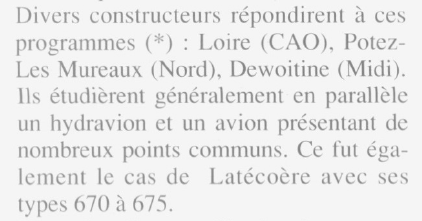
The Docavia says "Various manufacturers answered to these programs", not "this program". Potez-Mureaux had submitted a project to another program, but not to the A80.
 
Last edited:
The Docavia says "Various manufacturers answered to these programs", not "this program". Potez-Mureaux had submitted a project to another program, but not to the A80.

If you meant SNCAN-180,of course the author knew it,and it was for another program,but
in the text he spoke about A80 contenders,I think we should ask him.
 
If you meant SNCAN-180,of course the author knew it,and it was for another program,but
in the text he spoke about A80 contenders,I think we should ask him.
Docavia 34 author was Jean Cuny, . I knew him, but I cannot ask him right now, as he died in 1992.
I found your extract in page 262. It is in the section speaking about both programs A75 and A80, not just A80. This is why he wrote "ces programmes" (these programs) and not "ce programme" (this program). You have just misinterpreted French text.

SNCAN answered to A75 for a single-seat fighter seaplane, where the contenders were Dewoitine HD.780, Latécoère 670, 671, 672, 673, CAO 500 and Mureaux-Potez-CAMS 170 (SNCAN).

The SNCAN-Potez 180 has no connection to these two programs.
 
In TU 238,there are som Specifications to 1944,I want to trace them with their
contenderes,as following,

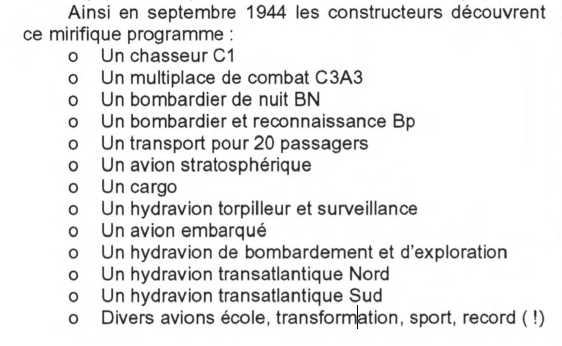
Thus, in September 1944, manufacturers were presented with
this ambitious program:

o A C1 fighter
o A C3A3 multi-seat combat aircraft
o A BN night bomber
o A Bp bomber and reconnaissance aircraft
o A 20-passenger transport aircraft
o A stratospheric aircraft
o A cargo aircraft
o A torpedo and surveillance seaplane
o A carrier-based aircraft
o A bombing and long-range reconnaissance seaplane
o A North Atlantic seaplane
o A South Atlantic seaplane
o Various aircraft for training, conversion, sports, and record-breaking (I)
 

Attachments

  • 2.png
    2.png
    104.5 KB · Views: 8
Please I need a help from my dears; Jemiba,Philippe Ricco,Deltafan,Toura,Retrofit,Arjen,Apophenia,
& Lark ,and if my dear Adrien (C460),he can solve many of this competitions for 1944,and I suggest
these entries;

** C.1 Fighter : Arsenal VG-50,VG-60,VB-15,VB-16,VB-20 & Bloch BA 10

** C3A3 Multi-seat combat aircraft : SNCAC design ?

** BN Night bomber : Arsenal VG-50 (another concept for this designation),SNCAC NC.200

** Bp Bomber and reconnaissance aircraft : VB-10 modern version

** 20-passenger transport aircraft : Caudron design ?, Amiot-530,Morane MS-580,Payen Pa-250
Breguet-510 & SNCASO SO.3010

** Stratospheric aircraft : SNCASO SO.3020,Breguet 870

** Cargo aircraft : LeO 450 variant ?

** Torpedo and surveillance seaplane : SNCAN 1400 & Arsenal VG-50 (Also another design),Breguet 880
& SNCASE SE.1020

** Carrier-based aircraft : Arsenal VB-10 a naval design

** Bombing and long-range reconnaissance seaplane : Arsenal ASM-6 & SNCASE SE-204M

** North Atlantic seaplane : Arsenal VG-50 (also another design)

** South Atlantic seaplane : SNCASE SE-212 ( a variant of SE-200),SNCASO SO.2040

** Various aircraft for training, conversion, sports, and record-breaking : Arsenal VB-10 Racer
 
Last edited:
Please I need a help from my dears; Jemiba,Philippe Ricco,Deltafan,Toura,Retrofit,Arjen,Apophenia,
& Lark ,and if my dear Adrien (C460),he can solve many of this competitions for 1944,and I suggest
these entries;

** C.1 Fighter : Arsenal VG-50,VG-60,VB-15,VB-16,VB-20 & Bloch BA 10

** C3A3 Multi-seat combat aircraft : SNCAC design ?

** BN Night bomber : Arsenal VG-50 (another concept for this designation),SNCAC NC.200

** Bp Bomber and reconnaissance aircraft : VB-10 modern version

** 20-passenger transport aircraft : Caudron design ?, Amiot-530,Morane MS-580,Payen Pa-250
Breguet-510 & SNCASO SO.3010

** Stratospheric aircraft : SNCASO SO.3020,Breguet 870

** Cargo aircraft : LeO 450 variant ?

** Torpedo and surveillance seaplane : SNCAN 1400 & Arsenal VG-50 (Also another design),Breguet 880

** Carrier-based aircraft : Arsenal VB-10 a naval design

** Bombing and long-range reconnaissance seaplane : Arsenal ASM-6 & SNCASE SE-204M

** North Atlantic seaplane : Arsenal VG-50 (also another design)

** South Atlantic seaplane : SNCASE SE-212 ( a variant of SE-200),SNCASO SO.2040

** Various aircraft for training, conversion, sports, and record-breaking : Arsenal VB-10 Racer
I think your proposals are completely anachronistic. Most of these aircraft date from before or during the war. Programs launched in 1944 were calling for new planes, not for recycling old contraptions.

For example, regarding the C1s, I am thinking more of the SE.2400, SO.6005/6010/6020, or even the MD.450.
 
I think your proposals are completely anachronistic. Most of these aircraft date from before or during the war. Programs launched in 1944 were calling for new planes, not for recycling old contraptions.

OK I agree with you,but there are not old at all by that time,1944,to explain.

Arsenal
VB-15 & VB-16 were from 1944 to 1946
VG-50 (new version) was a project of VG-30,appeared in 1945
VG-60 (new version) was appeared in 1945,based on VG-33

Please can you complete your vision to others competitions and thanks.
 
OK I agree with you,but there are not old at all by that time,1944,to explain.

Arsenal
VB-15 & VB-16 were from 1944 to 1946
VG-50 (new version) was a project of VG-30,appeared in 1945
VG-60 (new version) was appeared in 1945,based on VG-33

Please can you complete your vision to others competitions and thanks.
I do not fully agree:
- VB.15 and VB.16 are just re-engining the old VB.10 from 1940. They are not new design for new program.
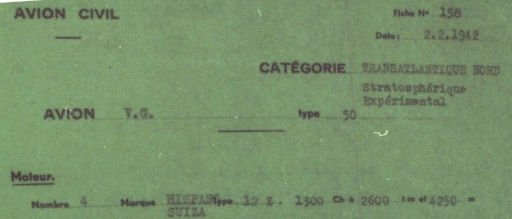
- VG.50 variant of VG.33 using Alison V-1710 engine was proposed in 1938-39. The VG.50 from 1945 was a 4-engined long distance transport from 1938 project, proposed after-war with many versions. This is not a new project answering to a new program.
- VG.60 based on VG.33 with HS 12Y51 is also a pre-war project, abandoned long before 1944. The VG.60 after-war project may have been proposed for this C1 program of 1944, as a jet aircraft, which has finally evolved into VG.70 prototype.
 
To explain more,

- OK for VB-15 & VB-16,but you forget by that time,there was no jet engines,
so a big possibility they were with a piston engines with 1700 hp or more

- VG-50 had 9 versions,4 of them are begun from 1944 to 1945

- VG-60 with third use of the designation was from 1945

And what are about the rest of competitions ?.
 
you forget by that time,there was no jet engines
No, I don't forget. As I explained, the role of a program is to support manufacturers for new developments, not to order old ones. So, in 1944, the priority was to develop new generation of planes, with jet engines as first priority (through Rateau and the future SNECMA).
And you are wrong, in 1944, there was plenty of existing jet engines available: De Havilland Goblin, Rolls Royce Derwent, Jumo 004, HeS 011, BMW 003, GE J31 and J33, etc. As well, there was many jet aircrafts in service: Me 262, P-80, He 162, Gloster Meteor, DH Vampire, etc.
The objectif for France in 1944 was to catch up, so it would be logical to launch new programs to study new perspectives and technology.

VG-50 had 9 versions,4 of them are begun from 1944 to 1945
Yes, but all of them were 4-engine transport, not C1 fighters. The only VG-50 C1 project dates from 1938.
VG-60 with third use of the designation was from 1945
Again, resurrection of a former 1942 project, so it does not enter in the scope of a new program.
And what are about the rest of competitions ?
Same principle, most of them were launched for developing new technology. So even if the aircraft manufacturers tried to first propose the projects they have studied during the war, the main objective was to launch new studies.
Stratospheric aircraft : SNCASO SO.3020,Breguet 870
SO.3020, that became NC.3021, I agree. You can add also SE.1000/1010, but Breguet 870 was a non-stratospheric flying boat project. Breguet main stratospheric war-time projects were the 1010/1011 Capricorne.
 
generall the VG-50 version from VG-30 was appeared after Armistice during 1942/43,and up to 1944,
What is the source?
I do not have any confirmation neither in Arsenal archive documents, nor in Vichy Air ministry archives. The only mentions of VG.50 from 1941 to 1945 are exclusively about the 4-engine transatlantic model designed by Galtier. Arsenal was not authorized to work on any model from VG.30 fighter family. Additionally, American engines were not available in France during that period where French industry was under German and Italian control.
VG50-1942 (PhR).jpg

The VB.10 project survived only as a demonstrator for twin-engine coupling based on Vernisse-Waseige principle.
 
VG-60 was powered by Junkers Jumo 213 or HS 12 Z,from 1945 to 1946
This is a good reason to suspect that it was not designed for a new C1 program launched in 1944. It was just re-engining a former model designed long before 1944.
 
generall the VG-50 version from VG-30 was appeared after Armistice during 1942/43

It was developed in Clermond-Ferrand as I think,anyway, can we talk about the
other competitions ?.
 

Similar threads

Back
Top Bottom