https://missiles.ru/2023/08/14/rvv-md2/
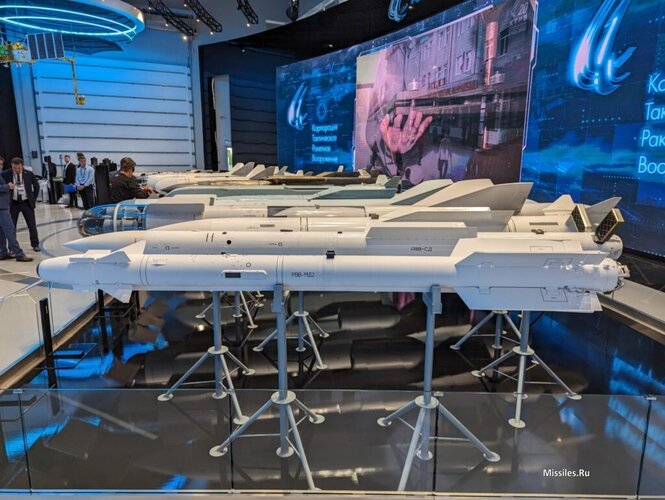
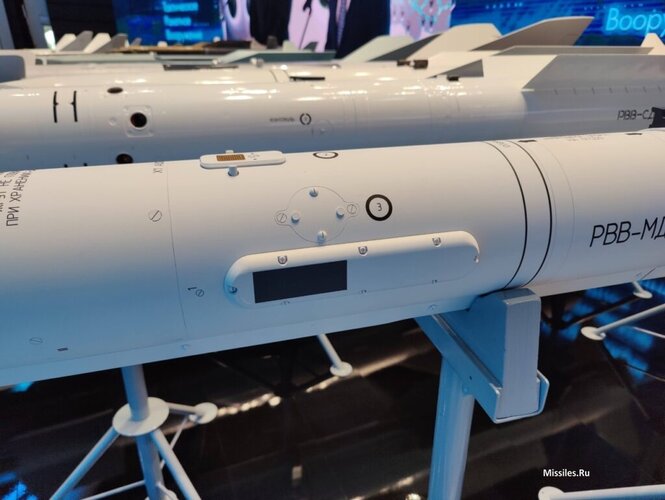
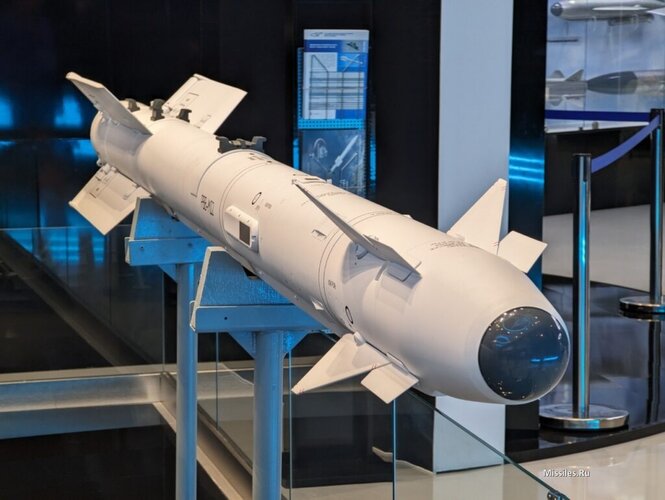
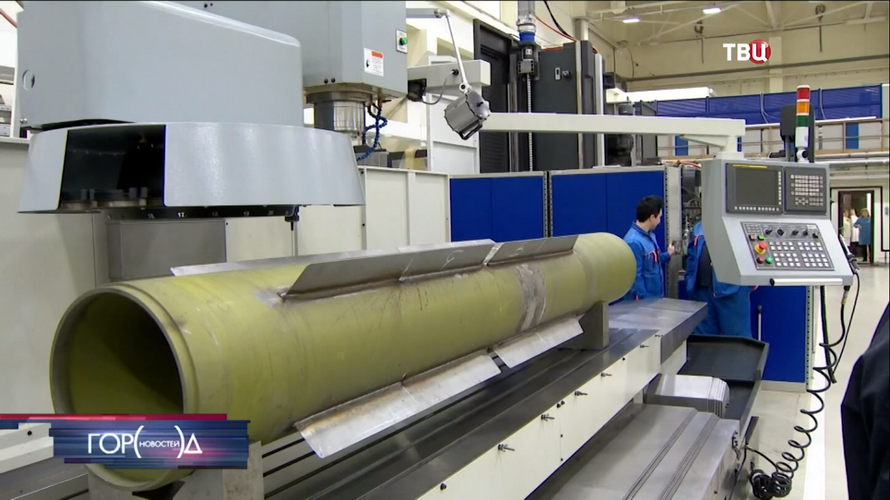
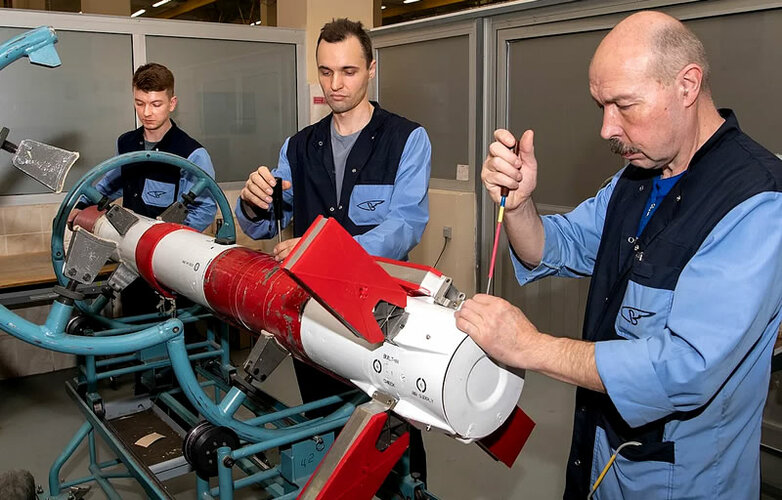
Saw this article with images of the new rvv-md2/r-74m2. Looks pretty awesome. Over at russiadefenseforum they were translating some of the info from the brochure. Here are some pics from the article above.
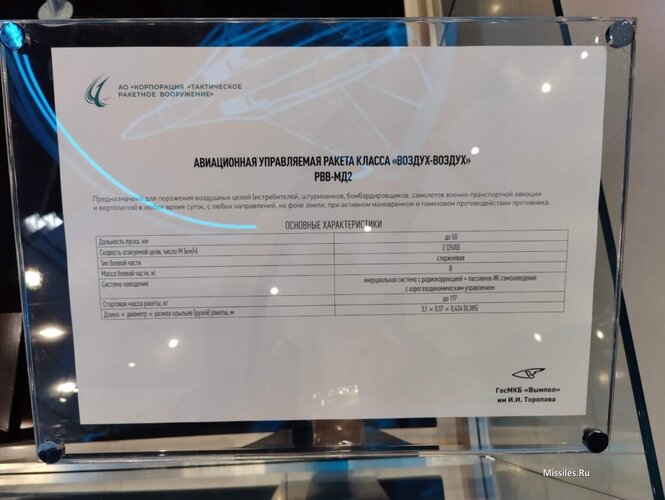
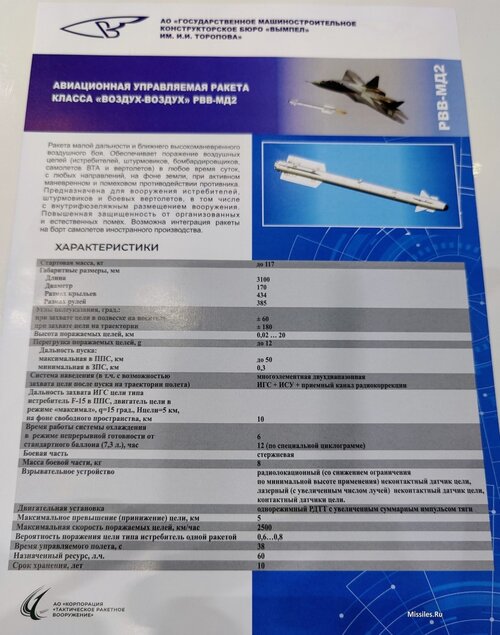
Specifications:
Maximum launch range (meaning target range, not flyout range): 50km
Max target speed, Mach(km/h): 2(2500)
Warhead: continuous rod
Guidance: INS with mid-course update + passive IR seeker and aero gas dynamic guidance
Launch mass: 117kg
Length x diameter x wigspan (rudders), m: 3.1 x 0.37 x 0.434 (0.385)
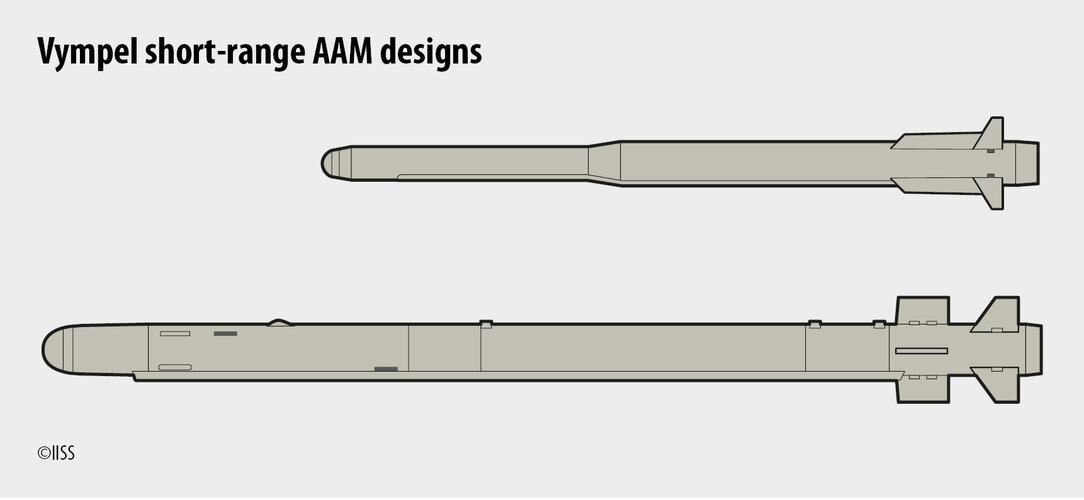
It seems to me that the rear wings (or whatever they are called) have been reduced in span on the RVV-MD2. Which kinda confirm what we saw in the picture from few years ago first showing what is now known to be the RVV-MD2.
Specifications:
Maximum launch range (meaning target range, not flyout range): 50km
Max target speed, Mach(km/h): 2(2500)
Warhead: continuous rod
Guidance: INS with mid-course update + passive IR seeker and aero gas dynamic guidance
Launch mass: 117kg
Length x diameter x wigspan (rudders), m: 3.1 x 0.37 x 0.434 (0.385)
RVV-MD2
Specifications:
Launch mass: up to 117kg
Dimensions, mm
Length: 3100
Diameter: 170
Wingspan: 434
Rudder span: 385
Cueing angles:
at pylon: +-60deg
at trajectory: +-180
Target altitude range: 0.02-20km
Max target G load: up to 12
Firing range:
max target front hemisphere: up to 50km
min target rear hemispehere: 0.3km
Seeker and guidance: multi-element two-band IR seeker + INS + mid-course update
Seeker lock on range, target: F-15 frontal hemisphere, engines at MIL thrust, q=15deg, target altitude = 5km, free background: 10km
Cooling system time at uninterrupted readiness mode, with a standard balloon volume of 7.3L, hours: 6/12(using special cyclogram).
Warhed: continuous rod
Warhead weight: 8kg
Detonator: radar detector with lowered restrictions on min altitude, laser detector with increased number of beams
Motor: single-mode rocket motor with increased overall thrust impulse
Max target height difference: 5km
Max target speed: 2500 km/h
Pk, target fighter: 0.6-0.8
GFuided flight time: 38s
Max flight
hours on pylon: 60
Storage time: 10years
Good question. I seem to recall that these are pretty normal numbers for Russian/soviet missiles as far as shelf life and air time goes. The seeker arming time span seems much improved tho. I think these are pretty normal figures for times before a required overhaul. I've heard our missiles have longer shelf lives but I'm not sure.
In 1984, AMRAAM was reportedly being designed for 50 flights of 2 hours, so 100 hours in flight. But by the 1990s, missiles were achieving 200 flight hours between required maintenance, with the goal being 450 hours.
That Guided flight time is some good improvement over 23-28 seconds for earlier R-73 variants. The storage time is also improved by about 2 years.
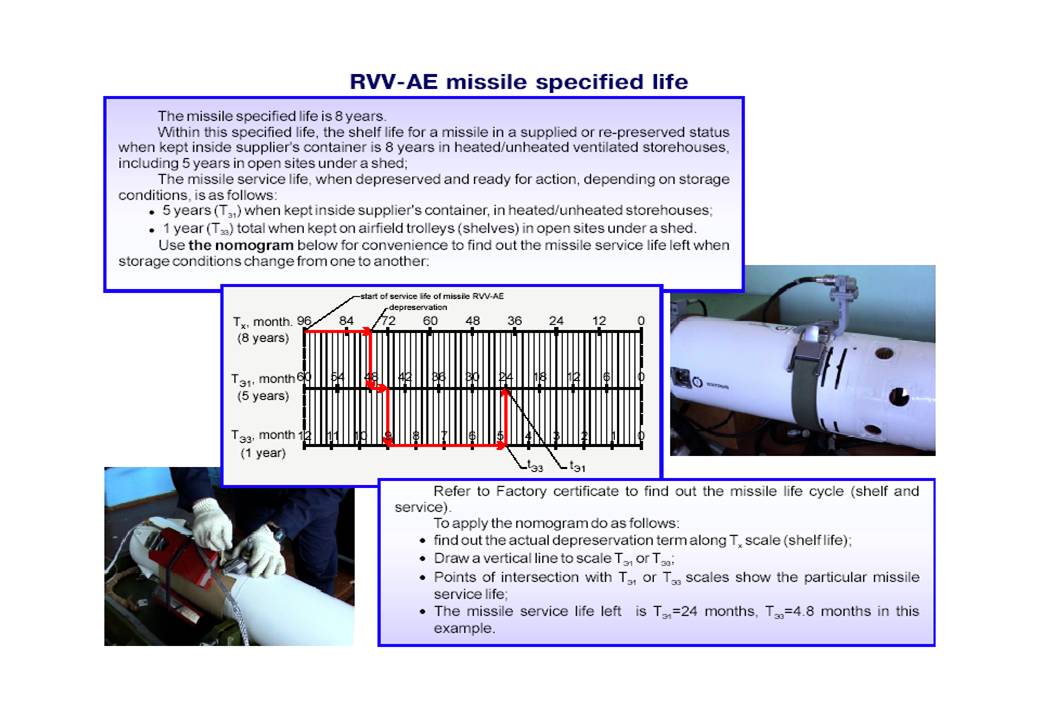
Typical Russian A2A missiles, export at least have storage life of 8 years. The missile come with a "calendar" to predict the remaining life of the missile. This is for RVV-AE.
Re RVV-MD2/R-74M2, also noticed the first row of control surfaces is gone, so it's only 2 rows now. On the earlier R-73/74 variants there are 3 rows of surfaces on the nose.
The first row aren't control surfaces but weather-vaning air-data (AoA/side-slip angle) sensors. These may have become redundant with the introduction of an INS into the guidance system.
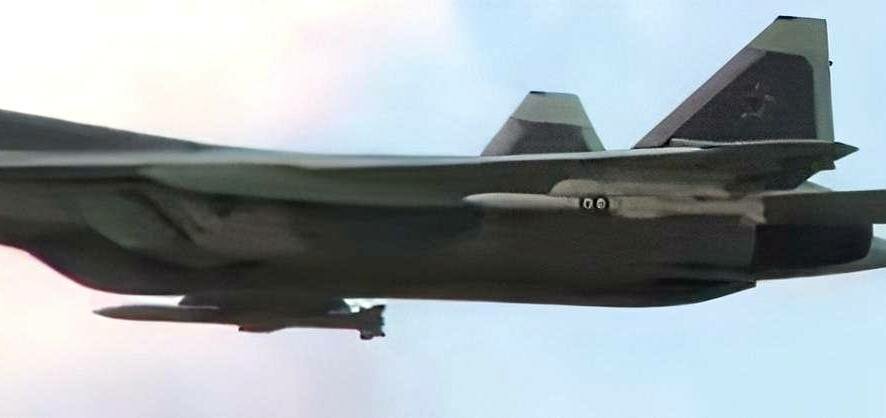
Interesting. I see some discrepancies between the number of missiles claimed per airframe, and the number illustrated (with the latter being plausible).
However, it does seem to support the idea that the RVV-BD isn't cleared for internal stowage.
I've generally assumed that an I-810 derived ("R-37 class") missile was being developed for the PAK-FA, given that ti appears to have 700kg ejectors and given the potential benefits of having the additional kinematic performance and seeker diametre (which allows more development potential/growth in performance to match low observable targets). However, I suppose it might also be plausible that the stealth configuration of the Su-75 will be limited to the RRV-SD, with the RVV-BD class weapons carried externally only?
I've seen a snippet of info that says the Su-57 could carry up to 10 Izd. 810 AAMs (tailored for internal carriage), 4 in the bays, 4 under the wings and 2 under intakes. There was also a R- designation, though not sure if that info is supposed to be public
Probably such a configuration is as likely as the F-14 carrying 6 AIM-54s operationally, ie most likely not in any day to day operations.
Given the above, i guess the Su-57E could carry up to a maximum of 6 RVV-BDs (R-37M, Izd. 610M iirc) under wings and intakes, since the RVV-BD is not tailored for internal carriage.
However, it does seem to support the idea that the RVV-BD isn't cleared for internal stowage.
I've generally assumed that an I-810 derived ("R-37 class") missile was being developed for the PAK-FA, given that ti appears to have 700kg ejectors and given the potential benefits of having the additional kinematic performance and seeker diametre (which allows more development potential/growth in performance to match low observable targets). However, I suppose it might also be plausible that the stealth configuration of the Su-75 will be limited to the RRV-SD, with the RVV-BD class weapons carried externally only?
TMA1's post provides the answer: RVV-BD =/= Izd. 810. So yes, the former (which is basically the R-37M in Russian domestic service) cannot be carried inside the Su-57 bays (chiefly because only the upper control surface pair folds), whereas the Izd. 810 can.
Related to turning performance, at a guess. Perhaps the gap which short-circuits the pressure and suction sides of the strake somehow improves unsteady flow at high AoA? Sort of a fowler flap cum dog tooth?
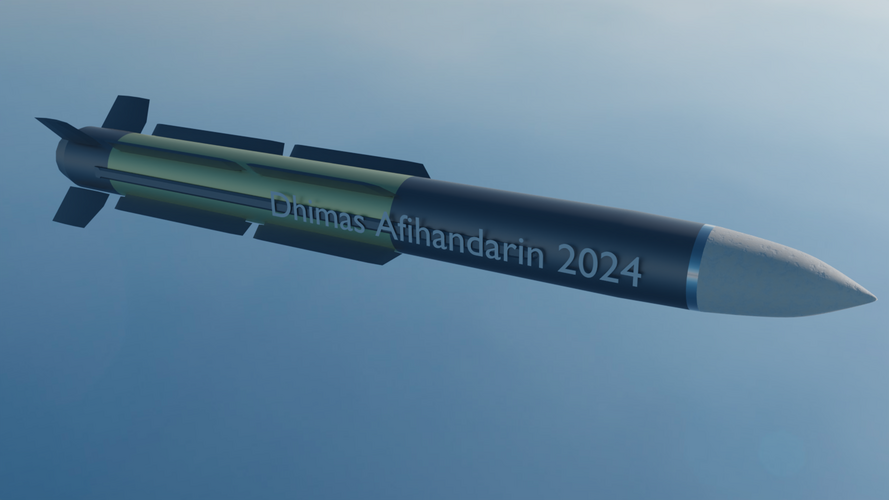
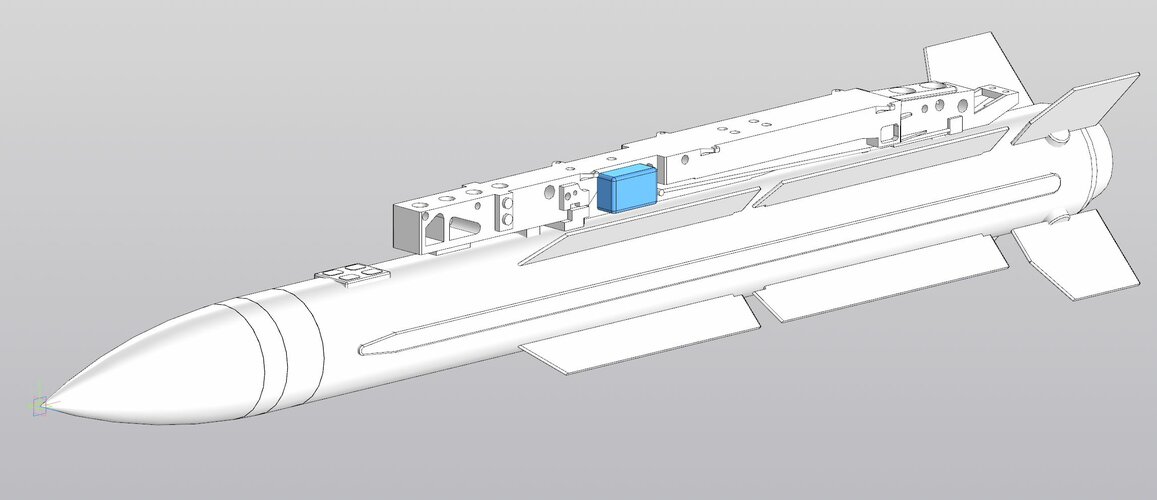
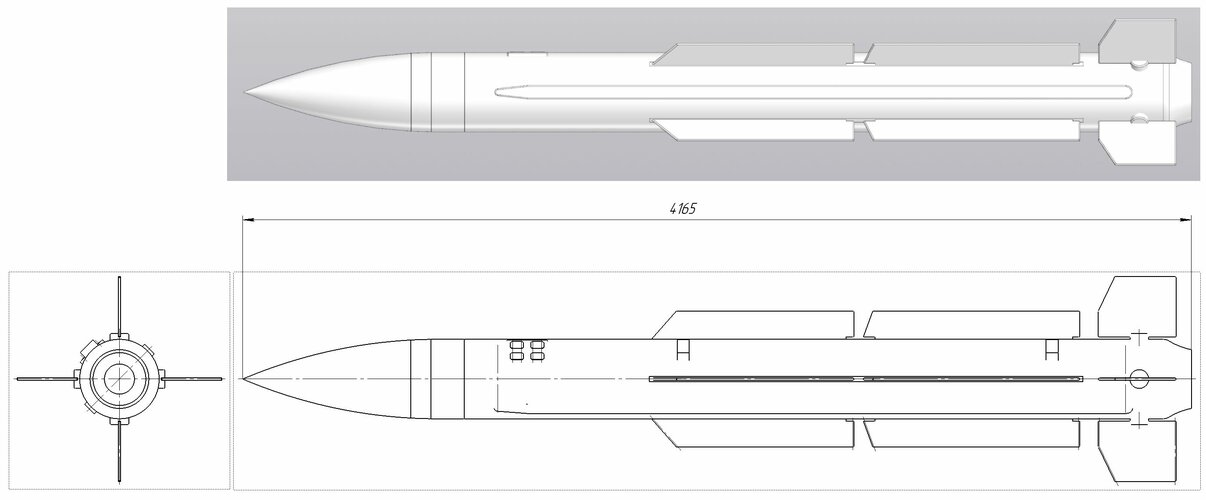
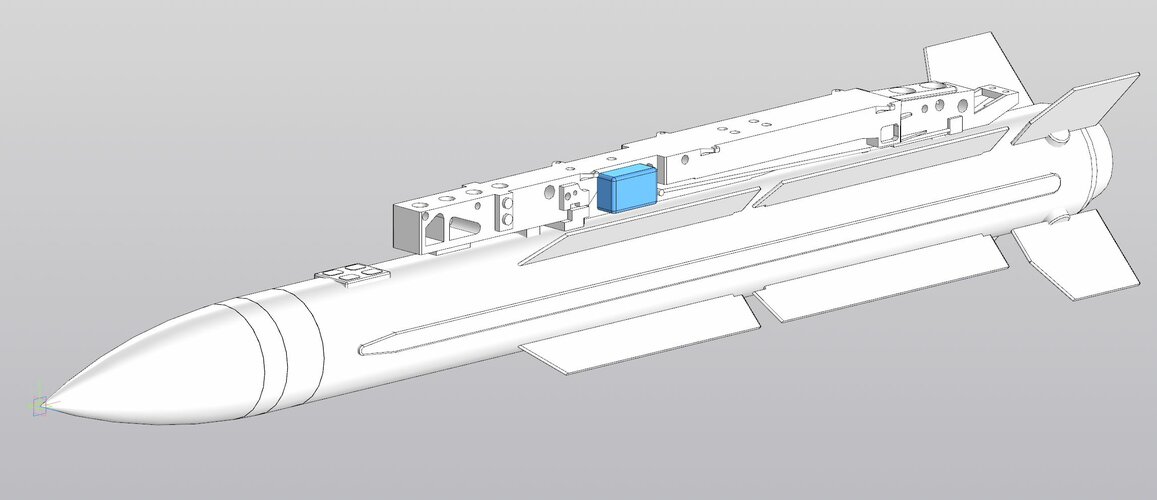
Quick 3D model that i did. Assuming 38 cm diameter as R-37. This missile would be about 4.4 meter in length maybe bit shorter. The total span unfolded would be some 85-89 cm. With fins folded it would be about 40 cm in diameter.
Length is going to be more like 4.2m, if the above theory about internal carriage on the Su-57 holds. 40cm bounding box width/height would be bang on though.
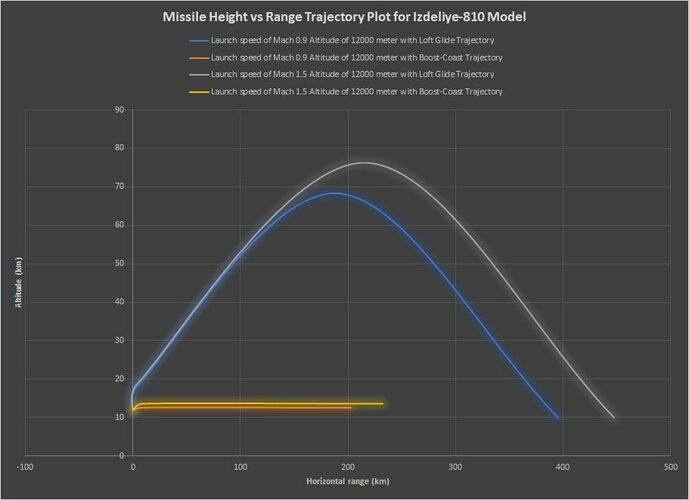
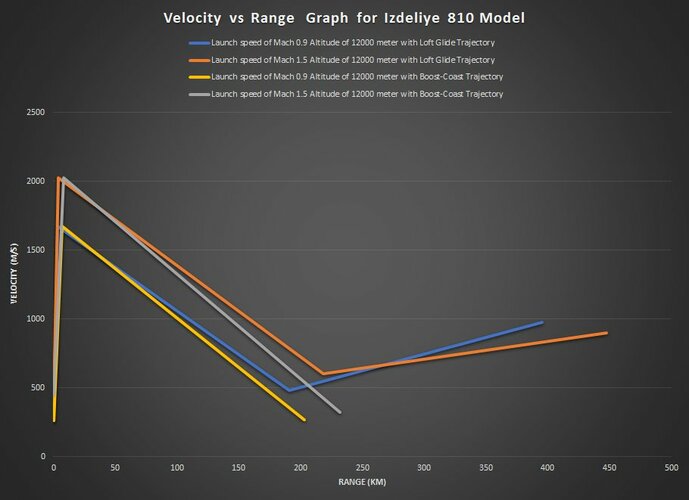
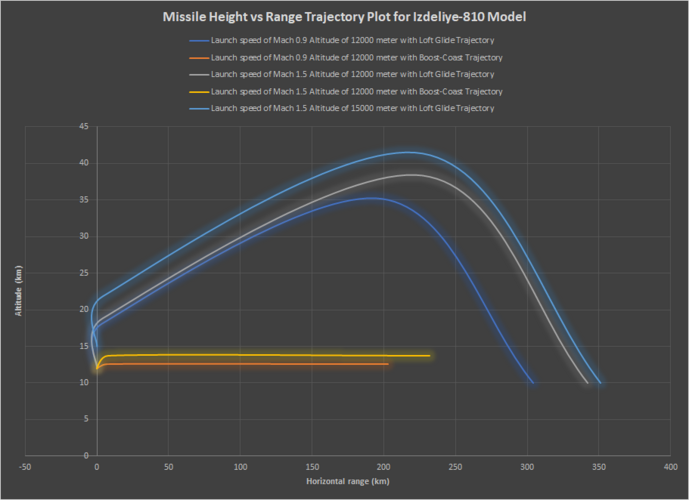
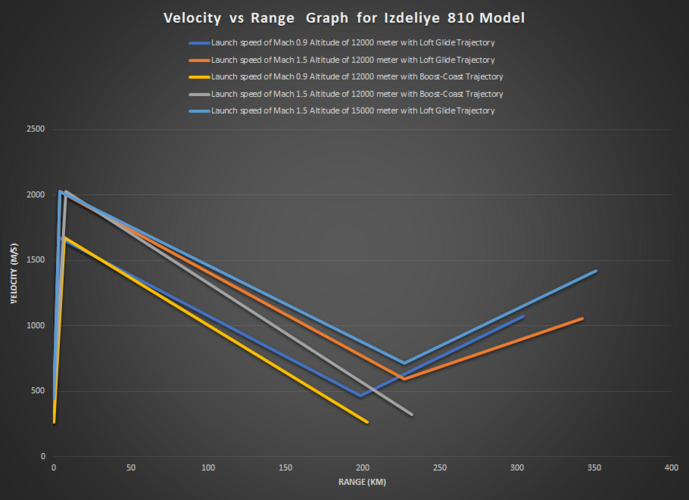
The modeled trajectory would be Loft glide (or boost glide) and Boost-coast "direct fire". For launching condition, two conditions are estimated. Subsonic (M 0.9) and Supersonic/supercruise (M 1.5) With launch altitude of 12000 meter. Target are assumed to be in 10000 meter for Loft glide which, typical operational altitude of an AEW aircraft. While for "direct fire" are Co altitude which could be representative for fighter aircraft.
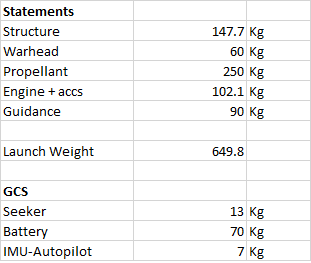
The assumed launch weight would be 650 Kg. Heavier than Izd 610 (RVV-BD) As i use methods of estimate from E Fleeman's tactical missile design. The weight prediction there actually assume 671 Kg which i corrected (well Agat seeker is light afterall + Digital IMU and autopilot) to 650 Kg.
Propellant load is assumed to be 250 Kg. The weight breakdown is as follows :
Engine + accs is the weight of the rocket motor casing and nozzles without the propellant. GCS stands for Guidance and Control System. The battery is surprisingly heavy as i assume Thermal battery, 10 KW power requirement for 700 seconds of flight (100 seconds more than R-33).
The resulting range with those assumptions :
and speed-range diagram
Well one can see 11-12% increase in range from supersonic launch. Also visible the Apogee. Could be excessive tho.
Can you perhaps add a lofted trajectory that doesn't go quite that high? An apogee of 30 - 40km would ensure the missile does not spend so much time at altitudes where air density (or rather lack thereof) precludes course correction by aerodynamic control surfaces. Your lofted trajectories basically have the missile unable to react to even mild mid-course updates for 300 of the 450km flight, which may then require very aggressive turning during the final 50km or so. Even against an AEW aircraft that's probably a bit tight (it flies a race track, rather than a nicely predictable straight line).
Increased battery endurance allows the missile to still able to guide itself, long even after motor burn out, allowing high apogee glide phase where the missile using its control surfaces to do things like energy management maneuver and of course use of higher power radar seeker.
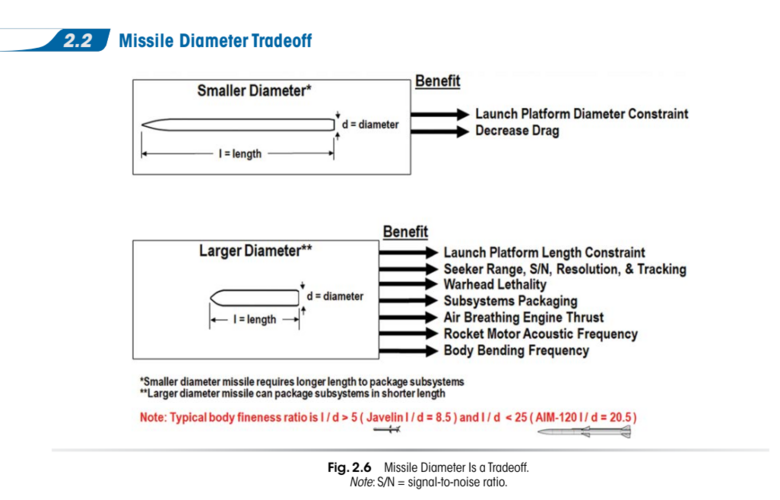
While large diameter is basically allows larger antenna means longer range and narrower beamwidth which basically improved angular resolution. The following is some benefit of larger diameter missile
Can you perhaps add a lofted trajectory that doesn't go quite that high? An apogee of 30 - 40km would ensure the missile does not spend so much time at altitudes where air density (or rather lack thereof) precludes course correction by aerodynamic control surfaces. Your lofted trajectories basically have the missile unable to react to even mild mid-course updates for 300 of the 450km flight, which may then require very aggressive turning during the final 50km or so. Even against an AEW aircraft that's probably a bit tight (it flies a race track, rather than a nicely predictable straight line).
Sure thing, which obtained by adjusting the angle of the missile during coast, with something flatter. In this one it's where the Apogee is limited to Below 45 Km. Not giving the previous 400+ km range but still respectable 300-350 Km. Maybe it can reach more if i can assume higher L/D (In my model for glide phase, i assume L/D ratio of 3). The missile also retain somehow more "energy" in shape of velocity.
I do find it interesting that the rvv-bd export model has a listed max range of 200km and that stealthflanker's simulations show around 200km max unlofted range. So the export R-37m may lack the datalinks for communicating with other vehicles which would allow kills beyond radar horizon I am guessing. Export version can probably only talk to it's host carrier.
Since the Ukrainians managed to capture an almost intact example of the AA-13 Axehead LRAAM (Its' rocket-motor appears to failed to ignite after it was launched) and it has been handed over to missile experts in the US to examine I wonder how much this knowledge will benefit the Ukrainians when their donated F-16s go into service?
There are things about that I don’t believe in the slightest. 180 with scramjet is nonsense… 300M for “anti-aam or sam defence”???? This is just stupid. Other parts of text seem believable and/or reasonable.
Only time will tell if the said designations are correct, I personally expect 810 to be called R-37BM or R-37M2 (based on “trust me bro” words from a friend, you may disregard this)
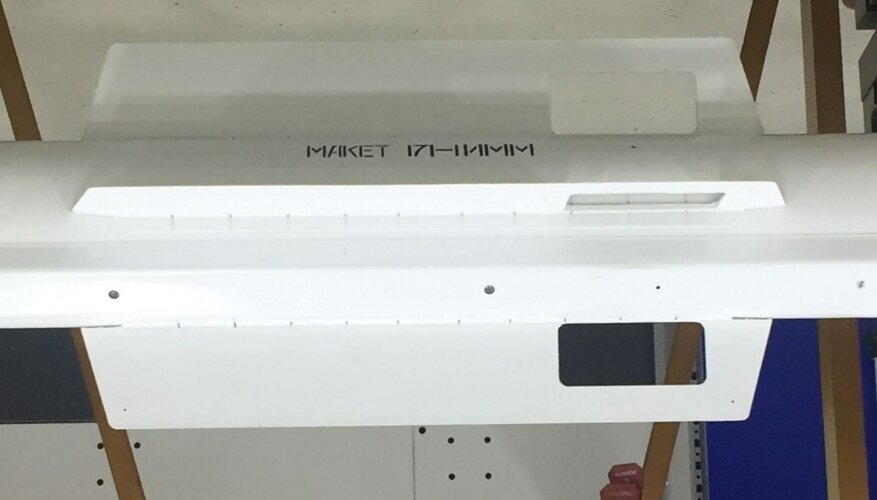
Hi ! I 've read that comment from Aviator69. Hm ,there is indeed some right data.There is really new AAM called Product 171-1. I have several pics and we can see that wings have 'windows'. I have only one pic of that Product 180 ( designation K-77M is not correct but R-87 if famous Fighterbomber is right). Now if we look better ,or If I see well ,those are not wings but some kind of air intakes? Of course both AAM's were not real ,only mock-ups. Also I've found some info that catapult launcher is AKU-180. Product 270 /R-47 ?/ also exists and I have many pics even from 2018. Pictures were from the Moscow's manufacturer GosMKB Vympel which produces all new AAM's for the Su-57. It is very interesting that Izdeliye 270 have some parts from the AAM type R-77E / Izdeliye 190 or export version of the old Soviet R-77/Izdeliye 170 / .We can see some inscriptions wrote in english.
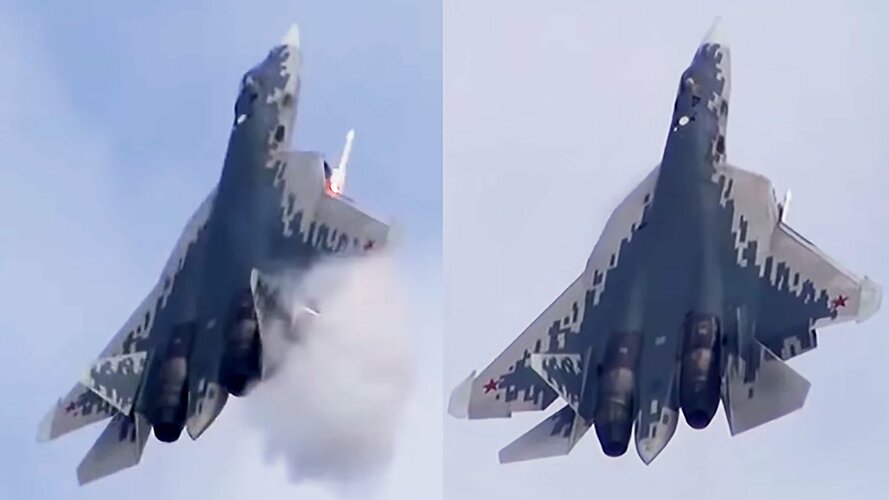
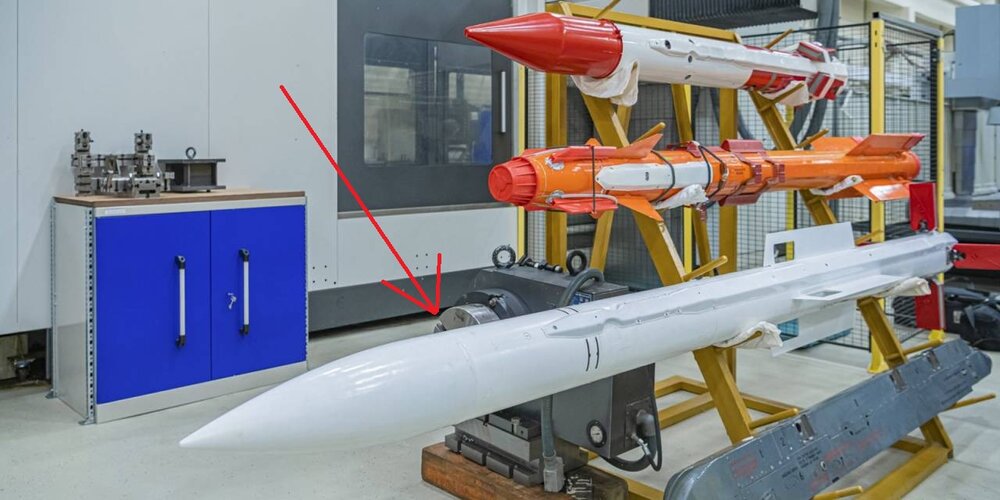
Product 300M ,I've read about that AAM as very small in the level of R-73/-74 and that can be attached inside underwing weapon compartment. Sorry but I have no pic of the Izdeliye 300M. Hm, for anti-AAM/SAM purpose? Then there is Product 750 or R-74M/ML and Product 760 or R-74M2. First AAM we can see on the pic in the middle ( as white-orange) ,second AAM appeared in one video where prototype of Su-57 launched that AAM from the underwing compartment during climb. Now about that Product 810 . Yes, military designation is really R-97. It is huge AAM,much bigger and heavier then actual R-37M or Product 610M as we know carried by the MiG-31BM,Su-30SM2 and Su-35S. I have some pics from GosMKB Vympel.Take a look to the diameter of the rocket engine chamber. R-97 is about 4.8m long,body diameter is about 450mm ,has eight wings and four foldable stabilisers. It is about 150kgs heavier then R-37M which has by the way launch weight of 600kgs. First test launch was achieved on July 6 2017. It is interesting that 'Time of the aerodynamic stability and controlability' is 360 sec. Source from 2018 where we can see that it is really R-97 is this : https://vk.com/@milinfolive-r-97-no...QWvf6qGqrZFd_iTPPg_aem_fc0Bk17oT3UH_hIwoTnNSA
The sequence is from the famous reportage ''Voennaya Priyemka'' or 'Military Reception' with author Aleksey Yegorov.Sequence was made in Sukhoi Su-57 simulator room. Test pilot Sergey Chernyishev made real sim combat flight and we can see that incoming aircraft was tracked from 170kms. Then he launched one R-97 towards him from the distance of 160kms. Interesting was that Su-57 flew at 4400m and target flew at only 3000m ,both subsonicaly.
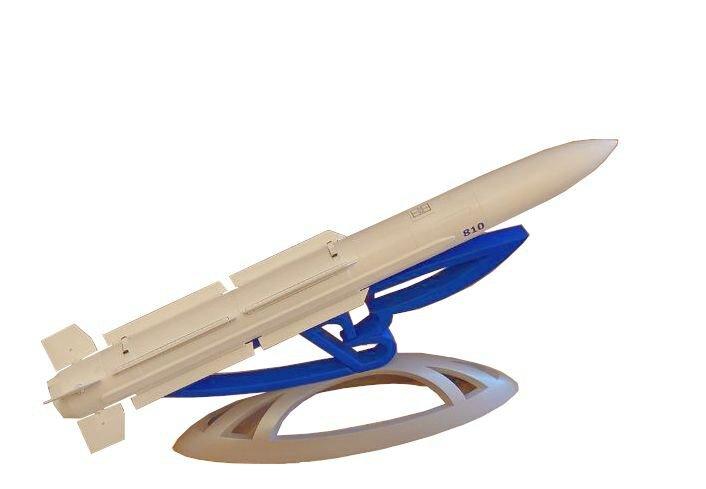
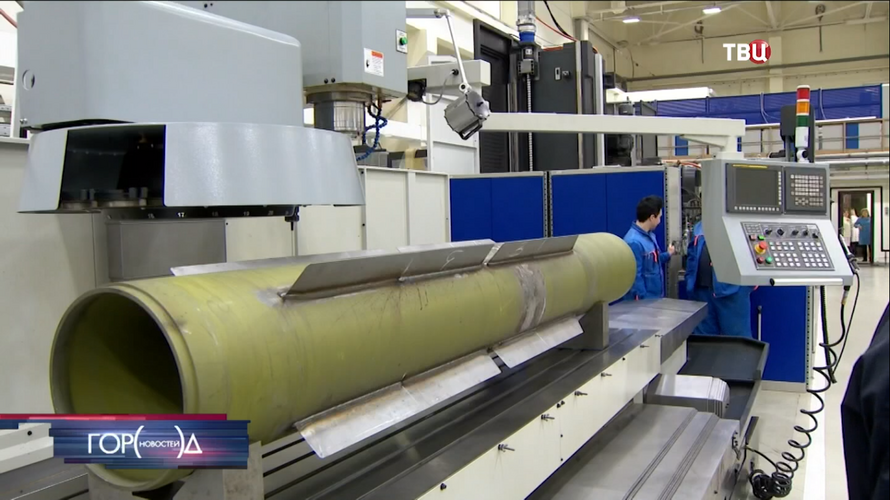
Izdeliye 810. First pic ,model that shows us eight wings and four foldable stabilisers. Second drawing,shows us Izdeliye 810 attached to the catapult launcher UVKU-50U. Third and fourth pic show us rocket engine chamber only and it is really huge.We can see eight wings.
The third launcher from the top is the UVKU-50U and this missile can be mounted on it inside the fuselage weapon compartments. Photos taken in 2019 in GosMKB Vympel.
.
Izdeliye 270 ( photo taken in GosMKB Vympel 2018 ).Take a look onto inscriptions: Check and Air Supply !
Izdeliye 760 ( sequence from this video:
Izdeliye 270 again, photo taken in GosMKB Vympel 2019
Izdeliye 180 ( source : https://bmpd.livejournal.com/4156525.html ).
Izdeliye 171-1, clearly visible mock-up and those ''windows''.
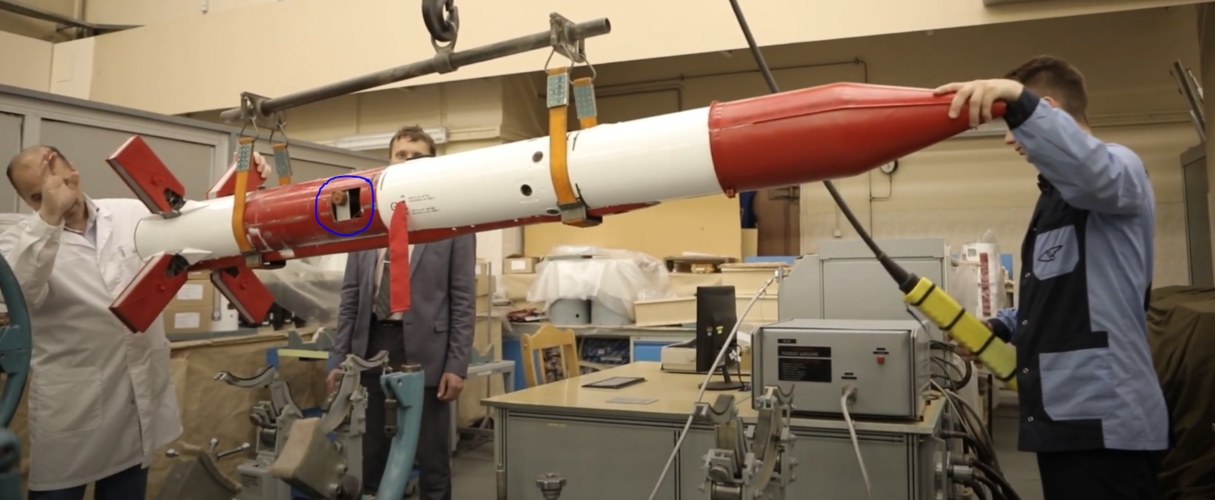
Izdeliye 270 again .Blue circle shows us very interesting detail.Some sources give data that it is position where mini-booster have to be inserted ?
Izdeliye 171-1 again.Photo taken in the GosMKB Vympel during visit of Moscow's mayor Sergey Sobyanin in 2019 ( 70th Anniversary of the manufacturer).
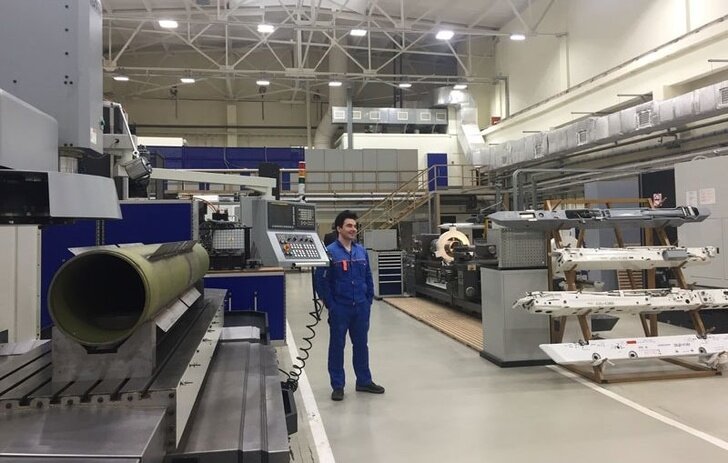
Izdeliye 270 during serial production in GosMKB Vympel.In the upper angle of the pic we can see three Izdeliye 170-1 or maybe Izdeliye 190 for export. Photo taken in 2018.
Now about that Product 810 . Yes, military designation is really R-97. It is huge AAM,much bigger and heavier then actual R-37M or Product 610M as we know carried by the MiG-31BM,Su-30SM2 and Su-35S. I have some pics from GosMKB Vympel.Take a look to the diameter of the rocket engine chamber. R-97 is about 4.8m long,
Now about that Product 810 . Yes, military designation is really R-97. It is huge AAM,much bigger and heavier then actual R-37M or Product 610M as we know carried by the MiG-31BM,Su-30SM2 and Su-35S. I have some pics from GosMKB Vympel.Take a look to the diameter of the rocket engine chamber. R-97 is about 4.8m long,body diameter is about 450mm ,has eight wings and four foldable stabilisers. It is about 150kgs heavier then R-37M which has by the way launch weight of 600kgs. First test launch was achieved on July 6 2017. It is interesting that 'Time of the aerodynamic stability and controlability' is 360 sec. Source from 2018 where we can see that it is really R-97 is this : https://vk.com/@milinfolive-r-97-no...QWvf6qGqrZFd_iTPPg_aem_fc0Bk17oT3UH_hIwoTnNSA
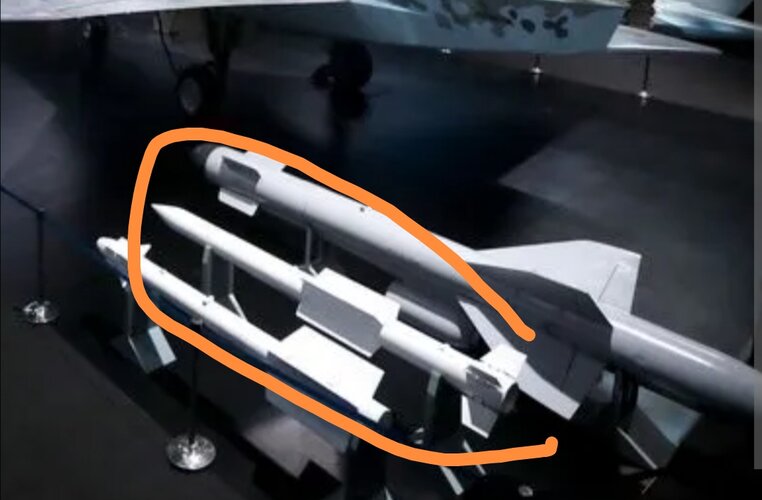
The model of AAM presented besides the Su-75 can be maybe K-77M as version of the R-77 (R-77-1) without those lattice stabilisers that can not be foldable.
Now about lenght,if fuselage weapon bays are really almost 5m long then there is chance to accomodate Izd 810 ? About body diameter as far as I know,tactical cruise missile Kh-69 has body diameter of 420mm. Anyway ,Izd 810 has much bigger body diameter in comparison with Izd 610M ,am I right?
What if Izd 810 is same diameter as 610M but bit longer ? Your dimension for 810 seems way too big. Also for internal bays, you have to make allowance for airflow and the suspension itself, so the real missile that can be accommodated inside the bay is smaller than the bay's dimension.
X-69 is 400mm/40 cm so does X-58UShK, and they're all 4.2 m. Feels like it's not possible to take more than that dimension.
This site uses cookies to help personalise content, tailor your experience and to keep you logged in if you register.
By continuing to use this site, you are consenting to our use of cookies.