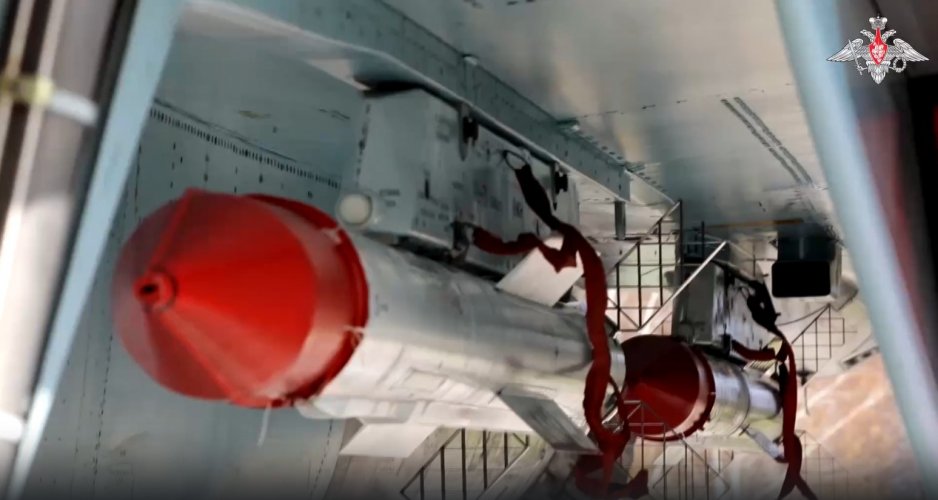
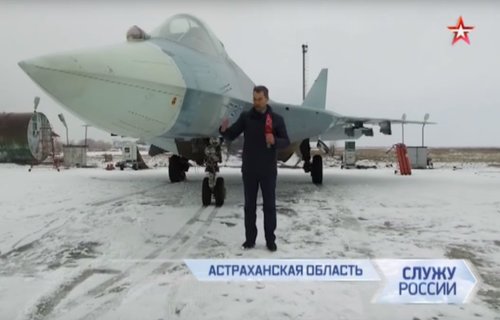
Found this Izd. 300 screenshot in an IISS pdf while looking for something else, haven't seen it posted here. Are there pictures (rather than just drawings) showing the whole missile, or at least the rear part?
View attachment 767450

Right behind the back of him is the model of the Product 520 or R-33S with that 'canards'.


R-33S.jpg
 
Great spotting, that's another elusive missile. Any recent info as to what R-33S really is, a nuke version of R-33 or an overall improvement of same, retaining a conventional warhead?

R-33S is the long range AAM produced only for the MiG-31B (BS) but in small number. This version got that canards for the better stability during low flying and it was designed to intercept then newly USAF stealth strategic very low flying cruise missiles AGM-129A ACM. R-33S also got new combined radio-optical proximity fuse and combined ARH+SARH in the terminal phase. About the warhead ,I don't think that it got nuclear warhead.
 
So far as I've seen - that is the first photograph of any part of the missile.
The original Izdeliye 300 (90s) is on display on the wall at the Vympel Museum - that's where that photo was taken.

Not seen any other photos of the Izdeliye 300 online - its not a public access museum AFAIK.

Of course, how much it has in common with Izdeliye 300M is unknown, but restarting work on a 1980s/90s design to replace your 1970s design in the 2020's is... an interesting choice.
 
Last edited:
Many current missiles remained mostly unchanged externally for decades, far more important being the advances in electronics and motors. So probably the same applies to the Izd. 300M, it might be externally roughly similar to the 1990s design, but the motors and electronics are much more advanced. At a minimum one would expect it to better the interim R-74M2 in most important areas.

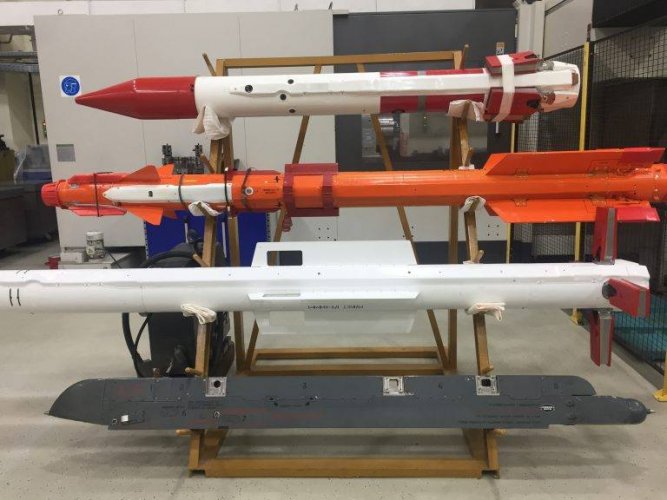
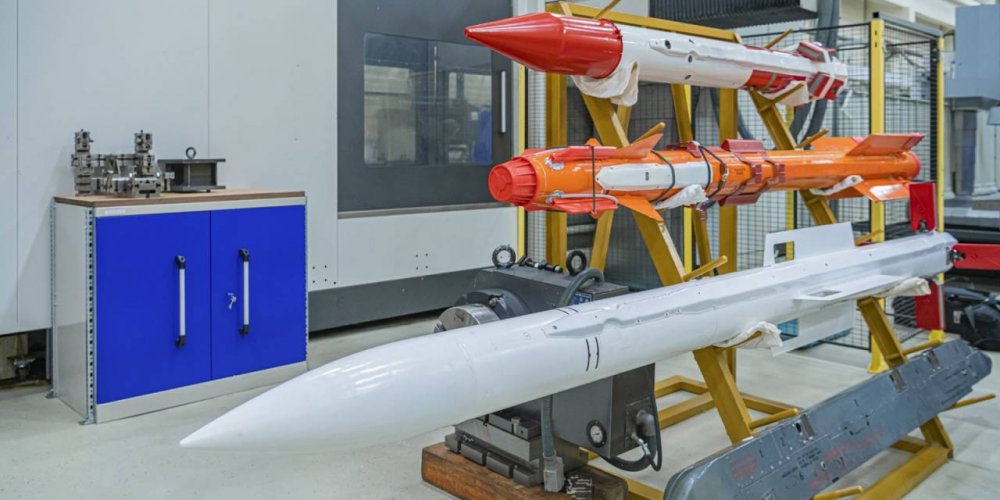
Anyway, as a more general enquiry, still trying to figure out all the new Su-57 missiles which i think i've got pretty well, except one. What is the R-47? Some associate it with the short R-77-like AAM, about which others claim is just a section of the standard R-77 with a cap on, although i find it extremely strange that they would put that "section" right above the R-74M2 and probably what is the R-77-2 on the display stand shown few years back. So either that must be some kind of new AAM or Vympel went a considerably way to feed us some creative maskirovka.

Other than that, i think the other ones go like this, R-87 is the Izd. 180 and R-97 is the Izd. 810. R-74M2 is self-explanatory, to be replaced by Izd. 300M. Am i in the ballpark?
 
Many current missiles remained mostly unchanged externally for decades, far more important being the advances in electronics and motors. So probably the same applies to the Izd. 300M, it might be externally roughly similar to the 1990s design, but the motors and electronics are much more advanced. At a minimum one would expect it to better the interim R-74M2 in most important areas.

Anyway, as a more general enquiry, still trying to figure out all the new Su-57 missiles which i think i've got pretty well, except one. What is the R-47? Some associate it with the short R-77-like AAM, about which others claim is just a section of the standard R-77 with a cap on, although i find it extremely strange that they would put that "section" right above the R-74M2 and probably what is the R-77-2 on the display stand shown few years back. So either that must be some kind of new AAM or Vympel went a considerably way to feed us some creative maskirovka.

Other than that, i think the other ones go like this, R-87 is the Izd. 180 and R-97 is the Izd. 810. R-74M2 is self-explanatory, to be replaced by Izd. 300M. Am i in the ballpark?

It is in fact Izdeliye 270 .

Izdelije 270.jpg Izdelije 270 2.jpg
 
The original Izdeliye 300 (90s) is on display on the wall at the Vympel Museum - that's where that photo was taken.

Not seen any other photos of the Izdeliye 300 online - its not a public access museum AFAIK.

Of course, how much it has in common with Izdeliye 300M is unknown, but restarting work on a 1980s/90s design to replace your 1970s design in the 2020's is... an interesting choice.

This is from one 'bmpd' article ( 2021 ) about the new Izdeliye 300M.

Программы НИОКР ГосМКБ «Вымпел» имени И.И. Торопова​

''К основным новым работам в рамках ФПР стоит отнести работы по формированию облика перспективного изделия 300М, исследования баллистических характеристик изделий с комбинированными двигательными установками, а также экспериментальные оценки влияния изменений антенных решеток на основные характеристики радиолокационных головок самонаведения.''

The main new work within the FPR framework should include work on developing the appearance of the promising 300M product, and research into the ballistic characteristics of products with combined propulsion systems as well as experimental assessments of the impact of changes in antenna arrays on the main characteristics of radar homing heads.''


So the Izdeliye 300M was in that time in developing phase.
 
Anyway, as a more general enquiry, still trying to figure out all the new Su-57 missiles which i think i've got pretty well, except one. What is the R-47? Some associate it with the short R-77-like AAM, about which others claim is just a section of the standard R-77 with a cap on, although i find it extremely strange that they would put that "section" right above the R-74M2 and probably what is the R-77-2 on the display stand shown few years back. So either that must be some kind of new AAM or Vympel went a considerably way to feed us some creative maskirovka.

Other than that, i think the other ones go like this, R-87 is the Izd. 180 and R-97 is the Izd. 810. R-74M2 is self-explanatory, to be replaced by Izd. 300M. Am i in the ballpark?
Unless I missed something, this info was all sourced from a comment on a blogpost by a random unknown person (https://charly015.blogspot.com/2024/10/el-grafico-del-arsenal-del-su-57.html). When did these designations get confirmed?
 
Unless I missed something, this info was all sourced from a comment on a blogpost by a random unknown person (https://charly015.blogspot.com/2024/10/el-grafico-del-arsenal-del-su-57.html). When did these designations get confirmed?
That is in turn based on a russian language post somewhere (i have saved that text but i can't find it now, need to look it up), which i believe is based on some diagram showing the Su-57 loadout which might have been official or semi-official, i think i might have seen that too, but it's been a while so i might not recall all the details correctly. Maybe @paralay @QuadroFX could help?
 
This is the text i saved since 2023:
'' Су-57 има 5 нових ракета класе В-В и то су : Изделие 171-1 ( Р-77-2) макс 6 ком ,4 испод крила и 2 испод уводника ваздуха, Изделие 180 ( Р-87 ) макс 10 ком ,4 испод крила,2 испод уводника ваздуха и 4 унутар трупних спремника, Изделие 270 ( Р-47) макс 6 ком ,4 испод крила и 2 испод уводника ваздуха , Изделие 760 ( Р-74М2) макс 6 ком ,4 испод крила и 2 унутар подкрилних спремника и Изделие 810 ( Р-97) макс 10 ком ,4 испод крила,2 испод уводника ваздуха и 4 унутар трупних спремника. ''
 
This is the text i saved since 2023:

It is in fact Serbian languge ( Serbian Cyrilic ) and that can be from the well known Serbian military forum ''My City Military''. I follow that forum and if I remember correctly, the main source of that information was 'Fighterbomber' on his page.
 
Yeah it is from Mycitymilitary. Do you remember anything about the graph/table i mentioned, or i remember things wrong? Perhaps it might have been posted on Fighterbomber's page.
 
Yeah it is from Mycitymilitary. Do you remember anything about the graph/table i mentioned, or i remember things wrong? Perhaps it might have been posted on Fighterbomber's page.

I will check that detail because the original source for those designations like R-47,R-87,R-97 is definitely Russian, I am 100% sure that was one of TG-channels. I must admit that I did not find official confirmation by e.g. KTRV/MKB Vimpel for that.
 
The original Izdeliye 300 (90s) is on display on the wall at the Vympel Museum - that's where that photo was taken.

Not seen any other photos of the Izdeliye 300 online - its not a public access museum AFAIK.

Of course, how much it has in common with Izdeliye 300M is unknown, but restarting work on a 1980s/90s design to replace your 1970s design in the 2020's is... an interesting choice.

Thanks! I had no idea.

I suppose it makes a bit of sense to pick up where you left off?
 
Documentary about GosMKB 'Vympel' from 2019 ( 70th anniversary).

ФИЛЬМ ОБ АО ГОСМКБ «ВЫМПЕЛ» ИМЕНИ И. И. ТОРОПОВА​


View: https://www.youtube.com/watch?v=WA2pewYPA8s


Some sequencies were we can see AAM's :

From 16:15 we can see Izdeliye 270, from 16:35 we can see AKU-170Ye with the model of the Izdeliye 190 or R-77E ( for export only ), from 17:25 there is a red model of the Izdeliye 171-1 ( only for the Su-57) with 'windows' as parts of the wings.
 
restarting work on a 1980s/90s design to replace your 1970s design in the 2020's is... an interesting choice.
SM2s are more or less unchanged from the 1950s Terrier in form factor and fins. The electronics have been updated, but the rocket motor hasn't changed since the 1980s.
 
SM2s are more or less unchanged from the 1950s Terrier in form factor and fins. The electronics have been updated, but the rocket motor hasn't changed since the 1980s.
If the Russians aren't using the seeker/motor etc from Izdeliye 300 then I guess the only advantage of using it is the overall configuration was already wind tunnel tested.
 
If the Russians aren't using the seeker/motor etc from Izdeliye 300 then I guess the only advantage of using it is the overall configuration was already wind tunnel tested.
I'd expect that it's overall configuration and rocket motor that were used, unless I've blanked on a report that they're updating the motor as well?

And again, if you've got a good missile shape, why change it?
 
No. This was debunked six years ago.

Please stop spreading misinformation.

Sorry it is not misinformation but fact. I mentioned earlier that those two photos are not made in 2007 but in 2019 and those are sequences from one TV-reportage made about 70th anniversary of the GosMKB 'Vympel'.

Now I have some details and questions for you if you don't mind ,tnx.

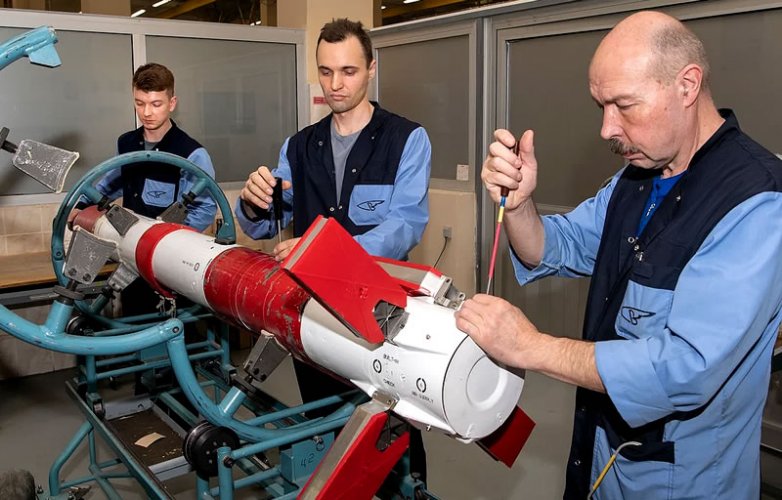
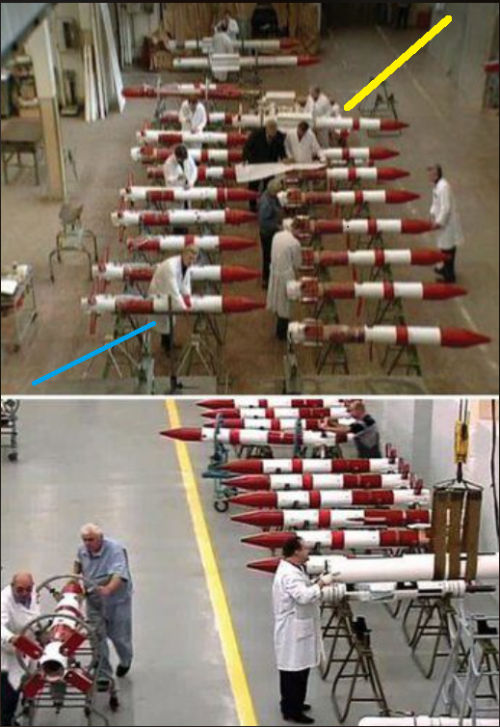
This photo is also made in 2019 during the visit of the Moscow's mayor Sergey Sobyanin to the Vympel.From the top to bottom we can see the following AAM's : Product 270, Product 750 and Product 171-1 with that specific windows in the wings.As we can see Product 270 is not only shorter then Product 171-1 but shorter then Product 750. As we know, R-73/74 has lenght about 3m,this Izd. 270 is maybe 2.5-2.7m long.The main question is, where are the wings on the Product 270 ?

Izdelie 171-1   1.jpg

Product 171-1( only for the Su-57) is the modified version of the operational and combat proven Product 170-1 and we can see here how much longer that AAM is in comparison with Product 270.

Izdelije  171 1.jpg

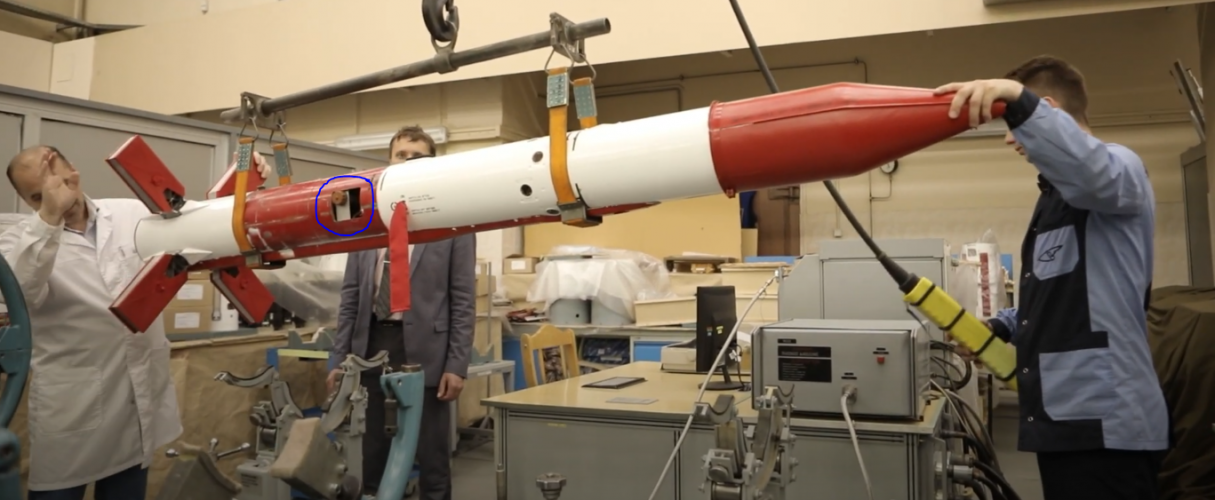
This is in fact sequence from the video ( documentary about Vympel ) posted earlier and we can see something unusual and very specific. The hole in the place where is the solid fuel rocket engine chamber.Also rocket engine has red color on its plating. All of this we can not see on the 'R-77 family' of AAM's ( R-77E or Product 190 for export and R-77-1 or Product 170-1 for the VKS/MA-VMF fighters). Am I right ?


Izdelie 270 GG.png

So what we can see on those two sequencies from 2019 ? On the upper 'photo' we can see R-77E ( or maybe R-77-1L) as finished product and marked with the yellow line.In the upper corner we can also see another two R-77E/R-77-1. Now which AAM is marked with the blue line that is so much shorter than R-77E/R-77-1 and obviously w/o wings and with that red plating of the rocket engine chamber? It is of course Product 270. Lower photo shows us production line of the Izdeliye 270 with one on the trolley.

Izdelie 270 u GosMKB Vimpel  2018 mod.png

Now this modified photo shows us some details.Sections/blocks like radome ( cone),radar seeker ( of course completely new), then laser proximity fuse,warhead etc, on the frontal part and gas-generators with nozzle and that famous lattice foldable stabilisers on the rear part are from R-77E in fact.Between that two sections there is completely new solid fuel rocket engine chamber section where we can see something unusual and marked with the yellow arrow.Maybe, maybe it is some kind of mini-booster for the lateral maneuvering.All in all ,we can not see something like that on the R-77 family AAMs,that's for sure and of course there is no wings on the Product 270.

Izd 270 mod2.png

My opinion( assumption) is that Product 270 is developed for the long-term WVR aerial combat 'cause there is some Russian sources which mention new 'MD' AAM ( MD of course for 'Malaya Dalynost' or short range) with controlable flight time even 100sec. I think that AAM's like Product 750 and 760 are not capable of that.

P.S. I must find in my archive one interview from the Vympel revue ( dating back to 2019) with one of the younger constructors-engineers who told about Product 270.He said that after work on Izd 270 he was moved to work on the Izd 810.
 
No. This was debunked six years ago.

Please stop spreading misinformation.
Well, even assuming that for a second, why the heck would they put an unfinished missile on the same presentation rack with two brand new designs, the R-74M2 and R-77-2? I'm not leaning either way for now but it's really puzzling and frustrating getting a satisfactory answer. Maybe it's still some kind of CUDA like missile made from mostly off the shelf R-77 components to reduce costs etc.?
 
Export version of the R-37M /Izd. 610M known as Izd 620 has the same launch distances as R-37M. I don't know any of the exported AAM's that has less launch distances then the version used in Soviet/Russian AF.
Main differences between export version and the domestic version of one radar guided AAM is in the so called carrier or 'liter' frequencies. E.g. those used by active or semi-active radar seekers and of course by radio-proximity fuse.

If we talk about that so called 'max/min ranges' or better max/min authorised launch distances, we have three launch parameters: 'Dr max 1' or authorised launch distance against non-maneuvering air target. 'Dr max 2' as authorised launch distance against maneuverable air target and we have 'Dr min' as min authorised launch distance. Authorisation of course comes from the WCS. As we all know ,launch distances depend on many factors/parameters: speed/alt of the fighter and its target,angle aspect and hemisphere etc etc...

R-37M should have max launch distance in 'Dr max 1' parameter for engaging big /means bigger frontal RCS/ incoming air target of 400 kms ( should have). Note: record-breaking launch distance ever, was achieved on April 1994 during one exercise with test AAM type K-37/Izd 610 launched from the prototype MiG-31M number 057 blue.Launch distance was 304kms.
I think the export r-37m (rvv-bd) is probably the base r-37.

View: https://www.youtube.com/watch?v=ZYOu38oJZ1c


at 2:02 , you can see this missile has only 1 datalink antenna, in r-37m you can see 2
 
@ noister

What we can see on that presentation is the export version of the R-37M ( Product 610M) ,maybe with the designation R-37ME also known as Product 620. That version can not be based on the old K-37 ( Product 610) because it was Soviet AAM with many components made in Ukraine. So R-37ME or whatever is downgraded version with only one data-link channel ( radio-correction channel in fact or mid-course update if you wish).

 
A bit of a historical question, any idea/explanation why Russia hasn't adopted the base R-77 missile in the 2000s? While funds were still scarce during that era, the situation was improving and several major upgrades programs were underway such as Su-27SM or Su-24M2 and others were starting as well, so there was some money, hence to me perhaps lack of funds is not the best explanation. What was Ukraine's involvement in the R-77 production, could that have been a factor (i'm strictly referring to the pre-2014 era)?

During that period VKS and VMF were happy to piggyback on various export fighters such as Su-30SM (MKI), Su-30M2, MiG-29K or MiG-29SMT, so it is a bit puzzling they haven't done the same with the R-77 (thousands produced for export) while waiting for the upgraded R-77-1. Could have been in service arming various modernized or new production aircraft easily a decade before the R-77-1 entered widespread service, narrowing a significant technological gap compared to other major air forces operating AMRAAMs and other active radar missiles.

Also, any idea if the VKS Su-34 could use operationally the R-77 or more precisely the R-77-1? I don't recall seeing any operational pictures showing that be it Syria or Ukraine (not counting any airshow or expo photos, those are not really relevant) but i seem to recall reading somewhere that there might be some kind of integration issue with the V-004 radar so the R-77 can't be used or at least not to full capacity?
 
Last edited:
A bit of a historical question, any idea/explanation why Russia hasn't adopted the base R-77 missile in the 2000s? While funds were still scarce during that era, the situation was improving and several major upgrades programs were underway such as Su-27SM or Su-24M2 and others were starting as well, so there was some money, hence to me perhaps lack of funds is not the best explanation. What was Ukraine's involvement in the R-77 production, could that have been a factor (i'm strictly referring to the pre-2014 era)?

During that period VKS and VMF were happy to piggyback on various export fighters such as Su-30SM (MKI), Su-30M2, MiG-29K or MiG-29SMT, so it is a bit puzzling they haven't done the same with the R-77 (thousands produced for export) while waiting for the upgraded R-77-1. Could have been in service arming various modernized or new production aircraft easily a decade before the R-77-1 entered widespread service, narrowing a significant technological gap compared to other major air forces operating AMRAAMs and other active radar missiles.

Also, any idea if the VKS Su-34 could use operationally the R-77 or more precisely the R-77-1? I don't recall seeing any operational pictures showing that be it Syria or Ukraine (not counting any airshow or expo photos, those are not really relevant) but i seem to recall reading somewhere that there might be some kind of integration issue with the V-004 radar so the R-77 can't be used or at least not to full capacity?

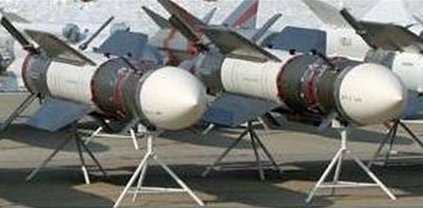
Some data about Soviet medium range AAM type R-77 or 'Product 170' . It was developed under the Project RVV-AYe ( in Russian Cyrilic it is РВВ-АЕ) by the GosMKB Vympel in Moscow in 1982. The main tactical- technical demand for this new AAM was to have highly maneuverable and very agile BVR- missile for engaging of the incoming enemy fighters at a distance of 50km with probabilty of hit 0.8 ( 80%) with use of the RC-channel. First test launch of the K-77 ( test versions of the Soviet/Russian AAM's have military designation with letter K not R ) was conducted in 1984 from the prototype of MiG-29 number 19 blue. It is interesting that in 1989 prototype of the MiG-29S ( Product 9.13S) number 05 red conducted launch of two K-77 against two different air targets, almost simultaneously. AAM type R-77 had inertial guidance with midcourse update and ARH in the terminal phase with the monopulse active radar sekeer type 9B1348 ( known as Product 50) .There was also digital comp known as 'Alisa' . Launchers for this missile was of catapulting type,AKU-170 with special pyrotechnics. One of the tactical-technical demand was to achieve posible launching during high-G maneuvering (even during 8-9G load).Of course as we all know ,R-77 was famous because it was the first AAM with that very usable lattice transverse stabilisers with which that AAM could sustain 50G of the lateral load and had AoA limit of 40 degrees.

Serial production of the R-77 began in 1989 in Kiev's factory/plant called Artem.Serial production stopped after 200 of these AAM's were produced and all of them were transfered to the new RuAF. Only fighter in the RuAF inventory which could carry this new AAM was MiG-29S ( only 16 serial produced were operational from the spring of 1992) were 10 was operational in the 1 AE ( first aviation sqn) of the 73GvIAP ( Guards Fighter Aviation Regment) in the Shaykovka air base and other 6 were in the Lipetsk-2 ( 4 CBP i PLS) and Akhtubinsk air base ( 929GLITs of the RuMoD). After 2000, fighters like Su-27SM/SM3 with N001V Myech radars could also carry that old Soviet R-77 but it was not applied in practice.

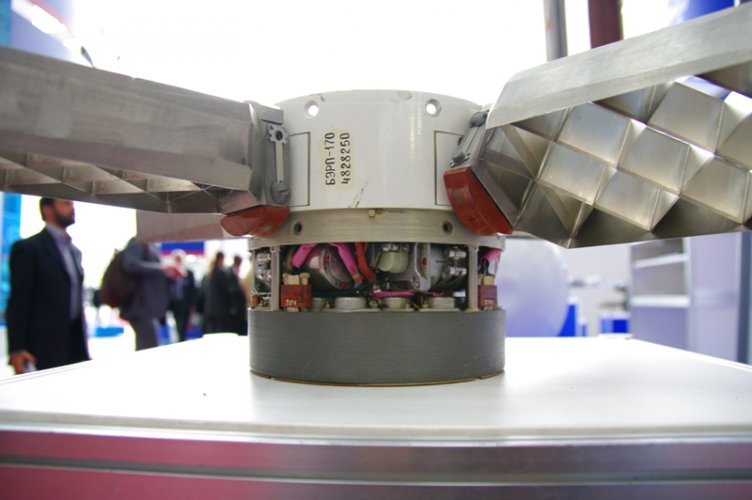
So practically complete AAM type R-77 was produced in the Ukraine before the dissolution of the USSR.From the active radar seeker ( developed by Moscow's company Agat and produced in Kiev's plant Arsenal ) to other components and parts like control unit and block called BERP-170 produced by Kiev's company called 'Luch'.

From 2015 in Moscow's GosMKB 'Vympel' in the serial production there is new R-77-1 ( Product 170-1) as modified version of that old Soviet AAM type R-77 with all Russian parts and components for the new fighters in the inventory of RuA&SF. There was two contracts so far for the serial production .One from 2015


and other from 2020.

 
Last edited:
There were no 'Project RVV-AE'
Much more comprehensive and correct history

RVV-AYe was only 'designation' ,yes. Some sources give this info :

''Сразу после появления информации об "Изделии-170" (так в проекте называлась РВВ-АЕ,....''


Vladimir Bogatsky called it simply RVV-AYe.

ФИЛЬМ ОБ АО ГОСМКБ «ВЫМПЕЛ» ИМЕНИ И. И. ТОРОПОВА​


View: https://www.youtube.com/watch?v=WA2pewYPA8s
 
Some data about R-77 ( Product 170) from the Patent doc. ( published in 1997) :

''Изобретение относится к ракетной технике, в частности к управляемым ракетам, и может быть использовано в различных типах и классах ракет с решетчатыми аэродинамическими поверхностями.Задачей изобретения является разработка всеракурсной высокоманевренной ракеты с высокими аэродинамическими характеристиками.
Ракета с данным соотношением геометрических размеров обеспечивает высокие аэродинамические характеристики во всем диапазоне ее применения.

Так, максимальный угол атаки составляет αmax≈ 40-45°, максимально допустимая поперечная перегрузка равна nymax≈ 50 ед как на пассивном, так и на активном участках траектории за счет введения аппаратурного ограничения.Таким образом, выбор соотношения размеров ракеты в указанных пределах обеспечивает ее высокие маневренные характеристики в диапазоне углов атаки α ≈ 0-45° и чисел М≈0,6-5,0. Маневрирование на больших углах атаки (α ≈ 40°) позволяет обеспечить высокий уровень поперечных перегрузок во всем диапазоне применения ракеты. Таким образом, ракета с заявленным соотношением размеров обеспечивает высокие аэродинамические характеристики во всем диапазоне ее применения, максимально допустимая перегрузка составляет nymax≈50 ед при углах атаки α ≈ 40-45°.''

Transl.

''The invention relates to missile technology, in particular to guided missiles, and can be used in various types and classes of missiles with lattice aerodynamic surfaces. The objective of the invention is to develop an all-aspect highly maneuverable missile with high aerodynamic characteristics.
A missile with this ratio of geometric dimensions ensures high aerodynamic characteristics throughout the entire range of its application.
Thus, the maximum angle of attack is αmax≈ 40-45°, the maximum permissible lateral overload is nymax≈ 50 units both on the passive and active sections of the trajectory due to the introduction of hardware limitations.
Thus, the choice of the ratio of the missile sizes within the specified limits ensures its high maneuverability characteristics in the range of attack angles α ≈ 0-45° and Mach numbers ≈ 0.6-5.0.
Maneuvering at high angles of attack (α ≈ 40°) allows for a high level of lateral overloads throughout the entire range of missile use.
Thus, the missile with the declared ratio of dimensions provides high aerodynamic characteristics in the entire range of its application, the maximum permissible overload is nymax≈50 units at angles of attack α ≈ 40-45°.''


Btw, R-77 can turn with turn rate of even 150°/sec !

Some interesting details about the active radar sekeer 9B1348E ( Product 50E) for the exported R-77E or Product 190.

''Появление комплексированных устройств послужило ступенью к созданию полностью законченных образцов радиолокационной аппаратуры. Развитием этого направления стало создание «Истоком» активной радиолокационной головки самонаведения для ракеты класса «воздух-воздух». Ее идеологи и основные разработчики: Ребров С.И., Русаков В.Н., Зайцев С.А., Потапов А.В., Хасянов А.Ф., Ильин А.Г., Батаев В.Я., Лисицын А.А., Язан В.И., Гусев А.П., Торбик В.М., Михайлов Л.Ф. и др. Это направление активно развивается более 10 лет, наряду с серийным производством изделия 50Э ведется разработка новых АРГС. Головной заказчик этих работ ГосМКБ «Вымпел».
Успешно законченная НИЭР по АРГС была продолжена в соответствии с Постановлением ЦК КПСС и СМ СССР №722136 от 31 июля 1982 г., решением Комиссии Президиума СМ СССР по военно-промышленным вопросам от 15 марта 1983 г. в виде ОКР «Синтез 20» в составе ракеты среднего радиуса действия. После проведения полного комплекса испытаний ракета с АРГС-50 была принята на вооружение в начале 1990-х.
В 1996–1997 гг. был разработан и освоен в производстве экспортный вариант АРГС 50Э, предназначенный для ракеты класса «воздух–воздух» среднего радиуса действия типа РВВ-АЕ. В период 1998–2005 гг. выпущено более 1500 изделий 50Э.

10 лет 50Э
Работы по созданию экспортного варианта активной радиолокационной головки самонаведения 50Э были начаты в июле 1996 г., а уже через год пошел процесс освоения ее серийного производства.
Первые серийные образцы изделия 50Э появились в конце 1997 г., а с января 1998 г. начались серийные поставки. И, как всегда, первый блин комом – почти 30 штук изделий пришлось возвращать назад, так как в программном обеспечении бортовой ЭВМ, разработанном нашим партнером МНИИ «Агат», была обнаружена серьезная ошибка.
К сожалению, это была не единственная ошибка. Существенные доработки, в том числе и системного плана, продолжались еще несколько лет. Возникавшие из-за этого отказы до сих пор нам выходят боком.
Производство изделий нарастало довольно быстро, и уже вскоре мы отмечали первые 500 штук выпущенных и поставленных заказчику изделий. Сам по себе технический уровень АРГС 50Э очень высокий. Она ничуть не уступает своему ближайшему конкуренту – американской AMRAAM, а по некоторым параметрам и превосходит ее. И вопрос надежности изделия – один из основных, которому все эти годы уделялось и уделяется большое внимание.''

The emergence of integrated devices served as a step towards the creation of fully finished samples of radar equipment. The development of this direction was the creation by Istok of an active radar homing head for an air-to-air missile.Its ideologists and main developers: Rebrov S.I., Rusakov V.N., Zaitsev S.A., Potapov A.V., Khasyanov A.F., Ilyin A.G., Bataev V.Ya., Lisitsyn A.A., Yazan V.I., Gusev A.P., Torbik V.M., Mikhailov L.F. etc.
This direction has been actively developing for more than 10 years, along with serial production of the 50E product, new ARGS are being developed. The main customer of these works is GosMKB Vympel.
The successfully completed research and development work on ARGS was continued in accordance with the Resolution of the Central Committee of the CPSU and the USSR CM No. 722136 of July 31, 1982, and the decision of the Commission of the Presidium of the USSR CM on military-industrial issues of March 15, 1983, in the form of the R&D project "Sintez 20" as part of a medium-range missile. After conducting a full range of tests, the missile with ARGS-50 was accepted into service in the early 1990s.
In 1996–1997, an export version of the ARGS 50E was developed and put into production, intended for the RVV-AE medium-range air-to-air missile. More than 1,500 50E units were manufactured in the period 1998–2005.

10 years of 50E
Work on creating an export version of the 50E active radar homing head began in July 1996, and a year later the process of mastering its serial production began.The first serial samples of the 50E product appeared at the end of 1997, and serial deliveries began in January 1998.
And, as always, the first pancake was lumpy - almost 30 items had to be returned, since a serious error was discovered in the software of the onboard computer developed by our partner MNII Agat.
Unfortunately, this was not the only mistake. Significant improvements, including system-related ones, continued for several more years. The failures that arose because of this still come back to haunt us.
The production of products increased quite quickly, and soon we celebrated the first 500 units of manufactured and delivered products to the customer. The technical level of the ARGS 50E itself is very high. It is in no way inferior to its closest competitor, the American AMRAAM, and in some respects even surpasses it.And the issue of product reliability is one of the main ones, to which much attention has been and continues to be paid all these years.''


Sequencies with test version K-77 from 18:14 and with R-77UL ( uchebno-trenirovachna) or training version for the pilots in the 'simulator' from 18:28.

View: https://www.youtube.com/watch?v=WiMHBxSp6f0&t=1109s

 
Last edited:
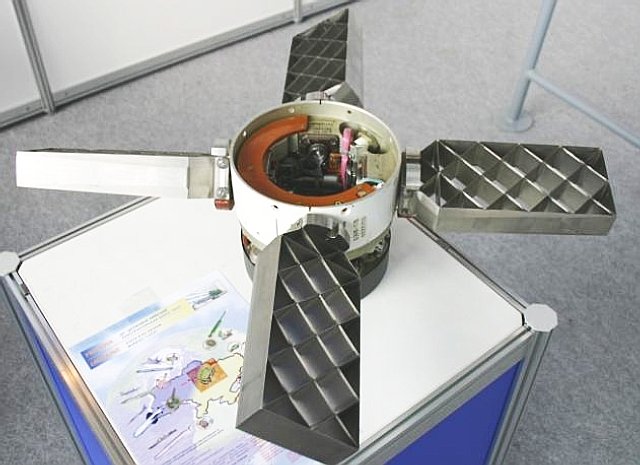
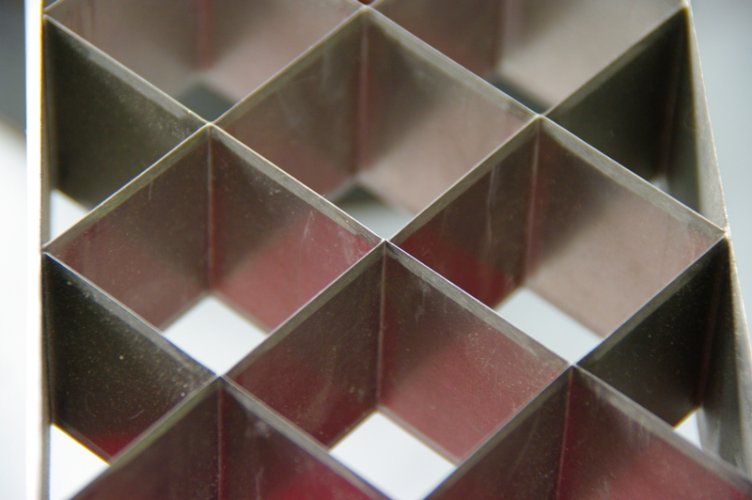
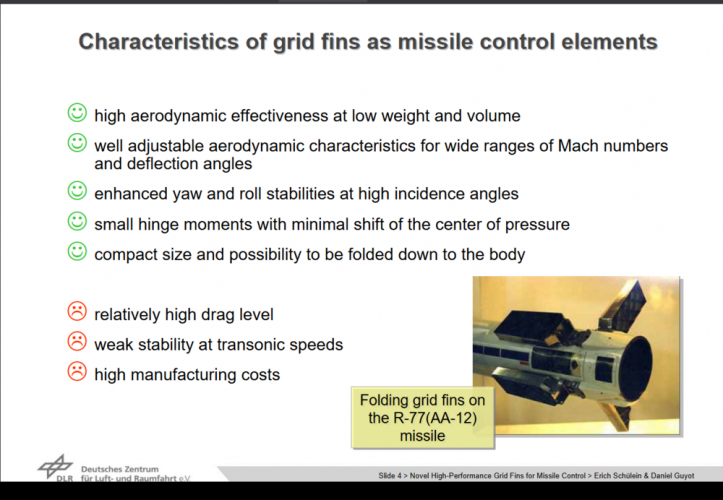
Lattice/grid stabilisers as something common only on the AAM's type R-77(E)/Products 170/190, R-77-1(E)/ Product 170-1 and the newer Product 171-1.

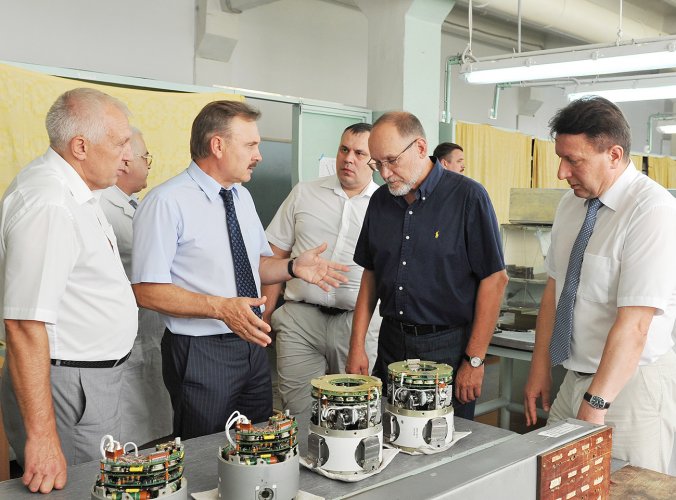
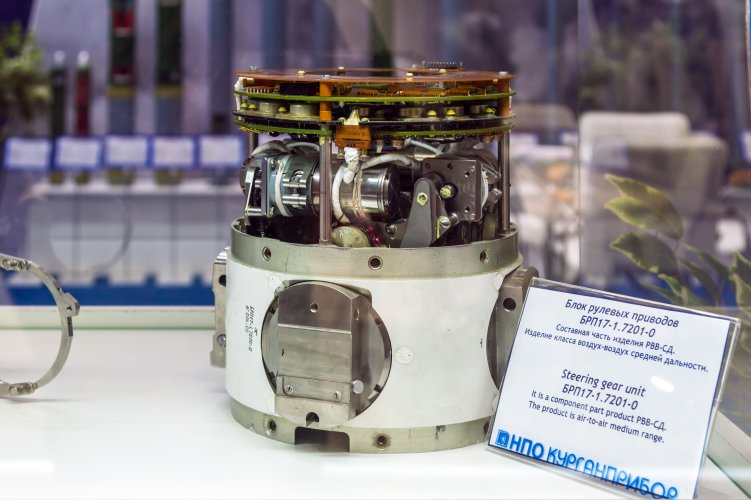
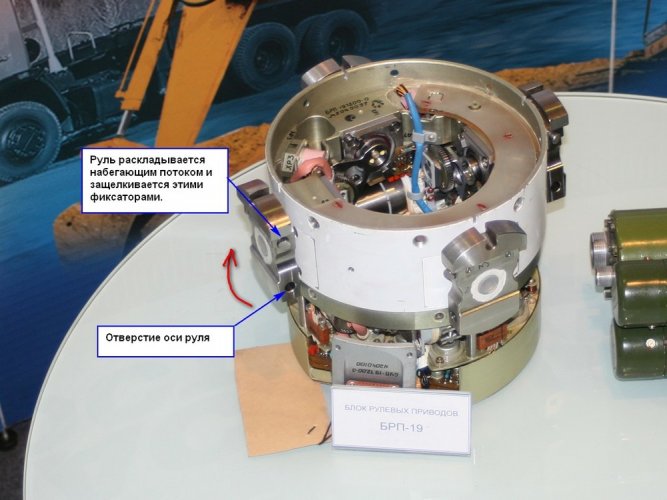
Photos of the lattice stabilizers and steering gear units in the GosMKB Vympel.

R-77-Adder-Tail-Controls-1.jpg

R-77 Resetka.jpg

R-77 Resetkasti stabilizator.jpg

vizit-apz_150814.jpg

For the R-77-1 .

BRP17-1_Steering_Gear_Unit_of_RVV-SD_AAM_Army-2022_2022-08-20_2226.jpg

For the R-77E.

BRP-19.jpg

5.4 Конструктивные особенности решётчатых поверхностей (рп).​


''Жесткие требования к ракетам, в частности, к их массе и габаритам, привели к появлению рулей, имеющих шарнирные моменты существенно меньше, чем у рулей традиционной плоской формы в плане. Одним из таких рулей является руль решетчатой конструкции.

Потребный момент не превышает 1,5 кГм, что позволило применить малогабаритные и легкие электрические рулевые приводы. Рули сохраняют эффективность на углах атаки до 40°, в результате возрастает и маневренность на больших углах атаки, доводя её у Р-77 до 150°/сек. ''

''Strict requirements for missiles, in particular, for their weight and dimensions, led to the emergence of rudders with hinge moments significantly smaller than those of traditional flat-plan rudders. One such rudder is the lattice rudder.

The required moment does not exceed 1.5 kgm, which allowed the use of small-sized and light electric steering drives. The rudders retain their effectiveness at attack angles of up to 40°, as a result, maneuverability at high attack angles also increases, bringing it to 150°/sec for the R-77.''


5.4.1. Технологический процесс изготовления решётчатых рулей.​


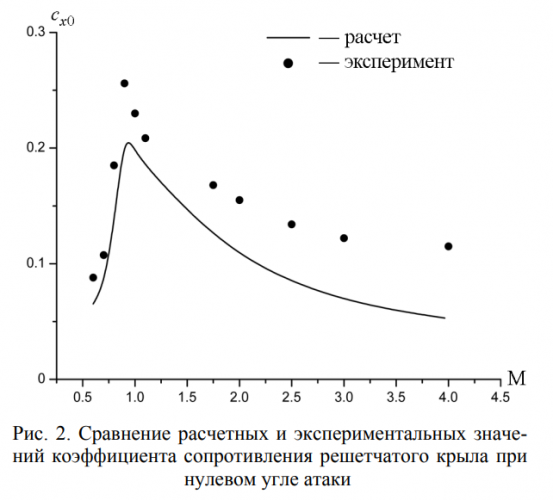
Now what about this analysis ?

Screenshot2024-05-20at12-04-42ADA509444_pdf.thumb.png.42720d983923b83ccd6bc487a9dd67b7.png


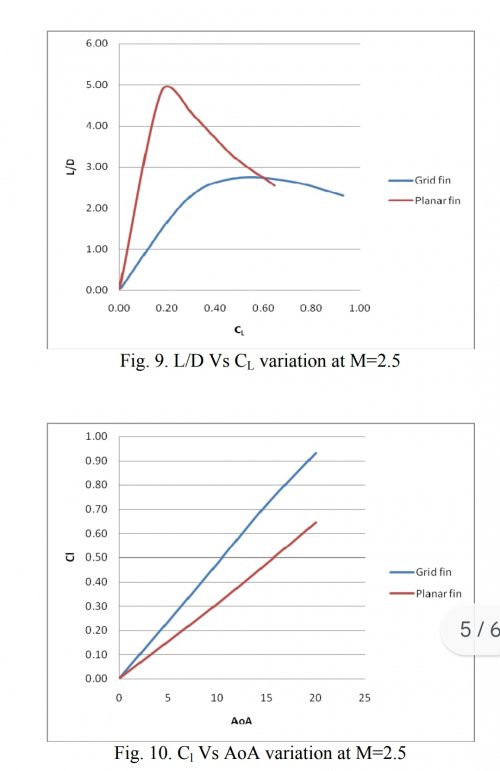
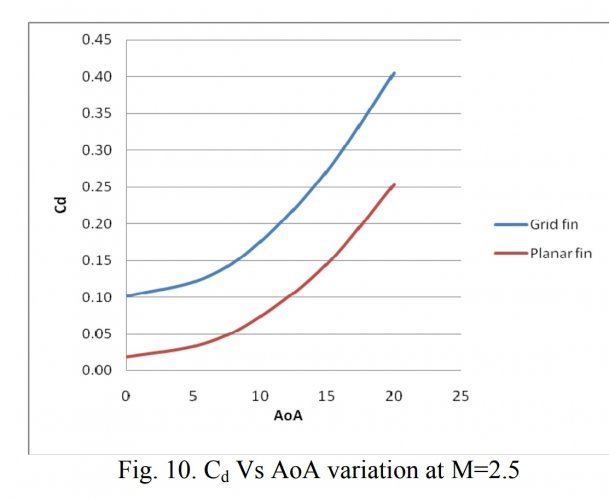
Some graphs ....

Grid fins-wings test.png

Grid vs planar fins.jpeg

Grid vs planar fins 1.jpeg

Source: https://forum.warthunder.com/t/the-...sign-performance-discussion/18337/382?page=19


My opinion is that Soviets tried to get as much as possible highly maneuverable and agile AAM with RVV-AYe or R-77 which got that lattice stabilisers.With the R-77 they got AAM with the high probability of hit against the fighters as small, maneuverable air targets ,especially in the BVR combat. I think they never thought that can have AAM with lattice grids for a longer launch ranges.With old 175kg heavy R-77(E) and with single-stage rocket engine ,max launch distance against bigger incoming air target is 80km (of course calculating height/speed of the fighter/target, angle aspect etc ...), with new 190kg R-77-1 it is about 100km.AAM's with lattice stabilisers can be useful in WVR combat too.

Many sources mentioned that RVV-AYe/R-77 is equivalent to the US Raytheon AIM-120 AMRAAM.Yes but only in the domain of the electronics ( digital comps,digital links,active radar seekers etc).RVV-AYe is the product of the completely different philosophy when we talk about aerodynamics e.g. In the USAF ,about 160kg heavy AIM-120 AMRAAM was replacement for the old about 230 kg heavy AIM-7 Sparrow. I must remind here that during 1999 war between NATO and FRY, USAF F-15C in many cases carried heavier ( longer -range) AIM-7M besides AIM-120C4 used then. In the Russian VVS on the contrary,R-77 could never be replacement for the much heavier R-27ER.Even today, one Su-35S with N035 Irbis will have bigger launch distances with R-27ER in comparison with R-77-1. On many videos ( through IKSh-1M HUD) , we could see that launch distances of the R-77-1 were, 60,80 max 100km but no more than that.So I think that lattice stabilizers are useful only for short/medium launch ranges not for bigger ones.

Lattice stabilisers have its roots in the Soviet AAM known as RVV-A 'Bisector'.


Some comparisons between R-77 ( R-77-1) and AIM-120 AMRAAM which I've found ( if they are correct?).

Lateral G-load : 50G vs 35G
AoA limit: 40°-45° vs 30°-35°
Turn rate: 150°/sec vs 110°/sec
Min real speed for controllable flight: 0.6 M vs 1M
 
Last edited:
Some details on R-77(E) and R-77-1. Besides contact mechanical fuse,R-77(E) has also optical/laser proximity fuse. R-77-1 has both laser and radar proximity fuses.

Взрыватели:
- дистанционный активный лазерный с адаптацией к размерам поражаемой цели;
- дублирующий контактный взрыватель-самоликвидатор;
- взрыватели взводятся на расстоянии 150-300 м от самолета-носителя и обеспечивают максимальное поражение цели элементами боевой части;

Fuzes:
- remote active laser with adaptation to the size of the target being hit;
- duplicate contact self-destruct fuse;
- fuses are armed at a distance of 150-300 m from the carrier aircraft and ensure maximum target destruction by elements of the warhead;

''Ракета оснащается лазерным взрывателем. Его работа заключается в облучении цели и определении по отраженному сигналу момента подрыва боевой части (на оптимальном расстоянии от цели). Параметры взрывателя адаптируются к размеру поражаемой цели.Предусмотрен также контактный взрыватель для случаев прямого попадания или падения на земную или водную поверхность в целях самоликвидации.''

''The missile is equipped with a laser fuse. Its function is to illuminate the target and determine the moment of detonation of the warhead (at the optimal distance from the target) based on the reflected signal. The fuse parameters are adapted to the size of the target being hit.
A contact fuse is also provided for cases of direct impact or fall on the earth or water surface for self-destruction purposes.''

One of the oldest photo of the R-77E taken on MAKS 2001. We can see 'windows' of the laser proximity fuse transmit and receive sensors.

R-77_MAKS-2001_08.jpg

R-77-1 with laser proximity fuse.

RuAF-embraces-Su-30SMs-armed-with-R-77-1-AAMs-for-enhanced-missions-3.jpg

R-77-1 with radar proximity fuse.

R-77-1.jpg
R-77-1 with radar fuse.jpg
R-77-1 with radar fuse 1.jpg
 
Now some details and questions about that 'Product 180'. As mentioned before ,it is completely new AAM developed only for the Su-57.Many sources ( Russian or western nevermind) gave it designation as K-77M ( R-77M) but I think it is incorrect.In fact ,this new AAM has maybe nothing to do with the actual R-77E /R-77-1.

Russian famous site 'bmpd' often give us correct and precise data and in this article about Izd. 180 there is no sign about designation K-77M. But there is one detail where author mentioned that Izd. 180 is modernisation of the actual Izd. 170-1 or R-77-1.


Izdelije 180.jpg

Interestingly ,this is the only photo of the 'Product 180' ( of course the model of it) that can be find or maybe there is some other pics?
Now what we can see on it ? We can see that there is new much larger catapult launcher instead of AKU-170. R-77-1 is 3.7m long ,I think that Izd. 180 is maybe 4.2m long ( half a meter longer). Besides those new folding stabilisers we can see either wings or even air intakes on the middle of the body.Maybe the body diameter is the only thing that is the same on Izd. 180 and Izd. 170-1 (200mm) and Izd. 171-1 too ( AAM also only for the Su-57).

Su-57 can carry max 10 of this new AAM( four inside of the FWC attached on UVKU-50L, max 250kg),two under the air intakes and four under the wings attached on AKU-180? Question is also ,is there a new dual- phase solid rocket engine or maybe ram-jet?

If that on the middle of the missile's body are really air intakes, that technical solution is almost the same like one applied on the 3M9 SAM of the 2K12 'Kub' AD missile system and that SAM was also developed and produced by the Moscow's company GosMKB 'Vympel'.

3M9 for the comparison.

 
Су-57 может нести максимум 10 таких новых ракет
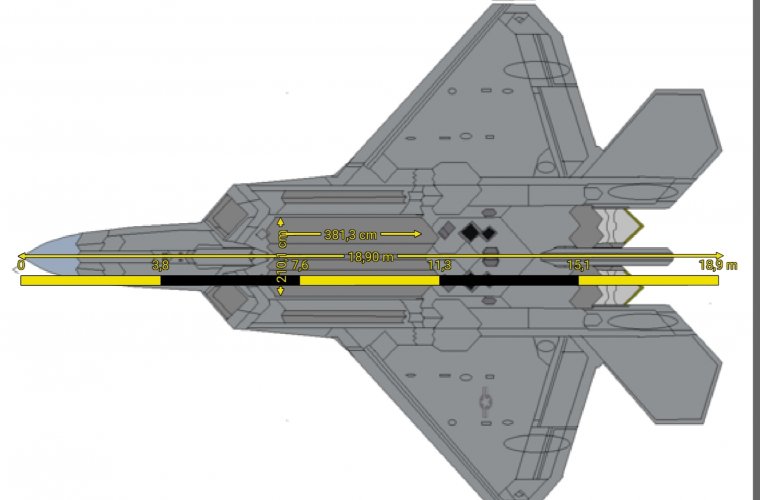
The width of one internal compartment of Su57 is 110 centimeters (of course, I counted it myself, so it may be inaccurate), if we count 2 internal compartments of f22, they have a width of 210 centimeters, which means that one compartment is about 105 centimeters, AIM120 missile has a diameter of 18 centimeters p77m is unlikely to be different from its predecessors, which means that it will be 20 centimeters, so the difference between 3 missiles placed next to each other will be 6 centimeters and given that the difference between the internal compartments is only 5 centimeters, the Su 57 can accommodate 3 missiles in one compartment, a difference of 1 centimeter is either an error or is not considered impossible in principle, A total of 12 missiles. The missile is supposedly 4.2 meters long to fit in the inner compartment like the x69
 

Attachments

  • IMG_20250621_005505.jpg
    IMG_20250621_005505.jpg
    317.5 KB · Views: 52
  • IMG_20250621_005431.jpg
    IMG_20250621_005431.jpg
    942.8 KB · Views: 67
Many sources ( Russian or western nevermind) gave it designation as K-77M ( R-77M) but I think it is incorrect.In fact ,this new AAM has maybe nothing to do with the actual R-77E /R-77-1.

The Western designation for this prototype would be "AA-X-12".
 
Last edited:
The width of one internal compartment of Su57 is 110 centimeters (of course, I counted it myself, so it may be inaccurate), if we count 2 internal compartments of f22, they have a width of 210 centimeters, which means that one compartment is about 105 centimeters, AIM120 missile has a diameter of 18 centimeters p77m is unlikely to be different from its predecessors, which means that it will be 20 centimeters, so the difference between 3 missiles placed next to each other will be 6 centimeters and given that the difference between the internal compartments is only 5 centimeters, the Su 57 can accommodate 3 missiles in one compartment, a difference of 1 centimeter is either an error or is not considered impossible in principle, A total of 12 missiles. The missile is supposedly 4.2 meters long to fit in the inner compartment like the x69
How much clearance between weapons are you giving? Can the ordnance techs reach around the missiles to attach them to the lugs? Are you giving enough space for the weapons to separate from the aircraft without hitting anything?
 
The width of one internal compartment of Su57 is 110 centimeters (of course, I counted it myself, so it may be inaccurate), if we count 2 internal compartments of f22, they have a width of 210 centimeters, which means that one compartment is about 105 centimeters, AIM120 missile has a diameter of 18 centimeters p77m is unlikely to be different from its predecessors, which means that it will be 20 centimeters, so the difference between 3 missiles placed next to each other will be 6 centimeters and given that the difference between the internal compartments is only 5 centimeters, the Su 57 can accommodate 3 missiles in one compartment, a difference of 1 centimeter is either an error or is not considered impossible in principle, A total of 12 missiles. The missile is supposedly 4.2 meters long to fit in the inner compartment like the x69

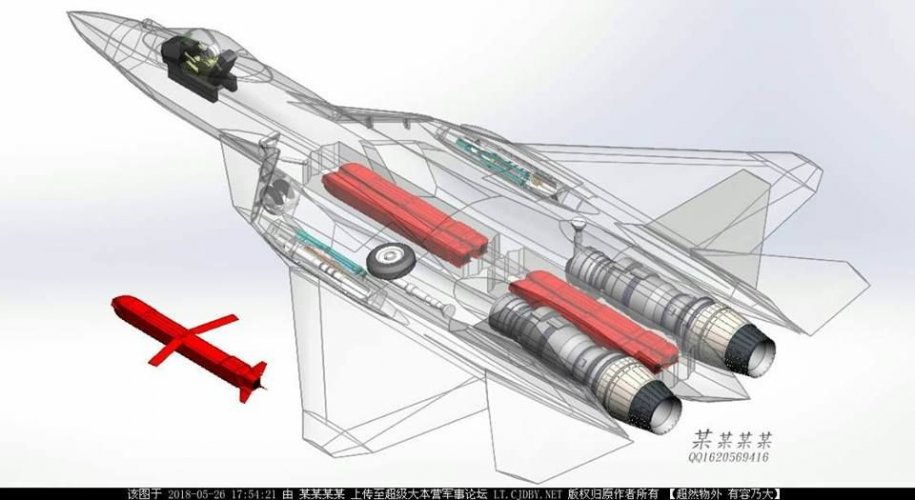
In the two FWC ( Fuselage Weapon Compartments) ,there is place for max 4 AAM's or ASM's/ARM's . Dimensions : 4.2m x 0.4m x 0.4m. In the FWC only two differ catapult launchers UVKU-50L ( max 250kg) or UVKU-50U ( max 750-800kg) can be attached.

"RVV-AE" was just an export-only designation used of R-77.

RVV-AYe ( on Russian Cyrilic: РВВ-АЕ) was the original designation for the medium-range AAM developed in 1982 with the lattice stabilisers after the short-range AAM known as RVV-A 'Bisector'. GosMKB Vympel's designation is Izdeliye 170 and military designation for the RVV-AYe /Izd. 170 is R-77 ( K-77 was for the test version during tests from 1984). R-77E or Izdeliye 190 is the export version .

 
Размеры: 4,2 м x 0,4 м x 0,4 м.
These are the dimensions of an x69 cruise missile, which fit 2 pieces in one compartment, the su-57 carries 4 x69 missiles. If you place 2 missiles side by side, then the internal width will be at least 80 centimeters, which is quite enough to fit 3 missiles of 20 centimeters each, and there will still be 20 centimeters for stabilizers
 

Attachments

  • cd3478c937b43fb54e679c0b88ce3c59.jpg
    cd3478c937b43fb54e679c0b88ce3c59.jpg
    56.7 KB · Views: 71
These are the dimensions of an x69 cruise missile, which fit 2 pieces in one compartment, the su-57 carries 4 x69 missiles. If you place 2 missiles side by side, then the internal width will be at least 80 centimeters, which is quite enough to fit 3 missiles of 20 centimeters each, and there will still be 20 centimeters for stabilizers

This sequence is from the video about 100th anniversary of the 929 GLITs of the Russian MoD in the Akhtubinsk air base. We can clearly see that Su-57 can carry max of 10 Izd. 180 ( simulators).

Su-57 sa 10 Izd 180.jpeg

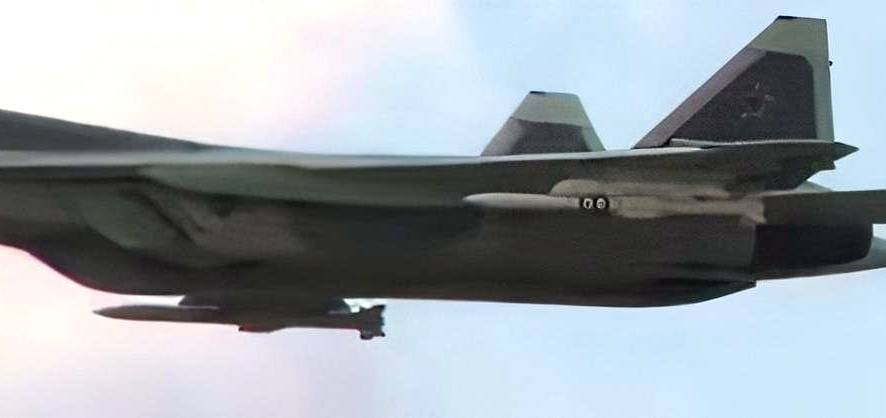
Underwing double weapon/AAM? stations 9A/9B and 10A/10B for the Izdeliye 171-1 ? Something that we can see on Su-35S with four R-77-1 under the fuselage ,between air intakes and engine nacelles.

Su-57 sa dvostrukim nosacem-lanserom ispod krila.jpg
 
You're right, I wonder why this is so, because in this case there are no advantages of quantity over r37 iz810
 
Current Su-57 config indeed supports two AAM per bay. But ability to have 3 is indirectly confirmed by S-75 presentation, where they said it can carry up to 5 internally, and the latter has the same mIn bay as Su-57.
 

Similar threads

Back
Top Bottom