red admiral
ACCESS: Top Secret
- Joined
- 16 September 2006
- Messages
- 2,093
- Reaction score
- 3,250
It was a lot of aeroplane to deliver not very many iron HE bombs around a target, if it could find it, and if it wasn't shot down along the way.



It may be a simplistic viewpoint, but I think the 'worst' of the "knocking chunks out of each other" may have been precipitated by the infamous 1957 Defence Review.If a more co-operative spirit had existed between the RAF and RN then there would have been the trust in the S2 and then maybe the longer range TFR capable Buccaneer Tactical Strike & Rec mk 3 for both services ...... together with a P1121 or P1116 based fighter to boot.
The fact the seniors in both services were quite happy to frequently knock chunks out of each other budget, sometimes for little more than devilment, was probably more important than any technical deficiencies.


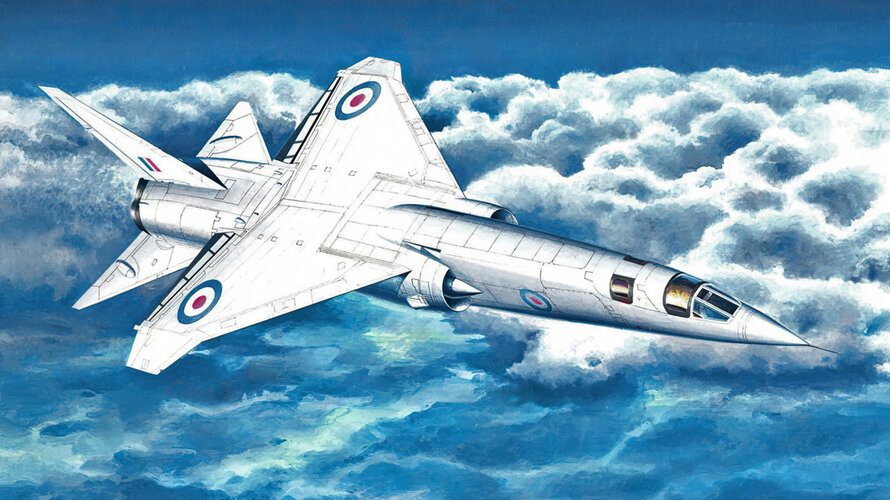
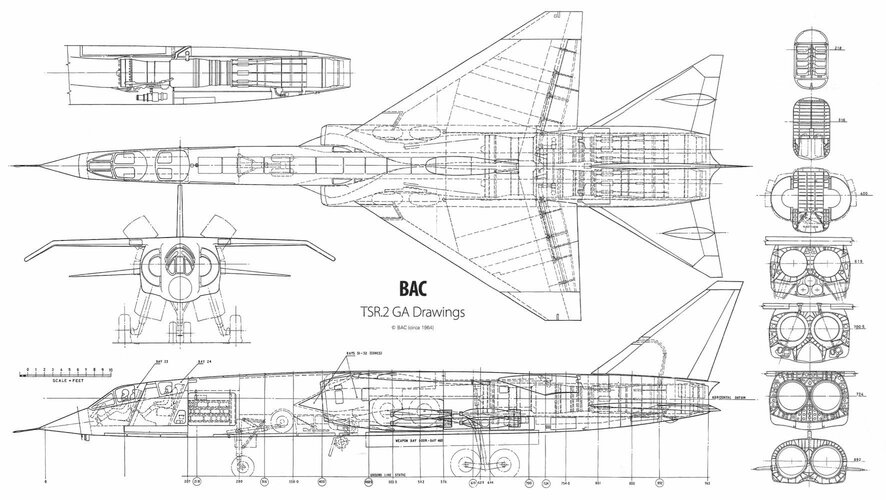
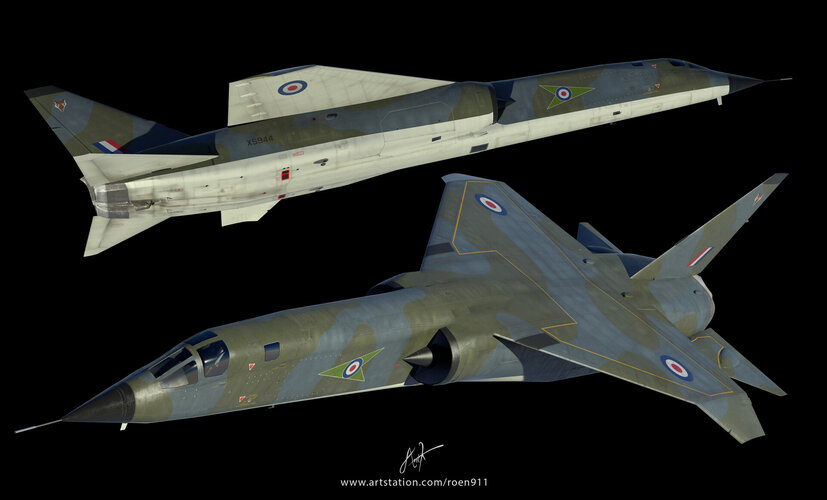
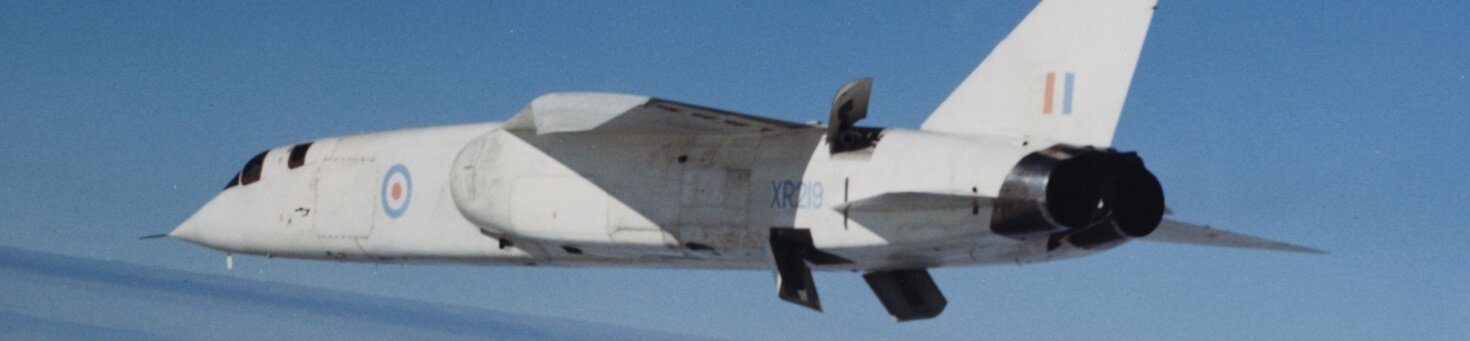
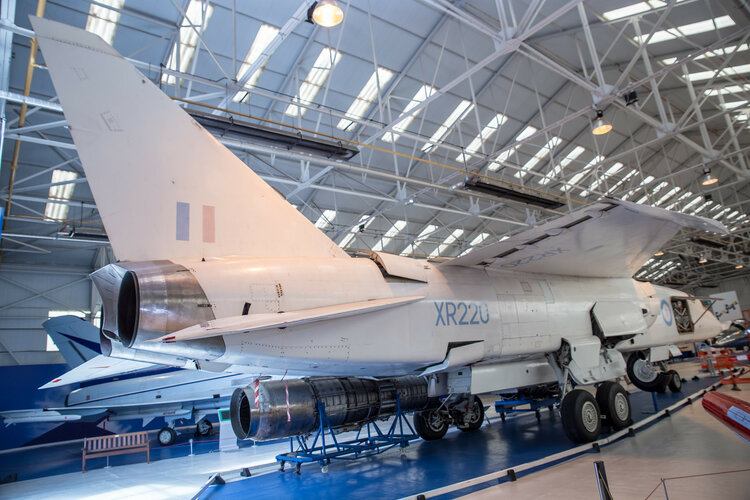

Speaking of the 'one of these or five of those' story...Regarding TSR.2 vs. Buccaneer, it's always been my understanding that the main thrust of the Navy's argument was 'Yes, you can buy six Buccaneers for the price of one TSR.2, but in order for those Buccaneers to do what the TSR.2 can do, you also need to buy an aircraft carrier and it's escorts and support ships, in other words MOAR SHIPS!, which is what we really want . . .'
cheers,
Robin.


The Medway was considered early on in the design process.The TSR.2 was powered by a variant of the Olympus turbojet, how would the combat range increased if it would be powered by a turbofan like the conway or spey variant.
IIRC the bucaneer s2 had a much larger combat range then s1 variant.
Has anyone ever seen Mountbatten's famous playing cards?
Is the story true (given Mountbatten's talent for bigging himself up)?
What was its provenance?
The Medway was considered early on in the design process.The TSR.2 was powered by a variant of the Olympus turbojet, how would the combat range increased if it would be powered by a turbofan like the conway or spey variant.
IIRC the bucaneer s2 had a much larger combat range then s1 variant.
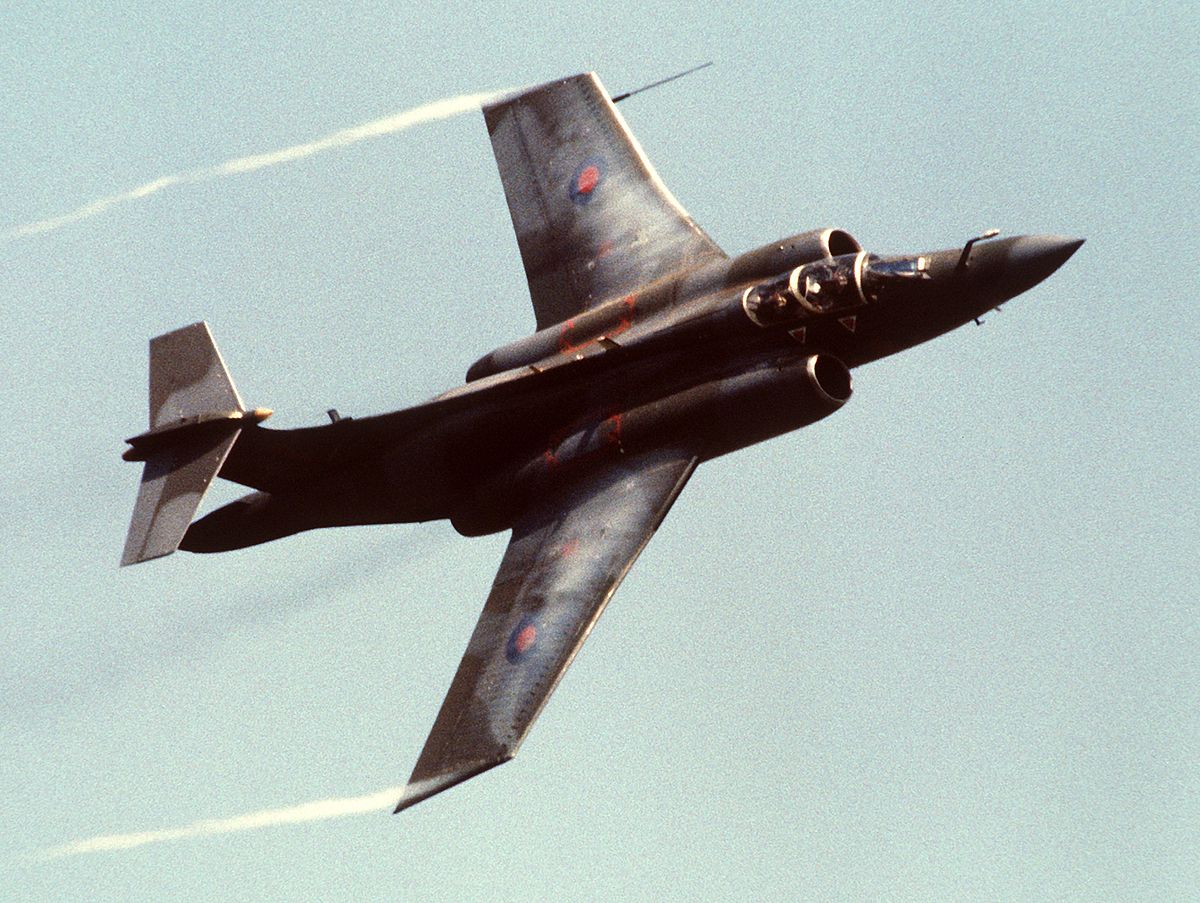
 de.wikipedia.org

Very belatedly... my guess is RB.1, based purely on the fact that the aircraft was built to Air Ministry Specification RB.192. In most cases of a service aircraft built to such a specification, the role prefix has corresponded to that of the specification.Is the name "Eagle" for the BAC TSR-2 speculation and/or enthusiast invention? Is there a possibility that the TSR-2 might have been given a "V" name and have been part of the V-bombers since it could deliver tactical nuclear weapons? Would the aircraft's designation have been GR.1 for "Ground attack/Reconnaissance"? TSR.1 for "Tactical Strike/Reconnaissance" Mark 1 or SR.1 for "Strike/Reconnaissance" Mark 1? Do I understand correctly that TSR-2 was a designation given by BAC to the aircraft? Or would the aircraft have been given the designation TSR.2 by the Ministry of Defence?
The detail in there on the planned war role of the RAAF's light bombers and the associated mission profiles is extremely interesting, and really shows the need for range in that theatre of operations. The prospect of suppressing an airfield at a thousand miles radius with only one or two squadrons available must have had some Australian mission planners looking longingly at the buckets of instant sunshine.Selection of a Strike/Reconnaissance Aircraft as replacement for the Canberras of the RAAF [F4C and RF4C, Mirage IVA, RA5C, TSR2, TFX (F111), bomber, fighter - includes 'Report of the Evaluation Team on a strike/ reconnaisance aircraft for the RAAF, Department of Air, August 1963', and photographs of the final assembly of the first aircraft] [83 pages]

You forgot T.S.R.2!TSR.2, TSR2 or TSR-2?
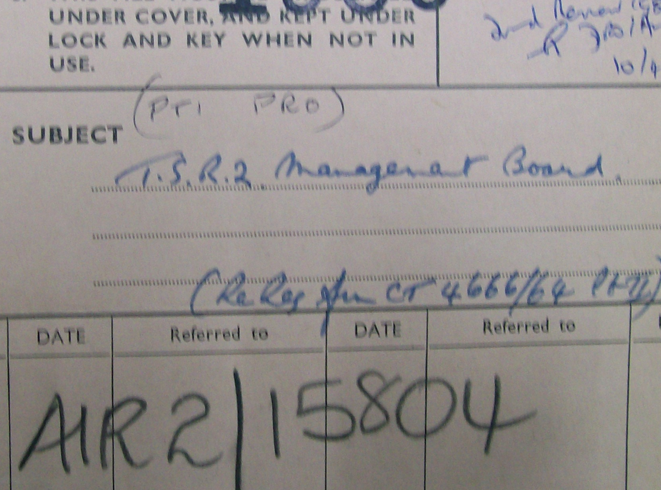

Absolutely yes. No point in chasing an "official" form.This is why designation pedantry can be so fruitless because often there is no way of knowing what is the 'official' way actually was because nobody at the time had a clue either.
You forgot T.S.R.2!
Very Interesting. Thank you.Australian TSR.2 requirement
NAA A4940, C3852
Selection of a Strike/Reconnaissance Aircraft as replacement for the Canberras of the RAAF [F4C and RF4C, Mirage IVA, RA5C, TSR2, TFX (F111), bomber, fighter] [392 pages]
View Digital Image
recordsearch.naa.gov.au
Selection of a Strike/Reconnaissance Aircraft as replacement for the Canberras of the RAAF [F4C and RF4C, Mirage IVA, RA5C, TSR2, TFX (F111), bomber, fighter - includes 'Report of the Evaluation Team on a strike/ reconnaisance aircraft for the RAAF, Department of Air, August 1963', and photographs of the final assembly of the first aircraft] [83 pages]
View Digital Image
recordsearch.naa.gov.au
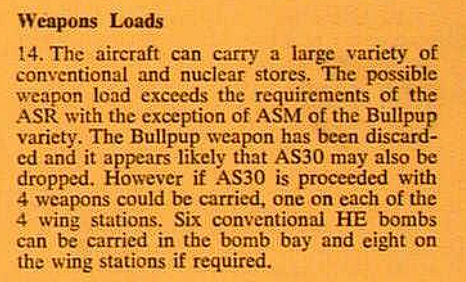
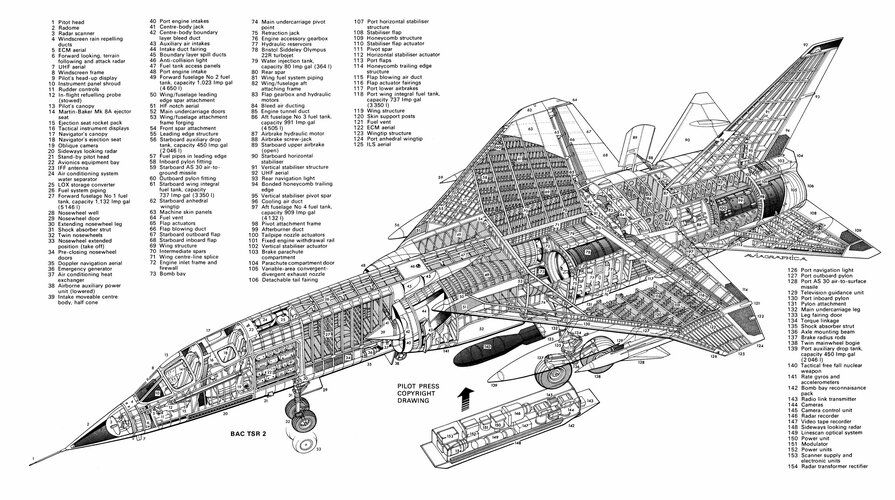
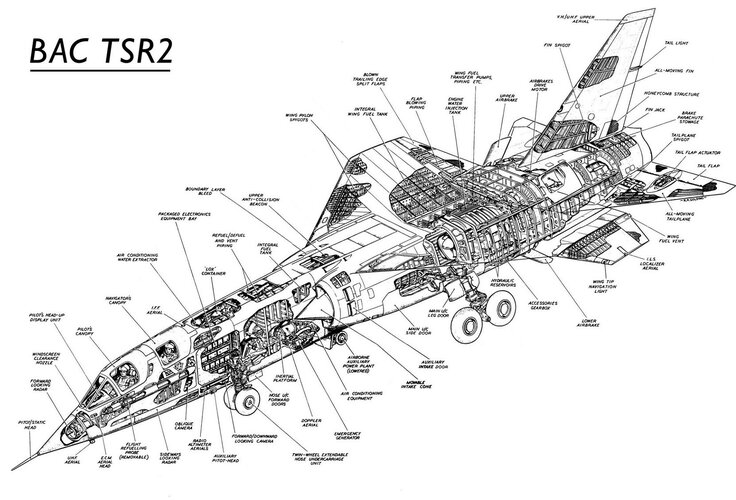
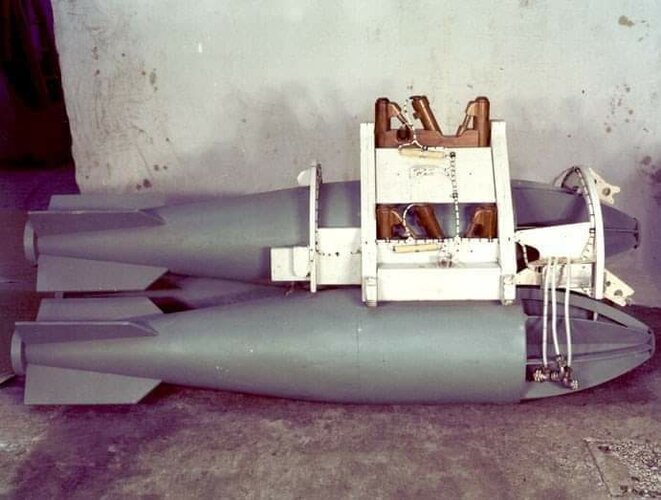
AFAIK, the inner pylons were planned to take three 1,000-pound bombs on triple ejector racks, but the outer ones could only take one.That's the first mention I've seen of two (presumably 1,000 lb) bombs being carried on each wing pylon. Does anyone have any more information about that? I always TSR.2 would only carry a single bomb on each pylon; I assume two bombs would likely have been carried in tandem like on the Jaguar?

But aside from National Prestige, is there a reason that they didn't look at the A3J Vigilante? 974 mile combat radius, carrying roughly 1-3x ~2000lb class weapons. Designed as a low level nuclear bomber in 1956, and introduced by the USN in 1961.
That would make more sense. Not seen any mention of triple racks on the TSR.2 before though. The max load always seems to get quoted as 10 x 1,000 lb.AFAIK, the inner pylons were planned to take three 1,000-pound bombs on triple ejector racks, but the outer ones could only take one.
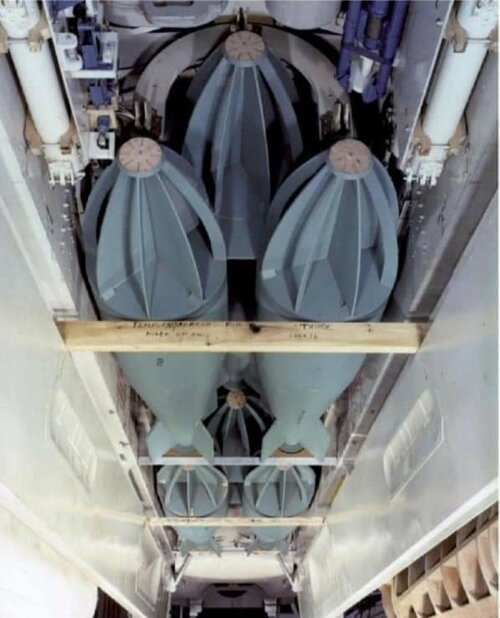
Looks like I've misremembered - by March 1965 it was considered that the inner wing pylons could carry four 1,000-pound bombs, for a maximum total load of 16 - one on each outer wing, four on each inner wing, and six internal.That would make more sense. Not seen any mention of triple racks on the TSR.2 before though. The max load always seems to get quoted as 10 x 1,000 lb.
Looks like I've misremembered - by March 1965 it was considered that the inner wing pylons could carry four 1,000-pound bombs, for a maximum total load of 16 - one on each outer wing, four on each inner wing, and six internal.
That's in Damien Burke's TSR.2 Britain's Lost Bomber, which as far as I know is still the definitive work. There's a nice copy of the loadout chart from the brochure in there.Cool. That would line up with AVIA 65/2331 which lists the maximum payload of TSR.2 as 16,000 lb. I thought that was a mistake / typo when I first read it as it seemed so far off from the 10,000 lb figure I'd seen quoted anywhere else.
Where did that information come from? I don't suppose there is any indication of what form such a loadout would take?
I shall have to re-read my copy. From memory I thought the loadout chart only showed 10 x 1,000 lb. The 16,000 lb loadout as a further development might be in the text though.That's in Damien Burke's TSR.2 Britain's Lost Bomber, which as far as I know is still the definitive work. There's a nice copy of the loadout chart from the brochure in there.
I would agree that T.S.R.2 is probably the most likely 'official' format as most BAC documents and official documents in the early days of the programme use that format the most.T.S.R.2 is the version of the name that is printed on the aircrew manual, maintenance manual, sales brochure, and a report on the aircraft's performance that I've seen.
All of those documents originated from BAC. So I'm leaning towards that being the "official" name from BAC's perspective. Or at least one that they tried to standardise to at one point
I do agree, standardisation is nice but nobody can ever enforce every author to use a consistent approach. I try to stick to my own personal format (myself I prefer Mk.3).This kind of format consistency is also helpful for designation qualifiers, like Mark 3, Mark III, Mk 3, etc. Personally I settled on the format "Mk3", but any format is good as long as we stick to it.
But aside from National Prestige, is there a reason that they didn't look at the A3J Vigilante? 974 mile combat radius, carrying roughly 1-3x ~2000lb class weapons. Designed as a low level nuclear bomber in 1956, and introduced by the USN in 1961.
I shall have to re-read my copy. From memory I thought the loadout chart only showed 10 x 1,000 lb. The 16,000 lb loadout as a further development might be in the text though.
Underwing carriage of HE bombs was more fluid, the situation changing time and time again until, finally, a maximum load of 10,000 lb (4,500 kg) was decided upon (six bombs internally and one on each under-wing pylon). The large Martel missile pylons were considered to be strong enough to carry up to four bombs each on multiple ejector racks, which would have given a total bomb load of 16,000 lb (7,260 kg) but no work was authorised on this.
Not wanting to derail the thread, but were there any plans or studies to give the Vigilante a more conventional weapons bay?The A3J Vigilante linear weapons bay didn’t work which being central to both the aircraft (literally) and its operational systems concept was a bit of a showstopper. I understand that was the reason the USN gave up on it in originally intended bomber role. True, that space could have stuffed with fuel, with buckets of instant sunshine under the wings but then have to put up with loads of external weapons carriage drag into the defended area, whereas external tanked could have been punched off prior to entry.