Interesting I have this book and can’t recall reading about the “Advanced Mobile ICBM Warhead” at 500kt. Cannot find any other references to this weapon.
Sounds like Midgetman, but that was to be fired from CONUS.
That's just the original W87-1, which was actually literally just a reimplementation of the initial version of the original W87-0 design prior to it being forcibly converted to use a non-HEU secondary.
Yield is thought to be in the 455–475 kt range (most estimates cite 475 kt), but it is also considered a 500 kt nominal warhead, the same as the W88, which is probably why it's listed as 500 kt. Originally not a lot of information was known about the exact expected yield, so many earlier estimates simply called it a 500 kt warhead (which technically wasn't even all that far off from the mark either).
Basically, it's what the W87 was originally supposed to be.
Couldn't NATO have fielded a shorter range missile that would be able to hit Soviet FOBs without threatening Moscow?
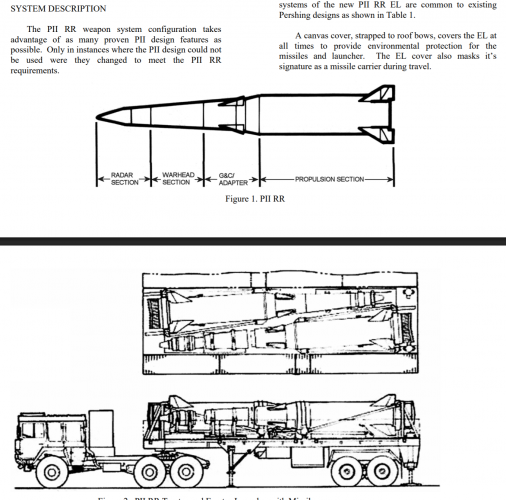
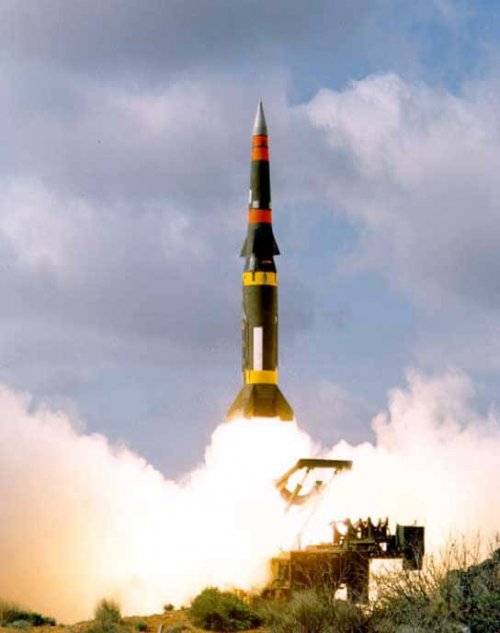
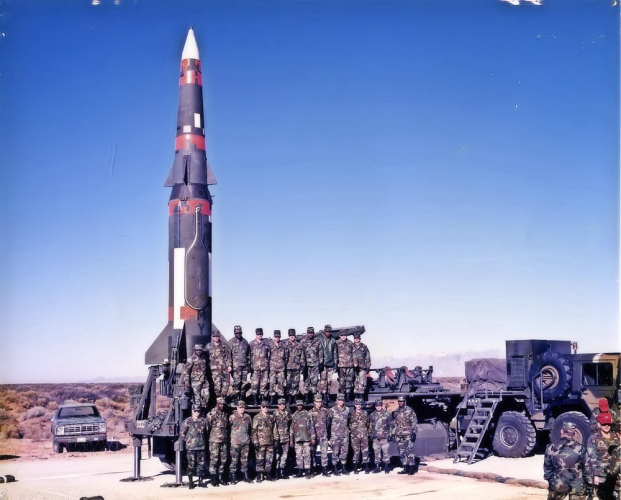
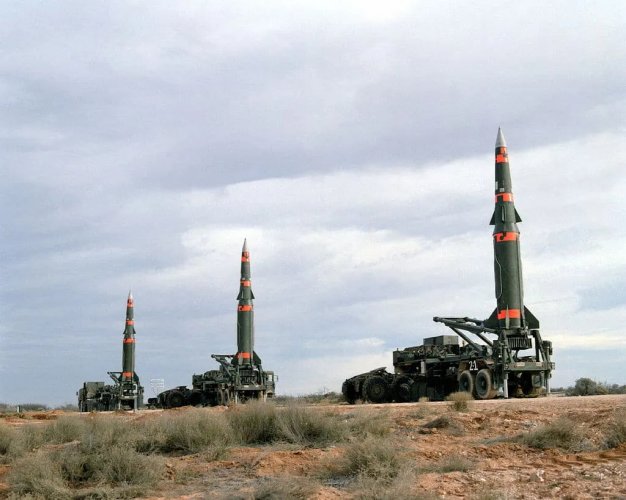
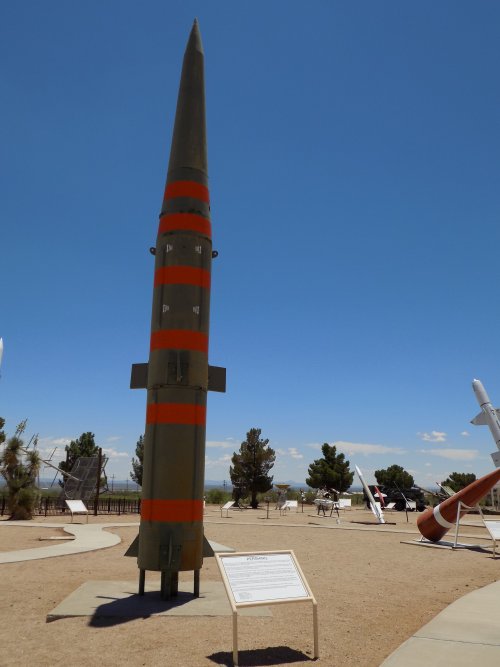
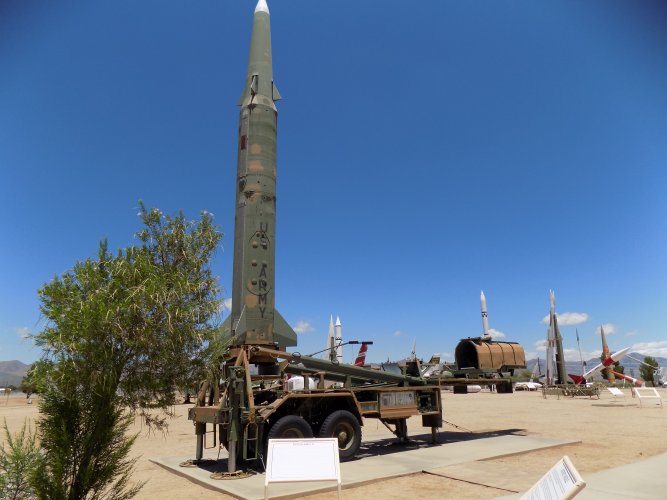
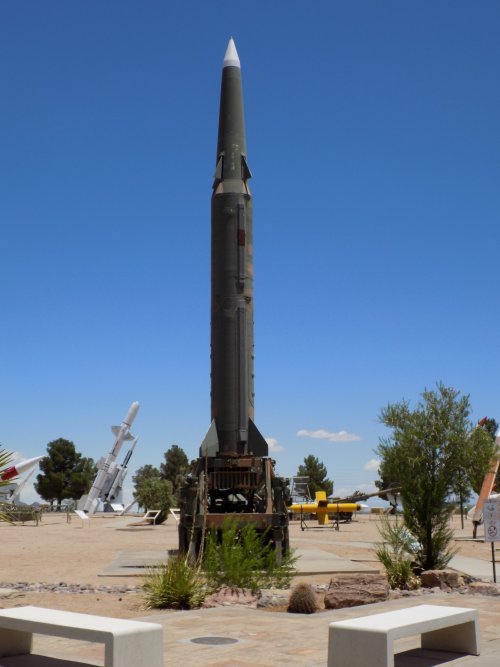
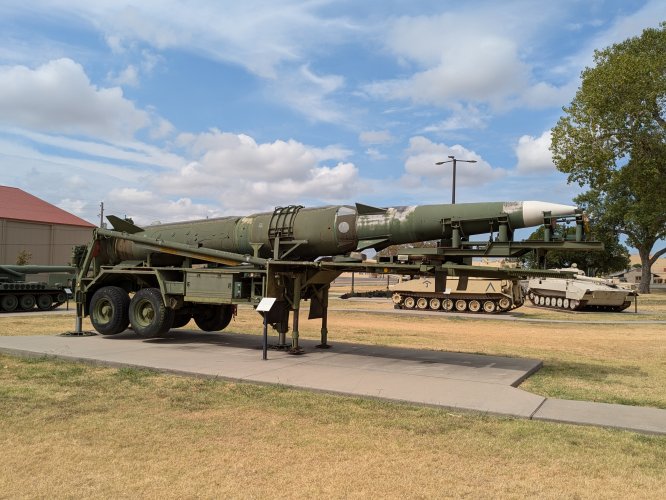
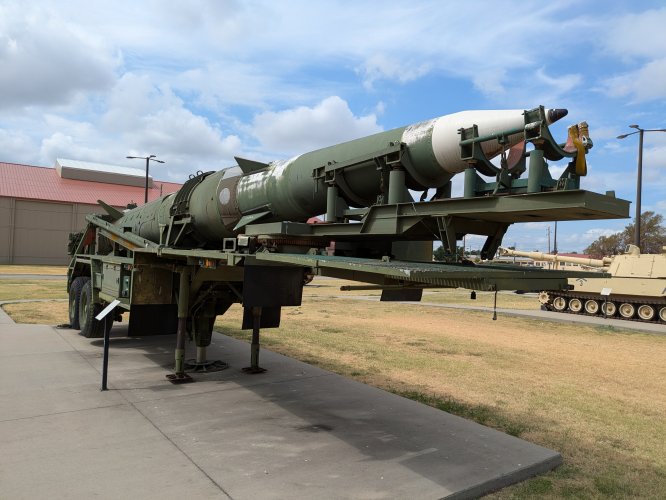
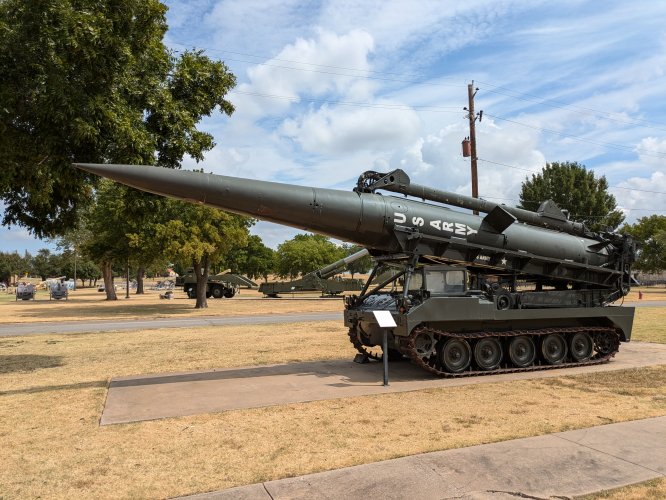
Ironically this is exactly what the Pershing II was. It was never even close to being capable of hitting Moscow, but the Soviets had done their own technical analysis on the Pershing II's capabilities, and had somehow arrived at the (wholly inaccurate) conclusion that the missile had a 2500 km range and could therefore be used to hit Moscow when fired from within Western Germany, when in fact it only had a 1770 km range and was incapable of hitting Moscow when fired from Western-controlled soil.
They also thought that Pershing II had been deployed with an earth penetrating warhead, which was also false – we were working on developing a new warhead for the Pershing II which would have some level of earth penetrating capability, but this warhead was never completed and its development program was terminated before it could be deployed. The only warhead that was ever actively deployed on the Pershing II was wholly incapable of being used for earth penetration.
And even the one under development wasn't really much to write home about – it was a pretty good EPW design, but the warhead yield was extremely low, so it wouldn't have been very useful against many types of deeply buried targets. I guess it could have possibly posed a threat to Moscow if they had extremely shallow bomb shelters with the exact position known super precisely, but the yield was so comedically low that you'd have had to use a salvo of them just to have a somewhat plausible-ish chance of cracking a single shelter, and that's assuming unrealistically good accuracy, targeting knowledge, and penetration.
Also it overlooks the whole issue that it'd be impossible to hit Moscow from Western-occupied territory in the first place, which makes this a pointless exercise to begin with – by the time the Pershing units have moved close enough to attempt that kind of decapitation strike, we'd be deeply embroiled in a conventional war which would probably have already long since gone nuclear given American and Soviet doctrine at the time, and therefore the politburo would have had plenty of forewarning to evacuate Moscow long before any Pershing unit got anywhere near being within range of Moscow.
IMO the W86 was kind of pointless – the EPW research was certainly quite useful down the line, but the utility of such a low yield EPW warhead is very limited against many deeply buried targets. It could be useful for cracking open extremely shallow bunkers, but that's about it.
I can kind of see why they funded it given the other zany stuff that was still considered reasonable back in that era, but there were better ways to spend that money. Then again, I suppose it could have been intended from the start as a bargaining chip to apply pressure against the Soviets with.
Or maybe there truly were a lot of shallowly buried command posts scattered across Eastern Europe that the Pershing II EPW would have been ideally suited for taking out. Idk. It's somewhat plausible I suppose.
If nothing else, it could simply have been intended as a vehicle to get funding to conduct more R&D on nuclear EPWs, in which case I suppose it did its job reasonably well.
Not even close.
Early missiles were liquid fueled, and the really early ones were cryogenically fueled. The whole rigamarole with hours of preparation from when the rocket is put on the pad that we have with space launch rockets now? They had to do that for all the ballistic missiles back in the 1950s. It was super obvious, for hours or even days ahead of time, that missiles were being prepped for launch. And anything that would be coming down in Europe could be *seen* from Europe, by aircraft.
Switching to storable liquid propellants in the 1960s cut the prep time by a fair chunk, but there was still prep time, and it was still obvious enough to be seen on satellites. Now you had a couple of hours warning that the missiles were being prepped.
Switching to solid fuel in 1976 meant that there was next to no prep time. You'd know the missiles were being prepped to launch when you couldn't find them in their garrison parking lots, because they'd dispersed into the forest, and when the missiles were detected in the air.
Of course, the US had adopted solid fuel missiles in the 60s instead of going with storable liquid propellants, but the number of missiles they had in Europe was relatively tiny - there were only 180 Pershing I launchers total, but they were based in Germany and couldn't hit Russia at all (Belarus, Ukraine and Poland, yes, but not Russia). The Soviets started out deploying 300 SS-20s with three warheads each - five times as many warheads as the Pershings, and they could hit all of Europe, all the way to Iceland.
Storable liquids did not have any significant or detectable prep time. As long as the guidance systems were kept spun up, then the only limiting factor was the time to open the silo door and go through the launch sequence, which was extremely short for both storable liquids and solid propellants.
For example, the (storable liquids) Titan II could be hot launched from within the silo in under 60 seconds (some sources say under 58 seconds).
Similarly, the (solid propellant) Minuteman III can also be hot launched from within its silo in under 60 seconds.
The Soviets developed the technique of "ampulization" of their storable liquids ICBMs to allow leaving them fueled for extended periods of time (initially 5 years, then 10 years, and eventually as high as 15 years). This was deployed starting with the second generation of Soviet ICBMs, which were deployed in the 1965–1973 period.
There was no "couple of hours" warning once solids and ampulized storable liquids became mainstream, which happened quite rapidly.
For the Soviets, their ampulized storable liquid missiles were every bit as good as a solid propellant missile when it came to missile launch times.