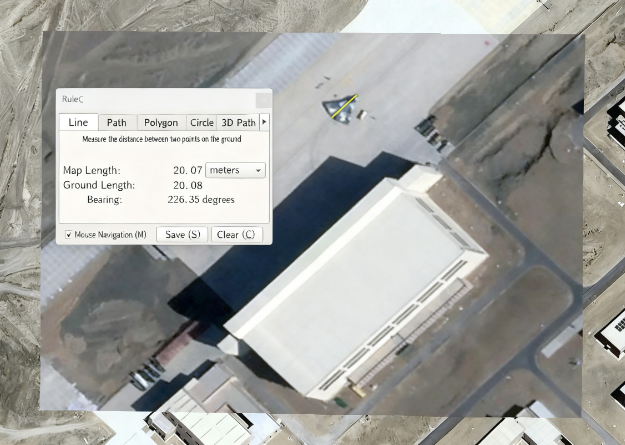
I don't understand the comments on risk reduction. CAC has plenty of experience designing DSI intakes to call upon, and plenty of flight test evidence to validate their models. I don't see this being anywhere near one of the major risks.

Changing intake, ducts, and main undercarriage bays means a complete re-do of the centre fuselage structure. I know CAC has plenty of manpower, but people spending time doing this means less time spent doing something that contributes to a more capable aircraft. Why?
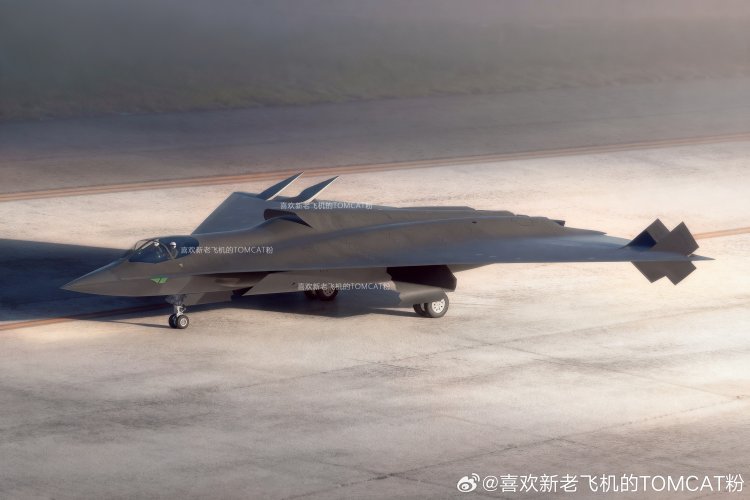
We honestly do not know if it’s DSI intake in the same way we seen on 5th gen fighters. Even if we get clearer pictures, external looks are no way final conclusions on how the technologies involved in the intake design
 
Tyler still keeps insisting that this is a regional bomber... :mad: Give it up dawg... There's no shame in telling things the way they are...
Well yes it is but that doesn't mean it's not a fighter.
It's the perfect survivable vlo platform that can deliver significant ALBM/CM apart from ULRAAM within 2IC/3IC unlike J20/35 so Tyler is somewhat right.

And if you believe Chinese watchers J36 must be ready for induction by 2030 hence the accelerated testing and evaluation.

That 26th december was not even the first flight just first public flight for outside audience.
 
Putting it another way, what we are seeing may be the most efficient, least resource and personnel intensive way of conducting its development and flight testing in context of the overall program.
That seems extremely unlikely to me when you compare to other aircraft engineering development programmes
 
Well yes it is but that doesn't mean it's not a fighter.
It's the perfect survivable vlo platform that can deliver significant ALBM/CM apart from ULRAAM within 2IC/3IC unlike J20/35 so Tyler is somewhat right.
Its a multi role fighter as intended. Im not sure it fares significantly and meaningfully better than J-XDS inside the first island chain where China can regularly sustain a high number of supporting assets. Even with carrier based aircraft, you'd still be hardpressed to match the availability that continental airfields bring. However, in the second island chain where China isnt able to sustain a dense network of aerial assets (and where the IADS systems the US can bring to bear cant really match the depth and quantity the chinese can field on their coastline), thats the environment a J-36 is a noticeably better choice.

Against distributed and proliferate sensor networks, no 6th gen fighter alone can win you a war anymore. Instead, an equally distributed network of aerial assets including 6th gen fighters is needed. The use case of a large platform that can do it all doesnt really make sense (over a more traditional fighter) unless the place you intend on operating has sparse sensors/threats. If you were fighting against dense threats, you'd be much better off with J-XDS + a large and sustained force of drones and jammers.

So yeah. I dont think calling it a bomber is accurate at all. A heavy multirole fighter / command node is probably more accurate. Its not going to be as nimble as a more traditional fighter (and kinematics do still matter in BVR), but with a higher magazine depth and longer reach, it doesnt need to be.
 
Last edited:
The use case of a large platform that can do it all doesnt really make sense (over a more traditional fighter) unless the place you intend on operating has sparse sensors/threats

A heavy multirole fighter / command node is probably more accurate.
Exactly my point, just like Chief Designer referred to it as "High Performance Fighters" so multirole would be correct here.

But to say its not inherently a bomber is also wrong given it's size and mag depth.


However, in the second island chain where China isnt able to sustain a dense network of aerial assets
Oh they can with the badger fleet but they won't survive hence the need for a vlo one.
And If u read the Wang's paper, major emphasis on energy optimization and integrated fuel thermal management + ACE suggests even 3IC could be in play here.
 
That seems extremely unlikely to me when you compare to other aircraft engineering development programmes

We've seen it among PRC aerospace programs quite a bit.

They seem to prefer to mitigate risk between prototype airframes, variants, and entire production runs, rather than either putting too much on a new project at once, or alternatively expecting too much at once in a way that delays a project from moving forwards.
 
This layout, where the hot exhaust core is enclosed by the outer stream, seems to make sense, if the airframe is indeed designed to accommodate high bypass engines...
View attachment 789925
How high bypass can VCE actually be? I've heard anything from a maximum bypass similar to contemporary low bypass turbofans like 0.5ish to near 1 BPR.
 
How high bypass can VCE actually be? I've heard anything from a maximum bypass similar to contemporary low bypass turbofans like 0.5ish to near 1 BPR.
Did not realize they both retain the upper inlet.
 
I don't mean to be a downer and I appreciate people's work, but I feel like a lot of these models (and models for other aircraft) don't get the nose right...

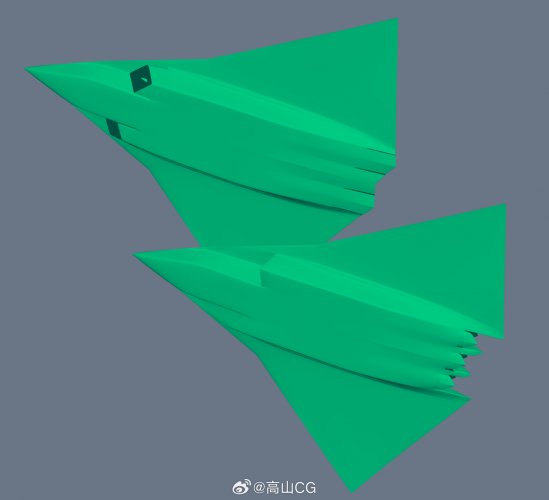
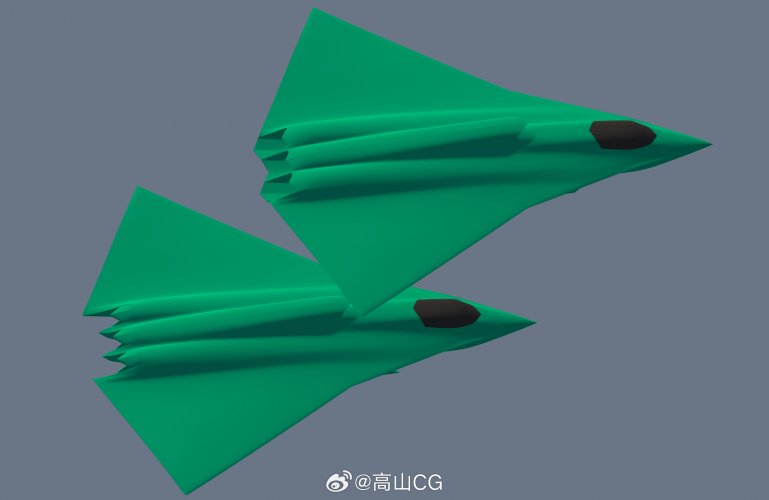
The nose has a noticeable downward slant, which ensures that the bottom of the nose isn't a giant bowl shaped scooper that almost all the models I've seen of the J-36 has. It might look that way from the the bottom fuselage shots because the intensity or lackthereof of shadows gives you that impression and because you can obviously no longer see how the nose's chine and upper section actually tapers when you are below the plane, but the side view really says otherwise. The radome's top section above the chine is much much shallower than the radome below the chine too. If the nose chine isn't modeled correctly, it turns what is suppose to be a gradual taper and slight scoop into a giant scooper chin... which isn't right.

Might I also add that some of these models could use a little more aggresive smoothing and thickness of the upper section of the airframe.

1761848145960.png
1761848294736.png 1761848461359.png
 
Last edited:
Did not realize they both retain the upper inlet.

Probably a safe assumption - but I don't think we know yet? I haven't seen any photos of No.2 that show the upper side.

*edit: No.2 means the second airframe - the actual number on the side would obviously be different
 
Exactly my point, just like Chief Designer referred to it as "High Performance Fighters" so multirole would be correct here.

But to say its not inherently a bomber is also wrong given it's size and mag depth.

I really don't want a return to this topic - but we're likely talking something similar to Mig-31 performance in terms of range, payload, and gee loading... whether it has the survivability is probably more debateable (in terms of VLO, EW, and kinematics to survive in air-to-air combat against a modern peer). It could probably act as a good interceptor or line-backer though. As mentioned much earlier, I'm very curious what the supersonic peak L/D AoA would be for this design.

I think the one thing that is left out of these conversations is doctrine - we don't know what the doctrine is. It could do roles similar to a Mig-31 (or possibly even F-14), but that depends on doctrine probably as much or more than the airframe itself at this point.
 
Probably a safe assumption - but I don't think we know yet? I haven't seen any photos of No.2 that show the upper side.

*edit: No.2 means the second airframe - the actual number on the side would obviously be different


There are interesting hints it might actually be no. 36022
 
My current understanding of prototype numbers would have had this airframe numbered 36022 as the SECOND machine of the THIRD version because:
0 is first version ie J-20 2001 and 1 is the first machine, second machine is 2002.
1 is the SECOND version ie J-20 2011, then we had iirc 2012, 2015 etc.

So based on that, was there a 36001, and if this numbering is indeed accurate, ie 36022, there might be a 36021 as well, either 1st flying article of the third version or perhaps static?
 
My current understanding of prototype numbers would have had this airframe numbered 36022 as the SECOND machine of the THIRD version because:
0 is first version ie J-20 2001 and 1 is the first machine, second machine is 2002.
1 is the SECOND version ie J-20 2011, then we had iirc 2012, 2015 etc.

So based on that, was there a 36001, and if this numbering is indeed accurate, ie 36022, there might be a 36021 as well, either 1st flying article of the third version or perhaps static?
static I think, though as least for now they had never been seen yet. There should be '36001', '36021'.

*But it is really weird that 36011 flew but 36021 didn't.
 
Why not no. 36010, since it is absent? Maybe, the two demonstrators of the J-36 were built parallelly, but the 36011 flew first.

since the Last digit „0“ would be the 0th airframe :p
 
How so? I saw a short and to the point video.
I believe you might be one of the few people on this forum who finds value in sandbox news. Most people appear to see sandbox news videos as just the regurgitation of a paragraph of recent news that's already been reported elsewhere, spread out over ten minutes in an annoying voice. Beauty is in the eye of the beholder, I suppose.
 
I believe you might be one of the few people on this forum who finds value in sandbox news. Most people appear to see sandbox news videos as just the regurgitation of a paragraph of recent news that's already been reported elsewhere, spread out over ten minutes in an annoying voice. Beauty is in the eye of the beholder, I suppose.
On this forum certainly. Issue is see with posting this here is that basically everyone who participates in this forum is "already in the know". Sandboxx, as a summary of information most of us have been aware of weeks up to months prior, certainly has more value to people who don't participate in this forum. Issue I hold with this channel is the often biased commentary.

I don't necessarily think it's off topic or harmful, just...redundant?
 
It isn't that there is a lack of news, to be honest. It is that the opinions are often not supported by sufficient research and a lack of full exploration of points of uncertainty. It isn't the worst channel, but it also differently isn't the best.

Things like describing DSI's as less complex or not involving s-ducting...

I'd like it to be a reliable source of information, but it hasn't been in my experience.
 
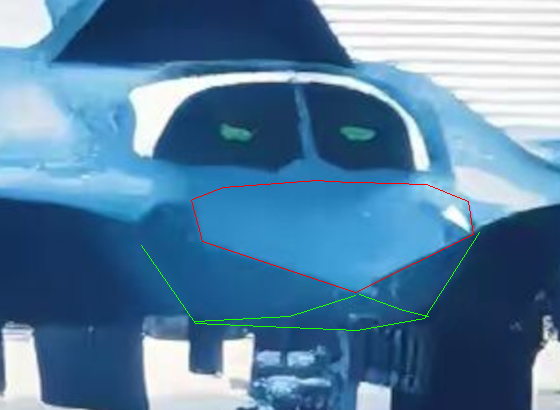
As I was making the post about the J-36 nose the other day, I noticed it's impossible to tell where the forward radome seam line starts. Only the cheek array covers are readily apparent.

Do excuse my dumb question but would it be possible that the radome seamline / array face sits behind the EO windows and ahead of of the cheek array? or even behind the cheek array? or would it have to be located in front of the EO windows not to interfere with transmission? I'm not sure if the cheek windows would interfere with the front facing array or not.
 
On this forum certainly. Issue is see with posting this here is that basically everyone who participates in this forum is "already in the know". Sandboxx, as a summary of information most of us have been aware of weeks up to months prior, certainly has more value to people who don't participate in this forum. Issue I hold with this channel is the often biased commentary.

I don't necessarily think it's off topic or harmful, just...redundant?
I like this reply. I'm not sure why so many feel the need to go after someone for posting a news article on the topic, even if it is repeating information already said.
 

Similar threads

Back
Top Bottom