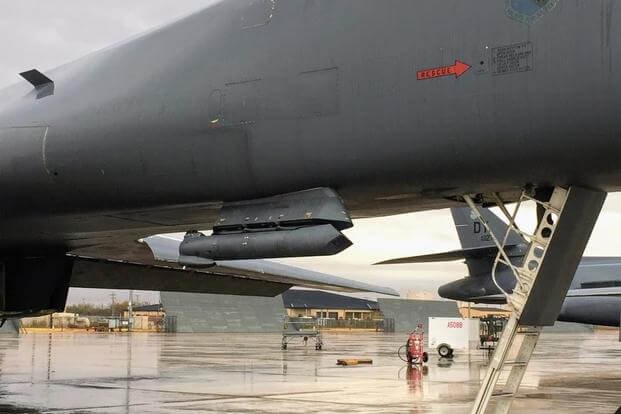
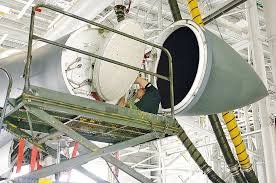
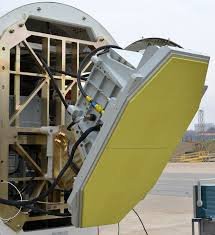
which bomber has EOTS? Which bomber has such massive radar? Which bomber has TVC? which bomber is made by CAC? I can ask far more question than you can
EOTS? Massive radar? Like this? And TVC can also be used for trim at high altitude without having to worry about control surfaces flashing returns up front.
We really should depart from legacy solutions. Of course take everything from every side with a grain of salt. But that doesn't mean to invalidate rumours with "push" behind them. And by this I mean political push from the CCP
Reflecting on older times, I still remember the haydays of "J-20 is an interceptor".
If we zoom out a bit and look at what a 1 to 1 BVR fight looks like (even if this no longer applies today, I think investigating the geometry and timelines of it is still relevant) , I think the A2A role for this plane still makes a whole lot of sense.
In BVR fights, maneuverability and kinematics do still matter, but they are first a function of the speed and range of the missiles with which each side is armed with, and then a function of your closure and distance with the enemy.
If you are far enough away, it's kinematics that drive the fight - find and fix the enemy while flying to the desired azimuth, altitude and speed to secure a high PK firing solution. At long range, it's much harder to have a single enemy formation put you in a pincer or engage you omnidirectionally and even if that were to happen - again you've got time to turn, fire, turn and fire. At these ranges, whether it's the first shot or subsequent shots, as long as you are far enough away, how fast you can turn to get nose on (or within azimuth for your weapon to ride a good trajectory) doesn't really matter since you've got side array, wide coverage and offboard sensing to support those missiles. Evading missiles at long range relies much more on speed to get out of the detection basket and much less on maneuverability.
However, the closer two opponents are drawn to each other, the more maneuverability starts to matter. I'm not even talking about visual range here, I'm talking about something like 15 - 30 miles from each other for smaller missiles and probably even greater distances for larger missiles. Even with cheek arrays, EOTS and a huge frontal array, you still need to get somewhat nose on for your missiles to be able to ride a good trajectory and Yet, the distance begins to close, but neither you or the enemy's missiles are getting slower. You are likely coming into range of a larger number of smaller, more numerous enemies that will try to engage you omnidirectionally, forcing hard decisions from you. Any missile fired at you, you certainly aren't going to play chicken hoping the jammers will do their job. You'll be maneuvering and turning hard to force the missile to turn with you, diving into denser air and performing high G maneuvers. Quickly it becomes less a matter of who can detect who and more a matter of who can turn faster to defend and to regain posture to put a missile on target. Yet If anything gets within that mid to close range to you and you don't want to fight - a J-36 might not have the maneuverability to engage, but it certainly has the maneuverability and speed to turn and leave.
If you consider the J-36 optimized for the long range fight, which fits well considering the huge range of Chinese A2A missiles, then suddenly the 5 large nose sensors, the three engines, the large weapon bays all make sense, the planform and the side by side seating all make sense. You've got the 5 nose sensors to find and fix targets at long range, the large weapon bays to carry the missiles needed to reach those targets, the side by side seating to ensure your helpers keep those targets out of mid to close range from you, and the three engines to impart high speed performance and heavy fighter maneuverability on a planform that is heavier and draggier than your normal sized fighter.
In contrast, the J-XDS would be the kind of fighter that would be okay fighting within the close to mid range BVR fights as well as longer ranged fights. It doesn't have any of the maneuverability issues that would cause it to be disadvantaged on highly compressed timelines.
Having said that, it should be a reminder too that the J-36 is the solution to a fight against targets without the density and strategic depth that land based IADS can have (and particularly not the depth and breadth of a continental land based IADS network). It's probably still ill advised to fly bombing runs over Guam unless it is carrying standoff A2G munitions and for a mission like that, carrying a meager 2 long range A2G munitions is kinda dumb when there's plenty of other ways to hit the 2nd island chain. Instead, it's primary mission is to fly out to places well outside of the Chinese joint engagement zone, skirt the edges and expanses between US installations, fly alongside a modest number of high end manned and unmanned assets, and control the package to disrupt and kill all kinds of high value aerial targets. The J-36, while capable, would be redundant from a cost and sustainance standpoint while offering no tangible advantage over the J-XDS anywhere close to the Chinese or US JEZs.
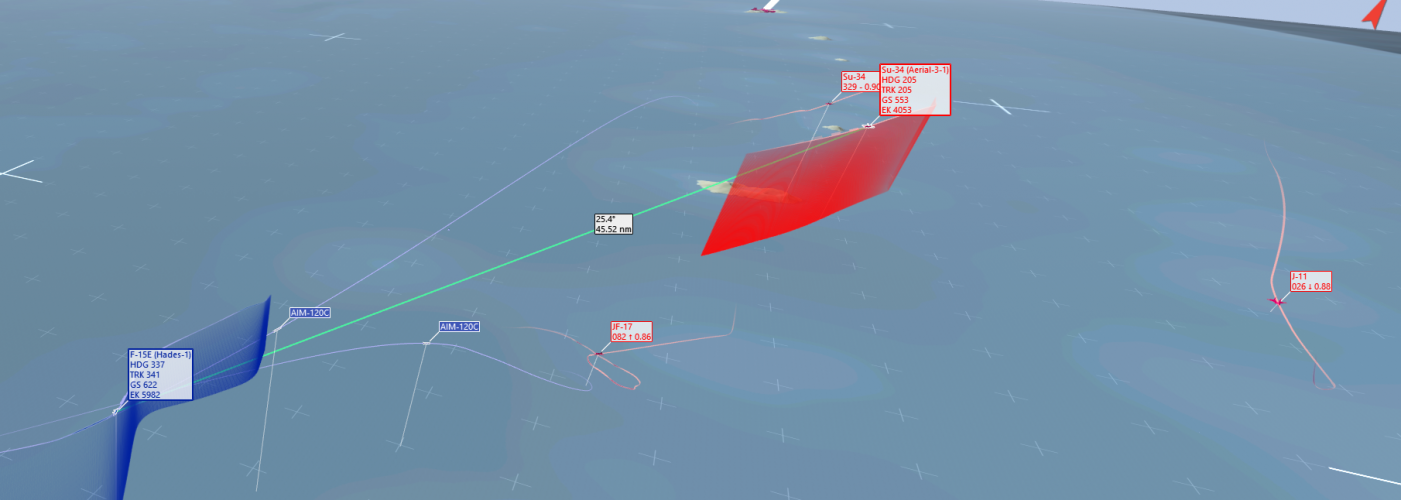
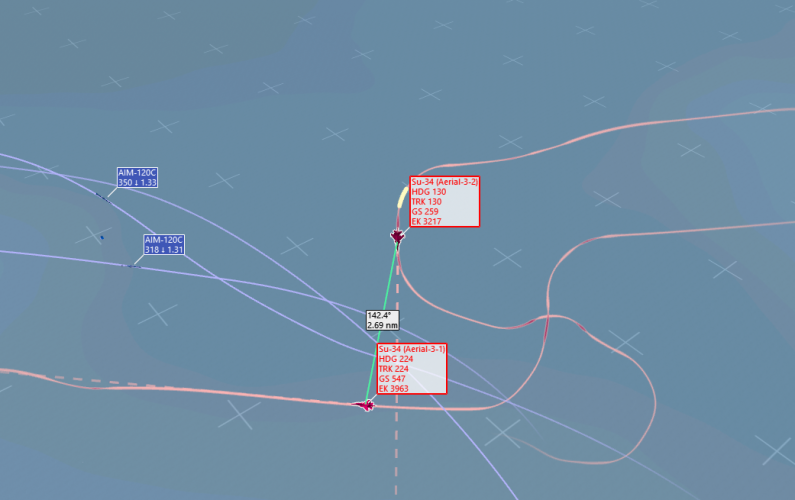
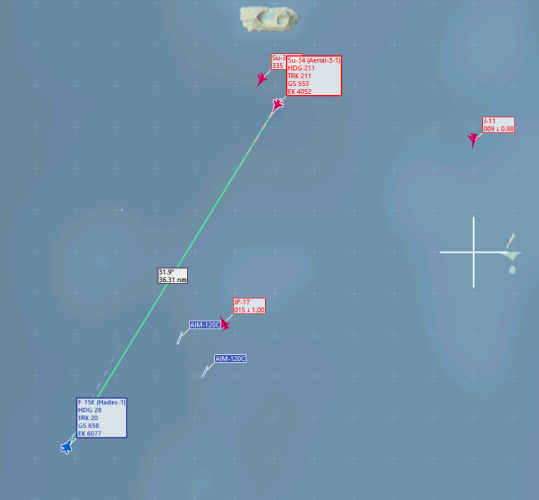
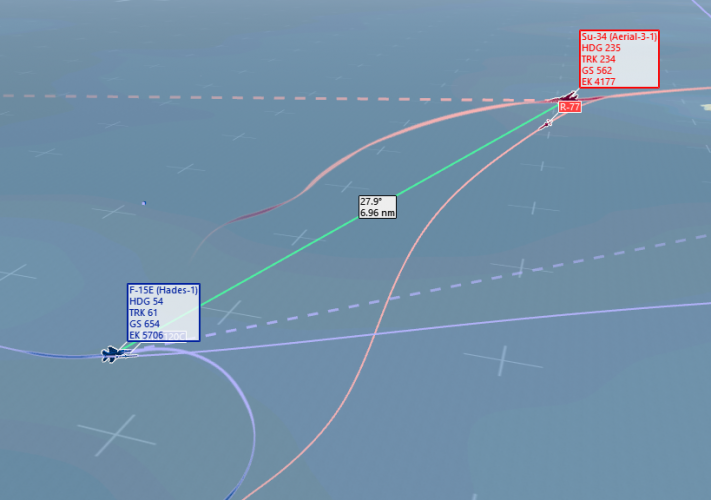
I normally don't use DCS as any form of ground truth, but for the sake of timelines, I think it's useful enough to illustrate the point:
I'm in an F15E with 8 missiles flying against 2 Su34s, a J-11, and a JF-17 whose run out of missiles engaging my light fighters (but I don't know that).
At 50 nm, I'm able to fire at two groups despite not being able to get them in the same scan volume - just with a little maneuvering. I could have had enough time to even engage the flanking J-11 had it not been such low altitude and still support the missiles before turning cold. To evade my missiles, the max G's the Su-34s pulled was 5Gs. Keep in mind the only reason they had to pull 5 Gs at all was because DCS AI is fucking dumb and choose only to defend when the missiles go active. IRL, they would have banked off an easy 3Gs and dragged my missile so far out the missile would plunge into the water:
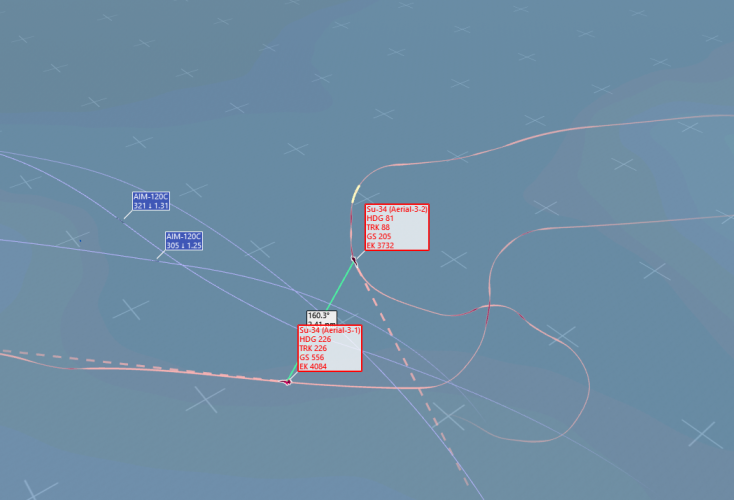
Every single one of my shots were defeated and distance has now closed from 50 nm to 38 nm. Meanwhile that J-11 is flanking hard, completely unengaged while their suicidal light fighter is about to come gun me. At these distances, they very easily have completed their pincers, forcing me to engage only one of the three groups at a time.
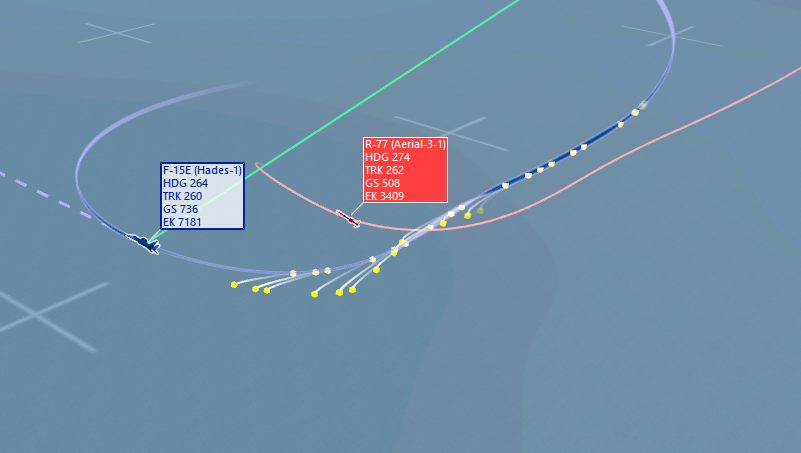
In my infinite idiocy, I'm shitting bricks trying to engage that J-11 that surprise flanked me, allowing the leading Su-34 to take a shot at me at 5 nm.
In order to defeat the missile without relying on any form of jamming, stealth, or anything, this forces me to pull a whopping 8Gs while pooping flares and chaff everywhere. Now In order to recommit against the Su-34s and J-11, I need to continue pulling those 7 - 8 Gs, shoot and then immediately turn cold as there's basically zero need or time to support the missiles in the 10-15 nm range anyway. But that's all moot because in the next 10 seconds, I get runned down and smoked by a second R77.
IRL, this fight would never happen and this fight looks like it's already closed to visual range, but keep in mind these are crappy missiles with all kinds of bugs and a far shorter range than anything that's being flown today. Take these ranges, scale them up, and the drastic missile evasion against multiple targets groups, wide arc of engagement that forces you to turn greater angles to engage, and drastic maneuvers to defend mulitiple incoming missiles would be happening at 10 or 20nm and not 5nm. You may not have to support these missiles anymore like in older fighters, but you still need to defend, reposition and recommit. As you can probably see, in these cases, the seconds squeezed from maneuverability starts to matter. At those distances, a J-36 would be ill advised to fight alone / out numbered, but still more than enough to leave the fight.
Indirectly too - this also illustrates the US doctrine of using much less capable CCAs that are more easily amassed. I have a detection advantage of something like 30 or 40 nm over these Su-34s, JF-17s and J-11s. Yet, because of their coordination and dispersion, they forced me into hard choices early on - separate scan volumes using altitude, separate azimuths that require me to drop lock, a disposable asset (JF-17) to run me down and compress my timeline, while simply due to the quick collapse of distances, their fighters with far less capable sensors were able to engage and kill me with no losses of their own. These are the fights that your more traditional 6th gens like J-XDS would be fighting while the long range attacking, shaping and coordination would be handled by the J-36 far in the back.
Credits to archipeppe for the FB-23 drawing. And BTW With two F135, the FB-23 even with the FB-22 MTOW has a TWR far lower than my estimates for the J-36. And seeing as how much larger the FB-23 is to the FB-22. Despite being super cruise capable the FB-23 would be no where near as kinematically capable compared to the J-36.
There is no logical reasoning to why side by side seating is treated differently than tandem in this case. Side by side works better for the J-36 due to how wide the fuselage is. Many fighters are still fighters despite being tandem, while the FB-23 is definitively a tactical bomber with tandem seating.
FB-22 was estimated to have a MTOW of 54,400kg. And was supposed to use 2x modified F119. The FB-22 was basically a wider F-22. Assuming it used F135's with 191kN wet. And assuming the Gross weight it roughly 0.745 of MTOW so roughly a gross of 40,500 kg. It would have a wet TWR of 0.96.
Assuming the FB-23 of size above had a MTOW of 65,000-70,000 kg. Applying the same formula, it'd have a TWR of around 0.75. Roughly similar to the Su-34 with 0.79. And again far lower than any reasonable estimate for the J-36.
I think it's pretty evident that with 3 engines, the J-36 would have a lot of excess power in both electrical and cooling, as well as excess thrust. There is nothing of old with a apples to apples comparison to it.
EOTS? Massive radar? Like this? And TVC can also be used for trim at high altitude without having to worry about control surfaces flashing returns up front.
1. obviously pod is not something in its design, but you are right anyway, EOTS can be used for ground target
2.tbh that radar is actually quite small compare to the size of B1.
3.TVC can be used for trimming but you forget that TVC itself is harmful to stealth, and you can easily make a bomber to be static stable then you dont need to worry about control surface flashing. Look at B2 and B21, nobody has ever considered to give them TVC to make them "more stealthy"
1. obviously pod is not something in its design, but you are right anyway, EOTS can be used for ground target
2.tbh that radar is actually quite small compare to the size of B1.
3.TVC can be used for trimming but you forget that TVC itself is harmful to stealth, and you can easily make a bomber to be static stable then you dont need to worry about control surface flashing. Look at B2 and B21, nobody has ever considered to give them TVC to make them "more stealthy"
In the case of the B-1B, the pod was because it was available and would do the job. I seem to recall the original radar (Westinghouse APQ-164) was a phased array using elements of the AP-66/68 (F-16/18s radar) and the replacement is the SABER (also F-16).
"The new radar has advanced operational capabilities and provides greater system reliability than the older passive ESA. Is large synthetic aperture radar maps, advanced image processing, and its sensor integration enable a situational awareness advantages and provide the aircraft with intelligence, surveillance, reconnaissance, (ISR) and targeting capabilities. Northrop Grumman engineers also leveraged open architecture standards to integrate data from other onboard sensors.
As a derivative of the AN/APG-83 SABR, the SABR-GS leverages hardware, legacy modes and advanced operating modes proven on the F-35, F-22, and F-16 aircraft."
Anyway, the Backfire has similar systems, and the B-2 / 21 have AESA radars but no EOTS as they'd be unlikely to fly the types of missions that would require them. That's what I mean when I say IMO the J-36 is something more like a Backfire in concept but with additional AAM capabilities, (and likely CCA management as well).
As for TVC the B-2 has the "beaver tail" that performs a similar function and maybe the B-21 has fluidic TVC?
In the case of the B-1B, the pod was because it was available and would do the job. I seem to recall the original radar (Westinghouse APQ-164) was a phased array using elements of the AP-66/68 (F-16/18s radar) and the replacement is the SABER (also F-16).
"The new radar has advanced operational capabilities and provides greater system reliability than the older passive ESA. Is large synthetic aperture radar maps, advanced image processing, and its sensor integration enable a situational awareness advantages and provide the aircraft with intelligence, surveillance, reconnaissance, (ISR) and targeting capabilities. Northrop Grumman engineers also leveraged open architecture standards to integrate data from other onboard sensors.
As a derivative of the AN/APG-83 SABR, the SABR-GS leverages hardware, legacy modes and advanced operating modes proven on the F-35, F-22, and F-16 aircraft."
Anyway, the Backfire has similar systems, and the B-2 / 21 have AESA radars but no EOTS as they'd be unlikely to fly the types of missions that would require them. That's what I mean when I say IMO the J-36 is something more like a Backfire in concept but with additional AAM capabilities, (and likely CCA management as well).
As for TVC the B-2 has the "beaver tail" that performs a similar function and maybe the B-21 has fluidic TVC?
The problem of backfire and B1 is their sturctural strength is to low and cannot do some high G load maneuver even for BVR fight, and their thrust to weight ratio can neither support them to keep high energy after that. We already know that the MTOW of J36 is below 60t from CAC's bid document of airport tractor, and even use the thrust of WS10 you can still easily find that it will be one of the highest T/W military aircrafts, and we have gained information from relible PLA observers (which predicted the tri-engine and the date of its maiden flight serveral months in advance) that this thing has some incredible mobility compare to its weight. Also there is an article researching the air combat mode for 6gen fighters from the chief designer of J36, and most of his point fit the feature of this plane. Thats why we call it a fighter here but not bomber fighter or bomber.
By the way, TVC is Thrust Vectoring Control so "beaver tail" is not. Beaver tail is, strictly saying.
Even those are just assumptions. It's got side-by-side seating. Which other "fighter" has that? If you didn't already know what these were you would likely make some wildly incorrect assumptions about these as well.
If I had to guess (which I do), I'd think the J-36 is more like a mini- Backfire in concept with some long-range air-to-air capability. It's not going to be "turning and burning" with anything. I think its big wing is for altitude and fuel, and the third engine might have a secondary electrical power generation role, as Paul suggested. Could even be a quarterback for CCAs.
No, they are not assumptions.
They form the groundwork of which all other speculation can be built on.
For aircraft which are more "unique" like J-36, it is all the more important that we defer to what the folks with reliable track records on the Chinese language grapevine say, rather than freewheel speculate ourselves. And what they say it this aircraft is primarily an air superiority platform, and that it is at minimum, supersonic capable.
The rest can be negotiated and considered, but the above two aspects (air superiority, supersonic) cannot.
-Three engines provide more electrical generation capacity for advanced sensors. That could apply to both fighter and bomber roles.
-Three engines for >1 TWR? Easy, supercruise and/or sustained supersonic flight. Why do you want to do that? Apart from efficiently crossing large distances quickly, it has an arguably much more significant tactical advantage: you impart greater kE to a missile at launch, giving it better range, or giving it more energy with which to maneuver in the terminal phase. Particularly if you launch it at higher altitudes. Again, a benefit that would apply to both fighter and bomber roles, as a bomber could fire something like a small ALBM or an anti-ship missile and give it a boost in range. Lockheed studied equipping the Blackbird with the AGM-69 at one point and the increase in range it got from being fired at Mach 3 and 80,000 feet was hilarious.
-TVC? Assuming TVC on the second prototype without a very clear shot of the engines like we have of the SAC airframe (I say that only because it is vaguely possible that the nozzles are designed for rear-quarter LO rather than TVC), the answer could be as simple as TVC was necessary to make the tailless configuration work as desired. Also, very small control inputs could be handled by TVC in certain combat scenarios, rather than using conventional control surfaces whose deflection could cause a more noticeable RF signature spike. So again, TVC could apply to either a fighter or a bomber role.
Basically, if I wanted a stealthy tactical bomber to hit out at naval formations or other regional targets, I might come up with an airframe like this. And if I wanted a stealthy interceptor, something along the lines of a MiG-31 type, I might come up with an airframe like this.
I'd say that side-by-side seating only proves this thing probably isn't intended to get into a close-in knife fight. In a turning fight you want unobstructed views in all directions as you have to make very quick reactions and decisions. But otherwise, all of those other features could easily be explained for either mission.
Or, holy crap, it could be a multi-role fighter intended to be something like a J-16 replacement. Then you'd all have to admit everyone was both right and wrong regarding the mission the jet flies
I agree with your points SOC, including the final point that it's reasonable to call it a multi-role fighter, but everything you described should be written to respond back to what Sferrin wrote rather than Tomboy.
The whole discussion about whether this is a "striker/bomber" versus an "air superiority platform," is occurring in a modern context where it is widely accepted that air superiority platforms are perfectly able to operate as striker/bombers if the adequate avionics and weapons stations, and overall integration is done, but where the reverse is not true.
I don't think anyone arguing that J-36 is an air superiority platform is saying it cannot be a striker/bomber -- of course it can be, and it can likely do so fairly capably simply by virtue of being a next generation VLO platform with what looks like lots of range and a decent sized weapons bay.
Instead, the argument for its role being an air superiority platform exists only in opposition to the idea that it is primarily a striker/bomber -- because the implication and insinuation is that being primarily a striker/bomber will either preclude, or greatly inhibit its ability to operate in the air superiority role.
In short, it's "J-20-role-debate-of-the-early-2010s II: Electric Boogaloo".
I hoped if everyone in the public space has learned anything from that arduously long process, it would be the importance of deferring to the Chinese language grapevine.
We are in danger of falling into the "argument from personal incredulity" fallacy when we decide what J-36 has to be based on previous practices. We should be paying attention to what informed Chinese commentators are saying and what Chengdu has been saying in published articles.
I don't think placing the Chinese language grapevine at the forefront and foundation of these discussions is particularly fallacious. If anything it is part and parcel of what modern PLA watching in the public space is.
Occasionally there are exceptions where evidence or indicators preempt them, and are given their due course, but no such basis exists for J-36 or J-XDS exists today.
I never said it was, I said we should listen to it.
Argument from personal incredulity is "It can't be an air superiority fighter because it has side-by-side seating, and I don't believe an air superiority fighter can have side-by-side seating".
Why three engines for a fighter. The size and configuration of the J-36 lends itself to being a strike aircraft, this is not a fighter, think modern, delta-type F-111. As an example, why they called the F-117 a fighter I don't know but it should have been called the A-117, the F-117 was definitely not a fighter, it would easily be picked off.
This is what the future of air superiority looks like, network centric warfare, distributed sensor platforms and long range engagements made possible by these distributed sensor platforms. Long range, time on station and the energy to fuel the own highly capable on board sensor suite as well as having the juice to fuel all the systems necessary to process, receive and transmit loads of information gathered on the entire battlefield by other assets, regardless of the domain they operate in.
This is, in my opinion and the opinion of many others, reflected in the superficial design of the J-36 and according to influential PRC engineers it's the vision to which they sought to adapt future designs like this one.
Nothing about the aircraft says "striker" to me, it's not going to conduct bombing runs or lobbing ALBMs. Simply because it's large doesn't necessarily mean it's a bomber or fighter bomber. Given the amount of new Chinese high end drones I wouldn't even be surprised if it hands off any strike capabilities to these lower cost platforms. While serving as an AEW&C stand-in for these aircraft and engaging targets that seek to intercept such strike drones, or perhaps vector in A2A configured UCAVs and remain in the background and thus undetected.
The side by side seating seems evident of such a role in my opinion, a role that's about management. Management of energy, management of information, management of communication, management of drones, management of the battlefield space.
That's how I look at the aircraft at least, I could be wrong. I have no illusions of knowing the grand plans of the PLAAF or anything.
Edit: while manned 6th Generation aircraft will probably retain some A2G capabilities, I personally believe that the F-35 and Su-34 were the last fully fledged strike fighters/fighter bombers. I assume UCAVs will take this role over much quicker than other roles occupied by manned combat aircraft. F/A-XX could be the exception to that, but there's so little information about it, I think the jury is still out on that one (if it's a proper striker, then it's mostly because the Navy snoozed when it came to introducing a strike UCAV like the GJ-11 or Su-70 in time, a production X-47B could have occupied the naval strike role much earlier, but here we are.)
How do you know the J-36 will not be dropping bombs? You're 1st, 2nd and 3rd paragraphs sound like a marketing jargon, sounds like you're involved in the program somehow?
There are several pages here and on the SDFs thread dedicated to it why the third engine may have been considered necessary. And just as many pages including quotes and grapevine why it's most definitely a fighter and if anything, it would be closer to an armed AEW&C than a bomber.
Argument from personal incredulity is "It can't be an air superiority fighter because it has side-by-side seating, and I don't believe an air superiority fighter can have side-by-side seating".
Something I wondered recently is if a moniker such as "air superiority fighter" in relation to the J-36 or F-47 could even be applied. This dated terminology may not do the network centric next generation aircraft justice and rob their perception of the necessary nuance associated with their theoretical mission profile.
Credits to archipeppe for the FB-23 drawing. And BTW With two F135, the FB-23 even with the FB-22 MTOW has a TWR far lower than my estimates for the J-36. And seeing as how much larger the FB-23 is to the FB-22. Despite being super cruise capable the FB-23 would be no where near as kinematically capable compared to the J-36.
There is no logical reasoning to why side by side seating is treated differently than tandem in this case. Side by side works better for the J-36 due to how wide the fuselage is. Many fighters are still fighters despite being tandem, while the FB-23 is definitively a tactical bomber with tandem seating.
The FB-23 was designed a supercruising, theater strike platform from the beginning and happened to have tandem seating for only two crew members. Its a shame it was never produced but world events and missions change and evolve over time.
Why would you drop bombs in your two person manned, supersonic, tri engine, sensor packed, high end stealth fighter when said aircraft can direct a flock of stealthy and less valuable UCAVs to do that for it? And this isn't even particularly Sci-fi, the Su-57 and S-70 have trialed this very thing in Ukraine. So this line of thinking is already being put into practice with last generation stealth fighters.
Why would you want your high end airframe to do everything when you can distribute mission profiles across other components of the battlefield network and optimize your high end manned component for directing and analyzing the the battlespace, only intervening directly when the opportunity presents itself or it becomes necessary due to other platforms lacking the capabilities to do so.
I am in fact lead designer at CAC and I can confirm that each of the three engines is a variable thrust engine producing 158 kN of thrust each (dry obviously) /j
There are several pages here and on the SDFs thread dedicated to it why the third engine may have been considered necessary. And just as many pages including quotes and grapevine why it's most definitely a fighter and if anything, it would be closer to an armed AEW&C than a bomber.
That's fine but its all speculation, I know I don't know what it's real intended purpose is. Yes, managing CCAs, maybe EW and based upon it's platform design, may not have any fighter-type maneuverability and the third engine, could be required for SS dash or for a propulsion system performance short coming, possibly.
Why would you drop bombs in your two person manned, supersonic, tri engine, sensor packed, high end stealth fighter when said aircraft can direct a flock of stealthy and less valuable UCAVs to do that for it? And this isn't even particularly Sci-fi, the Su-57 and S-70 have trialed this very thing in Ukraine. So this line of thinking is already being put into practice with last generation stealth fighters.
Why would you want your high end airframe to do everything when you can distribute mission profiles across other components of the battlefield network and optimize your high end manned component for directing and analyzing the the battlespace, only intervening directly when the opportunity presents itself or it becomes necessary due to other platforms lacking the capabilities to do so.
I am in fact lead designer at CAC and I can confirm that each of the three engines is a variable thrust engine producing 158 kN of thrust each (dry obviously) /j
I wouldn't call influential AVIC engineers laying out their idea and priorities for the next generation of air warfare speculation. And the J-36 even more than the J-50 quite frankly, fits that very vision that has been described, network centric, long range, advanced cooling, immense power generation. These are the things that have been described, and the size and layout of the J-36 hint at the idea that this aircraft has been influenced by this very school of thought.
And it's not like the Chinese are having their own fundamental criteria, in large part that's also what US voices brought up in relation to the NGAD program. Same with GCAP and FCAS. Things like range, power generation, improved all aspect stealth, improved cooling systems to deal with the ever increasing demands, extensive integrated sensor packages, network focused design and systems etc. is more or less the red line that connects all next generation efforts. Something I also like to emphasize, because I believe it's more worthwhile to look at common goals/demands across these next generation programs rather than coming up with my own arbitrary criteria which have no meaning.
Either way, in that sense the J-36 is a very representative specimen of it's generation, because in some ways you can visually see how it has been optimized according to the criteria above.
Edit: This is something I, Overscan and others have brought up repeatedly. We don't have all that much information, but we should actually lean on what little we do have rather than simply ignoring it and arguing based on our own bias and in some cases dated perception of air warfare and what matters or how it's fought.
Just to bring up an example of where this kind of thinking leads: the B-1 is large, has long range and is quite fast, it has a large internal weapons bay. Clearly it's a long range supersonic interceptor meant to carry super long range air to air missiles internally to reduce drag and radar signature. What a counter to Soviet/Russian strategic bombers! Why else would it need such speed, variable geometry wings and internal storage? After all most bombers are subsonic and it's better to hang more stuff on external hard points. Would be silly to think of it as a bomber.
I never said it was, I said we should listen to it.
Argument from personal incredulity is "It can't be an air superiority fighter because it has side-by-side seating, and I don't believe an air superiority fighter can have side-by-side seating".
I never said it was, I said we should listen to it.
Argument from personal incredulity is "It can't be an air superiority fighter because it has side-by-side seating, and I don't believe an air superiority fighter can have side-by-side seating".
I didn't say it can't be. And I didn't say an air superiority fighter couldn't be. I said IMO it was an indicator that it likely wasn't. And history would justify that skepticism as there hasn't been a production air superiority fighter anywhere in the world that had side-by-side seating. (The TF-102 and Lightning were trainer versions of their respective aircraft.) In that at least, China would score a first if the J-36 turns out to be an air-superiority aircraft.
Why three engines for a fighter. The size and configuration of the J-36 lends itself to being a strike aircraft, this is not a fighter, think modern, delta-type F-111. As an example, why they called the F-117 a fighter I don't know but it should have been called the A-117, the F-117 was definitely not a fighter, it would easily be picked off.
Three engines for the required power and thrust requirements that two engines that currently exist cannot fulfill, this has been repeated again and again. The F-117 has extremely poor agility and kinematics with poor thrust to ratio. Something that isn't evident with the J-36 as three engines would lead to very high excess thrust, which would require two massive engines to reach a similar TWR.
I still stick to the idea that side-by-side seating helps with communication and controlling several unmanned combat aircraft. After all, in the game, you won't be controlling multiple unmanned combat aircraft at the same time. Mainly, I personally believe that a certain characteristic of the J36 will cause the amount of information that needs to be processed to rise sharply. The two HUDs indicate that these two pilots might be able to switch between the roles of pilot and unmanned wingman operator at any time. On the other hand, I think getting caught up in concepts like fighter and interceptor is a bit tedious; it's better to simply refer to it as the next-generation air superiority combat platform.
This is what the future of air superiority looks like, network centric warfare, distributed sensor platforms and long range engagements made possible by these distributed sensor platforms. Long range, time on station and the energy to fuel the own highly capable on board sensor suite as well as having the juice to fuel all the systems necessary to process, receive and transmit loads of information gathered on the entire battlefield by other assets, regardless of the domain they operate in.
This is, in my opinion and the opinion of many others, reflected in the superficial design of the J-36 and according to influential PRC engineers it's the vision to which they sought to adapt future designs like this one.
J-36 looks generally very much like I was expecting NGAD to look. Farking huge, ~105klbs+ MTOW, F-111 sized. Maybe heavier. 3x 35klb engines means it's got a ~1:1 TWR at 105klbs!
Nothing about the aircraft says "striker" to me, it's not going to conduct bombing runs or lobbing ALBMs. Simply because it's large doesn't necessarily mean it's a bomber or fighter bomber. Given the amount of new Chinese high end drones I wouldn't even be surprised if it hands off any strike capabilities to these lower cost platforms. While serving as an AEW&C stand-in for these aircraft and engaging targets that seek to intercept such strike drones, or perhaps vector in A2A configured UCAVs and remain in the background and thus undetected.
The side by side seating seems evident of such a role in my opinion, a role that's about management. Management of energy, management of information, management of communication, management of drones, management of the battlefield space.
That's how I look at the aircraft at least, I could be wrong. I have no illusions of knowing the grand plans of the PLAAF or anything.
I wouldn't say never, but it'd take a very special target indeed to have the J-36 dropping bombs on it. Like nuclear targets where you're not trusting the recall or reliability of your CCAs.
Overall I think it's mostly a missileer-type and a major C&C node. Maybe they'll surprise us with the maneuverability of the beast, but I'm not really expecting such a big plane to be hanging with a bunch of F-16s or even Su27s in the dogfight.
Edit: while manned 6th Generation aircraft will probably retain some A2G capabilities, I personally believe that the F-35 and Su-34 were the last fully fledged strike fighters/fighter bombers. I assume UCAVs will take this role over much quicker than other roles occupied by manned combat aircraft. F/A-XX could be the exception to that, but there's so little information about it, I think the jury is still out on that one (if it's a proper striker, then it's mostly because the Navy snoozed when it came to introducing a strike UCAV like the GJ-11 or Su-70 in time, a production X-47B could have occupied the naval strike role much earlier, but here we are.)
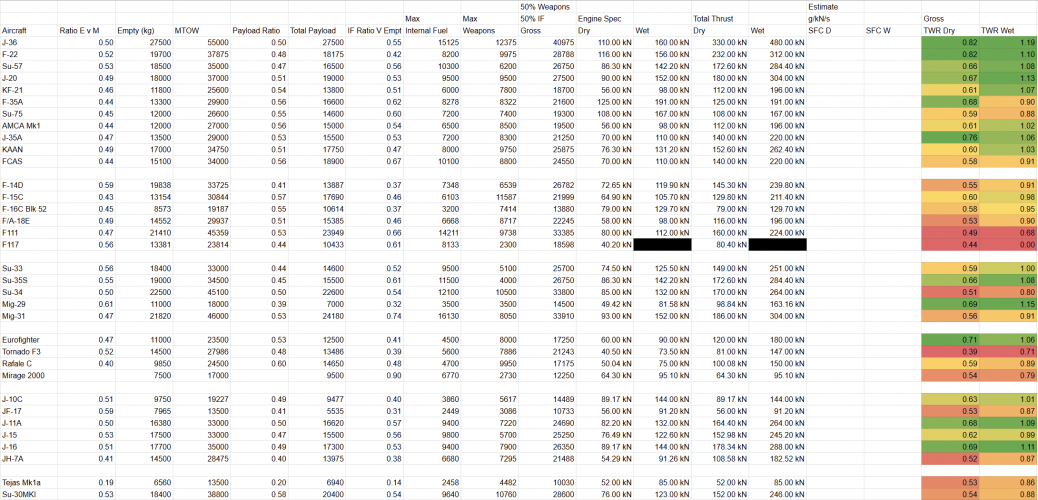
After recent criticisms in my other spreadsheet I've compiled another one with consistent calculations across the board, with a wider variety of aircraft.
The J-36 particularly has a very high TWR, excess thrust as mentioned before. Does not appear similar kinematically to the other strike aircraft on the list at all. For the J-36 I went with a simple calculation with simple assumptions, such as a MTOW of 55T, a middle ground between 50 and 60T and Mass ratios of 0.5, and generally a conservative thrust estimate for the engines.
Having a great T/W ratio does not necessarily make a supercruise aircraft. If your engine doesn’t sustain high net thrust at Mil power at supercruise inlet pressures and temperatures, adding another engine doesn’t make it faster at those conditions.
Having a great T/W ratio does not necessarily make a supercruise aircraft. If your engine doesn’t sustain high net thrust at Mil power at supercruise inlet pressures and temperatures, adding another engine doesn’t make it faster at those conditions.
I think prior posts around T/W ratio in wasn't about the aircraft's supercruise performance, but rather the relationship between T/W ratio and aircraft role (specifically air superiority versus dedicated strike bomber).
That said, if one had to draw a relationship between T/W ratio and supercruise it would be most accurate to say T/W ratio alone doesn't necessarily make a supercruise aircraft -- engine characteristics matter. However, it is also true that if your engine characteristics are compatible with supercruise but your overall aircraft and propulsion setup lacks the requisite T/W ratio then it won't necessarily be supercruise capable either.
All of which is to say -- it is assumed that J-36's target engines are supercruise compatible, which just takes us back to the matter of how many engines of a given type it needs for the requisite TWR.
Having a great T/W ratio does not necessarily make a supercruise aircraft. If your engine doesn’t sustain high net thrust at Mil power at supercruise inlet pressures and temperatures, adding another engine doesn’t make it faster at those conditions.
Never said any of that. I just wanted to show the TWR of strike/fighter bombers versus fighter aircraft. It's the comparisons with specifically aircraft like the F-111 and Su-34 versus other aircraft like stealth air superiority fighters specifically I wanted to draw attentions to.
Having a higher TWR doesn't necessarily make a super cruise aircraft, I agree, that's why I never said any of that. What it does however enable is faster acceleration, and the ability to maintain energy in maneuvers, something that is important in BVR, and why air superiority fighters generally have higher TWR than say, strike fighters, and bombers.
If a J-36 sized airframe mounted two 40,000lbf class engines, it'd have a moderate TWR of around the F-35, and it still would be higher than the Su-34 and F-111, and would be similar to that of the FB-22. But they chose to use 3x slightly smaller engines, to exceed the TWR of previous gen air superiority fighters. I still can't see how people are drawing conclusions that this is the design of a bomber.
As an example, why they called the F-117 a fighter I don't know but it should have been called the A-117, the F-117 was definitely not a fighter, it would easily be picked off.
That was intentionally misleading as during the Cold War the USAF had a highly secret programme (Well, programmes) where various surreptitiously obtained MiGs (Often involving the Israelis) were covertly tested in the US (I do beige at Edwards AFB and Groom Lake aka Area 51). To develop combat techniques to fight them, these MiGs were assigned there intentionally misleading tri-services designations of F-112-116 so also functioned as a smoke-screen for the Nighthawk.
If it were that small, now I'm wondering why it would need three engines. 2 40k engines should give it plenty of power. (Unless they're three, non-afterburning engines?)
21-22 m long and 20 m wingspan is not small for a plane by any means. We're talking a delta wing with such wingspan. We're not even including a long pointy nose or some tail sting. In between those figures is A LOT of volume. J-36 is visibly chunky.
So just like F-35 may appear small if just length and wingspan are taken into account - 15 x 10 m for F-16 vs 16 x 11 m for F-35A, there is still a big difference in volume and weight. F35A being basically 45% heavier, empty weight.
So, comparing F-22 with J-36 might also lead to quite a difference in volume and weight.
B-21 is really not a good comparison as its wing area to weight ratio is much much lower than for a fighter jet. Approx 400 m2 for probably 150 or so tonnes mtow, powered by some 250+ kn of thrust. Versus fighter jet numbers (F-22) approx 80 m2 for 38 tonnes mtow, powered by 320 kn.
B21 2.6 m2 wing area per ton. 0.6 kn of thrust per m2 wing. 1.7 kn per ton.
F22 2.1 m2 wing area per ton. 4 kn of thrust per m2 wing . 8.4 kn per ton.
Obviously, a fighter jet has a whole buttload of thrust more per weight. Even without reheat, it'd still be over 6 kn per ton.
So, which of those two extremes is J-36 closer to? Approx 180-200 m2 wing area, X weight and assumed 3 WS-15 engines. Using a speculative 170 kn thrust value and same 8.4 kn per ton - one gets 61 ton mtow.
Using wing area per kn as a metric, J36 might get some 2.7 m2 of wing per kn of thrust. Sure, not quite as much as F-22, but still much closer to F-22 than to bomber's figure.
Does China have 40k or 45k lbf engines? Of course one can't say either way, that it does or doesn't. Pure thrust doesn't have to equate technological level. A larger engine can match thrust of a smaller, more advanced engine. A shorter lasting engine can match thrust of a longer lasting engine, and so on. That said, we do know that 10 years ago China was using 142 kn engines from Russia on J20. Since then, they've replaced those with domestic ones. Jane's was reporting by 2021 of WS10C variant with the same thrust. And those engines saw several changes since then, at least changing the nozzle. (which may or may not mean other modifications)
We also saw completely new engine nozzles, implying WS15 being tested. It's plausible to expect WS15 to have some power advantage over even the most potent WS10 variants. We also had a industry sourced brochure of Chinese future engines from 2012, with a then-stated goal for WS15 being 180 kn. Whether that was achieved we can't know. But everything said so far does point to some 150 kn being the lowest estimate, with 180+ kn possibly being the high end estimate.
So... 45k lbf? Possibly not. But 35-40k lbf? I don't see why not. That's why I went with 38k lbf (170 kn) engines for the above example.
Do we knot for a fact J36 is supersonic? No. But we don't know for a fact it is not. And some things CAN be estimated just by eyeballing it. B2 has a wing sweep of 35 degrees. F-22 and J20 both have around 42 degrees wing sweep. J36 goes further still, well over 45 degrees. Just the fact J36 has those big twin wheel MLG suggests its MTOW is substantial. (which, again, isn't strange given the chunkyness of the plane. Yes that too can be eyeballed just fine) IF F-22 can get away with single wheel MLG for its 38 ton MTOW, then why wouldn't twice as many wheels of similar size not suggest at least 50% greater MTOW, if not more? if MTOW was just a little bit higher than F22s, then a logical solution would be two medium sized wheels per MLG bogie, each wheel being smaller than the one on the F22.
There was also a question of which fighter has side by side seating. Well, there's always a first time. It happened in attack helicopters too. Before Ka-52, not going with a tandem seat might have seemed counterintuitive.
Let's remember the initial F-111 design role was one of a multirole interceptor and bomber. USAF wanted a F105 replacement, USN wanted an interceptor to replace the F4. It was the USN who actually preferred side by side seating for the interceptor role. That idea actually started earlier with the F6D missileer, which was to dispense air to air missiles from afar, relying on a big radar.
And that's in a way what J36 seems to be geared towards as well. While the F6D and TFX program were way too early for the technology of the time, which then impacted doctrine - J36 may not be. Chinese designers may be counting on technology being advanced enough so the missileer concept can work. But now there's a whole bunch of other roles added to it, like electronic warfare, drone coordination and so on. And why saddle it with subsonic speed? J-36 being able to be part of the broader, supersonic formation would be preferred.
But even so, Chinese may not be 100% sure of the approach. Which is why there is also the so-called J-50. Sure, it's expensive to have two large combat jets planes, seemingly for a similar role set. But it covers all the bases. And we are way past era where ground strikes and air superiority can't be done by the same plane. So I'd wager that both Chinese planes will at some point be used for boming missions too. J36 being better suited there simply due to its larger bomb bays. But that alone doesn't make it a striker first and foremost.
However, it is also true that if your engine characteristics are compatible with supercruise but your overall aircraft and propulsion setup lacks the requisite T/W ratio then it won't necessarily be supercruise capable either.
The required TWR for supercruise is very low. See the Concorde: about 0.4. So TWR is an extremely poor or rather useless indicator for supercruise capability.
For a pure delta, field perfomance might be a very important factor that determines the minimum TWR...
21-22 m long and 20 m wingspan is not small for a plane by any means. We're talking a delta wing with such wingspan. We're not even including a long pointy nose or some tail sting. In between those figures is A LOT of volume. J-36 is visibly chunky.
Let me put an end to the misconception, misunderstanding and misrepresentation of Thrust to weight ratio (TWR).
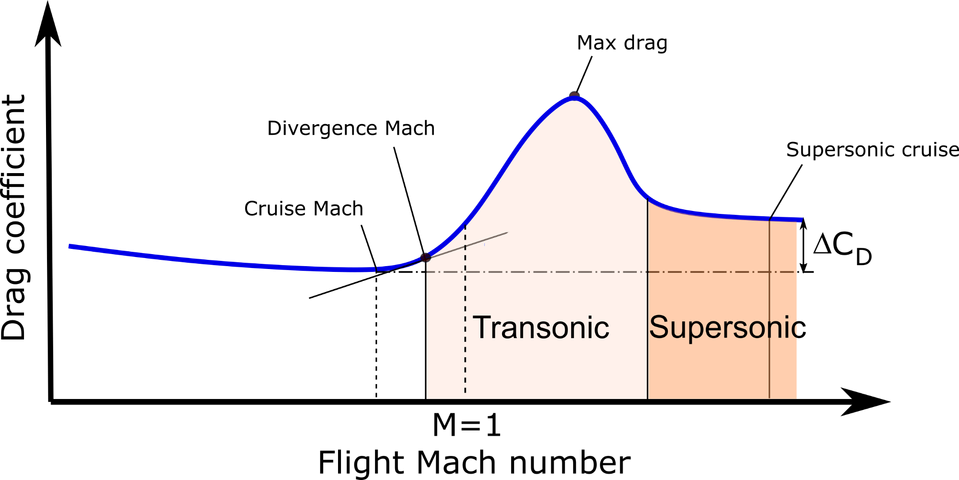
TWR is primarily ralated to acceleration and maneuvering. But it does relate to cruising speed.
That said it's true that only 0.5 TWR is needed right after the transonic region, but you have to get past the sound barrier in the first place.
And that requires a lot more power to overcome the wing-, body-, and wave-drag. Here's where engine inlet and power come into play.
From 6th gen. forward adaptive/variable cycle engine drag will start to play a roll, too.
Naturally, for higher supersonic speeds higher TWR is needed.
Let me put an end to the misconception, misunderstanding and misrepresentation of Thrust to weight ratio (TWR).
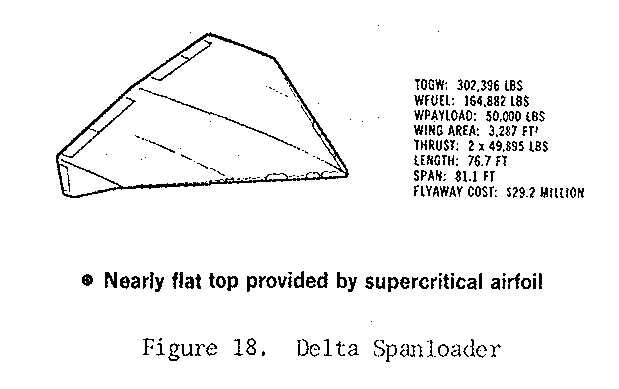
TWR is primarily ralated to acceleration and maneuvering. But it does relate to cruising speed. View attachment 790816
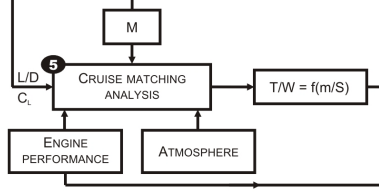
That said it's true that only 0.5 TWR is needed right after the transonic region, but you have to get past the sound barrier in the first place. View attachment 790817
And that requires a lot more power to overcome the wing-, body-, and wave-drag. Here's where engine inlet and power come into play.
From 6th gen. forward adaptive/variable cycle engine drag will start to play a roll, too.
Naturally, for higher supersonic speeds higher TWR is needed.
Do you even need that? The B-58 had about 63,000lbs of thrust available but could fly extended periods of time at supersonic speed at well above 126,000lbs. Then there are things like the Concord and XB-70. Or the SR-71.
This site uses cookies to help personalise content, tailor your experience and to keep you logged in if you register.
By continuing to use this site, you are consenting to our use of cookies.