20-21m has always been the more reasonable estimate, even ever since the first flight with it appearing to be about as long as the J-20 is. The 22-24m length figures I imagine were mostly from fanboys who were trying to fit air launched ballistic missiles into the long weapons bay to make it out to be some kind of strike fighter.View attachment 790518It's not as big as I imagined before?

You are using an out of date browser. It may not display this or other websites correctly.
You should upgrade or use an alternative browser.
You should upgrade or use an alternative browser.
Shenyang / Chengdu "6th Gen" Aircraft - News and Analysis
It should be a bit longer than 20 m, but not by much. I personally dislike importing images into GE and doing measurements that way as lots of details can go wrong. I've found the simpler pixel counting method to be a bit more precise. Still, even so, I'm getting 21 to 22 m, certainly not 23+ m. And wingspan between 19 and 20 m.
So called J-50 is basically just as long, I'm getting 20 to 21 m. (wingspan was always visibly shorter)
So called J-50 is basically just as long, I'm getting 20 to 21 m. (wingspan was always visibly shorter)

FighterJock
ACCESS: Above Top Secret
- Joined
- 29 October 2007
- Messages
- 7,227
- Reaction score
- 8,538
I would think that the engines have re-heat Sferrin it would be a mistake not to, also like you I wonder about the J-50 having three engines unless it will carry extremely heavy ordanance in it's weapons bays thus needing an extra third engine to help get it airborne?

- Joined
- 24 November 2008
- Messages
- 1,858
- Reaction score
- 4,327
Even though the dimensions are "small", the volume is largeIf it were that small, now I'm wondering why it would need three engines. 2 40k engines should give it plenty of power. (Unless they're three, non-afterburning engines?)


- Joined
- 3 June 2011
- Messages
- 20,895
- Reaction score
- 19,083
Even the B-21 only has two engines.Even though the dimensions are "small", the volume is large
Scott Kenny
ACCESS: USAP
- Joined
- 15 May 2023
- Messages
- 19,511
- Reaction score
- 27,958
Google Earth has some notable error bars on distance estimates, around 10%.View attachment 790518It's not as big as I imagined before?
Does China have 40k or 45k engines, though?If it were that small, now I'm wondering why it would need three engines. 2 40k engines should give it plenty of power. (Unless they're three, non-afterburning engines?)
I've been assuming 3x 30-35k engines.
Waterb-Doge
ACCESS: Restricted
- Joined
- 16 December 2024
- Messages
- 9
- Reaction score
- 37
It is a subsonic bomber with much lower thrust to weight ratioEven the B-21 only has two engines.
- Joined
- 3 June 2011
- Messages
- 20,895
- Reaction score
- 19,083
Except you're making a bunch of assumptions about the J-36. Do we know for a fact it's a supersonic aircraft with a high thrust to weight ratio? AND that it's so heavy that 80,000lbs of thrust is not enough? You can't just eyeball it.It is a subsonic bomber with much lower thrust to weight ratio

- Joined
- 2 August 2006
- Messages
- 3,335
- Reaction score
- 1,846
I'm thinking it is heavy and has three engines for long range supercruise, somewhere between M=1.2 and M=1.5. It's heavy because it has a large fuel fraction, which one would need for effective supercruise. However, they don't have engines powerful enough at dry settings for just two engines to supercruise, so it needs three. At least that's my thinking as to the why of the design choices made.
Except you're making a bunch of assumptions about the J-36. Do we know for a fact it's a supersonic aircraft with a high thrust to weight ratio? AND that it's so heavy that 80,000lbs of thrust is not enough? You can't just eyeball it.
I think we should all reveal our assumptions for why or why not 80,000lb may or may not be adequate for the J-36. Thus we can dispute each others assumptions.
I'm going with the assumptions that the J-36 3 engine configuration has a MTOW of 50,000kg. Uses 3 engines of 156kN class (468kN total wet) and has some simplified empty mass ratio vs MTOW of 0.49 (empty weight 24500), it's on the higher end for a fighter, but is to be expected considering the weight and need for reinforcements. Assuming 50% internal fuel and carrying it's 50% weapons payload, I'm calculating the gross weight to be roughly 37,250kg. This gives wet TWR of gross weight of 1.28
Assuming we want to preserve maximum armament payload and that reduce the engines from 3 to 2 reduces the empty weight overall by 1500kg, (the weight reduction I've chosen accounts for the larger thrust class engines weighing more) (meaning empty weight is now 23,000kg.) The MTOW decreases to 47,600kg, Maintaining the above TWR, The total wet thrust decreases to 443kN divided by 2 gives ~221kN. Edging close to 50,000lbf class engines, which in my opinion would need more reinforcements and the weight would not even drop that much.
Feel free to dispute my assumptions and calculations. But of course forum speak can only go so far and this is purely a Weight versus thrust comparison and does not take into account the potential savings in drag such as wave drag reduction by cross sectional area reduction, nor engine thrust curves at different speeds and altitudes.
The simple answer is they had thrust and power requirements that could not be met with two of any engine China has currently available, and they did not want to wait for suitable engines to be developed.

EmoBirb
ACCESS: Top Secret
- Joined
- 18 January 2025
- Messages
- 2,693
- Reaction score
- 6,919
The simplest and most plausible answer, gracefully hit the nail on the head imo.The simple answer is they had thrust and power requirements that could not be met with two of any engine China has currently available, and they did not want to wait for suitable engines to be developed.
Increasing the MTOW and engine thrust simply proves my point even further, I wanted to be more conservative with the numbers but running these numbers through my same assumptions and formulations, the required thrust for a 2 engine variant would need to be 52,500 lbf or 233kN per engine. The TW/R drops a bit which is why it isn't that much higher than the 50t estimate.J-36 could easily exceed 50t in MTOW, tender called for maximum of 60t. Also, WS-10C2 could apparently do ~15.5t hence I expect WS-15 to be a 16-17t engine while intended VCE will likely do even more thrust.

- Joined
- 27 December 2005
- Messages
- 19,225
- Reaction score
- 35,635
Bear in mind the increasing need for large quantities of electrical power generation as well. Multi-aperture radar arrays, jamming, possible laser weapons. Not all engine power has to translate to thrust.

Avimimus
ACCESS: Top Secret
- Joined
- 15 December 2007
- Messages
- 2,707
- Reaction score
- 1,378
J-36 could easily exceed 50t in MTOW, tender called for maximum of 60t.
Where is this information from?
EmoBirb
ACCESS: Top Secret
- Joined
- 18 January 2025
- Messages
- 2,693
- Reaction score
- 6,919
I feel like people think way too one dimensional and orthodox regarding the sixth generation of fighters. Endless discussions about missiles and engines and speed and range. When what's actually interesting and truly worth theorizing about is how much power do they generate, what advancements took place in the realm of cooling, how is the power distribution managed, what sensor arrays are being used and looked at in academic papers, what's the role in the broader fleet network of a given air force, what potential system will aid the pilot(s) with managing the enormous streams of information being gathered by such multispectral sensor arrays, is there ongoing and available research on systems aiming to address this issue, what role does AI play, what drones are likely closely linked to the network of systems built around these manned fighters etc. etc.
This game of top trumps was already dying with the last developed fourth generation fighters, with even their upgraded variants now leaning into network centric warfare, data management, energy management, cooling efficiency, AI integration, wingmen, becoming and utilizing sensor and information nodes to contribute the larger picture complemented by other air, land, sea, space and virtual based assets.
In short, I believe discussing stuff like thrust or how many missiles these things (J-36, J-50 or F-47) can carry are like the least interesting aspects worth theorizing about. The 6th Generation warrants that moniker not because they're tailless 5th Gens or anything of that kind, according to some sources (like influential Chinese engineers) the next generation of air warfare is much more complex, multilayered and distributed (as in less importance placed on individual platforms gaining an outright individual performance advantage and utilizing that to achieve their missions) than many make it out to be.
Just a bit of a rant, I guess.
This game of top trumps was already dying with the last developed fourth generation fighters, with even their upgraded variants now leaning into network centric warfare, data management, energy management, cooling efficiency, AI integration, wingmen, becoming and utilizing sensor and information nodes to contribute the larger picture complemented by other air, land, sea, space and virtual based assets.
In short, I believe discussing stuff like thrust or how many missiles these things (J-36, J-50 or F-47) can carry are like the least interesting aspects worth theorizing about. The 6th Generation warrants that moniker not because they're tailless 5th Gens or anything of that kind, according to some sources (like influential Chinese engineers) the next generation of air warfare is much more complex, multilayered and distributed (as in less importance placed on individual platforms gaining an outright individual performance advantage and utilizing that to achieve their missions) than many make it out to be.
Just a bit of a rant, I guess.

Reddington777
ACCESS: Top Secret
- Joined
- 23 March 2025
- Messages
- 830
- Reaction score
- 2,745
This brings me back to what I was wondering. The J-36's nose has no visible radome seam at all. Meanwhile the cheek arrays do have a covering that appears to be of a different material than the aircraft skin.what sensor arrays are being used
Might This mean that theres not a main forward facing array fitted? Or that its a new radome thats made from new materials different even from the J-XDS's radome, which is still of a noticeably different material than the aircraft skin.
The nose sensor arrangement is by far the more interesting part of the plane. From modeling the nose section, just the diameter of the cross sectional cut in front of the EO windows measures around 1.8 to 2m wide. The cross sectional area somewhere around 1.5m2 to 1.8m2. Assuming the array face is 70% of the cross sectional area, it can still fit a radar array between 1 and 1.3m2 inside the nose. And thats if we assume the radome starts just before the EO windows...
Last edited:
- Joined
- 3 June 2011
- Messages
- 20,895
- Reaction score
- 19,083
Even the FB-23 would have only used a pair of F135s. Presumably it would have been a supercruiser.I'm thinking it is heavy and has three engines for long range supercruise, somewhere between M=1.2 and M=1.5. It's heavy because it has a large fuel fraction, which one would need for effective supercruise. However, they don't have engines powerful enough at dry settings for just two engines to supercruise, so it needs three. At least that's my thinking as to the why of the design choices made.
This brings me back to what I was wondering. The J-36's nose has no visible radome seam at all. Meanwhile the cheek arrays do have a covering that appears to be of a different material than the aircraft skin.
Might This mean that theres not a main forward facing array fitted? Or that its a new radome thats made from new materials different even from the J-XDS's radome, which is still of a noticeably different material than the aircraft skin.
The nose sensor arrangement is by far the more interesting part of the plane. From modeling the nose section, just the diameter of the cross sectional cut in front of the EO windows measures around 1.8 to 2m wide. The cross sectional area somewhere around 1.5m2 to 1.8m2. Assuming the array face is 70% of the cross sectional area, it can still fit a radar array between 1 and 1.3m2 inside the nose. And thats if we assume the radome starts just before the EO windows...
I also get 0.428m^2 for the side arrays applying the same 70% assumption that's about 0.3m^2 for both side arrays alongside the main radar
EmoBirb
ACCESS: Top Secret
- Joined
- 18 January 2025
- Messages
- 2,693
- Reaction score
- 6,919
Neither had the earliest J-20s and I think it's for one too early to tell and second the images we've seen so far were heavily edited and usually of poor quality. I think we have to remain patient.The J-36's nose has no visible radome seam at all.
Agreed, it's very unconventionalThe nose sensor arrangement is by far the more interesting part of the plane.
Waterb-Doge
ACCESS: Restricted
- Joined
- 16 December 2024
- Messages
- 9
- Reaction score
- 37
Not supersonic while having a large backswept angle and caret&DSI intake? Not a fighter while having massive radar arrays and EOTS, with leading edge flap and vector thrust? Not a bug while talking like Mr.TrickZZter?Except you're making a bunch of assumptions about the J-36. Do we know for a fact it's a supersonic aircraft with a high thrust to weight ratio? AND that it's so heavy that 80,000lbs of thrust is not enough? You can't just eyeball it.
Except you're making a bunch of assumptions about the J-36. Do we know for a fact it's a supersonic aircraft with a high thrust to weight ratio? AND that it's so heavy that 80,000lbs of thrust is not enough? You can't just eyeball it.
This is where deference to the PLA watching Chinese language grapevine is important.
In terms of the relevant physical characteristics, we know that it is a supersonic capable aircraft with a primary air to air role.
In terms of specific weight, thrust or specific kinematic performance that is of course unknowable and has not been conveyed to us through the usual Chinese language grapevine.
But even without that, there is enough from the rest (i.e.: supersonic capable, air to air oriented) to give a bit more grounding for additional assumptions to be layered on top.
At this stage, if one is in the public space trying to guess from the ground up what these aircraft are (or indeed, about any new leading edge PLA projects that emerge), without first consulting with what the Chinese language grapevine is saying first, is not only a bit arrogant, but arguably dangerous.
- Joined
- 24 November 2008
- Messages
- 1,858
- Reaction score
- 4,327
Apples and orangesEven the B-21 only has two engines.
- Joined
- 3 June 2011
- Messages
- 20,895
- Reaction score
- 19,083
Which fighter has side-by-side seating?Not supersonic while having a large backswept angle and caret&DSI intake? Not a fighter while having massive radar arrays and EOTS, with leading edge flap and vector thrust? Not a bug while talking like Mr.TrickZZter?
- Joined
- 3 June 2011
- Messages
- 20,895
- Reaction score
- 19,083
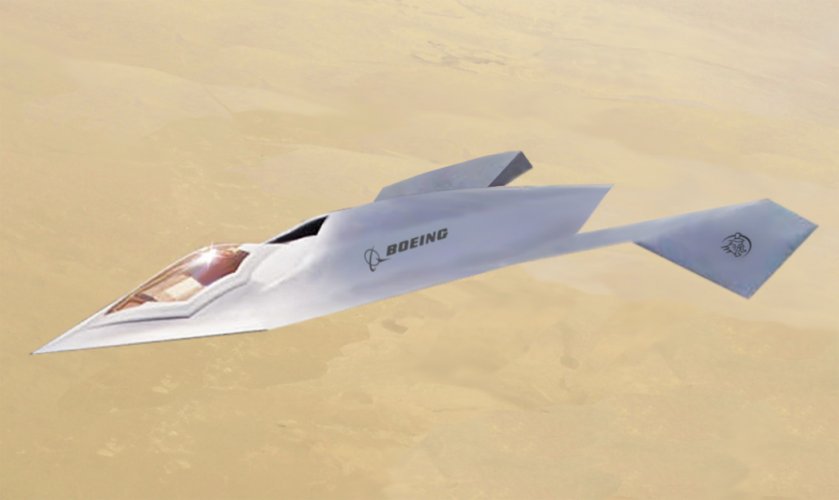
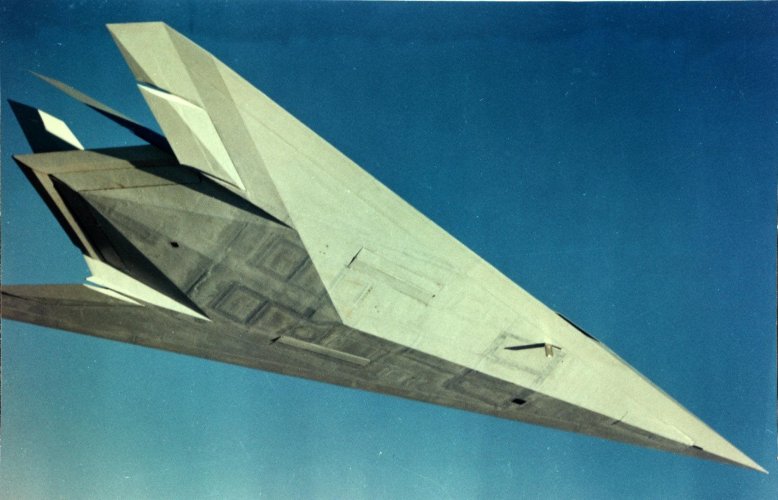
And this?Apples and oranges
Attachments
- Joined
- 3 June 2011
- Messages
- 20,895
- Reaction score
- 19,083
But even without that, there is enough from the rest (i.e.: supersonic capable, air to air oriented)
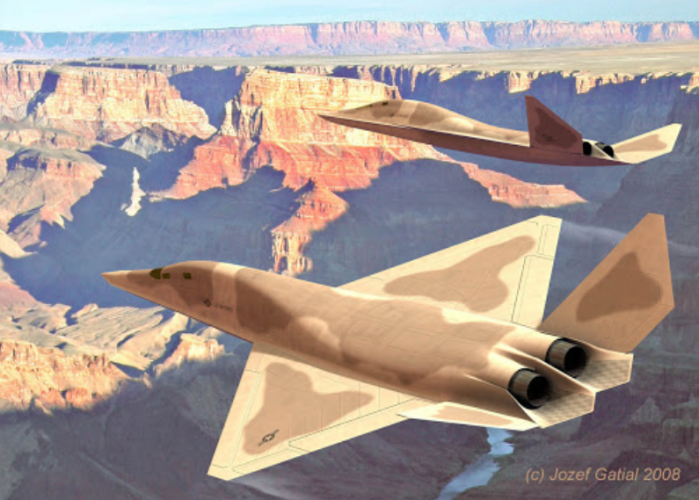
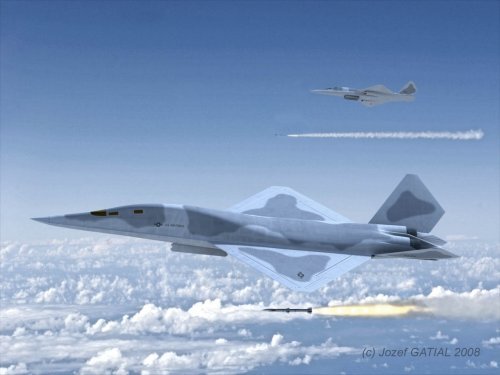
Even those are just assumptions. It's got side-by-side seating. Which other "fighter" has that? If you didn't already know what these were you would likely make some wildly incorrect assumptions about these as well.
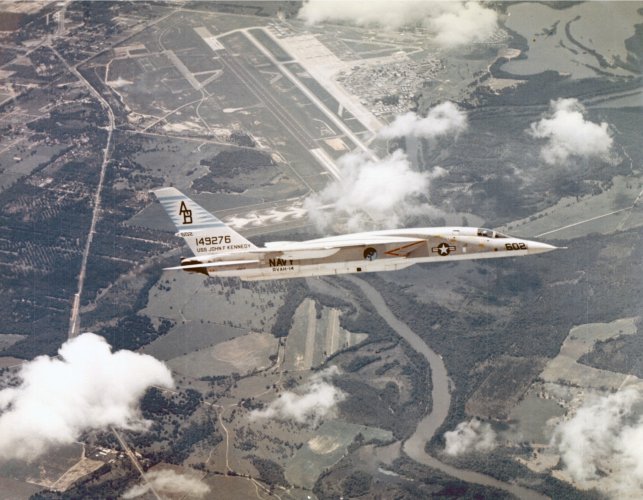
If I had to guess (which I do), I'd think the J-36 is more like a mini- Backfire in concept with some long-range air-to-air capability. It's not going to be "turning and burning" with anything. I think its big wing is for altitude and fuel, and the third engine might have a secondary electrical power generation role, as Paul suggested. Could even be a quarterback for CCAs.
Attachments

Tomboy
ACCESS: Top Secret
- Joined
- 4 January 2025
- Messages
- 543
- Reaction score
- 1,967
That's a tactical bomber while J-36 is a air superiority fighter. Couldn't get further from this lmaoAnd this?
- Joined
- 3 June 2011
- Messages
- 20,895
- Reaction score
- 19,083
That's a tactical bomber while J-36 is a air superiority fighter. Couldn't get further from this lmao
An air-superiority fighter with side-by-side seating? LMAO.
- Joined
- 24 November 2008
- Messages
- 1,858
- Reaction score
- 4,327
Indeed, F/B-23 would look neat with a 3rd engine + dorsal intake!And this?
Tomboy
ACCESS: Top Secret
- Joined
- 4 January 2025
- Messages
- 543
- Reaction score
- 1,967
Again, if it was simply a bomber then why three engines for >1 TWR and TVC?An air-superiority fighter with side-by-side seating? LMAO.
What's up with the renewed cope here lmao
- Joined
- 3 June 2011
- Messages
- 20,895
- Reaction score
- 19,083
Cope? You seriously think Chinesium stealth requires cope lmaoAgain, if it was simply a bomber then why three engines for >1 TWR and TVC?
What's up with the renewed cope here lmao
- Joined
- 3 June 2011
- Messages
- 20,895
- Reaction score
- 19,083
Might look neat but it didn't need one. That's my point.Indeed, F/B-23 would look neat with a 3rd engine + dorsal intake!
Tomboy
ACCESS: Top Secret
- Joined
- 4 January 2025
- Messages
- 543
- Reaction score
- 1,967
Lmao, don't tell me your one of those people who think Chinese planes are plastic mockups and all of their stealth is fake.Cope? You seriously think Chinesium stealth requires cope lmao
This is absolute peak
Also, you didn't answer my question
Waterb-Doge
ACCESS: Restricted
- Joined
- 16 December 2024
- Messages
- 9
- Reaction score
- 37
why not? twin seat is not rare in modern fighter, side by side is not a hard choice when it is wide enough and has twin seat at the begining but not modificated from a single seat version, for example F111B has same cockpit config and it is not a bomber but an interceptorWhich fighter has side-by-side seating?

- Joined
- 24 January 2006
- Messages
- 1,380
- Reaction score
- 709
Again, if it was simply a bomber then why three engines for >1 TWR and TVC?
Well, playing Devil's Advocate here:
-Three engines provide more electrical generation capacity for advanced sensors. That could apply to both fighter and bomber roles.
-Three engines for >1 TWR? Easy, supercruise and/or sustained supersonic flight. Why do you want to do that? Apart from efficiently crossing large distances quickly, it has an arguably much more significant tactical advantage: you impart greater kE to a missile at launch, giving it better range, or giving it more energy with which to maneuver in the terminal phase. Particularly if you launch it at higher altitudes. Again, a benefit that would apply to both fighter and bomber roles, as a bomber could fire something like a small ALBM or an anti-ship missile and give it a boost in range. Lockheed studied equipping the Blackbird with the AGM-69 at one point and the increase in range it got from being fired at Mach 3 and 80,000 feet was hilarious.
-TVC? Assuming TVC on the second prototype without a very clear shot of the engines like we have of the SAC airframe (I say that only because it is vaguely possible that the nozzles are designed for rear-quarter LO rather than TVC), the answer could be as simple as TVC was necessary to make the tailless configuration work as desired. Also, very small control inputs could be handled by TVC in certain combat scenarios, rather than using conventional control surfaces whose deflection could cause a more noticeable RF signature spike. So again, TVC could apply to either a fighter or a bomber role.
Basically, if I wanted a stealthy tactical bomber to hit out at naval formations or other regional targets, I might come up with an airframe like this. And if I wanted a stealthy interceptor, something along the lines of a MiG-31 type, I might come up with an airframe like this.
I'd say that side-by-side seating only proves this thing probably isn't intended to get into a close-in knife fight. In a turning fight you want unobstructed views in all directions as you have to make very quick reactions and decisions. But otherwise, all of those other features could easily be explained for either mission.
Or, holy crap, it could be a multi-role fighter intended to be something like a J-16 replacement. Then you'd all have to admit everyone was both right and wrong regarding the mission the jet flies
- Joined
- 3 June 2011
- Messages
- 20,895
- Reaction score
- 19,083
Which part of,Lmao, don't tell me your one of those people who think Chinese planes are plastic mockups and all of their stealth is fake.
This is absolute peak
Also, you didn't answer my question
If I had to guess (which I do), I'd think the J-36 is more like a mini- Backfire in concept with some long-range air-to-air capability. It's not going to be "turning and burning" with anything. I think its big wing is for altitude and fuel, and the third engine might have a secondary electrical power generation role, as Paul suggested. Could even be a quarterback for CCAs.
says, "bomber".
Waterb-Doge
ACCESS: Restricted
- Joined
- 16 December 2024
- Messages
- 9
- Reaction score
- 37
which bomber has EOTS? Which bomber has such massive radar? Which bomber has TVC? which bomber is made by CAC? I can ask far more question than you canWhich fighter has side-by-side seating?
EmoBirb
ACCESS: Top Secret
- Joined
- 18 January 2025
- Messages
- 2,693
- Reaction score
- 6,919
This is what the future of air superiority looks like, network centric warfare, distributed sensor platforms and long range engagements made possible by these distributed sensor platforms. Long range, time on station and the energy to fuel the own highly capable on board sensor suite as well as having the juice to fuel all the systems necessary to process, receive and transmit loads of information gathered on the entire battlefield by other assets, regardless of the domain they operate in.It's not going to be "turning and burning" with anything. I think its big wing is for altitude and fuel, and the third engine might have a secondary electrical power generation role, as Paul suggested. Could even be a quarterback for CCAs.
This is, in my opinion and the opinion of many others, reflected in the superficial design of the J-36 and according to influential PRC engineers it's the vision to which they sought to adapt future designs like this one.
Nothing about the aircraft says "striker" to me, it's not going to conduct bombing runs or lobbing ALBMs. Simply because it's large doesn't necessarily mean it's a bomber or fighter bomber. Given the amount of new Chinese high end drones I wouldn't even be surprised if it hands off any strike capabilities to these lower cost platforms. While serving as an AEW&C stand-in for these aircraft and engaging targets that seek to intercept such strike drones, or perhaps vector in A2A configured UCAVs and remain in the background and thus undetected.
The side by side seating seems evident of such a role in my opinion, a role that's about management. Management of energy, management of information, management of communication, management of drones, management of the battlefield space.
That's how I look at the aircraft at least, I could be wrong. I have no illusions of knowing the grand plans of the PLAAF or anything.
Edit: while manned 6th Generation aircraft will probably retain some A2G capabilities, I personally believe that the F-35 and Su-34 were the last fully fledged strike fighters/fighter bombers. I assume UCAVs will take this role over much quicker than other roles occupied by manned combat aircraft. F/A-XX could be the exception to that, but there's so little information about it, I think the jury is still out on that one (if it's a proper striker, then it's mostly because the Navy snoozed when it came to introducing a strike UCAV like the GJ-11 or Su-70 in time, a production X-47B could have occupied the naval strike role much earlier, but here we are.)
Last edited:
Similar threads
-
 Chengdu J-10 "Vigorous Dragon" fighter - News only
- Started by overscan (PaulMM)
- Replies: 939
-

-
Shenyang FC-31 demonstrators / J-35 naval fighter / J-35A land-based version
- Started by Foxglove
- Replies: 1K
-

-
 The early MiG's in China - MiG-9, MiG-15 and MiG-15UTI
- Started by Deino
- Replies: 11