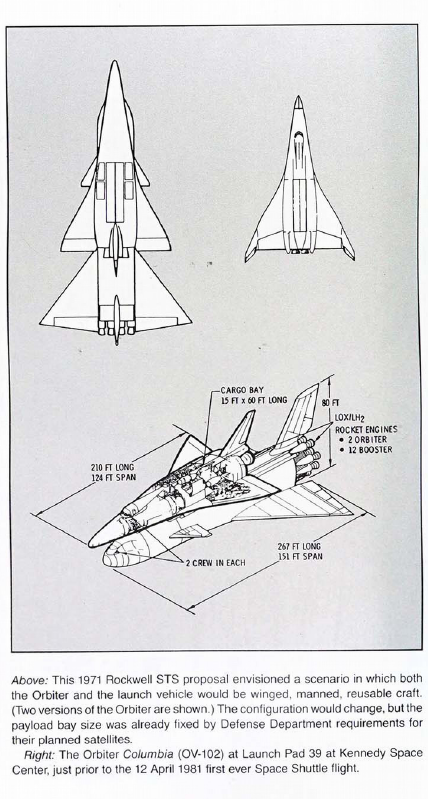
Enlarged due to HEXAGON.
Not just HEXAGON. The 15 foot diameter was a NASA requirement for space station modules and high energy upper stages
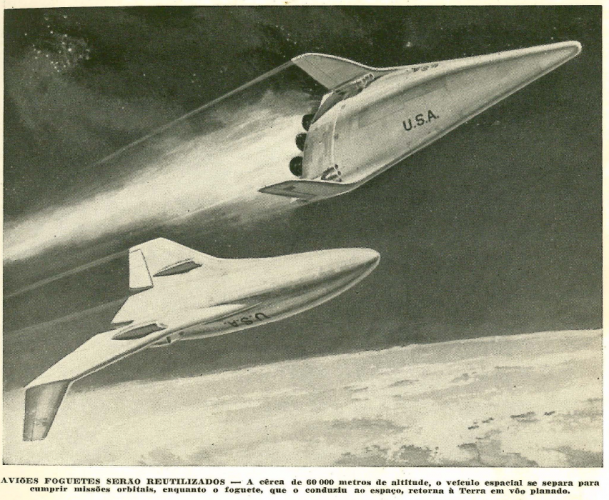
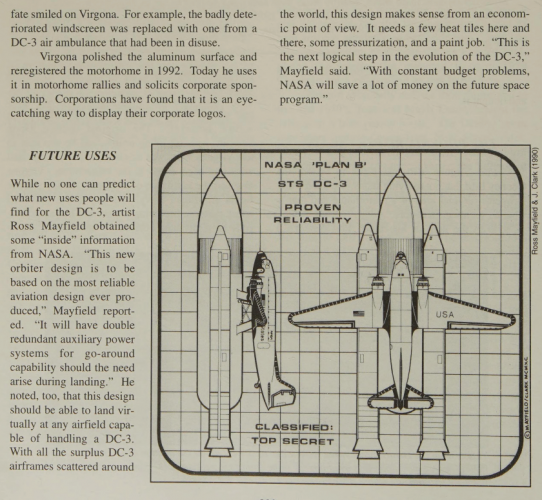
What we were left with wasn't much more than a glider sopped onto a skid-tank with two giant bottle rockets giving it a run-and-go...like I had to do with my old car to get it to crank. It wasn't ideal either, but it got me to work.
What is it with these inane derogatory comments?
It always was going to be a glider. Jet engines on spacecraft is just plain dumb.
Skid tank? A orbiter with integral tanks would have been too big
Bottle rockets were going to be problem and Marshall mismanagement of them didn't help.
 
In context the first couple of "test" flights had a connection cable that would allow NASA to fly the Orbiter back should something happen to the crew. This was removed the second the "test flights" were over with.
There was no such capability at the beginning of the program. That cable was developed until after Columbia.
 
I stand by my logic that minimizing main engine burn events and associated burn times reduces both quantitative cumulative replacement costs and qualitative critical failure modes/risks. One basic engineering philosophy, especially in aerospace, is to reduce/minimize the functional need of energy intense active system elements (like engines) by employing low/no energy consuming passive system elements
The best burn is no burn.

Glide--maybe plain jets on return--nothing more., except retros. An empty rocket is a (reasonably) safe rocket.

Depots have always spooked me.

Propellant handling is best done on the ground, all engines near the ground for ease of access

This right here?

That is why I wince seeing Raptors in that bloody skirt.
 
The best burn is no burn.

Glide--maybe plain jets on return--nothing more., except retros. An empty rocket is a (reasonably) safe rocket.
Wrong
A. gliding doesn't work on Mars.
b. Landing burn is no different than VTOL landing. The risk will be minimal by the time personnel will fly on Starship for landings, which will be after several unmanned hundred landing

This right here?

That is why I wince seeing Raptors in that bloody skirt.
Not applicable to Starship.
 
SSTO sound good on Begin.
one vehicle, no staging, return to Launch site etc
but you looking in details thing not looking good,
SSTO have low payload, need miracle engine to get it orbit. i look on you Aerospike and HOLOT !
Or take oxidiser like Fluorine or dig out NERVA engine as main propulsion (once they reach 80 Km hight)
Other propose refuelling of SSTO after Take off with Propellants

Oddly Convair look into SSTO and came to this conclusion: wenn to build them, then so big as possible !
What let to NEXUS proposal a reusable SSTO with one million Pound payload !

View: https://www.youtube.com/watch?v=zDJ4l6Mc-IM
 
SSTO sound good on Begin.
one vehicle, no staging, return to Launch site etc
but you looking in details thing not looking good,
SSTO have low payload, need miracle engine to get it orbit. i look on you Aerospike and HOLOT !
Or take oxidiser like Fluorine or dig out NERVA engine as main propulsion (once they reach 80 Km hight)
Other propose refuelling of SSTO after Take off with Propellants

Oddly Convair look into SSTO and came to this conclusion: wenn to build them, then so big as possible !
What let to NEXUS proposal a reusable SSTO with one million Pound payload !

View: https://www.youtube.com/watch?v=zDJ4l6Mc-IM

Convair was also asked to look at smaller "NEXUS" designs but only reluctantly did so. The did about a paragraph and a half on turning the Saturn V S1 and S2 stages into "NEXUS-light" to address some future concerns with later version of the Saturn V family which were height limited by the VAB. That this also made the stages recoverable was a bit of a bonus. :)

Randy
 

Attachments

  • 7.png
    7.png
    1 MB · Views: 24
  • 5.png
    5.png
    468.9 KB · Views: 27

Similar threads

Back
Top Bottom