
You are using an out of date browser. It may not display this or other websites correctly.
You should upgrade or use an alternative browser.
You should upgrade or use an alternative browser.
Various US Reusable Launch Vehicles (RLV) Projects
- Thread starter PMN1
- Start date
Three US startups (AFAIK, there might be others) are aiming for winged SSTO: Radian, Titans space and Cochrane exploration. I figured it might be interesting to have all three at the same place. Even if I'm extremely sceptical any of them will crack the SSTO conundrum...
Radian
https://www.radianaerospace.com/radian-one
Titans space
https://titansspace.com/titans-space-shuttle/https://www.linkedin.com/pulse/spac...age-to-orbit-titans-space-neal-lachman-6axxe/
Cochrane exploration
https://www.cochranex.com/cx-01
Radian
https://www.radianaerospace.com/radian-one
Titans space
https://titansspace.com/titans-space-shuttle/https://www.linkedin.com/pulse/spac...age-to-orbit-titans-space-neal-lachman-6axxe/
Cochrane exploration
https://www.cochranex.com/cx-01
martinbayer
ACCESS: Above Top Secret
- Joined
- 6 January 2009
- Messages
- 5,062
- Reaction score
- 6,967
Popcorn time! Even after decades in aerospace engineering, it never ceases to amaze me how many ways to failure people can come up with...Three US startups (AFAIK, there might be others) are aiming for winged SSTO: Radian, Titans space and Cochrane exploration. I figured it might be interesting to have all three at the same place. Even if I'm extremely sceptical any of them will crack the SSTO conundrum...
Radian
https://www.radianaerospace.com/radian-one
Titans space
https://titansspace.com/titans-space-shuttle/https://www.linkedin.com/pulse/spac...age-to-orbit-titans-space-neal-lachman-6axxe/
Cochrane exploration
https://www.cochranex.com/cx-01

- Joined
- 13 August 2007
- Messages
- 10,404
- Reaction score
- 18,041
ohh yeah let see how long it take get to launch or get bankrupt on way...Popcorn time! Even after decades in aerospace engineering, it never ceases to amaze me how many ways to failure people can come up with...


TimothyC
Arnie Holmes
- Joined
- 31 March 2010
- Messages
- 34
- Reaction score
- 65
Radian
Rail Assisted Launch. Leaving the first stage on the ground is a bit like cheating.
Titans space
Star Raker, down to the nose that folds to the side and the landing gear that are dropped on launch (meaning it's stage and a half at best). Good luck funding something that big.
Cochrane exploration
Scramjets. Let me know when someone gets one working.
I can only agree with the above. Oh, and by the way, Star raker had ramjets, because Mach 7 transition.
https://spaceflighthistory.blogspot.com/2020/09/star-raker-1978.html
https://spaceflighthistory.blogspot.com/2020/09/star-raker-1978.html

TheKutKu
ACCESS: Top Secret
- Joined
- 13 February 2023
- Messages
- 551
- Reaction score
- 1,848
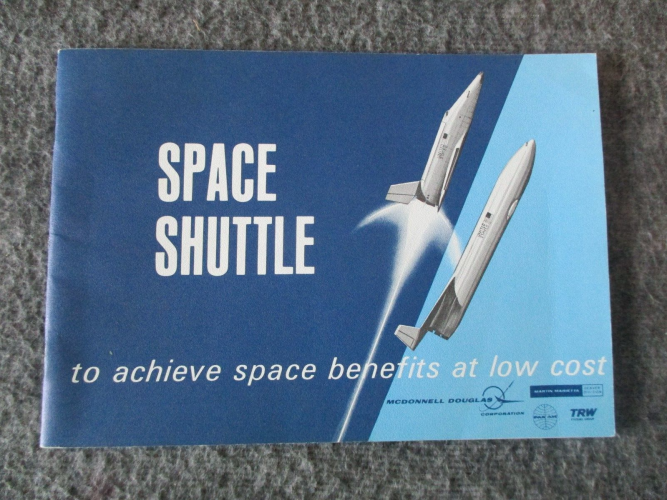
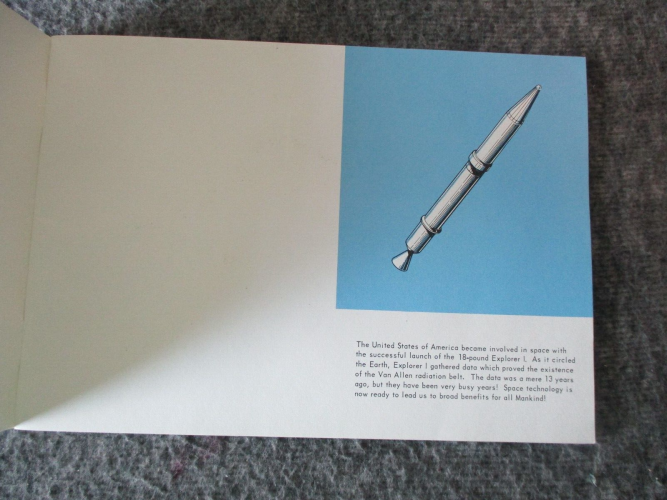
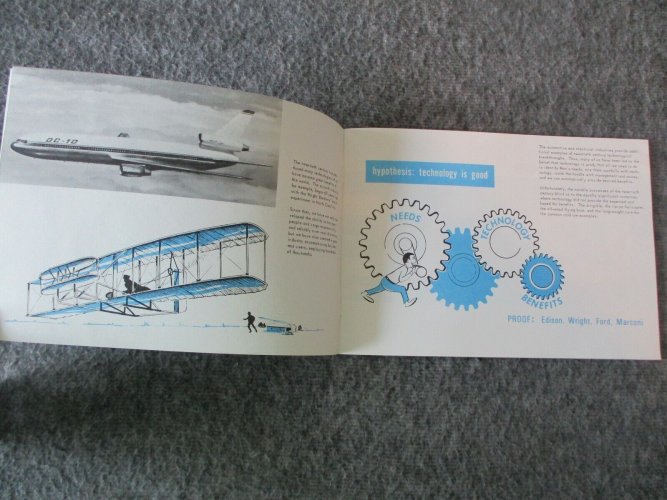
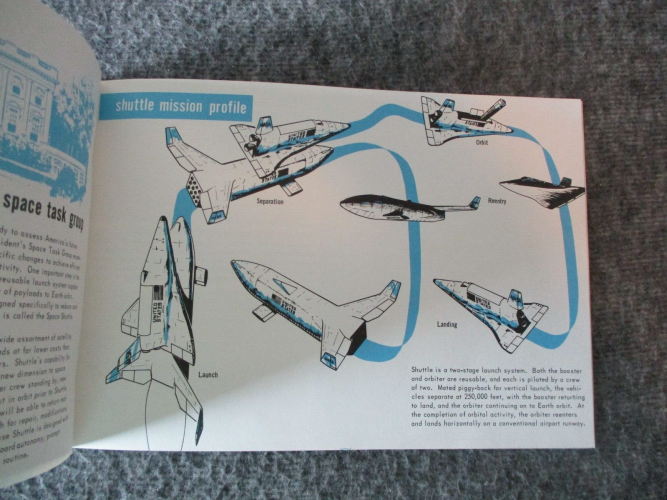
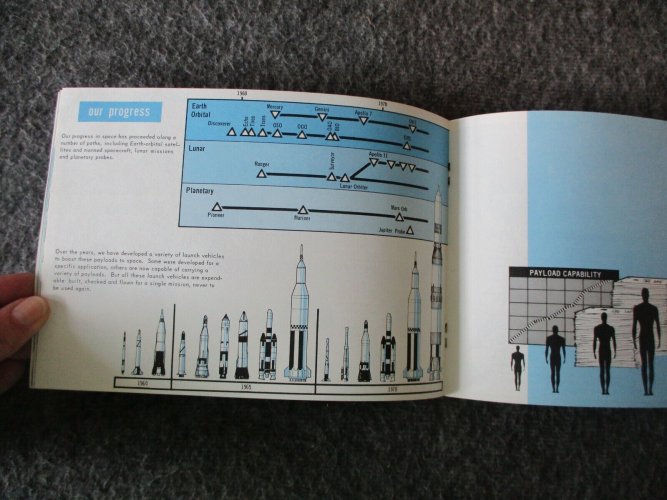
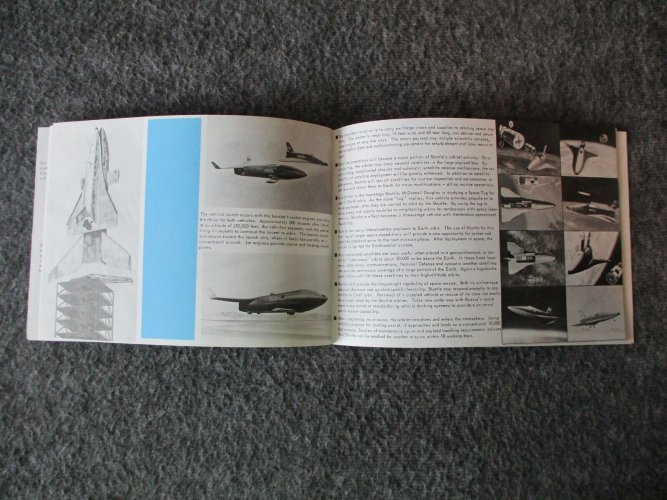
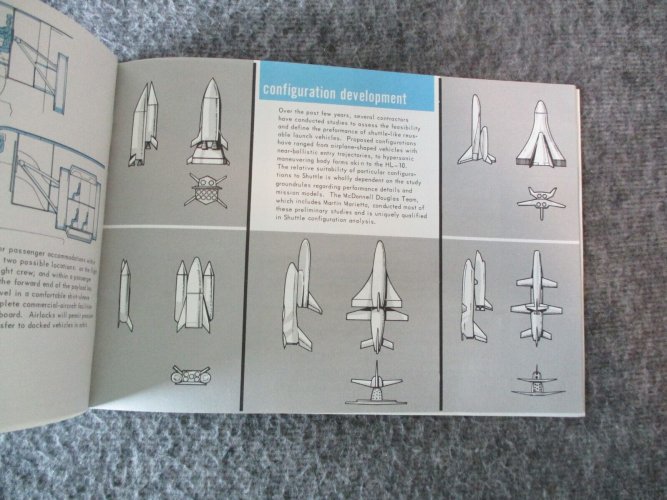
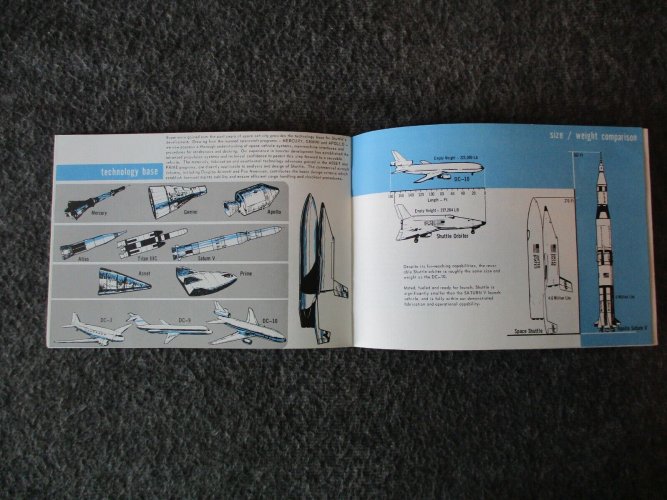
Was this brochure posted? I could swear I had seen it here, but looking through the subforum I can't find it.
From If+its+Outhere on ebay

From If+its+Outhere on ebay
Attachments
Rail Assisted Launch. Leaving the first stage on the ground is a bit like cheating.
Arguable since it also alleviates the need for "return to launch site" of a first stage which usually means faster turn around for said "stage".
Star Raker, down to the nose that folds to the side and the landing gear that are dropped on launch (meaning it's stage and a half at best). Good luck funding something that big.
IIRC it's actually not as big as the "Starraker" was due to not needing to loft huge pieces of SPS components.
Scramjets. Let me know when someone gets one working.
IIRC they've gotten them to "work" combustion wise, they just don't have enough thrust to actually accelerate them

Randy
I can only agree with the above. Oh, and by the way, Star raker had ramjets, because Mach 7 transition.
https://spaceflighthistory.blogspot.com/2020/09/star-raker-1978.html
According to the people who designed and built the "subsonic" combustion ramjets they figured they were good up to around Mach 10, but really do you want to stay in the atmosphere and deal with the overall heating issues at that point?
Randy
And speaking of ground-accelerators/scramjets/LOX production at hypersonic speeds/microwave thermal ablation propulsion/etc-etc
View: https://www.youtube.com/watch?v=w0XGYdO1SBY
Randy
Randy

Nik
ACCESS: Top Secret
- Joined
- 15 July 2009
- Messages
- 1,374
- Reaction score
- 1,208
This 'Omnibus' design ?
To quote a Classic Brit comedy series, "That's very brave , Minister..."
I'm sorry, about 15 mins in, my BS Deflector Shield maxed out and I had to stop.
Abject apologies in advance if they get it to work, but...
FWIW, I like the craft's proportions: Minus those intakes, it looks 'sorta-right'...
To quote a Classic Brit comedy series, "That's very brave , Minister..."
I'm sorry, about 15 mins in, my BS Deflector Shield maxed out and I had to stop.
Abject apologies in advance if they get it to work, but...
FWIW, I like the craft's proportions: Minus those intakes, it looks 'sorta-right'...
martinbayer
ACCESS: Above Top Secret
- Joined
- 6 January 2009
- Messages
- 5,062
- Reaction score
- 6,967
Please let me know *exactly* *which* *laws*, whether physical or manmade, Rail Assisted Launch would *cheat* on. All's fair in love and engineering, if it does the trick...Rail Assisted Launch. Leaving the first stage on the ground is a bit like cheating.

BlueAbyssal
ACCESS: Top Secret
- Joined
- 14 January 2024
- Messages
- 534
- Reaction score
- 930
Titans (aside from the s making it sound a bit weird) gets into some silly fights on X, especially about Starship. It’d be nice if they’d flown some hardware before crowing that they could undercut SpaceX.
TimothyC
Arnie Holmes
- Joined
- 31 March 2010
- Messages
- 34
- Reaction score
- 65
The "single" part of SSTO. Leaving the stage on the ground still uses a stage. As soon as you have a staging event, you don't get to call it SSTO.Please let me know *exactly* *which* *laws*, whether physical or manmade, Rail Assisted Launch would *cheat* on. All's fair in love and engineering, if it does the trick...
Please let me know *exactly* *which* *laws*, whether physical or manmade, Rail Assisted Launch would *cheat* on. All's fair in love and engineering, if it does the trick...
The "single" part of SSTO. Leaving the stage on the ground still uses a stage. As soon as you have a staging event, you don't get to call it SSTO.
It IS "cheating" as any assist is still an assist and in most cases it ends up being really BIG assist which in any other context would be considered a 'stage'. Hence the very idea of an "ASSTO" or "assisted" Single "stage' vehicle.
In context the 'assists' given by the ground accelerator and the beamed power ARE significant enough to get the vehicle to the needed speed.
Randy
In response to post 387-390 on page 10 of this threadI'm not sure if this is the right thread but I'm looking for pics of the Shuttle ET with what looks like wings and a shuttle based heat shield
https://up-ship.com/blog/?p=41903https://www.deviantart.com/alangutierrezart/art/Shuttle-with-Manned-Booster-325163105
Belly to belly would be better.
As shuttle fell out of favor, the adage "don't mix crew and cargo" became de rigueur.
With Starship, crew, cargo and tankage all together has been considered acceptable once again.
Might a fluffy winged fuel tank concept be reconsidered, with high-value crew/cargo/engine orbiters making a return?
The art here seems to indicate no SRBs...boostback Falcon-Heavy strap-ons would perhaps allow a winged, automated tank of lightweight construction.
Why is it that the adage "don't mix crew and cargo" no longer applies?
Last edited:
Because Starship isn't crew, cargo and tankageWith Starship, crew, cargo and tankage all together has been considered acceptable once again.
Starship is either a tanker, depot, launch vehicle, lunar lander and Mars transport,
There is no crew when it is a tanker, depot or launch vehicle.
Crew boards the lunar lander when it is in orbit.
Mars transport is no different than the Apollo lunar module with propellant and equipment.
And anyways, the adage don't mix crew and cargo" is for delivery missions like satellites, propellant or space station logistics
And..........Starship isn't going to be launching people until it is has flown hundreds of times and demonstrated some reliability.
Why? what is the point? Why make it more complex and expensive? What requirements drive such a configuration?Might a fluffy winged fuel tank concept be reconsidered, with high-value crew/cargo/engine orbiters making a return?
The links I provided show there were folks who thought some kind of TSTO could divvied up, though both winged vehicles would face harsher re-entry profiles in this case, to make an argument against the concept.
Maybe it was just salesmanship on the part of Rockwell...but that's equally true of SpaceX announcing the prices of payloads to be delivered to the surface of the Moon and Mars at such an early date.
Sometimes what-could-have-been is of more interest than what was.
Maybe it was just salesmanship on the part of Rockwell...but that's equally true of SpaceX announcing the prices of payloads to be delivered to the surface of the Moon and Mars at such an early date.
Sometimes what-could-have-been is of more interest than what was.
Last edited:
martinbayer
ACCESS: Above Top Secret
- Joined
- 6 January 2009
- Messages
- 5,062
- Reaction score
- 6,967
It is only "cheating" if you enter *any* RLV design evaluation with the made up absolutist, purist mindset that the outcome *has to be* an SSTO. As someone how has worked in that sector for years, I never understood that sort of simplistic, almost magical thinking. If the best overall design, taking into account LCC, TRLs, reliability, mission safety, environmental impact, etc., turns out to be a TSTO (which is the camp that I firmly find myself in), so be it. Any good design starts with requirements that have to be met, but *not* with a preordained solution.It IS "cheating" as any assist is still an assist and in most cases it ends up being really BIG assist which in any other context would be considered a 'stage'. Hence the very idea of an "ASSTO" or "assisted" Single "stage' vehicle.
In context the 'assists' given by the ground accelerator and the beamed power ARE significant enough to get the vehicle to the needed speed.
Randy
Last edited:
martinbayer
ACCESS: Above Top Secret
- Joined
- 6 January 2009
- Messages
- 5,062
- Reaction score
- 6,967
The design objective is to have a cost/reliability/safety/sustainability/etc. optimized RLV, but that does NOT automatically mean an SSTO! What exactly is your logic here??? Engineering design is most assuredly *NOT* driven by name calling!The "single" part of SSTO. Leaving the stage on the ground still uses a stage. As soon as you have a staging event, you don't get to call it SSTO.
Last edited:
You know, I am beginning to think a coil-based warp drive might actually be more plausible than an Earth-based SSTO at this point.
I would submit that some species of reusable stage-and-a-half+ approach would check the most boxes. SLS costs a lot, but only has four big liquid engines, (I don't like solids for anything but munitions either--but it is what it is).
Starship/SuperHeavy costs less, but is quite complex and with no abort profile, it may never be as safe as traditional approaches.
So what might an RLV look like
that is safe, inexpensive, and simple?
Maybe Rockwell was onto something.
We know Falcon strap-ons do work. They have the best TR level. SuperHeavy seems to be similarly dialed in.We know shuttle orbiters work, because they flew over a hundred times.
Starship proves you can return a big, hollow eggshell through a harsh re-entry. It exploded at flight's end, so one more reason to keep eggshell tankage away from either crew or cargo.
So we are left perhaps with earlier ideas of shuttle--and have come full circle.
https://www.esa.int/esapub/bulletin/bullet97/dujarric.pdf
I would submit that some species of reusable stage-and-a-half+ approach would check the most boxes. SLS costs a lot, but only has four big liquid engines, (I don't like solids for anything but munitions either--but it is what it is).
Starship/SuperHeavy costs less, but is quite complex and with no abort profile, it may never be as safe as traditional approaches.
So what might an RLV look like
that is safe, inexpensive, and simple?
Maybe Rockwell was onto something.
We know Falcon strap-ons do work. They have the best TR level. SuperHeavy seems to be similarly dialed in.We know shuttle orbiters work, because they flew over a hundred times.
Starship proves you can return a big, hollow eggshell through a harsh re-entry. It exploded at flight's end, so one more reason to keep eggshell tankage away from either crew or cargo.
So we are left perhaps with earlier ideas of shuttle--and have come full circle.
https://www.esa.int/esapub/bulletin/bullet97/dujarric.pdf
Last edited:
martinbayer
ACCESS: Above Top Secret
- Joined
- 6 January 2009
- Messages
- 5,062
- Reaction score
- 6,967
See Exhibit A, FSSC-16 (easily discoverable in a simple forum search). Rockwell (which, full disclosure, I joined after I left the ESA FESTIP program when Rockwell had already become Boeing North American) was quite literally halfway there with their wing/body STS heritage X-33 concept.So what might an RLV look like
that is safe, inexpensive, and simple?
Maybe Rockwell was onto something.
Last edited:
martinbayer
ACCESS: Above Top Secret
- Joined
- 6 January 2009
- Messages
- 5,062
- Reaction score
- 6,967
Christian Dujarric was our ESA (in US terms) COTR on FESTIP, and you may notice that in the linked PDF my FSSC-16 design concept (which was my assignment/take on evolving/improving FSSC-9) is displayed in Figures 11 and 12. I wasn't too thrilled about the additional booster design requirement to lug a throwaway Ariane 5 core (which these days might as well be an Ariane 6 core) to LEO, SSO or GTO injection conditions besides the reusable LEO orbiter, but I made it work - something that was *NOT* required for FSSCs 1, 3, 4, 5, 12, or 15. I stand by my work.You know, I am beginning to think a coil-based warp drive might actually be more plausible than an Earth-based SSTO at this point.
I would submit that some species of reusable stage-and-a-half+ approach would check the most boxes. SLS costs a lot, but only has four big liquid engines, (I don't like solids for anything but munitions either--but it is what it is).
Starship/SuperHeavy costs less, but is quite complex and with no abort profile, it may never be as safe as traditional approaches.
So what might an RLV look like
that is safe, inexpensive, and simple?
Maybe Rockwell was onto something.
We know Falcon strap-ons do work. They have the best TR level. SuperHeavy seems to be similarly dialed in.We know shuttle orbiters work, because they flew over a hundred times.
Starship proves you can return a big, hollow eggshell through a harsh re-entry. It exploded at flight's end, so one more reason to keep eggshell tankage away from either crew or cargo.
So we are left perhaps with earlier ideas of shuttle--and have come full circle.
https://www.esa.int/esapub/bulletin/bullet97/dujarric.pdf
Last edited:
martinbayer
ACCESS: Above Top Secret
- Joined
- 6 January 2009
- Messages
- 5,062
- Reaction score
- 6,967
What *exactly* is your definition of a half stage? To me, any distinct vehicle entity that is capable to physically effect a velocity increment on its own, even if unguided, is a full stage, including i.e. liquid or solid parallel boosters, even if they don't have GNC functionality. The only true half stages I can think of are drop tanks (like the STS ET) or drop engines (like the jettisonable booster engine section of the original Atlas). Thoughts?You know, I am beginning to think a coil-based warp drive might actually be more plausible than an Earth-based SSTO at this point.
I would submit that some species of reusable stage-and-a-half+ approach would check the most boxes. SLS costs a lot, but only has four big liquid engines, (I don't like solids for anything but munitions either--but it is what it is).
Starship/SuperHeavy costs less, but is quite complex and with no abort profile, it may never be as safe as traditional approaches.
So what might an RLV look like
that is safe, inexpensive, and simple?
Maybe Rockwell was onto something.
We know Falcon strap-ons do work. They have the best TR level. SuperHeavy seems to be similarly dialed in.We know shuttle orbiters work, because they flew over a hundred times.
Starship proves you can return a big, hollow eggshell through a harsh re-entry. It exploded at flight's end, so one more reason to keep eggshell tankage away from either crew or cargo.
So we are left perhaps with earlier ideas of shuttle--and have come full circle.
https://www.esa.int/esapub/bulletin/bullet97/dujarric.pdf
martinbayer
ACCESS: Above Top Secret
- Joined
- 6 January 2009
- Messages
- 5,062
- Reaction score
- 6,967
Because it is an unnecessary idiotic constraint. I once flew in a 747 Combi in the first row ahead of the cargo bulkhead, and it was one of the most enjoyable/relaxed flights I've had the pleasure to be on in my life so far.Why is it that the adage "don't mix crew and cargo" no longer applies?
Agreed.Because it is an unnecessary idiotic constraint.
To answer your question, Atlas rockets were true-stage-and-a-half LVs, the giant drop tank (ET) would count, though they are polar opposites---one keeps tankage and one sustainer engine, STS kept engines, crew and payload but got rid of most of the tankage.
I like the second concept in that a compact orbiter isn't a big eggshell. While SuperHeavy re-use has been proven--might Starship get weaker with each flight due to annealing?
My idea of the KISS method is that large propellant tanks need outside the airframe.
With stage and a half, you ignite engines once only. Pressure-fed strap-ons are simple and rugged. All engines are at ground/pad level, out in the open.
Yes, that drives aerodynamicists out of their minds, but makes for a better work environment--which I think is all important--and simpler from a UX standpoint.
Starship/SuperHeavy handling strikes me as very awkward.
Imagine if I asked you to move a lighthouse, paint the Sistine Chapel, then work on a vertical railway yard (chopsticks) all at once.
Parallel staging means you might need a step ladder, and a lower LUT.
If you want to look at engines of any stage--stool and flashlight covers most of your needs. That type of work environment may make all the difference.
If you are high, high above pad level --you might be more tempted to say "good enough" as opposed to a squat LV stack with most complexity right at human height.
If a worker can wander over to the pad on a whim at any old time--he might just catch something that would be missed by a guy who is white as a sheet atop the Empire State Building.
You were relaxed in that 747.
Now, imagine I hung it vertically over Boca, then told you to swap out an engine half way up.
Both Glushko and the F-4 Phantom proved aerodynamics don't matter anyway
A couple of minutes after launch, it matters even less.
On return, aerodynamics matters again. Shuttle orbiters were more like a full frame car--think Ford LTD or Chevy Caprice, as opposed to the hypersonic dirigible that is Starship.
The Martian Astrorocket was the least eggshell-like TSTO on account of the relatively small tanks needed for hypergolics. These days, most folks look at hypergolics with the same disgust you have for solids.
But I would still rather carry a box full of sweaty dynamite at ground level than walk a tightrope at Boca.
Last edited:
Not really, see my post.Because it is an unnecessary idiotic constraint. I once flew in a 747 Combi in the first row ahead of the cargo bulkhead, and it was one of the most enjoyable/relaxed flights I've had the pleasure to be on in my life so far.
That isn't KISS, it is more complex.My idea of the KISS method is that large propellant tanks need outside the airframe.
With stage and a half, you ignite engines once only
Unproven statement. You don't know if they are feasible or cost effective.Pressure-fed strap-ons are simple and rugged.
. All engines are at ground/pad level, out in the open.
Yes, that drives aerodynamicists out of their minds, but makes for a better work environment--which I think is all important--and simpler from a UX standpoint.
Starship/SuperHeavy handling strikes me as very awkward.
Imagine if I asked you to move a lighthouse, paint the Sistine Chapel, then work on a vertical railway yard (chopsticks) all at once.
Parallel staging means you might need a step ladder, and a lower LUT.
If you want to look at engines of any stage--stool and flashlight covers most of your needs. That type of work environment may make all the difference.
If you are high, high above pad level --you might be more tempted to say "good enough" as opposed to a squat LV stack with most complexity right at human height.
If a worker can wander over to the pad on a whim at any old time--he might just catch something that would be missed by a guy who is white as a sheet atop the Empire State Building.
This shows where internet based knowledge fails. One must be selective in what to read on spaceflight because if one were well read on ALL spaceflight development, one would know that Starship and its booster spends little time at the pad. And that Starship can be stacked on the Booster only a day or two before launch. And because of the ease and quickest of "assembly", SpaceX has destacked Starship from the Booster many times in the past to do work on it. It is automated and requires no hands on techs.You were relaxed in that 747. Now, imagine I hung it vertically over Boca, then told you to swap out an engine half way up.
SpaceX treats the pad like a runway, no repairs or inspections on done on it. The same with ULA's SLC-41 and Blue's SLC-36. The umbilical towers/masts are just for that and not access.
Also, booster engine access regardless of launch vehicle, requires more than a stool. Nothing is at human height. The vehicle is over a flame trench and platforms would be required to be installed and removed to access engines. SpaceX doesn't even access the booster engines at the pad.
So, all the words and reasonings above regarding work environment are meaningless and don't apply to current vehicles. Operations with single stack are easier and cheaper than parallel. Also, parallel vehicles are more structurally complex. The SLS core tankage is simpler than the shuttle ET. But the SLS core is more complex than the Delta IV or Falcon Heavy due to the SRBs.
And workers don't go to the pads on a whim.
These statements show a lack of knowledge of what is really involved to assemble, test and launch a vehicle and it shows. And the comment on carrying a box of dynamite is representative of this:
A. why would anyone be carrying a sweaty box anywhere?
B. Why are circus acts referenced?
c. With regard to working at heights, I guess "stage and a half/parallel" vehicles are not going to have crew since that would require going high on a tower and access arm and that is deemed too scary.
Last edited:
Wrong characterization. Starship is like an airliner in construction. And you are right about the orbiters, they were vary inefficient as aircraft much like a flying car.On return, aerodynamics matters again. Shuttle orbiters were more like a full frame car--think Ford LTD or Chevy Caprice, as opposed to the hypersonic dirigible that is Starship.
No need for hypergolics as the primary propellants for launch vehicles. For spacecraft, it is ok.The Martian Astrorocket was the least eggshell-like TSTO on account of the relatively small tanks needed for hypergolics. These days, most folks look at hypergolics with the same disgust you have for solids.
martinbayer
ACCESS: Above Top Secret
- Joined
- 6 January 2009
- Messages
- 5,062
- Reaction score
- 6,967
STS successfully did crew & cargo as its *basic* design mission.Not really, see my post.
Last edited:
Not really. It lost a crew needlessly on flight (cargo delivery) that didn't human interaction to perform it. And most cargo was removed from the future fights after that.STS successfully did crew & cargo as its *basic* design mission.
When spaceflight becomes nearly as safe as airliners, then "Combi" flights are ok. Until then, if a crew is not needed to interact with the payload like a satellite or propellant delivery, there is no sense to subject them to the risk. "Baggage" (hardware, equipment, experiments, fluids, etc) used by the crew is not cargo in the sense of this topic.
Additionally, cargo delivery can be done cheaper by vehicles that don't fly crew. Spaceflight already uses drone, UAV, UAS, RPAV, etc equivalents as a baseline.
It is only "cheating" if you enter *any* RLV design evaluation with the made up absolutist, purist mindset that the outcome *has to be* an SSTO.
Which was very much (and often still is) the case for SSTO advocates.
As someone how has worked in that sector for years, I never understood that sort of simplistic, almost magical thinking. If the best overall design, taking into account LCC, TRLs, reliability, mission safety, environmental impact, etc., turns out to be a TSTO (which is the camp that I firmly find myself in), so be it. Any good design starts with requirements that have to be met, but *not* with a preordained solution.
Good burn on Starship
I agree with you, most SSTO advocates do not agree with you since SSTO is the "logical" preordained solution. Therefore anything that wasn't a "strict" SSTO was, more often than not, an "assisted" SSTO even if that meant something that was functionally another "stage"
The design objective is to have a cost/reliability/safety/sustainability/etc. optimized RLV, but that does NOT automatically mean an SSTO! What exactly is your logic here??? Engineering design is most assuredly *NOT* driven by name calling!
Eh. no? See the "key" here was for NASA-et-al to end up having a "SINGLE" stage to orbit vehicle. Hence the gyrations to keep the design goal of an SSTO in mind rather than "entertain" anything like a TSTO or (shudder) a 1.5 stage design. Hence the screams of outrage when anyone would suggest putting SABRE engines on a "first" stage instead of on the (repetitive I know) SINGLE stage Skylon. (And half of the Skylon fans would have heart failure at any change in or from the Skylon.)
(Edit: knew I missed something)
Hence the idea that having an SSTO "automatically" meant something that was going to be far more "cost/reliability/safety/sustainability/etc" by the very virtue of it being an SSTO was gospel at the time. Never proven correct but that hasn't stopped the "debate".
Given what I've seen of the FSSC-16 design I'm pretty sure you've heard how "silly" that design is with "wasting" efforts on wings instead of doing VTVL? (If only more recently) "Key" issue was the name but back in the 90s you tended to get funding if it was for an SSTO than a multistage design.
Randy
Why is it that the adage "don't mix crew and cargo" no longer applies?
Because it is an unnecessary idiotic constraint. I once flew in a 747 Combi in the first row ahead of the cargo bulkhead, and it was one of the most enjoyable/relaxed flights I've had the pleasure to be on in my life so far.
So your own "example" shows why the adage is still TRUE not that it is false. I hope you don't think that rocket launch is anywhere close to as safe and reliable as airplanes have become. (And that only in the last 40 years or so and THAT due to too many crashes and losses of life)
STS had "crew/cargo" mixed because (surprise-not) the Astronaut office demanded that the Shuttle fly with a crew every flight and NASA caved to this, mostly for the "good" reason of "NO Buck, NO Bucks". In context the first couple of "test" flights had a connection cable that would allow NASA to fly the Orbiter back should something happen to the crew. This was removed the second the "test flights" were over with. The Shuttle was pretty much as "safe" as airplanes of the early 80s, two totally losses of vehicle and crew over 135 flights of five vehicles. This was of course neither politically nor publicly "acceptable" hence why the Shuttle was retired, it's even less acceptable now hence the requirement of an abort system for crewed flights.
Me? I've flown on hundreds of "combi" flights and they were neither "relaxing" nor "enjoyable" but then again I was on an ACTUAL "combination" flight on aircraft that were made to haul cargo with "people" as an afterthought. "Packed to the gills" rotator flights were paradise comparatively but those aircraft were built the carry the most (civilian) passengers possible with the airframe given and not cargo.
You can stuff a "Passenger pod" onto a cargo rocket but have to account for aborts and other issues that you don't necessarily have to have in mind with the standard design of something that will only carry cargo.
Randy
I will say this....if you really want to travel overseas, freighter liners are relatively inexpensive as compared to "Fun Ships" that tool around in a circle. Lots of folks defrauded by the "free cruise" gimmick.
Shuttle allowed down-mass--perhaps helped by not having hollow tanks underneath that could stove in if you land heavily in one of Elon/Yutani's contraptions.
An orbiter is a reasonable compromise--less than a real-life Orbit Jet that Musk wants Starship to be --but more than a diving bell capsule.
Then too, you could also make an argument to the effect that compromise (whittling down the shuttle) is what doomed STS to start with.
Shuttle allowed down-mass--perhaps helped by not having hollow tanks underneath that could stove in if you land heavily in one of Elon/Yutani's contraptions.
An orbiter is a reasonable compromise--less than a real-life Orbit Jet that Musk wants Starship to be --but more than a diving bell capsule.
Then too, you could also make an argument to the effect that compromise (whittling down the shuttle) is what doomed STS to start with.
Last edited:
Again, another unsupported statement. They keep coming much like those of the View TV showShuttle allowed down-mass--perhaps helped by not having hollow tanks underneath that could stove in if you land heavily in one of Elon/Yutani's contraptions.
What qualifications is this statement based on?An orbiter is a reasonable compromise--less than a real-life Orbit Jet that Musk wants Starship to be --but more than a diving bell capsule.
No, that argument can't be made. Shuttle wasn't whittled down, it was enlarged.]Then too, you could also make an argument to the effect that compromise (whittling down the shuttle) is what doomed STS to start with.
Enlarged due to HEXAGON. The phrase "whittling down of the shuttle" was a quoted caption to a drawing in a book on spaceflight I lost due to a plumbing disaster.
The drawing showed showed how a TSTO concept got "whittled down" to what actually launched. The TSTO in the book was drawn quite a bit larger.
What we were left with wasn't much more than a glider sopped onto a skid-tank with two giant bottle rockets giving it a run-and-go...like I had to do with my old car to get it to crank. It wasn't ideal either, but it got me to work.
The drawing showed showed how a TSTO concept got "whittled down" to what actually launched. The TSTO in the book was drawn quite a bit larger.
What we were left with wasn't much more than a glider sopped onto a skid-tank with two giant bottle rockets giving it a run-and-go...like I had to do with my old car to get it to crank. It wasn't ideal either, but it got me to work.
martinbayer
ACCESS: Above Top Secret
- Joined
- 6 January 2009
- Messages
- 5,062
- Reaction score
- 6,967
Whoa, lots of stuff to unpack there. But I'll start by asking *precisely what* the deal with the *connection cable* you mention is supposed to be - connecting *precisely what* to *precisely what else*, and transmitting *precisely what data* for *precisely what purpose*??? Thank you in advance though for your concise and to the point reply.So your own "example" shows why the adage is still TRUE not that it is false. I hope you don't think that rocket launch is anywhere close to as safe and reliable as airplanes have become. (And that only in the last 40 years or so and THAT due to too many crashes and losses of life)
STS had "crew/cargo" mixed because (surprise-not) the Astronaut office demanded that the Shuttle fly with a crew every flight and NASA caved to this, mostly for the "good" reason of "NO Buck, NO Bucks". In context the first couple of "test" flights had a connection cable that would allow NASA to fly the Orbiter back should something happen to the crew. This was removed the second the "test flights" were over with. The Shuttle was pretty much as "safe" as airplanes of the early 80s, two totally losses of vehicle and crew over 135 flights of five vehicles. This was of course neither politically nor publicly "acceptable" hence why the Shuttle was retired, it's even less acceptable now hence the requirement of an abort system for crewed flights.
Me? I've flown on hundreds of "combi" flights and they were neither "relaxing" nor "enjoyable" but then again I was on an ACTUAL "combination" flight on aircraft that were made to haul cargo with "people" as an afterthought. "Packed to the gills" rotator flights were paradise comparatively but those aircraft were built the carry the most (civilian) passengers possible with the airframe given and not cargo.
You can stuff a "Passenger pod" onto a cargo rocket but have to account for aborts and other issues that you don't necessarily have to have in mind with the standard design of something that will only carry cargo.
Randy
martinbayer
ACCESS: Above Top Secret
- Joined
- 6 January 2009
- Messages
- 5,062
- Reaction score
- 6,967
I stand by my logic that minimizing main engine burn events and associated burn times reduces both quantitative cumulative replacement costs and qualitative critical failure modes/risks. One basic engineering philosophy, especially in aerospace, is to reduce/minimize the functional need of energy intense active system elements (like engines) by employing low/no energy consuming passive system elements (like wings) instead. I actually never heard any criticisms about FSSC-16 having wings back in the day, but that was admittedly in last Millenium ESA Western Europe.Which was very much (and often still is) the case for SSTO advocates.
Good burn on Starship
I agree with you, most SSTO advocates do not agree with you since SSTO is the "logical" preordained solution. Therefore anything that wasn't a "strict" SSTO was, more often than not, an "assisted" SSTO even if that meant something that was functionally another "stage"
Eh. no? See the "key" here was for NASA-et-al to end up having a "SINGLE" stage to orbit vehicle. Hence the gyrations to keep the design goal of an SSTO in mind rather than "entertain" anything like a TSTO or (shudder) a 1.5 stage design. Hence the screams of outrage when anyone would suggest putting SABRE engines on a "first" stage instead of on the (repetitive I know) SINGLE stage Skylon. (And half of the Skylon fans would have heart failure at any change in or from the Skylon.)
(Edit: knew I missed something)
Hence the idea that having an SSTO "automatically" meant something that was going to be far more "cost/reliability/safety/sustainability/etc" by the very virtue of it being an SSTO was gospel at the time. Never proven correct but that hasn't stopped the "debate".
Given what I've seen of the FSSC-16 design I'm pretty sure you've heard how "silly" that design is with "wasting" efforts on wings instead of doing VTVL? (If only more recently) "Key" issue was the name but back in the 90s you tended to get funding if it was for an SSTO than a multistage design.
Randy
Last edited:
Similar threads
-
-

-

-
 Candidate Space Shuttle Orbiters Wind Tunnel Studies 1969 NASA Langley Research
- Started by Sferrin
- Replies: 2
-
 Lockheed-California Earth-to-space shuttle of 1964
- Started by hesham
- Replies: 18