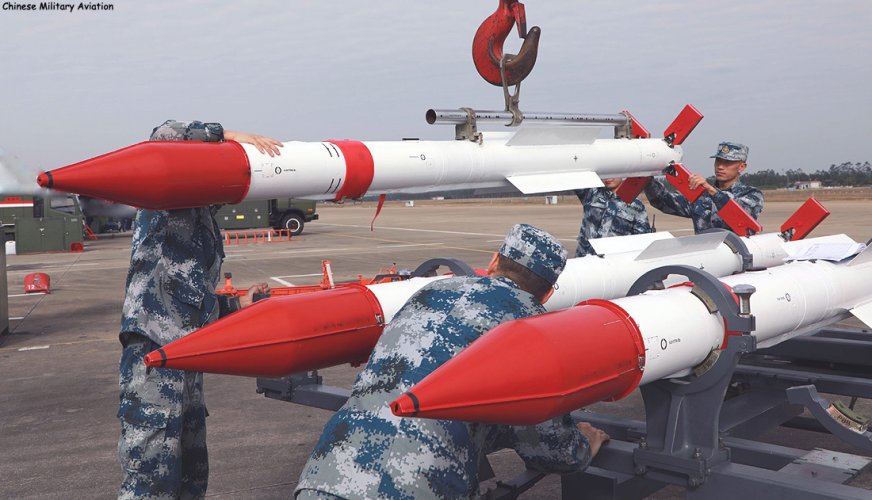
J16 has more than enough of these.
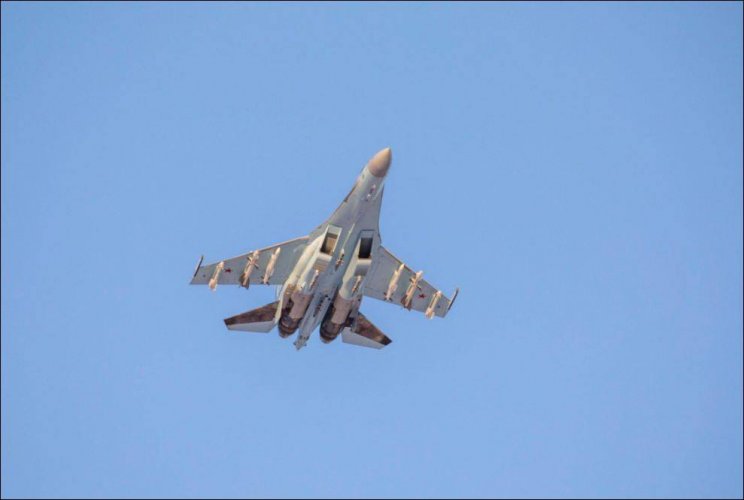
The extra advantage, i would say minor advantage su35 will have in wvr.
Though lots of other factors will come into play too.
No significant advantage in bvr.
Will have significant advantage in dog fight, i guess.
Not enough compared to the Su-35S.
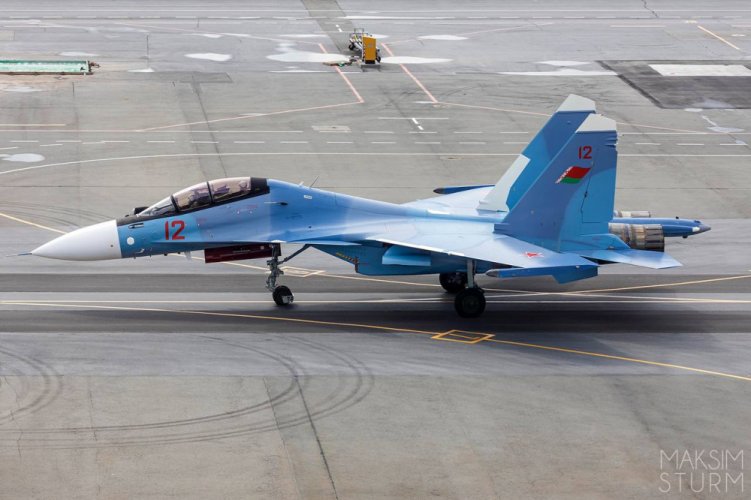
J-16 has inherited "flaws" of the two seater Flanker because the Russians wanted their Su-27UB trainer to have an elevated seating position so that trainee/operator would have superior field of view, and they also wanted to keep the same amount of fuel as the single seater, which would not be possible if they have opted for the F-15E type of layout.
Obvious downside is significant increase of the planes midsection, increased weight (on average the two seater is 1,2 tones heavier), and added weight in front of the CG.
All that has significantly reduced the overall flight performance of the plane where we have around Mach 0,35 reduction of the top speed, around 600 km reduction in range, reduction of acceleration, climb rate, service ceiling, turn performance etc. and I'm pretty sure that increase of the midsection wasn't that "kind" towards the RCS of the plane.
Add to that the fact that Su-35S has more powerful engines with TVC and the J-16 will lose in a dog fight every single time under the condition that both planes are flown with the equally capable pilots.
The same thing happens when you pit the Su-30SM against the Su-35S. Su-30SM is losing badly even if it has TVC engines.
Just to put it into perspective, here is the video of the Su-35S and Su-30SM taking off one after another (here the videos are merged) where we can see Su-35S not using the AB, while Su-30SM's are using AB.
View: https://www.youtube.com/watch?v=FmrJQEtjO34
Now, all that disadvantages are also hampering the J-16 in BVR engagement where the acceleration, speed, height, supersonic persistence and maneuvering are having significant impact on the missile kinematic and on capability to engage and disengage.
Su-35S can accelerate faster up to the supersonic speed, it can also fly higher and can stay significantly longer in supersonic area because not only does it have superior lift to drag ratio, where you don't need as much engine RPM for the same speed (you also spend less fuel), but the Su-35S can carry about 2,1 tons of fuel more!
Su-35S also has significantly superior supersonic maneuverability because it can use the TVC for the trim drag reduction (according to the Sergey Bogdan, the test pilot), and when you add the fact that the Su-35S radar has two times wider field of view, it is easy to understand how it can provide the missile midcourse guidance, while at the same time going away from the incoming missile (we have seen that from the HUD videos from the SMO engagements), and on the contrary, the J-16 needs to fly towards the incoming missile if it wants to provide the missile with the target update.
It is clear that the Su-35S has more potential for the BVR "cat and mouse" game, and among other things that is the main reason F-22 is capable of dominating the F-35 in BVR fight (according to the F-22 pilots), simply by superior kinematics!
Though those air to air kill, lot of them are shooting down drones and cruise missiles.
And ones against fighter jets, are old ukranian migs and flanker whose situational awareness are not the best.
You obviously haven't read the article I have posted?
Out of 12 air to air kills Alan Datiyev scored 11 kills of manned aircraft (9 jets and two helicopters) and just one Bayraktar drone kill.
Now, you are hugely oversimplifying Russian accomplishments since the Ukraine pilots are tactically well versed and on international exercises they were able to score kills against the US F-15C in both BVR and WVR, and they are flying under the cover of some of the best SAM systems and ground jamming systems, both of Soviet and Western origin. Add to that the fact that the West is providing the ISR (Intelligence, Surveillance, and Reconnaissance) 24/7, and you can see that the Russians are facing the opponent US/NATO never did, and China basically doesn't have any experience of the sort!
Almost all 200+ km kills are done under very difficult conditions where the targeting planes were trying to disengage or escape flying extremely low, which means that the jet/missile radars had to work against the ground clutter and hit the small, fighter sized targets, and at the same time the Russian plane was in a danger of being shot by the SAM's.
Up to date, no one has achieved such a long range kills in high intensity conflict!
Ukraines have the F-16 with the AIM-120, but they make absolutely no difference, and they know it. Russians planes are far superior in BVR realm for such types of jets.