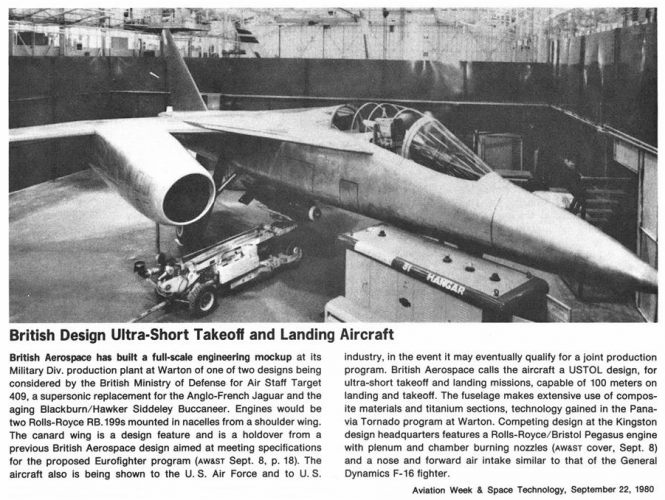
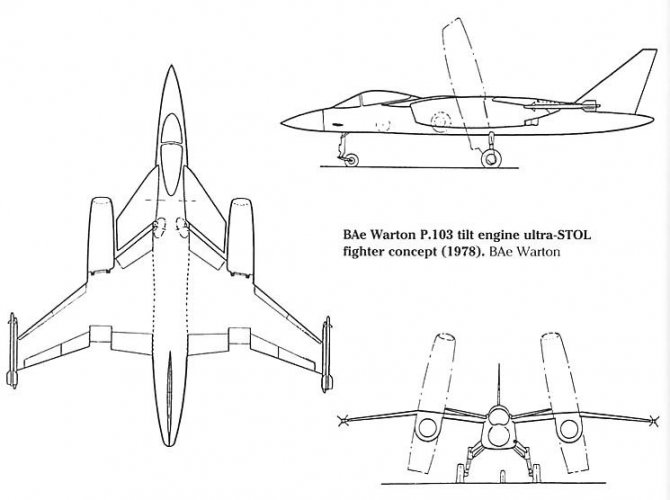
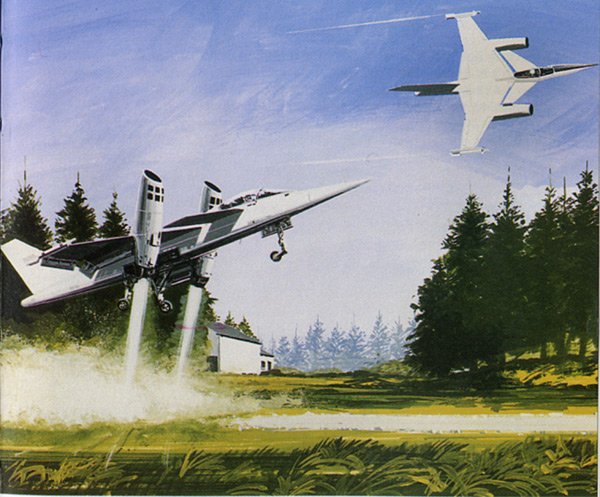
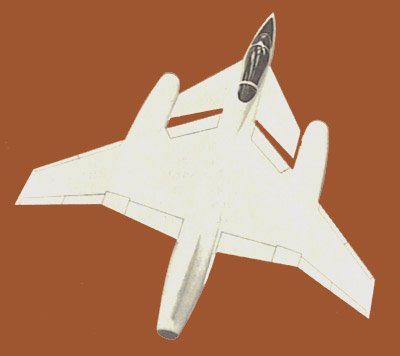
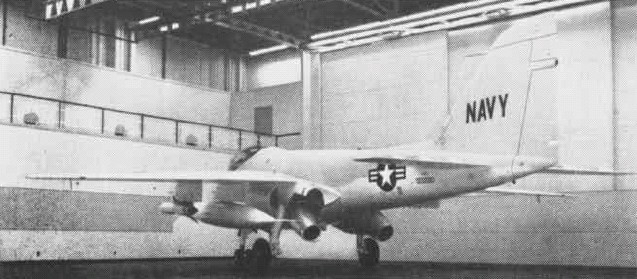
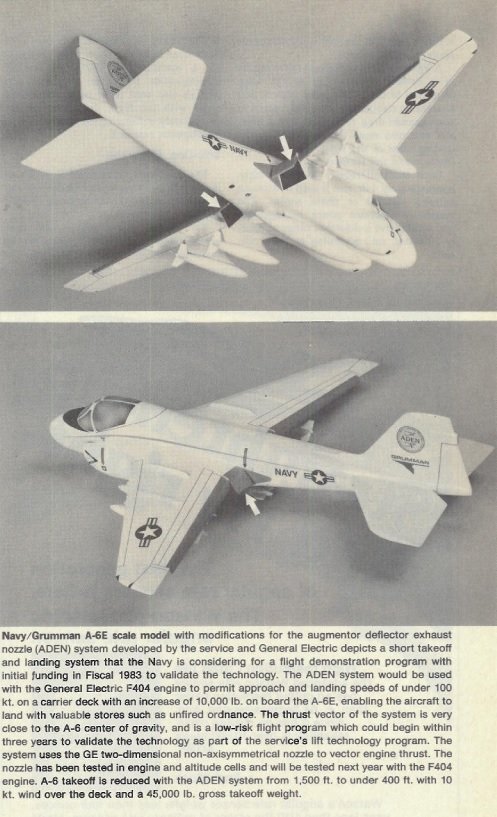
Many nations were trying to make the take-off and landing distances shorter in the jet age, while still not relinquishing performance and/or payload. Some were better 'baked', like the swing-wing (with shortcoming being that allowed G load was not as good as on the fixed wings, even if titanium was used; maintenance was also much increased; wing pylons were usually either avoided or were just for the light load, with F-111 being a notable exception), or the wings with full-span high-lift devices, but the required runaways still remained sizable. Same for the fully-blown flaps & slats.
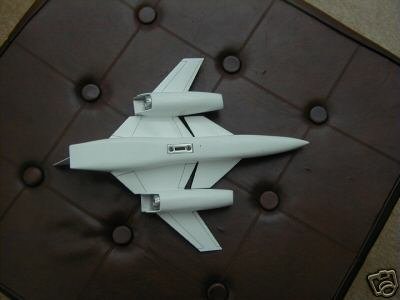
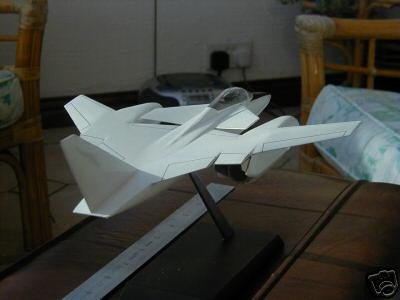
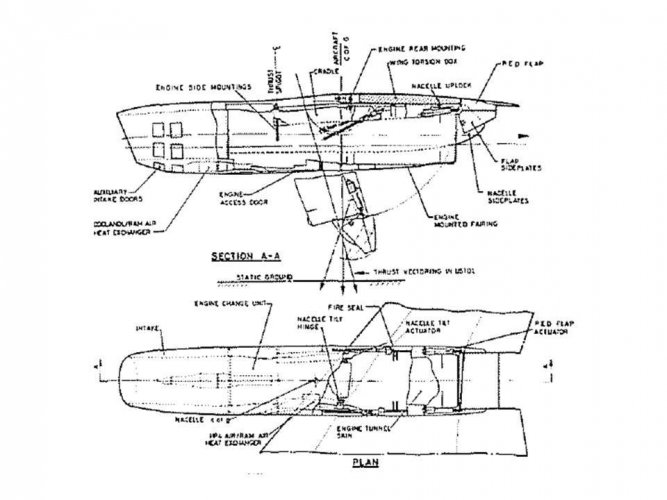
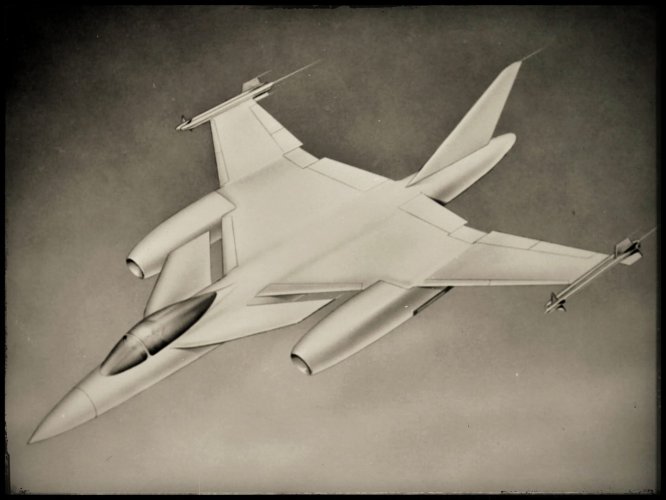
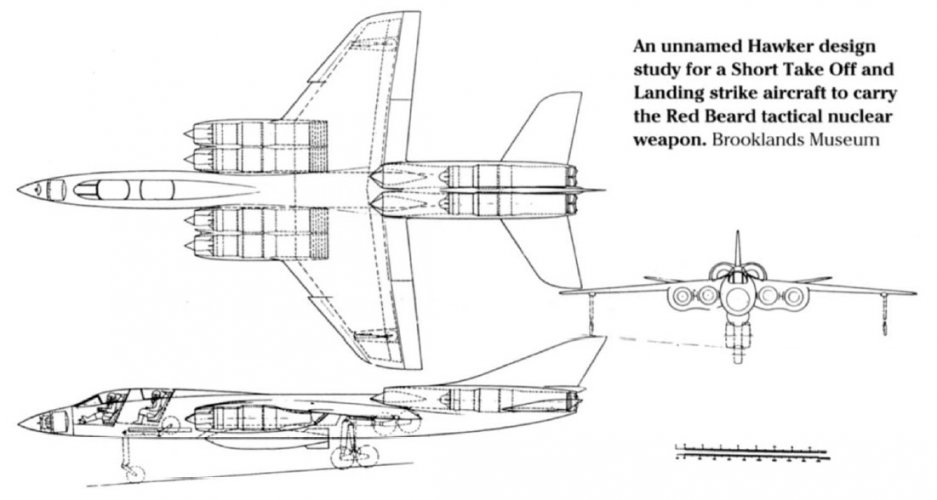
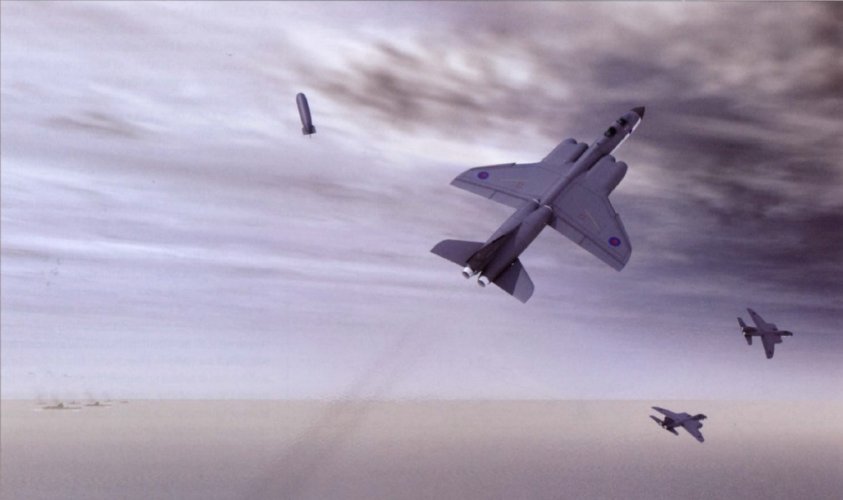
So here is my suggestion: a high-wing aircraft, that has the movable nozzles in the front (or whatever is the alternative feasible system that can push down the compressed air down when required) while the rear nozzle is fixed as one can see on a MiG-21 or on a Mirage. Afterburner is standard part of the engine - talk alt-Pegasus that does ~90 kN dry, and ~140 kn on reheat. About one half of the dry thrust can be used to help out during taking off and landing, ie 45 kN = ~10000 lbf = aircraft is 'lighter' by some 4.5 tons as far as wings are concerned. That is with initial engine of the 1960s.
Wing is of normal size, not that small like on the 1st Harriers, but also thin so the drag is not outrageously high at high speeds.
It is not only about what the British can do with this system (make this aircraft instead of Jaguar in case the partnership is not made?), but also the other aircraft-making countries.
So here is my suggestion: a high-wing aircraft, that has the movable nozzles in the front (or whatever is the alternative feasible system that can push down the compressed air down when required) while the rear nozzle is fixed as one can see on a MiG-21 or on a Mirage. Afterburner is standard part of the engine - talk alt-Pegasus that does ~90 kN dry, and ~140 kn on reheat. About one half of the dry thrust can be used to help out during taking off and landing, ie 45 kN = ~10000 lbf = aircraft is 'lighter' by some 4.5 tons as far as wings are concerned. That is with initial engine of the 1960s.
Wing is of normal size, not that small like on the 1st Harriers, but also thin so the drag is not outrageously high at high speeds.
It is not only about what the British can do with this system (make this aircraft instead of Jaguar in case the partnership is not made?), but also the other aircraft-making countries.