tomo pauk

ACCESS: Top Secret
Joined
1 May 2011
Messages
1,122
Reaction score
891
Many nations were trying to make the take-off and landing distances shorter in the jet age, while still not relinquishing performance and/or payload. Some were better 'baked', like the swing-wing (with shortcoming being that allowed G load was not as good as on the fixed wings, even if titanium was used; maintenance was also much increased; wing pylons were usually either avoided or were just for the light load, with F-111 being a notable exception), or the wings with full-span high-lift devices, but the required runaways still remained sizable. Same for the fully-blown flaps & slats.

So here is my suggestion: a high-wing aircraft, that has the movable nozzles in the front (or whatever is the alternative feasible system that can push down the compressed air down when required) while the rear nozzle is fixed as one can see on a MiG-21 or on a Mirage. Afterburner is standard part of the engine - talk alt-Pegasus that does ~90 kN dry, and ~140 kn on reheat. About one half of the dry thrust can be used to help out during taking off and landing, ie 45 kN = ~10000 lbf = aircraft is 'lighter' by some 4.5 tons as far as wings are concerned. That is with initial engine of the 1960s.

Wing is of normal size, not that small like on the 1st Harriers, but also thin so the drag is not outrageously high at high speeds.
It is not only about what the British can do with this system (make this aircraft instead of Jaguar in case the partnership is not made?), but also the other aircraft-making countries.
 
... movable nozzles in the front (or whatever is the alternative feasible system that can push down the compressed air down when required)...

On the above, I am reminded of the Avro Canada 'eyelid' nozzle concept dating back to the 1956 US Navy TS 140 submission.
-- https://www.secretprojects.co.uk/threads/avro-x-wing-ts-140-u-s-navy-proposal.6279/

AFAIK, this 'eyelid' nozzle was a simple diverter valve but is was controllable for fine pitch control. The TS 140 concept was powered by 4 x Orpheus turbojets (which, of course, would go on to form the basis of the 4-poster Pegasus). Alas, the TS 140 submission failed to gain USN interest but Avro Canada's Advanced Projects Group later revived the 'eyelid' nozzle approach for their short-lived VTOL Canuck proposal.

So, my question is: Might that Avro Canada 'eyelid' nozzle be adapted to a turbofan for your STOL strike aircraft? The advantage over rotating nozzles would be in reduced high-speed drag. The downside would be in lessened fine pitch control. Plus its hard to argue with the simplicity of bicycle chains to rotate nozzles!
 
Next question is: What is your imaged timeline? (Mainly, I am wondering because of the use of forward nozzles + reheat.)

If we were in roughly the same timeframe as the Kestrel-to-Harrier sequence (I'm sticking to British examples for simplicity), it would be possible to imagine a Bristol Siddeley BS.100 without its troublesome plenum chamber burning. Then you could have a rotating-nozzle turbofan producing 26,200 lbf. Would that be sufficient power to obviate the need for an afterburner?

Of course, if your start date is before 1960, you would likely be stuck with reheat and a smaller selection of turbofan types upon which to mount your rotating nozzles.
 
Won't front nozzles pushing the nose up increase the angle of attack of the wings and increase drag?
 
So, my question is: Might that Avro Canada 'eyelid' nozzle be adapted to a turbofan for your STOL strike aircraft? The advantage over rotating nozzles would be in reduced high-speed drag. The downside would be in lessened fine pitch control. Plus its hard to argue with the simplicity of bicycle chains to rotate nozzles!
This is very much a work in progress, and by someone that is not an aeronautics or a propulsion engineer :)
But indeed, I'm interested in any sort of a system that can use the compressed air re-routed downwards, to help out with substantially reducing the airstrips needed for a normal operation of the combat aircraft. So it does not need to be a rotating nozzle, but it can be some piping/ducting that employs some sort of a valve etc.

Next question is: What is your imaged timeline? (Mainly, I am wondering because of the use of forward nozzles + reheat.)

If we were in roughly the same timeframe as the Kestrel-to-Harrier sequence (I'm sticking to British examples for simplicity), it would be possible to imagine a Bristol Siddeley BS.100 without its troublesome plenum chamber burning. Then you could have a rotating-nozzle turbofan producing 26,200 lbf. Would that be sufficient power to obviate the need for an afterburner?

Of course, if your start date is before 1960, you would likely be stuck with reheat and a smaller selection of turbofan types upon which to mount your rotating nozzles.

The back-of-the-envelope croquis etc. in the second half of 1950s, with experimental engine versions by very early 1960s, and with actual flying hardware by second half of the 1960s?
I don't see the afterburner as a bad thing, but as a good if not great feature. As for the total thrust available - the more the merrier. Especially since we'd be eyeing the Mach 2 performance.

Won't front nozzles pushing the nose up increase the angle of attack of the wings and increase drag?
If installed close to or at the the CoG, no worries.

Possible users of the system:
- folks at MiG when making the alternative MiG-23, that was originally supposed to have the lift engines (these add complexity, price and maintenance, while much reduce the fuel load); also for the alternative MiG-27 and MiG-29
- Yakovlev - they might've had a good competition vs. the MiGs; the alt Yak-41 might've been cool and earlier in timing, thus avoiding the effects of the 1990s
- Europeans: on an aircraft made instead of Jaguar and/or instead of Tornado
- British: test it on the Buccaneer, with downwards nozzles while removing the wing bleed system
- only French: A/C made instead of the Mirage Balzac as prototype, and later adopted for 'normal' Mirages; also for a carrier-borne fighter
- Americans: on the future YF-17/F-18?
- on the Eurocanards, with the simple downward doors/ducts/valves
- on the JSF contenders
 
It's a similar concept to many of the concepts the UK explored historically such as in this thread. There were a variety of diverter schemes.

Design issues are really around trim and flying qualities i.e. gross and fine control of the aircraft across a range of speeds, weights, atmospheric conditions etc. The extra lift needs to be at, or in front of the cg. Probably the biggest driver on configuration layout is that it forces your fan face to be ahead of the whole aircraft cg. So you end with very Harrier-ish configurations regardless of what else you do.
 
This idea, along with a host of other VTOL/STOL ideas, stems for the massive attack defence strategy that started in about 1957 and ended in 1968. While many of the concepts are practical and worthwhile I think they're a product of their time and many were left by the wayside not just for technical reasons, but also because of wider reasons including the change in defence strategy.

In any case, airfields have proved to be quite resilient to conventional weapons over the decades.
 
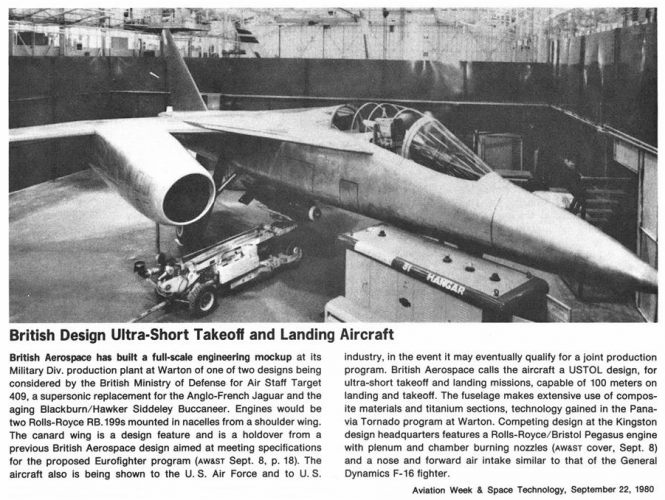
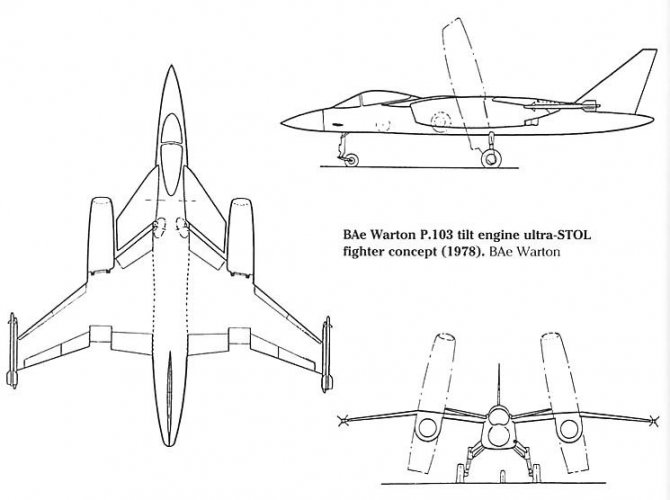
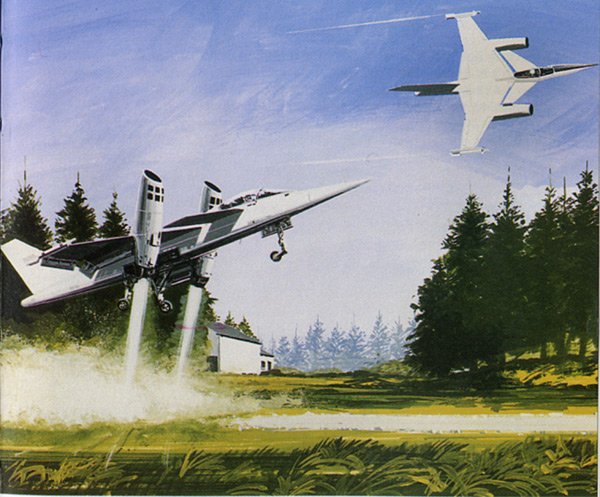
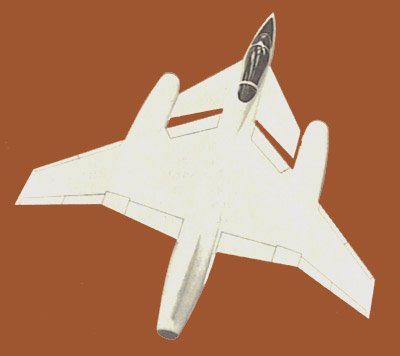
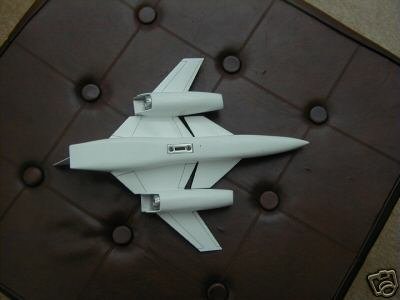
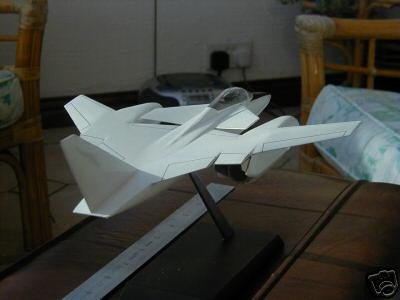
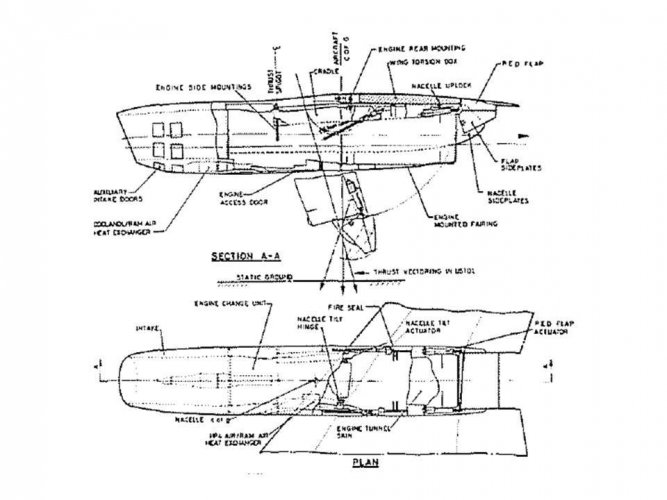
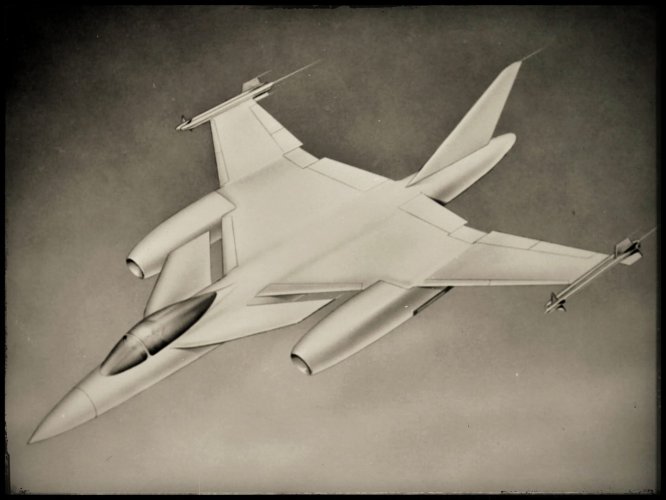
The British Aerospace P.103 explored the concept.
 

Attachments

  • rtisfkj.png
    rtisfkj.png
    684.3 KB · Views: 79
  • baeP.103_01 2.jpg
    baeP.103_01 2.jpg
    43.6 KB · Views: 73
  • 1978 P.103b.jpg
    1978 P.103b.jpg
    119.3 KB · Views: 66
  • 1977 P.103c.jpg
    1977 P.103c.jpg
    16.7 KB · Views: 62
  • 61_1_b.jpg
    61_1_b.jpg
    13.1 KB · Views: 60
  • 6f_1_b.jpg
    6f_1_b.jpg
    15.9 KB · Views: 66
  • 64587452_10214440594750164_30355896840224768_n.jpg
    64587452_10214440594750164_30355896840224768_n.jpg
    60.7 KB · Views: 60
  • 3.png
    3.png
    133.1 KB · Views: 50
  • 2.png
    2.png
    126.6 KB · Views: 45
  • 62508101_2177463202289471_8416810941403889664_o.jpg
    62508101_2177463202289471_8416810941403889664_o.jpg
    86.3 KB · Views: 74
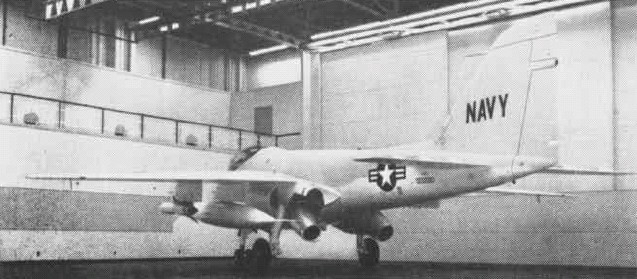
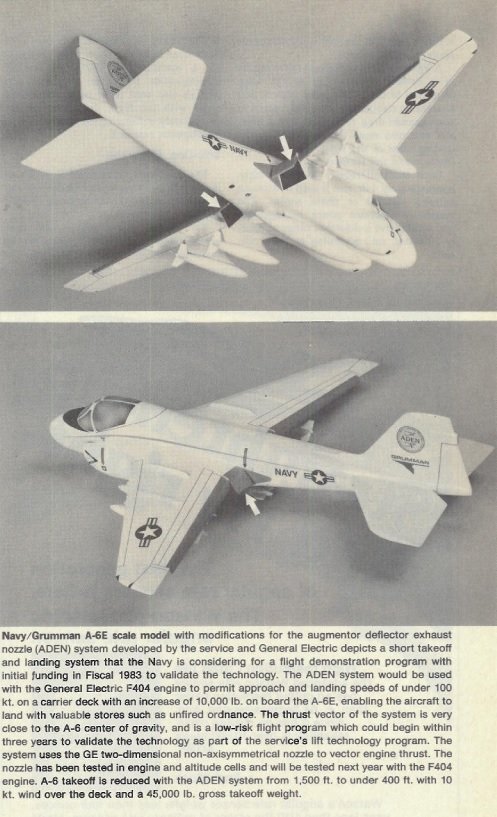
The early A-6 proposals, rather the YA2F prototypes, had a swiveling exhaust nozzle at the trailing edge of the wing. Non-afterburning engines, mind you, but still a STOL concept.

YA2F-1_tilting_pipes_NAN6-60.jpg
 
... I don't see the afterburner as a bad thing, but as a good if not great feature. As for the total thrust available - the more the merrier. Especially since we'd be eyeing the Mach 2 performance...

Ah, "Mach 2"! For some reason, I had assumed that you were looking for a STOL strike aircraft ...
 
The Sea Harrier picked up a bit of internal volume when the cockpit was raised by 30cm, and this seemed to have been achieved with no loss of performance or CoG problems etc. 30cm under the cockpit doesn't seem like much, but you can put in a fair bit of late 70s digital electronics in that small space.
 
The British Aerospace P.103 explored the concept.

Thank you for the feedback.
Please note that such an aircraft is the full-blown VTOL. I'm trying to explore the merits of a STOL high-performance combat aircraft, where the downward re-routing of the compressed air is used to much improve the low-speed capabilities of the aircraft, beating even the swing-wing designs in that category.
 
The P
Thank you for the feedback.
Please note that such an aircraft is the full-blown VTOL. I'm trying to explore the merits of a STOL high-performance combat aircraft, where the downward re-routing of the compressed air is used to much improve the low-speed capabilities of the aircraft, beating even the swing-wing designs in that category.
The P.103 was described as an 'ultra-STOL', not full VTOL.

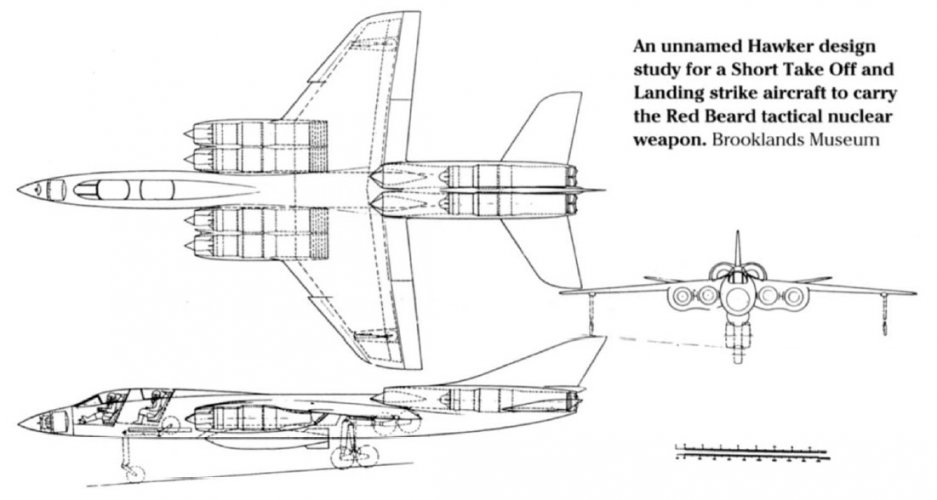
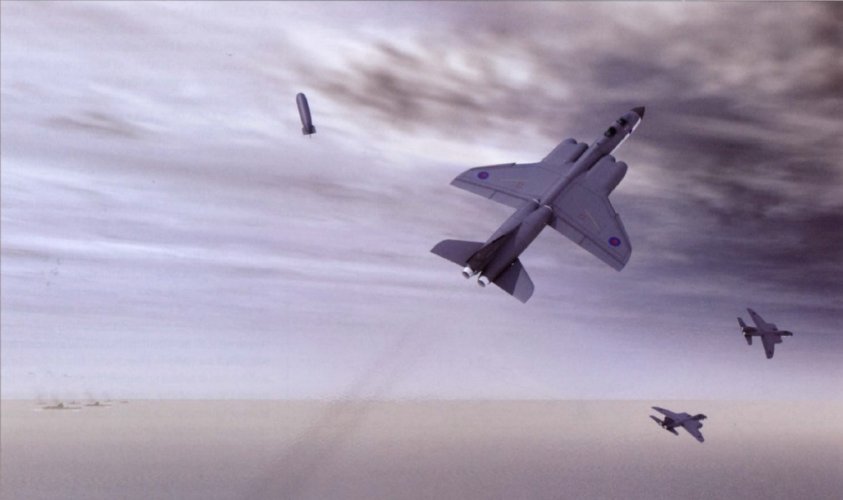
There's also this design, a STOL tactical nuclear strike aircraft by Hawker. It's unnamed and there seems to be little information on it. It's only mentioned in relation to the weapons it was to carry.

Whatever it was called, it was a monster - very large with six engines. The four fore-mounted ones could be vectored downwards.

British Secret Projects: Hypersonics, Ramjets & Missiles by Gibson & Butler, p. 93.

EDIT: My guesses on how it would be used. Acceleration and climb would be its forte. Obviously it would take off from short, rough fields (I wonder if a naval variant was contemplated?). The high thrust of six engines, four vectored would get it in the air quickly even with a heavy load. Like a Buccaneer, it would then raise its gear and descend to cruise altitude to stay under radar. Nearing its target it again uses its immense thrust to get into a steep climb, lobs its bomb in a parabolic trajectory and maybe completes an Immelmann to get as far away and as quickly as possible.
 

Attachments

  • GbUb46bXgAEuNV6.jpg
    GbUb46bXgAEuNV6.jpg
    103.7 KB · Views: 93
  • GbUdi3LXEAA7VY5.jpg
    GbUdi3LXEAA7VY5.jpg
    105 KB · Views: 83
Last edited:
How long a runway are you thinking of by "short"?

Today then a F-35B on Shipborne Rolling Vertical Landing (SRVL) manages 600-800ft but with an approach speed of about 40kts. At this speed you need a reaction control system to supplement the aerodynamic controls. If you then transfer this over to a land base with no wind over deck then the distance will increase a lot (it's a V^2 term) and so we're likely looking at well over 1,000ft needed.
 
How long a runway are you thinking of by "short"?

Today then a F-35B on Shipborne Rolling Vertical Landing (SRVL) manages 600-800ft but with an approach speed of about 40kts. At this speed you need a reaction control system to supplement the aerodynamic controls. If you then transfer this over to a land base with no wind over deck then the distance will increase a lot (it's a V^2 term) and so we're likely looking at well over 1,000ft needed.
A quick peek on what the aircraft of the day were using, like the A-7 or F-105, reveals almost 5000 ft required, and that is just for ground run. The A-7 will need more than 3000 ft to land, but still that is a lot. The heavily-laden A-6 also required a lot.
With F-15 it was the other way around - it took a lot to land (5000+ ft just for the ground run), while even when heavily laden they needed just 2500 ft (the F-15C with just under 9000 lb of fuel in the CFTs and 16 MK 82s).

If my system can cut these values by 50%, it would've been a major boon. The braking chute or the thrust reversers are still an option.
 
I think a good standard for 'short' would be to use perhaps the most consequential runway in a postwar/cold war conflict: Port Stanley at 4,100'. Too short for conventional Argentine combat aircraft to use, but long enough for transports, trainers and Harriers. Once you get longer than that the number of airfields drops dramatically, and their value as targets rises just as dramatically.
 
How long a runway are you thinking of by "short"?

Today then a F-35B on Shipborne Rolling Vertical Landing (SRVL) manages 600-800ft but with an approach speed of about 40kts. At this speed you need a reaction control system to supplement the aerodynamic controls. If you then transfer this over to a land base with no wind over deck then the distance will increase a lot (it's a V^2 term) and so we're likely looking at well over 1,000ft needed.
Let's look it from a slightly different angle. How much of a runway did J-35, JA-37 and JAS-39 need? The whole STOL/VSTOL thing came out of the theory that in wartime the main air bases would be taken out by nuclear attack or otherwise. The Swedish system with dispersed air bases, shor5 runways and road runways seems to me a much more practical answer than Harrier to this.
 
How much of a runway did J-35, JA-37 and JAS-39 need?
800m / 2,600ft for the shortest runways in Bas90 scheme but most were standard 5,000-8,000ft length. You're only operating from the short runways at light weights. So there's a large difference compared to Harrier/F-35B in STOL mode.

it's worth noting that Jaguar coud also operate from short (and soft) runways like Gripen/Viggen. e.g. 1,200 - 1,800ft for light loads. Or a Hunter at max weight with the brake chute can also land at those short short Bas90 runways.

Where it gets more difficult is operating with significant weapon and fuel loads at higher temperatures.

If we're wanting to operate from 3-4,000ft long runways then to operate at higher weights/temperatures then I'd go with 1. Brake chute 2. Blown Flaps / Tails like Buccaneer S.2 3. Lower Wing Loading
 
Sweden's Bas60 and Bas90 airbase systems are fascinating examples of survivability in the Cold War context. While the ~30 highway runways of Bas60 get a lot of attention the Swedes also used roads as taxiways to disperse aircraft many km from the ~40 main base runways. They also planned to use civilian airports for further dispersial all the while using the non STOL Draken.

The STOL Viggen opened up the opportunity for the Bas90 to incorporate the 800m runways linked to the main base via taxiways and dispersial areas.
 
I'd observe that dispersal is a lot easier when you have a large country with low population density and relatively few aircraft. Not quite the same situation for NATO forces in West Germany. e.g RAF found only space for 6 WARLOCs for Harriers and that was out of only <500m strips.
 
That's true, however I think western Europe did have a lot of civilian airfields with 5,000'+ runways and supporting infrastructure like fuel storage and distribution and hardstand areas. The situation isn't as dire as its made out, particularly given how difficult it's been in practice to close airfields themselves for prolonged periods during the Cold War.
 
A ski ramp halved the take-off run of a F/A-18 (maybe different with a lower thrust:weight ratio) and this could be a design that can be assembled and disassembled quickly or even just be two ski ramp trailers side by side.

The USMC had a land-based catapult and recovery (tailhook on aircraft and one cable) design, so landing at very short distances was possible.

High thrust-weight aircraft and low-thrust/weight aircraft with RATO could take off from almost anywhere and land almost anywhere with such tech.

True VTOL or even only STOVL was never necessary IMO.

View: https://www.youtube.com/watch?v=eXlIm1LRs5s&t=107s
 
The major point in taking out runways was that most bases only needed a single line of bombs to make the runway short enough to be effectively closed. 10,000ft runway cut in half leaves you about 4500ft usable, for example. 8000ft runway cut in half gets you down to about 3500ft usable.

Relatively long STOL or planes with naturally a short takeoff at light weights are now unable to use a runway that got two lines of craters across the runway (roughly dividing it into thirds). That 10,000ft runway is now only 2750ft in any one usable length.
 
FWIW I've developed an unhealthy obsession with airbases as the system that generates all the cool stuff happening in the air.

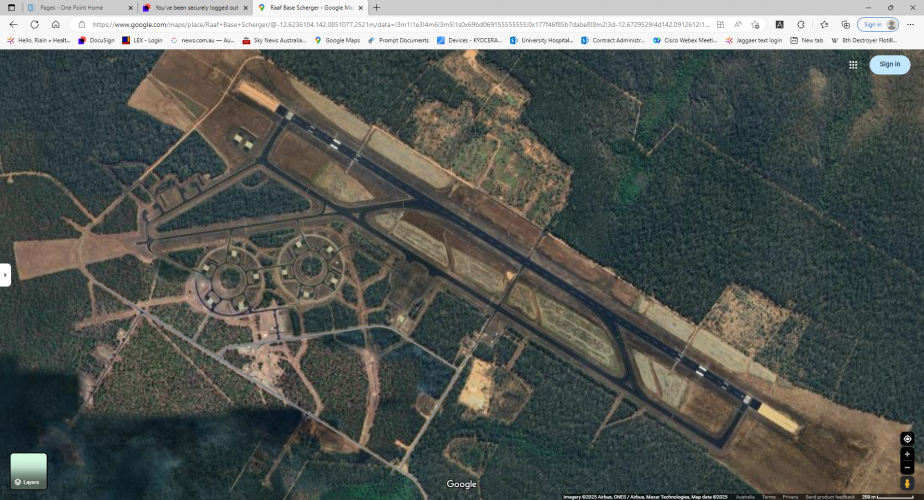
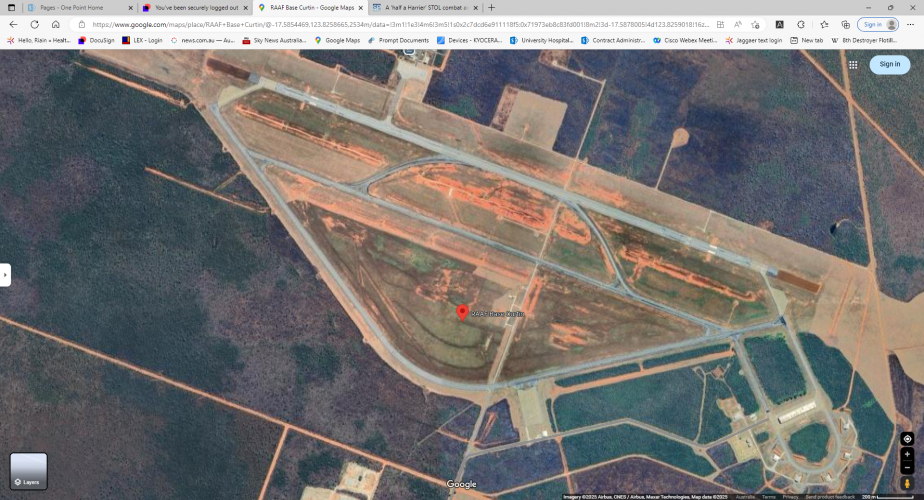
These a Google maps screenshots of the "bare" bases RAAF Scherger in Qld and Curtin in W.A., purpose built in the 80s and 90s so the RAAF could cover the north of the continent. No units are stationed there; they get opened up for exercises on occasion.

They illustrate that the task of the enemy isn't to close the runway, it's to close the 10,000' x 150' main runway, the parallel 10,000' x 100' taxiway and the 1 or 2 lengths of 5,000' x 50' taxiway angled away from the main runway. Not only that, but these bases also have multiple entry/exit routes to the runway, so the enemy has to hit multiple points on the runway and main taxiway. Even assuming this is done repair crews working around the clock on a triaged basis could have flying happening again within hours, certainly in a couple of days. In 1973 Israel had to bombard Damascus airport for 10 days with 175mm artillery to keep it closed and regular naval shelling couldn't keep Port Stanley closed.


1747968088061.png

1747968205798.png
 
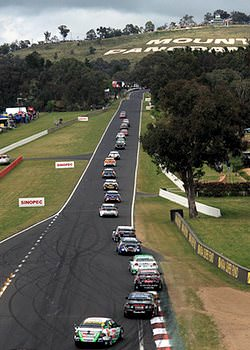
The bottom image looks like a car racetrack, except that it's lacking the parking areas.

One the upper one, a 4-ship pass in 2 pairs perpendicular to the runway would probably get the runway and parallel taxiway broken. The angled taxiways would be a challenge, but might be do-able with a single additional 2-ship pass parallel to the runway.
 
The bottom image looks like a car racetrack, except that it's lacking the parking areas.

Not an Aussie racetrack. :D

1747975384181.png

One the upper one, a 4-ship pass in 2 pairs perpendicular to the runway would probably get the runway and parallel taxiway broken. The angled taxiways would be a challenge, but might be do-able with a single additional 2-ship pass parallel to the runway.

Through the hail of SAMs an AA guns. Airfields are not the soft targets they appear to be.

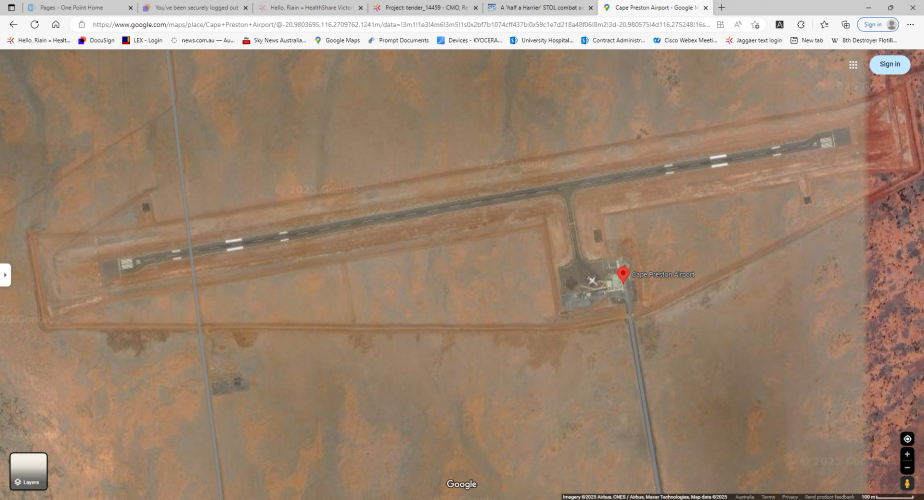
In the recent Federal Election one of the minor parties tried to drum up fear that Chinese owned Cape Preston airfield could be used to invade Northwest Australia. However, Cape Preston airport serves the mining industry and is as austere as you can get, its the perfect example of a vulnerable airfield. A single bomb would make it useless, and a strafing run would clean up anything on the hardstand.

1747974301991.png

The minute you add a taxiway and more hardstand the airfield becomes so much more useful to the military, but also so much harder to close for any extended period of time for the enemy.
 
That's true, however I think western Europe did have a lot of civilian airfields with 5,000'+ runways and supporting infrastructure like fuel storage and distribution and hardstand areas. The situation isn't as dire as its made out, particularly given how difficult it's been in practice to close airfields themselves for prolonged periods during the Cold War.
There were also many thousand NATO aircraft to be based in country. And closing airfields with the expected tactical nukes is a bit more significant than what was historically happened.
 
There were also many thousand NATO aircraft to be based in country. And closing airfields with the expected tactical nukes is a bit more significant than what was historically happened.

IIUC the Bas60 'dealt' with nukes by putting the 1st echelon support 1-2km from the runway and 2nd echelon support up to 6km further away again.

For all the talk about tactical nukes onto airfields, any attack against all the main NATO airbases would require so many weapons that it would likely invite a strategic nuclear response.
 
Through the hail of SAMs an AA guns. Airfields are not the soft targets they appear to be.
An appropriately-timed attack like I was talking about was a total of 2 passes maybe 30 seconds apart. One pass over the main runway, just enough delay for the rubble to land before the second pass goes over the airfield to take out the angled taxiways.

Desert Storm suggests that two passes that close together are likely survivable.


IIUC the Bas60 'dealt' with nukes by putting the 1st echelon support 1-2km from the runway and 2nd echelon support up to 6km further away again.

For all the talk about tactical nukes onto airfields, any attack against all the main NATO airbases would require so many weapons that it would likely invite a strategic nuclear response.
IIRC, a 10MT warhead will just delete an airfield outright, the crater is a good 3km across. But that's definitely going to draw a strategic scale response.
 
For all the talk about tactical nukes onto airfields, any attack against all the main NATO airbases would require so many weapons that it would likely invite a strategic nuclear response.
That was the plan. Massive retaliation. In part carried by the dispersed NATO aircraft in theatre.
 
Just for the record, ICBM air basing studies for Minuteman (and MX two decades later) counted 2700 paved airstrips across CONUS' 48 states. Can't remember the length, however.
 
I do like when the discussion around the pursuit of a technology such as STOL is linked to reason behind it, in this case dispersing aircraft due to the threat of nuke strikes.

IIRC, a 10MT warhead will just delete an airfield outright, the crater is a good 3km across. But that's definitely going to draw a strategic scale response.

I think megaton+ warheads are reasonably scarce even in the 60s and would have been reserved for 'strategic' exchanges. IIRC during the development of the TSR2/WE177 the RAF wanted 300kt and 100kt weapons to take out hardened targets including major airbases. The Red Beard was considered insufficient and when Cabinet put a 10kt limit on tactical nukes the RAF had to resort to 'stick bombing' of 4 x 10kt nukes, 2 of which had to be carried externally on the TSR2 with attendant limitations on performance and was at least one reason for the cancellation of the TSR2.

An appropriately-timed attack like I was talking about was a total of 2 passes maybe 30 seconds apart. One pass over the main runway, just enough delay for the rubble to land before the second pass goes over the airfield to take out the angled taxiways.

Desert Storm suggests that two passes that close together are likely survivable.

Sure, but the JP233 carried 30 anti-runway weapons and 215 anti-personnel mines to hinder repair work, because airfields are inherently repairable. In 1967 Israel attacked many airfields 2 or 3 times in the first morning with a lot of aircraft, because that's what it takes to really knock out and air force for a week. IIUC there wasn't a counter-airfields campaign fought in 1973.

Just for the record, ICBM air basing studies for Minuteman (and MX two decades later) counted 2700 paved airstrips across CONUS' 48 states. Can't remember the length, however.

If Australia is any guide airstrips start getting paved at about 3,000', and as the study was around Minuteman basing I'd suggest they're talking at least that and more likely 4-5,000'.
 
I think megaton+ warheads are reasonably scarce even in the 60s and would have been reserved for 'strategic' exchanges.
I'm not so sure about that. B28s and B43s were mostly megaton-class in terms of number produced (it looks like), and the US made ~4500x (total) B28s and another ~1000x B43s. There were ~2000x B28s in service by 1961! B43s were in service starting in 1961 and production ceased in 1965. Note that early production B28s had some issues and the early marks were withdrawn pretty quickly, there were only about 2000 B28s ever in service at one time.

Those two bombs were two of the most widely shared Dual-Key weapons, equipping F104Gs, etc. So, that's some 3000 weapons, and references available to me suggest that at least half of those were megaton-class (1.0-1.45MT).


Sure, but the JP233 carried 30 anti-runway weapons and 215 anti-personnel mines to hinder repair work, because airfields are inherently repairable. In 1967 Israel attacked many airfields 2 or 3 times in the first morning with a lot of aircraft, because that's what it takes to really knock out and air force for a week. IIUC there wasn't a counter-airfields campaign fought in 1973.
Or you drop a stick of 1000lb bombs across the runway+parallel taxiway. Big craters take time to fill in. A delay-fuzed big bomb is even better because it heaves the concrete slabs and makes the runway no longer flat.

USN would have loved that conventional strike package, 6x A6s, loaded with 12x 1000lbs each, flat-out on the deck in TFR, ~30sec after the first 4 birds zoom over the other pair flies by. Might actually be 8x A6s, it's not easy getting the angled taxiways, and the flight going after them would need to drop on two separate targets instead of how the main flights are dropping their bombs on the same targets. 24x 1000lbs is kinda overkill for a 5000ft angled taxiway, though.
 
I'm not so sure about that. B28s and B43s were mostly megaton-class in terms of number produced (it looks like), and the US made ~4500x (total) B28s and another ~1000x B43s. There were ~2000x B28s in service by 1961! B43s were in service starting in 1961 and production ceased in 1965. Note that early production B28s had some issues and the early marks were withdrawn pretty quickly, there were only about 2000 B28s ever in service at one time.

Those two bombs were two of the most widely shared Dual-Key weapons, equipping F104Gs, etc. So, that's some 3000 weapons, and references available to me suggest that at least half of those were megaton-class (1.0-1.45MT).

Sorry, I should have been clearer, I meant Soviet bombs and delivery systems. In any case 1mt is just a number, 200kt would likely ruin your average, well-built NATO airbase.

Or you drop a stick of 1000lb bombs across the runway+parallel taxiway. Big craters take time to fill in. A delay-fuzed big bomb is even better because it heaves the concrete slabs and makes the runway no longer flat.

USN would have loved that conventional strike package, 6x A6s, loaded with 12x 1000lbs each, flat-out on the deck in TFR, ~30sec after the first 4 birds zoom over the other pair flies by. Might actually be 8x A6s, it's not easy getting the angled taxiways, and the flight going after them would need to drop on two separate targets instead of how the main flights are dropping their bombs on the same targets. 24x 1000lbs is kinda overkill for a 5000ft angled taxiway, though.

IIUC the reason Black Bucks dropped their bombs from 10,000' was so was for the bombs to hit at a steep enough angle to get at least some penetration. Tossed bombs hit at an angle of about 30 degrees and tended to skip rather than dig in before exploding. I doubt 1000lb bombs dropped from very low level, even if they were retarded, would get any penetration to get serious damage. Your A6s would need special bombs like Durandals.

I think 8 A6s attacking the runways and taxiways for those RAAF base examples is reasonable. However, you haven't touched the aircraft parked on the hardstands, any in dispersal areas, any ammo dumps and fuel storage all of which will likely require more aircraft. In addition the A6 is a serious bomber, with a big payload and highly advanced avionics. If you swap A6s for a more common type the numbers to attack the same airfield go up.
 
Back
Top Bottom