Last edited by a moderator:



I may be more than a little biased on this one!Jaguar

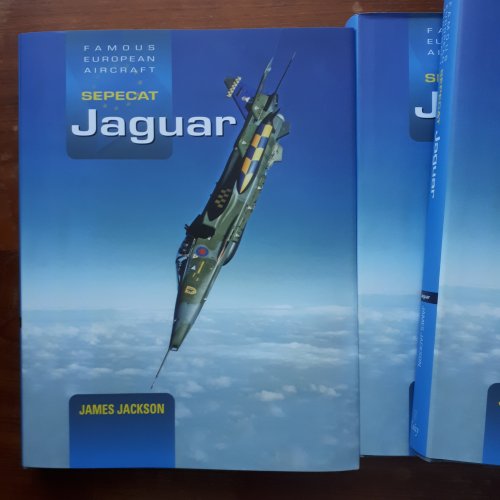
The Jaguar book in definitely one to look out for.
I may be more than a little biased on this one!
I've just handed in some corrections and another five appendices of data. If all goes well it should make the April launch date.
https://www.crecy.co.uk/wings-over-the-fleet?osCsid=6893e87guc3odffe09vb3nv4l1Available from July 2025
"All the major types are covered, from all-weather fighters, interceptors, strike aircraft, anti-submarine helicopters and airborne early warning aircraft.
as are many design studies and proposals that remained on the drawing board. Guided missiles during the post-war period and the evolution of the Royal Navy's aircraft carriers and the new technologies required to operate jet aircraft from ships are also analysed."
Promising...
I don't yet own a James Jackson book, but I know that author is held in respect by those on this website. His forthcoming book on the SEPECAT Jaguar, which (checking just now) I see has been retired by its operators except India, is very tempting: I will have to decide whether to buy a copy, or remain content with the eponymous chapters of my Bill Gunston books Attack Aircraft of the West and Jet Bombers (which included the Jaguar's 1990-91 Gulf War experience).
This Hikoki book Wings Over the Fleet: British Naval Aircraft Since 1945 seems like a must-have; thanks for the notice GTX. Mr Jackson, other than the fact it will include the Fleet Air Arm's new F-35s (and not include WW2 and previous), how does the theme and content of your forthcoming book compare and contrast with, for example, Owen Thetford's British Naval Aircraft Since 1912 in the Putnam Aviation Series? Please comment. Best wishes to you for all your books' success.

| Publisher | Crecy Publishing Ltd (April 30, 2025) |
|---|---|
| Language | English |
| ISBN-10 | 1800353294 |
| ISBN-13 | 978-1800353299 |
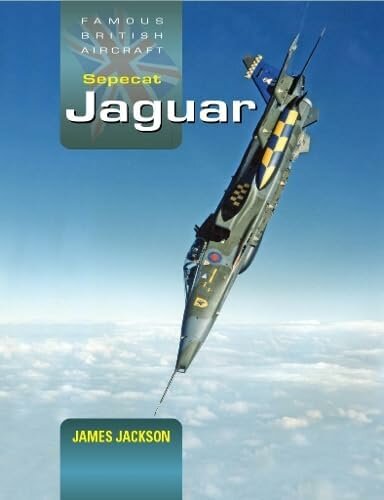
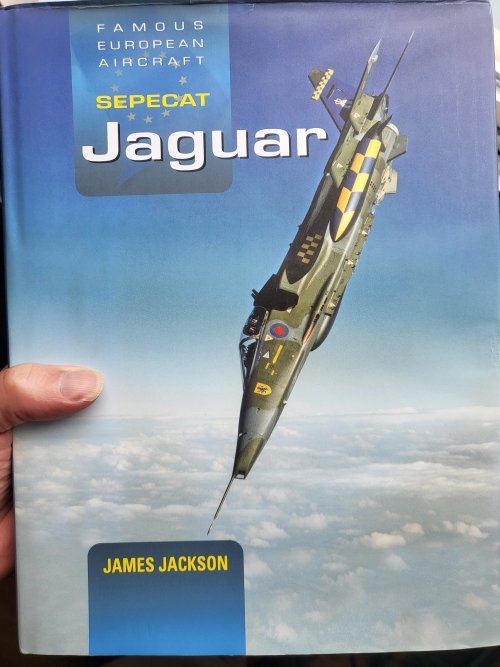
Cool!A slight update - the book will probably be within a new 'Famous European Aircraft' series on publication.

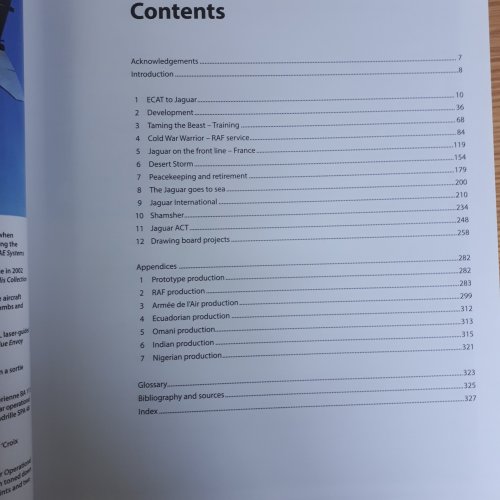
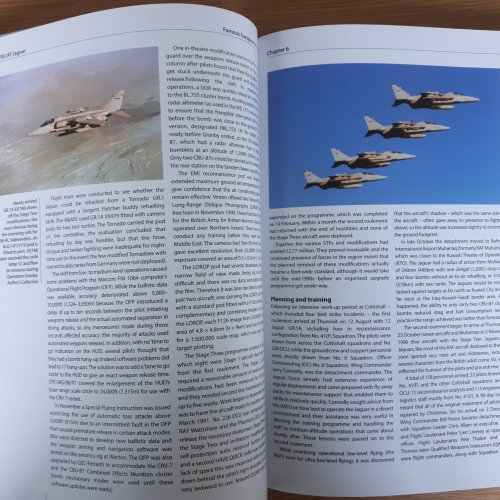
There is a whole chapter on the Indian Jaguars, including licence production and the DARIN upgrades.I wonder how much DARIN upgrades from the Indian Air Force-related content were involved. Seems like not very much was included.

That will be awesome. Is it Chapter 10?There is a whole chapter on the Indian Jaguars, including licence production and the DARIN upgrades.
Yes it is.That will be awesome. Is it Chapter 10?
This book is out, and looks good from what I've seen posted on Facebook.
Its out in the UK. Still has to cross the Atlantic.Odd, I pre-ordered mine on Amazon months ago and I got an email from them today saying its delayed to July
Yes the full development history is covered, including the expansion of the Jaguar S as the RAF's main variant following the 1966 Defence Review.I am interested in the evolution of the Jaguar and its role as the de facto replacement in RAF service of the P1154.
Does this get covered? Would like to see models and artwork.

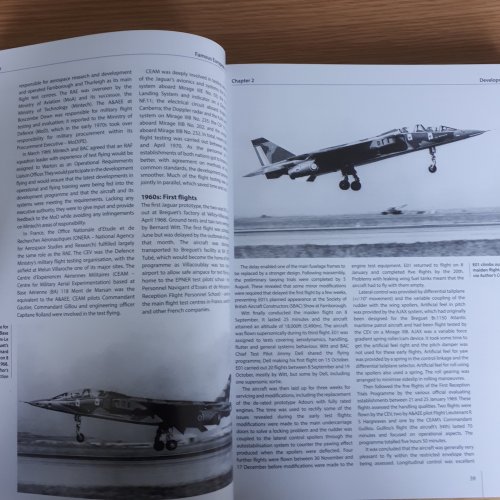
Now have a copy and am delighted with it.Yes the full development history is covered, including the expansion of the Jaguar S as the RAF's main variant following the 1966 Defence Review.
No models or profile artworks but there is some 3D artwork by our very own @CiTrus90 and plenty of photographs.
I did order a copy directly from Crecy, but other potential US buyers may not be as dedicated to want to put in that effort and cost.That's odd. I'll drop Crecy a line and see what's going on.

Did you try Amazon UK?Well if anyone from the author or publisher lurks here you may want to talk to Amazon, I just got an email from them that they're canceling my pre-order (in the US) of many months ago due to "supply chain issues". They don't seem to have either any stock or a date by which they will have stock.
Not being in the UK, I didn't think of using Amazon UK. The BN link says "arrives in three weeks" which to me means "we don't have it in stock".Did you try Amazon UK?
Barnes & Noble: https://www.barnesandnoble.com/w/sepecat-jaguar-james-jackson/1147302681?ean=9781800353299

Well if anyone from the author or publisher lurks here you may want to talk to Amazon, I just got an email from them that they're canceling my pre-order (in the US) of many months ago due to "supply chain issues". They don't seem to have either any stock or a date by which they will have stock.

Stock has definitely been shipped to the US. As Dan says, publishers don't have any direct comms with Amazon so they are as much in the dark as we are.I did order a copy directly from Crecy, but other potential US buyers may not be as dedicated to want to put in that effort and cost.
Its never been one of my favourite aircraft, but I'll try and get around to buying a copy.


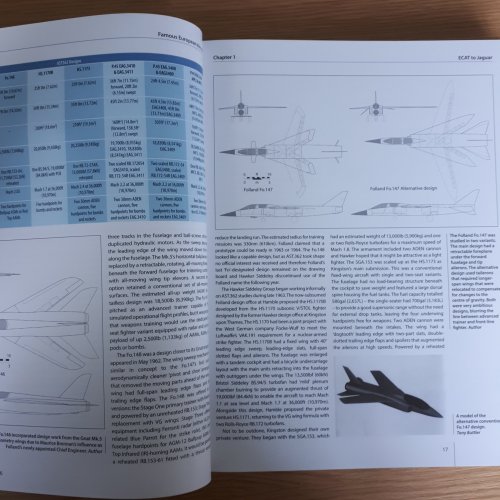
ECAT only specified a maximum speed of Mach 0.9, so there was no need for a large turbofan and most French turbojets of the early 1960s were Turbomeca's relatively puny series lightweight engines. So the French designers put a pair of engines on to get sufficient thrust (plus there may have been a wish for single-engine safety, this factor did seem to come into play later for the Jaguar A and S in terms of combat survivability). The designs seem to vary between on 9,400lbf to 13,500lbf with the RB.172 or Tourmalet in pairs.From having a read through, I'm still wondering why Jaguar had two engines. Was there a requirement somewhere to use two engines, or Adour specifically?
From going through then all the ECAT/ECAP French concepts and almost all UK concepts were twin engine. Or was it simply that Adour was the best fit for the requirements (range) given it's lower sfc as a turbofan and the existing big turbofans (i.e. Spey Mk 200) were just too big and heavy?
Just seen this. Exciting!
Is that a navalised SEPECAT Jaguar with Sea Eagles, enlarged air intakes and a big radar on the nose?
It is indeed. To be precise EAG.8469, a navalised version of the developed STOVL Jaguar for AST.396.
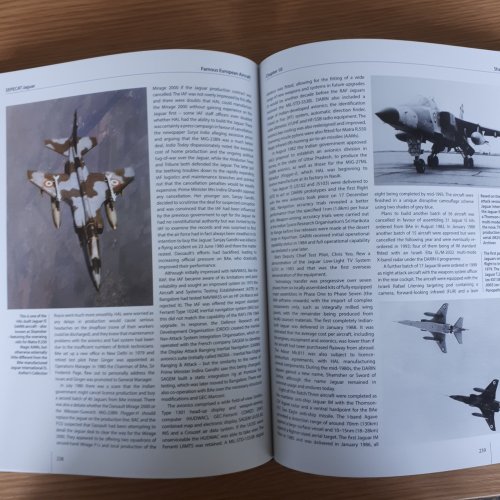
I recently received my copy and already started reading it. As an unbuilt project enthusiast I'm fully satisfied because the book includes both comprehensive chapters on origins and derivatives. I consider most monographic incomplete without that information. Not the case here because both chapters are excellent in their coverage, including enough detail to please even the most demanding enthusiasts. If the Jaguar is not your favourite aircraft, maybe there are still reasons to know more like its complex but successful development as an international program with demanding background. It also was a Cold War warrior but still useful in the late XX years conflicts, and still in service with the Indian Air Force. The Jaguar aroused the interest of different air forces and failed exports, in general, is an attractive topic to me. We covered it for the Jaguar in this forum:
Narrative is excellent and the book is generously illustrated with beautiful photographs and technical drawings. Additionally, Luca Landino's renderings of unbuilt concepts are amazing. I recommend it. Thank you Mr Jackson!