Italy had ambitious plans, probably without doubt, completely unrealistic...
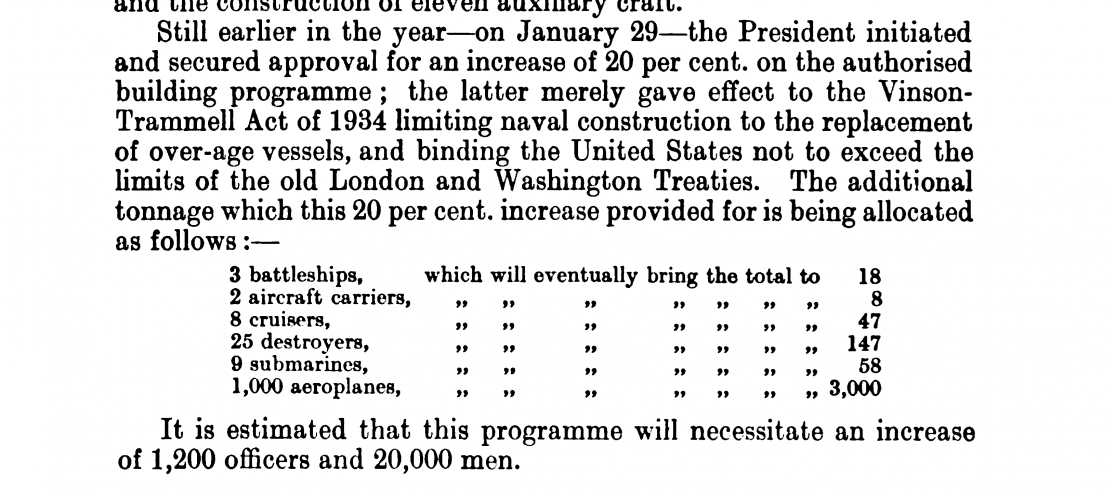
They planned for a two-seas fleet of:
9 Battleships, 3 Aircraft Carriers, 36 Cruisers, 142 Destroyers and 84 Submarines.
The original 'plan' was drawn up in 1935 with a target date of 1942!
Bearing in mind that the Roma did not complete until 1942 and the Impero was never finished, along with many of the planned 'cruisers', I don't see too much of a change, apart from the Impero being completed, and perhaps 2 of the Carriers. Italian Heavy Industry was not particularly well developed at the time, and I can foresee many bottlenecks in the production lines.
In addition to the Littorio’s, they would have the 4 Dulio’s and Cesare ships rebuilt. That would leave a ninth capital ship unfinished, I am guessing it would be a repeat Littorio to simplify construction. Then there are the various pre-war ‘tin-clad’ Light Cruisers, although they would have the Zara class Heavy Cruisers, plus some others.
For what it's worth the fleet Italy actually had in June 1940 was:
- 115 submarines.
- no aircraft carriers
- 8 battleships, completed, completing or fitting out.
- 2 operational battleships (the Cavour class) which were modernised 1933-37.
- 2 new battleships (Littorio & Vittorio Veneto) working up.
- 2 old battleships (Duilio class) nearing the completion of the modernisations that were begun in 1937.
- 2 new battleships (Impero & Roma) fitting out.
- 18 cruisers 7 heavy and 12 light.
- 130 surface torpedo-craft consisting of 61 destroyers and 69 torpedo boats.
My guess is that Italy will have its work cut out maintaining that fleet, let alone expanding it. Plus the Regio Esercito is in desperate need of modernisation and the Regia Aeronautica has to be kept up to date. The needs of those services will compete for Italy's relatively small industrial and financial resources with the needs of the Regia Marina.
AFIAK (which is mainly according to Dr Clarke and Drachinifiel) Italy's situation was the the opposite of France's. That is Italy had the shipbuilding infrastructure (in part because it acquired most of Austria-Hungary's shipyards) but not the money, while France had the money, but not the shipbuilding infrastructure. According to Kennedy (Page 429) France had a national income of $10 billion in 1937 of which 9.1% was spent on defence while Italy had a national income of $6 billion in 1937 of which 14.5% was spent on defence. However, to support what you said about Italian heavy industry, France made 7.8 million long tons of steel in 1939 and Italy only made 2.3 million.
OTOH we don't know how the Italian economy will develop between 1939 and 1944 ITTL. Presumably, the economy will continue to grow, more hydroelectric plants will be built, more railway lines will be electrified, they'll do everything they can to get all the oil and raw materials from Albania that they can, expand the motor industry and if they have any sense build more steel works, but this is Mussolini's Italy that we're talking about. However, only the latter will directly help the RM, which will probably increase its fuel reserves during the 4 extra years of peace.
Italy is likely to do everything it can to help Franco's Spain repair the damage done in the Civil War (which will include the renovation of its navy) so it can be a third front against France and because it has raw materials that Italy needs which should be able to buy on favourable terms due to the help that Italy gave to the Nationalists in the Civil War. The RM will be particularly interested in the repair and expansion of Spain's naval bases so it can use them as part of its "Breakout Strategy". Another thing the RM will probably do as part of that strategy is improve their bases in Italian East Africa. It also needs to increase the capacity of Libya's ports.
Submarines
- 40 were underage ocean-going submarines (sommergibili oceaniei) completed 1928-40 and included 4 minelaying submarines.
- 68 were underage coastal submarines (sommergibili costieri) completed 1928-1938.
- The other 7 were old coastal submarines dated from World War II and were used for training, but IOTL 2 of them (which were minelaying boats) were laid up in September 1940 and weren't used again.
6 additional ocean-going boats (1938 Programme) were under construction and IOTL they were completed from July 1940 to September 1941, but the 12 ocean-going boats in the 1939-40 building programme hadn't been begun and IOTL they weren't built. No-ocean going submarines were built under Italy's war programmes, but they did lay down 12 cargo carrying submarines 1942-43 and 2 of them were completed before the Armistice. No new coastal submarines were under construction or on order, but 61 were ordered during the war of which 22 were completed between October 1941 and the Armistice.
5 of the existing ocean-going boats would become overage 1941-44 and another 6 would become overage 1945-48. 18 of the existing coastal submarines would become overage 1941-44 and 21 more would become overage 1945-48. Or put another way 23 submarines would become overage 1941-44 and another 27 would become overage 1945-48.
I was going to say that Italy would have it's work cut out replacing the submarines it already had, let alone increasing the size of its submarine force. However, IOTL Italy ordered 60 submarines in its five naval programmes from 1934 to 1938 which was an average of 12 per year of which 54 were completed by June 1940 and the rest were completed by September 1941. If they could continue to build them at that rate they'd complete 48 between 1941 and 1944 and have another 48 under construction or planned for completion 1945-48 in 1944.
Therefore, the state of play at the end of 1944 ITTL would be 139 submarines because 54 would have been completed between June 1940 and 1944 while 30 had been discarded for a net increase of 24 boats. The 30 discarded boats were the 7 that were overage in June 1940 IOTL and the 23 that became overage 1941-44. Another 48 would be under construction or planned to be completed by 1948 which would increase the total to 160 in 1948 as 27 existing boats would be discarded for a net increase of 21 boats.
Aircraft Carriers
AFAIK Italy had no plans to build any aircraft carriers in June 1940 and if they'd changed their plans by the TTL declaration of war, my guess is that they'd only have got as far as laying the first ship down in 1943 or 1944.
Battleships
Impero was laid down four months before Roma and was launched 7 months before Roma. What went wrong IOTL was that the RM decided to move her from La Spezia to Trieste in June 1940 because they didn't want the AdA to bomb her while she was fitting out. Unfortunately, she had only got as far as Bari when Italy declared war. None of that happens happen ITTL and my guess is that she'd be completed on schedule in August 1941.
Roma was scheduled to be delivered in June 1942 which her builders were able to do IOTL without difficulty. They might be able to do better than that ITTL as war doesn't break out until 1944.
My guess is that another pair of battleships would be under construction when war breaks out ITTL with another pair planned, but they'd be replacements for the Cavour and Doria classes rather than to increase the fleet. They'd either be repeats of Roma and Impero or a "Super Littorio" with an official standard displacement of 45,000 tons and mounting twelve 15in guns in four triple turrets to match the French Alsace class battleships which were to be armed with twelve 15in guns in three quadruple turrets.
Cruisers
The 2 cruisers that were under construction for Siam in June 1940 would have been delivered by 1944 ITTL.
The 2 Ciano class in the 1939 Programme weren't built IOTL, but ITTL they're laid down in 1940 and completed in 1944. That's because the preceding Abruzzi class took 4 years to build. AFAIK they were ordered in reply to the French De Grasse class and as the MN had ordered 3 its likely that the Italians would have a third Ciano class cruiser fitting out in 1944.
The heavy cruisers Trento and Trieste became overage 1948-49. Therefore, the their replacements were probably under construction at the TTL declaration of war based on the 4-year building times.
The other heavy cruisers don't become overage until 1951-53 and the first 6 light cruisers don't become overage until 1951-53 too. Therefore, my guess is that Italy will only complete the 3 Ciano class and lay down the replacements for Trento and Trieste between 1940 and 1944. So the state of play at the end of 1944 is that the RM will have 20 cruisers in late 1944 consisting of 7 heavy cruisers and 14 light cruisers plus a 15th cruiser nearing completion and 2 heavy cruisers laid down.
Destroyers and Torpedo Boats
The 130 surface torpedo-craft include the 2 destroyers and 2 torpedo-boats that were sold to Sweden shortly before Italy joined the war IOTL as part of an arms for raw materials deal. I think they won't be traded to Sweden ITTL, but there might be a similar deal in 1944 ITTL.
The 61 destroyers included 5 completed 1917-24 which were overage according to both London Naval Treaties. Another 16 would become overage 1941-44 and 20 more would become overage 1945-48.
33 of the torpedo boats were completed 1915-24 and were overage according to the terms of both London Naval Treaties. Fortunately, the 4 Orsa class (which the RM called escort vessels) were completed in 1938 and the 32 Spica class completed 1935-38 so no more torpedo-boats became overage until 1954. All the old torpedo boats were built as destroyers, but were reclassified as torpedo-boats between 1929 and 1938.
12 very large destroyers of the Capitani Romani class were laid down in 1939 and were due for completion in 1941. The RM called them esploratori (scouts) but Jane's 1940 had them in the RM's cruiser section. AFAIK they were built in reply to the 12 La Fantasque and Mogador class contre-torpilleurs that had been built or were on order for the MN. IOTL 4 were broken up on the stocks 1941-42 and only 3 of the remainder were completed before the Armistice.
Jane's 1939 and 1940 say that Italy's 1939 Building Programme included 8 destroyers. IOTL Italy laid down 7 destroyers of the Soldati type 1940-41. However, I'm not sure that they were 7 of the 8 the ships in the 1939 programme or that the 1939 ships were cancelled and that the 7 ships actually laid down were built to a war programme. 20 destroyers of the Commandanti type were ordered to the war programmes and 4 more were planned, but only 9 of them were laid down before the Armistice and none of them were completed.
16 Ciclone class escort vessels were laid down in 1941 and 15 were completed before the Armistice. Jane's 1939 and 1940 say that 4 torpedo boats were in Italy's 1939 Building Programme. However, these were actually the first 4 Ciclone class or they were cancelled, because the first Ariete class torpedo boat wasn't laid down until 1942. 16 of a planned total of 42 were laid down before the Armistice, but only one of them was completed before Italy changed sides.
My guess is that ITTL the 12 Capitani Romani class will be completed in 1941 as planned. I also guess that the 8 destroyers and 4 torpedo-boats in the 1939 Programme will be laid down in 1940 and completed 1941-42. The 8 destroyers will be additional Soldati class and the 4 torpedo-boats will be Spicas or Arietes.
Furthermore, my guess is that these 24 ships will replace existing destroyers and torpedo-boats and so will the other surface torpedo-craft that Italy builds between 1940 and 1944 ITTL.
I think that by 1944 the RM will have discarded the 7 destroyers that were overage in 1940 and the 33 torpedo-boats that were overage in 1940. I also guess that the 16 destroyers that became overage 1941-44 (which displaced about 1,000 tons) would still be in service, but would have reclassified as escort vessels or torpedo-boats.
My guess is that the ships built under the 1940 and later programmes ITTL will be scouts and fleet destroyers rather than escort vessels and torpedo-boats. That's because they're the types of vessel that will become overage 1940-48 and they're also the types of vessels that France is concentrating on. E.g. France had 32 contre-torpilleurs in 1939 and would have another 4 by 1944. Italy only has the 12 Capitani Romanis and 12 Navigatori class. Furthermore, the latter were completed 1929-31 and will become overage 1945-47.
Therefore, I think the state of play in late 1944 will be that Italy would still has around 130 surface torpedo-craft, but there would be 74 scouts & fleet destroyers, the 4 Oriani class escort vessels and 52 torpedo-boats. So more scouts & fleet destroyers and less torpedo-boats. The 52 torpedo boats would consist of the 4 ships in the OTL 1939 Programme, the 4 OTL Orsa class, the 32 OTL Spica class and 16 ex-destroyers of the Sella, Sauro and Turbine classes. Another 12 scouts and 8 fleet destroyers would be building or planned to replace the Freccia, Folgore an Navigatori classes. The surface torpedo-craft forces of 1944 would be more modern than the one of 1940 because my guess is that only had 16 out of 130 ships would be overage in 1940 while 40 out of 130 ships were overage in June 1940.
Minor War Vessels
According to Jane's 1940 the RM had 71 MAS boats of which 57 were built in the second half of the 1930s, 9 were built in the 1920s and 5 dated from World War One. Back in 1923 a Decree said the service life of a MAS boat was 8 years so my best guess is that enough will be built by 1944 to replace all the MAS boats completed before 1936. They're likely to be of the MAS551 and 555 types as they what was built for the RM 1941-43 IOTL. I doubt that they'll build any larger MTBs of the MS type or A/S motor launchers of the VAS type because ITTL they won't capture any German-built S-boats from the Yugoslav navy in 1941 ITTL.
Jane's 1940 also says that the RM had 2 ex-German minesweepers and 3 ex-Austrian minesweepers that they used as minelayers and 38 surviving minesweepers of the RD4 to RD57 type. I think the replacement of them would be in full-swing in 1944. My guess is that rather than build more ships of the RD1 prototype launched in 1938 they'll build a ship based on the Ostia and Fasana class minelayers of 610-615 tons that were built in the 1920s and were also fitted for minesweeping.